The Six Enneads
by Plotinus
On This Page
Description
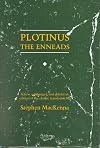
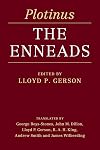
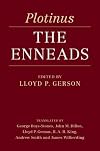
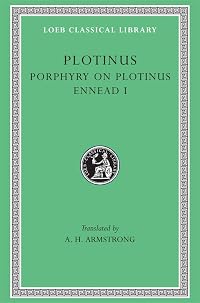
The Enneads by Plotinus is a work which is central to the history of philosophy in late antiquity. This volume is the first complete edition of the Enneads in English for over seventy-five years, and also includes Porphyry's Life of Plotinus. Led by Lloyd P. Gerson, a team of experts present up-to-date translations which are based on the best available text, the editio minor of Henry and Schwyzer and its corrections. The translations are consistent in their vocabulary, making the volume show more ideal for the study of Plotinus' philosophical arguments. They also offer extensive annotation to assist the reader, together with cross-references and citations which will enable users more easily to navigate the texts. This monumental edition will be invaluable for scholars of Plotinus with or without ancient Greek, as well as for students of the Platonic tradition. show lessTags
Recommendations





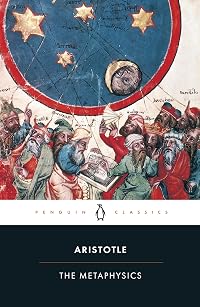



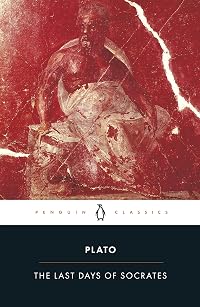










Member Recommendations
jpers36 Plotinus was a major influence on Augustine.
Member Reviews
My primary interest in reading the Enneads was finding the foundation for neo-platonic theurgy, therefore a practical interest in post—Plotinian thought in ceremonial Theion Ergon seduced me to read the foundational philosophy. For how, after all should I understand a system without grasping its roots? Although the system stemming from the Chaldean Oracles is somewhat different from neo-platonic philosophy, it has its motherly embrace there. Here, in the Enneads there is a major-work of a religion (religere - to delimit, after Macrobius) that has simple tenets at its structural approach and an in-depth elucidation for many cases that may trouble the neoplatonic follower. The hypothesis are well-weighted and they are balanced in a show more clear way, attempting to arrive at faith by reason, not by blind faith. There is not one area of life that may not be read through the lenses of the Enneads, yet the system remains open and compatible with scientific undertakings. Farah Godredj enumerated “three hermeneutic moments” when encountering literature: “Understanding, representation and relational relevance”, in relation to Plotinus, the first is understanding or incorporation that is existential hermeneutics, internalizing the text, giving it a broad setting in the topos, the second is attempting not to “totalitarize” the text keeping relativity in mind, and a multi-faceted approach to the narrative, the last one in short is an approach in building a philosophical ontology of the whole metaphysics, a certain angle of reading. I may add my own: “Explicit act”, that is practiced aretology, practicing beauty and awe, practicing the deification - which is the golden way to theurgy. Exchanging perspective, I put full thrust into the belief-mechanisms of the text and without stripping if of deep metaphysics I fully arrived at understanding a separate, whole, and intricate system of self-referential open ground for interpreting the Divine into it, often-wise I engage the text that produced interesting comparative grounds with my discoveries in theurgy, astrology, other religious systems, sometimes I ignored the more technical parts of it (I read them, but they didn’t appeal to me). Now, I haven’t fully grasped it with a major masterly mind that could recite the dynamics of the system in a flash, that requires years of practice and studies, and I never will, as I would have to be Plotinus and move “with his mind”, but by conversing with his mind via the text I may fully agree that the theology and interpretation that he created via clustered “generalizations” into the particular is beautiful, “arete-ical”, and provides ground for training beautiful men and women, in the ensouled, teological (goal oriented) manner. What gives good fruit in effects is a worthy enterprise. show less
While exhibiting depth and some implication, the work is still best classified, in my opinion, as Platonic fluff. It falls into the class of philosophy starting with huge leaps about mystical concepts, followed by giant defining assumptions. It is beautiful, sensuous writing but to no worthy end. In "Descent" we are shown the possible alternatives to explain the free, lasting soul, descending into the limited, terminal body. My critique is best summarized by the introduction's point of highlighting an "unusually positive view of Matter." In "On the Good, the One," Plotinus combines Aristotelian unity with Platonic metaphysics. We are shown that unity is good because it neither seeks nor needs to be anything else. He also references show more Aristotle positively for considering every possible state but then not for considering probability. show less
1
My primary interest in reading the Enneads was finding the foundation for neo-platonic theurgy, therefore a practical interest in post—Plotinian thought in ceremonial Theion Ergon seduced me to read the foundational philosophy. For how, after all should I understand a system without grasping its roots? Although the system stemming from the Chaldean Oracles is somewhat different from neo-platonic philosophy, it has its motherly embrace there. Here, in the Enneads there is a major-work of a religion (religere - to delimit, after Macrobius) that has simple tenets at its structural approach and an in-depth elucidation for many cases that may trouble the neoplatonic follower. The hypothesis are well-weighted and they are balanced in a show more clear way, attempting to arrive at faith by reason, not by blind faith. There is not one area of life that may not be read through the lenses of the Enneads, yet the system remains open and compatible with scientific undertakings. Farah Godredj enumerated “three hermeneutic moments” when encountering literature: “Understanding, representation and relational relevance”, in relation to Plotinus, the first is understanding or incorporation that is existential hermeneutics, internalizing the text, giving it a broad setting in the topos, the second is attempting not to “totalitarize” the text keeping relativity in mind, and a multi-faceted approach to the narrative, the last one in short is an approach in building a philosophical ontology of the whole metaphysics, a certain angle of reading. I may add my own: “Explicit act”, that is practiced aretology, practicing beauty and awe, practicing the deification - which is the golden way to theurgy. Exchanging perspective, I put full thrust into the belief-mechanisms of the text and without stripping if of deep metaphysics I fully arrived at understanding a separate, whole, and intricate system of self-referential open ground for interpreting the Divine into it, often-wise I engage the text that produced interesting comparative grounds with my discoveries in theurgy, astrology, other religious systems, sometimes I ignored the more technical parts of it (I read them, but they didn’t appeal to me). Now, I haven’t fully grasped it with a major masterly mind that could recite the dynamics of the system in a flash, that requires years of practice and studies, and I never will, as I would have to be Plotinus and move “with his mind”, but by conversing with his mind via the text I may fully agree that the theology and interpretation that he created via clustered “generalizations” into the particular is beautiful, “arete-ical”, and provides ground for training beautiful men and women, in the ensouled, teological (goal oriented) manner. What gives good fruit in effects is a worthy enterprise. show less
An important read. Western Christendom was deeply affected by this book. I read it over a period of two months, while commuting for two hours a day. It is a stimulating read. Students of Medieval theology should read it in order to understand later developments.
What a chore. Wait until the NeoPlatonists learn about evolution though.
Sala Swartz
[FILOSOFIA]
Disciplina: Filosofia Teoretica
→ Indirizzo: Metafisica, Neoplatonismo
Descrittori
#Neoplatonismo #Metafisica #FilosofiaSpeculativa #CorpusSistematico
[FILOSOFIA]
Disciplina: Filosofia Teoretica
→ Indirizzo: Metafisica, Neoplatonismo
Descrittori
#Neoplatonismo #Metafisica #FilosofiaSpeculativa #CorpusSistematico
Members
- Recently Added By
Lists

Filosofía - Clásicos
217 works; 1 member

Trinity College Booklist (1951): Class Three, Philosophy and Religion
80 works; 3 members

How to Read a Book's Recommended Reading List
309 works; 10 members

Western Canon
206 works; 2 members

Greatest Books, allegedly
484 works; 9 members

Philip Ward's Lifetime Reading Plan
592 works; 22 members
Author Information

258+ Works 3,719 Members
Plotinus studied under Ammonius Sakkas and later moved to Rome, where he continued to develop his views and created a circle of faithful disciples, among them Porphyry the Phoenician (232--304), who edited Plotinus's Enneads and wrote works of his own, including The Life of Plotinus. Plotinus has been recognized as the last representative of Greek show more rationalism and one of the great thinkers of all times, having built a system that includes theories of reality, knowledge, ethics, esthetics, and theology. The main stock of Plotinus's ideas comes from the classical age of Greek philosophy, recast to counter problems that the winds of new doctrines ushered in along with the rising power of religious worship and the spreading expectation for salvation. Plotinus appeals to intellectual purity, an aspect often misunderstood as a concession to mysticism that lacks redeeming logical features. His philosophical system provides two ways to meet the demands of a fulfilled life. The first deals with finding one's place in a universe that is the result of the creative procession from the One, the source of all reality; the second is designed to effect the soul's "return" in a union with the One. Whereas the first way is metaphysical, the latter is ethical. The first brings understanding, the second grants blessedness. Plotinus's insights proved influential, and many of his disciples, chiefly Porphyry, sought to preserve and transmit them to subsequent generations of thinkers in other parts of the Roman world, Syria and Greece in particular. Iamblichus (died c.a.d.330), Syrianus (fl. c.431), and Proclus (410--485) worked out their own versions of Neoplatonism. The schools' activities ended when they were ordered closed in a.d. 529. Still, the ideas had taken on a life of their own and moved in new directions. Many of them already had been taken over by Christian intellectuals who were learning how to respond to the need to strengthen the rational side of their religion. (Bowker Author Biography) show less
Some Editions
Awards and Honors
Series
Belongs to Publisher Series
Work Relationships
Is contained in
Common Knowledge
- Canonical title
- The Six Enneads
- Alternate titles
- Plotinus; Enneads
- First words
- Pleasure and distress, fear and courage, desire and aversion, where have these affections and experiences their seat?
- Last words
- (Click to show. Warning: May contain spoilers.)This is the life of gods and of the godlike and blessed among men, liberation from the alien that besets us here, a life taking no pleasure in the things of earth, the passing of solitary to solitary.
- Original language
- Ancient Greek
Classifications
- Genres
- Philosophy, Nonfiction, Religion & Spirituality
- DDC/MDS
- 186.4 — Philosophy & psychology Ancient, medieval & eastern philosophy Skeptic and Neoplatonic philosophies Neoplatonic philosophy
- LCC
- AC1 .G72 — General Works Collections. Series. Collected works Collections. Series. Collected works Collections of monographs, essays, etc. American and English
- BISAC
Statistics
- Members
- 893
- Popularity
- 30,198
- Reviews
- 9
- Rating
- (3.59)
- Languages
- 9 — Dutch, English, French, German, Greek (Ancient), Greek, Italian, Portuguese, Spanish
- Media
- Paper, Ebook
- ISBNs
- 38
- ASINs
- 42