On This Page
Description
Rife with intrigue and treachery, this history play depicts the onset of the fifteenth-century Wars of the Roses between the houses of Lancaster and York. Young King Henry VI has married the beautiful Margaret of Anjou but the new queen is ruthless and ambitious. Supported by the powerful Duke of Suffolk, Margaret plots the overthrow of her enemies, chief among them the Duke of Gloucester. But the Duke of York also aspires to the crown, and the common people, led by Jack Cade, are in show more rebellion. To the despair of the mild young king, England descends into civil war. David Tennant plays Henry VI, and Kelly Hunter plays Queen Margaret. Norman Rodway is the Duke of Gloucester, Isla Blair the Duchess of Gloucester, and Clive Merrison plays the Duke of York. show lessTags
Recommendations















Member Reviews
The action in Henry VI, Part II is mostly treachery amongst, and depopulation of, the dramatis personae. Those few not removed from the living are responsible for the newly missing. Quite a jolly old England Shakespeare’s England of old.
The play resembles a pro wrestling battle royal except instead of being tossed over the ropes the combatants are tossed into their graves, and not always with their heads. The heads, less willing to cede the limelight, at times continue as dramatis personae without the personae themselves.
Amazingly, there is much talk of honor from this group among whom honor is most loved as an ideal to be breached. The survivor with a royal stake whose potential for dishonor is not yet heartily embraced is Henry VI show more himself, the man who would not be king:
Was ever king that joy’d an earthly throne,
And could command no more content than I?
No sooner was I crept out of my cradle
But I was made a king at nine months old:
Was never subject long’d to be a king
As I do long and wish to be a subject.
One hardly can be optimistic he will hold the scepter much longer.
All in all, despite Shakespeare’s habit of messing with biographical and historical facts, Part II is an absorbing enterprise in political misbehavior and violence in the service of ambition. show less
The play resembles a pro wrestling battle royal except instead of being tossed over the ropes the combatants are tossed into their graves, and not always with their heads. The heads, less willing to cede the limelight, at times continue as dramatis personae without the personae themselves.
Amazingly, there is much talk of honor from this group among whom honor is most loved as an ideal to be breached. The survivor with a royal stake whose potential for dishonor is not yet heartily embraced is Henry VI show more himself, the man who would not be king:
Was ever king that joy’d an earthly throne,
And could command no more content than I?
No sooner was I crept out of my cradle
But I was made a king at nine months old:
Was never subject long’d to be a king
As I do long and wish to be a subject.
One hardly can be optimistic he will hold the scepter much longer.
All in all, despite Shakespeare’s habit of messing with biographical and historical facts, Part II is an absorbing enterprise in political misbehavior and violence in the service of ambition. show less
A Saintly King no Match for Headless Coqs
In the fifteenth century the age of chivalry had long since passed and Shakespeare with his first history play written in the late sixteenth century shows how personal the barbarity had become. Warrior Queens and ambitious wives add to a fatal mix for the Noble families of England.
Lady Eleanor:
Were I a man, a duke and next of blood,
I would remove these tedious stumbling-blocks
And smooth my way upon their headless necks.
Testosterone drives the events forward, which rapidly threaten the king himself with the Duke of York happy to stir up a popular revolt to gain the crown. It was quite simply all or nothing if you didn't get to wear the crown you lost your head. This had always been the case, but show more the wars of the roses between the houses of York and Lancaster threatened to plunge the country into chaos and Shakespeare shows how close it was for the the Lord of Misrule to triumph. If ever the Elizabethan state needed a history lesson as the queen aged with no heir to the throne then Shakespeare provided it. Reading and watching a performance of the play today shows just how well the play works. It makes for great drama and an interesting interpretation of the history of England.
The majority of the play is centred around the the scheming of the powerful Dukes of England as they break into various factions to secure the crown from a king who has proven to be weak in the art of politics and leadership. However interspersed are scenes and one whole act of the blackest of black comedy involving non noble characters, which are also relevant to the plot. In act one it is Eleanor; wife of the Lord Protector to the king and the most powerful man in the kingdom who hires a sinister group of charlatans to prophesy the fate of the king and his advisers. The scene ends with their arrest and puts in train the events that will lead to the Protectors downfall. In act 2 there is the miracle cure claimed by Simpcox which is foiled in the public domaine by the Lord Protector, then there is the trial by combat of Horner the armourer and Peter his assistant. Peter has accused Horner of uttering treasonable words and the king has ordered a trial by combat. These trials usually took place between men of noble birth and Peter and Horner are provided with long poles and sandbags as weapons (as befits their station). However Peter kills Horner and this turning upside down of the way things should be is a portent of Jack Cades rebellion in act 4. This starts with the execution of Suffolk at the hands of pirates; dark in the extreme before moving onto a tremendous piece of theatre as Jack Cade acts out a real Lord of Misrule, hanging and ordering the death of innocent people on a whim, stirring up a mob and making a mockery of law and justice. Act 5 starts with the ignominious killing of Cade before the play ends in an orgy of death and destruction as York makes his play for the crown aided by Warwick and Salisbury.
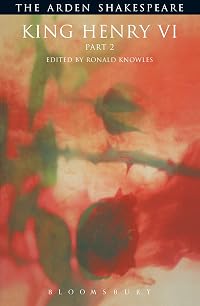
The Arden Shakespeare edition contains most of what you would want for a reading of the play. As is usual with this series it pays some attention to the productions of the play on stage since the 1590's. How different productions can emphasise the particular themes that run through the play. For example the carnivalesque aspects which could be toned down and played for a more gentle comedy instead of a more Rabelaisian saga of violence. The relationship between King Henry and his queen Margaret could either be played as a respectful queen towards her saintly husband, or as a strong willed woman contemptuous of a weak and indecisive monarch who is losing his grip on his crown. Ronald Knowles introduction covers many of the themes and he is particularly strong on providentialism: the belief that God controls events on earth and works in mysterious ways and the great chain of being; everybody has and knows their place in society and should stick to it. These ideas are challenged by the machiavellianism of the nobles and the violent challenges from those lower down the order. He is also very good on the burlesque distortion of society occasioned by Jack Cade's rebellion. He also covers issues relating to text and authorship including the quarto publication of The Contention (this is included in a facsimile reproduction as an appendix). There is a section on sources and of course as you would expect there are copious notes which explain where Shakespeare found his history and where he adapted it to fit into a drama that played well on stage.
This is an early play by Shakespeare, perhaps the first where he was the main author, but his skill and artistry is evident. The animal imagery in evidence throughout may appear a little overplayed in places and repetitive, but it does link the actions within the play and hammers home one of the main ideas that the actions of both the nobles in their lust for power and the lower orders in their lust to destroy is hardly better than the primitive natural world. There are interesting parallels between the actions of the nobles and the ordinary people and the death scenes are well handled. The violence both on and off stage is extreme with a central motif of decapitation and defilement. "Yes, Poll!" says the pirate lieutenant; "Pole!" corrects Suffolk (he is William de la Pole) whose head does not end up on a pole as do other characters in this play, his head ends up in the lap of his lover Queen Margaret (unfortunately not attached to his body). Characterisation is pushed up to another level by Shakespeare; the strident assertive females, the essentially good and holy King, The world weary Duke of Gloucester who can hardly believe what is happening to him and who has a tremendous scene with his wife the lady Eleanor who is just finishing a two day ordeal of public penance; the cunning Duke of York and the bravado of the kingmaker Warwick.
The BBC 1983 television production directed by Jane Howell is a must see for anybody that likes this play. It sticks closely to the text that has come down to us and proves how well the play works in the theatre. Peter Bensen as King Henry is portrayed as a weak king in the traditional sense of being out of touch and fearful of what is going on around him. He needs the support of his Protector the good and sensitive Duke of Gloucester. His new Queen: Margaret played by Julia Foster is a feisty woman intent on asserting her authority in love perhaps with Suffolk, but is able to let him go when her position is threatened. The Jack Cade scenes are excellent as is the fighting at the conclusion, many of the themes highlighted by the Arden edition can be followed in this production.
Shakespeare's Henry VI part 2 shows a world that is gripped by greed where violence always lurks just below the surface and rises up with the least provocation. It is a world where pageantry and order can no longer paper over the cracks, it is a world sinking into barbarism where the strongest survive and religion is only for the foolish. A martial society where the ability to bear arms is of the upmost importance. It is all here in Shakespeare's play and the words on the page can come alive on the stage. Brilliant 5 stars. show less
In the fifteenth century the age of chivalry had long since passed and Shakespeare with his first history play written in the late sixteenth century shows how personal the barbarity had become. Warrior Queens and ambitious wives add to a fatal mix for the Noble families of England.
Lady Eleanor:
Were I a man, a duke and next of blood,
I would remove these tedious stumbling-blocks
And smooth my way upon their headless necks.
Testosterone drives the events forward, which rapidly threaten the king himself with the Duke of York happy to stir up a popular revolt to gain the crown. It was quite simply all or nothing if you didn't get to wear the crown you lost your head. This had always been the case, but show more the wars of the roses between the houses of York and Lancaster threatened to plunge the country into chaos and Shakespeare shows how close it was for the the Lord of Misrule to triumph. If ever the Elizabethan state needed a history lesson as the queen aged with no heir to the throne then Shakespeare provided it. Reading and watching a performance of the play today shows just how well the play works. It makes for great drama and an interesting interpretation of the history of England.
The majority of the play is centred around the the scheming of the powerful Dukes of England as they break into various factions to secure the crown from a king who has proven to be weak in the art of politics and leadership. However interspersed are scenes and one whole act of the blackest of black comedy involving non noble characters, which are also relevant to the plot. In act one it is Eleanor; wife of the Lord Protector to the king and the most powerful man in the kingdom who hires a sinister group of charlatans to prophesy the fate of the king and his advisers. The scene ends with their arrest and puts in train the events that will lead to the Protectors downfall. In act 2 there is the miracle cure claimed by Simpcox which is foiled in the public domaine by the Lord Protector, then there is the trial by combat of Horner the armourer and Peter his assistant. Peter has accused Horner of uttering treasonable words and the king has ordered a trial by combat. These trials usually took place between men of noble birth and Peter and Horner are provided with long poles and sandbags as weapons (as befits their station). However Peter kills Horner and this turning upside down of the way things should be is a portent of Jack Cades rebellion in act 4. This starts with the execution of Suffolk at the hands of pirates; dark in the extreme before moving onto a tremendous piece of theatre as Jack Cade acts out a real Lord of Misrule, hanging and ordering the death of innocent people on a whim, stirring up a mob and making a mockery of law and justice. Act 5 starts with the ignominious killing of Cade before the play ends in an orgy of death and destruction as York makes his play for the crown aided by Warwick and Salisbury.
The Arden Shakespeare edition contains most of what you would want for a reading of the play. As is usual with this series it pays some attention to the productions of the play on stage since the 1590's. How different productions can emphasise the particular themes that run through the play. For example the carnivalesque aspects which could be toned down and played for a more gentle comedy instead of a more Rabelaisian saga of violence. The relationship between King Henry and his queen Margaret could either be played as a respectful queen towards her saintly husband, or as a strong willed woman contemptuous of a weak and indecisive monarch who is losing his grip on his crown. Ronald Knowles introduction covers many of the themes and he is particularly strong on providentialism: the belief that God controls events on earth and works in mysterious ways and the great chain of being; everybody has and knows their place in society and should stick to it. These ideas are challenged by the machiavellianism of the nobles and the violent challenges from those lower down the order. He is also very good on the burlesque distortion of society occasioned by Jack Cade's rebellion. He also covers issues relating to text and authorship including the quarto publication of The Contention (this is included in a facsimile reproduction as an appendix). There is a section on sources and of course as you would expect there are copious notes which explain where Shakespeare found his history and where he adapted it to fit into a drama that played well on stage.
This is an early play by Shakespeare, perhaps the first where he was the main author, but his skill and artistry is evident. The animal imagery in evidence throughout may appear a little overplayed in places and repetitive, but it does link the actions within the play and hammers home one of the main ideas that the actions of both the nobles in their lust for power and the lower orders in their lust to destroy is hardly better than the primitive natural world. There are interesting parallels between the actions of the nobles and the ordinary people and the death scenes are well handled. The violence both on and off stage is extreme with a central motif of decapitation and defilement. "Yes, Poll!" says the pirate lieutenant; "Pole!" corrects Suffolk (he is William de la Pole) whose head does not end up on a pole as do other characters in this play, his head ends up in the lap of his lover Queen Margaret (unfortunately not attached to his body). Characterisation is pushed up to another level by Shakespeare; the strident assertive females, the essentially good and holy King, The world weary Duke of Gloucester who can hardly believe what is happening to him and who has a tremendous scene with his wife the lady Eleanor who is just finishing a two day ordeal of public penance; the cunning Duke of York and the bravado of the kingmaker Warwick.
The BBC 1983 television production directed by Jane Howell is a must see for anybody that likes this play. It sticks closely to the text that has come down to us and proves how well the play works in the theatre. Peter Bensen as King Henry is portrayed as a weak king in the traditional sense of being out of touch and fearful of what is going on around him. He needs the support of his Protector the good and sensitive Duke of Gloucester. His new Queen: Margaret played by Julia Foster is a feisty woman intent on asserting her authority in love perhaps with Suffolk, but is able to let him go when her position is threatened. The Jack Cade scenes are excellent as is the fighting at the conclusion, many of the themes highlighted by the Arden edition can be followed in this production.
Shakespeare's Henry VI part 2 shows a world that is gripped by greed where violence always lurks just below the surface and rises up with the least provocation. It is a world where pageantry and order can no longer paper over the cracks, it is a world sinking into barbarism where the strongest survive and religion is only for the foolish. A martial society where the ability to bear arms is of the upmost importance. It is all here in Shakespeare's play and the words on the page can come alive on the stage. Brilliant 5 stars. show less
If we thought there was ridiculous political bickering in the previous Henry VI play, think again; part two takes the drama to a whole other level. Between Suffolk’s machinations with Queen Margaret, Gloucester’s execution and his wife’s witchcraft, the eventual true beginnings of the Yorkist rebellion, and the peoples’ revolution, there’s no end in sight for infighting and betrayal. Starkly contrasted against Henry VI’s seeming passivity and obsession with holiness, the bloodshed that will likely come to fruition as the Yorks take up arms against the crown seems almost inevitable. If we focus on that foreground being laid, the play has much to commend it, but I found myself a bit overwhelmed while reading it – and not show more being at all surprised at the Hollow Crown’s blending of the three Henry VI plays into a more seamless sequence. Yes, it was historically accurate that much was going on besides the machinations around the crown during Henry VI’s reign, but if we’re meant to focus on the coming War of the Roses I could have honestly done without the petty drama of the commoners. Then again, for historical audiences, this accuracy placed them on equal(ish) grounds to the royal bickering and kept in line with the growing concerns and influence of the English commoners during Shakespeare’s time. The other element that stood out (when I could stay focused away from the constant scene jumping) is the rise of two female power players: Queen Margaret and the Duchess of Gloucester. We’ve already seen Jean d’Arc’s rise and fall in the previous play, as well as Margaret having some flirtations with the Duke of Suffolk during her marriage negotiations, and Shakespeare continues this trend. The Duchess’ scenes are decidedly witchy in nature, and even through their brevity show an interesting tone that more modern writers of this historical era (notedly Phillipa Gregory) pick up on and embellish for other women of the era. Margaret, as well, steps further into the spotlight, as she continues to plot with Suffolk, even while asserting her husband’s right to rule independently of a regent or court advisors. Her strong voice is chastised at points (much like Jean d’Arc’s earlier), but we see a seeming stumble towards madness as she speaks at length to her lover’s severed head even as she continues to establish a stronger place in Henry’s court. Grim, but powerful imagery for both, which I expect to see come full circle in the final play of this trilogy. show less
Shakespeare’s histories have always felt less accessible to me than his other work. But I realized the other day that it’s probably because I’m not that familiar with the people involved. What is the musical “Hamilton” if not our version of Shakespeare's histories? It’s a theatrical show based on our own country’s history. Shakespeare's histories are not as easy for us to understand because we they are covering a time period that we don’t always learn about. But during Shakespeare's time everyone knew who those dukes and kings were, just as we know names like George Washington and Abraham Lincoln.
Anyway, all of that to say that these three plays worked much better for me than some of the other histories of his I've show more tackled and I think it’s because I finally made that connection. It was also incredibly helpful to me to watch the Hollow Crown series before reading the plays. It covers all three of these plays although it's called Henry VI Part one and two, it's really a combination of parts 1, 2 and 3.They are so well done and watching those first helped me picture a face with a name while reading the place, which helped me keep all the characters straight.
These plays are part of the eight plays that make up the War of the Roses. Henry VI Part 1 includes the original scene where the characters pick a white or red rose to declare their allegiance. From there it’s a constant stream of battle and betrayal as they all fight for the thrown. Poor King Henry VI is thrust into his role as monarch when he’s only a baby. The death of his father meant a life time watching others attempt to steal his throne. Almost everyone in the plays comes to a bloody end by the final curtain.
A few thoughts:
Margaret was such a bad ass. She was conniving, but she was strong where her husband, King Henry VI, was weak. I have to admire her and she certainly has some of the best lines.
We meet the infamous Richard in these plays. I'd read and seen Richard III before, so reading these gave me a better understanding of his character's background. He’s a delicious villain and one that I loved getting to know.
“Why, I can smile and murder whiles I smile,
And cry 'content' to that which grieves my heart,
And wet my cheeks with artificial tears,
And frame my face for all occasions”
BOTTOM LINE: I ended up loving them. I was surprised by how hooked I got on the War of the Roses drama, but it’s like a soap opera. It’s amazing to see how power seems to corrupt all the touch it. Even those who are not driven with a desire for power are often the easiest to steal power from, because they aren’t as vicious as others. I would definitely read part 1, 2, and 3 back-to-back because they work better as one continuous story. I also highly recommend watching the Hollow Crown series first, but just dive into the plays and enjoy them!
“Suspicion always haunts the guilty mind.”
“For where thou art, there is the world itself,
With every several pleasure in the world,
And where thou art not, desolation.”
“Unbidden guests are often welcomest when they are gone.” show less
Anyway, all of that to say that these three plays worked much better for me than some of the other histories of his I've show more tackled and I think it’s because I finally made that connection. It was also incredibly helpful to me to watch the Hollow Crown series before reading the plays. It covers all three of these plays although it's called Henry VI Part one and two, it's really a combination of parts 1, 2 and 3.They are so well done and watching those first helped me picture a face with a name while reading the place, which helped me keep all the characters straight.
These plays are part of the eight plays that make up the War of the Roses. Henry VI Part 1 includes the original scene where the characters pick a white or red rose to declare their allegiance. From there it’s a constant stream of battle and betrayal as they all fight for the thrown. Poor King Henry VI is thrust into his role as monarch when he’s only a baby. The death of his father meant a life time watching others attempt to steal his throne. Almost everyone in the plays comes to a bloody end by the final curtain.
A few thoughts:
Margaret was such a bad ass. She was conniving, but she was strong where her husband, King Henry VI, was weak. I have to admire her and she certainly has some of the best lines.
We meet the infamous Richard in these plays. I'd read and seen Richard III before, so reading these gave me a better understanding of his character's background. He’s a delicious villain and one that I loved getting to know.
“Why, I can smile and murder whiles I smile,
And cry 'content' to that which grieves my heart,
And wet my cheeks with artificial tears,
And frame my face for all occasions”
BOTTOM LINE: I ended up loving them. I was surprised by how hooked I got on the War of the Roses drama, but it’s like a soap opera. It’s amazing to see how power seems to corrupt all the touch it. Even those who are not driven with a desire for power are often the easiest to steal power from, because they aren’t as vicious as others. I would definitely read part 1, 2, and 3 back-to-back because they work better as one continuous story. I also highly recommend watching the Hollow Crown series first, but just dive into the plays and enjoy them!
“Suspicion always haunts the guilty mind.”
“For where thou art, there is the world itself,
With every several pleasure in the world,
And where thou art not, desolation.”
“Unbidden guests are often welcomest when they are gone.” show less
This installment of the Henry VI trilogy turns up the body count as various factions jostle for power. Duke Humphrey of Gloucester, the King’s uncle and the protector of the realm, is seen as having too much power, so he is dispatched with extreme prejudice. The Queen’s very good friend the Duke of Suffolk is next. And then John Cade, who claims to be descended of the Mortimers, stages an uprising. And THEN the Duke of York, who was managing the King’s troops in Ireland, decides to stake his own claim to the throne. All seem to agree that Henry is more of a preacher than a prince… will he survive this treason?
It took me more than five months to finish this play (March to August 2021), which is at least partly attributable to the show more state of my brain during the global pandemic. But the play itself is a bit hard to get through: lots of talking heads and opportunities for the mind to wander. I think I have to watch The Hollow Crown again to get more people to hold in my head before proceeding to Henry VI, Part 3. show less
It took me more than five months to finish this play (March to August 2021), which is at least partly attributable to the show more state of my brain during the global pandemic. But the play itself is a bit hard to get through: lots of talking heads and opportunities for the mind to wander. I think I have to watch The Hollow Crown again to get more people to hold in my head before proceeding to Henry VI, Part 3. show less
Yes, there are way too many Dukes in this play, and they are not sufficiently differentiated. Reading this, you get the feeling it's like one of those old "Masterpiece Theatre" miniseries, and you really wish that Alistair Cooke were around to give you some tidy and well-spoken background info. Not to mention the fact that the central character Henry VI probably should never have been king in the first place. Given Queen Elizabeth's political sensitivity in the 1590s, Shakespeare had to be careful not to impugn the entire concept of inherited monarchy.
That said, "Henry VI Part II" contains a number of very interesting things, and I was tempted to give it four stars. For one thing, the Queen - Margaret of Anjou - is a great character, show more one of the best Shakespearean villainesses. It's a well-written part, with enough depth that on a certain level you have to sympathize with her plight, particularly her infidelity. I mean, it's not _her_ fault that she was married off to such a schlub as King Henry VI.
Then there's the whole Jack Cade rebellion, which is portrayed with a lot of gusto, even if Cade is presented in a one-sided manner as an ignorant demogogue. In some ways, the episode is eerily reminiscent of some 20th century dictators. Oh, the fickle mob!
And this is play that contains on the most famous of all Shakespearean tags, "The first thing we do, let's kill all the lawyers." Contrary to what is sometimes assumed, the Bard himself was NOT sympathetic to that idea: clearly, lawyers and clerks were among the most important of his fan base in the early 1590s when he wrote this play at the start of his career.
Of course, Shakespeare's chronicle plays bear the same relationship to the "real history" of 15th century England as Oliver Stone's films do the history of our own time, but that doesn't mean that they can't be appreciated on their own merits. show less
That said, "Henry VI Part II" contains a number of very interesting things, and I was tempted to give it four stars. For one thing, the Queen - Margaret of Anjou - is a great character, show more one of the best Shakespearean villainesses. It's a well-written part, with enough depth that on a certain level you have to sympathize with her plight, particularly her infidelity. I mean, it's not _her_ fault that she was married off to such a schlub as King Henry VI.
Then there's the whole Jack Cade rebellion, which is portrayed with a lot of gusto, even if Cade is presented in a one-sided manner as an ignorant demogogue. In some ways, the episode is eerily reminiscent of some 20th century dictators. Oh, the fickle mob!
And this is play that contains on the most famous of all Shakespearean tags, "The first thing we do, let's kill all the lawyers." Contrary to what is sometimes assumed, the Bard himself was NOT sympathetic to that idea: clearly, lawyers and clerks were among the most important of his fan base in the early 1590s when he wrote this play at the start of his career.
Of course, Shakespeare's chronicle plays bear the same relationship to the "real history" of 15th century England as Oliver Stone's films do the history of our own time, but that doesn't mean that they can't be appreciated on their own merits. show less
Henry VI, Part 2 is infinitely better than Part 1 with numerous themes that can be explored in depth and the pace of a real page-turner. It ranks in my book as one of Shakespeare's best and most interesting works.
The play deals with the reign of Henry VI, whose weak leadership is confronted by the political intrigues of all of those around him. He is surrounded by a real nest of vipers with everyone against everyone. The play is very political in nature and finds an echo in our own political turbulence today. Looking back at Shakespeare's time, it also has a lot to say about the evolution of law, evidence and trials.
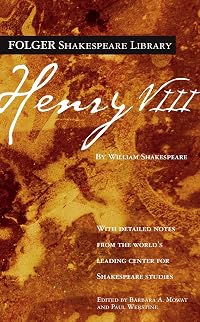
The Folger Library e-book is wonderful with convenient access to footnotes. This edition also contains better than show more average essays about the play including thought-provoking summaries of the books included in the section on Further Reading. show less
The play deals with the reign of Henry VI, whose weak leadership is confronted by the political intrigues of all of those around him. He is surrounded by a real nest of vipers with everyone against everyone. The play is very political in nature and finds an echo in our own political turbulence today. Looking back at Shakespeare's time, it also has a lot to say about the evolution of law, evidence and trials.
The Folger Library e-book is wonderful with convenient access to footnotes. This edition also contains better than show more average essays about the play including thought-provoking summaries of the books included in the section on Further Reading. show less
Members
- Recently Added By
Lists

Favorite Shakespeare plays?
37 works; 45 members

Vivat Rex
13 works; 1 member

Stage Plays/Screenplays/Dialogues/Anything Dialogue-Storytelling Related
81 works; 2 members

Greatest Books, allegedly
484 works; 9 members
Essential/Recognized Stage Plays
115 works; 4 members

'Books You Can't Live Without: The Top 100', The Guardian, 2007
156 works; 7 members
Author Information

6,165+ Works 443,866 Members
William Shakespeare, 1564 - 1616 Although there are many myths and mysteries surrounding William Shakespeare, a great deal is actually known about his life. He was born in Stratford-Upon-Avon, son of John Shakespeare, a prosperous merchant and local politician and Mary Arden, who had the wealth to send their oldest son to Stratford Grammar School. show more At 18, Shakespeare married Anne Hathaway, the 27-year-old daughter of a local farmer, and they had their first daughter six months later. He probably developed an interest in theatre by watching plays performed by traveling players in Stratford while still in his youth. Some time before 1592, he left his family to take up residence in London, where he began acting and writing plays and poetry. By 1594 Shakespeare had become a member and part owner of an acting company called The Lord Chamberlain's Men, where he soon became the company's principal playwright. His plays enjoyed great popularity and high critical acclaim in the newly built Globe Theatre. It was through his popularity that the troupe gained the attention of the new king, James I, who appointed them the King's Players in 1603. Before retiring to Stratford in 1613, after the Globe burned down, he wrote more than three dozen plays (that we are sure of) and more than 150 sonnets. He was celebrated by Ben Jonson, one of the leading playwrights of the day, as a writer who would be "not for an age, but for all time," a prediction that has proved to be true. Today, Shakespeare towers over all other English writers and has few rivals in any language. His genius and creativity continue to astound scholars, and his plays continue to delight audiences. Many have served as the basis for operas, ballets, musical compositions, and films. While Jonson and other writers labored over their plays, Shakespeare seems to have had the ability to turn out work of exceptionally high caliber at an amazing speed. At the height of his career, he wrote an average of two plays a year as well as dozens of poems, songs, and possibly even verses for tombstones and heraldic shields, all while he continued to act in the plays performed by the Lord Chamberlain's Men. This staggering output is even more impressive when one considers its variety. Except for the English history plays, he never wrote the same kind of play twice. He seems to have had a good deal of fun in trying his hand at every kind of play. Shakespeare wrote 154 sonnets, all published on 1609, most of which were dedicated to his patron Henry Wriothsley, The Earl of Southhampton. He also wrote 13 comedies, 13 histories, 6 tragedies, and 4 tragecomedies. He died at Stratford-upon-Avon April 23, 1616, and was buried two days later on the grounds of Holy Trinity Church in Stratford. His cause of death was unknown, but it is surmised that he knew he was dying. (Bowker Author Biography) show less
Some Editions
Series


Belongs to Publisher Series
Work Relationships
Is contained in
The complete works of William Shakespeare : reprinted from the First Folio (volume 7 of 13) by William Shakespeare
Has the adaptation
Was inspired by
Has as a supplement
Has as a student's study guide
Common Knowledge
- Canonical title
- Henry VI, Part 2
- Original title
- The Second Part of Henry the Sixth
- Alternate titles
- King Henry VI, Part 2; 2 Henry VI
- Original publication date
- 1594 (Quarto) (Quarto); 1600 (Quarto) (Quarto); 1619 (Quarto) (Quarto); 1623 (Folio) (Folio)
- People/Characters
- Henry VI, King of England; Humphrey, Duke of Gloucester; Henry Beaufort (Bishop of Winchester, Cardinal Beaufort); Richard Plantagenet, 3rd Duke of York; Edward IV, King of England; Richard III, King of England (show all 22); Edmund Beaufort, Duke of Somerset; William de la Pole, 1st Duke of Suffolk; Humphrey Stafford, Duke of Buckingham; Richard Neville, 16th Earl of Warwick (Warwick the Kingmaker); Richard Neville, Earl of Salisbury; Thomas, Lord Clifford; Young Clifford (John); Lord Scales; James Fiennes, Lord Say; Matthew Goffe; Sir Humphrey Stafford; William Stafford; Sir John Stanley; Jack Cade; Margaret of Anjou; Eleanor Cobham, Duchess of Gloucester
- Important events
- 15th century; Middle Ages
- First words
- As by your high imperial majesty
I had in charge at my depart for France,
As procurator to your excellence,
To marry Princess Margaret for your grace,
So, in the famous ancient city, Tours,
In presence of the Kings of France and Sicil,
The Dukes of Orleans, Calaber, Bretagne and Alencon,
Seven earls, twelve barons and twenty reverend bishops,
I have perform'd my task and was espoused:
And humbly now upon my bended knee,
In sight of England and her lordly peers,
Deliver up my title in the queen
To your most gracious hands, that are the substance
Of that great shadow I did represent;
The happiest gift that ever marquess gave,
The fairest queen that ever king received. - Last words
- (Click to show. Warning: May contain spoilers.)Sound drums and trumpets, and to London all:
And more such days as these to us befall! - Publisher's editor
- Norman Sanders (New Penguin Shakespeare)
Classifications
Statistics
- Members
- 1,124
- Popularity
- 22,570
- Reviews
- 29
- Rating
- (3.60)
- Languages
- 14 — Catalan, English, English (Middle), Finnish, French, German, Italian, Norwegian (Bokmål), Norwegian, Polish, Portuguese, Spanish, Swedish, Turkish
- Media
- Paper, Audiobook, Ebook
- ISBNs
- 107
- UPCs
- 2
- ASINs
- 44