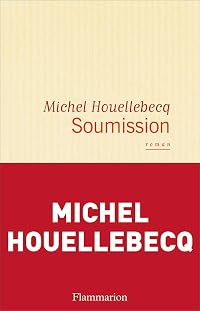
Submission
by Michel Houellebecq
On This Page
Description
In a near-future France, François, a middle-aged academic, is watching his life slowly dwindle to nothing. His sex drive is diminished, his parents are dead, and his lifelong obsession--the ideas and works of the novelist Joris-Karl Huysmans--has led him nowhere. In a late-capitalist society where consumerism has become the new religion, François is spiritually barren, but seeking to fill the vacuum of his existence. And he is not alone. As the 2022 Presidential election approaches, two show more candidates emerge as favorites: Marine Le Pen of the Front National, and Muhammed Ben Abbes of the nascent Muslim Fraternity. Forming a controversial alliance with the mainstream parties, Ben Abbes sweeps to power, and overnight the country is transformed. Islamic law comes into force: women are veiled, polygamy is encouraged and, for François, life is set on a new course. show lessTags
Recommendations























Member Recommendations
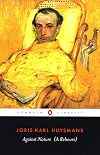
JuliaMaria In "Unterwerfung" geht es um einen Professor der Literaturwissenschaften mit Schwerpunkt "Huysman". Entsprechend wird auch viel über Huysman gesprochen.
40
gianoulinetti Sul tema della sottomissione della donna all'uomo


Member Reviews
Above our heads the linden branches stirred in the breeze. Just then, in the distance, I heard a soft, muffled noise like an explosion.
This wasn't the dystopia I had expected. Scandalous -- such was the domestic response to this alleged fragmentation grenade. Set a few years in the future, the Muslim Brotherhood in France forms a coalition and becomes ruling party -- but what exactly follows? Changes, for sure, but ones that often elude the eye. That is, however, from a man's perspective. Women appear eased into the margins, out of sight and somewhat blurred. The internet and supermarkets still maintain us, meet our needs and desires with a formal clumsiness: just like Amazon. Weather patterns feature in the novel. Maybe our trends in show more civilization and ontology are just as capricious. This novel is more about the life-cycle of ideas rather than Sharia or the more extreme notions: stonings, genital mutilation etc. There are always times when I read Houellebecq that I think-- wait, am I like that? H succeeds in prodding us to consider our self-deceptions and I'm truly thankful for that. This may disappoint some, but I found it to be remarkable. 4.8 stars show less
This wasn't the dystopia I had expected. Scandalous -- such was the domestic response to this alleged fragmentation grenade. Set a few years in the future, the Muslim Brotherhood in France forms a coalition and becomes ruling party -- but what exactly follows? Changes, for sure, but ones that often elude the eye. That is, however, from a man's perspective. Women appear eased into the margins, out of sight and somewhat blurred. The internet and supermarkets still maintain us, meet our needs and desires with a formal clumsiness: just like Amazon. Weather patterns feature in the novel. Maybe our trends in show more civilization and ontology are just as capricious. This novel is more about the life-cycle of ideas rather than Sharia or the more extreme notions: stonings, genital mutilation etc. There are always times when I read Houellebecq that I think-- wait, am I like that? H succeeds in prodding us to consider our self-deceptions and I'm truly thankful for that. This may disappoint some, but I found it to be remarkable. 4.8 stars show less
I can’t decide if this novel is irresponsible race-baiting or a clever commentary on the culture war. It’s probably both. In Submission‘s 2022, a moderate Muslim candidate becomes president of France and remakes French society along moderate Islamic lines – which are not all that moderate. In a word, the patriarchy is back. Women can no longer work. The narrator is a professor at a Parisian university, who is forced to retire when the new regime takes over. While the new government greatly reduces crime, it is at the cost of women’s freedoms. Professors are “bribed” back into their positions by finding them biddable female students as wives. Which, to be fair, is not how Islam works. It is, however, how patriarchy works. show more And that’s definitely one of the unacknowledged planks of the right-wing adherents of the “culture war”. They hate Muslims. But they want women back in the kitchen and no brown people in sight. But I’m not sure this novel is commenting on them, and I don’t think Islam is a good vehicle to make that point. But then France has a different reaction to its Muslim citizens than the UK, and I grew up in the Middle East so I’ve lived in actual Islamic countries, and Houellebecq’s presentation of Islam is hopelessly simplified, even though he provides a character to actually explain the religion. There’s also an unacknowledged issue here. I’ve seen it in the real world. In Houellebecq’s France, women can still study, but they cannot work. So their studies are worthless. But those women don’t want their daughters to suffer the same fate, so they agitate for jobs. It’s what’s been happing in the Gulf states for the past 30 years. Houllebecq’s interpretation of an Islamic Europe is unsustainable. You can’t disenfranchise half of the population and expect that to continue unopposed. Houellebecq is a controversial figure, but much of the controversy he has manufactured himself. Submission is the sort of novel that will upset people, but it’s not really a thought experiment. it’s a piss-take. Houellebecq is upsetting the people he’s taking the piss out of. Seems fair to me. show less
"'They…' I was dumbstruck. 'They're acting as if nothing's going on.'" (pg. 51)
I decided to read this book not only because there was some buzz about it a while ago (I'm late to the zeitgeist party, as ever…) but because it seemed appropriate in light of the French presidential election results just a few days ago, a significant part of which revolved around the threat of Islam and immigration to the values of the Republic.
It is often noted how eerie it was that Submission was first published on the very day that Charlie Hebdo was attacked by Islamic terrorists in 2015, a coincidence made even more intriguing by the fact that Michel Houellebecq, Submission's author, was mentioned on that magazine's front page the same day. Reading show more the book now in May 2017, days after the election, the eeriness is only heightened by realizing how much Houellebecq has gotten right so far…
Set in 2022, the book tells us how, in 2017, the National Front makes it into the run-offs before the left is voted back in (pg. 26). Everyone in politics backs this leftist president, from across the political spectrum, just because they are against the National Front (pg. 123). Either Houellebecq is prescient, or he's just being cynical and the real 2017 election happened to contain everything of which a political cynic might conceive. The only thing Houellebecq doesn't predict in his book is a prominent member of the unpopular outgoing socialist administration – a corporate banker, left-winger and career bureaucrat – running as an 'outsider' and a 'centrist' and winning on that platform. But maybe that would have been too absurd even for Houellebecq's satire.
From then on, we progress to 2022 and the insidious plan by Islamic parties to seize power. It sounds absurd before you read it, but the subtle ways Houellebecq unpacks it makes you realize it is all frighteningly conceivable. And it's not a violent overthrow through terrorism. Contributors include the undermining of the classic Western patriarchy (pg. 31), the dimming of the natural star of women through aggressive feminism (pp14-15), concerns about the education system (pg. 68), Saudi and Qatari funding, the "widening gap… between the people and those who claimed to speak for them, the politicians and journalists" (pg. 94) and, perhaps most scarily and damagingly, the 'moderate' Muslims who just seem so reasonable in establishing a two-tier society where Muslims abide by sharia and the rest abide by secular law. Houellebecq is never excitable or alarmist, which makes the 'power grab' all the more disturbing, for it is not so much a grab as a docile handover.
You see, the book is not really about the threat of Islam but the weakness of the West. It is the death of the West and the shunting of the sickly corpse aside by an aggressive, vibrant and wealthy alternative. How easily and believably the Muslim government of Submission takes over has less to do with the cunning of the Islamists and more to do with the moribund, virtueless French, evidenced through our protagonist and narrator. "Europe had reached a point of such putrid decomposition that it could no longer save itself, any more than fifth-century Rome could have done" (pp230-1).
By the end of the novel, one almost (almost) feels like the Muslims of Submission are the ones in the right (and were it not for their treatment of women, they might well be). A society and culture and civilization that is not only unwilling to defend itself from overthrow but actively encourages elements that contribute to its own weakness (in Houellebecq's view, these include feminism, Western apologetics and mass immigration) is not one you feel inclined to weep for. And it's not just about France. France, perhaps, is an easy target given the terrorist attacks they have endured and the joke presidents they elect and the immigration they encourage in deference to Frau Merkel and the EU – after all, they are the culture that tried to turn cuckoldry into an art form – but the problems and weaknesses evident in Submission could apply to just about any Western country. It is important to stress that the book is not a Lament for France, but a Lament for the West.
Elsewhere, the book remains resolutely French – there's a gratuitous expenditure of words on things like food, leisure, pretentious literary criticism and anal sex – and it is heartening that there are still many that consider themselves so. But something's on the march in France, and I don't think it's Macron's bland and asinine En Marche. show less
I decided to read this book not only because there was some buzz about it a while ago (I'm late to the zeitgeist party, as ever…) but because it seemed appropriate in light of the French presidential election results just a few days ago, a significant part of which revolved around the threat of Islam and immigration to the values of the Republic.
It is often noted how eerie it was that Submission was first published on the very day that Charlie Hebdo was attacked by Islamic terrorists in 2015, a coincidence made even more intriguing by the fact that Michel Houellebecq, Submission's author, was mentioned on that magazine's front page the same day. Reading show more the book now in May 2017, days after the election, the eeriness is only heightened by realizing how much Houellebecq has gotten right so far…
Set in 2022, the book tells us how, in 2017, the National Front makes it into the run-offs before the left is voted back in (pg. 26). Everyone in politics backs this leftist president, from across the political spectrum, just because they are against the National Front (pg. 123). Either Houellebecq is prescient, or he's just being cynical and the real 2017 election happened to contain everything of which a political cynic might conceive. The only thing Houellebecq doesn't predict in his book is a prominent member of the unpopular outgoing socialist administration – a corporate banker, left-winger and career bureaucrat – running as an 'outsider' and a 'centrist' and winning on that platform. But maybe that would have been too absurd even for Houellebecq's satire.
From then on, we progress to 2022 and the insidious plan by Islamic parties to seize power. It sounds absurd before you read it, but the subtle ways Houellebecq unpacks it makes you realize it is all frighteningly conceivable. And it's not a violent overthrow through terrorism. Contributors include the undermining of the classic Western patriarchy (pg. 31), the dimming of the natural star of women through aggressive feminism (pp14-15), concerns about the education system (pg. 68), Saudi and Qatari funding, the "widening gap… between the people and those who claimed to speak for them, the politicians and journalists" (pg. 94) and, perhaps most scarily and damagingly, the 'moderate' Muslims who just seem so reasonable in establishing a two-tier society where Muslims abide by sharia and the rest abide by secular law. Houellebecq is never excitable or alarmist, which makes the 'power grab' all the more disturbing, for it is not so much a grab as a docile handover.
You see, the book is not really about the threat of Islam but the weakness of the West. It is the death of the West and the shunting of the sickly corpse aside by an aggressive, vibrant and wealthy alternative. How easily and believably the Muslim government of Submission takes over has less to do with the cunning of the Islamists and more to do with the moribund, virtueless French, evidenced through our protagonist and narrator. "Europe had reached a point of such putrid decomposition that it could no longer save itself, any more than fifth-century Rome could have done" (pp230-1).
By the end of the novel, one almost (almost) feels like the Muslims of Submission are the ones in the right (and were it not for their treatment of women, they might well be). A society and culture and civilization that is not only unwilling to defend itself from overthrow but actively encourages elements that contribute to its own weakness (in Houellebecq's view, these include feminism, Western apologetics and mass immigration) is not one you feel inclined to weep for. And it's not just about France. France, perhaps, is an easy target given the terrorist attacks they have endured and the joke presidents they elect and the immigration they encourage in deference to Frau Merkel and the EU – after all, they are the culture that tried to turn cuckoldry into an art form – but the problems and weaknesses evident in Submission could apply to just about any Western country. It is important to stress that the book is not a Lament for France, but a Lament for the West.
Elsewhere, the book remains resolutely French – there's a gratuitous expenditure of words on things like food, leisure, pretentious literary criticism and anal sex – and it is heartening that there are still many that consider themselves so. But something's on the march in France, and I don't think it's Macron's bland and asinine En Marche. show less
Francois is a literary intellectual in near-future France, living out the typically atomized, hedonistic, and despairing existence of the modern secular man.
Blinkered to the realities of politics and religion for most of his life due to a simple lack of interest, both begin to demand his attention by way of sweeping social and political change in the country, particularly in the form of an ascendant Islamic party and presidential candidate. Academic acquaintances clue him in to the historical and political significance of the events unfolding around him.
The era of dominant liberal politics is coming to an end in France as the traditional liberal-left and liberal-right fade away, and a nativist right and Islamist right become the show more dominant players. This is explained as being the obvious consequence of secularism, which, lacking a potent vision of reality that can inspire men, is impotent to compel them to reproduce. The future will belong, inevitably, to the religionists.
Francois' academic muse is Huysman, a 19th century author who eventually converted to Catholicism and joined a monastery. Francois loves the man, but finds himself incapable of sympathizing with his religious devotion or his opposition to carnal indulgence, which is pretty much the only thing that keeps Francois from suicide.
The novel does an excellent job of capturing a France haunted by a Christian past, wandering lost in a secular present, and bending in submission to an Islamic future. While I'm typically wary of anything that might be classified 'ideological fiction', Submission manages to be an exhilarating read, despite -- or perhaps because of -- the prominence of its 'ideas'.
This is partly because the ideas it presents -- traditional morality and patriarchy as central to human well-being and a flourishing civilization, for instance -- are so far outside contemporary mainstream discourse, so inimical to it, that hearing them respectfully, even persuasively, presented in novel form is exciting.
As France is becoming a frontier of Islam's current civilizational clash with the west in the west, Submission provides a vital picture of what lies beneath the surface of these events. In embracing secular, atheistic materialism, Europe has committed cultural suicide. The question is now only "what will fill the void?" show less
Blinkered to the realities of politics and religion for most of his life due to a simple lack of interest, both begin to demand his attention by way of sweeping social and political change in the country, particularly in the form of an ascendant Islamic party and presidential candidate. Academic acquaintances clue him in to the historical and political significance of the events unfolding around him.
The era of dominant liberal politics is coming to an end in France as the traditional liberal-left and liberal-right fade away, and a nativist right and Islamist right become the show more dominant players. This is explained as being the obvious consequence of secularism, which, lacking a potent vision of reality that can inspire men, is impotent to compel them to reproduce. The future will belong, inevitably, to the religionists.
Francois' academic muse is Huysman, a 19th century author who eventually converted to Catholicism and joined a monastery. Francois loves the man, but finds himself incapable of sympathizing with his religious devotion or his opposition to carnal indulgence, which is pretty much the only thing that keeps Francois from suicide.
The novel does an excellent job of capturing a France haunted by a Christian past, wandering lost in a secular present, and bending in submission to an Islamic future. While I'm typically wary of anything that might be classified 'ideological fiction', Submission manages to be an exhilarating read, despite -- or perhaps because of -- the prominence of its 'ideas'.
This is partly because the ideas it presents -- traditional morality and patriarchy as central to human well-being and a flourishing civilization, for instance -- are so far outside contemporary mainstream discourse, so inimical to it, that hearing them respectfully, even persuasively, presented in novel form is exciting.
As France is becoming a frontier of Islam's current civilizational clash with the west in the west, Submission provides a vital picture of what lies beneath the surface of these events. In embracing secular, atheistic materialism, Europe has committed cultural suicide. The question is now only "what will fill the void?" show less
Submission was published on the same day as the Charlie Hebdo shootings in 2015. That tragedy only deepens Houellebecq's novel, which could not be more relevant to questions of cultural identity and the individual's relationship to changes in the surrounding society. And even though the book is deeply political - the French left vs the right, nativism vs the existing power structure, secularism vs Catholicism vs Islam, traditional French national identity vs new possibilities, the Enlightenment vs pre-Enlightenment thought - fundamentally Houellebecq's classical preoccupation with the modern self remains: which direction does the contemporary man turn to for truth in a post-everything world? Once every modern source of authority is show more suspect or discredited, what's left to answer the pull of ancient dogma? Furthermore, by returning to religious certainties, what exactly would be lost?
The title is a triple play on words: the individual's submission to society, France's submission to the changing currents of history, and of course the word "Islam" simply means "submission" to God's will. Houellebecq's protagonists are always adrift in some sense, and so here is François, an academic who has dedicated his whole career to the study of the Catholic writer Huysmans, whose journey from decadent author to devoutly religious monk is an explicit model for the audience. France in 2022 is undergoing a political crisis loosely inspired by real life, where the collapse of trust in the traditional left (Socialists) and right (Union For a Popular Movement) parties has left a vacuum for the National Front (a real French nationalist party), and the Muslim Brotherhood (a fictional "moderate" Islamist party). Terrorist violence accelerates the polarization of the electorate, but as the left and the right hate the nationalists even more than they hate each other, an accord is reached and they throw the election to the Muslim Brotherhood, who begins to transform French society in accordance with a relaxed interpretation of Sharia. François then has to decide whether to adapt to the new order, or to refuse, and thereby defend... something.
Some political aspects of the novel translate to America better than others. There has always been, and probably will always be, a sizable percentage of Americans who have conveniently forgotten that their own ancestors did not spring up from the banks of the Mississippi, just as there is always a hefty contingent who fetishize anything new or different. Many real French politicians such as Hollande, Sarkozy, and Le Pen appear, and so the comparisons to their "corresponding" American figures like Barack Obama or Donald Trump are inevitable. We might not have a two-round Presidential runoff electoral system, but the idea that Democrats and Republicans actually have a shared interest in trading off control as a duopoly at the expense of responding to the public interest has a long history. Furthermore, the broad sense that the great social revolutions of the Sixties "failed" in some important way - the varying degrees of contempt for hippies here is matched for soixante-huitards in France - is something that is shared not just between the US and France but across the West more generally.
Still, let's not exaggerate. Americans might not be perfectly welcoming of every single potential immigrant on planet Earth, but the US is definitely among the more receptive countries in the world, and our two-party system gives nativists at best only partial control of one major party. Also the second half of the novel discusses international relations topics like expansion of the European Union that are not quite as touchy for Americans, though agreements like NAFTA and TPP do attract their fair share of derision and sense of selling out. Above all I think that most immigrants to the US come because they like the system of the US, not because they want to transform the US into whatever they just left, particularly not some kind of Sharia law dystopia. France offers us parallels, but not necessarily points of intersection (though Israel, also mentioned in the novel, is a closer comparison). So while it's very easy to read the novel as a universal anti-immigrant warning, along the lines of the infamous The Camp of the Saints, beyond the general sense of an incompetent establishment unable to respond to a major change the political analogies are limited.
However, all that political stuff is basically just setup for the main character's personal crisis, as well as a way to talk about how that relates to his culture. François is the steretypically Houellebecq-ian emotionally distant, anhedonic narrator who has surprisingly little invested in the world around him, beyond the satisfaction of immediate needs, but this time rather than merely being bored with his career, his reading, his girlfriend, etc, this time it's France itself. In his words, upon watching the Presidential debates, "It may well be impossible for people who have lived and prospered under a given social system to imagine the point of view of those who feel it offers them nothing, and who can contemplate its destruction without any particular dismay." This might strike some readers as typically French navel-gazing on top of typically Houellebecq-ian distemper, and indeed François, as you'd expect, gets heavy into the Nietzsche:
"And yet I knew I was close to suicide, not out of despair or even any special sadness, simply from the degradation of 'the set of functions that resist death', in Bichat's formulation. The mere will to live was clearly no match for the pains and aggravations that punctuate the life of the average Western man. I was incapable of living for myself, and who else did I have to live for? Humanity didn't interest me – it disgusted me, actually. I didn't think of human beings as my brothers, especially not when I looked at some particular subset of human beings, such as the French, or my former colleagues. And yet, in an unpleasant way, I couldn't help seeing that these human beings were just like me, and it was this very resemblance that made me avoid them."
One of the great ironies of modern Western culture is that while it is extremely individualistic, in the sense that people are encouraged to think for themselves, and especially to think OF themselves, there are more forces pulling everyone in various directions, not all of them pleasant, than ever before. It's difficult for most people to feel strongly about abstract concepts like capitalism, religion, tradition, and so forth, without particularized connections to each life as it is lived. From the inside, each person would like to see themselves as in control of their destinies. But there will always be something inside of most that desires to be part of a harmonious whole, in order to get those feelings of warm connection we imagine the people of the past felt. A linear view of history seems to show a straightforward march up from the simplistic and brutal ideologies of the past, but even if we are at the "End of History", one can't deny that the modern life provides countless opportunities for stimulation without satisfaction or satiation. What if the Enlightenment was a mistake?
To state this so bluntly is to invite controversy, no matter how widely shared this disagreeable feeling might be, which is why I've always been a fan of Houellebecq's plain, unadorned presentation style, which gives his concerns a protagonist to present them without drenching them in bathos. François himself is impossible to root for - his struggle at the end to convert to Islam in order to continue his worthless academic career, marry underage girls, and enjoy higher social status is no one's idea of an underdog success story - but his basic problems are easily relatable. In fact, weighty and touchy thought experiments, like the collapse and abandonment of the French cultural tradition under the social pressures brought by Muslim immigration due to a lack of conviction by white Frenchmen, are almost enhanced by François' disagreeableness.
For example, once again a Houellebecq protagonist has issues loving the woman or women in his life. In Submission she's named Myriam, but she could be the sexually voracious yet forever unknowable love interest character in any of his novels. Being Jewish, she leaves France for Israel fairly early in the novel, worried by escalating anti-semitic violence. François, despite not truly liking her all that much, is actually sad once she's gone, in an illustration of not knowing what you have until it's gone: "As soon as we hung up, I was overwhelmed by a terrible loneliness, and I knew that I'd never have the courage to call Myriam again. The feeling of closeness when we talked on the phone was too violent, and the void that came afterwards too cruel."
I can recognize that feeling, as I suspect many can. His sudden mournful outburst, coming from a place he doesn't understand, actually enhances his loss of her. After all, how often do we truly understand where our own feelings come from? Our goal is to have a love deeply rooted in another person, who simultaneously deeply loves us, but what if that just doesn't happen? This also affects his realization that she's leaving France for another country with a more coherent identity. Israel's 2015 election offers a neat allegory with this book about nativism in politics (and the decidedly non-allegorical exodus of French Jews to Israel in real life in the wake of the Hebdo shootings surely informs Myriam's actions), but as François observes, "there is no Israel for me". Even without a real sense of belonging, he's going to remain in France as it changes, and make a choice about if and how he acquiesces to the new regime.
Man's search for meaning is one of those inexhaustible, evergreen subjects, and in a way a purposeless mope like François is as good an avatar for that search as anyone. After the Muslim Brotherhood wins and decides to change the university system as a main part of their platform, he loses his job. Having devoted his life to the study of an author who decided to become extremely Catholic, François decides at first to follow his path despite his atheism. He visits some of France's ancient shrines and religious structures like Rocamadour, and even attempts to join a monastery in the historically significant town of Martel, where Charles Martel fought off the 8th century Muslims who had recently conquered Spain. He flirts with true religious conversion, but can't take it seriously, as many modern people cannot. He then returns to Paris to discuss returning to a university position with Robert Rediger, a fellow professor who had found that being an advocate for the Islamization of France, a fifth columnist, was actually quite pleasant.
François' dilemma is simple, seen in those terms. What do each of us really have at stake in society? How irreplaceable are our neighbors? What do we really care about cultural heritage, or types of food, or ways of life? What has modernity given us that couldn't be taken away? What does it mean when a sizable percentage of a society has nothing invested in it? And what about the self-interest of becoming a collaborator, with the cushy job, the social status, the multiple wives? Even if François doesn't actually believe in Islam any more than he does in Catholicism, what's so wrong with dhimmitude, submitting to the new order out of that paradigmatic modern trait, greed? Maybe in the end there really isn't anything beyond the self worth sacrificing for. But if that were really true, and the wave of change is a chance to adapt without being reborn, then there's nothing to miss.
And so, after this extremely absorbing and thought-provoking journey of confrontation with change, the book ends before his final decision, flatly and plainly presenting that very same question to the reader:
"I'd be given another chance; and it would be the chance at a second life, with very little connection to the old one. I would have nothing to mourn." show less
The title is a triple play on words: the individual's submission to society, France's submission to the changing currents of history, and of course the word "Islam" simply means "submission" to God's will. Houellebecq's protagonists are always adrift in some sense, and so here is François, an academic who has dedicated his whole career to the study of the Catholic writer Huysmans, whose journey from decadent author to devoutly religious monk is an explicit model for the audience. France in 2022 is undergoing a political crisis loosely inspired by real life, where the collapse of trust in the traditional left (Socialists) and right (Union For a Popular Movement) parties has left a vacuum for the National Front (a real French nationalist party), and the Muslim Brotherhood (a fictional "moderate" Islamist party). Terrorist violence accelerates the polarization of the electorate, but as the left and the right hate the nationalists even more than they hate each other, an accord is reached and they throw the election to the Muslim Brotherhood, who begins to transform French society in accordance with a relaxed interpretation of Sharia. François then has to decide whether to adapt to the new order, or to refuse, and thereby defend... something.
Some political aspects of the novel translate to America better than others. There has always been, and probably will always be, a sizable percentage of Americans who have conveniently forgotten that their own ancestors did not spring up from the banks of the Mississippi, just as there is always a hefty contingent who fetishize anything new or different. Many real French politicians such as Hollande, Sarkozy, and Le Pen appear, and so the comparisons to their "corresponding" American figures like Barack Obama or Donald Trump are inevitable. We might not have a two-round Presidential runoff electoral system, but the idea that Democrats and Republicans actually have a shared interest in trading off control as a duopoly at the expense of responding to the public interest has a long history. Furthermore, the broad sense that the great social revolutions of the Sixties "failed" in some important way - the varying degrees of contempt for hippies here is matched for soixante-huitards in France - is something that is shared not just between the US and France but across the West more generally.
Still, let's not exaggerate. Americans might not be perfectly welcoming of every single potential immigrant on planet Earth, but the US is definitely among the more receptive countries in the world, and our two-party system gives nativists at best only partial control of one major party. Also the second half of the novel discusses international relations topics like expansion of the European Union that are not quite as touchy for Americans, though agreements like NAFTA and TPP do attract their fair share of derision and sense of selling out. Above all I think that most immigrants to the US come because they like the system of the US, not because they want to transform the US into whatever they just left, particularly not some kind of Sharia law dystopia. France offers us parallels, but not necessarily points of intersection (though Israel, also mentioned in the novel, is a closer comparison). So while it's very easy to read the novel as a universal anti-immigrant warning, along the lines of the infamous The Camp of the Saints, beyond the general sense of an incompetent establishment unable to respond to a major change the political analogies are limited.
However, all that political stuff is basically just setup for the main character's personal crisis, as well as a way to talk about how that relates to his culture. François is the steretypically Houellebecq-ian emotionally distant, anhedonic narrator who has surprisingly little invested in the world around him, beyond the satisfaction of immediate needs, but this time rather than merely being bored with his career, his reading, his girlfriend, etc, this time it's France itself. In his words, upon watching the Presidential debates, "It may well be impossible for people who have lived and prospered under a given social system to imagine the point of view of those who feel it offers them nothing, and who can contemplate its destruction without any particular dismay." This might strike some readers as typically French navel-gazing on top of typically Houellebecq-ian distemper, and indeed François, as you'd expect, gets heavy into the Nietzsche:
"And yet I knew I was close to suicide, not out of despair or even any special sadness, simply from the degradation of 'the set of functions that resist death', in Bichat's formulation. The mere will to live was clearly no match for the pains and aggravations that punctuate the life of the average Western man. I was incapable of living for myself, and who else did I have to live for? Humanity didn't interest me – it disgusted me, actually. I didn't think of human beings as my brothers, especially not when I looked at some particular subset of human beings, such as the French, or my former colleagues. And yet, in an unpleasant way, I couldn't help seeing that these human beings were just like me, and it was this very resemblance that made me avoid them."
One of the great ironies of modern Western culture is that while it is extremely individualistic, in the sense that people are encouraged to think for themselves, and especially to think OF themselves, there are more forces pulling everyone in various directions, not all of them pleasant, than ever before. It's difficult for most people to feel strongly about abstract concepts like capitalism, religion, tradition, and so forth, without particularized connections to each life as it is lived. From the inside, each person would like to see themselves as in control of their destinies. But there will always be something inside of most that desires to be part of a harmonious whole, in order to get those feelings of warm connection we imagine the people of the past felt. A linear view of history seems to show a straightforward march up from the simplistic and brutal ideologies of the past, but even if we are at the "End of History", one can't deny that the modern life provides countless opportunities for stimulation without satisfaction or satiation. What if the Enlightenment was a mistake?
To state this so bluntly is to invite controversy, no matter how widely shared this disagreeable feeling might be, which is why I've always been a fan of Houellebecq's plain, unadorned presentation style, which gives his concerns a protagonist to present them without drenching them in bathos. François himself is impossible to root for - his struggle at the end to convert to Islam in order to continue his worthless academic career, marry underage girls, and enjoy higher social status is no one's idea of an underdog success story - but his basic problems are easily relatable. In fact, weighty and touchy thought experiments, like the collapse and abandonment of the French cultural tradition under the social pressures brought by Muslim immigration due to a lack of conviction by white Frenchmen, are almost enhanced by François' disagreeableness.
For example, once again a Houellebecq protagonist has issues loving the woman or women in his life. In Submission she's named Myriam, but she could be the sexually voracious yet forever unknowable love interest character in any of his novels. Being Jewish, she leaves France for Israel fairly early in the novel, worried by escalating anti-semitic violence. François, despite not truly liking her all that much, is actually sad once she's gone, in an illustration of not knowing what you have until it's gone: "As soon as we hung up, I was overwhelmed by a terrible loneliness, and I knew that I'd never have the courage to call Myriam again. The feeling of closeness when we talked on the phone was too violent, and the void that came afterwards too cruel."
I can recognize that feeling, as I suspect many can. His sudden mournful outburst, coming from a place he doesn't understand, actually enhances his loss of her. After all, how often do we truly understand where our own feelings come from? Our goal is to have a love deeply rooted in another person, who simultaneously deeply loves us, but what if that just doesn't happen? This also affects his realization that she's leaving France for another country with a more coherent identity. Israel's 2015 election offers a neat allegory with this book about nativism in politics (and the decidedly non-allegorical exodus of French Jews to Israel in real life in the wake of the Hebdo shootings surely informs Myriam's actions), but as François observes, "there is no Israel for me". Even without a real sense of belonging, he's going to remain in France as it changes, and make a choice about if and how he acquiesces to the new regime.
Man's search for meaning is one of those inexhaustible, evergreen subjects, and in a way a purposeless mope like François is as good an avatar for that search as anyone. After the Muslim Brotherhood wins and decides to change the university system as a main part of their platform, he loses his job. Having devoted his life to the study of an author who decided to become extremely Catholic, François decides at first to follow his path despite his atheism. He visits some of France's ancient shrines and religious structures like Rocamadour, and even attempts to join a monastery in the historically significant town of Martel, where Charles Martel fought off the 8th century Muslims who had recently conquered Spain. He flirts with true religious conversion, but can't take it seriously, as many modern people cannot. He then returns to Paris to discuss returning to a university position with Robert Rediger, a fellow professor who had found that being an advocate for the Islamization of France, a fifth columnist, was actually quite pleasant.
François' dilemma is simple, seen in those terms. What do each of us really have at stake in society? How irreplaceable are our neighbors? What do we really care about cultural heritage, or types of food, or ways of life? What has modernity given us that couldn't be taken away? What does it mean when a sizable percentage of a society has nothing invested in it? And what about the self-interest of becoming a collaborator, with the cushy job, the social status, the multiple wives? Even if François doesn't actually believe in Islam any more than he does in Catholicism, what's so wrong with dhimmitude, submitting to the new order out of that paradigmatic modern trait, greed? Maybe in the end there really isn't anything beyond the self worth sacrificing for. But if that were really true, and the wave of change is a chance to adapt without being reborn, then there's nothing to miss.
And so, after this extremely absorbing and thought-provoking journey of confrontation with change, the book ends before his final decision, flatly and plainly presenting that very same question to the reader:
"I'd be given another chance; and it would be the chance at a second life, with very little connection to the old one. I would have nothing to mourn." show less
When it seems that Marine Le Pen's National Front has an even chance of winning the 2022 French elections, the Socialists and a centre-right party, the UMP, form a coalition with the apparently moderate Muslim Fraternity to make sure of defeating the racist, far-right National Front. The narrator clearly describes the compromises the parties must make, the long-held policies the socialists and the UMP must sacrifice, in order to make a deal. After the coalition wins the election, the Islamic religion and culture subsume French society. Women disappear from public life, the school leaving age is lowered to twelve, social welfare payments are eliminated, only Islamic educational institutions are publicly funded, Jews emigrate en masse, show more and men take multiple wives, some as young as fifteen.
Francois, the narrator, is a professor of literature at the Sorbonne, specialising in Huysmans, best known for Against the Grain, published in 1884, about the decadent life of the wealthy, aristocratic Des Esseintes, who was based partly on the infamous Robert de Montesquiou, who was also a model for Proust's Baron Charlus. Huysmans is a recurring theme in Submission. Francois compares the decadence of contemporary French society to the decadence of Huysmans' time, and the imposition of Islamic religion and culture to Huysmans eventually embracing the Catholic church. In order to keep his job at the Sorbonne, Francois would have to convert to Islam.
This is a comedy, but I gasped before I laughed. Francois is depressed and alienated, and cares for no-one. He is utterly neutral, taking no ethical stand whatsoever, guided only by his own self-interest, but his only interests are eating, drinking, smoking, sex and Huysmans. His colleagues are no better. French culture disappears as every man looks after himself.
Submission is a hugely entertaining and thought-provoking book. Read it. show less
Francois, the narrator, is a professor of literature at the Sorbonne, specialising in Huysmans, best known for Against the Grain, published in 1884, about the decadent life of the wealthy, aristocratic Des Esseintes, who was based partly on the infamous Robert de Montesquiou, who was also a model for Proust's Baron Charlus. Huysmans is a recurring theme in Submission. Francois compares the decadence of contemporary French society to the decadence of Huysmans' time, and the imposition of Islamic religion and culture to Huysmans eventually embracing the Catholic church. In order to keep his job at the Sorbonne, Francois would have to convert to Islam.
This is a comedy, but I gasped before I laughed. Francois is depressed and alienated, and cares for no-one. He is utterly neutral, taking no ethical stand whatsoever, guided only by his own self-interest, but his only interests are eating, drinking, smoking, sex and Huysmans. His colleagues are no better. French culture disappears as every man looks after himself.
Submission is a hugely entertaining and thought-provoking book. Read it. show less
In Submission, Michel Houellebecq imagines a France of the near future where a weakening of familiar political allegiances opens the door for an Islamic party, the Muslin Brotherhood, to seize power. It is 2022, election season, and unrest throughout Europe is making people nervous about the future. France in particular, after years of political bickering and scandal, is ripe for change. Francois, a middle-aged expert on Huysmans, teaches at the Sorbonne. Emotionally and materially selfish, a disillusioned loner intellectual, concerned mainly with his own erotic appetites, Francois observes the changes taking place around him at a sardonic remove, unable and unwilling to commit to anything, interested only insofar as the changes affect show more him, but unconvinced that anything of meaning will actually take place (this is France after all). However, as the Muslim Brotherhood gains traction and is taken seriously as a viable alternative to the traditional parties that have failed again and again, and as their ascent begins to seem not just reasonable but inevitable, even desirable, things happen that compel him to sit up and take notice. The most momentous of these events occurs when his girlfriend Myriam (actually a former student with whom he still sleeps occasionally), follows her family and moves to Israel (Myriam is Jewish). With the loss of the only emotional link to another human being that means anything to him (this is significant because their relationship is driven almost exclusively by sex), Francois begins to drift, even more than usual. Then the Brotherhood assumes power. Almost overnight French society undergoes a revolutionary shift, and Francois finds a life-changing decision thrust upon him by circumstances that, in Houellebecq’s rendition, seem entirely plausible. Submission is a subtle political satire narrated by a self-involved protagonist whom the reader never really grows to like, but who is none the less totally fascinating. Michel Houellebecq has written an absorbing and provocative novel that may leave us untouched emotionally, but which gives us plenty to think about. show less
Members
- Recently Added By
Published Reviews
ThingScore 100
Submission is not a simple provocation. It is a deep, gripping and haunting novel which proves a culmination point of Houellebecq’s work so far and, in my view, a recent high-point for European fiction. I can think of no writer currently working who can get anywhere near Houellebecq’s achievement in finding a fictional way into the darkest and most necessary corners of our time. Nor can I show more think of another writer currently working who would be able to write a novel of this depth, scope and relevance while also making it witty and page-turning.
The most intelligent criticism to date has come from reviewers who have objected to one layer of the novel which relates to the academic specialism of the main character. Francois is a typical Houellebecq leading man: a middle-aged academic whose parents’ deaths have no effect on him, who has short relationships with his younger female students and who since separating from an attractive young Jewish student, with whom he still intermittently has sex, switches to prostitutes though finds his libido insufficiently diverted. When Francois flees the looming chaos in Paris by going to the significantly chosen town of Martel in the south of France he tries to interest himself in Cro-Magnon man. At one point he reflects, “Cro-Magnon man hunted mammoth and reindeer; the man of today can choose between an Auchan and a Leclerc, both supermarkets located in Souillac.” show less
The most intelligent criticism to date has come from reviewers who have objected to one layer of the novel which relates to the academic specialism of the main character. Francois is a typical Houellebecq leading man: a middle-aged academic whose parents’ deaths have no effect on him, who has short relationships with his younger female students and who since separating from an attractive young Jewish student, with whom he still intermittently has sex, switches to prostitutes though finds his libido insufficiently diverted. When Francois flees the looming chaos in Paris by going to the significantly chosen town of Martel in the south of France he tries to interest himself in Cro-Magnon man. At one point he reflects, “Cro-Magnon man hunted mammoth and reindeer; the man of today can choose between an Auchan and a Leclerc, both supermarkets located in Souillac.” show less
added by avatiakh
Houellebecq signaleert een tendens, een kiem, en zijn roman is de broeikas waarin hij het proces versnelt en tot het uiterste doordenkt. Als je zo’n fictie in kort bestek navertelt krijgt dat onvermijdelijk iets karikaturaals, maar binnen deze roman voltrekken de veranderingen zich gestaag, subtiel en in grote lijnen overtuigend. Wat daar ook aan bijdraagt: het is, voor wie ontvankelijk is show more voor zijn humor, weer een echt geestige Houellebecq, de grappigste sinds Platform. show less
added by Jozefus
Lists

Best Contemporary Literary Fiction (Around the Last 30 Years)
400 works; 124 members

Best of French Literature
138 works; 27 members

Best Dystopias
280 works; 277 members

Best 21st Century Books (So Far)
679 works; 86 members

EU Fiction: 1950-2022
223 works; 70 members

Top Five Books of 2015
811 works; 240 members

The Economist Best Fiction 2015
7 works; 1 member

Books Read in 2016
4,666 works; 197 members

Academia in Fiction
158 works; 23 members
International Dublin Literary Award Longlist 2017
147 works; 3 members

Dublin Literary Award Longlist 2017
147 works; 2 members

Llibres que he llegit el 2021
54 works; 1 member

Política - Clásicos
164 works; 2 members

Books Read in 2018
4,360 works; 110 members

To read 2025
5 works; 1 member

contemporary literary fiction list to check out
47 works; 1 member
Author Information

58+ Works 23,241 Members
Michel Houellebecq's first novel, Whatever, was followed by two collections of poetry and a book of essays. He lives in Dublin. (Bowker Author Biography)
Some Editions
Awards and Honors
Awards
Distinctions
The Guardian Book of the Day (2015-09-08)
Series
Belongs to Publisher Series
Llibres Anagrama (12)
dumont taschenbücher (6359)
Work Relationships
Has as a commentary on the text
Common Knowledge
- Canonical title
- Submission
- Original title
- Soumission
- Original publication date
- 2015
- People/Characters
- François; Mohamed Ben Abbes; Marine Le Pen; Robert Rediger
- Important places
- Paris, France; Rocamadour, Occitanie, France
- First words*
- Gedurende alle jaren van mijn naargeestige jeugd bleef Huysmans voor mij een metgezel, een trouwe vriend; nooit voelde ik twijfel, nooit overwoog ik op te geven of me op een ander onderwerp te richten.
- Quotations
- Op zondagochtend was er nooit veel verkeer op de snelweg, het is het moment waarop de samenleving ademt, haar luchtwegen vrijmaakt, het moment waarop haar leden de korte illusie van een individueel bestaan koesteren.
Maar ik besefte heel goed, al jaren zelfs, dat de groeiende kloof en inmiddels zelfs diepe afgrond tussen de bevolking en degenen die spraken in haar naam, politici en journalisten, onherroepelijk tot iets chaotisch, heftigs ... (show all)en onvoorspelbaars moest leiden.
‘En jij, wat ga jij doen? Wat denk je dat er op de universiteit gaat gebeuren?’
Ik liep tot op de drempel met haar mee; ik besefte dat ik er eigenlijk geen flauw idee van had; en ik besefte ook dat dat me geen ene ... (show all)moer kon schelen. Ik kuste haar zachtjes op de lippen en antwoordde toen: ‘Voor mij is er geen Israël.’
All the same, I realized -- I'd known for years -- that the widening gap, now a chasm, between the people and those who claimed to represent them, the politicians and journalists, would necessarily lead to a situation that wa... (show all)s chaotic, violent, and unpredictable. For a long time, France, like all of the other countries of Western Europe, had been drifting toward civil war. (p.92) - Last words*
- (Click to show. Warning: May contain spoilers.)Ik zou nergens spijt van hoeven te hebben.
- Original language
- French
- Canonical DDC/MDS
- 843.92
- Canonical LCC
- PQ2668.O77
*Some information comes from Common Knowledge in other languages. Click "Edit" for more information.
Classifications
Statistics
- Members
- 2,554
- Popularity
- 7,514
- Reviews
- 101
- Rating
- (3.63)
- Languages
- 26 — Armenian, Basque, Bosnian, Catalan, Czech, Danish, Dutch, English, Estonian, Finnish, French, German, Greek, Hebrew, Hungarian, Icelandic, Italian, Norwegian (Bokmål), Polish, Portuguese, Romanian, Russian, Serbian, Spanish, Swedish, Turkish
- Media
- Paper, Audiobook, Ebook
- ISBNs
- 76
- ASINs
- 20