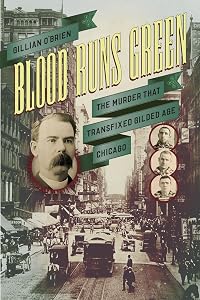
Blood Runs Green: The Murder That Transfixed Gilded Age Chicago
by Gillian O'Brien
Historical Studies of Urban America
On This Page
Description
It was the biggest funeral Chicago had seen since Lincoln ?s. On May 26, 1889, four thousand mourners proceeded down Michigan Avenue, followed by a crowd forty thousand strong, in a howl of protest at what commentators called one of the ghastliest and most curious crimes in civilized history. The dead man, Dr. P. H. Cronin, was a respected Irish physician, but his brutal murder uncovered a web of intrigue, secrecy, and corruption that stretched across the United States and far beyond. Blood show more Runs Green tells the story of Cronin ?s murder from the police investigation to the trial. It is a story of hotheaded journalists in pursuit of sensational crimes, of a bungling police force riddled with informers and spies, and of a secret revolutionary society determined to free Ireland but succeeding only in tearing itself apart. It is also the story of a booming immigrant population clamoring for power at a time of unprecedented change. From backrooms to courtrooms, historian Gillian O ?Brien deftly navigates the complexities of Irish Chicago, bringing to life a rich cast of characters and tracing the spectacular rise and fall of the secret Irish American society Clan na Gael. She draws on real-life accounts and sources from the United States, Ireland, and Britain to cast new light on Clan na Gael and reveal how Irish republicanism swept across the United States. Destined to be a true crime classic, Blood Runs Green is an enthralling tale of a murder that captivated the world and reverberated through society long after the coffin closed. show lessTags
Recommendations

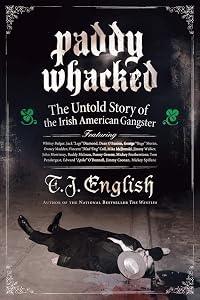







Member Reviews
A large portion of this work concerns itself with the three Irish societies that held sway in Chicago during the Gilded Ages. Clan na Gael, the secret Irish republican society founded in New York in 1867, sought to bring about Irish independence from Britain with violence. The Ancient Order of Hibernians, established in New York in 1836, served as an Irish Catholic fraternal organization. The third, the Land League of America, founded in 1880, vouchsafed support to the Irish Land League and, later, the Irish Parliamentary Party.
Like other immigrant communities of the time, the Irish population in Chicago faced many challenges, but the Irish community shared both a strong religion and an antagonism toward England. And, in a time when the show more populace was largely anti-immigrant and anti-Irish, the secret societies were often places where the Irish could find friends, support, and even jobs. Many men belonged to all three organizations and, at times, there were brutal conflicts between their high-ranking members and fractures within the groups themselves.
Although they each belonged to different sectors of Clan na Gael, Doctor Patrick Henry Cronin became a persistent, outspoken opponent of Alexander Sullivan. Cronin believed that Sullivan was more concerned with promoting himself than with securing freedom for the Irish. As the split widened, Cronin feared for his life, believing some sort of a plot against him existed and, finally, allegations, published in the newspapers, became public. Tensions mounted; Doctor Cronin disappeared.
Weeks later, the body of Patrick Cronin surfaced, and it was determined that his injuries had been sustained during a prolonged attack with multiple instruments, including an ice pick. The funeral of the murdered doctor brought Chicago to a standstill and sparked a widespread police investigation capped by a protracted trial.
Although the murder is, purportedly, at the heart of the narrative, there is much intriguing history detailed here. Perhaps the extensive backstory regarding the secret societies and the history of Chicago are important for understanding the motivation behind the murder, but there are times that the reader may feel as if Doctor Cronin’s death is far less important than the actions of the societies. The unfortunate result is that the backstory/history bogs down the telling of the tale and often relegates the murder to something other than the primary focus of the narrative.
Voluminous notes, a listing of organization and terms, and an extensive bibliography of both primary and secondary sources all follow the narrative, providing both information and resource information for readers. show less
Like other immigrant communities of the time, the Irish population in Chicago faced many challenges, but the Irish community shared both a strong religion and an antagonism toward England. And, in a time when the show more populace was largely anti-immigrant and anti-Irish, the secret societies were often places where the Irish could find friends, support, and even jobs. Many men belonged to all three organizations and, at times, there were brutal conflicts between their high-ranking members and fractures within the groups themselves.
Although they each belonged to different sectors of Clan na Gael, Doctor Patrick Henry Cronin became a persistent, outspoken opponent of Alexander Sullivan. Cronin believed that Sullivan was more concerned with promoting himself than with securing freedom for the Irish. As the split widened, Cronin feared for his life, believing some sort of a plot against him existed and, finally, allegations, published in the newspapers, became public. Tensions mounted; Doctor Cronin disappeared.
Weeks later, the body of Patrick Cronin surfaced, and it was determined that his injuries had been sustained during a prolonged attack with multiple instruments, including an ice pick. The funeral of the murdered doctor brought Chicago to a standstill and sparked a widespread police investigation capped by a protracted trial.
Although the murder is, purportedly, at the heart of the narrative, there is much intriguing history detailed here. Perhaps the extensive backstory regarding the secret societies and the history of Chicago are important for understanding the motivation behind the murder, but there are times that the reader may feel as if Doctor Cronin’s death is far less important than the actions of the societies. The unfortunate result is that the backstory/history bogs down the telling of the tale and often relegates the murder to something other than the primary focus of the narrative.
Voluminous notes, a listing of organization and terms, and an extensive bibliography of both primary and secondary sources all follow the narrative, providing both information and resource information for readers. show less
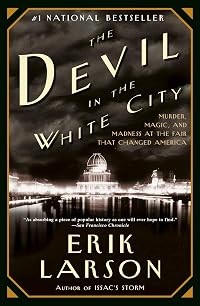
Thoroughly researched & well written. Information about the Irish republican movement here and in Ireland and about secret societies and Chicago politics.not enough characterization to make me as interested in the murder or trial as some writers have managed ( devil in the white city, midnight in the garden of good and evil)
Ratings
Members
- Recently Added By
Lists

Books Set in Chicago
19 works; 7 members

Books Set in Illinois
19 works; 7 members

Books with Colourful Titles
171 works; 8 members

A Rainbow of Books: Colors in the Title
570 works; 24 members

Books With Body Parts in the Title
153 works; 9 members

Books whose title names an object usually found in the kitchen
171 works; 14 members

Books With Complete Sentence Titles
374 works; 15 members

Chicago Books
87 works; 4 members

r/AskHistorians' Recommended Books
1,068 works; 18 members

Books With Time Words in the Title
160 works; 4 members

Books With Place Names in the Title
215 works; 10 members
Author Information
6 Works 97 Members
Gillian O'Brien is a Reader in Modern Irish History at Liverpool John Moores University. She is coeditor of Georgian Dublin and Portraits of the City: Dublin and the Wider World.
Series

Common Knowledge
- Canonical title
- Blood Runs Green: The Murder That Transfixed Gilded Age Chicago
- Important places
- Chicago, Illinois, USA
Classifications
- Genres
- Nonfiction, History, Politics and Government
- DDC/MDS
- 364.152 — Society, government, & culture Social problems and social services Crime Criminal offenses Offenses against the person Homicide
- LCC
- HV6534 .C4 .O27 — Social sciences Social pathology. Social and public welfare. Criminology Social pathology. Social and public welfare. Criminology Crimes and offenses
- BISAC
Statistics
- Members
- 66
- Popularity
- 472,591
- Reviews
- 2
- Rating
- (3.00)
- Languages
- English
- Media
- Paper, Ebook
- ISBNs
- 4
- ASINs
- 1