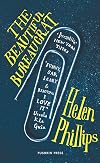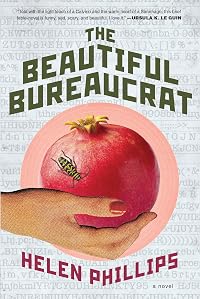
The Beautiful Bureaucrat
by Helen Phillips
On This Page
Description
Becoming increasingly uneasy about suspicious activities at a new job she felt lucky to land, Josephine makes a terrible realization and is forced to confront dangerous and powerful elements in order to protect her loved ones.Tags
Recommendations







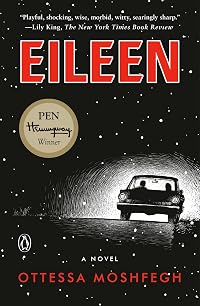
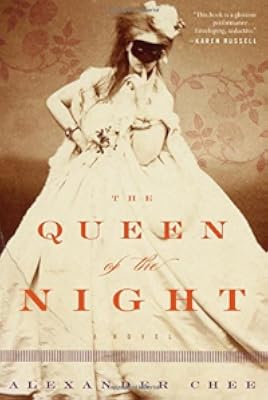
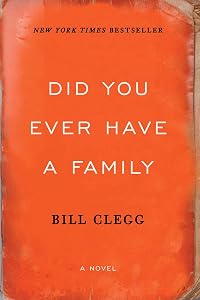
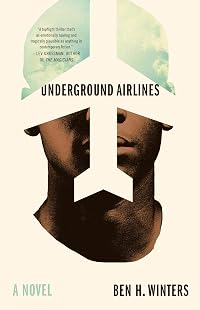


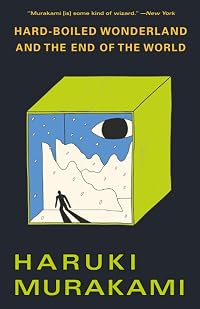
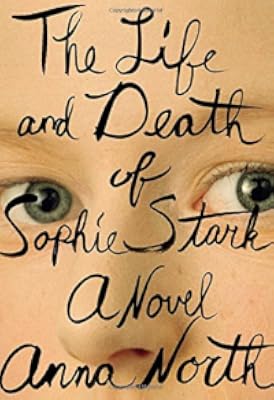
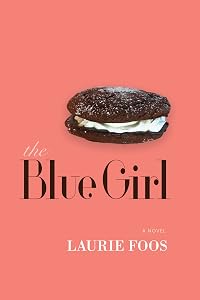
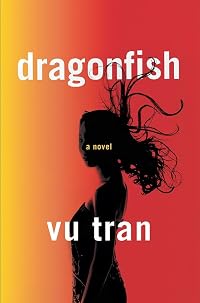




Member Recommendations
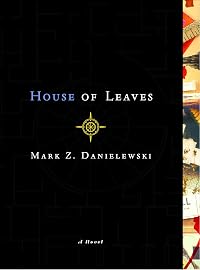
4leschats Similar aspects of word play demonstrate how the abstract nature of language creates, alters, and describes our concrete experiences.
4leschats Both deal with the surreality and dehumanization of bureaucracy which arbitrarily decides life and death
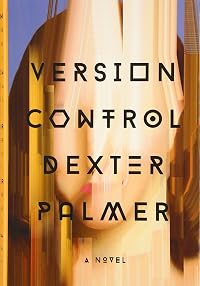
wandering_star A similar tone - someone trapped in a surreal world.

wandering_star offbeat takes on the nature of work
Member Reviews
I’m still not sure what prompted me to get this book. I’ve never read Kafka and I don’t ordinarily go in for magical realism. Besides, a book about a woman whose job is constantly entering numbers into a database (excuse me. ‘Database’) sounds too much like my own life to be called fantasy. Okay, Ursula Le Guin did gush over it and she has never let me down but still, what was I thinking?
I don’t know, but I’m sure glad I did. I was hooked from the first paragraph:
“The person who interviewed her had no face. Under other circumstances- if the job market hadn't been so bleak for so long, if the summer hadn't been so glum and muggy - this might have discouraged Josephine from stepping through the door of the office in the show more first place. As things were, her initial thought was: ‘Oh, perfect, the interviewer's appearance probably deterred other applicants.’”
If I were to compare this book to any other I’ve read it would have to be Jose Saramago’s ‘Blindness’ but even that isn’t a perfect match. While they share the use of allegorical themes and symbolism, The Beautiful Bureaucrat has a whimsical nature that inexplicably transcends it’s bleak and drab setting.
Bottom line: I’m confident that this book will appeal to anyone who appreciates literary themes. It may even appeal to those who just like an occasional foray into the absurd.
*Quotations are cited from an advanced reading copy and may not be the same as appears in the final published edition. The review book was based on an advanced reading copy obtained at no cost from the publisher in exchange for an unbiased review. While this does take any ‘not worth what I paid for it’ statements out of my review, it otherwise has no impact on the content of my review.
FYI: On a 5-point scale I assign stars based on my assessment of what the book needs in the way of improvements:
• 5 Stars – Nothing at all. If it ain’t broke, don’t fix it.
• 4 Stars – It could stand for a few tweaks here and there but it’s pretty good as it is.
• 3 Stars – A solid C grade. Some serious rewriting would be needed in order for this book to be considered good or memorable.
• 2 Stars – This book needs a lot of work. A good start would be to change the plot, the character development, the writing style and the ending.
• 1 Star - The only thing that would improve this book is a good bonfire. show less
I don’t know, but I’m sure glad I did. I was hooked from the first paragraph:
“The person who interviewed her had no face. Under other circumstances- if the job market hadn't been so bleak for so long, if the summer hadn't been so glum and muggy - this might have discouraged Josephine from stepping through the door of the office in the show more first place. As things were, her initial thought was: ‘Oh, perfect, the interviewer's appearance probably deterred other applicants.’”
If I were to compare this book to any other I’ve read it would have to be Jose Saramago’s ‘Blindness’ but even that isn’t a perfect match. While they share the use of allegorical themes and symbolism, The Beautiful Bureaucrat has a whimsical nature that inexplicably transcends it’s bleak and drab setting.
Bottom line: I’m confident that this book will appeal to anyone who appreciates literary themes. It may even appeal to those who just like an occasional foray into the absurd.
*Quotations are cited from an advanced reading copy and may not be the same as appears in the final published edition. The review book was based on an advanced reading copy obtained at no cost from the publisher in exchange for an unbiased review. While this does take any ‘not worth what I paid for it’ statements out of my review, it otherwise has no impact on the content of my review.
FYI: On a 5-point scale I assign stars based on my assessment of what the book needs in the way of improvements:
• 5 Stars – Nothing at all. If it ain’t broke, don’t fix it.
• 4 Stars – It could stand for a few tweaks here and there but it’s pretty good as it is.
• 3 Stars – A solid C grade. Some serious rewriting would be needed in order for this book to be considered good or memorable.
• 2 Stars – This book needs a lot of work. A good start would be to change the plot, the character development, the writing style and the ending.
• 1 Star - The only thing that would improve this book is a good bonfire. show less
What Lurks Behind Reality
If you are a cube dweller facing a computer every day entering data, like what may appear to be only random strings of numbers, letters, and symbols, governed by bosses who strike you as bland and colorless substitutes for human beings, who may wish for a more meaningful work life, perhaps more meaningful life in general, wondering if you are missing something, something that only a few people see--well then, not only will you enjoy Helen Phillips's new novel, you will probably also identify with her half-fleshed out character Josephine Newbury.
Josephine, married and childless, after considerable time unemployed, finally lands a job with a mysterious company called A/Z, a sort of Alpha/Omega concern (there you show more pretty much have it). At A/Z, she works in the Z department entering just a small bit of data into the files of people, the files containing pages dense with numbers, letters, and symbols. At night, she shares meager meals with her husband David, makes love, and frets. They move frequently, always encountering problems, always landing in a dank place. In their early thirties, they would like to have a child, but they can't seem to. If working in a giant gray block isn't enough, Josephine lives in a world that's often bland and out of kilter.
She does have something to fret about, when her husband begins disappearing for long stretches, which at times frightens her, at others enrages her, until finally she comes to understand why. Along with this, she also comes to comprehend what she's doing, along with maybe thousands of others, as she taps her keyboard.
Phillips writes the novel, at least at the outset, as a thriller set in a sort of Twilight Zone world, a fantasy with enough reality mixed in to make the whole thing feel bizarre but uncomfortably familiar. Unfortunately, the characters and landscape may be too sketchy for some and the ending too enigmatic for those seeking a resolution for their time invested. On the other hand, Phillips does intrigue your imagination enough to have you mulling over the structure of life, which, given the data entry sheets, you might conjure as a vast and indifferent mathematical construct.
An interesting effort that will not be for every one but satisfying for those who enjoy fantasy. show less
If you are a cube dweller facing a computer every day entering data, like what may appear to be only random strings of numbers, letters, and symbols, governed by bosses who strike you as bland and colorless substitutes for human beings, who may wish for a more meaningful work life, perhaps more meaningful life in general, wondering if you are missing something, something that only a few people see--well then, not only will you enjoy Helen Phillips's new novel, you will probably also identify with her half-fleshed out character Josephine Newbury.
Josephine, married and childless, after considerable time unemployed, finally lands a job with a mysterious company called A/Z, a sort of Alpha/Omega concern (there you show more pretty much have it). At A/Z, she works in the Z department entering just a small bit of data into the files of people, the files containing pages dense with numbers, letters, and symbols. At night, she shares meager meals with her husband David, makes love, and frets. They move frequently, always encountering problems, always landing in a dank place. In their early thirties, they would like to have a child, but they can't seem to. If working in a giant gray block isn't enough, Josephine lives in a world that's often bland and out of kilter.
She does have something to fret about, when her husband begins disappearing for long stretches, which at times frightens her, at others enrages her, until finally she comes to understand why. Along with this, she also comes to comprehend what she's doing, along with maybe thousands of others, as she taps her keyboard.
Phillips writes the novel, at least at the outset, as a thriller set in a sort of Twilight Zone world, a fantasy with enough reality mixed in to make the whole thing feel bizarre but uncomfortably familiar. Unfortunately, the characters and landscape may be too sketchy for some and the ending too enigmatic for those seeking a resolution for their time invested. On the other hand, Phillips does intrigue your imagination enough to have you mulling over the structure of life, which, given the data entry sheets, you might conjure as a vast and indifferent mathematical construct.
An interesting effort that will not be for every one but satisfying for those who enjoy fantasy. show less
In Helen Phillips's fabulist-tinged novel The Beautiful Bureaucrat, we’re treated to some heavy philosophical ruminations about life and mortality. What does it mean to be alive in face of our physical vulnerabilities and the smallness of our existence? To be specks in the grand universe…a number on a spreadsheet? Ponder the sheer implications of it for a moment and get underneath the crust of complacency/delusion, and you are thrust into something akin to exhilaration perhaps? Anxiety? Paranoia?
Josephine Newbury and Joseph Jones are a couple who are struggling to get their acts together after moving to the city. They are newlyweds still struggling to get into the rhythm of their marriage. As any young couple, they are strapped for show more cash. Josephine interviews for a ho-hum data entry job at a company vaguely called AZ/ZA. As she interviews for this joyless job in a windowless building, talking to a someone she calls “The Person with Bad Breath,” there is ever present undercurrent of dread and mystery. Why can’t she see his face? Why doesn’t he register in her mind?
Phillips seems to be making a comment on modern life, where everything, even people, becomes lost in the blur, flattened, warped.
To no surprise, Josephine's job is interminable. The work is the same, day in and day out. Eventually, Josephine literally loses herself in the job, her work subsuming her identity. In this way, the book's constant comparisons to Kafka would seem apt, but it can also be compared easily to Terry Gilliam’s Brazil. Institutions and individuals become commodified, altering each other in their soul-less, interactions.
DATA! In contemporary parlance, big data is in. Facebook, Google, even sites like Goodreads or LibraryThing are all collecting reams and reams of data. It’s what all major companies do but won't necessarily talk about. For years, I worked as a data wonk, crunching numbers in Stata, writing elaborately rendered .do files with loops and loops of code automating analysis of massive data files. The Beautiful Bureaucrat seems to capture that same awe of the dizzying beauty of data (yes, it can be strangely beautiful, believe it or not); the only difference is that there is no automation in AZ/ZA. Josephine is the code. She literally has to hand-enter information and cross check paper files to the computer.
What's so clever about The Beautiful Bureaucrat is how Phillips is able to go from a simple exploration of the database to an exploration of the Database. It’s no surprise, then, that the database/Database seemingly asserts a surreal, authoritative control over Josephine’s reality. The greater part of the novel is her struggle to unpack the meaning of the work she does. It takes over her life in the most bodily of ways: Her eyes are constantly dry, bloodshot from too much computer screen time (staring into the abyss, perhaps?). When she stares at her drab office walls, she is haunted by “scratches, smears, shadowy fingerprints, the echoes of hands.”
Outside of work, the reach of the Database is equally insidious. At home with her husband Joseph, she hears the numbers in the flush of the toilet. In the throes of an orgasm, she screams “041-74-3400!”— her husband’s social security number. The blur of names from the piles of files gets mixed up in her mind, and she starts muttering plays on words ("boomhaven" gets transposed into "haven-tomb") that brings to mind a kind of acquired dyslexia.
It’s pretty obvious that the mysterious Database will eventually reveal itself. Despite the brain fog her tedious work brings, Josephine happens upon a chilling coincidence one Monday morning.The big reveal is that she has been working on some kind of database of death certificates. The dates are dates of birth and death. But a mystery remains. Is Josephine merely recording death dates, or are these dates the dates people will die? Josephine, the data entry specialist turns into a sleuth. What she ultimately discovers—what she fears most—threatens to unravel her already frazzled mind.
What’s particularly noteworthy about The Beautiful Bureaucrat are the various side characters that pop into Josephine’s life: the waitress at the diner who says loony, cryptic things; the overly chummy co-worker, a kind of frenemy counterpart to Josephine. Even the company she works for is such a presence in the book that it really is a character unto itself—a kind of creator/deity/guiding hand.
Reality and delusion; truth and fiction; discovery and delusion—these are all the dichotomies that Phillips explores in the book. It’s remarkable how much depth is packed in this slim novel. This book will stay with me for its uncanny and surreal imagery and symbolism. show less
Josephine Newbury and Joseph Jones are a couple who are struggling to get their acts together after moving to the city. They are newlyweds still struggling to get into the rhythm of their marriage. As any young couple, they are strapped for show more cash. Josephine interviews for a ho-hum data entry job at a company vaguely called AZ/ZA. As she interviews for this joyless job in a windowless building, talking to a someone she calls “The Person with Bad Breath,” there is ever present undercurrent of dread and mystery. Why can’t she see his face? Why doesn’t he register in her mind?
“The person who interviewed her had no face. … The interviewer’s skin bore the same grayish tint as the wall behind, the eyes were obscured by a pair of highly reflective glasses, the fluorescence flattened the features assembled above the genderless gray suit . ... The lips, dry and faintly wry, parted to release the worst breath Josephine had ever smelled.”
Phillips seems to be making a comment on modern life, where everything, even people, becomes lost in the blur, flattened, warped.
To no surprise, Josephine's job is interminable. The work is the same, day in and day out. Eventually, Josephine literally loses herself in the job, her work subsuming her identity. In this way, the book's constant comparisons to Kafka would seem apt, but it can also be compared easily to Terry Gilliam’s Brazil. Institutions and individuals become commodified, altering each other in their soul-less, interactions.
DATA! In contemporary parlance, big data is in. Facebook, Google, even sites like Goodreads or LibraryThing are all collecting reams and reams of data. It’s what all major companies do but won't necessarily talk about. For years, I worked as a data wonk, crunching numbers in Stata, writing elaborately rendered .do files with loops and loops of code automating analysis of massive data files. The Beautiful Bureaucrat seems to capture that same awe of the dizzying beauty of data (yes, it can be strangely beautiful, believe it or not); the only difference is that there is no automation in AZ/ZA. Josephine is the code. She literally has to hand-enter information and cross check paper files to the computer.
What's so clever about The Beautiful Bureaucrat is how Phillips is able to go from a simple exploration of the database to an exploration of the Database. It’s no surprise, then, that the database/Database seemingly asserts a surreal, authoritative control over Josephine’s reality. The greater part of the novel is her struggle to unpack the meaning of the work she does. It takes over her life in the most bodily of ways: Her eyes are constantly dry, bloodshot from too much computer screen time (staring into the abyss, perhaps?). When she stares at her drab office walls, she is haunted by “scratches, smears, shadowy fingerprints, the echoes of hands.”
Outside of work, the reach of the Database is equally insidious. At home with her husband Joseph, she hears the numbers in the flush of the toilet. In the throes of an orgasm, she screams “041-74-3400!”— her husband’s social security number. The blur of names from the piles of files gets mixed up in her mind, and she starts muttering plays on words ("boomhaven" gets transposed into "haven-tomb") that brings to mind a kind of acquired dyslexia.
It’s pretty obvious that the mysterious Database will eventually reveal itself. Despite the brain fog her tedious work brings, Josephine happens upon a chilling coincidence one Monday morning.
What’s particularly noteworthy about The Beautiful Bureaucrat are the various side characters that pop into Josephine’s life: the waitress at the diner who says loony, cryptic things; the overly chummy co-worker, a kind of frenemy counterpart to Josephine. Even the company she works for is such a presence in the book that it really is a character unto itself—a kind of creator/deity/guiding hand.
Reality and delusion; truth and fiction; discovery and delusion—these are all the dichotomies that Phillips explores in the book. It’s remarkable how much depth is packed in this slim novel. This book will stay with me for its uncanny and surreal imagery and symbolism. show less
 This review was written for LibraryThing Early Reviewers.
At 170 pages, this no doubt technically qualifies as a novel, but for me it has very much the feel of a short story, if that makes any sense.
Whether it does make any sense or not, I don't know. Whether anything whatsoever about this book makes any sense or not, I don't know. It's a very strange little story about a woman who gets a job inputting mysterious numbers under the supervision of someone whose face she can somehow never quite make out. It's told with this odd combination of specific detail and dreamlike vagueness, giving a sense that it's full of stuff that's meant to be symbolic, although it's hard to say what it might be symbolic of. None of this feels like it should really work or be at all satisfying... and yet, I found show more myself sitting in the bathtub reading it even after all the water had drained out, utterly unable to put it down until I'd finished the last thirty pages. show less
Whether it does make any sense or not, I don't know. Whether anything whatsoever about this book makes any sense or not, I don't know. It's a very strange little story about a woman who gets a job inputting mysterious numbers under the supervision of someone whose face she can somehow never quite make out. It's told with this odd combination of specific detail and dreamlike vagueness, giving a sense that it's full of stuff that's meant to be symbolic, although it's hard to say what it might be symbolic of. None of this feels like it should really work or be at all satisfying... and yet, I found show more myself sitting in the bathtub reading it even after all the water had drained out, utterly unable to put it down until I'd finished the last thirty pages. show less
After both her and her husband struggle to find work for far too long, Josephine is thrilled when she’s hired to work on “The Database”. In a windowless building that takes up several city blocks, she works in a small office, entering strangely coded numbers in an increasingly mind-numbing task. Over time, Josephine’s once supportive husband grows distant and work on The Database wears at her until she is desperate to discover its true purpose.
In just 192 pages, The Beautiful Bureaucrat packs in the tension of the best thrillers with a double dose of “WHAT IS GOING ON?” for good measure. And Helen Phillips uses every inch of those 192 pages to tell her story, forcing readers to puzzle out the narrative until the very last show more moment, while also filling them with fabulous wordplay.
“On the wall above the children, there was a poster:
BE SURE TO EAT THREE HOURS
BEFORE DONATING BLOOD
What’s it like to eat three hours? She was feeling impish. How do they taste? Like cotton candy or grass or concrete?”
So many novels of this style wind up either frustratingly confusing or too neat, but Phillips finds a delicate balance with what she chooses to reveal in the end. Both a puzzle and a meditation on life, work, and choice, The Beautiful Bureaucrat is the kind of book you finish and immediately begin again—not because you have to, but you want to.
More at rivercityreading.com show less
In just 192 pages, The Beautiful Bureaucrat packs in the tension of the best thrillers with a double dose of “WHAT IS GOING ON?” for good measure. And Helen Phillips uses every inch of those 192 pages to tell her story, forcing readers to puzzle out the narrative until the very last show more moment, while also filling them with fabulous wordplay.
“On the wall above the children, there was a poster:
BE SURE TO EAT THREE HOURS
BEFORE DONATING BLOOD
What’s it like to eat three hours? She was feeling impish. How do they taste? Like cotton candy or grass or concrete?”
So many novels of this style wind up either frustratingly confusing or too neat, but Phillips finds a delicate balance with what she chooses to reveal in the end. Both a puzzle and a meditation on life, work, and choice, The Beautiful Bureaucrat is the kind of book you finish and immediately begin again—not because you have to, but you want to.
More at rivercityreading.com show less
Phillips portrays her heroine’s nameless city and nomadic existence as a fuzzy, dreamlike alternate reality that teeters on just this edge of familiarity. Combining jarring wordplay with familiar Judeo-Christian imagery, Phillips crafts a contemporary, anonymous, urban folk tale (can’t you just imagine a folk tale titled “The Beautiful Bureaucrat”?)--except where magic once drove the plot, anxiety now catalyzes characters. Phillips evokes both shadows of Soviet paranoia and current NSA surveillance, drawing the reader’s attention to the cyclic nature of history. Whether or not we are endowed with free will--or if humans are only lines on a cosmic form--our only compensation is love.
What Lurks Behind Reality
If you are a cube dweller facing a computer every day entering data, like what may appear to be only random strings of numbers, letters, and symbols, governed by bosses who strike you as bland and colorless substitutes for human beings, who may wish for a more meaningful work life, perhaps more meaningful life in general, wondering if you are missing something, something that only a few people see--well then, not only will you enjoy Helen Phillips's new novel, you will probably also identify with her half-fleshed out character Josephine Newbury.
Josephine, married and childless, after considerable time unemployed, finally lands a job with a mysterious company called A/Z, a sort of Alpha/Omega concern (there you show more pretty much have it). At A/Z, she works in the Z department entering just a small bit of data into the files of people, the files containing pages dense with numbers, letters, and symbols. At night, she shares meager meals with her husband David, makes love, and frets. They move frequently, always encountering problems, always landing in a dank place. In their early thirties, they would like to have a child, but they can't seem to. If working in a giant gray block isn't enough, Josephine lives in a world that's often bland and out of kilter.
She does have something to fret about, when her husband begins disappearing for long stretches, which at times frightens her, at others enrages her, until finally she comes to understand why. Along with this, she also comes to comprehend what she's doing, along with maybe thousands of others, as she taps her keyboard.
Phillips writes the novel, at least at the outset, as a thriller set in a sort of Twilight Zone world, a fantasy with enough reality mixed in to make the whole thing feel bizarre but uncomfortably familiar. Unfortunately, the characters and landscape may be too sketchy for some and the ending too enigmatic for those seeking a resolution for their time invested. On the other hand, Phillips does intrigue your imagination enough to have you mulling over the structure of life, which, given the data entry sheets, you might conjure as a vast and indifferent mathematical construct.
An interesting effort that will not be for every one but satisfying for those who enjoy fantasy. show less
If you are a cube dweller facing a computer every day entering data, like what may appear to be only random strings of numbers, letters, and symbols, governed by bosses who strike you as bland and colorless substitutes for human beings, who may wish for a more meaningful work life, perhaps more meaningful life in general, wondering if you are missing something, something that only a few people see--well then, not only will you enjoy Helen Phillips's new novel, you will probably also identify with her half-fleshed out character Josephine Newbury.
Josephine, married and childless, after considerable time unemployed, finally lands a job with a mysterious company called A/Z, a sort of Alpha/Omega concern (there you show more pretty much have it). At A/Z, she works in the Z department entering just a small bit of data into the files of people, the files containing pages dense with numbers, letters, and symbols. At night, she shares meager meals with her husband David, makes love, and frets. They move frequently, always encountering problems, always landing in a dank place. In their early thirties, they would like to have a child, but they can't seem to. If working in a giant gray block isn't enough, Josephine lives in a world that's often bland and out of kilter.
She does have something to fret about, when her husband begins disappearing for long stretches, which at times frightens her, at others enrages her, until finally she comes to understand why. Along with this, she also comes to comprehend what she's doing, along with maybe thousands of others, as she taps her keyboard.
Phillips writes the novel, at least at the outset, as a thriller set in a sort of Twilight Zone world, a fantasy with enough reality mixed in to make the whole thing feel bizarre but uncomfortably familiar. Unfortunately, the characters and landscape may be too sketchy for some and the ending too enigmatic for those seeking a resolution for their time invested. On the other hand, Phillips does intrigue your imagination enough to have you mulling over the structure of life, which, given the data entry sheets, you might conjure as a vast and indifferent mathematical construct.
An interesting effort that will not be for every one but satisfying for those who enjoy fantasy. show less
Members
- Recently Added By
Lists

Kirkus Starred Fiction Reviews of Books Published in 2015
310 works; 6 members

NYT: Notable Books of 2015 (Fiction & Poetry)
20 works; 1 member

Speculative Fiction to Read
706 works; 31 members

Kirkus Reviews Best Fiction of 2015
98 works; 6 members
Author Information

7+ Works 1,783 Members
Helen Phillips is Professor of English Studies at the University of Glamorgan.
Awards and Honors
Awards
Common Knowledge
- Canonical title
- The Beautiful Bureaucrat
- Original title
- The Beautiful Bureaucrat
- Alternate titles
- The Beautiful Bureaucrat: A Novel
- Original publication date
- 2015
- People/Characters
- Josephine; Joseph; Trishiffany
- Dedication
- for/ADT, RPT, NPT, &_PT
- First words
- The person who interviewed her had no face.
- Last words
- (Click to show. Warning: May contain spoilers.)The file of our child, our child. And your file too.
- Blurbers
- Le Guin, Ursula K.; Offill, Jenny; Jamison, Leslie; Ausubel, Ramona; Ferris, Joshua; Brockmeier, Kevin (show all 7); Sloan, Robin
- Canonical DDC/MDS
- 813.6
- Canonical LCC
- PR6120.Y54
Classifications
Statistics
- Members
- 473
- Popularity
- 64,474
- Reviews
- 52
- Rating
- (3.25)
- Languages
- English, Italian, Spanish
- Media
- Paper, Audiobook, Ebook
- ISBNs
- 12
- UPCs
- 1
- ASINs
- 3