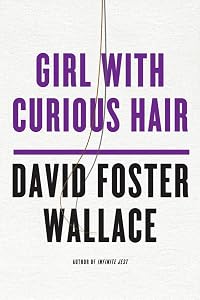
Girl with Curious Hair: Stories
by David Foster Wallace 
On This Page
Description
Until his death in 2008, David Foster Wallace was one of the most prodigiously talented and original young writers in America, and Girl with Curious Hair displays the full range of his gifts. From the eerily "real," almost holographic evocations of historical figures like Lyndon Johnson, over-televised game show hosts, and late-night comedians, to the title story, where terminal punk nihilism meets Young Republicanism, Wallace renders the incredible comprehensible, the bizarre normal, the show more absurd hilarious, and the familiar strange.. show less
Tags
Recommendations
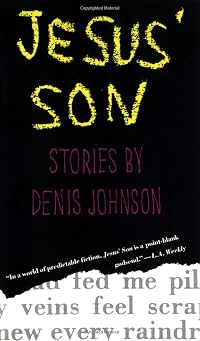
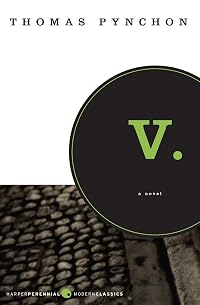
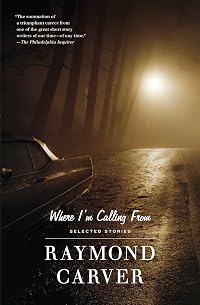
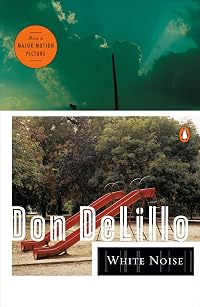


Member Reviews
Always good, and occasionally great. The titular story was my favourite - A Confederacy of Dunces on crack - but there are plenty of other highlights, like the imagined-but-all-too-real Lyndon, or the gruffly heartfelt John Billy. The final section, a novella, gives glimpses of what was to come with Infinite Jest - and as with that book, you'll either love it, or hate it.
David Foster Wallace delivers some beautiful commentary on modern culture through fiction. While some readers may find these stories difficult to get through, it's worth the effort to follow the satire on both American culture (fast food, television, musical, political .. he covers them all in different stories) as well as literature. I admit that there were times I found the avant-garde writing style confusing or disorienting, but as I kept reading the seemingly disconnected fragments became meaningful. If you're looking for a quick fun-filled read, this is not the book. The stories are well constructed and will take some thought to fully unfold and understand, but that's what I like most about DFW's writing: it always stays with me show more when I close the book. show less
Racconti di Wallace che, come tutti gli scritti di Wallace, non riesco a leggere tutto d'un fiato.
Amo D.F. Wallace, me ne sono innamorata leggendo una sua intervista, anni fa. Si era già suicidato.
Non è una lettura scorrevole, vi sono riferimenti ad eventi e personaggi estranei alla nostra cultura. Descrive la televisione americana, le strade americane, gli americani. Uno per uno. E ne fa ritratti talmente reali da fare sembrare ogni personaggio uno psicopatico. Ma è proprio così che è. E' proprio così che siamo.
Amo D.F. Wallace, ma questi racconti, dopo aver letto La ragazza dai capelli strani (che per inciso ha una chioma scolpita a forma di pene sulla testa, enorme), faccio decantare un po' le parole e, per il momento, passo show more ad altro. Fino a quando sentirò la mancanza struggente di D.F. Wallace e della sua ironica tristezza e me ne farò un'altra dose. show less
Amo D.F. Wallace, me ne sono innamorata leggendo una sua intervista, anni fa. Si era già suicidato.
Non è una lettura scorrevole, vi sono riferimenti ad eventi e personaggi estranei alla nostra cultura. Descrive la televisione americana, le strade americane, gli americani. Uno per uno. E ne fa ritratti talmente reali da fare sembrare ogni personaggio uno psicopatico. Ma è proprio così che è. E' proprio così che siamo.
Amo D.F. Wallace, ma questi racconti, dopo aver letto La ragazza dai capelli strani (che per inciso ha una chioma scolpita a forma di pene sulla testa, enorme), faccio decantare un po' le parole e, per il momento, passo show more ad altro. Fino a quando sentirò la mancanza struggente di D.F. Wallace e della sua ironica tristezza e me ne farò un'altra dose. show less
An incredibly important early work from David Foster Wallace, one part entertaining story collection, one part treatise on fiction. For any serious reader of Wallace, especially those wishing to tackle 'Infinite Jest', this collection is a necessity. One of the more challenging pieces, "Westward the Course of Empire Takes its Way" is a direct shot across the bow of the metafictionists of the 1960s and 1970s, which Wallace attempts to move beyond, and seemingly with great success.
I did not fully understand almost all of this book (or, I sort-of understood most of this book.) If you're prepared for that, you may find this to be more than a three star book. My previous D.F. Wallace experience consists solely of "Consider the Lobster", which I greatly enjoyed.
Part of why I found this so hard to understand (and to enjoy) is that it really is a meta-meta-book, fiction-that-is-not-fiction-that-is. And I think Wallace was well aware of that; but it is hard to take, all the same. The book is rooted in, and a protest against/mocking of, a literary culture (or long fad?) that is now, at least in part, sailing into the past. And good riddance...
But, if you do enjoy postmodern (or is this post-post-modern) lit, then again, show more this might be more to your liking. show less
Part of why I found this so hard to understand (and to enjoy) is that it really is a meta-meta-book, fiction-that-is-not-fiction-that-is. And I think Wallace was well aware of that; but it is hard to take, all the same. The book is rooted in, and a protest against/mocking of, a literary culture (or long fad?) that is now, at least in part, sailing into the past. And good riddance...
But, if you do enjoy postmodern (or is this post-post-modern) lit, then again, show more this might be more to your liking. show less
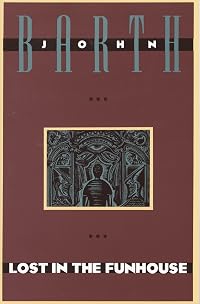
This book is very clever because every story is post-something. Little Expressionless Animals, Lydon, My Appearance- Post-Delillo. Luckily...- post Beckett. Girl with curious Hair- post-Easton Ellis. John Billy- post-Faulkner. Here and There- post writing workshop (okay, that's a stretch.) Say Never- post Roth. Everything is Green- I really don't know, but induction says that this, too, is post-something. And the mother of all the posts, 'Westward the Course of Empire,' is post-Barth (unfortunately John and not Karl.) Yes, all very clever. And sometimes moving. Here's how it works: each story pretends to be hip and ironic and post-modern, then whups you upside the head with deep, undeniable sentiment.
The problem with all this is that show more people who don't know DeLillo, Becket, Easton Ellis, Roth, Barth etc... won't get why they should care about the ironizing of irony bits that start each story, and are unlikely to feel the whup when they are whupped. I quite liked the book, but it's hard for me to say why anyone who isn't deeply interested in literary polemic would bother reading it. The prose styles are pretty good, and there's an impressive range of them, sure. As I may have mentioned, it's all very clever. It's the sort of thing that makes me want to write an essay. Before you go buy this because he's important and dead, ask yourself: am I the kind of person who often reads books and is inspired to write essays about them? Because if you're not, buy DFW's essays. They don't inspire me to write; they inspire me to read.
Also be aware that DFW himself said, re: Westward the Course of Empire Takes its Way, "25 year olds should be denied access to pen and paper."
Also, I'm particularly cranky because I read Barth's story, 'Lost in the Funhouse,' to prepare for reading Westward. As bad as Westward is, it's the better of the two. No thanks for getting me to read that dreck, David, wherever you are. show less
The problem with all this is that show more people who don't know DeLillo, Becket, Easton Ellis, Roth, Barth etc... won't get why they should care about the ironizing of irony bits that start each story, and are unlikely to feel the whup when they are whupped. I quite liked the book, but it's hard for me to say why anyone who isn't deeply interested in literary polemic would bother reading it. The prose styles are pretty good, and there's an impressive range of them, sure. As I may have mentioned, it's all very clever. It's the sort of thing that makes me want to write an essay. Before you go buy this because he's important and dead, ask yourself: am I the kind of person who often reads books and is inspired to write essays about them? Because if you're not, buy DFW's essays. They don't inspire me to write; they inspire me to read.
Also be aware that DFW himself said, re: Westward the Course of Empire Takes its Way, "25 year olds should be denied access to pen and paper."
Also, I'm particularly cranky because I read Barth's story, 'Lost in the Funhouse,' to prepare for reading Westward. As bad as Westward is, it's the better of the two. No thanks for getting me to read that dreck, David, wherever you are. show less
I don't know what it was about the general tone/emotional impact of this book that I enjoyed so much less than Brief Interviews or Oblivion. I was left cold by the titular story, as well as "Everything's Green." "Say Never" seemed left over from Brief Interviews, and it was better. Especially enjoyed the juxtaposition of perspectives, which I can't remember reading in any other story by Wallace, but again, it left an overall sort of bad taste in my mouth. After a promising beginning, "Westward..." petered out. "My Appearance" was the stand-out, with the most nuanced characterization.
I'm going to say some stuff here sort of off the cuff, as it's been a long time since I read his other two short story collections. But I think Wallace is a show more pretty moral short story writer. I think, as technically pretentious as some of his stories get, and even though there is little outright judgment/analysis, each one ends with an unstated but pretty clear moral message. Maybe less so in Oblivion than Brief Interviews or Girl. That's great. I'll take a moralizer over an absurdist/post-modernist any day. But Girl, unlike the other two, seemed messy and snarky as well as high-handed, and that's sort of a strange combination. I guess I mean that this collection seems to lack Wallace's usual sensitivity.
I'll return to this, but not before finishing The Pale King. show less
I'm going to say some stuff here sort of off the cuff, as it's been a long time since I read his other two short story collections. But I think Wallace is a show more pretty moral short story writer. I think, as technically pretentious as some of his stories get, and even though there is little outright judgment/analysis, each one ends with an unstated but pretty clear moral message. Maybe less so in Oblivion than Brief Interviews or Girl. That's great. I'll take a moralizer over an absurdist/post-modernist any day. But Girl, unlike the other two, seemed messy and snarky as well as high-handed, and that's sort of a strange combination. I guess I mean that this collection seems to lack Wallace's usual sensitivity.
I'll return to this, but not before finishing The Pale King. show less
Members
- Recently Added By
Lists

Metafiction
86 works; 23 members

Books Read in 2022
5,226 works; 115 members
Author Information

90+ Works 47,841 Members
Writer David Foster Wallace was born in Ithaca, New York on February 21, 1962. He received a B.A. from Amherst College in Massachusetts. He was working on his master's degree in creative writing at the University of Arizona when he published his debut novel The Broom of the System (1987). Wallace published his second novel Infinite Jest (1996) show more which introduced a cast of characters that included recovering alcoholics, foreign statesmen, residents of a halfway house, and high-school tennis stars. He spent four years researching and writing this novel. His first collection of short stories was Girl with Curious Hair (1989). He also published a nonfiction work titled Signifying Rappers: Rap and Race in the Urban Present. He committed suicide on September 12, 2008 at the age of 46 after suffering with bouts of depression for 20 years. (Bowker Author Biography) show less
David Foster Wallace has a Legacy Library. Legacy libraries are the personal libraries of famous readers, entered by LibraryThing members from the Legacy Libraries group.
Some Editions
Series
Belongs to Publisher Series
Work Relationships
Contains
Common Knowledge
- Canonical title
- Girl with Curious Hair: Stories
- Original title
- Girl with Curious Hair
- Alternate titles*
- Dire mai e altri racconti
- Original publication date
- 1988
- People/Characters
- Alex Trebek; David Letterman; Lyndon Baines Johnson
- Important places
- California, USA; Los Angeles, California, USA; Illinois, USA
- Dedication
- For L-----
- First words
- It's 1976.
- Last words
- (Click to show. Warning: May contain spoilers.)You are loved.
- Blurbers
- Levin, Jennifer; Bell, Madison Smartt; Cosgrove, Benedict; Boyle, T. Coraghessen
*Some information comes from Common Knowledge in other languages. Click "Edit" for more information.
Classifications
Statistics
- Members
- 2,470
- Popularity
- 7,883
- Reviews
- 30
- Rating
- (3.64)
- Languages
- 6 — English, Finnish, French, German, Italian, Spanish
- Media
- Paper, Audiobook, Ebook
- ISBNs
- 32
- ASINs
- 19