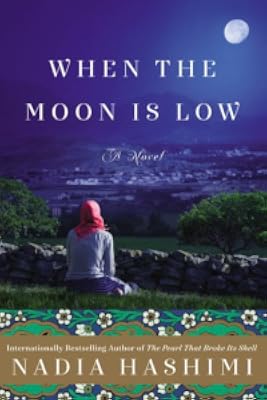
When the Moon Is Low
by Nadia Hashimi
On This Page
Description
Mahmoud's passion for his wife Fereiba, a schoolteacher, is greater than any love she's ever known. But their happy, middle-class world-a life of education, work, and comfort-implodes when their country is engulfed in war, and the Taliban rises to power. Mahmoud, a civil engineer, becomes a target of the new fundamentalist regime and is murdered. Forced to flee Kabul with her three children, Fereiba has one hope to survive: she must find a way to cross Europe and reach her sister's family in show more England. With forged papers and help from kind strangers they meet along the way, Fereiba make a dangerous crossing into Iran under cover of darkness. Exhausted and brokenhearted but undefeated, Fereiba manages to smuggle them as far as Greece. But in a busy market square, their fate takes a frightening turn when her teenage son, Saleem, becomes separated from the rest of the family. Faced with an impossible choice, Fereiba pushes on with her daughter and baby, while Saleem falls into the shadowy underground network of undocumented Afghans who haunt the streets of Europe's capitals. Across the continent Fereiba and Saleem struggle to reunite, and ultimately find a place where they can begin to reconstruct their lives. show lessTags
Recommendations
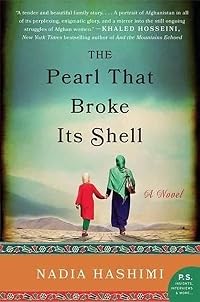
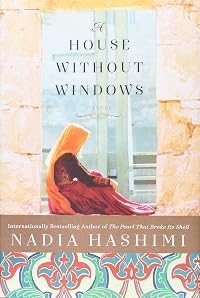




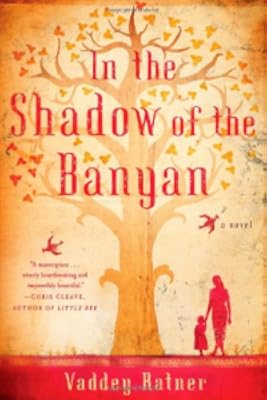

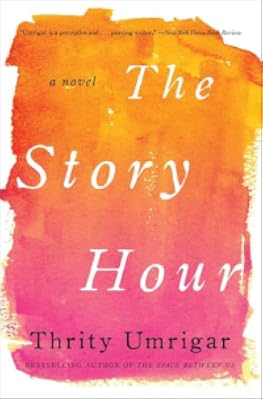

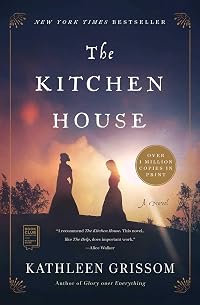
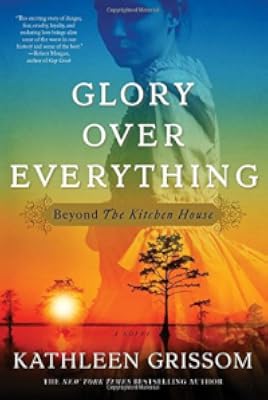

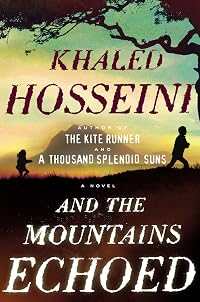

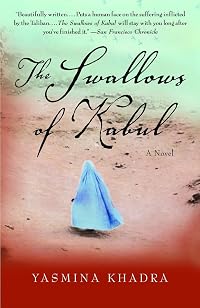
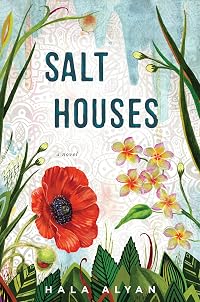

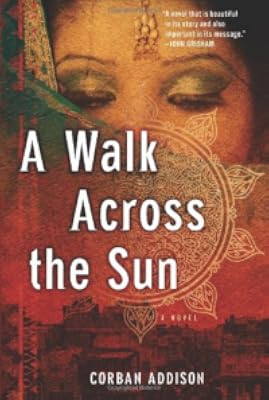




Member Recommendations

Member Reviews
When the Moon is Low by Nadia Hashimi is one of the most moving books about the refugee experience that I have ever read. I’ve seen the thousands of migrants on the news, desperate to reach a safe place and start a new life but to actually read of the difficulties that these families must endure was eye-opening. The book opens by introducing Fereiba and her life in Kabul. Her mother died when she was born and she was raised by a distant father and more or less indifferent step-mother. She is given in marriage to a young man and is lucky enough to find love. Their early years are set against the Soviet invasion of Afghanistan which was a dangerous time but still Fereiba was able to work as a teacher and she and her husband flourished. show more When the Taliban gained control their life changed drastically and then came the night that her husband was taken.
Knowing she had to get out Afghanistan for the safety of her family, she, her thirteen year old son, eleven year old daughter and 3 month out baby begin the long, heart breaking journey to England where they have relatives. At this point the narrative switches between Fereiba and her son, Saleem as they become separated. Fereiba must make the difficult decision of continuing her journey in order to get her younger children to safety while Saleem must try to complete the journey by himself.
When the Moon is Low paints a vivid picture of the danger and despair that is experienced by displaced people. The book is very relevant as this scenario is being played out in many corners of the world today. This is a compelling, strong story that held my interest and I appreciated that the harshness of the story was softened somewhat by the author’s bittersweet ending. show less
Knowing she had to get out Afghanistan for the safety of her family, she, her thirteen year old son, eleven year old daughter and 3 month out baby begin the long, heart breaking journey to England where they have relatives. At this point the narrative switches between Fereiba and her son, Saleem as they become separated. Fereiba must make the difficult decision of continuing her journey in order to get her younger children to safety while Saleem must try to complete the journey by himself.
When the Moon is Low paints a vivid picture of the danger and despair that is experienced by displaced people. The book is very relevant as this scenario is being played out in many corners of the world today. This is a compelling, strong story that held my interest and I appreciated that the harshness of the story was softened somewhat by the author’s bittersweet ending. show less
The news doesn't show us much about Afghanistan anymore. Other places and concerns have replaced this particular Middle Eastern country in the public consciousness. But many of the issues that brought it to the fore still exist. The Taliban, women's rights violations, extremism, and so forth haven't stopped. We've turned our attention elsewhere but people continue to suffer and Afghans still make the difficult and dangerous choice to flee their homeland in search of asylum elsewhere. The only times that the desperate plight of these refugees is brought to our attention is when a horrible tragedy happens, humanitarian groups shine an uncomfortable light on refugee camps, or a large protest or mass exodus occurs. Otherwise this ongoing show more crisis is conveniently and quietly ignored. Nadia Hashimi's latest novel, When the Moon Is Low, examines this crisis on a personal level with the tale of an Afghan mother who flees with her three children in tow to try and find a better life for them in London.
Fereiba grew up in Kabul with her father and stepmother, her own mother having died giving birth to her. Her stepmother favored her own children, using Fereiba to help her with housework and childcare, and Fereiba's father never intervened on her behalf in order to keep peace with his wife. Without the love and support that every child deserves, Fereiba had a solitary and sad childhood. Only after the unexpected love she finds in marriage does it look like her life is changing for the better. She and her husband live a comfortable life, she works as a teacher, and they start a family. But when the Taliban arrive, everything is thrown into chaos and Fereiba must learn to live with fear and haunting tragedy. Following the plan her husband set in motion, she makes the difficult and dangerous choice to leave Kabul with her children to try and make their way to her sister in London. Traveling on forged documents, the journey is arduous and exacting. As a mother, Fereiba must watch as her oldest son, Saleem, struggles to become a man without a father and before his time and as her youngest son, a medically fragile infant, suffers and weakens. The small family faces indignities and hardship that they have no choice but to endure and accept as they make their way through an unwelcoming and sometimes hostile Europe. But when Saleem is caught by police without papers, separated from the family, and deported, the blow is horrible. The only option is for Fereiba to go on with the other two children and for Saleem to make his own way.
The story of their flight is emotionally wrenching. Their strength and determination in the face of so many obstacles, including racism and suspicion towards those seeking asylum, is impressive. They do find kind and helpful people to help them along the way so they can maintain hope even in the darkest of times. Hashimi has drawn vivid pictures of the squalor in which refugees live, their desperation and sometime solidarity, and has captured the ever present nagging fear of the displaced extremely well, especially in the character of Saleem. The novel does have a bit of a split personality feeling to it after spending so much time on Fereiba's childhood and courtship and then jumping almost straight into their refugee life with just a tiny bridge over her many years of happiness with Mahmood, her husband and soulmate. The early story is told by Fereiba in the first person while sections focused on Saleem, told in the third person, take precedence in the second half of the novel, although Fereiba continues to narrate the occasional chapter as well. This is an ingenious way to show their experiences as two different faces of the refugee crisis. The story is a compelling and fast read which highlights the continued human cost of oppression and intolerance on a very personal level. show less
Fereiba grew up in Kabul with her father and stepmother, her own mother having died giving birth to her. Her stepmother favored her own children, using Fereiba to help her with housework and childcare, and Fereiba's father never intervened on her behalf in order to keep peace with his wife. Without the love and support that every child deserves, Fereiba had a solitary and sad childhood. Only after the unexpected love she finds in marriage does it look like her life is changing for the better. She and her husband live a comfortable life, she works as a teacher, and they start a family. But when the Taliban arrive, everything is thrown into chaos and Fereiba must learn to live with fear and haunting tragedy. Following the plan her husband set in motion, she makes the difficult and dangerous choice to leave Kabul with her children to try and make their way to her sister in London. Traveling on forged documents, the journey is arduous and exacting. As a mother, Fereiba must watch as her oldest son, Saleem, struggles to become a man without a father and before his time and as her youngest son, a medically fragile infant, suffers and weakens. The small family faces indignities and hardship that they have no choice but to endure and accept as they make their way through an unwelcoming and sometimes hostile Europe. But when Saleem is caught by police without papers, separated from the family, and deported, the blow is horrible. The only option is for Fereiba to go on with the other two children and for Saleem to make his own way.
The story of their flight is emotionally wrenching. Their strength and determination in the face of so many obstacles, including racism and suspicion towards those seeking asylum, is impressive. They do find kind and helpful people to help them along the way so they can maintain hope even in the darkest of times. Hashimi has drawn vivid pictures of the squalor in which refugees live, their desperation and sometime solidarity, and has captured the ever present nagging fear of the displaced extremely well, especially in the character of Saleem. The novel does have a bit of a split personality feeling to it after spending so much time on Fereiba's childhood and courtship and then jumping almost straight into their refugee life with just a tiny bridge over her many years of happiness with Mahmood, her husband and soulmate. The early story is told by Fereiba in the first person while sections focused on Saleem, told in the third person, take precedence in the second half of the novel, although Fereiba continues to narrate the occasional chapter as well. This is an ingenious way to show their experiences as two different faces of the refugee crisis. The story is a compelling and fast read which highlights the continued human cost of oppression and intolerance on a very personal level. show less
“Maybe this is how it is meant to be: a wife without a husband. Children without a father. perhaps incomplete is the very definition of a normal family. Where did my lofty expectations come from anyway? Afghanistan is a land of widows and widowers, orphans and the missing. Missing a right leg, a left hand, a child, or a mother. Everyone was missing something …” (221)
Fereiba , school teacher in Kabul, is surprised to find love in an arranged marriage. Having lost her mother at birth, her childhood was troubled, her relationship with her father’s second wife imbalanced – and her father either unwilling or unable to upset his wife’s rule. She and Mahmood, a gifted engineer, are delighted to welcome three children: the first a show more son, Saleem, followed by a daughter and a second son. But their comfortable life implodes when the Taliban rise to power in Kabul, and their family becomes a target for the fundamentalist regime. Travelling with forged papers, Fereiba and her three children make a dangerous crossing into Iran under cover of darkness. But their road to freedom has only just begun; before they reach the safety of England, they need still traverse Turkey, Greece, Italy, and France. In Athens, Saleem becomes separated from his family – and his mother must make a dreaded decision to carry on with her young daughter and son, hoping upon hope that she will see Saleem again.
When the Moon is Low is a compelling read, both frightful and triumphant – and resplendent with the bravery of one woman to save her family. An impressive novel from Nadia Hashimi – an author new to me – but whose other work I will certainly explore. Highly recommended.
“We need only a chance. Somewhere in the world, there must be a place where we will be welcomed as a long-lost sister, not stoned away like an unwanted snake in the garden.” (223) show less
Fereiba , school teacher in Kabul, is surprised to find love in an arranged marriage. Having lost her mother at birth, her childhood was troubled, her relationship with her father’s second wife imbalanced – and her father either unwilling or unable to upset his wife’s rule. She and Mahmood, a gifted engineer, are delighted to welcome three children: the first a show more son, Saleem, followed by a daughter and a second son. But their comfortable life implodes when the Taliban rise to power in Kabul, and their family becomes a target for the fundamentalist regime. Travelling with forged papers, Fereiba and her three children make a dangerous crossing into Iran under cover of darkness. But their road to freedom has only just begun; before they reach the safety of England, they need still traverse Turkey, Greece, Italy, and France. In Athens, Saleem becomes separated from his family – and his mother must make a dreaded decision to carry on with her young daughter and son, hoping upon hope that she will see Saleem again.
When the Moon is Low is a compelling read, both frightful and triumphant – and resplendent with the bravery of one woman to save her family. An impressive novel from Nadia Hashimi – an author new to me – but whose other work I will certainly explore. Highly recommended.
“We need only a chance. Somewhere in the world, there must be a place where we will be welcomed as a long-lost sister, not stoned away like an unwanted snake in the garden.” (223) show less
When the Moon is Low by Nadia Hashimi. This was an audiobook, told in two voices, Fereiba and her teenaged son, Saleem. Both readers were very good, especially Sneha Mathan, who voiced Fereiba's character. The story is about a family from Afghanistan before and after the Taliban came to power. It is the story of every refugee who tries to find a safer home and comes up against obstacles at every turn. We have seen this played out on the evening news, on the big screen and in literature. This book is fiction but it is fiction based on the truth of the times we live in. Fereiba's son Saleem is separated from his mother and 2 younger siblings early on and it is only the goal of reuniting that keeps them both moving forward as they strive show more to reach England where her sister and her family are living. This is also a story about the depths of strength and courage in the human spirit, resources we can only hope never to have to draw on, ourselves, to such a degree.
Towards the end of this 11-disc audiobook, I found myself feeling that perhaps it was being drawn out a bit too long. But I reminded myself that in reality, for people on the run, any amount of time is too long, when it comes to seeking asylum and safety. And home.
I don't want to say more than this, for spoiler alert reasons. But this was a gripping and heart-rending story, well-written and I think it will stay with me awhile. show less
Towards the end of this 11-disc audiobook, I found myself feeling that perhaps it was being drawn out a bit too long. But I reminded myself that in reality, for people on the run, any amount of time is too long, when it comes to seeking asylum and safety. And home.
I don't want to say more than this, for spoiler alert reasons. But this was a gripping and heart-rending story, well-written and I think it will stay with me awhile. show less
This is the story of a family who flees Afghanistan in the wake of the violence of the Taliban. The beginning chapters are told from the first-person perspective of Fereiba, depicting her early life in Kabul, marriage, children, and a tragedy that leads to the decision to leave. The middle chapters are focused on the family’s journey out of Afghanistan to Iran to Turkey to Greece to western Europe. The later chapters are told in the third person, focusing on Saleem, the eldest son. They hope to reach England, where Fereiba’s stepsister and her husband have settled. The two storylines serve as an effective way to portray the refugees’ dilemmas and the challenges they face. It moves along at a good pace. There are several harrowing show more scenes (per the author’s note, these scenes are adapted from real experiences), and though it is sad it also contains threads of hope. It is a well-crafted narrative that calls attention to the human cost of oppression. show less
Fereiba falls for her neighbour but his mother matches him up to marry Fereiba’s beautiful half-sister, instead, and she is crushed. However, it turns out far better for her when she marries his cousin, Mahmoud. They are in Kabul, and though they have grown up with relative freedom (Fereiba became a teacher), the Taliban take over and more and more is restricted. To their horror, Mahmoud is arrested… and never comes home. Fereiba has three children and decides she needs to leave. The story is told partly by Fereiba and partly by her oldest son, Saleem, a teenager when they leave.
I listened to the audio. Fereiba and Saleem were narrated by different people, so you could tell easily and quickly where you were. I thought this was very show more good. It captured how difficult it was to get out and how they would survive while doing so, though this family did have some advantages, as Mahmoud was thinking ahead (just not enough ahead for him to be able to leave with them). show less
I listened to the audio. Fereiba and Saleem were narrated by different people, so you could tell easily and quickly where you were. I thought this was very show more good. It captured how difficult it was to get out and how they would survive while doing so, though this family did have some advantages, as Mahmoud was thinking ahead (just not enough ahead for him to be able to leave with them). show less
Anyone who thinks the refugees fleeing from Afghanistan, Syria, Iran, Iraq, etc. to Europe are jumping the queue or taking the "easy" way out over some slightly more difficult and tiresome "alternative" pathway, please read this book.
Members
- Recently Added By
Lists

Afghanistan
42 works; 2 members
Author Information

14+ Works 2,852 Members
Afghan-American Nadia Hashimi was born and raised in New York and New Jersey. She graduated from Brandeis University with degrees in Middle Eastern Studies and Biology. She enrolled in medical school in Brooklyn and completed her pediatric training at NYU/Bellevue hospitals in New York City. The Pearl That Broke Its Shell is her debut novel. Nadia show more is also the author of When the Moon is Low, A House Without Windows and One Half from the East. (Bowker Author Biography) show less
Awards and Honors
Awards
Distinctions
Common Knowledge
- Canonical title
- When the Moon Is Low
- Original title
- When the Moon Is Low
- People/Characters
- Fereiba; Saleem; Mahmood; Hakan Yilmaz; Hayal; Roksana
- Important places
- Kabul, Afghanistan; Athens, Greece; Intikal, Turkey
- Epigraph
- The small man
Builds cages for everyone
He
Knows
While the sage,
Who had to duck his head
When the moon is low,
Keeps dropping keys all night long
For the
Beautiful
Rowdy
Prisoners.
â... (show all)€” "DROPPING KEYS" BY HAFIZ.
A FOURTEENTH-CENTURY SUFI POET - Dedication
- For Zoran, who made me the luckiest girl in the world when he promised to always be my best friend
- First words
- Though I love to see my children resting soundly in the quiet of their slumber my uneasy mind retraces our journey.
- Last words
- (Click to show. Warning: May contain spoilers.)"Ajmal, my friend, let's go!"
- Publisher's editor
- Kahan, Rachel
Classifications
Statistics
- Members
- 472
- Popularity
- 64,640
- Reviews
- 28
- Rating
- (3.90)
- Languages
- 5 — English, French, German, Italian, Portuguese (Portugal)
- Media
- Paper, Audiobook, Ebook
- ISBNs
- 27
- ASINs
- 6