On This Page
Description
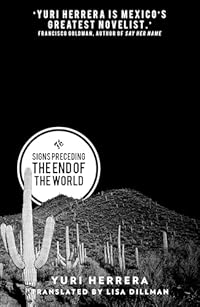
Signs Preceding the End of the World is one of the most arresting novels to be published in Spanish in the last ten years. Yuri Herrera does not simply write about the border between Mexico and the United States and those who cross it. He explores the crossings and translations people make in their minds and language as they move from one country to another, especially when there's no going back. Traversing this lonely territory is Makina, a young woman who knows only too well how to survive show more in a violent, macho world. Leaving behind her life in Mexico to search for her brother, she is smuggled into the USA carrying a pair of secret messages – one from her mother and one from the Mexican underworld.. show less
Tags
Recommendations


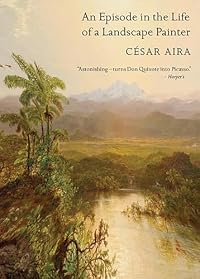
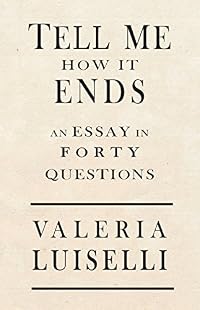
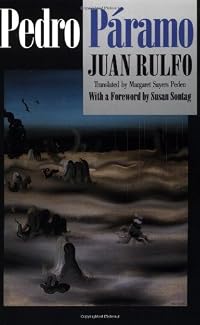
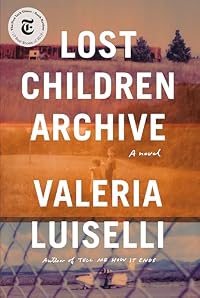







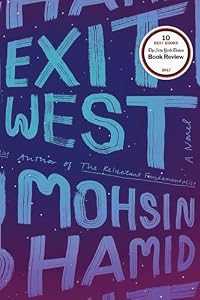


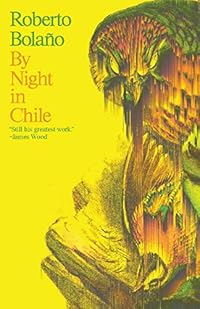




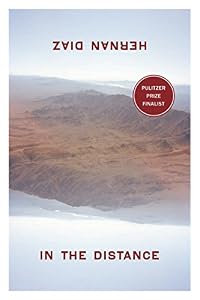
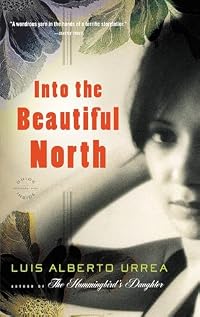










Member Recommendations
Member Reviews
SIGNS PRECEDING THE END OF THE WORLD is the tale of Makina, a young woman who must travel across a border to find her long-lost brother and deliver him a message. In order to accomplish this task, she is forced to rely on local crime lords, men who know the people who can smuggle her into the country and back out again. It's all very secretive - Makina doesn't know anything about those individuals on whom she's relying, and she's never completely sure that something won't go wrong and her whole mission will be compromised. It's her harrowing story, told in Yuri Herrera's thoughtful and expertly chosen prose (thoughtfully translated from Spanish by Lisa Dillman) and engaging characters that makes this brief story so compelling.
Makina show more works as a telephone switchboard operator, and acknowledges that she is very good at her job. There aren't any cellular towers built near her area, so people still rely on an operator to connect them. She will keep confidences, which makes her popular with those in organized crime, but she's not afraid to offer her opinion when necessary. There's a hilarious scene where two lovers are quarreling across the phone lines to each other, and Makina inserts herself into the conversation as a kind of translator. She interprets what one lover is saying and responds back to the other in such a way that she eventually helps them to reconcile. It's that unique blend of secrecy and self-ssuredness that serves her well on her journey.
While the countries from which Makina is leaving and entering are never mentioned by name, it's easy to recognize them as Mexico and the United States, respectively. The fact that the author himself is Mexican, and is now living/working in the US, only seems to further support this idea. The physical border to be crossed is described as a fast-moving river, which could easily be the Rio Grande, followed by difficult desert terrain. There are police, border-residing vigilantes, and others who try to prevent Makina from reaching her brother. These same groups frequently make news headlines for their inhumane and illegal treatment of individuals the encounter around the border area. Through his descriptions of these people - those "defending" the border and those trying to cross it, the author explores the tenseness of immigration relations between the US and Mexico.
The reader is also treated to the view of America from a first-time visitor's perspective. She notices the unnatural bounty of supermarkets, the ever-present signs prohibiting almost all behavior, and the sadness that she identifies as coming from the too-strong relationship to technology at the sake of human contact. There is a particularly beautiful piece of imagery used when Makina is walking around the restaurants in the city, experiencing the culture through its smells since she could not afford to dine. It's during this scene that she notices just how many Mexicans work in these restaurants, and makes the aside that "All cooking is Mexican cooking", which in some ways is a very true statement. With the current political climate that seems to favor mass arrest and deportation, it's worth thinking about how these actions will trickle down to all aspects of American life, including food.
There is so much richness of language, of exploration into the immigrant experience, and the lengths to which some people will go to obtain a piece of the American Dream. SIGNS PRECEDING THE END OF THE WORLD is a masterwork, and at only 107 pages, you'll fly through it and then wonder how the author could pack so much into such a short work. His precision in language, even when in translation, is breathtaking and so vibrant that you can really picture the worlds in which the story takes place. I highly recommend this book, for its insightful portrayal of US/Mexico immigration and the harrowing story of a young woman on a mission. show less
Makina show more works as a telephone switchboard operator, and acknowledges that she is very good at her job. There aren't any cellular towers built near her area, so people still rely on an operator to connect them. She will keep confidences, which makes her popular with those in organized crime, but she's not afraid to offer her opinion when necessary. There's a hilarious scene where two lovers are quarreling across the phone lines to each other, and Makina inserts herself into the conversation as a kind of translator. She interprets what one lover is saying and responds back to the other in such a way that she eventually helps them to reconcile. It's that unique blend of secrecy and self-ssuredness that serves her well on her journey.
While the countries from which Makina is leaving and entering are never mentioned by name, it's easy to recognize them as Mexico and the United States, respectively. The fact that the author himself is Mexican, and is now living/working in the US, only seems to further support this idea. The physical border to be crossed is described as a fast-moving river, which could easily be the Rio Grande, followed by difficult desert terrain. There are police, border-residing vigilantes, and others who try to prevent Makina from reaching her brother. These same groups frequently make news headlines for their inhumane and illegal treatment of individuals the encounter around the border area. Through his descriptions of these people - those "defending" the border and those trying to cross it, the author explores the tenseness of immigration relations between the US and Mexico.
The reader is also treated to the view of America from a first-time visitor's perspective. She notices the unnatural bounty of supermarkets, the ever-present signs prohibiting almost all behavior, and the sadness that she identifies as coming from the too-strong relationship to technology at the sake of human contact. There is a particularly beautiful piece of imagery used when Makina is walking around the restaurants in the city, experiencing the culture through its smells since she could not afford to dine. It's during this scene that she notices just how many Mexicans work in these restaurants, and makes the aside that "All cooking is Mexican cooking", which in some ways is a very true statement. With the current political climate that seems to favor mass arrest and deportation, it's worth thinking about how these actions will trickle down to all aspects of American life, including food.
There is so much richness of language, of exploration into the immigrant experience, and the lengths to which some people will go to obtain a piece of the American Dream. SIGNS PRECEDING THE END OF THE WORLD is a masterwork, and at only 107 pages, you'll fly through it and then wonder how the author could pack so much into such a short work. His precision in language, even when in translation, is breathtaking and so vibrant that you can really picture the worlds in which the story takes place. I highly recommend this book, for its insightful portrayal of US/Mexico immigration and the harrowing story of a young woman on a mission. show less
"The end of the uni-verse" (translator's note)
I read two excellent Mexican novels in 2015; Jennifer Clement's Prayers for the Stolen; and this one. Both are similar, and yet very different; they both concern the border, the idea of different worlds, the violence of a male society ruled by guns and the knowledge that nobody dies peacefully of old age, and how women survive in it.
The difference: Clement writes (brilliantly) about a world which is, Herrera writes of one that becomes. It's a subjective, subjunctive novel.
Using in one tongue the word for a thing in the other makes the attributes of both resound: if you say Give me fire when they say Give me a light, what is not to be learned about fire, light and the act of giving? It's not show more another way of saying things: these are new things. The world happening anew, Makina realizes: promising other things, signifying other things, producing different objects. Who knows if they'll last, who knows if these names will be adopted by all, she thinks, but there they are, doing their damnedest.
A simple story: Makina (as in deus ex?) lives in a small town in Mexico, ruled by gangs. She has to cross the border into the US to bring back her brother, who left years ago to reclaim something that was supposed to be legally theirs, and never came back. She has to make deals to get there, but what's more, she has to transform. What she is at home isn't what she is over there. Then again, is anyone?
Signs... is a novel of language; Herrera bombards the reader with worlds... sorry, words that are pregnant with concepts, that frequently fit together in new ways. There's plenty of dialogue but no speech markers; there's no wall between the narrative and the people caught within it, whatever they may think when they look at each other or try to figure out which language to use. At the centre is that neologism jarchar - to verse in Lisa Dillman's (excellent, and appropriately subversive) translation - a verb meaning to exit, to cross, to transgress, to pass, to stand out, to counterpoint, to become a story. The act of leaving, entering somewhere new, changes not just the one who leaves and enters but the story around them. Makina is one of the most memorable characters I've read all year, even though (or perhaps because) both because of who she is and who she becomes as the story mutates around her. All that bullshit about "strong female characters" that all too often means physically strong; she's one of those who can recognize the story around her and make her mark on it, who can gaze - and let the reader gaze - into all those layers of thatsjustthewayitis and slip between them.
We are to blame for this destruction, we who don’t speak your tongue and don’t know how to keep quiet either. We who didn’t come by boat, who dirty up your doorsteps with our dust, who break your barbed wire. We who came to take your jobs, who dream of wiping your shit, who long to work all hours. We who fill your shiny clean streets with the smell of food, who brought you violence you’d never known, who deliver your dope, who deserve to be chained by neck and feet. We who are happy to die for you, what else could we do? We, the ones who are waiting for who knows what. We, the dark, the short, the greasy, the shifty, the fat, the anemic. We the barbarians.
That title; much like another novel set in the Mexican borderlands, the end of the world seems a given; always in gerund, never in the present or future tense. Then again, someone with a passing knowledge in mythology knows that the calendar always starts over again after each apocalypse, and new things rise from the old. Go, then; there are other worlds than this.
/December 2015
Reread 21/11/16 in Swedish. Still great, but the Swedish translation completely ditches the "verse"/"jarchar" thing which disappoints me a bit. show less
I read two excellent Mexican novels in 2015; Jennifer Clement's Prayers for the Stolen; and this one. Both are similar, and yet very different; they both concern the border, the idea of different worlds, the violence of a male society ruled by guns and the knowledge that nobody dies peacefully of old age, and how women survive in it.
The difference: Clement writes (brilliantly) about a world which is, Herrera writes of one that becomes. It's a subjective, subjunctive novel.
Using in one tongue the word for a thing in the other makes the attributes of both resound: if you say Give me fire when they say Give me a light, what is not to be learned about fire, light and the act of giving? It's not show more another way of saying things: these are new things. The world happening anew, Makina realizes: promising other things, signifying other things, producing different objects. Who knows if they'll last, who knows if these names will be adopted by all, she thinks, but there they are, doing their damnedest.
A simple story: Makina (as in deus ex?) lives in a small town in Mexico, ruled by gangs. She has to cross the border into the US to bring back her brother, who left years ago to reclaim something that was supposed to be legally theirs, and never came back. She has to make deals to get there, but what's more, she has to transform. What she is at home isn't what she is over there. Then again, is anyone?
Signs... is a novel of language; Herrera bombards the reader with worlds... sorry, words that are pregnant with concepts, that frequently fit together in new ways. There's plenty of dialogue but no speech markers; there's no wall between the narrative and the people caught within it, whatever they may think when they look at each other or try to figure out which language to use. At the centre is that neologism jarchar - to verse in Lisa Dillman's (excellent, and appropriately subversive) translation - a verb meaning to exit, to cross, to transgress, to pass, to stand out, to counterpoint, to become a story. The act of leaving, entering somewhere new, changes not just the one who leaves and enters but the story around them. Makina is one of the most memorable characters I've read all year, even though (or perhaps because) both because of who she is and who she becomes as the story mutates around her. All that bullshit about "strong female characters" that all too often means physically strong; she's one of those who can recognize the story around her and make her mark on it, who can gaze - and let the reader gaze - into all those layers of thatsjustthewayitis and slip between them.
We are to blame for this destruction, we who don’t speak your tongue and don’t know how to keep quiet either. We who didn’t come by boat, who dirty up your doorsteps with our dust, who break your barbed wire. We who came to take your jobs, who dream of wiping your shit, who long to work all hours. We who fill your shiny clean streets with the smell of food, who brought you violence you’d never known, who deliver your dope, who deserve to be chained by neck and feet. We who are happy to die for you, what else could we do? We, the ones who are waiting for who knows what. We, the dark, the short, the greasy, the shifty, the fat, the anemic. We the barbarians.
That title; much like another novel set in the Mexican borderlands, the end of the world seems a given; always in gerund, never in the present or future tense. Then again, someone with a passing knowledge in mythology knows that the calendar always starts over again after each apocalypse, and new things rise from the old. Go, then; there are other worlds than this.
/December 2015
Reread 21/11/16 in Swedish. Still great, but the Swedish translation completely ditches the "verse"/"jarchar" thing which disappoints me a bit. show less
A timely read, the book offers a "hero's journey" of Makina, a Mexican woman sent by her mother to find her brother on the 'other side', while also carrying a "package" for a certain Mr. Aitch. While something is always lost in translation, I think Lisa Dillman worked hard (at least according to the Translator's Note) to pick up on the craft of Herrera's writing. The style reminded me of both Italo Calvino and José Saramago, the former of whom I love, and the latter I'm still trying...
Pay attention to the beginning as it is what helps situate this Campbellian monomyth. There's a lot of subtlety in the book, and certain moments almost seem meta-narrative: "Using in one tongue the word for a thing in the other makes the attributes of show more both resound: if you say Give me fire when they say Give me a light, what is not to be learned about fire, light and the act of giving? It's not another way of saying things: these are new things." (67-68).
Yes, it is a book about migration, but also more metaphorical border crossings. show less
Pay attention to the beginning as it is what helps situate this Campbellian monomyth. There's a lot of subtlety in the book, and certain moments almost seem meta-narrative: "Using in one tongue the word for a thing in the other makes the attributes of show more both resound: if you say Give me fire when they say Give me a light, what is not to be learned about fire, light and the act of giving? It's not another way of saying things: these are new things." (67-68).
Yes, it is a book about migration, but also more metaphorical border crossings. show less
Read for my writerly book group. A young Mexican woman crosses the US border to seek her brother. She is brave and observant and resourceful. The book is written in short intense bursts, very cinematic, really. One could read this book several times, pick it apart, and find it breaktakingly well thought out and put together. But the takeaway will remain the same: Crossing borders must never be taken lightly. And some borders in particular change the one who crosses, a death occurs, not necessarily literal, but powerfully life-changing. Nothing will be the same after. Kind of a five star, but I was left . . . annoyed by the ambiguity of the ending, thought it unnecessary. His choice, fine. ****1/2
A stark, stylish novella which reads like a modern Mexican katabasis – a descent into the underworld that is also a journey over the border into the US. Herrera's prose style and his narrative framing (the story begins with a sinkhole opening in a Mexican village, and ends with a charged descent into a basement) invite mythic comparisons, with our protagonist Makina like a supercool latter-day Ishtar, who travelled to see her sister in hell, removing one item of clothing at each of the seven gates. Makina, travelling to find her own sibling, is similarly stripped of what she brings with her, though whether she is going to hell or not is very much at issue. (Then again, Mesopotamia is a long way from Mexico, so perhaps we should really show more be thinking about Quetzlcoatl's descent to the underworld. I don't know anything about it, unfortunately.)
And yet despite all this metaphorical layering – with which reviewers have a tendency to get too carried away – the book is, for me, at its most satisfying as a purely literal treatment of the Mexico–US border, and Makina is wonderful character just on her own terms. Laconic and resourceful, dealing coolly with changing and often frightening circumstances, she's a figure you don't see that frequently in fiction, and I would happily have spent ten times as long in her company. The language in which she is described has, like all the language in this book, a certain flexible, lapidary quality, like the liminal patois spoken across the illicit borderland:
More than the midpoint between homegrown and anglo their tongue is a nebulous territory between what is dying out and what is not yet born. But not a hecatomb. Makina senses in their tongue not a sudden absence but a shrewd metamorphosis, a self-defensive shift. They might be talking in perfect latin tongue and without warning begin to talk in perfect anglo tongue […] Using in one tongue the word for a thing in the other makes the attributes of both resound: if you say Give me fire when they say Give me a light, what is not to be learned about fire, light and the act of giving? It's not another way of saying things: these are new things.
The book is full of such ‘new things’, a challenge that has drawn great inventiveness and creativity from the English translator Lisa Dillman. That ‘anglo’ above is a rendering of the Spanish gabacho, a word that originally meant Pyrenean, but which in Mexican slang means something like ‘gringo’, though perhaps not quite so pejorative. A more delightful coinage of Herrera's (at least I think it's his) is his use of desgranar ‘to shell (a nut etc.)’ as a female-agentive version of ‘fuck’. Dillman translates this with neat literalness as ‘shuck’ (‘she’d been reckless and gone and shucked him as she had others on a couple of trips to the Little Town…’), which has the added bonus of rhyming felicitously. (Under a different review, someone was lamenting recently that such a word for the opposite of penetration does not exist in English, and pointed me to an article proposing ‘circlusion’ – well, here's a suggestion that's a little simpler and admirably suited.) It well expresses not just Makina's casual attitude to sex, but her complete refusal ever to be an object of anything – she is All Subject.
More notorious is Herrera's invention of jarchar, a multi-purpose verb of movement covering ‘leave’, ‘go’, ‘travel’, ‘come’, which derives from a term used of Mozarabic poetry – Dillman talks about this one directly in an afterword. Her translation, ‘to verse’, works perfectly in my opinion. On a very few occasions, there are hints of translationese in the form of not-quite-appropriate set phrases (‘A few houses had already been sent packing to the underworld’), but on the whole I thought the translation was extremely sensitive and atmospheric.
Indeed it's amazing just how much atmosphere and resonance such a short book can generate – I read it in less than an hour, but it will be with me for some time. Recommended reading for the Underground. show less
And yet despite all this metaphorical layering – with which reviewers have a tendency to get too carried away – the book is, for me, at its most satisfying as a purely literal treatment of the Mexico–US border, and Makina is wonderful character just on her own terms. Laconic and resourceful, dealing coolly with changing and often frightening circumstances, she's a figure you don't see that frequently in fiction, and I would happily have spent ten times as long in her company. The language in which she is described has, like all the language in this book, a certain flexible, lapidary quality, like the liminal patois spoken across the illicit borderland:
More than the midpoint between homegrown and anglo their tongue is a nebulous territory between what is dying out and what is not yet born. But not a hecatomb. Makina senses in their tongue not a sudden absence but a shrewd metamorphosis, a self-defensive shift. They might be talking in perfect latin tongue and without warning begin to talk in perfect anglo tongue […] Using in one tongue the word for a thing in the other makes the attributes of both resound: if you say Give me fire when they say Give me a light, what is not to be learned about fire, light and the act of giving? It's not another way of saying things: these are new things.
The book is full of such ‘new things’, a challenge that has drawn great inventiveness and creativity from the English translator Lisa Dillman. That ‘anglo’ above is a rendering of the Spanish gabacho, a word that originally meant Pyrenean, but which in Mexican slang means something like ‘gringo’, though perhaps not quite so pejorative. A more delightful coinage of Herrera's (at least I think it's his) is his use of desgranar ‘to shell (a nut etc.)’ as a female-agentive version of ‘fuck’. Dillman translates this with neat literalness as ‘shuck’ (‘she’d been reckless and gone and shucked him as she had others on a couple of trips to the Little Town…’), which has the added bonus of rhyming felicitously. (Under a different review, someone was lamenting recently that such a word for the opposite of penetration does not exist in English, and pointed me to an article proposing ‘circlusion’ – well, here's a suggestion that's a little simpler and admirably suited.) It well expresses not just Makina's casual attitude to sex, but her complete refusal ever to be an object of anything – she is All Subject.
More notorious is Herrera's invention of jarchar, a multi-purpose verb of movement covering ‘leave’, ‘go’, ‘travel’, ‘come’, which derives from a term used of Mozarabic poetry – Dillman talks about this one directly in an afterword. Her translation, ‘to verse’, works perfectly in my opinion. On a very few occasions, there are hints of translationese in the form of not-quite-appropriate set phrases (‘A few houses had already been sent packing to the underworld’), but on the whole I thought the translation was extremely sensitive and atmospheric.
Indeed it's amazing just how much atmosphere and resonance such a short book can generate – I read it in less than an hour, but it will be with me for some time. Recommended reading for the Underground. show less
I immediately fell in love with the opening sentence of ‘Signs Preceding the End of the World’:
Such a vivid image places you immediately in situ, introduces Makina, and sets up an environment of arbitrary risk. This high quality of writing is sustained throughout the short, punchy novel. The plot is simple: Makina crosses the border from Mexico to the US in show more search of her brother. Her quest has a mythic, ancient Greek quality, coupled with a sense of contemporary familiarity. The translator’s note at the end talks about this and gives especially detailed treatment to the verb ‘jarchar’, which is beautifully and memorably translated as ‘verse’. It functions in the text as a synonym for depart, giving Makina’s exits a specific atmosphere.
I found this novel unusual, striking, moving, and altogether very impressive. It packs such a lot into a small space. Not a word is wasted or misplaced. Characters are delineated and memorable images called up in abbreviated paragraphs. I didn’t even notice the absence of speech marks until I’d reached the end, although that has often been known to irritate me. It is probably best read in one go, which is very easily done. I feel vindicated in my policy of picking out any library book with ‘end of the world’ somewhere on the cover and reading the blurb. You can discover some great reads in this fashion. show less
I’m dead, Makina said to herself when everything lurched: a man with a cane was crossing the street, a dull groan suddenly surged through the asphalt, the man stood still as if waiting for someone to repeat the question and then the earth opened up beneath his feet: it swallowed the man, and with him a car and a dog, all the oxygen around and even the screams of passers-by.
Such a vivid image places you immediately in situ, introduces Makina, and sets up an environment of arbitrary risk. This high quality of writing is sustained throughout the short, punchy novel. The plot is simple: Makina crosses the border from Mexico to the US in show more search of her brother. Her quest has a mythic, ancient Greek quality, coupled with a sense of contemporary familiarity. The translator’s note at the end talks about this and gives especially detailed treatment to the verb ‘jarchar’, which is beautifully and memorably translated as ‘verse’. It functions in the text as a synonym for depart, giving Makina’s exits a specific atmosphere.
I found this novel unusual, striking, moving, and altogether very impressive. It packs such a lot into a small space. Not a word is wasted or misplaced. Characters are delineated and memorable images called up in abbreviated paragraphs. I didn’t even notice the absence of speech marks until I’d reached the end, although that has often been known to irritate me. It is probably best read in one go, which is very easily done. I feel vindicated in my policy of picking out any library book with ‘end of the world’ somewhere on the cover and reading the blurb. You can discover some great reads in this fashion. show less
Dreamy and hallucinatory, small and perfectly formed. In 106 pages, and 9 chapters Makina descends into either hell or at least some sort of alien underworld. Ostensibly leaving her village to cross the border to search for her lost brother, her journey becomes wider and more revelatory as each chapter milestone is crossed and as each new guide appears, to take her on the next phase of her journey. In some ways reminiscent of Ishiguro's The Unconsoled (but thankfully a lot easier to read) there is some very profound and beautiful writing (even in translation). I liked this passage in particular
(Makina observes some same sex weddings) "Makina had admired the nerve of her friends who were that way inclined, compared to the tedious show more smugness of so-called normal marriages; she'd conveyed secret messages, lent her home for the loving that could not speak its name, lent her clothing for liberation parades. She'd witnessed other ways to love.....and now they were acting just the same. She felt slightly let down, but then said to herself what did she know? It must be, she thought, that they know other marriages, good ones, where people don't split up, where fathers don't leave, and they keep speaking to the other. That must be why they are so happy, and don't mind imitating people who've always despised them. Or maybe they just want the papers, and kind of papers, she said to herself, even if its only to fit in, maybe being different gets old after a while".
Just so. A wonderful book that will stay with you for a while show less
(Makina observes some same sex weddings) "Makina had admired the nerve of her friends who were that way inclined, compared to the tedious show more smugness of so-called normal marriages; she'd conveyed secret messages, lent her home for the loving that could not speak its name, lent her clothing for liberation parades. She'd witnessed other ways to love.....and now they were acting just the same. She felt slightly let down, but then said to herself what did she know? It must be, she thought, that they know other marriages, good ones, where people don't split up, where fathers don't leave, and they keep speaking to the other. That must be why they are so happy, and don't mind imitating people who've always despised them. Or maybe they just want the papers, and kind of papers, she said to herself, even if its only to fit in, maybe being different gets old after a while".
Just so. A wonderful book that will stay with you for a while show less
Members
- Recently Added By
Lists

The Guardian's 100 best books of the 21st century
100 works; 21 members

Top Five Books of 2016
795 works; 229 members

Lithub: The 50 Best Contemporary Novels Under 200 Pages
50 works; 4 members

Books Read in 2016
4,666 works; 199 members
Author Information

Yuri Herrera was born in Actopan, Mexico, in 1970. He earned his PhD for Hispanic Language and Literature from UC Berkeley. He teaches at the University of Tulane, in New Orleans. Signs Preceding the End of the World, is his first novel in English. He and translator Lisa Dillman won the Best Translated Book Award 2016 from the University of show more Rochester's Three Percent blog and funded by Amazon's literary partnerships program. His latest work includes The Transmigration of Bodies (July 2016). (Bowker Author Biography) show less
Some Editions
Awards and Honors
Awards
Distinctions
Series

Belongs to Publisher Series
And Other Stories (24)
Work Relationships
Is contained in
Common Knowledge
- Original publication date
- 2009
- People/Characters
- Makina; Mr. Double-U; Mr. Aitch; Mr. Q; Chucho
- Important places
- Mexico
- Dedication
- For my grandmother Nina, my aunt Ester, and my uncle Miguel, on their way.
- First words
- I'm dead, Makina said to herself when everything lurched: a man with a cane was crossing the street, a dull groan suddenly lurched through the asphalt, the man stood still as if waiting for someone to repeat the question and ... (show all)then the earth opened up beneath his feet: it swallowed the man, and with him a car and a dog, all the oxygen around and even the screams of the passers by.
- Last words
- (Click to show. Warning: May contain spoilers.)When she looked up the man was no longer there and she tipped briefly into panic, she felt for a second - or many seconds; she couldn't tell because she didn't have a watch, nobody had a watch - that the turmoil of so many new things crowding in on the old ones was more than she could take; but a second - or many - later she stopped feeling the weight of uncertainty and guilt; she thought back to her people as though recalling the contours of a lovely landscape that was now fading away: the Village, the Little Town, The Big Chilango, all those colors, and she saw that what was happening was not a cataclysm: she understood with all of her body and all of her memory, she truly understood, and when everything in the world fell silent finally said to herself I'm ready.
- Blurbers
- Luiselli, Valeria; Alarcón, Daniel; Goldman, Francisco; Volpi, Jorge; Alarcon, Daniel; Obiol, Maria Jose
- Original language
- Spanish
Classifications
- Genres
- General Fiction, Fiction and Literature
- DDC/MDS
- 863.7 — Literature & rhetoric Spanish, Portuguese, Galician literatures Spanish fiction 21st Century
- LCC
- PQ7298.418 .E7986 .S4613 — Language and Literature French, Italian, Spanish and Portuguese literatures Spanish literature Provincial, local, colonial, etc. Spanish America
- BISAC
Statistics
- Members
- 1,004
- Popularity
- 25,824
- Reviews
- 36
- Rating
- (3.97)
- Languages
- 6 — Dutch, English, French, Italian, Spanish, Swedish
- Media
- Paper, Audiobook, Ebook
- ISBNs
- 12
- ASINs
- 6