On This Page
Description
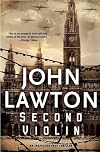
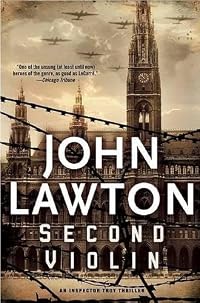
One of today's top historical espionage writers, John Lawton, adds another spellbinding thriller to his Inspector Troy series with Second Violin. The sixth installment in the series, Lawton's new novel opens in 1938 with Europe on the brink of war. In London, Frederick Troy, newly promoted to the prestigious murder squad at Scotland Yard, is put in charge of rounding up a list of German and Italian "enemy aliens" that also includes Frederick's brother, Rod, who learns upon receiving an show more internment letter that he was born in Austria despite having grown up in England. Hundreds of men are herded by train to a neglected camp on the Isle of Man. And as the bombs start falling on London, a murdered rabbi is found, then another, and another. Amid great war, murder is what matters. Moving from the Nazi-infested alleys of prewar Vienna to the bombed-out streets of 1940 London, and featuring an extraordinary cast of characters, Lawton's latest thriller is a suspenseful and intelligent novel, as good a spy story as it is an historical narrative. show lessTags
Recommendations









Member Recommendations
Member Reviews
I gave it a try, but made it only to page 110. I picked the book up as "an Inspector Troy thriller," but Inspector Troy made no appearance in the first quarter of the book, nor is this a thriller; in fact, the part that I read was a grim historical novel set in Vienna during the Nazi takeover and the beginning of the Jewish genocide. I'm aware of many of the ways that the Nazis stole the dignity from their victims before dispatching them, and I didn't enjoy reading about it again. And after reading it, I found the idea of this book somehow finally turning into "an Inspector Troy thriller," with the escapist lack of seriousness that the label implies, tasteless.
I kept going for 110 pages partly because the book *is* better written than show more your average murder mystery, and I wanted to know why the reviewer at the Chicago Tribune found Lawton as good as Le Carré. But ultimately, even the writing fell through for me as historical characters were introduced. The portrayal of Churchill was believable enough, but I found Lawton's Freud too sweet-tempered and gregarious for a man suffering from a painful, terminal cancer of the jaw, and Lawton's H.G. Wells was a mere caricature apparently designed to make socialists seem silly.
I admire Lawton's ambition, but it seems misplaced. show less
I kept going for 110 pages partly because the book *is* better written than show more your average murder mystery, and I wanted to know why the reviewer at the Chicago Tribune found Lawton as good as Le Carré. But ultimately, even the writing fell through for me as historical characters were introduced. The portrayal of Churchill was believable enough, but I found Lawton's Freud too sweet-tempered and gregarious for a man suffering from a painful, terminal cancer of the jaw, and Lawton's H.G. Wells was a mere caricature apparently designed to make socialists seem silly.
I admire Lawton's ambition, but it seems misplaced. show less
Great personal rather than portentous depiction of the early days of World War II--when you're in the middle of things, how do you know if it's historic, if it'll get better or worse? The book jacket overstates the thriller and spying parts of the story; fans of Foyle's War on TV would enjoy the pace and tone.
"Second Violin" is one of my favorite Frederick Troy novels, despite the fact that the murders really have nothing to do with the rest of the book. Like the latest book in the series, "A Lily of the Field," the book begins in Austria and Germany, introducing characters who will be important to the rest of the book. Some of these characters also turn up in other books in the series. I actually like not having read the books in chronological order; it's fun to know what happens to the various characters when you meet them in earlier books.
"Second Violin" introduces two women who feature in later books, Zette Borg and Kitty Stilton. Both will become his lovers and they represent the type of sexual encounters that he will have throughout show more the series. Zette may have been Troy's first lover -- he's a little vague about that -- and she sets the bar high for all the rest. She's beautiful and crazy. She's also a physicist who will later play a role in the development of the atomic bomb. Kitty is a Cockney police officer, the daughter of one of Troy's colleagues. She's looking for a husband and Troy has no interest in being her Mr. Right. Kitty features in a later book as well, married to an American presidential hopeful during the 1960s.
The atmospheric portrayal of London, especially the horror and the excitement of the Blitz; the quirky and endearing characters; the mix of historical and fictional characters -- all add up to an extremely satisfying thriller. I won't say murder mystery, because that is actually the least-satisfying aspect of "Second Violin," but I'm not complaining. show less
"Second Violin" introduces two women who feature in later books, Zette Borg and Kitty Stilton. Both will become his lovers and they represent the type of sexual encounters that he will have throughout show more the series. Zette may have been Troy's first lover -- he's a little vague about that -- and she sets the bar high for all the rest. She's beautiful and crazy. She's also a physicist who will later play a role in the development of the atomic bomb. Kitty is a Cockney police officer, the daughter of one of Troy's colleagues. She's looking for a husband and Troy has no interest in being her Mr. Right. Kitty features in a later book as well, married to an American presidential hopeful during the 1960s.
The atmospheric portrayal of London, especially the horror and the excitement of the Blitz; the quirky and endearing characters; the mix of historical and fictional characters -- all add up to an extremely satisfying thriller. I won't say murder mystery, because that is actually the least-satisfying aspect of "Second Violin," but I'm not complaining. show less
Although Lawton's books are shelved in the mystery section and this one is subtitled "An Inspector Troy Thriller," and one of the jacket blurbs calls him an espionage writer, I don't think he really belongs in any of those categories. His novels (of which I've read two now)could readily fit into the Guardian's "State of the Nation" category; the sections dealing with Frederick Troy are in the genre of Bildungsroman just as much as they are police procedurals. In both [b:Riptide|303098|Riptide|Douglas Preston|http://photo.goodreads.com/books/1173555399s/303098.jpg|131682] and [b:Second Violin|579753|One of Us Is Wrong (Felony & Mayhem Mysteries)|Samuel Holt|http://photo.goodreads.com/books/1175974986s/579753.jpg|566660], there is quite a show more lot of the book before Troy even appears; his brother and father are also major characters, especially in Second Violin. There is espionage (in Riptide in particular) but it doesn't seem to be the focus of the series. These two books, the first and second in chronological order although not published as such, remind me of the television series Foyle's War in the way that they evoke the life of Britain during the Second World War. Troy, who is actually just a Sergeant in this book, is the son of a Russian emigre who has made a fortune as a newspaper publisher and writes his own editorials. His elder brother is a journalist. Famous people of the time appear occasionally but not excessively. Second Violin seems to me to fall outside the categories of thriller/mystery/spy story because it has more than one theme or focus, but one of the important ones is identity -- who is British? who is not? Don't expect a formula story, but this is well worth reading and I'll be seeking out the remainder of the series, which I believe carries on into at least the 1960s. show less
I loved it! Lawton is an extremely effective writer and I loved the combination of a good mystery story interwoven with the complex political and social forces raging at the outset of World War II. It reminded me of how much I enjoyed Herman Wouk's "Winds of War." Lawton creates very vivid characters, people who are more than just plot devices. He is able to make one care about what happens to them, both the nice and the not-so-nice.
I got this book because of a recommendation from LibraryThing and my pleasure in reading it just reinforces what a great tool LT is. I am going to work my way through Lawton's Inspector Troy series with great relish.
I got this book because of a recommendation from LibraryThing and my pleasure in reading it just reinforces what a great tool LT is. I am going to work my way through Lawton's Inspector Troy series with great relish.
More a history than a mystery., this novel is set earlier with, Troy as a Sergeant of the Murder Squad but seconded to Special Branch. There, he discovers that thuggery and racial profiling were not just practiced in Germany. Timely flashbacks and much flitting among character perspectives keep the story lively and interesting. Soupcons of real people liven the broth nicely
(Completed 1/20 - #4, rating 4.0) This is the 6th book of this 7 book series, the 4th I have read. I love this series. It is a grand mix of London from the 30's through the early 60's, politics, at war, history, big personalities, sex, and a bit of crime fiction. For the most part, Second Violin stays within the 1939-40 timeframe and does not bounce around earlier nor later years as have other Troy novels (This is the only series I've read where the reader can pretty much pick up any book and read the series in any order - there is no order!) Anyway, SV starts very slowly, the first 100 pages deal with Nazis in Vienna and impacts on the local Jews. I barely stayed with the book, but for me it got rolling once the story shifted to show more London. After another 100 pages or so I had to admit to myself that the first 100 pages were in fact necessary (I've read enough about Nazis though, thank you.) There is a murder mystery of sorts in the background but it is dwarfed by what happens to the Troy family and others - including the "imprisonment" of the oldest son of this 'toff' family because he was born in Danzig(?) and never became a naturalized citizen - so Rod is sent off on a long train ride along with other aliens to a makeshift camp. Meanwhile Freddie is trying to figure out why so many Rabbis from the Stepney area are dying, and Dad is having meetings with Churchill and phone conversations with Freud. Not your typical crime fiction series..... show less
Members
- Recently Added By
Author Information

30+ Works 2,371 Members
Series


Common Knowledge
- Canonical title
- Second Violin
- Original publication date
- 2007-08-09
- People/Characters
- Frederick Troy; Rod Troy; Alex Troy; Winston Churchill (Churchill, Winston Leonard Spencer); Sigmund Freud; Josef Hummel (show all 14); Kitty Stilton; Walter Stilton; Kolankiewicz; Viktor Rosen; Wolfgang Stahl; Billy Jacks; Zette Borg; Trager
- Important places
- London, England, UK; Vienna, Austria
- Important events
- World War II
- Dedication
- for Ion Trewin
- First words
- Yellow.
- Last words
- (Click to show. Warning: May contain spoilers.)Her former lover, Frederick Troy, having little or no grasp of physics, regarded all this as merely metaphor.
Classifications
Statistics
- Members
- 207
- Popularity
- 157,340
- Reviews
- 15
- Rating
- (3.72)
- Languages
- English
- Media
- Paper, Audiobook, Ebook
- ISBNs
- 17
- ASINs
- 6