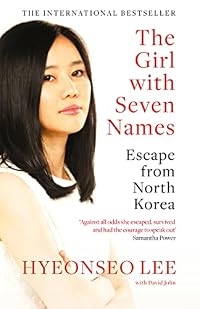
The Girl with Seven Names
by Hyeonseo Lee, David John
On This Page
Description
Biography & Autobiography. Politics. Nonfiction. NEW YORK TIMES BESTSELLER An extraordinary insight into life under one of the world's most ruthless and secretive dictatorships – and the story of one woman's terrifying struggle to avoid capture/repatriation and guide her family to freedom. As a child growing up in North Korea, Hyeonseo Lee was one of millions trapped by a secretive and brutal communist regime. Her home on the border with China gave her some exposure to the world beyond the show more confines of the Hermit Kingdom and, as the famine of the 1990s struck, she began to wonder, question and to realise that she had been brainwashed her entire life. Given the repression, poverty and starvation she witnessed surely her country could not be, as she had been told "the best on the planet"? Aged seventeen, she decided to escape North Korea. She could not have imagined that it would be twelve years before she was reunited with her family. show lessTags
Recommendations








Member Reviews
This is an account of the author's childhood growing up in the North Korean town of Hyesan, on the banks of the Yalu river that borders China. The horrors of life in North Korea are vividly recounted, but in some ways in a matter of fact way, as these experiences were normal for anyone growing up there in the 80s and 90s, with no point of comparison - witnessing her first public execution at the age of 7 and seeing starvation during the 90s as the economy collapses after subsidies from the fallen Soviet Union dry up. She escapes to China in late 1997 just before her 18th birthday and spends several years in Shenyang and Shanghai, including various narrow escapes, but she shows great resourcefulness and is able to thank her lucky stars show more that she learned some Chinese characters as a child. She eventually ends up in South Korea. She eventually succeeds in persuading her mother and younger brother to escape. But there are powerful drivers pulling the family members in all directions - her mother, now in her 50s, has grown up, married, raised children and lived her life in a society with an utterly different mentality and after a while yearns to return to the North, regardless of the risks of capture, imprisonment or death; and her brother pines for his fiancée, whom he fails to persuade to follow him into China, owing to the risk it will cause for her parents. The author encapsulates the dilemmas in her introduction: "..... I still love my country and miss it very much....Even for those who have suffered unimaginably there and have escaped hell, life in the free world can be so challenging that many struggle to come to terms with it and find happiness... a small number of them even give up, and return to live in that dark place, as I was tempted to do, many times." Migration, even to what is objectively a much better life situation, still carries with its own contradictions and conflicted emotions. show less
An astounding memoir of a woman who crossed the border from North Korea to China at seventeen, intending to return, but found herself stuck, separated from her mother and brother. She survived on her own, spending many years in China before eventually making her way to South Korea, and finally convincing her mother and brother to join her - an arduous, dangerous journey, full of twists of good and bad fortune - but ultimately, with the help of a kind stranger, the family members were reunited.
Quotes
The irony was that the new communist state had created a social hierarchy [songbun] more elaborate and stratified than anything seen in the time of the feudal emperors. (6)
One of the tragedies of North Korea is that everyone wears a mask, show more which they let slip at their peril. (20)
Kindness toward strangers is rare in North Korea. There is risk in helping others. The irony was that by forcing us to be good citizens, the state made accusers and informers of us all. (38)
...every child learned to subordinate their will to that of the collective...mass games helped to suppress individual thought. (51)
I had believed [the Chinese were worse off than North Koreans] for years, even though evidence to the contrary was everywhere before my eyes... (90)
My curiosity had always been greater than my fear - not a good trait to have in North Korea, where fear keeps your sense sharp and helps you stay alive. (91)
In truth there is no dividing line between cruel leaders and oppressed citizens. The Kims rule by making everyone complicit in a brutal system, implicating all, from the highest to the lowest, blurring morals so that no one is blameless. (150)
...the two Koreas had diverged into two quite separate cultures.....We were no longer the same people. (213)
...such generosity wasn't easy to accept. It involved a loss of control. All I could do was say thank you. (261)
One of the main reasons that distinctions between oppressor and victim are blurred in North Korea is that no one there has any concept of rights. To know that your rights are being abused, or that you are abusing someone else's, you first have to know that you have them, and what they are. (288)
Dictatorships may seem strong and unified, but they are always weaker than they appear. They are governed by the whim of one man, who can't draw upon a wealth of discussion and debate, as democracies can, because he rules through terror and the only truth permitted is his own. (290) show less
Quotes
The irony was that the new communist state had created a social hierarchy [songbun] more elaborate and stratified than anything seen in the time of the feudal emperors. (6)
One of the tragedies of North Korea is that everyone wears a mask, show more which they let slip at their peril. (20)
Kindness toward strangers is rare in North Korea. There is risk in helping others. The irony was that by forcing us to be good citizens, the state made accusers and informers of us all. (38)
...every child learned to subordinate their will to that of the collective...mass games helped to suppress individual thought. (51)
I had believed [the Chinese were worse off than North Koreans] for years, even though evidence to the contrary was everywhere before my eyes... (90)
My curiosity had always been greater than my fear - not a good trait to have in North Korea, where fear keeps your sense sharp and helps you stay alive. (91)
In truth there is no dividing line between cruel leaders and oppressed citizens. The Kims rule by making everyone complicit in a brutal system, implicating all, from the highest to the lowest, blurring morals so that no one is blameless. (150)
...the two Koreas had diverged into two quite separate cultures.....We were no longer the same people. (213)
...such generosity wasn't easy to accept. It involved a loss of control. All I could do was say thank you. (261)
One of the main reasons that distinctions between oppressor and victim are blurred in North Korea is that no one there has any concept of rights. To know that your rights are being abused, or that you are abusing someone else's, you first have to know that you have them, and what they are. (288)
Dictatorships may seem strong and unified, but they are always weaker than they appear. They are governed by the whim of one man, who can't draw upon a wealth of discussion and debate, as democracies can, because he rules through terror and the only truth permitted is his own. (290) show less
"The hours in each day when we were not being watched, by someone, were few"
By sally tarbox on 26 June 2017
Format: Paperback
Quite an interesting account of a N Korean defector. Min Young (later she took the name Hyeonseo Lee) lived a relatively privileged life in N Korea, with a stepfather in the military, a clever mother able to make a living in trading over the border (illegal but the guards could be bribed) and relatives in China.
She describes her childhood near the border - the conformity, the secret police, the almost religious devotion to the leader - and the executions and famine. As a rebellious teen, she planned a 'holiday' over in China by crossing the river by night. How her life panned out here - and later in S Korea - and show more how her later effort to help her family escape fared, makes an at times nailbiting read. show less
By sally tarbox on 26 June 2017
Format: Paperback
Quite an interesting account of a N Korean defector. Min Young (later she took the name Hyeonseo Lee) lived a relatively privileged life in N Korea, with a stepfather in the military, a clever mother able to make a living in trading over the border (illegal but the guards could be bribed) and relatives in China.
She describes her childhood near the border - the conformity, the secret police, the almost religious devotion to the leader - and the executions and famine. As a rebellious teen, she planned a 'holiday' over in China by crossing the river by night. How her life panned out here - and later in S Korea - and show more how her later effort to help her family escape fared, makes an at times nailbiting read. show less
Lugu inimeseks olemisest ja selleks jäämisest, milles on palju uskumatut, pead kratsima panevat, imestamist ja uuesti mõtestamist vajavaid sündmusi. Mul oli keeruline mitte rääkida raamatust, mida hetkel loen. Rääksin sellest kodus, tööl ja kohvikus. Lugu haaras kaasa ja köitis ühest küljest äärmise objektiivsusega režiimi suhtes, millele ei ole võimalik minu silmis mingit õigustus leida ja teisest küljest sügavate tunnetega inimese kõige salajasemates soppides, mille avamiseks tuleb läbi käia pikk ja käänuline tee.
Tüdruk, kes sai sellel pikal teekonnal seitse nime ja kes osutus lugeja eakaaslaseks, köidab oma piiritu aususe ja tagasihoidliku sitkusega, temas on tohutu jõud ja sihikindlus, samas ei karda ta show more näidata lugejale ka oma nõrka poolt. Samal ajal elasin mina õndsas õnnes ja rõõmus äsja taasiseseisvuse saavutanud riigis teadmata, et kusagil on tüdruk, kes poolkogemata satub vabadusse, millest tal oli vaid ähmane ettekujutus.
Lugedes tabasin mitu korda ennast mõttelt, et see kõik on kusagil olnud. Ehk ongi ja mälestused enda lapsepõlvest elustuvad nii mõnski kohas. Samas kui oled lugenud George Orwelli "1984" ja elanud läbi silmadele ning kõrvadele ebareaalsena näivaid sündmusi, siis "Seitsme nimega tüdruk" toob selle kõik veel lähemale. show less
Tüdruk, kes sai sellel pikal teekonnal seitse nime ja kes osutus lugeja eakaaslaseks, köidab oma piiritu aususe ja tagasihoidliku sitkusega, temas on tohutu jõud ja sihikindlus, samas ei karda ta show more näidata lugejale ka oma nõrka poolt. Samal ajal elasin mina õndsas õnnes ja rõõmus äsja taasiseseisvuse saavutanud riigis teadmata, et kusagil on tüdruk, kes poolkogemata satub vabadusse, millest tal oli vaid ähmane ettekujutus.
Lugedes tabasin mitu korda ennast mõttelt, et see kõik on kusagil olnud. Ehk ongi ja mälestused enda lapsepõlvest elustuvad nii mõnski kohas. Samas kui oled lugenud George Orwelli "1984" ja elanud läbi silmadele ning kõrvadele ebareaalsena näivaid sündmusi, siis "Seitsme nimega tüdruk" toob selle kõik veel lähemale. show less
What struck me most about this story is not the major acts of bravery or the astounding instances of luck, but how leaving North Korea presented more personal challenges. It is hard to live with freedom when it is something you never had; making choices and taking responsibility for those choices. It is hard to leave family at any time, but leaving and knowing you will never see them again must take such a toll. Learning that everything you'd been taught about your country and its leaders is a lie, as is most of what you'd been told about foreigners. What a toll it must take on an individual's sense of self, having to question everything you'd been taught to believe. Ms. Lee bravely faced many physical dangers and displayed remarkable show more intelligence and courage. Her inner courage, too, is much to be admired. show less
“I grew up knowing almost nothing of the outside world except as it was perceived through the lens of the regime. And when I left, I discovered only gradually that my country is a byword, everywhere, for evil. But I did not know this years ago, when my identity was forming. I thought life in North Korea was normal. Its customs and rulers became strange only with time and distance.”
Hyeonseo Lee tells her life story from childhood in North Korea, moving with her family within the country, living under a false identity in China, and eventually gaining asylum in South Korea. She was able to help her mother and brother migrate later, though they faced complications and were imprisoned in Laos. It portrays the North Korean culture and the show more difficulties they endure, while being told it is the best country on earth.
It is organized around the various names she assumed during her life. It is incredible how many obstacles she encountered before she was even thirty years old, including a brutal attack, an arranged marriage, sex trafficking, interrogation by the police, and being held hostage by a gang. It is a beautifully written story. The author has a talent for storytelling. This is one of the better North Korean defection memoirs I have read. show less
Hyeonseo Lee tells her life story from childhood in North Korea, moving with her family within the country, living under a false identity in China, and eventually gaining asylum in South Korea. She was able to help her mother and brother migrate later, though they faced complications and were imprisoned in Laos. It portrays the North Korean culture and the show more difficulties they endure, while being told it is the best country on earth.
It is organized around the various names she assumed during her life. It is incredible how many obstacles she encountered before she was even thirty years old, including a brutal attack, an arranged marriage, sex trafficking, interrogation by the police, and being held hostage by a gang. It is a beautifully written story. The author has a talent for storytelling. This is one of the better North Korean defection memoirs I have read. show less
A memoir more like a thriller than most memoirs. It's a story of her escape not only from North Korea but from her indoctrination as a schoolgirl - North Korea is the best country in the world and the Kim despots are like gods. At 17 she hatched a plan to escape across the river from her village to China, and there was horrified to come to realize that she had been brainwashed. She was able to pass as Korean-Chinese by learning Chinese, amazingly, by watching TV. Eventually she crossed to South Korea using a complicated plan she devised, and then managed to bring her mother and brother there.
She is not only courageous but she must be brilliant, becoming fluent not only in Mandarin but in English - so much so that this book is show more beautifully written. Hard to put down. show less
She is not only courageous but she must be brilliant, becoming fluent not only in Mandarin but in English - so much so that this book is show more beautifully written. Hard to put down. show less
Members
- Recently Added By
Lists

Boeken.
10 works; 1 member

wish list
61 works; 3 members

HarperCollins Publishers
144 works; 3 members

Biographies: Women
112 works; 1 member
North Korean Authors
15 works; 2 members
Author Information

1 Work 1,225 Members
Hyeonseo Lee was born in 1980 in Hyesan, North Korea. She escaped to China in 1997. Later she moved to Seoul, South Korea. She graduated from Hankuk University of Foreign Studies. She is an activist and speaks internationally on human rights and life in North Korea. In 2013 she gave a TED talk about her experiences which has been viewed over 3 show more million times. She is the author of The Girl with Seven Names: A North Korean Defector's Story. (Bowker Author Biography) show less
2 Works 1,283 Members
Awards and Honors
Common Knowledge
- Canonical title
- The Girl with Seven Names
- Original title
- The Girl with Seven Names
- Original publication date
- 2015
- Important places
- Hyesan, N Korea; Pyongyang, North Korea; Hamhung, N Korea; Shenyang, China; Shanghai, China; Changbai (show all 8); Luang Namtha, Laos; Vientiane, Laos
- First words
- (Prologue) I was awoken by my mother's cry.
(chapter 1) One morning in the late summer of 1977, a young woman said goodbye to her sisters on the platform of Hyesan station and boarded the train for Pyongyang. - Last words
- (Click to show. Warning: May contain spoilers.)(chapter 53) "It means so much to me that I receive your blessing."
(Click to show. Warning: May contain spoilers.)(epilogue) She would surely also have been astounded, as Brian and I were, to see her asking a waitress, in English, for another cup of coffee, and humming to herself, gazing across the sunlit canyon of skyscrapers, completely at her ease. - Blurbers
- Power, Samantha; Jang, Jin-sung
- Original language
- English
Classifications
- Genres
- Biography & Memoir, General Nonfiction, Nonfiction
- DDC/MDS
- 951.93051092 — History & geography History of Asia East Asia: China, Taiwan, Hong Kong, Korea Korean Peninsula North Korea (Democratic People's Republic of Korea)
- LCC
- DS934.6 .L44 .A3 — History of Europe, Asia, Africa and Oceania Asia History of Asia Korea Democratic People's Republic, 1948-
- BISAC
Statistics
- Members
- 1,226
- Popularity
- 20,072
- Reviews
- 65
- Rating
- (4.24)
- Languages
- 11 — Dutch, English, Estonian, Finnish, French, German, Hungarian, Italian, Farsi/Persian, Spanish, Swedish
- Media
- Paper, Audiobook, Ebook
- ISBNs
- 28
- ASINs
- 6
