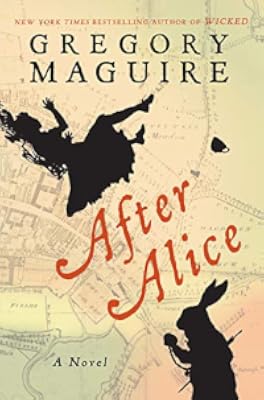
After Alice
by Gregory Maguire
On This Page
Description
From the multi-million-copy bestselling author of Wicked comes a magical new twist on Alice's Adventures in Wonderland, published to coincide with the 150th anniversary of Lewis's Carroll's beloved classic.When Alice toppled down the rabbit-hole 150 years ago, she found a Wonderland as rife with inconsistent rules and abrasive egos as the world she left behind. But what of that world? How did 1860s Oxford react to Alice's disappearance?
In this brilliant work of fiction, Gregory Maguire show more turns his dazzling imagination to the question of underworlds, undergrounds, underpinnings—and understandings old and new, offering an inventive spin on Carroll's enduring tale. Ada, a friend of Alice's mentioned briefly in Alice's Adventures in Wonderland, is off to visit her friend, but arrives a moment too late—and tumbles down the rabbit-hole herself.
Ada brings to Wonderland her own imperfect apprehension of cause and effect as she embarks on an odyssey to find Alice and see her safely home from this surreal world below the world. If Eurydice can ever be returned to the arms of Orpheus, or Lazarus can be raised from the tomb, perhaps Alice can be returned to life. Either way, everything that happens next is "After Alice."
. show less
Tags
Recommendations
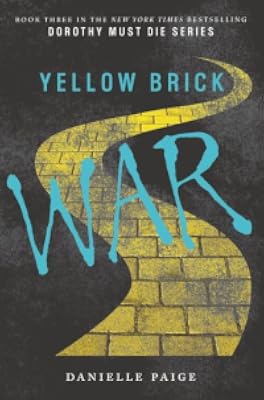
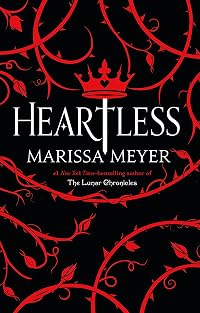
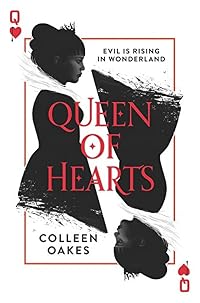
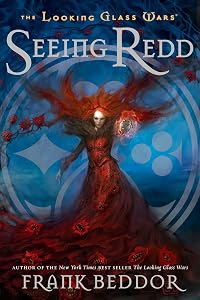
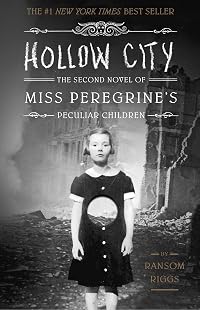
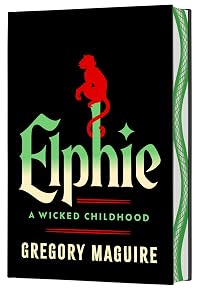
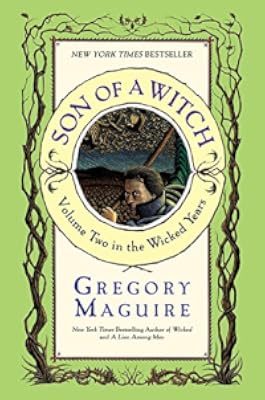
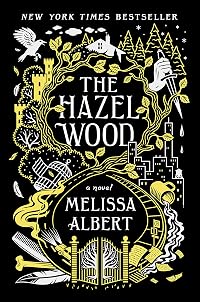
Member Recommendations
charlie68 It's great book, similar to the Alice books in a lot of ways. The main characters go on a fantastic journey.
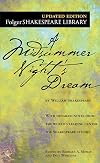
charlie68 Both explore the madness of 'love'.
charlie68 Similar themes in both.
charlie68 Similar themes throughout.
charlie68 Both books explore the meanings and absurdity of language in a playful manner.
Member Reviews
Alice has fallen down the rabbit hole – again – and her best friend, Ada, has followed to find her and bring her home. In this charming reworking of Lewis Carroll’s Alice in Wonderland, author Gregory Maguire returns to the world of, among others, slowly disappearing cats, stressed white rabbits with pocket watches, Mad Hatters who may be the sanest of them all and, as Maguire’s own addition, a very confused Queen Victoria. Above ground, Alice’s father is entertaining the aged Charles Darwin and his young American friend Mr. Winter who has brought along a child, Siam as in ‘Yes I am’, who has only recently been freed from slavery in America and has never experienced childhood.
The story alternates between above and below show more ground, between the world of science and reason and grownups and the world of silliness and imagination and childhood. But whether above or below, After Alice is a whole lot of fun especially if, like me, you’re a huge fan of the original tale with all its chaotic wackiness and loveable and quirky characters. I will admit I liked the parts underground the best but, really, I enjoyed it all. And because After Alice is based on a Victorian tale and all good Victorian tales had to have a moral (as Carroll himself said, ‘everything’s got a moral, if only you can find it) Maguire has an important point about these two worlds. Maguire gives Darwin the last best words:
If separate species develop skills that help them survive, and if those attributes are favoured which best benefit the individual and its native population, to what possible end might we suppose has arisen, Mr. Winter, that particular capacity of the human being known as the imagination? show less
The story alternates between above and below show more ground, between the world of science and reason and grownups and the world of silliness and imagination and childhood. But whether above or below, After Alice is a whole lot of fun especially if, like me, you’re a huge fan of the original tale with all its chaotic wackiness and loveable and quirky characters. I will admit I liked the parts underground the best but, really, I enjoyed it all. And because After Alice is based on a Victorian tale and all good Victorian tales had to have a moral (as Carroll himself said, ‘everything’s got a moral, if only you can find it) Maguire has an important point about these two worlds. Maguire gives Darwin the last best words:
If separate species develop skills that help them survive, and if those attributes are favoured which best benefit the individual and its native population, to what possible end might we suppose has arisen, Mr. Winter, that particular capacity of the human being known as the imagination? show less
Wow! This was not what I expected. Not necessarily a compelling, "can't wait to get back to it" kind of plot, but descriptive and oddly thoughtful and replete with passages like this:
The bells said that at its core, human life was fundamentally a sort of organic clockwork, while the winds and skylarks that swept against the sound of metronomic iron timekeeping argued for variety, subtlety, epiphany. What the sun thought, or meant, or said, was too high overhead to be heard. Like the vast deity to which Lydia's father tried to pray, the sun shouted its light and simultaneously kept its magnificent silence.
Wow!
The bells said that at its core, human life was fundamentally a sort of organic clockwork, while the winds and skylarks that swept against the sound of metronomic iron timekeeping argued for variety, subtlety, epiphany. What the sun thought, or meant, or said, was too high overhead to be heard. Like the vast deity to which Lydia's father tried to pray, the sun shouted its light and simultaneously kept its magnificent silence.
Wow!
I was given this ARC digitally in exchange for an honest review.
Gregory Maguire, I love his books, his endless reimagings, his inexhaustible capacity to charm readers. I L.O.V.E. Alice in Wonderland in every form possible. So, of course, the thought of these two things coming together, pure joy to me!
That being said, while I enjoyed this book immensely, parts of it were disappointing, to me. I loved the character of Ada and her adventures through Wonderland to find her only friend, Alice. Ada was funny, brave, and compassionate, and despite her physical limitations, or maybe because of them, a wonderful heroine. Her encounters with many of Wonderlands famous citizens, as she trails after Alice, are on point. The circumstances in the show more "real world" somewhat mirror the happenings in Wonderland. The character of Siam, for me, never got a real chance to shine. I would have loved it if Ada and Siam could have enjoyed a longer adventure in each others company. They were a wonderful pair.
The parallel story of Lydia, the Governess, Mr. Winter, and Darwin ( yep, that one ) were the only parts I had a hard time with. They were amusing, sometimes boring, but they took me completely out of the good time I was having with Ada in Wonderland.
I understand their importance to the story, truly I do, but they were often such a downer as to be uncomfortable at times. Luckily, Ada would bring the mood right back up!
Overall, my love of Mr. Maguire and of Alice's Adventures remain intact. His book is solid and I enjoyed it. But if he ever decides to revisit Wonderland, I hope he leaves the "real world" out of it and let's his wonderful Ada and Siam run amok! show less
Gregory Maguire, I love his books, his endless reimagings, his inexhaustible capacity to charm readers. I L.O.V.E. Alice in Wonderland in every form possible. So, of course, the thought of these two things coming together, pure joy to me!
That being said, while I enjoyed this book immensely, parts of it were disappointing, to me. I loved the character of Ada and her adventures through Wonderland to find her only friend, Alice. Ada was funny, brave, and compassionate, and despite her physical limitations, or maybe because of them, a wonderful heroine. Her encounters with many of Wonderlands famous citizens, as she trails after Alice, are on point. The circumstances in the show more "real world" somewhat mirror the happenings in Wonderland. The character of Siam, for me, never got a real chance to shine. I would have loved it if Ada and Siam could have enjoyed a longer adventure in each others company. They were a wonderful pair.
The parallel story of Lydia, the Governess, Mr. Winter, and Darwin ( yep, that one ) were the only parts I had a hard time with. They were amusing, sometimes boring, but they took me completely out of the good time I was having with Ada in Wonderland.
I understand their importance to the story, truly I do, but they were often such a downer as to be uncomfortable at times. Luckily, Ada would bring the mood right back up!
Overall, my love of Mr. Maguire and of Alice's Adventures remain intact. His book is solid and I enjoyed it. But if he ever decides to revisit Wonderland, I hope he leaves the "real world" out of it and let's his wonderful Ada and Siam run amok! show less
Review based on advanced review copy received for free in exchange for an honest review.
I am no stranger to Gregory Maguire. I started with Wicked, as everyone should. I was wow'd. After Alice did not completely move me, as Wicked did. However, it was a wonderful little novel with a lot of the magic that Maguire showed in Wicked coming through.
As the title and cover imply, After Alice is somehow a take on Alice in Wonderland. However, this story does not really track Alice, per se; rather, it tracks her awkward, chunky, physically disabled friend Ada.
Ada is mentioned in Carroll's own Alice only in passing (passage at the beginning of After Alice shows only mention of Ada's long ringlets). In Maguire's version, Ada is a difficult, show more perhaps abrasive, curious, but sweet-hearted child, with a near-full body back-brace and an inclination to get in trouble. Ada perhaps intentionally misunderstands the instruction to bring Alice some marmalade and uses the opportunity to escape not only the vicarage, where she lives with her noisy baby brother, but also her governess who is always attempting to correct Ada into ... well, into someone perhaps more like Alice.
Ada sees the famous white rabbit with a timeclock and, as we know Alice has done, follows the rabbit and falls down the hole to wonderland.
Everything from the fall itself to Ada's experiences in Wonderland and the various "people" she meets down there are described with a very strong nod to the images and stories we know from the traditional Alice. Unsurprisingly, Maguire's take is dark. There is an ominous presence hanging over everything and even careless death occurs without the batting of an eye.
Additionally, amidst Ada's adventures, Maguire takes us back and forth between her nanny's awful day (she has lost one of her charges!), Alice's sister's day (her very teenage confusing feelings about her mother's recent passing and the attentions of an American visitor and his black adoptee), and Siam, the black child who has escaped slavery and worse under the care of Mr. Winter (the American). And there are, I believe, a few other perspectives as well.
Yet Maguire is certainly a talented writer, and the varying perspectives work well together, moving together toward a climax in Wonderland and in the real world around the same time.
I enjoyed the story and the magic that Maguire weaves into the everyday, and the everyday that Maguire weaves into the magical... and I was particularly impressed with the ending.... something about it (no spoilers!) just... I don't know, it almost made me feel as if the world were unsteady for a few moments.
What I didn't love... all I really didn't love about the book might be the pacing. I say "might be" because I had so much going on in my own life while I was reading this, it is hard to tell if the book or real life was the cause of my relatively slow read. Regardless, I thought it was a pretty, enjoyable read. I would recommend to fans of Maguire, to fans of Alice in Wonderland, and to fans of magical realism and fantasy. FOUR of five stars. show less
I am no stranger to Gregory Maguire. I started with Wicked, as everyone should. I was wow'd. After Alice did not completely move me, as Wicked did. However, it was a wonderful little novel with a lot of the magic that Maguire showed in Wicked coming through.
As the title and cover imply, After Alice is somehow a take on Alice in Wonderland. However, this story does not really track Alice, per se; rather, it tracks her awkward, chunky, physically disabled friend Ada.
Ada is mentioned in Carroll's own Alice only in passing (passage at the beginning of After Alice shows only mention of Ada's long ringlets). In Maguire's version, Ada is a difficult, show more perhaps abrasive, curious, but sweet-hearted child, with a near-full body back-brace and an inclination to get in trouble. Ada perhaps intentionally misunderstands the instruction to bring Alice some marmalade and uses the opportunity to escape not only the vicarage, where she lives with her noisy baby brother, but also her governess who is always attempting to correct Ada into ... well, into someone perhaps more like Alice.
Ada sees the famous white rabbit with a timeclock and, as we know Alice has done, follows the rabbit and falls down the hole to wonderland.
Everything from the fall itself to Ada's experiences in Wonderland and the various "people" she meets down there are described with a very strong nod to the images and stories we know from the traditional Alice. Unsurprisingly, Maguire's take is dark. There is an ominous presence hanging over everything and even careless death occurs without the batting of an eye.
Additionally, amidst Ada's adventures, Maguire takes us back and forth between her nanny's awful day (she has lost one of her charges!), Alice's sister's day (her very teenage confusing feelings about her mother's recent passing and the attentions of an American visitor and his black adoptee), and Siam, the black child who has escaped slavery and worse under the care of Mr. Winter (the American). And there are, I believe, a few other perspectives as well.
Yet Maguire is certainly a talented writer, and the varying perspectives work well together, moving together toward a climax in Wonderland and in the real world around the same time.
I enjoyed the story and the magic that Maguire weaves into the everyday, and the everyday that Maguire weaves into the magical... and I was particularly impressed with the ending.... something about it (no spoilers!) just... I don't know, it almost made me feel as if the world were unsteady for a few moments.
What I didn't love... all I really didn't love about the book might be the pacing. I say "might be" because I had so much going on in my own life while I was reading this, it is hard to tell if the book or real life was the cause of my relatively slow read. Regardless, I thought it was a pretty, enjoyable read. I would recommend to fans of Maguire, to fans of Alice in Wonderland, and to fans of magical realism and fantasy. FOUR of five stars. show less
 This review was written for LibraryThing Early Reviewers.
Ada follows Alice down the hole and only catches up to her at the end. Siam finds his own way through the looking glass and decides he’s reached as good a place as he can get. This was never painful and had it’s own humor so I’m almost ready to forgive GM for the political tract of Wicked. But not really. I knew he could do better because of Stepsister.
The title is the absolute epitome of what this novel is: a kaleidoscope of conflicting contradictions. Is it a literal description of us readers following Alice and the White Rabbit down the rabbit hole? Is After Alice instead an acknowledgement that we can't ever return to the state of innocence that was children's literature before the world experienced Alice's Adventures in Wonderland? Or rather is it a modern retelling based on Alice, a meditation on the themes the classic suggests but rewritten for a 21st-century readership? Perhaps it is all of these things, or even none of them.
In fact, is it about Alice at all? Was the Alice of Lewis Carroll's Wonderland the historical Alice Liddell or merely a literary persona, and are any of show more these the same as the Alice of Maguire's novel, whom we discover is actually one Alice Clowd? As Carroll's Alice remarked, curiouser and curiouser. Lots of questions, then, in search of answers.
We soon discover that this is a tale that fluctuates between three or four youngsters, none of whom have anything to do with Dean Liddell's children except that their story is set in Oxford one midsummer, sometime in the 1860s. Maguire gives us some early clues: for example, 4th July 1862 -- when Carroll took the Liddell sisters boating -- is identified as being 'cool and rather wet' but in Alice in Wonderland and in After Alice we are presented with an idyllic if somnolent midsummer's day. Then there is Ada, a friend of Carroll's Alice who gets a passing reference in Wonderland -- here we have an Ada Boyce, but she's a friend of a different Alice, Alice Clowd. The elder sister of this Alice, whom we spy reading the famous book "without pictures" (identified as A Midsummer Night's Dream), is Lydia Clowd, not Lorinna Liddell. All this is enough to chase away any supposition that this is a story centred on either the real Alice or the fictional one.
In trying to escape from her governess, Miss Armstrong, Ada Boyce inadvertently falls down a hole. Her iron corset, designed to straighten her spine, falls off her and she enters a Wonderland very similar to that described in Alice in Wonderland: one full of contradictions, plays on language, metamorphosing creatures and contrary characters. Ada soon finds herself on the track of her friend Alice Clowd, who is always a step or two ahead of her. Along the way she meets up with Siam, the ward of a young American, who has also found his way into this Wonderland, though he has come via a looking glass in the Clowd household. Meanwhile, above ground, Lydia starts to look for her missing sister Alice, joining Miss Armstrong looking for Ada, missions that will prove to be fruitless.
Already the reader is liable to be confused. Where Carroll had just one protagonist meeting fantastical personages Maguire chooses to present the points of view of three children -- Ada, Lydia and Siam -- with significant roles played by Miss Armstrong and by the elusive Alice. What with Maguire imitating and almost trying to outdo Carroll in punning and wordplay, his attempt to divide our interest between several individuals proves too much at times, as does the to and fro of action above as well as below ground.
Remembering that the first Alice book began life as Alice's Adventures Underground I totally understand that the author is trying to play on different notions of 'underground', as he has explained in an interview. These are the mythical associations of the land of the dead, plus technological change in 1860s London (the laying of the sewers and the development of the underground railway). But Maguire is also keen to introduce the concept of the underground railroad, the escape route for Black American slaves fleeing from exploitation and persecution (which is where the character Siam comes in). This last theme seems to me, as it has done for many other readers, a tacked-on idea which is poorly and inconsequentially integrated into the plot, however worthy the conception.
In fact, all the extraneous material -- the appearances of an unnamed Charles Dodgson and the Liddell siblings (in a boat), plus a named Charles Darwin, for example -- appears not only superfluous but also too clever by half. And what of the sly suggestion that Miss Armstrong is somehow responsible for the attempted drowning of her charge and her friend? It all seems somehow meaningless, like a ghost image on a photographic negative. There is, granted, an underlying theme of emancipation -- of Victorian females from their literal and metaphorical straitjackets and Afro-Americans from forced enslavement -- but little of this seems to relate to the Carrollian witticisms peppering the conversations Ada has with Wonderland denizens. And when it comes down to the bottom line, what is the point of trying to ape Lewis Carroll's originality?
Clearly, Maguire is aware that he may be castigated for indulging in such presumptuous behaviour; he says in chapter 14, as an apologia, that a "story in a book has its own intentions, even if unknowable to the virgin reader;" but I suspect from what follows that this particular story has also passed the author by. Elsewhere -- chapter 30 to be precise -- he muses on Oxford as an inspiration for much literature ("perhaps we love our Oxford because it seems eternal," he declares) though After Alice is not at all in the same league as the examples he cites.
After Alice is, in the last analysis, scattergun in its execution and leaves the reader wandering in their own Wonderland: why was this written, they will ask themselves. For me an answer may lie in a response he makes in the previously mentioned online interview.*
His mother, he tells us,
Fairytales read in childhood therefore "felt like veiled biographies of me." In After Alice the Clowd family have lost their mother, leaving the widower father with one daughter who regularly disappears into an imaginary world and another who feels the responsibility of being the mistress of the house. Ada Boyce meanwhile struggles with a mother who exists in an alcoholic haze, a noisy newborn child and a governess who has issues of her own -- no wonder she chafes against restrictions, whether being chaperoned when she leaves the house or having to wear her hideous orthopaedic corset. Finally, young Siam, following an inhumane and cruel childhood, has been rescued and brought to an alien country -- we can only guess why he might be tempted to retreat into an imaginary world rather than exist in a real one where nothing makes much sense.
Maguire tells us he has never got over being "fascinated by the plight of children who have to make their way in a hostile, and unwelcoming, and ungenerous world, and yet do it anyway and survive." This, it seems to me, is what this novel is struggling to voice; that it fails to do so in any decisive way means it lacks the emotional heart that would justify the rehash of an already perfect classic.
* * * * *
* published by Broadly. show less
In fact, is it about Alice at all? Was the Alice of Lewis Carroll's Wonderland the historical Alice Liddell or merely a literary persona, and are any of show more these the same as the Alice of Maguire's novel, whom we discover is actually one Alice Clowd? As Carroll's Alice remarked, curiouser and curiouser. Lots of questions, then, in search of answers.
We soon discover that this is a tale that fluctuates between three or four youngsters, none of whom have anything to do with Dean Liddell's children except that their story is set in Oxford one midsummer, sometime in the 1860s. Maguire gives us some early clues: for example, 4th July 1862 -- when Carroll took the Liddell sisters boating -- is identified as being 'cool and rather wet' but in Alice in Wonderland and in After Alice we are presented with an idyllic if somnolent midsummer's day. Then there is Ada, a friend of Carroll's Alice who gets a passing reference in Wonderland -- here we have an Ada Boyce, but she's a friend of a different Alice, Alice Clowd. The elder sister of this Alice, whom we spy reading the famous book "without pictures" (identified as A Midsummer Night's Dream), is Lydia Clowd, not Lorinna Liddell. All this is enough to chase away any supposition that this is a story centred on either the real Alice or the fictional one.
In trying to escape from her governess, Miss Armstrong, Ada Boyce inadvertently falls down a hole. Her iron corset, designed to straighten her spine, falls off her and she enters a Wonderland very similar to that described in Alice in Wonderland: one full of contradictions, plays on language, metamorphosing creatures and contrary characters. Ada soon finds herself on the track of her friend Alice Clowd, who is always a step or two ahead of her. Along the way she meets up with Siam, the ward of a young American, who has also found his way into this Wonderland, though he has come via a looking glass in the Clowd household. Meanwhile, above ground, Lydia starts to look for her missing sister Alice, joining Miss Armstrong looking for Ada, missions that will prove to be fruitless.
Already the reader is liable to be confused. Where Carroll had just one protagonist meeting fantastical personages Maguire chooses to present the points of view of three children -- Ada, Lydia and Siam -- with significant roles played by Miss Armstrong and by the elusive Alice. What with Maguire imitating and almost trying to outdo Carroll in punning and wordplay, his attempt to divide our interest between several individuals proves too much at times, as does the to and fro of action above as well as below ground.
Remembering that the first Alice book began life as Alice's Adventures Underground I totally understand that the author is trying to play on different notions of 'underground', as he has explained in an interview. These are the mythical associations of the land of the dead, plus technological change in 1860s London (the laying of the sewers and the development of the underground railway). But Maguire is also keen to introduce the concept of the underground railroad, the escape route for Black American slaves fleeing from exploitation and persecution (which is where the character Siam comes in). This last theme seems to me, as it has done for many other readers, a tacked-on idea which is poorly and inconsequentially integrated into the plot, however worthy the conception.
In fact, all the extraneous material -- the appearances of an unnamed Charles Dodgson and the Liddell siblings (in a boat), plus a named Charles Darwin, for example -- appears not only superfluous but also too clever by half. And what of the sly suggestion that Miss Armstrong is somehow responsible for the attempted drowning of her charge and her friend? It all seems somehow meaningless, like a ghost image on a photographic negative. There is, granted, an underlying theme of emancipation -- of Victorian females from their literal and metaphorical straitjackets and Afro-Americans from forced enslavement -- but little of this seems to relate to the Carrollian witticisms peppering the conversations Ada has with Wonderland denizens. And when it comes down to the bottom line, what is the point of trying to ape Lewis Carroll's originality?
Clearly, Maguire is aware that he may be castigated for indulging in such presumptuous behaviour; he says in chapter 14, as an apologia, that a "story in a book has its own intentions, even if unknowable to the virgin reader;" but I suspect from what follows that this particular story has also passed the author by. Elsewhere -- chapter 30 to be precise -- he muses on Oxford as an inspiration for much literature ("perhaps we love our Oxford because it seems eternal," he declares) though After Alice is not at all in the same league as the examples he cites.
After Alice is, in the last analysis, scattergun in its execution and leaves the reader wandering in their own Wonderland: why was this written, they will ask themselves. For me an answer may lie in a response he makes in the previously mentioned online interview.*
His mother, he tells us,
died in childbirth leaving my father as a widower and four children. I was the infant; I was seven days old when she hemorrhaged and died. And that is how every fairytale begins. The child is thrown into the perilous world—to use a phrase of Blake's—a child is thrown into a perilous world by the death of a parent.
Fairytales read in childhood therefore "felt like veiled biographies of me." In After Alice the Clowd family have lost their mother, leaving the widower father with one daughter who regularly disappears into an imaginary world and another who feels the responsibility of being the mistress of the house. Ada Boyce meanwhile struggles with a mother who exists in an alcoholic haze, a noisy newborn child and a governess who has issues of her own -- no wonder she chafes against restrictions, whether being chaperoned when she leaves the house or having to wear her hideous orthopaedic corset. Finally, young Siam, following an inhumane and cruel childhood, has been rescued and brought to an alien country -- we can only guess why he might be tempted to retreat into an imaginary world rather than exist in a real one where nothing makes much sense.
Maguire tells us he has never got over being "fascinated by the plight of children who have to make their way in a hostile, and unwelcoming, and ungenerous world, and yet do it anyway and survive." This, it seems to me, is what this novel is struggling to voice; that it fails to do so in any decisive way means it lacks the emotional heart that would justify the rehash of an already perfect classic.
* * * * *
* published by Broadly. show less
Dear me. I am so conflicted! See, on the one hand Gregory Maguire is one of my all time favorite writers. His ability to spin in his own particular brand of whimsy into classic tales is unrivaled. I've loved every single one of his books that I've set my hands on. Which is why I had such high hopes for this particular story. Alice in Wonderland is an iconic piece of childhood. Everyone knows it in some capacity or another. For me, it was the book I most loved to have read to me before bed. I've read every iteration of it that I could get. Needless to say, I was thrilled to read this.
Now, I find myself finished and rather conflicted about After Alice. I'll start with the good. First off, Maguire does indeed pay homage to his source show more material. Readers can expect to see cameos from some of their favorite quirky characters, and Ada's interactions with them are just as delightful as her predecessors. Also, the whole feel of the original is still here. The erudite vocabulary, the nonsense that isn't quite nonsense, all of it is there in vivid color. The portions that take place in Wonderland are simply darling. Ada's stubborn ways, pitted against the inhabitants of this wonderful world, were just too much fun.
What brings this book down, in my opinion, is its use of dual points of view. Lydia, Alice's older sister, has her own experiences chronicled in alternating chapters. Which means, of course, that every other chapter is filled with her Lydia's own musings and personality. Lydia isn't easy to like. She is, in fact, rather insufferable. Having her chapters mixed in with Ada's own whimsical ones made this book more difficult to read than I expected. I almost wanted to skip every other chapter, just to get back to Wonderland. If this book had focused solely on Ada's chapters, you would see a much different review being written. That part, I loved.
So, final thoughts? This isn't Maguire's strongest book. While it definitely has a lot in it to love, I feel like long time readers of Maguire's works will probably fall into the same boat that I am in right now. Feeling torn between wanting to love this, and dreaming of what might have been. There is still much of the Maguire magic in this book! If you're a completionist, I'd still give this a spot on your TBR. show less
Now, I find myself finished and rather conflicted about After Alice. I'll start with the good. First off, Maguire does indeed pay homage to his source show more material. Readers can expect to see cameos from some of their favorite quirky characters, and Ada's interactions with them are just as delightful as her predecessors. Also, the whole feel of the original is still here. The erudite vocabulary, the nonsense that isn't quite nonsense, all of it is there in vivid color. The portions that take place in Wonderland are simply darling. Ada's stubborn ways, pitted against the inhabitants of this wonderful world, were just too much fun.
What brings this book down, in my opinion, is its use of dual points of view. Lydia, Alice's older sister, has her own experiences chronicled in alternating chapters. Which means, of course, that every other chapter is filled with her Lydia's own musings and personality. Lydia isn't easy to like. She is, in fact, rather insufferable. Having her chapters mixed in with Ada's own whimsical ones made this book more difficult to read than I expected. I almost wanted to skip every other chapter, just to get back to Wonderland. If this book had focused solely on Ada's chapters, you would see a much different review being written. That part, I loved.
So, final thoughts? This isn't Maguire's strongest book. While it definitely has a lot in it to love, I feel like long time readers of Maguire's works will probably fall into the same boat that I am in right now. Feeling torn between wanting to love this, and dreaming of what might have been. There is still much of the Maguire magic in this book! If you're a completionist, I'd still give this a spot on your TBR. show less
Members
- Recently Added By
Lists

Female Protagonist
1,056 works; 57 members

Speculative Fiction: Slipstream Literature
166 works; 16 members

Fiction with Women's Names in the Title
378 works; 15 members

Favorite Fairy Tale Retellings
210 works; 62 members

Kirkus Starred Fiction Reviews of Books Published in 2015
310 works; 6 members

Stories Inspired by Other Fiction
127 works; 24 members
Books Read in 2015
3,299 works; 129 members

SFFCat 2015
35 works; 1 member

Alternative Alices
96 works; 4 members
KayStJ's to-read list
1,616 works; 11 members

Historical Figures in Fiction
51 works; 5 members

To Read
617 works; 7 members

Novels Set Underground
28 works; 7 members

2024 Reading List
49 works; 1 member
Author Information

67+ Works 80,340 Members
Gregory Maguire was born June 9, 1954 in Albany, New York. He received a B.A. from the State University of New York at Albany and a Ph.D. in English and American literature from Tufts University. He is a founder and co-director of Children's Literature New England, Incorporated, a non-profit educational charity established in 1987. He writes for show more both adults and children. His first book, The Lighting Time, was published in 1978. His adult works include Wicked, Confessions of and Ugly Stepsister, Lost, Mirror Mirror, Son of a Witch, and A Lion Among Men. The Broadway play Wicked is based on his book of the same title. His children's books include the picture book Crabby Cratchitt, the novel The Good Liar, and the Hamlet Chronicles series. (Bowker Author Biography) show less
Some Editions
Work Relationships
Is contained in
Was inspired by
Common Knowledge
- Canonical title
- After Alice
- Original publication date
- 2015-10-27
- People/Characters
- Ada Boyce; Miss Armstrong; Josiah Winter; Siam Winter; Charles Darwin; Alice Clowd (show all 16); Lydia Clowd; Victoria, Queen of the United Kingdom; Queen of Hearts; White Queen; Cheshire Cat; White Rabbit; Mad Hatter; March Hare; White Knight; Humpty Dumpty
- Important places
- Wonderland; Oxford, Oxfordshire, England, UK
- Epigraph
- Alice took up the fan and gloves, and, as the hall was very hot, she kept fanning herself all the time she went on talking: 'Dear, dear! How queer everything is to-day! And yesterday things went on just as usual. I wonder if ... (show all)I've been changed in the night? Let me think: was I the same when I got up this morning? I almost think I can remember feeling a little different. But if I'm not the same, the next question is, Who in the world am I? Ah, that's the great puzzle!' And she began thinking over all the children she knew that were of the same age as herself, to see if she could have been changed for any of them.
'I'm sure I'm not Ada,' she said, 'for her hair goes in such long ringlets, and mine doesn't go in ringlets at all; and I'm sure I can't be Mabel, for I know all sorts of things, and she, oh! she knows such a very little! Besides, she's she, and I'm I, and—oh dear, how puzzling it all is!...'
—Lewis Carroll, Alice's Adventures in Wonderland - Dedication
- For Natacha Liuzzi
- First words
- Were there a god in charge of story—I mean one cut to Old Testament specifics, some hybrid of Zeus and Father Christmas—such a creature, such a deity, might be looking down upon a day opening in Oxford, England, a bit pas... (show all)t the half-way mark of the nineteenth century.
- Last words
- (Click to show. Warning: May contain spoilers.)If separate species develop skills that help them survive, and if those attributes are favored which best benefit the individual and its native population, to what possible end might we suppose has arisen, Mr. Winter, that particular capacity of the human being known as the imagination?
Classifications
Statistics
- Members
- 1,672
- Popularity
- 13,347
- Reviews
- 72
- Rating
- (2.90)
- Languages
- English, Japanese
- Media
- Paper, Audiobook, Ebook
- ISBNs
- 23
- ASINs
- 6
