
My Life on the Road
by Gloria Steinem
On This Page
Description
"Gloria Steinem had an itinerant childhood. Every fall, her father would pack the family into the car and they would drive across the country, in search of their next adventure. The seeds were planted: Steinem would spend much of her life on the road, as a journalist, organizer, activist, and speaker. In vivid stories that span an entire career, Steinem writes about her time on the campaign trail, from Bobby Kennedy to Hillary Clinton; her early exposure to social activism in India, and the show more decades spent organizing ground-up movements in America; the taxi drivers who were "vectors of modern myths" and the airline stewardesses who embraced the feminist revolution; and the infinite, surprising contrasts, the "surrealism in everyday life" that Steinem encountered as she traveled back and forth across the country. With the unique perspective of one of the greatest feminist icons of the 20th and 21st centuries, here is an inspiring, profound, enlightening memoir of one woman's life-long journey"-- show lessTags
Recommendations















Member Reviews
I wanted to read more about Gloria Steinem after watching the first two episodes of Mrs America. This isn't quite a biography, but I found the blend of stories, characters and experiences from Gloria's constant travelling to be equally if not more interesting.
Born to an entrepreneur with wanderlust and a mother who gave up her ambitions to be a journalist for motherhood, Gloria had little schooling and even less interest in getting married and settling down. After travelling to India, Gloria returned to the States and moved to New York where she became a journalist. feminist spokeswoman and political activist. Such a brief description hardly does justice to Gloria's life, talent and voice, however - she's incredible!
I loved reading show more about the many different women and causes that Gloria met with throughout her travels, broken down into chapters on everything from native Americans to politics to travelling by taxi. There are a lot of 'moments of truth', where Gloria and other feminist icons tell it how it was and is for women - 'No wonder such misogyny was almost never named by the media. It was the media' - but this book also made me realise that feminism is about choice. A fascinating read. show less
Born to an entrepreneur with wanderlust and a mother who gave up her ambitions to be a journalist for motherhood, Gloria had little schooling and even less interest in getting married and settling down. After travelling to India, Gloria returned to the States and moved to New York where she became a journalist. feminist spokeswoman and political activist. Such a brief description hardly does justice to Gloria's life, talent and voice, however - she's incredible!
I loved reading show more about the many different women and causes that Gloria met with throughout her travels, broken down into chapters on everything from native Americans to politics to travelling by taxi. There are a lot of 'moments of truth', where Gloria and other feminist icons tell it how it was and is for women - 'No wonder such misogyny was almost never named by the media. It was the media' - but this book also made me realise that feminism is about choice. A fascinating read. show less
Reading this lively memoir of the vagabond life Gloria Steinem has led--first by necessity and then because she embraced it--made me want to hit the road myself in the hope that I could have even a fraction of her experiences. The varied places and people she’s encountered in her travels give her rich, interesting perspectives on the history and zeitgeist of the times she writes about, which extend from the later years of the Great Depression until today. It makes the book a fascinating, even inspiring combination of personal story and history that’s a lot of fun to read--and because this is Gloria Steinem, readers also get an enlightening front row seat for the burgeoning women’s movement of the 1960’s-70’s and its continuing show more development.
When she was a young child Steinem’s father ran a lakeside music venue in the summer, but once fall came he’d pack everyone in the car to spend the rest of the year driving around the country buying and then selling junk or antiques or whatever, earning enough of a profit to make it to the next town--an enterprise in which the whole family participated. Steinem thought she longed for a permanent home, but when she reached adulthood that didn’t happen. After college Steinem got a 2-year fellowship to study in India, but when she showed up at the ashram of Vinoba Bhave, one of the leaders in the land reform movement inspired by Gandhi, almost everyone was gone. Caste riots had broken out in nearby, now cordoned off villages, so the ashram residents had formed teams to slip under police barriers and travel from village to village hoping to help contain further violence. One more team wanted to go out, but they needed a women so Steinem was drafted, her first experience of traditional talking circles and modern community activism.
Working as a journalist back in the US, Steinem was dismissed by some of her male colleagues as a token “pretty girl” which helped lead her to the women’s movement and a continued life of organizing, activism, and travel. If you are expecting something dour and humorless, that’s not what you’ll find in this book. Steinem comes across as warmhearted, eager to learn from the people around her, and open to new experiences, all of which makes her wonderful company. I enjoyed learning more about mid-century politics and the growth of the women’s movement, but I also loved the personal glimpses she gives of people as diverse as Cherokee Nation chief Wilma Mankiller, who was a personal friend, and Frank Sinatra, who Steinem spent one awkward Thanksgiving dinner with--he didn’t talk much to anyone but he did let them watch while he put on an engineer’s hat and ran his toy trains around an elaborate track.
Steinem even works in interesting bits of older history, mentioning for instance that the American Constitution is partially modeled on the Iroquois Confederacy, but when Benjamin Franklin invited two Iroquois men to the Constitutional Convention to act as advisers, one of their first comments was something like--why aren’t there any women at this meeting? Good question. show less
When she was a young child Steinem’s father ran a lakeside music venue in the summer, but once fall came he’d pack everyone in the car to spend the rest of the year driving around the country buying and then selling junk or antiques or whatever, earning enough of a profit to make it to the next town--an enterprise in which the whole family participated. Steinem thought she longed for a permanent home, but when she reached adulthood that didn’t happen. After college Steinem got a 2-year fellowship to study in India, but when she showed up at the ashram of Vinoba Bhave, one of the leaders in the land reform movement inspired by Gandhi, almost everyone was gone. Caste riots had broken out in nearby, now cordoned off villages, so the ashram residents had formed teams to slip under police barriers and travel from village to village hoping to help contain further violence. One more team wanted to go out, but they needed a women so Steinem was drafted, her first experience of traditional talking circles and modern community activism.
Working as a journalist back in the US, Steinem was dismissed by some of her male colleagues as a token “pretty girl” which helped lead her to the women’s movement and a continued life of organizing, activism, and travel. If you are expecting something dour and humorless, that’s not what you’ll find in this book. Steinem comes across as warmhearted, eager to learn from the people around her, and open to new experiences, all of which makes her wonderful company. I enjoyed learning more about mid-century politics and the growth of the women’s movement, but I also loved the personal glimpses she gives of people as diverse as Cherokee Nation chief Wilma Mankiller, who was a personal friend, and Frank Sinatra, who Steinem spent one awkward Thanksgiving dinner with--he didn’t talk much to anyone but he did let them watch while he put on an engineer’s hat and ran his toy trains around an elaborate track.
Steinem even works in interesting bits of older history, mentioning for instance that the American Constitution is partially modeled on the Iroquois Confederacy, but when Benjamin Franklin invited two Iroquois men to the Constitutional Convention to act as advisers, one of their first comments was something like--why aren’t there any women at this meeting? Good question. show less
Easily, this will be one of my favorite books of the year. Steinem is conversational, real, and insightful as she recounts stories from her life of travels, and the amazing women and men she meets along the way. I spent time writing down some of her most insightful comments:
- When humans are ranked instead of linked, everyone loses.
- She didn't put her finder to the wind; she became the wind.
- To have a democracy, you have to want one.
- The first step in speaking for others is speaking for ourselves.
- When new people guide us, we see a new country.
- You're always the same person you were when you were born. You just keep on finding new ways to express it.
- When humans are ranked instead of linked, everyone loses.
- She didn't put her finder to the wind; she became the wind.
- To have a democracy, you have to want one.
- The first step in speaking for others is speaking for ourselves.
- When new people guide us, we see a new country.
- You're always the same person you were when you were born. You just keep on finding new ways to express it.
I knew of Gloria Steinem but not about her and this book is my introduction to the woman and her work. My Life on the Road is a highly quotable memoir full of observations, anecdotes and pearls of wisdom.
Steinem starts with the simple question of what makes me want to keep on the road travelling from place to place and for Steinem it starts with her Father. As it was her Father that pack the family in the car to go travelling with no end date to the journey.
I loved the descriptions that evoke life on the road ‘we see an acre of motorcycles around each isolated diner and motel’ and ‘stopping to cool off in shallow streams or find shade in groves where chai and steamed rice cakes called idlis were sold from palm-roofed show more shelters.’ Her years as a journalist have given her a wonderful skill to simply and quickly catch the beauty and the ugliness of situations.
The section on taxi drivers and how they individualised their cabs was one of my favourites. That is something that does not happen here in Australia. In fact I loved all the recollections of the people Steinem has met over the years. I was especially moved by the young man who was sexually abused; it is a gut wrenching tale.
Being a political junkie, I found Steinem’s insights into the political process intriguing. Especially when she talked about how politics became personal and the hope American women had that Hillary Clinton would succeed. I like how Steinem analyses the difference between the way the media treat male candidates and female candidates.
You would think that Steinem would be prepared at a drop of a hat to call out sexism or any other affronts to injustice. However, Steinem was refreshingly honest in admitting those moments when she could back and make a stand. How many times have we all had someone say something insulting only to later on think of the perfect retort?
What Steinem advocates is for Americans to travel their own country first. That people do not see travelling in their homeland as exciting and would rather go overseas to travel. I would argue everyone wants to travel overseas as it is seen as ‘spicier’ than travelling in your own country. I think everyone should take time to travel their own backroads first as there is a great deal to learn and appreciate.
This is a memoir about a woman who has travelled, experienced, listened, learned and is humble. I did not expect any of that to come through this book. show less
Steinem starts with the simple question of what makes me want to keep on the road travelling from place to place and for Steinem it starts with her Father. As it was her Father that pack the family in the car to go travelling with no end date to the journey.
I loved the descriptions that evoke life on the road ‘we see an acre of motorcycles around each isolated diner and motel’ and ‘stopping to cool off in shallow streams or find shade in groves where chai and steamed rice cakes called idlis were sold from palm-roofed show more shelters.’ Her years as a journalist have given her a wonderful skill to simply and quickly catch the beauty and the ugliness of situations.
The section on taxi drivers and how they individualised their cabs was one of my favourites. That is something that does not happen here in Australia. In fact I loved all the recollections of the people Steinem has met over the years. I was especially moved by the young man who was sexually abused; it is a gut wrenching tale.
Being a political junkie, I found Steinem’s insights into the political process intriguing. Especially when she talked about how politics became personal and the hope American women had that Hillary Clinton would succeed. I like how Steinem analyses the difference between the way the media treat male candidates and female candidates.
You would think that Steinem would be prepared at a drop of a hat to call out sexism or any other affronts to injustice. However, Steinem was refreshingly honest in admitting those moments when she could back and make a stand. How many times have we all had someone say something insulting only to later on think of the perfect retort?
What Steinem advocates is for Americans to travel their own country first. That people do not see travelling in their homeland as exciting and would rather go overseas to travel. I would argue everyone wants to travel overseas as it is seen as ‘spicier’ than travelling in your own country. I think everyone should take time to travel their own backroads first as there is a great deal to learn and appreciate.
This is a memoir about a woman who has travelled, experienced, listened, learned and is humble. I did not expect any of that to come through this book. show less
What comes across most clearly is Gloria Steinem's warm and friendly personality. I have never met her, but she seems so open here and so willing to learn from absolutely everyone that she totally charmed me. Like Kamala Harris, whose book I just finished reading a couple of weeks ago, the best part of this memoir is when she writes about her childhood and the love between her and her father. It gave true insight into how someone like Gloria Steinem might develop into what she is today. This book is also a treasure trove of information. I had never heard of the Serpent Mound before, and now I want to go visit. I didn't know that the Iroquois had provided the basis for the Constitution and a score of other facts that she has squirreled show more away in her mind over the years. I also did not know that much about the political history she describes here (which really surprises me) and I found all of that very interesting. Oh, I know what I wanted to remember: for several years now I have known about the connection between anger and depression. When she mentions this, she makes the point that this is why so many more women are diagnosed with depression than men -- because we have no acceptable means of expressing our anger. This was a lightening bolt for me. I had long wondered about why women were so much more depressed then men and this now makes so much sense to me. Even today it is made clear to me that I should never openly express my anger and so I feel guilty when it bubbles over, but that is so much better than feeling depressed. So I am very pleased that I read this book. I did find it had one flaw: there were too many bullet points and that made certain sections appear to be undigested, but all around it is an engaging and valuable read. show less
Astonishingly well-written and wonderfully profound. I can't tell if her ability to connect with people comes from her life as an organizer, her trade as a writer, or her natural demeanor. But her travels in life have allowed her to realize that the caste systems throughout the world--racism, sexism, homophobia, wealth inequality--have not just a shared root, but a human fallout. The stories are amazing, especially about her father, life on the road, life in academia, and the final one involving a lifelong friendship with a Native American friend. Highly recommended.
Rather than being a tell-all autobiography, My Life on the Road is a set of memoirs linked around the theme of travel. Gloria Steinem's career has taken her all over the world and brought her into contact (and sometimes conflict) with any number of notable figures from politics and the feminist movement: Betty Friedan, Wilma Mankiller, Hillary Clinton, Florynce Kennedy. The tone is warm but sometimes disjointed. There were some anecdotes that I wished Steinem would linger over, tease out some more; some that didn't seem of a piece with the rest of the text. I was fascinated to learn about the National Women's Conference, which took place in Houston in 1977 and which Steinem calls "the most important event nobody knows about", and which show more seems to have been an intersectional gathering avant la lettre.
Steinem is right to quote Native American scholar Paula Gunn Allen, who wrote that "the root of oppression is the loss of memory" (226)—that when women and other oppressed groups do not have a knowledge of their own past it is more difficult to dismantle contemporary systems of oppression. I'm in agreement with a lot of what Steinem says about the necessity to recover older rhythms of living with the Earth, for more people to be aware that the Western gender binary is not the only way for people to relate to their bodies.
And yet I also found myself frustrated at several points with the way in which Steinem uses history to make her point. Correlation is not causation. The political system of the United States is not directly modelled on the egalitarian democracy of the Iroquois Confederacy. Not all pre-modern forms of political organisation in Europe were hierarchical or feudal—how else could Iceland have a parliament as old as it does?—and Steinem's claims erase with a stroke of a pen the powerful (and sometimes non-Christian) women of medieval Europe. There were not eight million women burnt at the stake for witchcraft and practice pre-Christian traditions in the Middle Ages (no footnote for that eyebrow-raising number), and nor is the layout of a Catholic church an echo of female genitalia ("a vaginal aisle up the center of the church to the altar (the womb) with two curved (ovarian) structures on either side" (207)) in anything other than a manner so general that the same could be said of almost any building you care to mention.
Women can find ourselves in the past without having to resort to myth-making of our own. show less
Steinem is right to quote Native American scholar Paula Gunn Allen, who wrote that "the root of oppression is the loss of memory" (226)—that when women and other oppressed groups do not have a knowledge of their own past it is more difficult to dismantle contemporary systems of oppression. I'm in agreement with a lot of what Steinem says about the necessity to recover older rhythms of living with the Earth, for more people to be aware that the Western gender binary is not the only way for people to relate to their bodies.
And yet I also found myself frustrated at several points with the way in which Steinem uses history to make her point. Correlation is not causation. The political system of the United States is not directly modelled on the egalitarian democracy of the Iroquois Confederacy. Not all pre-modern forms of political organisation in Europe were hierarchical or feudal—how else could Iceland have a parliament as old as it does?—and Steinem's claims erase with a stroke of a pen the powerful (and sometimes non-Christian) women of medieval Europe. There were not eight million women burnt at the stake for witchcraft and practice pre-Christian traditions in the Middle Ages (no footnote for that eyebrow-raising number), and nor is the layout of a Catholic church an echo of female genitalia ("a vaginal aisle up the center of the church to the altar (the womb) with two curved (ovarian) structures on either side" (207)) in anything other than a manner so general that the same could be said of almost any building you care to mention.
Women can find ourselves in the past without having to resort to myth-making of our own. show less
Members
- Recently Added By
Lists

Feminists' memoirs/autobiographies
38 works; 11 members

Feminism
167 works; 4 members

Women's History Month: Suggested Reads
63 works; 6 members

Biographies: Women
112 works; 1 member
Author Information

170+ Works 5,338 Members
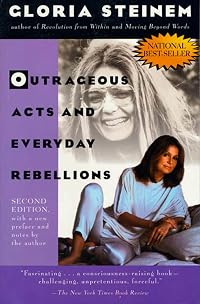
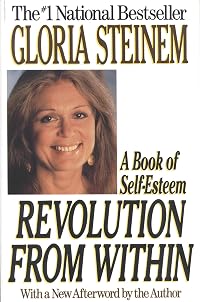
Gloria Steinem was born in Toledo, Ohio on March 25, 1934. She graduated from Smith College in 1956 and then spent two years in India on a Chester Bowles Fellowship. She is a writer, lecturer, political activist, and feminist organizer. In 1968, she co-founded New York magazine, where she was a political columnist and wrote feature articles. In show more 1972, she co-founded Ms. magazine, and remained one of its editors for fifteen years. In 1993, she co-produced and narrated Multiple Personalities: The Search for Deadly Memories, which was a documentary on child abuse for HBO, and co-produced the original TV movie Better Off Dead, which examined the parallel forces that both oppose abortion and support the death penalty. She has written numerous books including Marilyn: Norma Jean, Moving Beyond Words, My Life on the Road, and Revolution from Within: A Book of Self-Esteem, Outrageous Acts and Everyday Rebellions. She has received numerous awards including The Eleanor Roosevelt Val-Kill Medal Award in 2014 and the Presidential Medal of Freedom in 2013. In 1993, she was inducted into the National Women's Hall of Fame. (Bowker Author Biography) show less
Awards and Honors
Awards
Distinctions
Notable Lists
Work Relationships
Has the adaptation
Common Knowledge
- People/Characters
- Gloria Steinem
- Epigraph
- "Evolution intended us to be travelers...Settlement for any length of time, in cave or castle, has at best been...a drop in the ocean of evolutionary time." --Bruce Chatwin, Anatomy of Restlessness
- Dedication
- Dr. John Sharpe of London, who in 1957, a decade before physicians in England could legally perform an abortion for any reason other than the health of the woman, took the considerable risk of referring for an abortion a twen... (show all)ty-two-year-old American on her way to India.
Knowing only that she had broken an engagement at home to seek an unknown fate, he said, "You must promise me two things. First, you will not tell anyone my name. Second, you will do what you want to do with your life." Dear Dr. Sharpe, I believe you, who knew the law was unjust, would not mind if I say this so long after your death: I've done the best I could with my life. This book is for you. - First words
- When people ask me why I still have hope and energy after all these years, I always say: Because I travel.
- Last words
- (Click to show. Warning: May contain spoilers.)Neither do you.
Classifications
- Genres
- Sexuality and Gender Studies, Biography & Memoir, General Nonfiction, Nonfiction, Travel
- DDC/MDS
- 305.42092 — Society, government, & culture Social sciences, sociology & anthropology Social group - Age, Gender, Ethnicity Women Social role and status of women Standard subdivisions History, geographic treatment, biography Biography
- LCC
- HQ1413 .S675 .A3 — Social sciences The family. Marriage, Women and Sexuality The Family. Marriage. Women Women. Feminism
- BISAC
Statistics
- Members
- 1,287
- Popularity
- 18,945
- Reviews
- 72
- Rating
- (4.09)
- Languages
- English, German, Portuguese, Spanish
- Media
- Paper, Audiobook, Ebook
- ISBNs
- 19
- ASINs
- 7