On This Page
Description
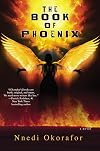
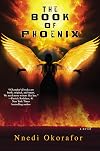
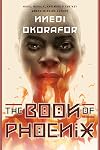
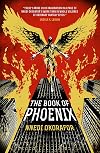
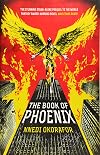
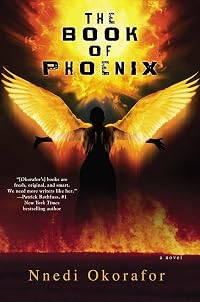
"Phoenix was grown and raised among other genetic experiments in New York's Tower 7. She is an 'accelerated woman'--only two years old but with the body and mind of an adult, Phoenix's abilities far exceed those of a normal human. Still innocent and inexperienced in the ways of the world, she is content living in her room speed reading e-books, running on her treadmill, and basking in the love of Saeed, another biologically altered human of Tower 7. Then one evening, Saeed witnesses show more something so terrible that he takes his own life. Devastated by his death and Tower 7's refusal to answer her questions, Phoenix finally begins to realize that her home is really her prison, and she becomes desperate to escape. But Phoenix's escape, and her destruction of Tower 7, is just the beginning of her story. Before her story ends, Phoenix will travel from the United States to Africa and back, changing the entire course of humanity's future"-- show lessTags
Recommendations





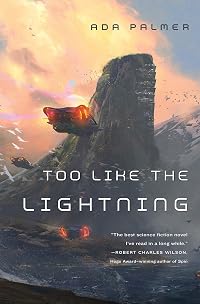
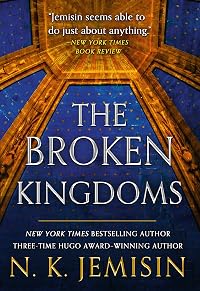
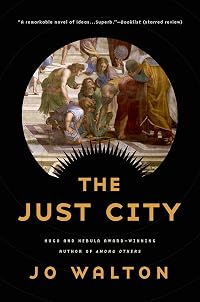
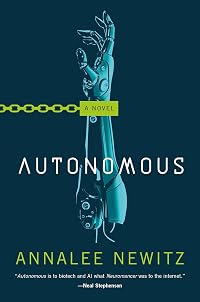

Member Recommendations
Member Reviews
The protagonist of this novel is a genetically modified woman with special abilities similar to the phoenix of folklore. Chronologically, she is only three years old, but she ages quickly and now appears to be around forty. She has been allowed to read and is a fast learner. The storyline follows her experiences in a futuristic dystopian world, where beings are created and then used in scientific experiments by the government. The protagonist is initially called Phoenix, and she renames herself later.
It is a speculative-science-fiction-fantasy combination set in the future after an unexplained apocalyptic event. It is structured as a book within a book. An older man finds an abandoned digital archive in a cave, containing “The Book of show more Phoenix,” which constitutes the bulk of the narrative. The genetically modified lifeforms are kept in towers and their lives are strictly controlled. The death of a loved one leads to a rebellion, and Phoenix escapes.
This novel examines the topics of race, power, identity, and storytelling. The majority of those confined in the towers are descended from Africans, commenting on America’s sad history of racial oppression. It draws on African storytelling traditions and folklore, and there are elements of magical realism sprinkled throughout. Phoenix views herself as a villain but is cast in the heroine’s role. This mix of villain/hero is related to her identity. She has been kept in an oppressive environment and told she is not worthy, but when she breaks free, she gains agency and must decide what to do with her powers.
There are many Old Testament allusions in the book that add to the symbolism. There are a few plot holes, and the “science” is pretty far-fetched (very little could be achieved at present, but this is set in the future). I do not read much fantasy, but I found this book unusual, creative, and relevant. show less
It is a speculative-science-fiction-fantasy combination set in the future after an unexplained apocalyptic event. It is structured as a book within a book. An older man finds an abandoned digital archive in a cave, containing “The Book of show more Phoenix,” which constitutes the bulk of the narrative. The genetically modified lifeforms are kept in towers and their lives are strictly controlled. The death of a loved one leads to a rebellion, and Phoenix escapes.
This novel examines the topics of race, power, identity, and storytelling. The majority of those confined in the towers are descended from Africans, commenting on America’s sad history of racial oppression. It draws on African storytelling traditions and folklore, and there are elements of magical realism sprinkled throughout. Phoenix views herself as a villain but is cast in the heroine’s role. This mix of villain/hero is related to her identity. She has been kept in an oppressive environment and told she is not worthy, but when she breaks free, she gains agency and must decide what to do with her powers.
There are many Old Testament allusions in the book that add to the symbolism. There are a few plot holes, and the “science” is pretty far-fetched (very little could be achieved at present, but this is set in the future). I do not read much fantasy, but I found this book unusual, creative, and relevant. show less
"You are an American, Phoenix, So though you know Africa well, you still believe in the power of science over all that we know. But you are African, too, so you know it in your flesh, your strange flesh, that the spirit world rules the physical world."
Nnedi Okorafor can pack more into 232 pages than some authors can pack into 1000 pages. This book has so much to tell about racism and colonialism, human arrogance and magic, love and family and the power of storytelling. Phoenix will capture your heart, and if you are an American like me and don't leave these pages questioning your own complicity, you need to read it again. Also, it is an exciting, rollicking good story with characters you grow to love (Kofi! My heart!). Please read this show more book and spread the word about Nnedi Okorafor, because she is one of the most wildly original storytellers of the modern era and deserves to make all the money. show less
Nnedi Okorafor can pack more into 232 pages than some authors can pack into 1000 pages. This book has so much to tell about racism and colonialism, human arrogance and magic, love and family and the power of storytelling. Phoenix will capture your heart, and if you are an American like me and don't leave these pages questioning your own complicity, you need to read it again. Also, it is an exciting, rollicking good story with characters you grow to love (Kofi! My heart!). Please read this show more book and spread the word about Nnedi Okorafor, because she is one of the most wildly original storytellers of the modern era and deserves to make all the money. show less
Nnedi Okorafor described The Book of Phoenix as a darker, angrier older sister to Who Fears Death. That’s accurate, and from that description I wouldn’t have expected to love this book more than its companion. But I do. Who Fears Death is walking through the desert to face your enemy and perhaps your death; Phoenix is soaring through the sky in a blaze of fire, burning with power and justified rage.
Hmm. This is a very angry book, and a very cruel one. A disclaimer: I understand where Nnedi Okorafor is coming from - and I can relate, but I obviously cannot have had the same experiences, since I am not a POC.
"The Book of Phoenix" is a bit of a mess - a blend of sci-fi and fantasy set in a dystopian world, with an almost godlike superhero battling evil scientists (who are REALLY evil); said evil scientists doing unspeakable things to people from Africa as a metaphor for colonisation and slavery; it is written as a fable or a folk tale; you can see where the plot is going; at its heart, it is a revenge fantasy.
At times it felt more like a pamphlet rather than a novel. This book is screaming its message - yet I kept thinking that show more those you can only reach by screaming (and maybe not even then...) will probably not read Nnedi Okorafor, while those who WILL, do not need much more than a whisper.
Also, I was extremely bothered by two things: "women are so emotional" explanation for Phoenix's actions (seriously!?) and that one of the male characters who is supposed to be one of the good guys is slut-shaming women, simply for being attracted to him and showing it (what's up with that!?).
I am rather disappointed, since I usually enjoy Nnedi Okorafor's writing - I loved Lagoon, I loved Binti and its sequels, and enjoyed Remote Control (there are some connections between the latter and "The Book of Phoenix" that I found quite interesting), but this book left me with messy and conflicting emotions. show less
"The Book of Phoenix" is a bit of a mess - a blend of sci-fi and fantasy set in a dystopian world, with an almost godlike superhero battling evil scientists (who are REALLY evil); said evil scientists doing unspeakable things to people from Africa as a metaphor for colonisation and slavery; it is written as a fable or a folk tale; you can see where the plot is going; at its heart, it is a revenge fantasy.
At times it felt more like a pamphlet rather than a novel. This book is screaming its message - yet I kept thinking that show more those you can only reach by screaming (and maybe not even then...) will probably not read Nnedi Okorafor, while those who WILL, do not need much more than a whisper.
Also, I was extremely bothered by two things: "women are so emotional" explanation for Phoenix's actions (seriously!?) and that one of the male characters who is supposed to be one of the good guys is slut-shaming women, simply for being attracted to him and showing it (what's up with that!?).
I am rather disappointed, since I usually enjoy Nnedi Okorafor's writing - I loved Lagoon, I loved Binti and its sequels, and enjoyed Remote Control (there are some connections between the latter and "The Book of Phoenix" that I found quite interesting), but this book left me with messy and conflicting emotions. show less
Nnedi Okorafor's The Book of Phoenix takes place in the not-too-distant future where government-backed multinational corporations exploit people from developing nations in Africa in order to improve the lives of the wealthy. Outside of a framing device set centuries in the future, Okorafor tells her story from the perspective of Phoenix Okore, a genetically-enhanced individual called a speciMEN. These individuals, created by LifeGen Technologies (the speciMEN nicknamed the company the Big Eye due to the way it observes them), exist to test ideas that may benefit the world's wealthiest individuals.
This theme of class-based exploitation runs throughout the novel, with many of the Big Eye workers taking positions in order to reduce the show more time on their academic indenture, a student loan program taken to the extreme. As for the speciMEN themselves, Okorafor explains how most of them are from Africa or members of the African diaspora. Much as companies exploit developing nations while Euro-Americans turn a blind eye so long as the exploited are from impoverished countries in our own time, the Big Eye can get away with it by targeting those least likely to attract much international condemnation from powerful countries. Okorafor writes, "They saw me as they saw the Africans made slaves during the Trans-Atlantic Slave Trade hundreds of years ago" (pg. 136). She also draws upon historic examples of the scientific exploitation of those of African descent, specifically Henrietta Lacks, whose HeLa cells continue to serve as tools in medical experimentation and raise questions about privacy rights and ethics (pgs. 148, 186). She also comments upon the effects of industrialization and ecological change upon relatively isolated groups like the Jarawa (pg. 188), who will suffer most from climate change while the West marginalizes their voices so that they cannot advocate on behalf of their needs. In these commentaries, Okorafor's work belongs alongside other works of environmental science fiction, such as Margaret Atwood's MaddAddam trilogy.
In some of the more introspective prose, it is easy to see Phoenix as an avatar for Okorafor, especially when she muses, "I love books. I adore everything about them. I love the feel of the pages on my fingertips. They are light enough to carry, yet so heavy with worlds and ideas" (pg. 135). Further, her condemnation of the exploitation of the natural world evokes a theme present in much of this type of speculative science-fiction, "Human beings make terrible gods" (pg. 162). Okorafor also makes some fun references amid her social commentary. For example, the character Mmuo had a friend at university named Success T (pg. 119). This character also appears in Okorafor's Nigerian noir short story "Showlogo." In addition to this, among the records Phoenix finds in the Library of Congress are references to "Project X" and "Experiment 626" (pg. 148), the former likely alluding to the 1987 film about government experiments and the latter to Disney's Lilo and Stitch.
I did not know at the time of reading that this book is a prequel to Okorafor's 2010 novel, Who Fears Death, but the work is able to stand on its own and, with the exception of a brief reference at the end to the protagonist of the earlier novel, it requires no foreknowledge of that work. show less
This theme of class-based exploitation runs throughout the novel, with many of the Big Eye workers taking positions in order to reduce the show more time on their academic indenture, a student loan program taken to the extreme. As for the speciMEN themselves, Okorafor explains how most of them are from Africa or members of the African diaspora. Much as companies exploit developing nations while Euro-Americans turn a blind eye so long as the exploited are from impoverished countries in our own time, the Big Eye can get away with it by targeting those least likely to attract much international condemnation from powerful countries. Okorafor writes, "They saw me as they saw the Africans made slaves during the Trans-Atlantic Slave Trade hundreds of years ago" (pg. 136). She also draws upon historic examples of the scientific exploitation of those of African descent, specifically Henrietta Lacks, whose HeLa cells continue to serve as tools in medical experimentation and raise questions about privacy rights and ethics (pgs. 148, 186). She also comments upon the effects of industrialization and ecological change upon relatively isolated groups like the Jarawa (pg. 188), who will suffer most from climate change while the West marginalizes their voices so that they cannot advocate on behalf of their needs. In these commentaries, Okorafor's work belongs alongside other works of environmental science fiction, such as Margaret Atwood's MaddAddam trilogy.
In some of the more introspective prose, it is easy to see Phoenix as an avatar for Okorafor, especially when she muses, "I love books. I adore everything about them. I love the feel of the pages on my fingertips. They are light enough to carry, yet so heavy with worlds and ideas" (pg. 135). Further, her condemnation of the exploitation of the natural world evokes a theme present in much of this type of speculative science-fiction, "Human beings make terrible gods" (pg. 162). Okorafor also makes some fun references amid her social commentary. For example, the character Mmuo had a friend at university named Success T (pg. 119). This character also appears in Okorafor's Nigerian noir short story "Showlogo." In addition to this, among the records Phoenix finds in the Library of Congress are references to "Project X" and "Experiment 626" (pg. 148), the former likely alluding to the 1987 film about government experiments and the latter to Disney's Lilo and Stitch.
I did not know at the time of reading that this book is a prequel to Okorafor's 2010 novel, Who Fears Death, but the work is able to stand on its own and, with the exception of a brief reference at the end to the protagonist of the earlier novel, it requires no foreknowledge of that work. show less
Based on reviews it looks like a lot of people didn't like this book as much as Who Fears Death - but I loved it so much more. I love Okorafor's combination of science fiction and fantasy, the way she treats magic as so foundationally real it doesn't need explanation or justification. And I loved the story of the end of the world, brought about by the all-too-human results of scientific experimentation, exploitation, and mutilation. It's not hard to see the parallels with our own world, or the message embedded in the story: Good things can come from bad actions, but that doesn't make those actions less bad. A society can make life better for some, but if it does so at the expense of others, there's no salvaging just the good parts, show more you've got to tear the whole thing down. Maybe the end of the world isn't always a disaster, it's just the natural consequence of the disaster that preceded it. show less
Even more amazing than the other two Nnedi Okorafor books I've read ("Akata Witch" and "Who Fears Death", both of which tie in a bit with this). A 6-star novel, if there is such a thing (THERE IS NOW, OK). Here is yet another sympathetic, multi-layered heroine at the helm of a hypnotic story.
While "The Book of Phoenix" is certainly a pulse-pounding sci-fi novel, it also tackles colonialism and non-consensual medical experimentation, and is laced with acute moments of both human innocence and human cruelty.
Okorafor continues to be a fearless, original, captivating, and heartfelt writer.
I can not wait to get my hands on "Lagoon".
While "The Book of Phoenix" is certainly a pulse-pounding sci-fi novel, it also tackles colonialism and non-consensual medical experimentation, and is laced with acute moments of both human innocence and human cruelty.
Okorafor continues to be a fearless, original, captivating, and heartfelt writer.
I can not wait to get my hands on "Lagoon".
Members
- Recently Added By
Lists

Favorite Science Fiction by Women Authors
737 works; 202 members

2016 Hugo Eligible Novels
90 works; 32 members

Dystopian and Apocalyptic Literature
350 works; 74 members

Diversity in Fantasy and Science Fiction
219 works; 33 members

Arthur C. Clarke Award Winners and Shortlisted Books
219 works; 14 members

Books Read in 2016
4,666 works; 197 members

Fantasy by Women Who Broke Away from Europe
144 works; 12 members

Africa
109 works; 8 members
Fiction on Fire
22 works; 2 members

Black Authors
384 works; 32 members

Global Reads: Books Set in Africa
19 works; 3 members

Female Protagonist
1,056 works; 57 members

Traveling the world in books
24 works; 1 member
Author Information

108+ Works 21,880 Members
Nnedi Okorafor was born on April 8, 1974 in Cincinnati, Ohio. She is a graduate of Clarion Writers Workshop in Lansing, Michigan and earned her PhD in English from the University of Illinois. Currently she is an associate professor of creative writing and literature at the University at Buffalo (SUNY). Her awards include a 2001 Hurston-Wright show more literary award for her story Amphibious Green, The Wole Soyinka Prize for Literature in Africa for Zahrah the Windseeker, the Carl Brandon Parallax Award for The Shadow Speaker, the 2007-08 winner of the Macmillan Writer's Prize for Africa for Long Juju Man, the 2011 World Fantasy Award for Best Novel for Who Fears Death, and her science fiction novella Binti won the 2016 Nebula Award (Best Novella) and the 2016 Hugo Awards for Best Novella. (Bowker Author Biography) show less

Nnedi Okorafor is a LibraryThing Author, an author who lists their personal library on LibraryThing.
Some Editions
Awards and Honors
Series


Belongs to Publisher Series
DAW Book Collectors (1688)
Work Relationships
Is a (non-series) prequel to
Is an expanded version of
Common Knowledge
- Canonical title
- The Book of Phoenix
- Original title
- The Book of Phoenix
- Original publication date
- 2015-05
- Epigraph
- "Voyage through death, to life upon these shores."
-- Robery Hayden, poet (Middle Passage) - Dedication
- To the stolen girls of Chibok, Nigeria. May you awaken with the heart of Phoenix Okore and may your powerful flames illuminate your swift journey home.
- First words
- Nobody really knows who wrote the Great Book.
- Last words
- (Click to show. Warning: May contain spoilers.)And their Great Book deformed the lives of many until the one named Onyesonwu came and changed it again. But that is another story.
- Publisher's editor
- Wollheim, Betsy
- Blurbers
- Rothfuss, Patrick
- Original language
- English
- Disambiguation notice
- This is the 2015 novel that expands on the novella, African Sunrise (Subterranean), that expanded on the novelette published in Clarkesworld.
Classifications
Statistics
- Members
- 697
- Popularity
- 40,902
- Reviews
- 40
- Rating
- (3.68)
- Languages
- 5 — Catalan, English, French, German, Spanish
- Media
- Paper, Audiobook, Ebook
- ISBNs
- 15
- ASINs
- 6