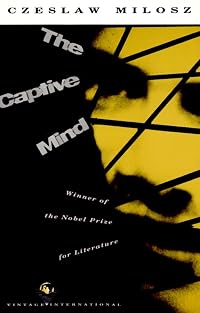
The Captive Mind
by Czesław Miłosz
On This Page
Description
The best known prose work by the winner of the 1980 Nobel Prize for Literature examines the moral and intellectual conflicts faced by men and women living under totalitarianism of the left or right. Written in the early 1950s, when Eastern Europe was in the grip of Stalinism and many Western intellectuals placed their hopes in the new order of the East, this classic work reveals in fascinating detail the often beguiling allure of totalitarian rule to people of all political beliefs and its show more frightening effects on the minds of those who embrace it. show lessTags
Recommendations












Member Recommendations
br77rino Milosz expresses in The Captive Mind the supreme astonishment, as so many eyewitnesses have, that Orwell's fictional 1984 could have laid out so well what life was like where they were, Stalinist Eastern Europe. He says it was a book that was passed around just like the Goldstein book in the novel.
30
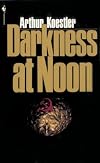
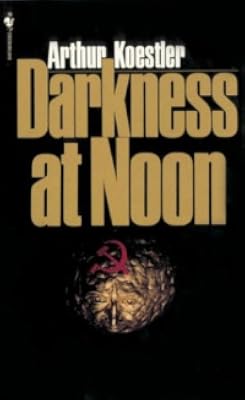
br77rino Darkness at Noon is a famous fictional view of life behind the Iron Curtain, and was written around the same time. The main character is a prisoner.
30
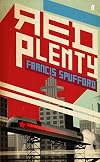
lewbs One is a fiction about the economics of communism, the other is a non-fiction about mental processes in communism. Complementary books.
Member Reviews
The Berlin Wall fell in 1989; the Soviet Union dissolved two years later. My whole life postdates the Cold War. The Captive Mind transports you to the 1950s, when not only was state-sponsored Communism ascendant, it seemed to point the direction of the future. Milosz depicts the brutal takeover of Poland by the Soviets, offering incisive portraits of friends who bent a knee to the New Faith. His book is a searing study of collective submission, wrought by terror, torture, and naivety. Three decades after the Fall of Communism, it is yet again essential reading. Its lessons may gird you against the call of a new New Faith.
Published two years after his definitive break with the post-war Polish state, this is the book where Czesław Miłosz investigates in detail how Stalinism affected the minds of people living in the parts of Europe that fell under Soviet domination after World War II. He looks in the abstract at a number of mental strategies he has identified for coping with totalitarian rule, and in the light of these he considers his own experience as a left-wing writer who lived through the horrors of the Nazi occupation in Warsaw and also looks at four other Polish writers (coincidentally called Alpha, Beta, Gamma and Delta) who accommodated themselves, or tried not to, in various different ways.
In the final chapters, Miłosz looks at the way the show more unpredictable individuality of the human mind keeps on undermining the "scientific" assumptions of totalitarian ideologies, and he devotes some time to making sure that his readers are aware of the scale of the horrors inflicted on the people of the Baltic states after the Russian occupations of 1940 and 1945 and the Nazi occupation of 1941. If you're going to have a single political system based on a Russian Centre, you'd better be prepared to put up with mass deportations, he's telling us.
Obviously some of this is very specific to the situation Miłosz was in in the early 1950s, but there are also a lot of frighteningly clear insights into the way people behave under pressure in the real world. And some prescient moments when he talks about the likelihood that the countries of Eastern Europe will rise up against Stalin and be crushed one by one, and about Catholicism as the main threat to Stalinism in Poland. Interesting too how Miłosz, who had seen all this at first hand, praises the insight of George Orwell, who hadn't. show less
In the final chapters, Miłosz looks at the way the show more unpredictable individuality of the human mind keeps on undermining the "scientific" assumptions of totalitarian ideologies, and he devotes some time to making sure that his readers are aware of the scale of the horrors inflicted on the people of the Baltic states after the Russian occupations of 1940 and 1945 and the Nazi occupation of 1941. If you're going to have a single political system based on a Russian Centre, you'd better be prepared to put up with mass deportations, he's telling us.
Obviously some of this is very specific to the situation Miłosz was in in the early 1950s, but there are also a lot of frighteningly clear insights into the way people behave under pressure in the real world. And some prescient moments when he talks about the likelihood that the countries of Eastern Europe will rise up against Stalin and be crushed one by one, and about Catholicism as the main threat to Stalinism in Poland. Interesting too how Miłosz, who had seen all this at first hand, praises the insight of George Orwell, who hadn't. show less
I bought this last year in an effort to widen my reading. I hadn’t realised when I purchased it that it wasn’t fiction. It’s a political diatribe written by someone who survived both WWII and the Soviet takeover of Poland, but managed to resist the blandishments of both the Underground during WWII and the Soviet occupiers afterwards. As a writer, an intellectual, with acceptable political credentials, he ended up as cultural attaché in Washington but, disgusted by the responses of his peers to the new regime, he chose to exile himself. Miłosz first points out that intellectuals were a peculiar class of their own in Central and East European countries, and this particularly applied to writers, one that had no equivalent in show more Western European – or American – societies. After discussing “ketman”, which seems to be a a misunderstanding of an historical Islamic term (now known as “taqiya”), Miłosz describes four writers of his acquaintance and their response to Soviet occupation – and this is where The Captive Mind comes into its own. I’ve no idea who the writers are he describes, although it probably isn’t difficult to figure out, but his dissection of their character and ambitions in light of Polish history during and after WWII is fascinating stuff. I don’t think for an instant that The Captive Mind is a warning against “totalitarian culture” as the book is often described. It is specific to a time and place, and I suspect some of the tactics described by Miłosz are triggered more by an institutional drive for survival than by an y kind of coherent political thought. The Captive Mind was intended to make for scary reading, but its teeth have long since been pulled – first by Solidarność, then by glasnost, although both of course were the end result of long and dangerous campaigns. On the other hand, in 2018 we seem to be staring down the throat of full-blown fascism, despite everything our parents and grandparents fought against last century, despite the clear benefits to all and sundry that progressivism and regulated economies bring… The Captive Mind is an important historical document, but its remit is too narrow, its lessons are too focused, and the passage of time has rendered its general sense of alarm both moot and badly aimed. However. Worth reading, if you’re interested in the subject. show less
"There are occasions when silence no longer suffices, when it may pass as an avowal. Then one must not hesitate. Not only must one deny one's true opinion, but one is commanded to resort to all ruses to deceive one's adversary. One makes all the protestations of faith that can please him, one performs all the rites one recognizes to be the most vain, one falsifies one's own books, one exhausts all possible means of deceit." - Arthur Gobineau, from `Religions and Philosophies of Central Asia'
"The Captive Mind," written in the early 1950s immediately after Milosz was awarded political asylum in France, is one of the first attempts to articulate the appeal of Communism (or, more broadly, dialectical materialism) to the intellectuals all show more over Eastern Europe.
Central to the novel are four characters identified by Milosz only as Alpha, Beta, Delta, and Gamma (but who we know enough about to identify as the very real authors Jerzy Andrzejewski, Tadeusz Borowski, Jerzy Putrament, and Konstanty Ildefons Galczynski.) Each of the four has uniquely different relationships to writing, and thinks differently about the way dialectical materialism affects their writing. In Alpha's youth, his far-right politics calls him into writing with the force of "moral authority." He later eschews these politics and becomes a Catholic who speaks out against anti-Semitism. After World War II ends, Alpha's writing ideologically aligns itself with the puppet governments that set themselves up on Eastern Europe, and he is later seen only seen as a literary prostitute by his former friends. Beta, a poet who spent two years in Auschwitz and Dachau only to later be released by American soldiers, later swallows the pill of Murti-Bing and writes hard-line ideological defenses of Leninism and Stalinism. The experiences of Delta and Gamma are equally typical accounts of when the mind of an intellectual bumps into an intractable ideological system which inevitably evolves into "ketman," meaning an outward acceptance of an idea while still holding on to unspoken reservations. In fact, this word, originally from the Arabic, was imported into English by Arthur Gobineau himself (see the quotation above).
The first two chapters are incisive in evoking the spirit of the Communism-addled writer who struggles to balance his "priorities." But the middle chapters on the writers seem as untrue - not false in the strict sense, but lacking the clarity of the moral-political-aesthetic themes with which he was trying to deal - as the ideology with which they are struggling. While they are presented as individuated, personal characters, the reader gets the feeling that Milosz is to turn them into archetypes while at other times working deliberately against this, which has an odd way of turning them into alienating abstractions for the reader.
Perhaps most of all, this book serves as a tocsin. By now, an entire generation of Europeans has had the ability to write, think, and speak publicly about whatever they wish, the very fact of which possibly renders Milosz's book a peculiar curio from the doldrums of intellectual history. For many Americans, whose questions of freedom are restricted to whether or not one is allowed to burn their draft card or a Koran, or utter a prayer in school, reading "The Captive Mind" may very well have a stultifying effect. If that happens, the book runs the risk - we all run the risk - of it becoming still even more relevant than it is now. show less
"The Captive Mind," written in the early 1950s immediately after Milosz was awarded political asylum in France, is one of the first attempts to articulate the appeal of Communism (or, more broadly, dialectical materialism) to the intellectuals all show more over Eastern Europe.
Central to the novel are four characters identified by Milosz only as Alpha, Beta, Delta, and Gamma (but who we know enough about to identify as the very real authors Jerzy Andrzejewski, Tadeusz Borowski, Jerzy Putrament, and Konstanty Ildefons Galczynski.) Each of the four has uniquely different relationships to writing, and thinks differently about the way dialectical materialism affects their writing. In Alpha's youth, his far-right politics calls him into writing with the force of "moral authority." He later eschews these politics and becomes a Catholic who speaks out against anti-Semitism. After World War II ends, Alpha's writing ideologically aligns itself with the puppet governments that set themselves up on Eastern Europe, and he is later seen only seen as a literary prostitute by his former friends. Beta, a poet who spent two years in Auschwitz and Dachau only to later be released by American soldiers, later swallows the pill of Murti-Bing and writes hard-line ideological defenses of Leninism and Stalinism. The experiences of Delta and Gamma are equally typical accounts of when the mind of an intellectual bumps into an intractable ideological system which inevitably evolves into "ketman," meaning an outward acceptance of an idea while still holding on to unspoken reservations. In fact, this word, originally from the Arabic, was imported into English by Arthur Gobineau himself (see the quotation above).
The first two chapters are incisive in evoking the spirit of the Communism-addled writer who struggles to balance his "priorities." But the middle chapters on the writers seem as untrue - not false in the strict sense, but lacking the clarity of the moral-political-aesthetic themes with which he was trying to deal - as the ideology with which they are struggling. While they are presented as individuated, personal characters, the reader gets the feeling that Milosz is to turn them into archetypes while at other times working deliberately against this, which has an odd way of turning them into alienating abstractions for the reader.
Perhaps most of all, this book serves as a tocsin. By now, an entire generation of Europeans has had the ability to write, think, and speak publicly about whatever they wish, the very fact of which possibly renders Milosz's book a peculiar curio from the doldrums of intellectual history. For many Americans, whose questions of freedom are restricted to whether or not one is allowed to burn their draft card or a Koran, or utter a prayer in school, reading "The Captive Mind" may very well have a stultifying effect. If that happens, the book runs the risk - we all run the risk - of it becoming still even more relevant than it is now. show less
Miłosz’s meditation on how people (for most of the book, academics) forced themselves to make an agonized peace with Soviet ideology in the aftermath of WW2 resonates today for readers who’ve seen friends and colleagues start speaking in strange tongues for favor in much smaller stakes.
The text slowed to a crawl in spaces where the context was obviously more immediate at its publication, but Miłosz’s poetic voice makes other passages of horror and humility deeply affecting, ringing throughout time.
The text slowed to a crawl in spaces where the context was obviously more immediate at its publication, but Miłosz’s poetic voice makes other passages of horror and humility deeply affecting, ringing throughout time.
This book took me longer than usual to read it and it will certainly will take longer than usual to understand what I have read. The models detailed in the book make perfect sense, but then again bring certain sadness when thought about. Important book that is hard to rate or describe. It certainly does require certain knowledge of the time period and geopolitical intricacies of the region. Recommended read for those who have a particular interest in the post world war 2 eastern Europe and the rise of Communism.
An examination of the psychology of the Stalinist totalitarian system from the view of polish poet Czeslaw Milosz. He names several types of self-delusion and describes the fates of some friends he knew who stayed in the Soviet Union. A very interesting and sharp analysis from a time in which it was not yet clear if Communism would fail in it's world-conquering ambitions.
Members
- Recently Added By
Lists

Best of World Literature
434 works; 51 members

Non-Fiction Worth Reading
1,015 works; 261 members

Nobel Price Winners
222 works; 20 members

1950s
340 works; 22 members
Author Information

213+ Works 8,573 Members
Czeslaw Milosz is the recipient of the 1980 Nobel Prize in Literature. His most recent publications are Striving Towards Being: The Letters of Thomas Merton and Czeslaw Milosz (FSG, 1997) and Road-side Dog (FSG, 1998). He lives in Berkeley, California. (Publisher Provided) Czeslaw Milosz was born in Szetejnie, Lithuania on June 30, 1911. In 1934, show more he received a degree as Master of Law and traveled to Paris on a fellowship from the National Culture Fund. In 1936, he worked as a literary programmer for Radio Wilno, but was dismissed for his leftist views the following year. He then took a job with Polish Radio in Warsaw. During World War II, he was a member of the Polish resistance. He served as a Polish diplomat in the late 1940s, but defected to Paris in 1951. In 1961, he became a lecturer in Polish literature at the University of California at Berkeley and, later, a professor of Slavic languages and literatures. His works include The Captive Mind, Native Realm, Czeslaw Milosz: The Collected Poems 1931-1987, Bells in Winter, A Year of the Hunter, and Roadside Dog. He received several awards including the Prix Littéraire European from the Swiss Book Guild for The Seizure of Power in 1953, the Neustadt International Prize for Literature, and the Nobel Prize for Literature in 1980. He has also translated the works of other Polish writers into English, and has co-translated his own works. He died on August 14, 2004. (Bowker Author Biography) show less
Some Editions
Awards and Honors
Awards
Series
Belongs to Publisher Series
Common Knowledge
- Canonical title
- The Captive Mind
- Original title
- Zniewolony umysł
- Original publication date
- 1953
- People/Characters
- Jerzy Andrzejewski; Tadeusz Borowski; Jerzy Putrament; Konstanty Ildefons Galczynski
- Important places
- Warsaw, Poland; Oświęcim, Lesser Poland, Poland; Vilna, Lithuania; Auschwitz concentration camp, Oświęcim, Lesser Poland, Poland
- Important events
- World War II; Cold War
- Epigraph
- When someone is honestly 55% right, that's very good and there's no use wrangling. And if someone is 60% right, it's wonderful, it's great luck, and let him thank God. But what's to be said about 75% right? Wise people say th... (show all)is is suspicious. Well, and what about 100% right? Whoever says he's 100% right is a fanatic, a thug, and the worst kind of rascal.
-An old Jew of Galicia - First words
- It was only towards the middle of the twentieth century that the inhabitants of many European countries came, in general unpleasantly, to the realization that their fate could be influenced directly by intricate and abstruse ... (show all)books of philosophy.
- Quotations
- Capitalism created scientific thinking and dealt a powerful blow to religion in Europe by removing the best minds from the confines of theology.
They stammer out their efforts to explain: "The dreadful sadness of life over there"; "I felt I was turning into a machine."
Naked fear is unlikely ever to be inclined to abdicate.
One must always keep in mind the eventual goal, which is the melting down of all nations into a single mass.
I think they are wrong, that their knowledge in all its perfection is insufficient, and their power over life and death is usurped. - Last words
- (Click to show. Warning: May contain spoilers.)And perhaps Zeus, who does not call stamp-collectors and tulip-growers silly, will forgive.
- Publisher's editor*
- Cilvēks un sabiedrība
- Original language
- Polish
*Some information comes from Common Knowledge in other languages. Click "Edit" for more information.
Classifications
- Genre
- Nonfiction
- DDC/MDS
- 943.8 — History & geography History of Europe Central Europe: Germany, Austria, Switzerland, Czech, Poland, Hungary Poland
- LCC
- DK4437 .M5413 — History of Europe, Asia, Africa and Oceania Russia. Soviet Union. Former Soviet Republics – Poland History of Poland History 1945-1989. People's Republic
- BISAC
Statistics
- Members
- 1,510
- Popularity
- 15,276
- Reviews
- 20
- Rating
- (4.18)
- Languages
- 18 — Catalan, Dutch, English, Finnish, French, German, Greek, Hungarian, Italian, Latvian, Norwegian (Bokmål), Polish, Portuguese, Romanian, Russian, Croatian, Spanish, Swedish
- Media
- Paper, Audiobook, Ebook
- ISBNs
- 45
- ASINs
- 16