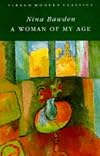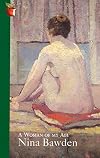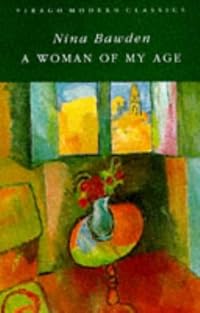
A Woman of My Age
by Nina Bawden
On This Page
Description
Elizabeth and Richard, 18 years married, have come to Morocco on holiday. As the adventures and disasters of their travels unfold, so too does Elizabeth's account of the desert her life has become. The author's book Circles of Deceit was shortlisted for the 1987 Booker Prize.Tags
Recommendations















Member Reviews
"Middle age: an urge to destroy because you cannot create any more."
"It was as if he hadn't really wanted freedom, only to assert his right to be free if he chose."
Said of an escaped horse, but just as applicable to some of the human characters. And maybe to me, too.
Historical Fiction?
I suppose this is historical fiction, albeit of a very recent kind, given that it's set before and around the time I was born. I have a casual fondness for English novels set in that period, usually among the slightly struggling, introspective middle class intelligentsia (Iris Murdoch, Margaret Drabble, Lynne Reid Banks, Penelope Fitzgerald, Elizabeth Taylor, Barbara Pym). It's only just occurred to me that perhaps I'm trying to glimpse something of my show more parents' past (they're both still alive). I certainly see parallels in some of these novels. The really good ones still speak truth today.
This shows its age in a few ways. Some are rather charming, such as a metaphor on the first page, "other people are under-developed negatives, snapshots" and saying, with embarrassment, that an unmarried couple "were lovers". Others are more discomforting: gender roles in general, attitudes to casual domestic violence, a friend who fears her Jewish heritage may be discovered, and phrases like "Sometimes I dreamed of dark rapists in romantic situations". The ending would be improbable nowadays, too.
The History of a Marriage
This is the story of Richard and Elizabeth's travels in Morocco: a week or two in the mid 1960s. It's interspersed with backstory of their childhoods and the course of their marriage of nearly 20 years, including two sons. She's around 38, but describes herself as middle aged. They seem comfortable with low-level discomfort in their relationship. Settled. Settled for second-best, perhaps.
"Our feelings for each other rattle around like cards in a spinning tombola... we draw out a card, not always appropriate, for each occasion."
"When we were first married, we argued with vain, angry faces, insisting that we should be understood... Now we don't want to be understood. The truth is too painful."
Inevitably, their past, present and future turn out to be more troubling and complex than is initially apparent: deaths, betrayals, and disappointments all lurk, waiting for the triggers: travel, heat, friends new and old. Some of the consequences are a little predictable, others much less so. The overall effect is plausible (mostly), dramatic, traumatic.
Introspection
Elizabeth is the narrator - to the reader and to herself: she sometimes thinks of herself in the third person, imagining how others describe her, as "a way of giving myself some kind of shape. Or helping me to see myself." She was raised by two strong women (aunts), in a fiercely political home (Labour), got into Oxford, but dropped out to marry, and has lacked confidence ever since.
For all her self-analysis, she isn't always honest to herself, which makes her situation all the more poignant: "Nothing moved in me. Apart from a superficial, tactile pleasantness, I felt nothing at all." But not always: "I had only pretended I didn't know... a shabby mischance had... knocked down the precarious walls of my prison."
At times, she's trying to be someone she's not, but she doesn't even know quite who that is. I can relate to that.
Escape?
We all need escape at times. a hobby, a holiday, friendships, an affair. There are no answers here, unfortunately.
Quotes
Some of these are agonising:
* "You know other people only as witnesses to your own situation: when they reflect your own fears and desires."
* Looking in the mirror, "I remain, as I did then [when younger] cloudy, fading, sadly out of focus. I do not know myself, only my own situation."
* "I put out my hand. He took it and, after a second, handed it back to me like a discarded handkerchief."
* "Richard has great charm when he chooses to exert it... He bestowed his charm upon them [her aunts] like a beautiful and unexpected present: since they were old, the giving of it flattered him, not them."
* A younger partner was "too young to be a discarded husband... too old to be a son".
* We "sat silent, smoking to comfort our inferiority".
* "I shrank from his perfection... grateful for the darkness."
* "He discussed his symptoms with the self-absorbed vehemence of a young man to whom pain is a single, shocking insult, not feared as a forerunner of something worse."
* "I fell into deceit quite easily... The change was not so much in him, as in the way I saw him."
* "a gloomily devoted mother."
* "This is what a marriage should be... two people comforting each other in the dark. There's no need for love in the daylight."
* "Duty is a much easier conception" than love.
* "He began to cry. It seemed like a strategy."
contrasted with
"I wanted to weep but I felt nothing." show less
"It was as if he hadn't really wanted freedom, only to assert his right to be free if he chose."
Said of an escaped horse, but just as applicable to some of the human characters. And maybe to me, too.
Historical Fiction?
I suppose this is historical fiction, albeit of a very recent kind, given that it's set before and around the time I was born. I have a casual fondness for English novels set in that period, usually among the slightly struggling, introspective middle class intelligentsia (Iris Murdoch, Margaret Drabble, Lynne Reid Banks, Penelope Fitzgerald, Elizabeth Taylor, Barbara Pym). It's only just occurred to me that perhaps I'm trying to glimpse something of my show more parents' past (they're both still alive). I certainly see parallels in some of these novels. The really good ones still speak truth today.
This shows its age in a few ways. Some are rather charming, such as a metaphor on the first page, "other people are under-developed negatives, snapshots" and saying, with embarrassment, that an unmarried couple "were lovers". Others are more discomforting: gender roles in general, attitudes to casual domestic violence, a friend who fears her Jewish heritage may be discovered, and phrases like "Sometimes I dreamed of dark rapists in romantic situations". The ending would be improbable nowadays, too.
The History of a Marriage
This is the story of Richard and Elizabeth's travels in Morocco: a week or two in the mid 1960s. It's interspersed with backstory of their childhoods and the course of their marriage of nearly 20 years, including two sons. She's around 38, but describes herself as middle aged. They seem comfortable with low-level discomfort in their relationship. Settled. Settled for second-best, perhaps.
"Our feelings for each other rattle around like cards in a spinning tombola... we draw out a card, not always appropriate, for each occasion."
"When we were first married, we argued with vain, angry faces, insisting that we should be understood... Now we don't want to be understood. The truth is too painful."
Inevitably, their past, present and future turn out to be more troubling and complex than is initially apparent: deaths, betrayals, and disappointments all lurk, waiting for the triggers: travel, heat, friends new and old. Some of the consequences are a little predictable, others much less so. The overall effect is plausible (mostly), dramatic, traumatic.
Introspection
Elizabeth is the narrator - to the reader and to herself: she sometimes thinks of herself in the third person, imagining how others describe her, as "a way of giving myself some kind of shape. Or helping me to see myself." She was raised by two strong women (aunts), in a fiercely political home (Labour), got into Oxford, but dropped out to marry, and has lacked confidence ever since.
For all her self-analysis, she isn't always honest to herself, which makes her situation all the more poignant: "Nothing moved in me. Apart from a superficial, tactile pleasantness, I felt nothing at all." But not always: "I had only pretended I didn't know... a shabby mischance had... knocked down the precarious walls of my prison."
At times, she's trying to be someone she's not, but she doesn't even know quite who that is. I can relate to that.
Escape?
We all need escape at times. a hobby, a holiday, friendships, an affair. There are no answers here, unfortunately.
Quotes
Some of these are agonising:
* "You know other people only as witnesses to your own situation: when they reflect your own fears and desires."
* Looking in the mirror, "I remain, as I did then [when younger] cloudy, fading, sadly out of focus. I do not know myself, only my own situation."
* "I put out my hand. He took it and, after a second, handed it back to me like a discarded handkerchief."
* "Richard has great charm when he chooses to exert it... He bestowed his charm upon them [her aunts] like a beautiful and unexpected present: since they were old, the giving of it flattered him, not them."
* A younger partner was "too young to be a discarded husband... too old to be a son".
* We "sat silent, smoking to comfort our inferiority".
* "I shrank from his perfection... grateful for the darkness."
* "He discussed his symptoms with the self-absorbed vehemence of a young man to whom pain is a single, shocking insult, not feared as a forerunner of something worse."
* "I fell into deceit quite easily... The change was not so much in him, as in the way I saw him."
* "a gloomily devoted mother."
* "This is what a marriage should be... two people comforting each other in the dark. There's no need for love in the daylight."
* "Duty is a much easier conception" than love.
* "He began to cry. It seemed like a strategy."
contrasted with
"I wanted to weep but I felt nothing." show less
Elizabeth and her husband are vacationing in Morocco and as she immerses herself in the environment she realizes that the desert is the perfect metaphor for her life. At 37, Elizabeth considers herself past it, middled-aged, boring and on a fast slide into tedious old age. She no longer is interested in her husband and shuns his advances. As they trudge through the country, uncomfortable in their European clothes, she begins to wonder how it happened. When did the bright, enthusiastic, liberal university student evolve into the slightly overweight, dull housewife. Her aunts, suffragettes to the end, begged her to get her degree before she married, but she giddily yielded to pressure from Richard who wanted a nest after his stint in the show more Army during WW2. Richard could be very charming.
As the years fly by she loses her identity and becomes the mother, the successful attorney's wife, the hostess, the neighbor. When she becomes active in local politics she is not encouraged by her husband who sees it only as her little hobby and she abandons any idea of a political career when the working class constituency believe she is just a wealthy do-good meddler who really cannot understand their problems. She doesn't get her dream job on a newspaper because Richard deliberately withholds critical information so he can keep his wife happy at home.
In the course of their trip, they meet an old friend with her young lover and a couple in their late sixties who are still in love. Elizabeth finds she is attracted to both the young man and the old man and is surprised when both are attracted to her..
How Elizabeth comes to grips with her life is an interesting study of a woman who was raised by feminists, filled the expected role of wife and mother, and finds a path back to her own identity. She makes some very surprising decisions. Although I think the resolution is not really believable because of the way the character is presented, I enjoyed this Bawden dissection of an English housewife at the beginning of the sweeping social changes of the 60's. show less
As the years fly by she loses her identity and becomes the mother, the successful attorney's wife, the hostess, the neighbor. When she becomes active in local politics she is not encouraged by her husband who sees it only as her little hobby and she abandons any idea of a political career when the working class constituency believe she is just a wealthy do-good meddler who really cannot understand their problems. She doesn't get her dream job on a newspaper because Richard deliberately withholds critical information so he can keep his wife happy at home.
In the course of their trip, they meet an old friend with her young lover and a couple in their late sixties who are still in love. Elizabeth finds she is attracted to both the young man and the old man and is surprised when both are attracted to her..
How Elizabeth comes to grips with her life is an interesting study of a woman who was raised by feminists, filled the expected role of wife and mother, and finds a path back to her own identity. She makes some very surprising decisions. Although I think the resolution is not really believable because of the way the character is presented, I enjoyed this Bawden dissection of an English housewife at the beginning of the sweeping social changes of the 60's. show less
Last month, Karen of Kaggsysbookishramblings and Simon of Stuck in a book had a read-a-long of Nina Bawden’s A Woman of my Age. I wanted to join in, and then a fellow librarything member sent me a copy of the book, but I have only just got around to reading it.
Nina Bawden’s Carrie’s War was one of my all-time favourite children’s books and I really enjoyed the couple of Bawden’s adult books I read last year. I find Bawden’s writing very engaging, her characters strong and believable their lives are fully explored and often portrayed with sharp humour – after reading The Devil by the Sea and A Grain of Truth I wanted to read all of Bawden’s novels for adults. I enjoyed ‘A woman of my age’ very much – although not show more quite as much as those two books I just mentioned, for me there were a few little odd things which jarred slightly.
“When I look in the mirror – not to see if the grey roots are beginning to show before the next tinting, but in the same way I used to look at myself when I was seventeen, at what, whom and why – I remain, as I did then, cloudy, fading, sadly out of focus. I do not know myself, only my own situation: I am Elizabeth Jourdelay, married to Richard, the mother of his two sons. I am, I am middle aged. This is an embarrassment that has come upon me suddenly, taking me by surprise so that I don’t really believe it. Looking in the mirror I see the wrinkles, but perhaps tomorrow they will be gone and my skin will be smooth again. Though wrinkles are not important. The important thing is that I am in the middle of my life and I feel as I did when I was adolescent, that I do not know where to go from here.
What of the time between? What have I done – become – during twenty long battling years? Is there no answer, no key?”
In ‘A Woman of my Age’ we meet Elizabeth – a woman of about 37 – who having been married for around eighteen years is no longer very interested in her husband and considers herself middle aged. Travelling in Morocco with her husband Richard, allows Elizabeth time to look back over her life, how is it she has ended up where she is? Brought up by two aunts who had worked for the suffrage movement and taught her to engage in politics, Elizabeth left university without taking her degree in order to marry Richard. Richard is a handsome, charming man, quite persuasive and prone to bursts of temper he is happiest with Elizabeth undertaking the traditional wife and mother role. There were times in her younger years when Elizabeth was frustrated by her life, yearning for a chance to work – however humbly – within the political arena – yet she finds herself sacrificing her ambitions for her family. Elizabeth’s view of herself and her relationship will surprise – maybe shock many modern readers –even shrugging off her husband hitting her during a particularly bad row.
In the searing heat of the Moroccan desert – Elizabeth and Richard meet two other couples. Flora is an old friend – particularly of Richard’s – Elizabeth hasn’t seen her for a number of years. Flora a woman of around 40 is travelling with her young lover Adam. The other couple are the Hobbs – a couple in their 60’s, Mrs Hobbs is good hearted friendly woman, very large and rather unwell, she and her husband are devoted to one another. Initially the Hobbs’ are a couple that Elizabeth and Richard smile at behind their backs, finding them slightly ridiculous – but Elizabeth quickly becomes genuinely fond of them. Sexually uninterested in her husband, resisting his advances when she can, Elizabeth is amazed to find herself an object of attraction to both Adam and Mr Hobbs – she is further surprised by her own reaction to them. As the group continue their journey across the desert –the sexual tensions that have built up have life changing consequences for almost everyone.
There is quite a twist in the ending of this novel- not something I saw coming, and certainly it wasn’t the ending that I would have chosen. I don’t want to give away too much – in case anyone else is thinking of reading it soon – but I suspect it is an ending which dismays many readers. However – while it is not the ending I would have chosen – it did make a sort of peculiar sense for me. Throughout the novel, Elizabeth indulges in a good deal of introspective navel gazing – she’s a little bit whiney I suppose. Her life is dull – she is disappointed by how it has turned out – but she never really does much about it –the reader sees how there were times when she nearly had – but just never quite managed it. Even in Morocco there is a moment when the reader thinks Elizabeth is going to strike out on her own – but here again she goes back to what is easy – it is as if Elizabeth is simply unable to go the whole hog – she’s good at talking about it – ruminating on her lot – but she just slips back into the old routine. Elizabeth emerges as a woman repeating the mistakes of her youth in middle age – destined to live out the same life again. Nina Bawden allows her readers to really know her characters – and while we all may interpret their motivations slightly differently – we have these complex not always likeable people set out before us – and in just 200 pages or so, we have their whole lives laid bare. show less
Nina Bawden’s Carrie’s War was one of my all-time favourite children’s books and I really enjoyed the couple of Bawden’s adult books I read last year. I find Bawden’s writing very engaging, her characters strong and believable their lives are fully explored and often portrayed with sharp humour – after reading The Devil by the Sea and A Grain of Truth I wanted to read all of Bawden’s novels for adults. I enjoyed ‘A woman of my age’ very much – although not show more quite as much as those two books I just mentioned, for me there were a few little odd things which jarred slightly.
“When I look in the mirror – not to see if the grey roots are beginning to show before the next tinting, but in the same way I used to look at myself when I was seventeen, at what, whom and why – I remain, as I did then, cloudy, fading, sadly out of focus. I do not know myself, only my own situation: I am Elizabeth Jourdelay, married to Richard, the mother of his two sons. I am, I am middle aged. This is an embarrassment that has come upon me suddenly, taking me by surprise so that I don’t really believe it. Looking in the mirror I see the wrinkles, but perhaps tomorrow they will be gone and my skin will be smooth again. Though wrinkles are not important. The important thing is that I am in the middle of my life and I feel as I did when I was adolescent, that I do not know where to go from here.
What of the time between? What have I done – become – during twenty long battling years? Is there no answer, no key?”
In ‘A Woman of my Age’ we meet Elizabeth – a woman of about 37 – who having been married for around eighteen years is no longer very interested in her husband and considers herself middle aged. Travelling in Morocco with her husband Richard, allows Elizabeth time to look back over her life, how is it she has ended up where she is? Brought up by two aunts who had worked for the suffrage movement and taught her to engage in politics, Elizabeth left university without taking her degree in order to marry Richard. Richard is a handsome, charming man, quite persuasive and prone to bursts of temper he is happiest with Elizabeth undertaking the traditional wife and mother role. There were times in her younger years when Elizabeth was frustrated by her life, yearning for a chance to work – however humbly – within the political arena – yet she finds herself sacrificing her ambitions for her family. Elizabeth’s view of herself and her relationship will surprise – maybe shock many modern readers –even shrugging off her husband hitting her during a particularly bad row.
In the searing heat of the Moroccan desert – Elizabeth and Richard meet two other couples. Flora is an old friend – particularly of Richard’s – Elizabeth hasn’t seen her for a number of years. Flora a woman of around 40 is travelling with her young lover Adam. The other couple are the Hobbs – a couple in their 60’s, Mrs Hobbs is good hearted friendly woman, very large and rather unwell, she and her husband are devoted to one another. Initially the Hobbs’ are a couple that Elizabeth and Richard smile at behind their backs, finding them slightly ridiculous – but Elizabeth quickly becomes genuinely fond of them. Sexually uninterested in her husband, resisting his advances when she can, Elizabeth is amazed to find herself an object of attraction to both Adam and Mr Hobbs – she is further surprised by her own reaction to them. As the group continue their journey across the desert –the sexual tensions that have built up have life changing consequences for almost everyone.
There is quite a twist in the ending of this novel- not something I saw coming, and certainly it wasn’t the ending that I would have chosen. I don’t want to give away too much – in case anyone else is thinking of reading it soon – but I suspect it is an ending which dismays many readers. However – while it is not the ending I would have chosen – it did make a sort of peculiar sense for me. Throughout the novel, Elizabeth indulges in a good deal of introspective navel gazing – she’s a little bit whiney I suppose. Her life is dull – she is disappointed by how it has turned out – but she never really does much about it –the reader sees how there were times when she nearly had – but just never quite managed it. Even in Morocco there is a moment when the reader thinks Elizabeth is going to strike out on her own – but here again she goes back to what is easy – it is as if Elizabeth is simply unable to go the whole hog – she’s good at talking about it – ruminating on her lot – but she just slips back into the old routine. Elizabeth emerges as a woman repeating the mistakes of her youth in middle age – destined to live out the same life again. Nina Bawden allows her readers to really know her characters – and while we all may interpret their motivations slightly differently – we have these complex not always likeable people set out before us – and in just 200 pages or so, we have their whole lives laid bare. show less
Elizabeth reflects on her life and eighteen-year marriage over the course of a holiday in Morocco. Bawden captures the stifling heat of Morocco as well as portraying the wavering indecision of the introspective, somewhat over-indulged characters. Very enjoyable.
Ratings
Members
- Recently Added By
Talk Discussions
Past Discussions
Nina Bawden Readalong in Virago Modern Classics (May 2013)
Author Information

57+ Works 4,531 Members
Nina Bawden was born in Ilford, Essex, England on January 19, 1925. She received a B.A. in 1946 and a M.A. in 1951 from Somerville College, Oxford. During her lifetime, she wrote more than 40 books for both children and adults. Her first adult novel was published in 1953. Her books for adults include Circles of Deceit, The Ruffian on the Stair, show more and Dear Austen. Her first children's book The Secret Passage was published in 1963. Her children's books include Kept in the Dark, Humbug, The Birds on the Trees, Carrie's War, The Outside Child, Granny the Pag, and Off the Road. She received numerous awards for her work including the 1976 Guardian Children's Fiction Prize for The Peppermint Pig and the 1977 Yorkshire Post Novel of the Year Award for Afternoon of a Good Woman. She was made a CBE in 1995 and received the ST Dupont Golden Pen Award for a lifetime's contribution to literature in 2004. She died on August 22, 2012 at the age of 87. (Bowker Author Biography) show less
Series
Belongs to Publisher Series
Virago Modern Classics (366)
Common Knowledge
- Canonical title
- A Woman of My Age
- Original title
- A Woman of My Age
- Original publication date
- 1967
- Important places
- Morocco
- Dedication
- For my father
Charles Mabey
on his eightieth birthday - First words
- Somewhere between Meknes and Fez, the bus came to a sudden halt.
- Last words
- (Click to show. Warning: May contain spoilers.)That's all you can ever say.
- Original language
- English
Classifications
Statistics
- Members
- 93
- Popularity
- 344,484
- Reviews
- 5
- Rating
- (3.87)
- Languages
- English, German
- Media
- Paper, Ebook
- ISBNs
- 8
- ASINs
- 3