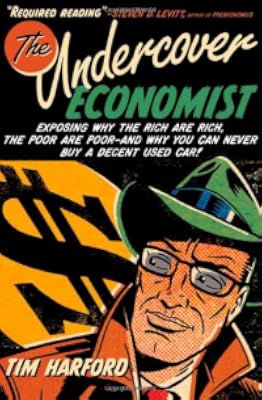
The Undercover Economist: Exposing Why the Rich Are Rich, the Poor Are Poor—and Why You Can Never Buy a Decent Used Car
by Tim Harford
On This Page
Description
Author of the extremely popular "Dear Economist" column in Financial Times, Tim Harford reveals the economics behind everyday phenomena in this highly entertaining and informative book. Can a book about economics be fun to read? It can when Harford takes the reins, using his trademark wit to explain why it costs an arm and a leg to buy a cappuccino and why it's nearly impossible to purchase a decent used car. Supermarkets, coffee houses, airlines, insurance companies and more are sucking show more money from our wallets. To protect ourselves and our bank accounts, we must better understand why companies do what they do. The Undercover Economist is a sheer delight-and the one book on economics that every American should read. show lessTags
Recommendations


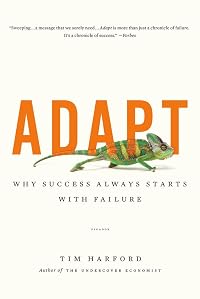
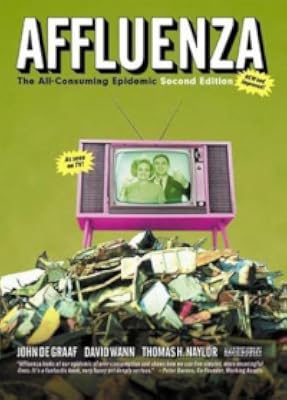
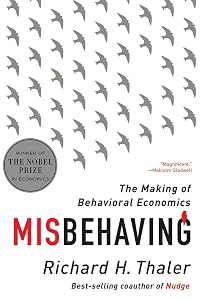
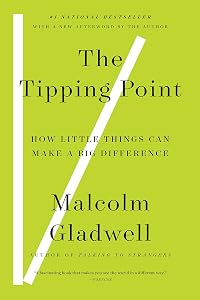


Member Recommendations
Member Reviews
Ekonomie není složitá věda, tedy… Ekonomie je složitá věda, kterou lze při dostatečném zjednodušení nesmírně elegantně a snadno vysvětlit. A ono zjednodušení nakonec nemusí být tak zásadní, jak se může na první pohled zdát. Ve své (dnes již, uznávám, trošku starší) úspěšné knize “The Undercover Economist: Exposing Why the Rich Are Rich, the Poor Are Poor—and Why You Can Never Buy a Decent Used Car!” to dokazuje britský ekonom a novinář Tim Harford.
S úkolem hledat ekonomické zákony v každodenním konání lidí začne hned v úvodu a své povídání o lásce ke kávě v první kapitole přenese v základní pojem mikroekonomie, mezní náklady. Ukazuje, že cena kávy není rozhodně show more dána výší výrobních nákladů a že je to naopak očekávaný výnos, který umožňuje určit, jakou mají věci cenu. Jednoduše tak vysvětluje to, co se během prvního semestru naučí většina vysokoškoláků, ovšem způsobem, který by nemusel být nepříjemný ani lidem s odporem k matematice a ke vzdělání obecně.
The Undercover Economist
Harford je zastáncem svobodných trhů, což ostatně naznačuje už názvem třetí kapitoly (Perfect Markets And The “World of Truth”), a jasně to dává najevo i poselstvím, které je z knihy zřejmé: bez trhů nelze zjistit, jakou mají věci hodnotu, a proto určování ceny jiným způsobem, než je setkávání nabídky s poptávkou, musí nutně skončit špatně. Nikde to není znát více, než v jeho plamenné obhajobě svobodného mezistátního obchodu bez zbytečných cel a dalších restrikcí. Tvrdě útočí na všechny ochranářské politiky a poukazuje na skutečnost, že jednoduše není možné, aby byl celý národ bez práce vinou dovozů z levnějších zemí - neměl by čím zaplatit. Uznává, že jednotlivci mohou na otevřeném obchodu tratit, ovšem pouze z krátkodobého hlediska. Ekonomice otevřený obchod prospívá. Uzavřené hranice (stačí jen obchodně) a restriktivní politika pak vede k udržování malých místních diktátorů, kteří sice ve vnějším světě nic neznamenají, ovšem svůj národ drží v bídě a izolaci.
Nejzajímavější však je, když se Harford od protržní ekonomické školy odchyluje. Na rozdíl od většiny současných zastánců zcela neřízené tržní ekonomiky zastává názor, že v některých případech trh selhává, a v těchto chvílích je na místě, aby zasáhl stát. Taková situace nastává ve chvíli, kdy obě strany nemají k dispozici stejné informace, a vede k podobným nešvarům, jakým je předražený americký systém zdravotního pojištění. Harford však nabízí řešení v podobě povinného spoření, které úspěšně funguje v Singapuru, neodmítá však ani typické evropské systémy povinného státního zdravotního pojištění. Neméně zajímavý je pak jeho pohled na externality, které navrhuje internalizovat, a to způsobem, který by se takovým Svobodným rozhodně nelíbil. Za příklad poslouží vjezd do velkých měst, který by jednoduše zpoplatnil. Naopak by však snížil výši daně při pořizování vozidel, aby se tak každý přiblížil onomu tržnímu ideálu “zaplať, kolik spotřebuješ”. Takovou představu lze snadno zobecnit do stavu, kdy samotně vlastnictví věci (auta) není třeba danit, neboť zdaněno bude až její užívání (poplatky za vjezd do města, mýtné na dálnicích, spotřební daň na pohonné hmoty, parkování ve městech). Je to totiž užívání, ne vlastnictví, které (ve většině případů) vytváří externality.
V kapitole o obchodních bariérách mezi státy poukazuje Harford na skutečnost, že nebýt ekonomicky nevzdělaných voličů, žádné obchodní bariéry by existovat nemohly. Přestože je však izolace nevýnosná pro společnost, je výnosná pro některé její členy, kteří dokáží ostatní snadno přesvědčit k její podpoře. Stačilo by však o něco více ekonomického vzdělání a všem by se v dlouhodobém výhledu žilo líp. “The Undercover Economist” je skvělým krokem k této vzdělanosti, byť se obávám, že si ji přečtou právě ti, kteří spíše než poučení hledají potvrzení svých, už existujících, znalostí. show less
S úkolem hledat ekonomické zákony v každodenním konání lidí začne hned v úvodu a své povídání o lásce ke kávě v první kapitole přenese v základní pojem mikroekonomie, mezní náklady. Ukazuje, že cena kávy není rozhodně show more dána výší výrobních nákladů a že je to naopak očekávaný výnos, který umožňuje určit, jakou mají věci cenu. Jednoduše tak vysvětluje to, co se během prvního semestru naučí většina vysokoškoláků, ovšem způsobem, který by nemusel být nepříjemný ani lidem s odporem k matematice a ke vzdělání obecně.
The Undercover Economist
Harford je zastáncem svobodných trhů, což ostatně naznačuje už názvem třetí kapitoly (Perfect Markets And The “World of Truth”), a jasně to dává najevo i poselstvím, které je z knihy zřejmé: bez trhů nelze zjistit, jakou mají věci hodnotu, a proto určování ceny jiným způsobem, než je setkávání nabídky s poptávkou, musí nutně skončit špatně. Nikde to není znát více, než v jeho plamenné obhajobě svobodného mezistátního obchodu bez zbytečných cel a dalších restrikcí. Tvrdě útočí na všechny ochranářské politiky a poukazuje na skutečnost, že jednoduše není možné, aby byl celý národ bez práce vinou dovozů z levnějších zemí - neměl by čím zaplatit. Uznává, že jednotlivci mohou na otevřeném obchodu tratit, ovšem pouze z krátkodobého hlediska. Ekonomice otevřený obchod prospívá. Uzavřené hranice (stačí jen obchodně) a restriktivní politika pak vede k udržování malých místních diktátorů, kteří sice ve vnějším světě nic neznamenají, ovšem svůj národ drží v bídě a izolaci.
Nejzajímavější však je, když se Harford od protržní ekonomické školy odchyluje. Na rozdíl od většiny současných zastánců zcela neřízené tržní ekonomiky zastává názor, že v některých případech trh selhává, a v těchto chvílích je na místě, aby zasáhl stát. Taková situace nastává ve chvíli, kdy obě strany nemají k dispozici stejné informace, a vede k podobným nešvarům, jakým je předražený americký systém zdravotního pojištění. Harford však nabízí řešení v podobě povinného spoření, které úspěšně funguje v Singapuru, neodmítá však ani typické evropské systémy povinného státního zdravotního pojištění. Neméně zajímavý je pak jeho pohled na externality, které navrhuje internalizovat, a to způsobem, který by se takovým Svobodným rozhodně nelíbil. Za příklad poslouží vjezd do velkých měst, který by jednoduše zpoplatnil. Naopak by však snížil výši daně při pořizování vozidel, aby se tak každý přiblížil onomu tržnímu ideálu “zaplať, kolik spotřebuješ”. Takovou představu lze snadno zobecnit do stavu, kdy samotně vlastnictví věci (auta) není třeba danit, neboť zdaněno bude až její užívání (poplatky za vjezd do města, mýtné na dálnicích, spotřební daň na pohonné hmoty, parkování ve městech). Je to totiž užívání, ne vlastnictví, které (ve většině případů) vytváří externality.
V kapitole o obchodních bariérách mezi státy poukazuje Harford na skutečnost, že nebýt ekonomicky nevzdělaných voličů, žádné obchodní bariéry by existovat nemohly. Přestože je však izolace nevýnosná pro společnost, je výnosná pro některé její členy, kteří dokáží ostatní snadno přesvědčit k její podpoře. Stačilo by však o něco více ekonomického vzdělání a všem by se v dlouhodobém výhledu žilo líp. “The Undercover Economist” je skvělým krokem k této vzdělanosti, byť se obávám, že si ji přečtou právě ti, kteří spíše než poučení hledají potvrzení svých, už existujících, znalostí. show less
La idea de este libro promete mucho. El primer capítulo analiza por qué los cafés en Starbucks y otras cadenas comerciales cafeteras son tan caros comparados con un café en un bar. Tim Harford [TH] nos tiende una trampa, para luego darle la vuelta al argumento. En un principio podríamos pensar que los cafés de Starbucks son tan caros porque esta cadena suele tener sus tiendas en lugares de mucho nivel (en plena Gran Vía madrileña, justo a la salida de las principales estaciones de metro…), y que como paga alquileres muy caros, deben de tener precios caros para mantenerse. Pero es justo al contrario. Comenzando por el término económico de escasez (a ver si algún lector versado en economía amplía esa entrada de la Wikipedia, show more que está muy delgada la pobre), TH nos retrotrae a los primeros tiempos del Far West y hace un símil entre las tierras de pastoreo de distinta calidad y las franquicias cafeteras. Su tesis es que Starbucks se apodera de los lugares en los que hay demanda de café (salidas de estaciones de metro importantes, en hora punta matutina, las propias estaciones de metro, plazas centrales de grandes ciudades) y ofrece más dinero a los propietarios de los centros comerciales para que no haya más tiendas de café cerca. Como Starbucks tiene así el poder de la escasez, puede permitirse cobrar más caros los cafés porque la gente que sale del metro y necesita un café se para menos a comparar precios y decidir que un capuchino por 3€ es un exceso. He resumido muchísimo el argumento, que puede parecer cojo. La discusión del libro es mucho mejor.
TH nos explica luego qué es un mercado perfecto y cuáles son los tres principales “problemas” que hacen que algunos mercados no funcionen como deberían. Por el camino aprenderemos un montón sobre términos económicos, pero administrados con maestría, de forma que no duelan
Hay un capítulo fantástico sobre las subastas de licencias de telefonía UMTS y cómo dos países distintos (EE.UU. y Reino Unido), empleando sistemas similares, obtuvieron recaudaciones muy distintas por parte de las compañías de telecomunicaciones. Una leve variación en los sistemas provocó que un país obtuviera 100 veces menos ingresos que el otro por más o menos las mismas licencias puestas a subasta. Muy interesante.
También nos damos una vuelta por países en desarrollo. TH compara a Camerún y China, dos países que el autor visitó y que hace pocos años tenían niveles de pobreza similares. Mientras que China ahora es una superpotencia económica y no para de crecer, Camerún sigue sumido en la miseria.
Y aprendemos por qué TH cree que el protocolo de Kyoto puede ser realmente útil, pues un protocolo anterior, que los EE.UU. hicieron de manera interna, consiguió recortar muchísimo las emisiones de azufre.
Una de las mejores partes del libro comienza con la frase Una empresa siempre intentará cobrarte por un producto lo máximo que estés dispuesto a pagar. Y a continuación da multitud de ejemplos, que todos conocemos, de empresas que ponen distintos precios a productos muy similares para que cada cual elija lo que está dispuesto a pagar por ellos. Compañías aéreas, la propia Starbucks y unas cuantas más. Una explicación fantástica.
También hay referencias aisladas a teoremas económicos muy interesantes, como aquél que demuestra que imponer un arancel al producto A importado de otro país es equivalente a poner un arancel al producto B exportado por nuestro propio país.
El libro picotea por temas muy variados. No hay una tesis central que se vaya desarrollando, son más bien capítulos independientes, en general. La lectura es muy amena y a veces, sólo a veces, hay que releer una parte para asegurarse de haber entendido bien el concepto subyacente. Me lo he pasado pipa leyendo.
Mi nota: Muy interesante. show less
TH nos explica luego qué es un mercado perfecto y cuáles son los tres principales “problemas” que hacen que algunos mercados no funcionen como deberían. Por el camino aprenderemos un montón sobre términos económicos, pero administrados con maestría, de forma que no duelan
Hay un capítulo fantástico sobre las subastas de licencias de telefonía UMTS y cómo dos países distintos (EE.UU. y Reino Unido), empleando sistemas similares, obtuvieron recaudaciones muy distintas por parte de las compañías de telecomunicaciones. Una leve variación en los sistemas provocó que un país obtuviera 100 veces menos ingresos que el otro por más o menos las mismas licencias puestas a subasta. Muy interesante.
También nos damos una vuelta por países en desarrollo. TH compara a Camerún y China, dos países que el autor visitó y que hace pocos años tenían niveles de pobreza similares. Mientras que China ahora es una superpotencia económica y no para de crecer, Camerún sigue sumido en la miseria.
Y aprendemos por qué TH cree que el protocolo de Kyoto puede ser realmente útil, pues un protocolo anterior, que los EE.UU. hicieron de manera interna, consiguió recortar muchísimo las emisiones de azufre.
Una de las mejores partes del libro comienza con la frase Una empresa siempre intentará cobrarte por un producto lo máximo que estés dispuesto a pagar. Y a continuación da multitud de ejemplos, que todos conocemos, de empresas que ponen distintos precios a productos muy similares para que cada cual elija lo que está dispuesto a pagar por ellos. Compañías aéreas, la propia Starbucks y unas cuantas más. Una explicación fantástica.
También hay referencias aisladas a teoremas económicos muy interesantes, como aquél que demuestra que imponer un arancel al producto A importado de otro país es equivalente a poner un arancel al producto B exportado por nuestro propio país.
El libro picotea por temas muy variados. No hay una tesis central que se vaya desarrollando, son más bien capítulos independientes, en general. La lectura es muy amena y a veces, sólo a veces, hay que releer una parte para asegurarse de haber entendido bien el concepto subyacente. Me lo he pasado pipa leyendo.
Mi nota: Muy interesante. show less
A simple yet original attempt: introducing economics (its major concepts and, some of its most pertinent theorists) simply by looking at the world around us. From the price of a cup of coffee to a trip for shopping at the supermarket, from renting a flat to buying a second-hand car, Tim Harford thus manages to turn a seemingly complicated topic into a accessible one -relevant to all of us. He even manages to explain the late financial crisis and, question why capitalism works in some countries but not others. It's easy to read, punchy and, fulfil its mission perfectly: make us more aware of all the economical issues involved behind our consumerists' lives. A great read.
I picked up a bargain priced copy of this work after having leafed through Tyler Cowen's hardback Inner Economist (waiting for the paperback version). Having studied the craft of economics, I am probably not the book's target audience. Economics has at last arrived in the pop science book section, albeit in a strange format. Just like the physics books, it sheds all elements of math and rigour: Look, no need to think, no complicated formulas. Add a snappy moniker ("freakonomics", "undercover", ...) for extra street cred. Unfortunately, these junkfood books are very low in nutritional value. The reader is only left with an illusion of understanding. Better read a textbook on microeconomics or managerial economics.
Tim Harford has written show more a readable book which presents economic concepts such as markets, scarcity, choices, externalities, asymmetric information, adverse selection, games, auctions, comparative advantage and free trade via household examples (coffee and beer being Harford's staples). Essentially an unconnected tour of some ideas and concepts of some Nobel prize winners from the perspective of a rich, white male.
The book has three obvious blind spots: Firstly, the good aspects of government (and government's function in a modern market economy) are hardly mentioned. Mostly, government is treated as the source of failure, waste and stupidity. While the value of an institutional framework gets a positive remark, the valuable contributions of economists to the study of government are ignored. Secondly, Harford is not interested in discussions of equality and fairness, invalidating his subtitle ("exposing why the rich are rich and the poor are poor"). Your parents determine much of your station in life. I wonder if a Harford born in Cameroon would express a similar world-view. Again, a less insular treatment would have illuminated some of the contributions of economics to the discussion of fairness and equality. Thirdly, spending his time between London and Washington DC, the author has developed a smug view about the rest of the world. Instead of belittling corrupt Africa, he might have taken his examples from corrupt Washington (federal or district, your choice). Public transport is notoriously bad in the US and the UK too. No need to go to Cameroon. He praises the US imperialistic market opening of Japan in 1854 but ignores the British gunships promoting free trade in opium a few years later. A less Panglossian worldview would make the text better.
Overall, a book I can not recommend for teaching purposes or as an introduction for beginners. Its one-sidedness does not present the full range of economics. Curiously (or to demonstrate my objections to the text), neither book nor index mention the founder of economics, Adam Smith, a professor of moral philosophy (hear, hear). The undercover economist has yet to uncover the foundations of economics. show less
Tim Harford has written show more a readable book which presents economic concepts such as markets, scarcity, choices, externalities, asymmetric information, adverse selection, games, auctions, comparative advantage and free trade via household examples (coffee and beer being Harford's staples). Essentially an unconnected tour of some ideas and concepts of some Nobel prize winners from the perspective of a rich, white male.
The book has three obvious blind spots: Firstly, the good aspects of government (and government's function in a modern market economy) are hardly mentioned. Mostly, government is treated as the source of failure, waste and stupidity. While the value of an institutional framework gets a positive remark, the valuable contributions of economists to the study of government are ignored. Secondly, Harford is not interested in discussions of equality and fairness, invalidating his subtitle ("exposing why the rich are rich and the poor are poor"). Your parents determine much of your station in life. I wonder if a Harford born in Cameroon would express a similar world-view. Again, a less insular treatment would have illuminated some of the contributions of economics to the discussion of fairness and equality. Thirdly, spending his time between London and Washington DC, the author has developed a smug view about the rest of the world. Instead of belittling corrupt Africa, he might have taken his examples from corrupt Washington (federal or district, your choice). Public transport is notoriously bad in the US and the UK too. No need to go to Cameroon. He praises the US imperialistic market opening of Japan in 1854 but ignores the British gunships promoting free trade in opium a few years later. A less Panglossian worldview would make the text better.
Overall, a book I can not recommend for teaching purposes or as an introduction for beginners. Its one-sidedness does not present the full range of economics. Curiously (or to demonstrate my objections to the text), neither book nor index mention the founder of economics, Adam Smith, a professor of moral philosophy (hear, hear). The undercover economist has yet to uncover the foundations of economics. show less
This book reminds me of P. J. O’Rourke’s Eat The Rich. Both are by right-libertarians (although Tim Harford, author of The Undercover Economist, might dispute that description); both are pretty funny, and both do a pretty good job of explaining economics. The most similar chapters are when the authors visit Third World economies and compare them to successful economies (Tanzania and Hong Kong for O’Rourke; Cameroon and China for Harford).
They cover slightly different ground otherwise; Harford is more interested in smaller-scale economic problems and has somewhat less of an axe to grind in praise of capitalism than O’Rourke (Harford is sparing in his use of the word “capitalism”, preferring some variant on “market”). In show more fact, Harford’s first chapters discuss the theory of capitalism as exemplified by Starbuck’s cappuccino, without ever actually using the word “capitalism”, as far as I noticed. The discussion of price targeting – noting that the actual cost of raw materials for all varieties of Starbucks coffee is more or less identical and more or less trivial, thus Starbucks makes its money by convincing a consumer that a venti mocha is actually worth more than a tall coffee – was particular interesting. A lot of the Amazon reviewers completely missed the point of this, quickly assuming that because Starbucks charges more than a cup of coffee is “worth”, it must be “gouging” its customers. Harford does not ever make that conclusion himself, pointing out that Starbucks has to pay rent, employee salaries and benefits, etc., etc., and if you want a cheaper cup of coffee you’re entirely free to go elsewhere for it.
One thing that was very interesting in this discussion was the observation that Amazon used to adjust book prices offered to a customer based on the customer’s shopping history. Because of customer protests, they have discontinued this practice; I find this rather as shame, because if I had known they were doing that I’m sure I could have figured out a way to gimmick it.
Hartford is very pro-globalization; he’s not anti-environmentalist but wants environmentalists to be aware that everything has costs and consequences, often unforeseen costs and unintended consequences (as an example, he explains why the London greenbelt drove land prices and rents through the roof; he should visit Boulder, Colorado some time.)
I want to warn everybody that although I recommend this book, I really not that much of an economics maven; thus I probably missed some things that deserved more critical attention. The one mistake I did notice was that Harford thinks anthracite is an exceptionally polluting form of coal – something to do with geology, as you might expect. Anyway, highly recommended. show less
They cover slightly different ground otherwise; Harford is more interested in smaller-scale economic problems and has somewhat less of an axe to grind in praise of capitalism than O’Rourke (Harford is sparing in his use of the word “capitalism”, preferring some variant on “market”). In show more fact, Harford’s first chapters discuss the theory of capitalism as exemplified by Starbuck’s cappuccino, without ever actually using the word “capitalism”, as far as I noticed. The discussion of price targeting – noting that the actual cost of raw materials for all varieties of Starbucks coffee is more or less identical and more or less trivial, thus Starbucks makes its money by convincing a consumer that a venti mocha is actually worth more than a tall coffee – was particular interesting. A lot of the Amazon reviewers completely missed the point of this, quickly assuming that because Starbucks charges more than a cup of coffee is “worth”, it must be “gouging” its customers. Harford does not ever make that conclusion himself, pointing out that Starbucks has to pay rent, employee salaries and benefits, etc., etc., and if you want a cheaper cup of coffee you’re entirely free to go elsewhere for it.
One thing that was very interesting in this discussion was the observation that Amazon used to adjust book prices offered to a customer based on the customer’s shopping history. Because of customer protests, they have discontinued this practice; I find this rather as shame, because if I had known they were doing that I’m sure I could have figured out a way to gimmick it.
Hartford is very pro-globalization; he’s not anti-environmentalist but wants environmentalists to be aware that everything has costs and consequences, often unforeseen costs and unintended consequences (as an example, he explains why the London greenbelt drove land prices and rents through the roof; he should visit Boulder, Colorado some time.)
I want to warn everybody that although I recommend this book, I really not that much of an economics maven; thus I probably missed some things that deserved more critical attention. The one mistake I did notice was that Harford thinks anthracite is an exceptionally polluting form of coal – something to do with geology, as you might expect. Anyway, highly recommended. show less
Full disclosure--Tim Hartford runs my absolute favourite radio programme ever: BBC Radio 4's More or Less, a topical statistics programme. Yes, you heard me right. Basically, they do fact-checking on audience-recommended bizarre-sounding statistics. It's funny, fun, and relevant, and has the added benefit of actually catching all the zombie statistics that politicians use. Catch NPR ever having anything like that.
Anyway, all that simply goes to note that I was heavily, heavily predisposed to like this book. And I did.
This book covers the basic intuition behind some of the most important economic concepts. It's kind of like what I expected Freakonomics to be: more economics, less freak. Harford walks through various familiar examples and show more their economic counterparts, mainly avoiding jargon and weaving anecdotes into quite an entertaining book. I'm a computer scientist, not an economist, and my little knowledge of economics comes from algorithmic game theory and similar. It was very interesting to really see how an economist thinks. My major problem with all of the theories that Harford propounded was that they heavily depend on rationality, and maybe more what I might term "utlitarian rationality": that people are not only rational in their actions, choosing whatever strategy gains them the most utility, but that they equate utility pretty directly with monetary gain. I have two real issues with this: first, people really aren't very good at choosing rational actions. Harford neatly sidestepped terms like Nash Equilibria, but he did invoke the concepts--and those are basically impossible for a supercomputer to achieve. How on earth would we expect people to find them? Second, I totally disagree with the notion that people actually measure gain via what economists tend to think of as utility. For an example, look up the "Ultimatum Game": people are so motivated by spite that they behave totally differently than the models would predict. I was actually interested to hear how much these imperfections in our real world disrupted the models, but Harford didn't really address this.
However, that was my only disappointment in the book. I'm slightly familiar with economics and definitely learned something, as well as being entertained by a series of fun facts. For instance, did you know that when IBM created its laser printers, it created the "economy" line by taking the professional printers and actually adding a computer chip to slow down the printer, meaning that economy printers actually cost them more to make? The book is chock full of entertaining tidbits like that. I can't recommend it enough-- definitely a good read for anyone who liked Freakonomics. Oh, and go listen to More or Less. Best radio show out there. show less
Anyway, all that simply goes to note that I was heavily, heavily predisposed to like this book. And I did.
This book covers the basic intuition behind some of the most important economic concepts. It's kind of like what I expected Freakonomics to be: more economics, less freak. Harford walks through various familiar examples and show more their economic counterparts, mainly avoiding jargon and weaving anecdotes into quite an entertaining book. I'm a computer scientist, not an economist, and my little knowledge of economics comes from algorithmic game theory and similar. It was very interesting to really see how an economist thinks. My major problem with all of the theories that Harford propounded was that they heavily depend on rationality, and maybe more what I might term "utlitarian rationality": that people are not only rational in their actions, choosing whatever strategy gains them the most utility, but that they equate utility pretty directly with monetary gain. I have two real issues with this: first, people really aren't very good at choosing rational actions. Harford neatly sidestepped terms like Nash Equilibria, but he did invoke the concepts--and those are basically impossible for a supercomputer to achieve. How on earth would we expect people to find them? Second, I totally disagree with the notion that people actually measure gain via what economists tend to think of as utility. For an example, look up the "Ultimatum Game": people are so motivated by spite that they behave totally differently than the models would predict. I was actually interested to hear how much these imperfections in our real world disrupted the models, but Harford didn't really address this.
However, that was my only disappointment in the book. I'm slightly familiar with economics and definitely learned something, as well as being entertained by a series of fun facts. For instance, did you know that when IBM created its laser printers, it created the "economy" line by taking the professional printers and actually adding a computer chip to slow down the printer, meaning that economy printers actually cost them more to make? The book is chock full of entertaining tidbits like that. I can't recommend it enough-- definitely a good read for anyone who liked Freakonomics. Oh, and go listen to More or Less. Best radio show out there. show less
Quite engagingly written. Has the same problem as most popular economics books which is that it keeps asserting things that seem to me false. This makes it rather slow reading, I decided to take a break after the first chapter to ponder what I thought was so wrong about it. I'm not like the author; I don't hang out in book shops, I'm listening to it on audio.
Anyway, the first chapter was quite interesting. It started out with a discussion of the economics of selling coffee at high-traffic locations like subway station exits. Evidently, there is evidence to support that these coffee kiosks are only doing slightly better than even, the cost they pay to rent that location and to be the only coffee shop in the station are high. He goes on show more to discuss a perfectly sensible theory of David Ricardo about scarcity. While there is no shortage of a resource it is sold at a fairly low cost, because the sellers of the resource compete w/ each other for the buyer's attention. As soon as the resource becomes scarce, i.e, more people want it than can get it, its price goes up, sometimes a lot. In fact, the price of the resource goes up, so that the buyer is only making as much profit as they would make if they chose instead the marginal equivalent resource. The companies that put up coffee kiosks illustrate this principle at work. The owners of the train stations own the property, several coffee companies want the spot, so the rental contract can be made high. But hold on, we've left out the fact that all this wouldn't matter if people weren't willing to pay high prices for coffee. If they weren't, then the renters would have to charge a lower amount to the coffee companies, because they couldn't afford to pay that amount. He claims that the commuters spilling out of the subways are desperate for caffeine and "price-blind". I'm not sure that's the case, likely they are just certain that a Starbucks cup is a necessary addition to their look as they enter their place of work and that the price they are paying is the price they ought to pay because they are the kind of people who are too special to pay any less for their coffee. But that's a small quibble.
In the next part the author discusses banks and it all really falls apart for me. We can match the situation to Ricardo's theory like this. There is a scarce resource, good bankers. There is a demand for good banking, and people are willing to pay for it. Therefore, the good bankers cost a lot, and the bank barely breaks even. But no, that's definitely not what how he seems to be fitting Ricardo's theory to his bank example. Befuddled and a little exasperated here, but willing to try again. show less
Anyway, the first chapter was quite interesting. It started out with a discussion of the economics of selling coffee at high-traffic locations like subway station exits. Evidently, there is evidence to support that these coffee kiosks are only doing slightly better than even, the cost they pay to rent that location and to be the only coffee shop in the station are high. He goes on show more to discuss a perfectly sensible theory of David Ricardo about scarcity. While there is no shortage of a resource it is sold at a fairly low cost, because the sellers of the resource compete w/ each other for the buyer's attention. As soon as the resource becomes scarce, i.e, more people want it than can get it, its price goes up, sometimes a lot. In fact, the price of the resource goes up, so that the buyer is only making as much profit as they would make if they chose instead the marginal equivalent resource. The companies that put up coffee kiosks illustrate this principle at work. The owners of the train stations own the property, several coffee companies want the spot, so the rental contract can be made high. But hold on, we've left out the fact that all this wouldn't matter if people weren't willing to pay high prices for coffee. If they weren't, then the renters would have to charge a lower amount to the coffee companies, because they couldn't afford to pay that amount. He claims that the commuters spilling out of the subways are desperate for caffeine and "price-blind". I'm not sure that's the case, likely they are just certain that a Starbucks cup is a necessary addition to their look as they enter their place of work and that the price they are paying is the price they ought to pay because they are the kind of people who are too special to pay any less for their coffee. But that's a small quibble.
In the next part the author discusses banks and it all really falls apart for me. We can match the situation to Ricardo's theory like this. There is a scarce resource, good bankers. There is a demand for good banking, and people are willing to pay for it. Therefore, the good bankers cost a lot, and the bank barely breaks even. But no, that's definitely not what how he seems to be fitting Ricardo's theory to his bank example. Befuddled and a little exasperated here, but willing to try again. show less
Members
- Recently Added By
Published Reviews
ThingScore 100
Harford’s book “leads the reader to the point” where seemingly “outrageous” statements by economists seem sensible, says Tim Worstall in The Daily Telegraph. Anyone confused by “how the world works” will benefit from reading it.
added by mikeg2
Lists

Recommend the 20 best books you've read in the last five years
2,168 works; 606 members

My List
302 works; 1 member

Author Information

26+ Works 7,463 Members
Tim Harford is an award-winning columnist, broadcaster, and economist. He is the author of Messy, Fifty Inventions That Shaped the Modern Economy, and the million-selling The Undercover Economist, and is the host of the .Cautionary Tales podcast. He is an honorary fellow of the Royal Statistical Society, and in 2019 he was awarded an OBE for show more services to improving economic understanding. show less
Awards and Honors
Work Relationships
Is contained in
Common Knowledge
- Canonical title
- The Undercover Economist: Exposing Why the Rich Are Rich, the Poor Are Poor—and Why You Can Never Buy a Decent Used Car
- Original title
- The Undercover Economist
- Original publication date
- 2006
- People/Characters
- David Ricardo; John von Neumann
- Important places
- Cameroon; China
- Dedication
- To Deborah Harford, Fran Monks, and Stella Harford -- family
... past, present, and future. - First words
- Introduction
I would like to thank you for buying this book, but if you're anything like me you haven't bought it at all. - Last words
- (Click to show. Warning: May contain spoilers.)Economics is about Yang Li's choice.
- Blurbers
- Levitt, Steven D.; Bodanis, David; Bhagwati, Jagdish; Wolf, Martin; Kay, John
Classifications
- Genres
- Economics, General Nonfiction, Business, Nonfiction, History
- DDC/MDS
- 330.90511 — Society, government, & culture Economics Jobs & Careers Economic geography and history Standard subdivisions and By Period 21st Century 2000-2009
- LCC
- HC59.15 .H35 — Social sciences Economic history and conditions Economic history and conditions
- BISAC
Statistics
- Members
- 3,672
- Popularity
- 4,406
- Reviews
- 65
- Rating
- (3.68)
- Languages
- 11 — Chinese, Dutch, English, German, Hungarian, Italian, Korean, Portuguese, Spanish, Thai, Turkish
- Media
- Paper, Audiobook, Ebook
- ISBNs
- 44
- ASINs
- 21