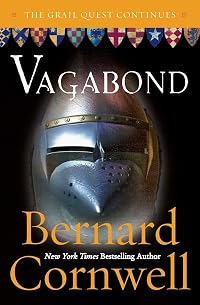
On This Page
Description
From New York Times bestselling author Bernard Cornwell, the sequel to The Archer's Tale-the spellbinding tale of a young man, a fearless archer, who sets out wanting to avenge his family's honor and winds up on a quest for the Holy Grail. In 1347, a year of conflict and unrest, Thomas of Hookton returns to England to pursue the Holy Grail. Among the flames of the Hundred Years War, a sinister enemy awaits the fabled archer and mercenary soldier: a bloodthirsty Dominican Inquisitor who also show more seeks Christendom's most holy relic. But neither the horrors of the battlefield nor sadistic torture at the Inquisitor's hands can turn Thomas from his sworn mission. And his thirst for vengeance will never be quenched while the villainous black rider who destroyed everything he loved still lives. show lessTags
Recommendations
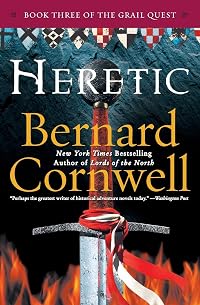
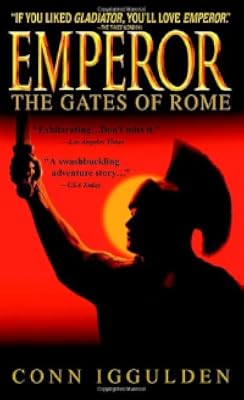
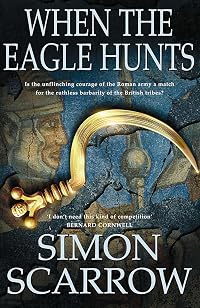
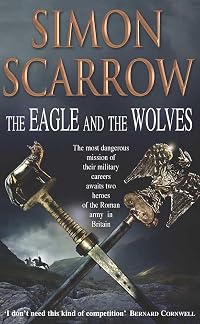
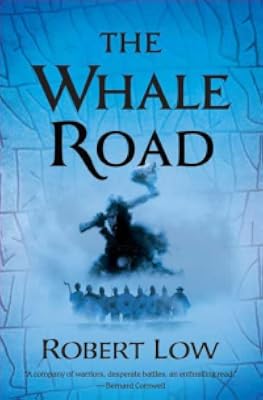







Member Recommendations
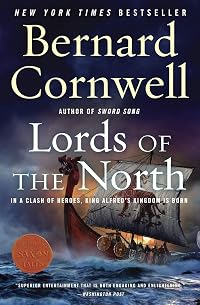
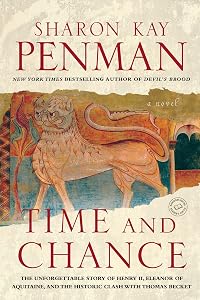
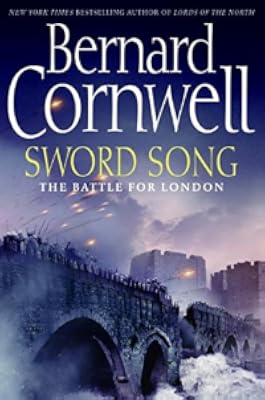
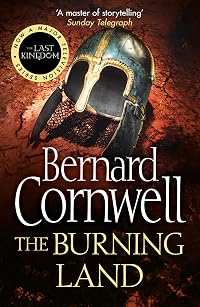
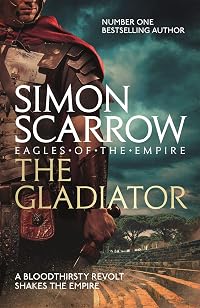
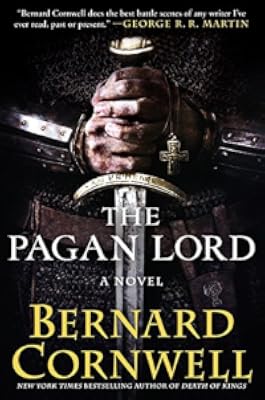
BookshelfMonstrosity These gritty and richly detailed historical thrillers are about redemption and a higher purpose -- in Paris an architect works to hide Jews from the Nazis and in Vagabond a soldier hunts for the Holy Grail.
Member Reviews
“Vagabond” did not appeal to me as much as the first book in the Grail series. Certain episodes did draw me in, though, and this author is in my opinion second only to Robert E. Howard when it comes to depicting battle scenes.
I do like the main character – Thomas – and also his Jewish friend who has a passion for checking the colour of people’s urine. Jeanette is also an appealing character. Unfortunately she isn’t in this tale as much as the first one.
I would’ve rated this novel four stars but, like all the Bernard Cornwell books that I’ve read to date, I’ve deducted a star because they are all let down by substandard elements of style. Long-winded sentences are plentiful. The needless dialogue attribution drives me show more to distraction whilst the overuse of the word “then” is surprising for such a seasoned author.
The long-winded sentences are often kept going by numerous “ands” plus a “then” or two, like with the quote below:
>David's sheltron had forced the central English battle back across a pasture, they had
stretched it thin and they were closing on the Archbishop's great banner, and then the arrows began to bite and after the arrows came the men-at-arms from the English right wing, the retainers of Lord Percy and of Lord Neville, and some were already mounted on their big horses that were trained to bite, rear and kick with their iron-shod hooves.And then, from where the Scots waited on the higher ground, the drums began to beat.The drums began to beat from where the Scots waited on the higher ground.'Charge now, sir,' he suggested, 'before they can make a battleline.''When this day's done, uncle,' Robbie Douglas said, 'you'll let me go after that priest.''What would happen, Thomas, if you found the Grail?' He did not wait for an answer. 'Do you think,' he went on instead, 'that the world will become a better place? show less
I do like the main character – Thomas – and also his Jewish friend who has a passion for checking the colour of people’s urine. Jeanette is also an appealing character. Unfortunately she isn’t in this tale as much as the first one.
I would’ve rated this novel four stars but, like all the Bernard Cornwell books that I’ve read to date, I’ve deducted a star because they are all let down by substandard elements of style. Long-winded sentences are plentiful. The needless dialogue attribution drives me show more to distraction whilst the overuse of the word “then” is surprising for such a seasoned author.
The long-winded sentences are often kept going by numerous “ands” plus a “then” or two, like with the quote below:
>David's sheltron had forced the central English battle back across a pasture, they had
stretched it thin and they were closing on the Archbishop's great banner, and then the arrows began to bite and after the arrows came the men-at-arms from the English right wing, the retainers of Lord Percy and of Lord Neville, and some were already mounted on their big horses that were trained to bite, rear and kick with their iron-shod hooves.And then, from where the Scots waited on the higher ground, the drums began to beat.The drums began to beat from where the Scots waited on the higher ground.'Charge now, sir,' he suggested, 'before they can make a battleline.''When this day's done, uncle,' Robbie Douglas said, 'you'll let me go after that priest.''What would happen, Thomas, if you found the Grail?' He did not wait for an answer. 'Do you think,' he went on instead, 'that the world will become a better place? show less
Though there's not much to the plot of this story (the Grail is more a plot device than a central theme in this tale), my attention never flagged because I was having so much fun getting to know the colorful characters, thrilling at the battle scenes, and appreciating the amazingly detailed and accurate historical detail on every page of this great read.
But that's not the main reason that I enjoyed this book.
Anyone who has studied the middle ages has probably struggled to understand the frankly foreign morals and attitudes of the time. It was a time when superstition was rife, attitudes were fatalistic, the church sold forgiveness and tortured people into acquiring faith, intellect/logic was regarded with suspicion, women were property, show more revenge was a sacred duty, loyalties were fleeting, and yet men willingly gave their lives for "honor" or "glory".
This is the first book about the period I've ever read that not only got all this right, but actually made the idiocyncracies of period seem real and credible. If I could travel back in time to the year 1347, it would look - and feel - like this.
This is the second book of a trilogy but you don't need to read the first - or last - to appreciate the experience. Having said that, I'm now going to run out and acquire both since book #2 was so much fun! show less
But that's not the main reason that I enjoyed this book.
Anyone who has studied the middle ages has probably struggled to understand the frankly foreign morals and attitudes of the time. It was a time when superstition was rife, attitudes were fatalistic, the church sold forgiveness and tortured people into acquiring faith, intellect/logic was regarded with suspicion, women were property, show more revenge was a sacred duty, loyalties were fleeting, and yet men willingly gave their lives for "honor" or "glory".
This is the first book about the period I've ever read that not only got all this right, but actually made the idiocyncracies of period seem real and credible. If I could travel back in time to the year 1347, it would look - and feel - like this.
This is the second book of a trilogy but you don't need to read the first - or last - to appreciate the experience. Having said that, I'm now going to run out and acquire both since book #2 was so much fun! show less
Greatly enjoyable audiobook. I loved the sections featuring Robbie the Scotsman. The story ALWAYS got better when he appeared. Does he appear in Part 3, I wonder? BTW De Taillebourg deserved his out come. EVERY TINY PIECE OF IT.
Ten years ago I might have finished it, but it doesn't suit my mood or patience now. It involves an archer, Thomas, in England during the Hundred Years War. His past and family are not mysterious, so much as dubious of reputation. The rumor has it that his family was given the care of the Holy Grail. Thomas' father is dead, taking his secrets to the grave. Or did he? An Inquisitor priest from France is hot on the trail of the grail and thinks Thomas knows the secret. Thomas isn't saying. In the meantime he is caught up in the war, and has made a deadly enemy of an insane asshole.
I read 131 pages to get through one battle; the Battle of Neville's Cross, on the northern border with Scotland. It was interesting and instructive on how show more battles were waged in the border wars. Having just read a book about the reivers of the border, the details of the fighting was interesting, though explicitly told. After that, I just couldn't. So I read the last chapter, skimmed a bit to see how we got there and was satisfied. I don't enjoy torture scenes, or insane, nasty characters and I don't regret my decision to stop reading this. Other's mileage may vary. show less
I read 131 pages to get through one battle; the Battle of Neville's Cross, on the northern border with Scotland. It was interesting and instructive on how show more battles were waged in the border wars. Having just read a book about the reivers of the border, the details of the fighting was interesting, though explicitly told. After that, I just couldn't. So I read the last chapter, skimmed a bit to see how we got there and was satisfied. I don't enjoy torture scenes, or insane, nasty characters and I don't regret my decision to stop reading this. Other's mileage may vary. show less
Not quite as captivating for me as the first in the series - it felt a bit more disjointed. Still, memorable battle scenes and some genuinely disturbing scenes relating to church sponsored torture and anti semitism. The audiobook performance is excellent. 3.4 stars.
"The entire first third of the book is devoted to the infamous battle of the Scots and the English that took place at Durham in October 1346. Just before blood-soaked part one of the novel begins in earnest, Cornwell sows the seeds for the actual plot, the meeting between Thomas of Hookton and his arch nemesis, his cousin, the evil Guy of Vexhille. Guy is heir to the ancient aristocratic title Thomas' father once held: Count of Astarac.
And the Vexhille family were once hunted down as heretics, allies of the Knights Templar who, among other precious religious treasures, had had possession of the Holy Grail. The Templars made a member of the Astarac clan the cup-bearer, or treasurer, and charged the Vexhille family with the safekeeping show more of the Grail, when European kings and papal clerics became jealous of the Knights Templar riches and power and declared them heretics.
To be honest, I didn't like the beginning that much; it was too slow. I got rather fed up reading about men-at-arms, knights and archers chopping each other to bits by a variety of gruesome methods. Seven or eight thousand agonizing Scottish deaths later, the plot finally got started.
In drip feed fashion we learn that Thomas' father, a mad priest with a taste for sin, believed that his heretic family had been put in charge of looking after the Grail, the most holy of all relics in Christendom. In a book he charted his thoughts and discoveries, shrouding what was already a mystery into an even deeper one with ancient religious quotations only the most educated of people can still decipher.
Before Thomas can even decide if he believes in the existence of the Grail or not, he's up to his eyeballs in papal conspiracies and hounded by fortune hunters, his cousin and an obsessed Inquisitor, who will stop at nothing to get his hands on the grail. It's a brutal part of medieval history and Cornwell never lets us forget that life was cheap and meant little, when priests could give absolution for sins for a few coins and assure sinners of everlasting happiness in the afterlife.
Anyway, my greatest critique of Cornwell's books is that he is so intent on writing for a male audience that he is incapable of writing about women. His readers' obvious fixation with rape fantasies has gotten the better of this author. Every single time a woman is mentioned in any of his books, she either has been raped repeatedly, is about to be raped or died because of it. This novel is more of the same. Museum archives all over Europe hold plenty of household accounts, diaries and other documents from the Middle Ages that show us how wives, daughters and dowager mothers had to cope when their knights went off to fight on behalf of king and country. These women had to look after vast estates, order tenants and serfs about, and be able to command household garrisons who were protecting their castles. They didn't do that by being shrinking violets or timid bunnies, and if you think about it, knights would hardly have left their womenfolk in charge of these estates, if they had to worry about their women getting raped by supposedly faithful retainers the moment knights had trotted off across the drawbridge. For the sheer reason of the author, apparently, being lazy enough so as not to, apparently, research properly before writing his books, I'm marking down the star rating here on Goodreads.
The Last Passage
And the Vexhille family were once hunted down as heretics, allies of the Knights Templar who, among other precious religious treasures, had had possession of the Holy Grail. The Templars made a member of the Astarac clan the cup-bearer, or treasurer, and charged the Vexhille family with the safekeeping show more of the Grail, when European kings and papal clerics became jealous of the Knights Templar riches and power and declared them heretics.
To be honest, I didn't like the beginning that much; it was too slow. I got rather fed up reading about men-at-arms, knights and archers chopping each other to bits by a variety of gruesome methods. Seven or eight thousand agonizing Scottish deaths later, the plot finally got started.
In drip feed fashion we learn that Thomas' father, a mad priest with a taste for sin, believed that his heretic family had been put in charge of looking after the Grail, the most holy of all relics in Christendom. In a book he charted his thoughts and discoveries, shrouding what was already a mystery into an even deeper one with ancient religious quotations only the most educated of people can still decipher.
Before Thomas can even decide if he believes in the existence of the Grail or not, he's up to his eyeballs in papal conspiracies and hounded by fortune hunters, his cousin and an obsessed Inquisitor, who will stop at nothing to get his hands on the grail. It's a brutal part of medieval history and Cornwell never lets us forget that life was cheap and meant little, when priests could give absolution for sins for a few coins and assure sinners of everlasting happiness in the afterlife.
Anyway, my greatest critique of Cornwell's books is that he is so intent on writing for a male audience that he is incapable of writing about women. His readers' obvious fixation with rape fantasies has gotten the better of this author. Every single time a woman is mentioned in any of his books, she either has been raped repeatedly, is about to be raped or died because of it. This novel is more of the same. Museum archives all over Europe hold plenty of household accounts, diaries and other documents from the Middle Ages that show us how wives, daughters and dowager mothers had to cope when their knights went off to fight on behalf of king and country. These women had to look after vast estates, order tenants and serfs about, and be able to command household garrisons who were protecting their castles. They didn't do that by being shrinking violets or timid bunnies, and if you think about it, knights would hardly have left their womenfolk in charge of these estates, if they had to worry about their women getting raped by supposedly faithful retainers the moment knights had trotted off across the drawbridge. For the sheer reason of the author, apparently, being lazy enough so as not to, apparently, research properly before writing his books, I'm marking down the star rating here on Goodreads.
The Last Passage
Thomas went to the engineers' tents and found a pickaxe, a mattock and a shovel. He dug a grave beside Stonewhip and tipped Skeat into the damp soil and tried to say a prayer, but he could not think of one, and then he remembered the coin for the ferryman and so he went to the Lord of Roncelets's tent and pulled the charred canvas away from the chest and took a piece of gold and went back to the grave. He jumped down beside his friend and put the coin under Skeat's tongue. The ferryman would find it and know from the gold that Sir William Skeat was a special man. 'God bless you, Will,' Thomas said, then he scrambled out of the grave and he filled it in, though he kept pausing in hope that Will's eyes would open, but of course they did not and Thomas at last wept as he shovelled earth onto his friend's pale face. The sun was up by the time he finished and women and children were coming from the town to look for plunder. A kestrel flew high and Thomas sat on the chest of coins and waited for Robbie to return from the town.
He would go south, he thought. Go to Astarac. Go and find his father's notebook and solve its mystery. The bells of La Roche-Derrien were ringing for the victory, a huge victory, and Thomas sat among the dead and knew he would have no peace until he had found his father's burden. Calix mens inebrians. Transfer calicem istem a me. Ego enim Bram pincerna regis.
Whether he wanted the job or not he was the King's cupbearer, and he would go south.
This book read more like a non-fiction book with a plot than a genuine fiction novel. I'm split between never wanting to read another book by Cornwell and going out and reading every book he's ever read. It was like pulling teeth to get through this book because of the descriptions and attention to detail, but at the same time that's what made this book so excellently rich and vivid.
Members
- Recently Added By
Lists

Historical Fiction
889 works; 89 members
Author Information

167+ Works 93,360 Members
Bernard Cornwell was born in London, England, on February 23, 1944, and came to the United States in 1980. He received a B.A. from the University of London in 1967. Cornwell served as producer of the British Broadcasting Corporation from 1969-1976. After this he was head of current affairs for BBC-TV in Belfast, Northern Ireland. In 1979 he became show more editor of television news for Thames Television of London. Since 1980 he has been a freelance writer. he lives with his wife on Cape Cod. Cornwell's Sharpe series, adventure stories about a British soldier set in the Peninsula War of 1808-1814, are built on the author's interest in the Duke of Wellington's army. Titles include Sharpe's Rifles, Sharpe's Revenge, Sharpe's Siege, Sharpe's Regiment, and Sharpe's Waterloo. The Last Kingdom series has ten books. Book ten, The Flame Bearer is on the bestsellers list. He has also written other works including Wildtrack, Killer's Wake, Sea Lord, Stormchild, Rebel, Copperhead, and Battle Flag. His title Death of Kings made The New York Times Best Seller List in 2012 and In 2014 his title The Pagan Lord made the list again. (Bowker Author Biography) show less
Some Editions
Series

Work Relationships
Common Knowledge
- Canonical title
- Vagabond
- Original title
- Vagabond
- Original publication date
- 2002-10-07
- People/Characters
- Thomas of Hookton; Guy Vexille; Father Hobbe; Will Skeat; Jeanette, Countess of Amorica; Sir Guillaume d'Evecque (show all 10); Eleanor; Sir Simon Jekyll; Edward, the Black Prince (of Woodstock, Prince of Wales and Aquitaine); Robbie
- Important places
- La Roche-Derrien, Brittany, France; York, North Yorkshire, England, UK; Hookton, Dorset, England, UK (fictional)
- Important events
- Hundred Years' War (1337 | 1453)
- Dedication
- Vagabond is for June and Eddie Bell
in friendship and gratitude - First words
- It was October, the time of the year's dying when cattle were being slaughtered before winter and when the northern winds brought a promise of ice.
- Last words
- (Click to show. Warning: May contain spoilers.)Whether he wanted the job or not he was the King's cupbearer, and he would go south.
- Original language
- English UK
Classifications
Statistics
- Members
- 2,286
- Popularity
- 8,678
- Reviews
- 38
- Rating
- (3.83)
- Languages
- 9 — Czech, English, French, German, Hungarian, Italian, Spanish, Turkish, Portuguese (Brazil)
- Media
- Paper, Audiobook, Ebook
- ISBNs
- 55
- ASINs
- 20