On This Page
Description
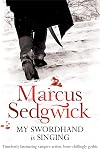
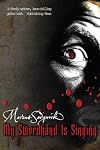
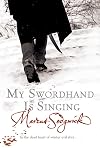
In the dangerous dark of winter in an Eastern European village during the early seventeenth century, Peter learns from a gypsy girl that the Shadow Queen is behind the recent murders and reanimations, and his father's secret past may hold the key to stopping her.Tags
Recommendations





Member Recommendations

avatiakh sequel

Member Reviews
Reviewed by Natalie Tsang for TeensReadToo.com
Marcus Sedgwick's MY SWORDHAND IS SINGING is a dark novel with a heavy emphasis on thick, snowy forests of Eastern Europe, gypsies, and superstitious town folk. It is the perfect setting for a scary story, but it is also much, much more.
Tomas and his teenage son, Peter, are a pair of traveling woodcutters with a mysterious past that settle down in the village of Chust one winter. Before long a string a deaths strike the village. Peter is perturbed by the villagers' strange reactions to the occurrences. When he asks Tomas about them, his father brushes away his questions as silly folk lore. However, Tomas is also doing his own share of strange things, like digging a trench around their home show more and filling it with moving water. When Agnes, a girl Peter likes, is symbolically married to a dead man and shut up in a remote hut, Peter tries to rescue her and runs into a monster.
Sedgwick takes pains to distance his tale from the gentleman bloodsucker that Anne Rice and authors like her have embedded into pop culture. The word "vampire" is never mentioned and the vampires, themselves, have varying appearances throughout the novel. He does a great job at weaving various and sometimes seemingly paradoxical pieces of folk lore. This gives the story a great sense of immediacy and realism. Sedgwick also shifts the focus from vampires to people who have to deal with terrifying occurrences at home. The buildup of the growing atmosphere of fear and denial will have readers biting their fingernails.
Marcus Sedgwick seems to take a lot of risks in writing this atypical, historically rich vampire novel. Central to the story line is not the relationship between a human and vampire or a girl and a boy (a la Buffy and Angel), but a wounded relationship between father and son. While this may seem terribly uncool, the realism of this relationship is what grounds the novel and makes the more fantastical elements more believable and scary. show less
Marcus Sedgwick's MY SWORDHAND IS SINGING is a dark novel with a heavy emphasis on thick, snowy forests of Eastern Europe, gypsies, and superstitious town folk. It is the perfect setting for a scary story, but it is also much, much more.
Tomas and his teenage son, Peter, are a pair of traveling woodcutters with a mysterious past that settle down in the village of Chust one winter. Before long a string a deaths strike the village. Peter is perturbed by the villagers' strange reactions to the occurrences. When he asks Tomas about them, his father brushes away his questions as silly folk lore. However, Tomas is also doing his own share of strange things, like digging a trench around their home show more and filling it with moving water. When Agnes, a girl Peter likes, is symbolically married to a dead man and shut up in a remote hut, Peter tries to rescue her and runs into a monster.
Sedgwick takes pains to distance his tale from the gentleman bloodsucker that Anne Rice and authors like her have embedded into pop culture. The word "vampire" is never mentioned and the vampires, themselves, have varying appearances throughout the novel. He does a great job at weaving various and sometimes seemingly paradoxical pieces of folk lore. This gives the story a great sense of immediacy and realism. Sedgwick also shifts the focus from vampires to people who have to deal with terrifying occurrences at home. The buildup of the growing atmosphere of fear and denial will have readers biting their fingernails.
Marcus Sedgwick seems to take a lot of risks in writing this atypical, historically rich vampire novel. Central to the story line is not the relationship between a human and vampire or a girl and a boy (a la Buffy and Angel), but a wounded relationship between father and son. While this may seem terribly uncool, the realism of this relationship is what grounds the novel and makes the more fantastical elements more believable and scary. show less
The creepiest thing about this book was that even though it's about certain blood-drinking, sunlight-allergic, extremely scary non-living people, they are almost never mentioned directly. The small community living in a huge, dark forest in the middle of nowhere prefers to pretend that these creepy and dangerous nighttime visitors don't exist. However, soon it becomes impossible to ignore what is happening, and then things get really gross and freaky. If you like scary books and are interested in vampire folklore, read this!
A pretty scary book, if you find zombies frightening. Zombies? Didn't I put this book on my Vampires shelf? Good catch, friend. The thing is, though this book is technically about vampires (or, really, the beginnings of the vampire mythology), said vampires act more like zombies. They don't talk much, or think much, or seduce anybody with their preternatural good looks. They crawl out of their graves all bloated and gross and kill a lot of people.
So if you're into the typical vampire fare, this probably isn't going to do it for you. This is more the book for someone who wants to be spooked.
So if you're into the typical vampire fare, this probably isn't going to do it for you. This is more the book for someone who wants to be spooked.
This is a review I wrote in 2007:
Beware. Not for the faint-hearted, younger readers & adults alike. Could cause nightmares in very sensitive young readers. However, for the bloodthirsty & adventurous, this is a great introduction to the classic gothic horror vampire story. Well-researched and based on many of the vampire myths emanating from Eastern Europe, you won't find here the well-dressed suave and sophisticated vampire, but rather the more "realistic" (if possible) vampire based on centuries of folklore and legend.
Peter is a young wood-cutter, living with his father Tomas, on the outskirts of a small village in a forested area of an Eastern European (presumed) country. His mother died in childbirth & Peter and his father have show more roamed for many years before building themselves a home near this place. Peter does much of the work as his dad is an alcoholic but he has a sweetheart in the village, Agnes, and the two of them seem quite content until some strange deaths start occurring in the village.... Then some travelling gypsies arrive, including the beautiful Sofia, and the dead don't seem to be staying in their graves....
This novel should have wide appeal to different ages & is an interesting addition to vampire literature. A good read. show less
Beware. Not for the faint-hearted, younger readers & adults alike. Could cause nightmares in very sensitive young readers. However, for the bloodthirsty & adventurous, this is a great introduction to the classic gothic horror vampire story. Well-researched and based on many of the vampire myths emanating from Eastern Europe, you won't find here the well-dressed suave and sophisticated vampire, but rather the more "realistic" (if possible) vampire based on centuries of folklore and legend.
Peter is a young wood-cutter, living with his father Tomas, on the outskirts of a small village in a forested area of an Eastern European (presumed) country. His mother died in childbirth & Peter and his father have show more roamed for many years before building themselves a home near this place. Peter does much of the work as his dad is an alcoholic but he has a sweetheart in the village, Agnes, and the two of them seem quite content until some strange deaths start occurring in the village.... Then some travelling gypsies arrive, including the beautiful Sofia, and the dead don't seem to be staying in their graves....
This novel should have wide appeal to different ages & is an interesting addition to vampire literature. A good read. show less
In the dark and snowy 17th century forest of Chust, Peter and his father work as woodcutters. They live on the edge of the village but have moved from place to place most of Peter's life. They are both outsiders but Peter is hoping that it will change if they stay put for once. The strange beliefs of the villagers don’t help him fit in and the many strange superstitions and folk tales seem to be based on something more substantial. Peter becomes increasingly terrified of the forest until Sophie, a gypsy girl, helps him uncover the secrets behind his horrors.
Peter and his father, Tomas, work in the forest surrounding the village Chust. Tomas is a haunted man, he drinks most of their earnings away and young Peter shoulders the heavy burden of making their living off selling cut wood. It's only after the village succumbs to hysteria and Peter sees the dead walking that he understands why Tomas drinks so much. And only Tomas' secret can save them now.
I didn't know if I was ready to tackle another YA vampire book. They seem to be all the rage these days and that isn't always a good thing. I had heard some good buzz about this one. It does capture the vintage vampire village lore quite well. (Say that three times fast!) I liked that flavor about it, it just didn't have enough edge for me. I show more wanted more from it and I think I'm expecting too much, being a YA book. I don't think I'll continue with the series. show less
I didn't know if I was ready to tackle another YA vampire book. They seem to be all the rage these days and that isn't always a good thing. I had heard some good buzz about this one. It does capture the vintage vampire village lore quite well. (Say that three times fast!) I liked that flavor about it, it just didn't have enough edge for me. I show more wanted more from it and I think I'm expecting too much, being a YA book. I don't think I'll continue with the series. show less
Review from Badelynge
Marcus Sedgewick takes us to a cold lonely place in the 17th Century in this YA style short horror novel. The dead haunt the snow covered forests of Transylvania. An isolated village hides from the dark and what lurks at the shadows edge, painting their windows with tar and and trusting that evil will not cross their defences. Sedgewick draws on the vampire folklore of the region to deliver a horror story that predates the more romanticised trappings of the last century. A woodcutter and his son live a solitary life on the edges of the dark woods, barely tolerated by the nearby village and running from a bloody past. It's all very well set up by Sedgewick, maintaining a quiet menace by the alchemy of dark woods show more mixed with snowy isolation. The characterisation though is pretty insipid. The cast are the smooth edged archetypes of fairy tales. It made it hard for this reader to make any sort of connection with them. The vampires are quietly chilling though, devious in their imitation of the people they once were and jealously hateful of the living. They're more recognisably zombie to modern readers or even Deadite to film goers. show less
Marcus Sedgewick takes us to a cold lonely place in the 17th Century in this YA style short horror novel. The dead haunt the snow covered forests of Transylvania. An isolated village hides from the dark and what lurks at the shadows edge, painting their windows with tar and and trusting that evil will not cross their defences. Sedgewick draws on the vampire folklore of the region to deliver a horror story that predates the more romanticised trappings of the last century. A woodcutter and his son live a solitary life on the edges of the dark woods, barely tolerated by the nearby village and running from a bloody past. It's all very well set up by Sedgewick, maintaining a quiet menace by the alchemy of dark woods show more mixed with snowy isolation. The characterisation though is pretty insipid. The cast are the smooth edged archetypes of fairy tales. It made it hard for this reader to make any sort of connection with them. The vampires are quietly chilling though, devious in their imitation of the people they once were and jealously hateful of the living. They're more recognisably zombie to modern readers or even Deadite to film goers. show less
Members
- Recently Added By
Lists

Best Young Adult
399 works; 101 members

Carnegie Medal books I've read (shortlist and winners)
86 works; 17 members

Scary October reads
58 works; 3 members

Best Vampire & Werewolf Fiction
221 works; 146 members
Author Information

58+ Works 7,576 Members
Marcus Sedgwick was born in East Kent, England. He is primarily a young adult author. His books include She Is Not Invisible, White Crow, Revolver, and The Ghosts of Heaven. He won the 2014 Michael L. Printz Award for Midwinterblood. His first adult novel, A Love Like Blood, was published in 2014. (Bowker Author Biography)
Awards and Honors
Awards
Distinctions
Series

Common Knowledge
- Canonical title
- My Swordhand is Singing
- Original title
- My Swordhand is Singing
- Original publication date
- 2006
- People/Characters
- Tomas (the Woodcutter); Peter (the Woodcutter); Agnes (Bride of the Dead); Sophia (the Gypsy)
- Important places
- Romania
- Dedication
- For my father
- First words
- There is a land beyond the forests.
- Last words
- (Click to show. Warning: May contain spoilers.)"Wait!" he called. "Wait! I'm coming with you!"
Classifications
Statistics
- Members
- 540
- Popularity
- 55,172
- Reviews
- 29
- Rating
- (3.45)
- Languages
- 6 — English, Finnish, German, Italian, Polish, Swedish
- Media
- Paper, Audiobook, Ebook
- ISBNs
- 18
- ASINs
- 5