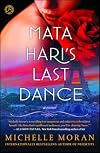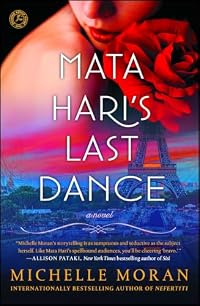
Mata Hari's Last Dance
by Michelle Moran
On This Page
Description
"From the international bestselling author of Rebel Queen and Nefertiti comes a captivating novel about the infamous Mata Hari, exotic dancer, adored courtesan, and, possibly, relentless spy. Paris, 1917. The notorious dancer Mata Hari sits in a cold cell awaiting freedom ... or death. Alone and despondent, Mata Hari is as confused as the rest of the world about the charges she's been arrested on: treason leading to the deaths of thousands of French soldiers. As Mata Hari waits for her fate show more to be decided, she relays the story of her life to a reporter who is allowed to visit her in prison. Beginning with her carefree childhood, Mata Hari recounts her father's cruel abandonment of her family as well her calamitous marriage to a military officer. Taken to the island of Java, Mata Hari refuses to be ruled by her abusive husband and instead learns to dance, paving the way to her stardom as Europe's most infamous dancer. From exotic Indian temples and glamorous Parisian theatres to stark German barracks in war-torn Europe, international bestselling author Michelle Moran who "expertly balances fact and fiction" (Associated Press) brings to vibrant life the famed world of Mata Hari: dancer, courtesan, and possibly, spy"-- show lessTags
Recommendations
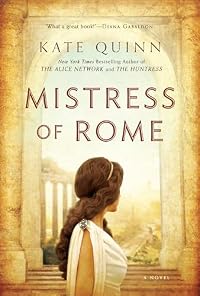
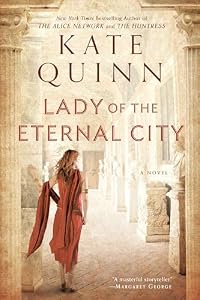
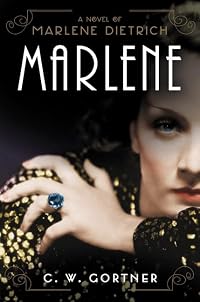
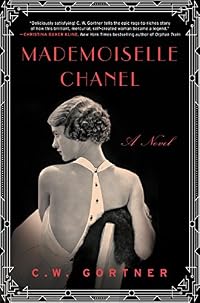










Member Reviews
James Bond. Kim Philby. George Smiley. In the popular imagination, when one thinks of spies, one thinks of Bond, or more recently, perhaps Claire Danes of Homeland. But almost no spy looms larger in popular culture than Mata Hari, the prototype for the femme fatale. Mati Hari, born “Margaretha Geertruida “Margreet” MacLeod”, was an exotic dancer and courtesan, eventually tried, convicted and executed by France for spying for the Germans during World War I.
But what if Mata Hari wasn’t really a spy? Or a least not for Germany, or at worst was the victim of a few bad decisions? Michelle Moran’s new novel, Mata Hari’s Last Dance, explores that possibility. Historians seem divided on whether she truly was a German spy. The show more history of her conviction, and the evidence against her, were always either tenuous or allegedly hidden because the evidence was secret.
Moran’s portrayal of Mata Hari is well-rendered and complex. M’greet, as she is called when not by her stage name, comes off by turns as ambitious, juvenile, erotic, maternal, manipulative, educated (quoting Petrarch’s Lives), and an astounding clothes horse — a new dress every day! She is absolutely comfortable using her sexuality to get what she wants, and she has a thing for men in uniform (which will lead to her downfall). Moran captures the atmosphere of Paris, the unique nature of Mata Hari’s dances — recognizing both their evocative cultural allusions as well as the obvious prurience of the audiences who just want to see her with her clothes off.
While popular culture places Mata Hari as spy, in this telling of her story she most reminds me of self-made media celebrities like Paris Hilton or Kim Kardashian, comfortable with their sexuality and able to manipulate the media to a frenzy.
I also very much enjoyed Edouard Clunet, Mata Hari’s long-suffering booking agent, who helped create her persona and early success. The Edouard of the book seems an amalgam of the historical Edouard, who defended her at her trial, and Gabriel Astruc, her booking agent. The interplay between the Edouard and Mata Hari carried the book forward strongly, and the merger of Edouard and Gabriel into one character definitely serves the larger story line.
As with any historical novel, there is some play with the precise historical details, and in the case of Mata Hari much is still not known or debated. But Moran’s portrayal of her character and motivations is utterly convincing. Historical fiction is an accessible way to learn history, and if you are at all intrigued by one of history’s most famous and scandalous women, you will enjoy Mata Hari’s Last Dance. show less
But what if Mata Hari wasn’t really a spy? Or a least not for Germany, or at worst was the victim of a few bad decisions? Michelle Moran’s new novel, Mata Hari’s Last Dance, explores that possibility. Historians seem divided on whether she truly was a German spy. The show more history of her conviction, and the evidence against her, were always either tenuous or allegedly hidden because the evidence was secret.
Moran’s portrayal of Mata Hari is well-rendered and complex. M’greet, as she is called when not by her stage name, comes off by turns as ambitious, juvenile, erotic, maternal, manipulative, educated (quoting Petrarch’s Lives), and an astounding clothes horse — a new dress every day! She is absolutely comfortable using her sexuality to get what she wants, and she has a thing for men in uniform (which will lead to her downfall). Moran captures the atmosphere of Paris, the unique nature of Mata Hari’s dances — recognizing both their evocative cultural allusions as well as the obvious prurience of the audiences who just want to see her with her clothes off.
While popular culture places Mata Hari as spy, in this telling of her story she most reminds me of self-made media celebrities like Paris Hilton or Kim Kardashian, comfortable with their sexuality and able to manipulate the media to a frenzy.
I also very much enjoyed Edouard Clunet, Mata Hari’s long-suffering booking agent, who helped create her persona and early success. The Edouard of the book seems an amalgam of the historical Edouard, who defended her at her trial, and Gabriel Astruc, her booking agent. The interplay between the Edouard and Mata Hari carried the book forward strongly, and the merger of Edouard and Gabriel into one character definitely serves the larger story line.
As with any historical novel, there is some play with the precise historical details, and in the case of Mata Hari much is still not known or debated. But Moran’s portrayal of her character and motivations is utterly convincing. Historical fiction is an accessible way to learn history, and if you are at all intrigued by one of history’s most famous and scandalous women, you will enjoy Mata Hari’s Last Dance. show less
I received a free copy of this e-book from the publisher, via Netgalley, in exchange for an honest review.
Had this book been as long as some of Moran's other work, it would have been spectacular. This book is half as long a Nefertiti and Madame Tussaud, over a hundred pages shorter than The Heretic Queen and Rebel Queen. The length of Mata Hari's Last Dance just seems so out of character for this author. While I was engaged throughout the novel, I felt like I didn't have the time or detail to really become invested in the novel's world. I found myself yearning for the pace to slow down so I could soak up the details usually found in a Moran novel. My gripes about its brevity aside, I enjoyed the novel. I think it is still a good book, show more just not quite as good as the author's other work. show less
Had this book been as long as some of Moran's other work, it would have been spectacular. This book is half as long a Nefertiti and Madame Tussaud, over a hundred pages shorter than The Heretic Queen and Rebel Queen. The length of Mata Hari's Last Dance just seems so out of character for this author. While I was engaged throughout the novel, I felt like I didn't have the time or detail to really become invested in the novel's world. I found myself yearning for the pace to slow down so I could soak up the details usually found in a Moran novel. My gripes about its brevity aside, I enjoyed the novel. I think it is still a good book, show more just not quite as good as the author's other work. show less
Michelle Moran's latest historical novel gives us the story of exotic dancer Mata Hari. Most people have heard of the famous femme fatale and WWI spy, but other than her public reputation, most of her life was a mystery. As she narrates her own story we discover a woman who, after escaping from a brutal husband, reinvents herself through exotic dance. After moving to France in 1904, Margaretha Zelle becomes “the Star of the East,” Mata Hari, and quickly rises to stardom.
The novel follows Mata Hari's life as she travels the world. She finds much success along the way as a dancer and performer but can never seem to find true happiness. She becomes intimate with many men as she constantly tries to reinvent herself from city to city. show more Was Mata Hari a sex symbol, a courtesan, a spy, a pawn or just a woman seeking happiness?
Michelle Moran always does a wonderful job of weaving fact and fiction together. From the beginning, readers know she is awaiting trial for espionage, and the story unfolds as an exploration of her guilt or innocence. The narrative, filled with flashbacks, can become confusing because much of her trial was classified at the time. I did find myself sympathetic to the woman behind the legend. This fast paced novel might not give readers an in-depth portrait of Mata Hari, but they will still be fascinated by the woman and the era. show less
The novel follows Mata Hari's life as she travels the world. She finds much success along the way as a dancer and performer but can never seem to find true happiness. She becomes intimate with many men as she constantly tries to reinvent herself from city to city. show more Was Mata Hari a sex symbol, a courtesan, a spy, a pawn or just a woman seeking happiness?
Michelle Moran always does a wonderful job of weaving fact and fiction together. From the beginning, readers know she is awaiting trial for espionage, and the story unfolds as an exploration of her guilt or innocence. The narrative, filled with flashbacks, can become confusing because much of her trial was classified at the time. I did find myself sympathetic to the woman behind the legend. This fast paced novel might not give readers an in-depth portrait of Mata Hari, but they will still be fascinated by the woman and the era. show less
At the turn of the century, Mata Hari made a splash across Europe with her risque dancing and courtesan lifestyle. However, it was her death which caused the biggest headlines and earned her place in history as one of the most notorious women of the twentieth century. Mata Hari’s Last Dance explores her rise and fall.
Unfortunately, while Ms. Moran’s intent was to show how Mata Hari was a victim of politics and war, she instead presents an uneven portrait of her, vacillating between confidence and naivete. In fact, the real hero of the story is her long-time friend and lawyer, who sets her up and keeps her out of trouble until she chose to part ways with him towards the end. In fact, that is what happens throughout most of the novel. show more Mata Hari does what she does best, while her lawyer protects her and keeps bringing her business.
Theirs is an interesting partnership and one of the highlights of the novel. Yet, the partnership does not make the story. In the end, the story is about her rise and fall, and while her rise is spectacular, her fall is just downright odd. This is where the unevenness in the presentation of her personality becomes obvious and uncomfortable. That someone who made her fortune sleeping her way through military men and the top leaders across the continent would be that naive about military and political machinations does not sit right.
Mati Hari is one of those names that evokes seduction, mystery, and treason. In Mata Hari’s Last Dance, Ms. Moran peels back the mystery to show the truth behind her persona. As is typical with Ms. Moran’s novels, she uses detailed research to bring to her heroine back to life. However, in a rare misstep, she fails to make her heroine interesting. The story meanders across Mata Hari’s life from the moment she makes her entrance until the end, at which time the story finally gets interesting. Sadly, this is not the type of story one expects from Ms. Moran, even though it will not stop her fans from flocking to the novel. Personally, I say skip it and pick something else as a summer read. show less
Unfortunately, while Ms. Moran’s intent was to show how Mata Hari was a victim of politics and war, she instead presents an uneven portrait of her, vacillating between confidence and naivete. In fact, the real hero of the story is her long-time friend and lawyer, who sets her up and keeps her out of trouble until she chose to part ways with him towards the end. In fact, that is what happens throughout most of the novel. show more Mata Hari does what she does best, while her lawyer protects her and keeps bringing her business.
Theirs is an interesting partnership and one of the highlights of the novel. Yet, the partnership does not make the story. In the end, the story is about her rise and fall, and while her rise is spectacular, her fall is just downright odd. This is where the unevenness in the presentation of her personality becomes obvious and uncomfortable. That someone who made her fortune sleeping her way through military men and the top leaders across the continent would be that naive about military and political machinations does not sit right.
Mati Hari is one of those names that evokes seduction, mystery, and treason. In Mata Hari’s Last Dance, Ms. Moran peels back the mystery to show the truth behind her persona. As is typical with Ms. Moran’s novels, she uses detailed research to bring to her heroine back to life. However, in a rare misstep, she fails to make her heroine interesting. The story meanders across Mata Hari’s life from the moment she makes her entrance until the end, at which time the story finally gets interesting. Sadly, this is not the type of story one expects from Ms. Moran, even though it will not stop her fans from flocking to the novel. Personally, I say skip it and pick something else as a summer read. show less
Compared to Moran's usual fare of overly naive young women thrust into political intrigue, Mata Hari was a refreshing character and story. Some readers criticized her for just being man-crazy and superficial, but I think that's A) not true and B) only seems that way since Moran's other heroines have been queens or related to queens or worked for queens. Mata Hari just wants to be an exotic dancer, have enough to eat, and have a family. In comparison, those are simple pleasures, and I think that's why she came off as shallow. However, I really liked her honesty and self-awareness. It was a nice change reading about a mature woman who knew what she wanted in life.
Moran's style of writing has always fallen a bit short in terms of show more descriptions, which is a pity. I would love to hear more about the clothes and the food and the scenery. Kate Quinn does a fabulous job of this, in my opinion. Moran's style has always been more general and sweeping, and this book wasn't any different. That's why I'm docking this one star.
Otherwise, I feel like Moran did a good job characterizing a complex and mature character and distinguished her from her other heroines. However, I'm looking forward to the next book by Moran and hoping it's better. show less
Moran's style of writing has always fallen a bit short in terms of show more descriptions, which is a pity. I would love to hear more about the clothes and the food and the scenery. Kate Quinn does a fabulous job of this, in my opinion. Moran's style has always been more general and sweeping, and this book wasn't any different. That's why I'm docking this one star.
Otherwise, I feel like Moran did a good job characterizing a complex and mature character and distinguished her from her other heroines. However, I'm looking forward to the next book by Moran and hoping it's better. show less
What do you think when you hear Mata Hari?
I chose to read this book for just that reason – I don’t know that much about the woman behind the myth. I hear the name and I think spy. I’m sure the same happens for many of you. This novel starts with Mata Hari awaiting her fate but that fate is pretty much a foregone conclusion because the powers that be need someone blame the war situation on and a notorious woman of questionable morals proves to be a perfect option.
Then her story is told – well she tells her story but is it the truth or is it what she wants it to be? She was born in the Netherlands into a marriage that was not good. Margaretha Zelle leaves her childhood home and goes to live with her godfather but that doesn’t show more bring her what she is looking for. Next she marries – from an ad in the paper – and this gives her an upgrade in social status but also a husband that beats her. She leaves the marriage and soon evolves into the femme fatale known as Mata Hari.
I found the book to be very interesting. It’s not a big book but Ms. Moran gives a thoroughly researched view of her subject. As with any fictional depiction there is license taken but the tale hews to the facts. Was she a spy? You’ll have to read the book to find out – actually I’m not sure that it’s a question that was truly ever effectively answered. I found this bit of information somehow very sad; Mata Hari couldn’t even read most of the evidence against her because it was classified. How does one even defend against that? She was certainly a woman who went against the mores of her time. I’m not sure I would have liked her at all but I am not sure she deserved her fate. show less
I chose to read this book for just that reason – I don’t know that much about the woman behind the myth. I hear the name and I think spy. I’m sure the same happens for many of you. This novel starts with Mata Hari awaiting her fate but that fate is pretty much a foregone conclusion because the powers that be need someone blame the war situation on and a notorious woman of questionable morals proves to be a perfect option.
Then her story is told – well she tells her story but is it the truth or is it what she wants it to be? She was born in the Netherlands into a marriage that was not good. Margaretha Zelle leaves her childhood home and goes to live with her godfather but that doesn’t show more bring her what she is looking for. Next she marries – from an ad in the paper – and this gives her an upgrade in social status but also a husband that beats her. She leaves the marriage and soon evolves into the femme fatale known as Mata Hari.
I found the book to be very interesting. It’s not a big book but Ms. Moran gives a thoroughly researched view of her subject. As with any fictional depiction there is license taken but the tale hews to the facts. Was she a spy? You’ll have to read the book to find out – actually I’m not sure that it’s a question that was truly ever effectively answered. I found this bit of information somehow very sad; Mata Hari couldn’t even read most of the evidence against her because it was classified. How does one even defend against that? She was certainly a woman who went against the mores of her time. I’m not sure I would have liked her at all but I am not sure she deserved her fate. show less
Even though she was executed by firing squad by the French military almost exactly one hundred years ago, the name Mata Hari still carries a certain mystique among amateur historians and others interest in the period. The big question, one that lends itself to all kinds of conspiracy theories, is whether or not Mata Hari was actually spying or only pretending to spy when she was arrested by French authorities. And if she was really spying, was she spying on France or on Germany? Or was she simply a beautiful woman who enjoyed making her living (a very fine one, at that) in the beds of prominent men all across Western Europe – especially the military officers she loved best? Michelle Moran’s new novel, Mata Hari’s Last Dance, show more recounts the story of this Dutch woman who managed to overcome her difficult childhood and reinvent herself as one of the most famous exotic dancers the world has ever known.
Margaretha Zelle was born in the Netherlands on August 7, 1876, and she died in Paris on October 15, 1917 at age forty-one. After her parents divorced (and the death of her mother), “Margreet” was abandoned by her father and forced to live with her amorous godfather and his wife. At eighteen, Margreet was so desperate to change her life that she answered a newspaper ad placed by a Dutch army captain who was seeking a wife. For Margreet, the match was a dream come true because it allowed her to move into the upper class and live the kind of life she had only seen from afar. But soon enough, her husband revealed himself for the abusive alcoholic that he was and the marriage fell apart.
Michelle Moran creates a believable young Margreet in Mata Hari’s Last Dance, but the novel moves into a different gear after Margreet flees her husband and becomes the fictional character she created for herself: an exotic Indonesian dancer she called Mata Hari. Astounded by the amount of money she could demand for a single performance in the nude, Mata Hari burned through several fortunes before the beginning of World War 1. But life got complicated for her during the war when she tried to raise enough money to gain custody of the daughter she had been forced to abandon in the Netherlands at the time she left her husband.
Unable any longer to make her living by performing in the most important cities in Western Europe, Mata Hari turned to her other skill: bedding the wealthiest and most powerful men on the continent, a choice that would lead directly to her execution by firing squad shortly before the war ended. Mata Hari’s “last dance” proved to be a fatal one.
Bottom Line: Michelle Moran’s Mata Hari’s Last Dance is a well-researched historical novel that leaves it up to the reader to decide on the guilt or innocence of its main character. Did the French government exploit her for political purposes? Was her conviction based upon false documents created by the German officer who realized she was spying on Germany, and not for Germany, as she had promised to do? You decide. show less
Margaretha Zelle was born in the Netherlands on August 7, 1876, and she died in Paris on October 15, 1917 at age forty-one. After her parents divorced (and the death of her mother), “Margreet” was abandoned by her father and forced to live with her amorous godfather and his wife. At eighteen, Margreet was so desperate to change her life that she answered a newspaper ad placed by a Dutch army captain who was seeking a wife. For Margreet, the match was a dream come true because it allowed her to move into the upper class and live the kind of life she had only seen from afar. But soon enough, her husband revealed himself for the abusive alcoholic that he was and the marriage fell apart.
Michelle Moran creates a believable young Margreet in Mata Hari’s Last Dance, but the novel moves into a different gear after Margreet flees her husband and becomes the fictional character she created for herself: an exotic Indonesian dancer she called Mata Hari. Astounded by the amount of money she could demand for a single performance in the nude, Mata Hari burned through several fortunes before the beginning of World War 1. But life got complicated for her during the war when she tried to raise enough money to gain custody of the daughter she had been forced to abandon in the Netherlands at the time she left her husband.
Unable any longer to make her living by performing in the most important cities in Western Europe, Mata Hari turned to her other skill: bedding the wealthiest and most powerful men on the continent, a choice that would lead directly to her execution by firing squad shortly before the war ended. Mata Hari’s “last dance” proved to be a fatal one.
Bottom Line: Michelle Moran’s Mata Hari’s Last Dance is a well-researched historical novel that leaves it up to the reader to decide on the guilt or innocence of its main character. Did the French government exploit her for political purposes? Was her conviction based upon false documents created by the German officer who realized she was spying on Germany, and not for Germany, as she had promised to do? You decide. show less
Members
- Recently Added By
Lists

Best Spy Fiction
156 works; 102 members
Author Information

9+ Works 7,504 Members
Michelle Moran is the international bestselling author of seven historical novels. She attended Pomona College, then earned a Masters Degree from the Claremont Graduate University. During her six years as a public high school teacher she used her summers to travel around the world, and it was her experiences as a volunteer on archaeological digs show more that inspired her to write historical fiction. Moran's books include Rebel Queen, The Second Empress, Madame Tussaud, Cleopatra's Daughter, The Heretic Queen, and Nefertiti. (Bowker Author Biography) show less
Common Knowledge
- Canonical title
- Mata Hari's Last Dance
- Original publication date
- 2016
- People/Characters
- Mata Hari
- Epigraph
- The divine attributes of Brahma, Vishnu, and Shiva - creation, fecundity, destruction. This is the dance I dance tonight. The dance of destruction as it leads to creation. -- Mata Hari
- Dedication
- A very heartfelt thank you to everyone who worked with me on this book. Sally Kim, Etinosa Agbonlahor, Dan Lazar, Susan Moldow,Brian Belfiglio, David Falk, Laura Flavin, Maria Whelan, and, most of all, Allison McCabe.
- First words
- We don't take a horse-drawn cab to his office.
- Original language
- English
Classifications
Statistics
- Members
- 153
- Popularity
- 213,347
- Reviews
- 15
- Rating
- (3.59)
- Languages
- English
- Media
- Paper, Audiobook, Ebook
- ISBNs
- 12
- ASINs
- 3