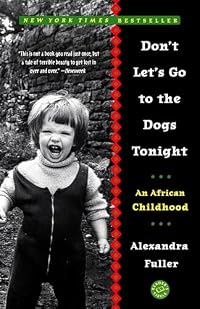
Don't Let's Go to the Dogs Tonight: An African Childhood
by Alexandra Fuller
On This Page
Description
NEW YORK TIMES BESTSELLER • A worthy heir to Isak Dinesen and Beryl Markham, Alexandra Fuller shares visceral memories of her childhood in Africa, and of her headstrong, unforgettable mother.“This is not a book you read just once, but a tale of terrible beauty to get lost in over and over.”—Newsweek
“By turns mischievous and openhearted, earthy and soaring . . . hair-raising, horrific, and thrilling.”—The New Yorker
Though it is a diary of an unruly life in an often show more inhospitable place, Don’t Let’s Go to the Dogs Tonight is suffused with Fuller’s endearing ability to find laughter, even when there is little to celebrate. Fuller’s debut is unsentimental and unflinching but always captivating. In wry and sometimes hilarious prose, she stares down disaster and looks back with rage and love at the life of an extraordinary family in an extraordinary time.
From 1972 to 1990, Alexandra Fuller—known to friends and family as Bobo—grew up on several farms in southern and central Africa. Her father joined up on the side of the white government in the Rhodesian civil war, and was often away fighting against the powerful black guerilla factions. Her mother, in turn, flung herself at their African life and its rugged farm work with the same passion and maniacal energy she brought to everything else. Though she loved her children, she was no hand-holder and had little tolerance for neediness. She nurtured her daughters in other ways: She taught them, by example, to be resilient and self-sufficient, to have strong wills and strong opinions, and to embrace life wholeheartedly, despite and because of difficult circumstances. And she instilled in Bobo, particularly, a love of reading and of storytelling that proved to be her salvation.
Alexandra Fuller writes poignantly about a girl becoming a woman and a writer against a backdrop of unrest, not just in her country but in her home. But Don’t Let’s Go to the Dogs Tonight is more than a survivor’s story. It is the story of one woman’s unbreakable bond with a continent and the people who inhabit it, a portrait lovingly realized and deeply felt.
Praise for Don’t Let’s Go to the Dogs Tonight
“Riveting . . . [full of] humor and compassion.”—O: The Oprah Magazine
“The incredible story of an incredible childhood.”—The Providence Journal. show less
Tags
Recommendations


Member Recommendations
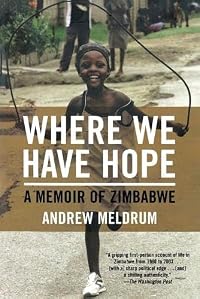
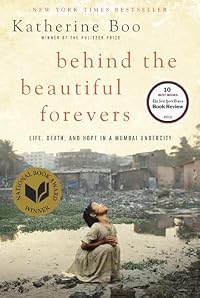
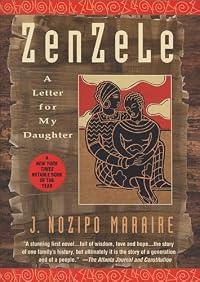
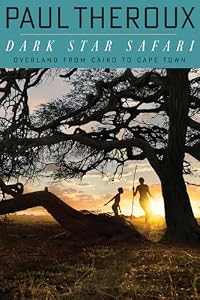
littlemousling Fuller's experience as a middle-class white child in (then) Rhodesia and several other African countries is an interesting contrast to Cooper's experience as an upper-class black child in Liberia.
Member Reviews
This isn't a typical memoir, but rather almost an autobiography told in a series of snapshots of the author's growing up in Africa. There isn't a lot of introspection. She just presents things as they are/were, herself included. And although she and her family are white, and essentially colonizers continuing the incursion of the British Empire (until the African colonies won their various wars of independence), she is also a true child of Africa, having spent her entire childhood and young adulthood there. And although she and her family were better off than the local Africans, by any other standard they were living in squalid poverty.
The racism and colonialism come through loud and clear without Fuller having to make an issue of it, show more as does her mother's alcoholism and mental illness, but that's not really what this story is about. It's the story of a dysfunctional, unconventional family, made more so by their geographical and economic circumstances, and yet there was love and a strong familial bond. She doesn't apologize for her parents' and her own (learned) racism, but we do see her become more aware and responsible as she grows older.
In addition, it's an homage to a land, a love story to one of the harshest places on the planet. And perhaps it's growing up in such harsh circumstance that makes Fuller's life at that time so vivid and so alive, and why she loves it to this day. This memoir is a complex story told in a deceptively simple manner. There's a lot to unpack, and Fuller leaves most of that unpacking to the reader. show less
The racism and colonialism come through loud and clear without Fuller having to make an issue of it, show more as does her mother's alcoholism and mental illness, but that's not really what this story is about. It's the story of a dysfunctional, unconventional family, made more so by their geographical and economic circumstances, and yet there was love and a strong familial bond. She doesn't apologize for her parents' and her own (learned) racism, but we do see her become more aware and responsible as she grows older.
In addition, it's an homage to a land, a love story to one of the harshest places on the planet. And perhaps it's growing up in such harsh circumstance that makes Fuller's life at that time so vivid and so alive, and why she loves it to this day. This memoir is a complex story told in a deceptively simple manner. There's a lot to unpack, and Fuller leaves most of that unpacking to the reader. show less
The memoirs of the childhood of a white girl (Alexandra, known as Bobo), raised on African farms in the 1970s and 1980s, along with her sister, Van(essa). But it's not a gilded, ex-pat life: her parents lose their farm in forced land distribution, after which they are itinerant farm managers, who move where the work is, often to disease-ridden and war-torn areas. They also have their own problems with bereavement and alcohol. It is perhaps closer to misery lit, although the tone is mostly light, and the worst episodes glossed over.
It is told in a chatty and slightly childish and rambling style (she is a child for most of the book), mostly in the present tense. This means the precise sequence of events is not always clear, but overall, show more it is an endearing insight into some troubled lives and times. It does rather fizzle out at the end, though.
QUOTIDIAN DANGER
The opening is a startling demonstration of how mundane life-threatening danger can become. "Mum says, 'Don't come creeping into our room at night.' They sleep with loaded guns beside them... 'Why not?' 'We might shoot you.'" Not very reassuring to a small child who might want a parent at night. By the age of 5, all children are taught to handle a gun and shoot to kill. There are many more examples throughout the book. For instance, the parents buy a mine-proofed Land Rover with a siren "to scare terrorists", but actually its only use is "to announce their arrival at parties". At the airport, "officials wave their guns at me, casually hostile".
IDENTITY AND NOT BELONGING
The Fullers are white and apparently upper middle class, but heavily in debt (though they manage to pay school fees). Mum says "We have breeding... which is better than having money", and they're pretty bad at managing what little money they do have. Often, they live in homes that are really dilapidated and lacking basic facilities.
Bobo feels neither African (where she spends most of her childhood) nor British (where she was born). At a mixed race primary school, she is teased for being sunburnt and asked "Where are you from originally?" and when at a white school that then admits African children, learns what it is like to be excluded by language (they talk Shona to each other). She is also very aware of her family's thick lips, contrasting with their pale skin and blonde hair.
RACE
One aspect that some have objected to is the attitude and language relating to the Africans. However, as I read it, Fuller is merely describing how things really were: casual, and sometimes benevolent racism were the norm.
As a small child, she resists punishment by saying "Then I'll fire you", which is awful, but reflects a degree of truth, and similarly, her disgust at using a cup that might have been used by an African is a learned reaction. However, as she grows older and more questioning, it's clear she is no racist.
It would be very sad if fear of offence made it impossible to describe the past honestly, though the list of terms by which white Rhodesians referred to black ones might be unnecessary.
I suppose you could argue she should have done more to challenge the views around her, such as when Mum is bemoaning the fact that she wants just one country in Africa to stay white-run, but she was only a child at this point.
In her parents' defence, they treated their African staff pretty well, including providing free first aid help, despite the fact they were so short of money they had to pawn Mum's jewellery to buy seed each year, then claim it back if the harvest was good. "When our tobacco sells well, we are rich for a day." Only a day.
What to make of an observation like this? "Africans whose hatred reflects the sun like a mirror into our faces, impossible to ignore."
There is beautifully written passage describing driving through a European settlement and then Tribal Trust Lands: "there are flowering shrubs and trees... planted at picturesque intervals. The verges of the road have been mown to reveal neat, upright barbed-wire fencing and fields of army-straight tobacco... or placidly grazing cattle shiny and plump with sweet pasture. In contrast, the tribal lands "are blown clear of vegetation. Spiky euphorbia hedges which bleed poisonous, burning milk when their stems are broken poke greenly out of otherwise barren, worn soil. The schools wear the blank faces of war buildings, their windows blown blind by rocks or guns or mortars. Their plaster is an acne of bullet marks. The huts and small houses crouch open and vulnerable... Children and chickens and dos scratch in the red, raw soil and stare at us as we drive thought their open, eroding lives." Those are not the words of a racist.
DEPRESSION, TRAUMA, ALCOHOLISM
There are some very dark episodes (including deaths), and at one point, even the dogs are depressed, and yet the book itself is not depressing. For instance, the four stages of Mum's drunken behaviour in front of visitors is treated humourously.
More troublingly, a victim of a sexual assault is just told not to exaggerate, and the whole thing brushed away. There is equally casual acceptance of the children smoking and drinking from a young age.
There is fun, but also a lack of overt love, particularly touching (the many dogs are far luckier in this respect!); aged only 7, Bobo notes "Mum hardly even lets me hold her hand". That is a legacy of multiple hurt and grief - and the consequent problems.
Then there is a life-changing tragedy, for which Bobo feels responsible: "My life is sliced in half". Afterwards, "Mum and Dad's joyful careless embrace of life is sucked away, like water swirling down a drain."
A later tragedy has more severe consequences, and these passages are described more painfully:
* "In the morning, when she's just on the pills, she's very sleepy and calm and slow and deliberate, like someone who isn't sure where her body ends and the world starts."
* "When Mum is drugged and sad and singing... it is a contained, soggy madness" but then "it starts to get hard for me to know mere Mum's madness ends and the world's madness begins."
* "She hardly bothers to blink, it's as if she's a fish in the dry season, in the dried-up bottom of a cracking river bed, waiting for rain to come and bring her to life."
* "Mum smiles, but... it's a slipping and damp thing she's doing with her lips which looks as much as if she's lost control of her mouth as anything else."
* "Her sentences and thoughts are interrupted by the cries of her dead babies."
* "To leave a child in an unmarked grave is asking for trouble."
* She is grieving "with her mind (which is unhinged) and her body (which is alarming and leaking)".
OTHER QUOTATIONS
* A new home "held a green-leafy lie of prosperity in its jewelled fist".
* When they stop a journey at a fancy hotels, the opulence is unfamiliar: "the chairs were swallowingly soft".
* "The first rains... were still deciding what sort of season to create."
* "It is so hot outside that the flamboyant tree outside cracks to itself, as if already anticipating how it will feel to be on fire... swollen clouds scrape purple fat bellies on the tops of the surrounding hills."
* Captured wild cattle give "reluctant milk" and even after adding Milo milkshake powder, "nothing can disguise the taste of the reluctant milk".
* A German aid worker "is keen on saving the environment, which, until then, I had not noticed needed saving".
* The ex-pat lives were typically "extra-marital, almost-incestuous affairs bred from heat and boredom and drink." When they go to England for good, they remember Africa with "a fondness born of distance and the tangy reminder of a gin-and-tonic evening". show less
It is told in a chatty and slightly childish and rambling style (she is a child for most of the book), mostly in the present tense. This means the precise sequence of events is not always clear, but overall, show more it is an endearing insight into some troubled lives and times. It does rather fizzle out at the end, though.
QUOTIDIAN DANGER
The opening is a startling demonstration of how mundane life-threatening danger can become. "Mum says, 'Don't come creeping into our room at night.' They sleep with loaded guns beside them... 'Why not?' 'We might shoot you.'" Not very reassuring to a small child who might want a parent at night. By the age of 5, all children are taught to handle a gun and shoot to kill. There are many more examples throughout the book. For instance, the parents buy a mine-proofed Land Rover with a siren "to scare terrorists", but actually its only use is "to announce their arrival at parties". At the airport, "officials wave their guns at me, casually hostile".
IDENTITY AND NOT BELONGING
The Fullers are white and apparently upper middle class, but heavily in debt (though they manage to pay school fees). Mum says "We have breeding... which is better than having money", and they're pretty bad at managing what little money they do have. Often, they live in homes that are really dilapidated and lacking basic facilities.
Bobo feels neither African (where she spends most of her childhood) nor British (where she was born). At a mixed race primary school, she is teased for being sunburnt and asked "Where are you from originally?" and when at a white school that then admits African children, learns what it is like to be excluded by language (they talk Shona to each other). She is also very aware of her family's thick lips, contrasting with their pale skin and blonde hair.
RACE
One aspect that some have objected to is the attitude and language relating to the Africans. However, as I read it, Fuller is merely describing how things really were: casual, and sometimes benevolent racism were the norm.
As a small child, she resists punishment by saying "Then I'll fire you", which is awful, but reflects a degree of truth, and similarly, her disgust at using a cup that might have been used by an African is a learned reaction. However, as she grows older and more questioning, it's clear she is no racist.
It would be very sad if fear of offence made it impossible to describe the past honestly, though the list of terms by which white Rhodesians referred to black ones might be unnecessary.
I suppose you could argue she should have done more to challenge the views around her, such as when Mum is bemoaning the fact that she wants just one country in Africa to stay white-run, but she was only a child at this point.
In her parents' defence, they treated their African staff pretty well, including providing free first aid help, despite the fact they were so short of money they had to pawn Mum's jewellery to buy seed each year, then claim it back if the harvest was good. "When our tobacco sells well, we are rich for a day." Only a day.
What to make of an observation like this? "Africans whose hatred reflects the sun like a mirror into our faces, impossible to ignore."
There is beautifully written passage describing driving through a European settlement and then Tribal Trust Lands: "there are flowering shrubs and trees... planted at picturesque intervals. The verges of the road have been mown to reveal neat, upright barbed-wire fencing and fields of army-straight tobacco... or placidly grazing cattle shiny and plump with sweet pasture. In contrast, the tribal lands "are blown clear of vegetation. Spiky euphorbia hedges which bleed poisonous, burning milk when their stems are broken poke greenly out of otherwise barren, worn soil. The schools wear the blank faces of war buildings, their windows blown blind by rocks or guns or mortars. Their plaster is an acne of bullet marks. The huts and small houses crouch open and vulnerable... Children and chickens and dos scratch in the red, raw soil and stare at us as we drive thought their open, eroding lives." Those are not the words of a racist.
DEPRESSION, TRAUMA, ALCOHOLISM
There are some very dark episodes (including deaths), and at one point, even the dogs are depressed, and yet the book itself is not depressing. For instance, the four stages of Mum's drunken behaviour in front of visitors is treated humourously.
More troublingly, a victim of a sexual assault is just told not to exaggerate, and the whole thing brushed away. There is equally casual acceptance of the children smoking and drinking from a young age.
There is fun, but also a lack of overt love, particularly touching (the many dogs are far luckier in this respect!); aged only 7, Bobo notes "Mum hardly even lets me hold her hand". That is a legacy of multiple hurt and grief - and the consequent problems.
Then there is a life-changing tragedy, for which Bobo feels responsible: "My life is sliced in half". Afterwards, "Mum and Dad's joyful careless embrace of life is sucked away, like water swirling down a drain."
A later tragedy has more severe consequences, and these passages are described more painfully:
* "In the morning, when she's just on the pills, she's very sleepy and calm and slow and deliberate, like someone who isn't sure where her body ends and the world starts."
* "When Mum is drugged and sad and singing... it is a contained, soggy madness" but then "it starts to get hard for me to know mere Mum's madness ends and the world's madness begins."
* "She hardly bothers to blink, it's as if she's a fish in the dry season, in the dried-up bottom of a cracking river bed, waiting for rain to come and bring her to life."
* "Mum smiles, but... it's a slipping and damp thing she's doing with her lips which looks as much as if she's lost control of her mouth as anything else."
* "Her sentences and thoughts are interrupted by the cries of her dead babies."
* "To leave a child in an unmarked grave is asking for trouble."
* She is grieving "with her mind (which is unhinged) and her body (which is alarming and leaking)".
OTHER QUOTATIONS
* A new home "held a green-leafy lie of prosperity in its jewelled fist".
* When they stop a journey at a fancy hotels, the opulence is unfamiliar: "the chairs were swallowingly soft".
* "The first rains... were still deciding what sort of season to create."
* "It is so hot outside that the flamboyant tree outside cracks to itself, as if already anticipating how it will feel to be on fire... swollen clouds scrape purple fat bellies on the tops of the surrounding hills."
* Captured wild cattle give "reluctant milk" and even after adding Milo milkshake powder, "nothing can disguise the taste of the reluctant milk".
* A German aid worker "is keen on saving the environment, which, until then, I had not noticed needed saving".
* The ex-pat lives were typically "extra-marital, almost-incestuous affairs bred from heat and boredom and drink." When they go to England for good, they remember Africa with "a fondness born of distance and the tangy reminder of a gin-and-tonic evening". show less
Alexandra Fuller's memoir of growing up in Africa was first of all, compulsively readable. I had a hard time putting it down. As is often the case in memoirs, her parents are kind of crazy, and it's easy to be as amused by their antics as you are appalled. Bobo, as Fuller is known in the book, is raised on a series of small, barely profitable tobacco farms in Rhodesia (later Zimbabwe), Malawi, and Zambia.
She's a bit of a wild child, as is probably to be expected from the combination of permissive parents, remote locations, and a backdrop of civil war and societal unrest. Her family goes into town in a convoy including soldiers and their own mine-proofed SUV. She drinks, smokes, and learns to shoot an Uzi at an early age. The casual show more racism of the time and situation are presented without commentary or explanation, which can be interpreted as brave. I think there is often a tendency to want to rush in after the fact and explain it away, to reassure the reader than you know much better now. But at the same time, I was left curious regarding how Fuller feels about all of that now.
There's no doubt that Fuller and her family have deep roots and a sincere love for the physical land of Africa, but I found myself contemplating what it really means to love a country when you're simultaneously oppressing and displacing its people. (Yes, I'm aware of clear parallels to the original American settlers - and that brings up the idea of history being written by the victors. The Americans won their country, while the English/Dutch etc were mostly driven out of Africa; is that the difference?) Although the family in the book isn't perpetrating many of the most egregious acts of colonialism, the fact remains that their farm is on land that only white people could own, they have black servants, and they clearly think the black Africans are inferior. Is it possible to really love a place without accepting its people?
Quote: "There is only one time of absolute silence. Halfway between the dark of night and the light of morning, all animals and crickets and birds fall into a profound silence as if pressed quiet by the deep quality of the blackest time of night. This is when we are startled awake by Dad on tobacco-sale day. This silence is how I know it is not yet dawn, nor is it the middle of the night, but it is the place of no-time, when all things sleep most deeply, when their guard is dozing, and when terrorists (who know this fact) are most likely to attack." show less
She's a bit of a wild child, as is probably to be expected from the combination of permissive parents, remote locations, and a backdrop of civil war and societal unrest. Her family goes into town in a convoy including soldiers and their own mine-proofed SUV. She drinks, smokes, and learns to shoot an Uzi at an early age. The casual show more racism of the time and situation are presented without commentary or explanation, which can be interpreted as brave. I think there is often a tendency to want to rush in after the fact and explain it away, to reassure the reader than you know much better now. But at the same time, I was left curious regarding how Fuller feels about all of that now.
There's no doubt that Fuller and her family have deep roots and a sincere love for the physical land of Africa, but I found myself contemplating what it really means to love a country when you're simultaneously oppressing and displacing its people. (Yes, I'm aware of clear parallels to the original American settlers - and that brings up the idea of history being written by the victors. The Americans won their country, while the English/Dutch etc were mostly driven out of Africa; is that the difference?) Although the family in the book isn't perpetrating many of the most egregious acts of colonialism, the fact remains that their farm is on land that only white people could own, they have black servants, and they clearly think the black Africans are inferior. Is it possible to really love a place without accepting its people?
Quote: "There is only one time of absolute silence. Halfway between the dark of night and the light of morning, all animals and crickets and birds fall into a profound silence as if pressed quiet by the deep quality of the blackest time of night. This is when we are startled awake by Dad on tobacco-sale day. This silence is how I know it is not yet dawn, nor is it the middle of the night, but it is the place of no-time, when all things sleep most deeply, when their guard is dozing, and when terrorists (who know this fact) are most likely to attack." show less
This is a classic example of the good old-fashioned "I grew up on a farm in Africa" memoir, complete with beautiful African scenery and smells, frightening political upheaval, grinding ecological disaster, family tragedy and comic interludes, and featuring embittered, gun-toting, drunken white people and lovable, impoverished, unreliable, drunken black people. And a lot of very heavy drinking.
Except that it's not set in the Olive Schreiner/Karen Blixen era, or even the Doris Lessing era, but much closer to our own experience, in the 1970s and 80s. Fuller describes her childhood on her parents' farm in Zimbabwe during the guerrilla war; after Mugabe comes to power they lose their farm and move first to another less promising farm in show more Zimbabwe, then to the poverty and political oppression of Hastings Banda's Malawi, and finally to Zambia.
Although the Fullers are probably not people you would want to be trapped with in a restaurant, they are fun to read about, and the author's talent for vivid description and the warmth of her obvious love for Africa more than makes up for the occasional bit of overwritten purple prose. She's not Doris Lessing, and there's no deep political analysis going on here, still less any suggestion of how she thinks Africa should be run, but she doesn't hesitate to criticise the attitudes of the colonialist class she was brought up in when they are clearly wrong. But, equally, she wants us to see that farmers like her parents are not just colonial exploiters, but they are also people who have built up a lot of knowledge about how to make African land productive in sustainable ways. It's just a pity that they should invest all that effort in tobacco, a product the world would be a lot better without... show less
Except that it's not set in the Olive Schreiner/Karen Blixen era, or even the Doris Lessing era, but much closer to our own experience, in the 1970s and 80s. Fuller describes her childhood on her parents' farm in Zimbabwe during the guerrilla war; after Mugabe comes to power they lose their farm and move first to another less promising farm in show more Zimbabwe, then to the poverty and political oppression of Hastings Banda's Malawi, and finally to Zambia.
Although the Fullers are probably not people you would want to be trapped with in a restaurant, they are fun to read about, and the author's talent for vivid description and the warmth of her obvious love for Africa more than makes up for the occasional bit of overwritten purple prose. She's not Doris Lessing, and there's no deep political analysis going on here, still less any suggestion of how she thinks Africa should be run, but she doesn't hesitate to criticise the attitudes of the colonialist class she was brought up in when they are clearly wrong. But, equally, she wants us to see that farmers like her parents are not just colonial exploiters, but they are also people who have built up a lot of knowledge about how to make African land productive in sustainable ways. It's just a pity that they should invest all that effort in tobacco, a product the world would be a lot better without... show less
This is a memoir of the author's childhood in Zimbabwe during and after the Rhodesian Civil War in which Zimbabwe gains independence from the British. Driving to town in a mine-proofed Land Rover with Uzi's across their laps, the family is caught between fighting for the British while at the same time living among the locals. The dichotomy between Bobo's life among the native women who raised her and her father's stints in the local British militia is one of the tensions running through the book.
Life in the dusty fringes of south-central Africa is difficult. Moving often, the Fuller's are always making due with the barest necessities and no firm position within society. Bobo's mother is a tough alcoholic with little time or inclination show more for pampering her daughters. Her father is a farmer who is always looking ahead to the next big opportunity. The author obviously loves Africa, but a rough and chaotic Africa, not a sugar-coated one.
I enjoyed the honest portrayal of life from a child's perspective without the form of a typical coming-of-age story. Recommended. show less
Life in the dusty fringes of south-central Africa is difficult. Moving often, the Fuller's are always making due with the barest necessities and no firm position within society. Bobo's mother is a tough alcoholic with little time or inclination show more for pampering her daughters. Her father is a farmer who is always looking ahead to the next big opportunity. The author obviously loves Africa, but a rough and chaotic Africa, not a sugar-coated one.
I enjoyed the honest portrayal of life from a child's perspective without the form of a typical coming-of-age story. Recommended. show less
In her memoir of growing up in Africa, Fuller paints a vivid and unflinching portrait of her unconventional childhood. Alexandra, who goes by Bobo, lived with her parents and sister in Rhodesia in the midst of Civil War in the 1970s. The daily dangers they face become the norm as they grow up.
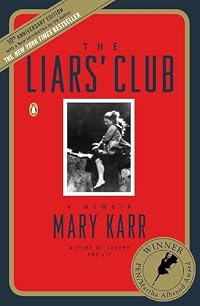
The style of the book reminded me quite a bit of The Liar’s Club and The Glass Castle. All three are similar tales of a somewhat neglected upbringing. This one is more extreme because it’s in Africa. The threat of terrorists and war increases the danger, but the struggle of a child growing up with alcoholic and selfish parents is a universal one.
Loss is a major theme throughout the book. Bobo and her family lose multiple children and at times show more their grief overwhelms them. Some of the surreal experiences Fuller describes almost seem normal when she writes about them. Certain aspects remind you that they are not anywhere near the western world, like the sanitary conditions, which were appalling. The kids constantly had worms or fleas and were often left to fend for themselves.
The circumstances of their life felt so foreign. There was no structure. Their existence depended on the whims of their irresponsible parents. Bobo’s older sister Vanessa was a somewhat stable force in her life. She seemed to understand more about what was happening, but she protected her sister as much as she could.
BOTTOM LINE: I love reading memoirs that give me a glimpse into a completely foreign life and this one did just that. I don’t envy Fuller’s childhood, but it was fascinating to read about.
“The land itself, of course, was careless of its name. It still is. You can call it what you like, fight all the wars you want in its name. Change its name altogether if you like. The land is still unblinking under the African sky. It will absorb white man's blood and the blood of African men, it will absorb blood from slaughtered cattle and the blood from a woman's birthing with equal thirst. It doesn't care.” show less
The style of the book reminded me quite a bit of The Liar’s Club and The Glass Castle. All three are similar tales of a somewhat neglected upbringing. This one is more extreme because it’s in Africa. The threat of terrorists and war increases the danger, but the struggle of a child growing up with alcoholic and selfish parents is a universal one.
Loss is a major theme throughout the book. Bobo and her family lose multiple children and at times show more their grief overwhelms them. Some of the surreal experiences Fuller describes almost seem normal when she writes about them. Certain aspects remind you that they are not anywhere near the western world, like the sanitary conditions, which were appalling. The kids constantly had worms or fleas and were often left to fend for themselves.
The circumstances of their life felt so foreign. There was no structure. Their existence depended on the whims of their irresponsible parents. Bobo’s older sister Vanessa was a somewhat stable force in her life. She seemed to understand more about what was happening, but she protected her sister as much as she could.
BOTTOM LINE: I love reading memoirs that give me a glimpse into a completely foreign life and this one did just that. I don’t envy Fuller’s childhood, but it was fascinating to read about.
“The land itself, of course, was careless of its name. It still is. You can call it what you like, fight all the wars you want in its name. Change its name altogether if you like. The land is still unblinking under the African sky. It will absorb white man's blood and the blood of African men, it will absorb blood from slaughtered cattle and the blood from a woman's birthing with equal thirst. It doesn't care.” show less
This well-written memoir of a young white girl growing up in Africa (Zimbabwe, Malawi and the Zambia) was a treat. The author really brings to life the setting and culture of the place well. She captures the dialogue, the mentality of local workers and a bit of the political landscape. Her family lives through unstable and sometimes violent times, before and after independence. This contributed to the already harsh environment of hot and impoverished Africa. Though not well off, her whiteness sets her and her family apart as privileged compared to many of the locals. But the author begins to recognize this and the previously-not-questioned prejudice, as she matures. A notable aspect of the book is the issue of growing up with an show more alcoholic mother with mental health issues in the context of bereavement. show less
Members
- Recently Added By
Published Reviews
Don’t Let’s Go To The Dogs Tonight: An Africa Childhood by Alexandra Fuller who was born in England but was raised in Rhodesia by an “absented mind” mother, an “always on the go and work to do” father and with an “I mind my own business and you all can go to hell” older sister.
The book is about her childhood in Africa. There are witty passages and sad ones and a lot about Africa
The book is about her childhood in Africa. There are witty passages and sad ones and a lot about Africa
added by grelobe
Lists

100 Biographies & Memoirs to Read in a Lifetime
42 works; 18 members

Best Biographies, Autobiographies and Memoirs
464 works; 156 members

100 Biographies and Memoirs to Read in a (Single) Lifetime
98 works; 12 members

Top Five Books of 2015
811 works; 241 members

Africa
109 works; 8 members

Books Set In Africa
81 works; 4 members

Best African Books
126 works; 46 members

Read These Too
458 works; 9 members
Most Popular Books Tagged Africa
35 works; 3 members

Books Read in 2015
3,298 works; 129 members

Favorite Book Titles
35 works; 1 member

Books With the Most Memorable Titles
478 works; 158 members

Best Biographies of Notable Women
277 works; 101 members

Books Read in 2024
4,623 works; 126 members
Author Information

11+ Works 6,500 Members
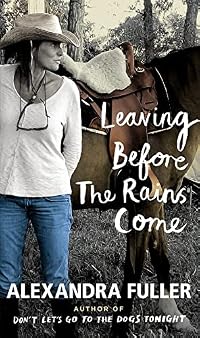
Alexandra Fuller was born in England in 1969. In 1972, she moved with her family to Rhodesia (now Zimbabwe). At the end of that country's civil war, the family moved to Malawi and later Zambia. Fuller received a Bachelor of Arts in English Literature from Acadia University in Nova Scotia, Canada after which she returned to Zambia where she worked show more with a safari company. In 1993, Fuller and her husband settled near Livingstone on the banks of the Zambezi River. In 1994, she left Africa and moved to Wyoming, USA In 2011, her book Cocktail Hour Under the Tree of Forgetfulness made Publisher's Weekly Best seller list. Fuller's title, Leaving Before the Rains Come, made the New York Times bestseller list in 2015. (Bowker Author Biography) Alexandra Fuller was born in England in 1969. In 1972, she moved with her family to Rhodesia (now Zimbabwe). At the end of that country's civil war, the family moved to Malawi and later Zambia. Fuller received a Bachelor of Arts in English Literature from Acadia University in Nova Scotia, Canada after which she returned to Zambia where she worked with a safari company. In 2011, her book Cocktail Hour Under the Tree of Forgetfulness made Publisher's Weekly Best seller list. She is also the author of Leaving Before the Rains Come, a non-fiction work which made the New York Time bestseller list in 2015. (Bowker Author Biography) show less
Some Editions
Awards and Honors
Series
Belongs to Publisher Series
Goldmann (45847)
Work Relationships
Has as a teacher's guide
Common Knowledge
- Original publication date
- 2001
- People/Characters
- Cecil Rhodes; Kaguvi Gumboreshumba; Nehanda Nyakasikana; Alexandra Fuller (Bobo); Ian Douglas Smith; Jomo Kenyatta (show all 10); Hastings Kamuzu Banda; Timothy Donald Fuller; Nicola Fuller; Vanessa Fuller
- Important places
- Africa; England, UK; Zambia; Malawi; Zimbabwe (Rhodesia); United Kingdom (show all 11); Karoi, Zimbabwe; Mutare, Zimbabwe; Harare, Zimbabwe; South Africa; Mkushi, Zambia
- Important events
- Rhodesian Bush War ( [1964, 1979]); First Chimurenga ( [1896, 1897]); Second Chimurenga ( [1966, 1980])
- Epigraph
- Don't let's go to the dogs tonight, For mother will be there. - A.P. Herbert
- Dedication
- To Mum, Dad and Vanessa and to the memory of Adrian, Olivia and Richard: with love.
- First words
- Mum says, "Don't come creeping into our rooms at night".
- Last words
- (Click to show. Warning: May contain spoilers.)It's the choice we make to get on with it.
Classifications
- Genres
- Biography & Memoir, Nonfiction, General Nonfiction
- DDC/MDS
- 968.9104092 — History & geography History of Africa Republic of South Africa and neighboring southern African countries Zambia, Zimbabwe, Malawi Zimbabwe, Mostly
- LCC
- DT2990 .F85 — History of Europe, Asia, Africa and Oceania Africa History of Africa Zimbabwe. Southern Rhodesia History
- BISAC
Statistics
- Members
- 3,755
- Popularity
- 4,217
- Reviews
- 113
- Rating
- (3.88)
- Languages
- 13 — Danish, Dutch, English, Finnish, French, German, Greek, Italian, Norwegian (Bokmål), Polish, Portuguese, Spanish, Swedish
- Media
- Paper, Audiobook, Ebook
- ISBNs
- 55
- ASINs
- 15