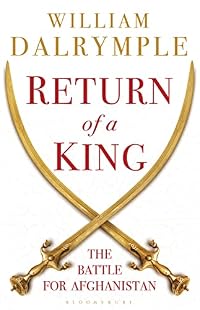
Return of a King: The Battle for Afghanistan, 1839-42
by William Dalrymple
On This Page
Description
Examines the mid-19th-century Afghan war as a tragic result of neocolonial ambition, cultural collision and hubris, drawing on previously untapped primary sources to explore such topics as the reestablishment of a puppet-leader Shah, the conflict's brutal human toll and the similarities between the war and present-day challenges.Tags
Recommendations



Member Recommendations
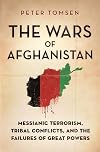
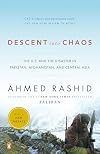
Stbalbach Return of a King / Into the Land of Bones are about Western powers invading Afghanistan and failing. Both extremely well written, fascinating and instructive.
Member Reviews
While there are other histories of the First Anglo-Afghan War, Dalrymple is apparently the first historian to use Afghan sources in his research. The result is a balanced account of the war and the decades leading up to it from both the English and the Afghan perspective. It's a tragic story from either perspective, and it didn't need to happen. Dalrymple's analysis of the many failures of leadership will make this of interest to students of leadership and management as well as military historians and readers with an interest in colonialism and the history of the British Empire. Potential readers shouldn't be discouraged by its heft. It's not dry like some histories, and it reads quickly for a book of its size.
I was particularly taken show more with Lady Sale, the wife of Sir Robert “Fighting Bob” Sale. While “Fighting Bob” and those under his command were under siege in Jalalabad, Lady Sale and other British dependents were in Kabul and left in the disastrous winter retreat. Lady Sale was among those taken hostage by Akbar Khan. She had as much, if not more fortitude than the British officers among the hostages, and contributed to their escape from captivity. Dalrymple quotes extensively from her published journal account of the events of 1841-42, and it piqued my interest in reading the whole thing. Project Gutenberg has a free electronic version of Lady Sale's journal that now resides in my reader app. show less
I was particularly taken show more with Lady Sale, the wife of Sir Robert “Fighting Bob” Sale. While “Fighting Bob” and those under his command were under siege in Jalalabad, Lady Sale and other British dependents were in Kabul and left in the disastrous winter retreat. Lady Sale was among those taken hostage by Akbar Khan. She had as much, if not more fortitude than the British officers among the hostages, and contributed to their escape from captivity. Dalrymple quotes extensively from her published journal account of the events of 1841-42, and it piqued my interest in reading the whole thing. Project Gutenberg has a free electronic version of Lady Sale's journal that now resides in my reader app. show less
The First Anglo-Afghan is one of the most astonishing military catastrophes in history. Dalrymple combines his compulsively readable style with a deep understanding of the period and translations of new Afghan sources to create a truly great book.
Remnants of an Army, depicting the William Brydon, "sole survivor" of the retreat from Kabul
British foreign policy in the late 1830s was oriented around protecting India, and using a combination of diplomacy, bribes, and military force to get Indian princes to support the policies of the British East India company. The long term threat to British security was Russian adventurism, and when Russian envoy Jan Prosper Witkiewicz, an exiled Polish noble working for the Tsar who also went by the name show more Vitkevich showed up in Afghanistan, the sahibs in London and Calcutta feared of a Russian-Persian-Afghan alliance which would encircle and dismember their possession in India.
Afghanistan was the weakest member of this potential alliance. In the first tragedy, the British had a man in Kabul, Alexander Burnes, and Burnes had good relationships with the King of Kabul, Dost Mohammed. However, Burnes was a low-born Scot, and his was overridden by more senior officials, particularly William Hay Macnaghten. Macnaghten's plan was to depost Dost Mohammed and install the previous king, Shaj Shuja, on the throne of Kabul. The initial invasion, by a large force of EIC infantry and roughly three times the number of fighters in camp followers was fiasco of ambush and marches without adequate water, saved only from the first disaster by the Battle of Ghazni, where Afghan defenders failed to brick up one gate of fortress which was seized by assault. After Ghazni, the English conquered Kabul, installed Shah Shuja, and eventually captured Dost Mohammed.
Having conquered Kabul, the British set out in an occupation that makes the 20th and 21st century ones look like brilliant strategic displays by comparison. Macnaghten alienated tribal elites repeatedly. He ignored advice from Burnes and Shah Shuja. He set up a cantonment that was indefensible, and then scattered supplies away from his troops. When the Afghans finally rose in rebellion, with the initiating spark being Burnes' womanizing habits, Macnaghten lead an insensate response that saw the British shot to pieces in their cantonment and all their supplies captured. While negotiating surrender with Dost Mohammed's son Akbar Khan, Macnaghten tried some moronic intrigues and was beheaded for his trouble. The remaining garrison had to fight their way to Jalalabad through miles of mountain passes in a freezing blizzard. The destruction of the English army was near total. Shah Shuja was assassinated while outside his fortress, trying to proclaim his royal authority. Dost Mohammed was released from captivity in India and returned to power.
The Afghans did not profit from their victory. The British organized a second Army of Retribution, which invaded the country, used superior firepower to drive off the politically disorganized locals, and torched everything within reach, including Kabul. Afghanistan was permanently wounded.
This is a great book. With the American Afghan War old enough to vote, history doesn't repeat but it rhymes. Hamid Karzai is oddly enough of the same subtribe as Shah Shuja. The Taliban has invoked the legacy of Dost Mohammed and standing up to the Ferengi invaders. And while the story has been told again and again from an English perspective, Dalrymple's brave research trip in 2010 and use of non-English sources show the war from all perspectives. show less
Remnants of an Army, depicting the William Brydon, "sole survivor" of the retreat from Kabul
British foreign policy in the late 1830s was oriented around protecting India, and using a combination of diplomacy, bribes, and military force to get Indian princes to support the policies of the British East India company. The long term threat to British security was Russian adventurism, and when Russian envoy Jan Prosper Witkiewicz, an exiled Polish noble working for the Tsar who also went by the name show more Vitkevich showed up in Afghanistan, the sahibs in London and Calcutta feared of a Russian-Persian-Afghan alliance which would encircle and dismember their possession in India.
Afghanistan was the weakest member of this potential alliance. In the first tragedy, the British had a man in Kabul, Alexander Burnes, and Burnes had good relationships with the King of Kabul, Dost Mohammed. However, Burnes was a low-born Scot, and his was overridden by more senior officials, particularly William Hay Macnaghten. Macnaghten's plan was to depost Dost Mohammed and install the previous king, Shaj Shuja, on the throne of Kabul. The initial invasion, by a large force of EIC infantry and roughly three times the number of fighters in camp followers was fiasco of ambush and marches without adequate water, saved only from the first disaster by the Battle of Ghazni, where Afghan defenders failed to brick up one gate of fortress which was seized by assault. After Ghazni, the English conquered Kabul, installed Shah Shuja, and eventually captured Dost Mohammed.
Having conquered Kabul, the British set out in an occupation that makes the 20th and 21st century ones look like brilliant strategic displays by comparison. Macnaghten alienated tribal elites repeatedly. He ignored advice from Burnes and Shah Shuja. He set up a cantonment that was indefensible, and then scattered supplies away from his troops. When the Afghans finally rose in rebellion, with the initiating spark being Burnes' womanizing habits, Macnaghten lead an insensate response that saw the British shot to pieces in their cantonment and all their supplies captured. While negotiating surrender with Dost Mohammed's son Akbar Khan, Macnaghten tried some moronic intrigues and was beheaded for his trouble. The remaining garrison had to fight their way to Jalalabad through miles of mountain passes in a freezing blizzard. The destruction of the English army was near total. Shah Shuja was assassinated while outside his fortress, trying to proclaim his royal authority. Dost Mohammed was released from captivity in India and returned to power.
The Afghans did not profit from their victory. The British organized a second Army of Retribution, which invaded the country, used superior firepower to drive off the politically disorganized locals, and torched everything within reach, including Kabul. Afghanistan was permanently wounded.
This is a great book. With the American Afghan War old enough to vote, history doesn't repeat but it rhymes. Hamid Karzai is oddly enough of the same subtribe as Shah Shuja. The Taliban has invoked the legacy of Dost Mohammed and standing up to the Ferengi invaders. And while the story has been told again and again from an English perspective, Dalrymple's brave research trip in 2010 and use of non-English sources show the war from all perspectives. show less
The pattern of the story is familiar to students of contemporary history. A Western power invades Afghanistan. Their army easily overcomes the forces of the local government and occupies the country. The victory soon turns sour, however, as missteps in dealing with the complex tribal politics of the region soon engender an uprising in the mountainous countryside. Eventually, exhausted by the drain on their resources, the army withdraws, leaving the victorious survivors to squabble over the remains and rebuild their country.
This is a narrative that could easily describe the decade-long Soviet occupation of Afghanistan, and increasingly it looks to be the inevitable outcome of the ongoing U.S.-led operation as well. But it is also one show more that could also serve as a summary of the British invasion of Afghanistan in the late 1830s. It was those parallels which inspired William Dalrymple to write a history of the first Anglo-Afghan War, one that spotlights the folly of such an effort and the disastrous consequences for all involved.
To tell the story of the invasion, Dalrymple begins not with the British but with the Afghans, specifically with the Afghan ruler Shah Shuja. A member of the Durrani dynasty, he was overthrown in 1809 by his half-brother and predecessor, Shah Mahmoud, and forced into exile. Over the next 29 years Shuja mounted three attempts to reclaim his throne by force, all of which were thwarted by his successors. In between these attempts Shuja languished in Ludhiana, where he and his entourage subsisted on a pension provided by the British East India Company on the off chance that they might need an Afghan monarch at some point.
Shuja’s fourth opportunity to reclaim the throne came about as a result of the growing Anglo-Russian competition in the region. As Russia advanced into central Asia, securing the northwestern frontier of India became an increasing anxiety for both East India Company officials and British politicians. Fearing that Russia would ally with the current ruler of Afghanistan, Dost Mohammad Khan, the company’s governor-general, Lord Auckland, decided to remove Dost Mohammad and reinstall Shah Shuja on the throne. Allying with the neighboring Sikh kingdom, Auckland used the Sikhs’ war with Afghanistan over the Peshawar Valley as the pretext for a joint invasion of the country, which began in December 1838.
Over the next eight months the British forces gradually occupied Afghanistan. Dalrymple’s account of the invasion stresses the arrogance of the British, who brought with them a massive train of camp followers and camels carrying luxury goods. Though their march though the rough terrain took a toll on their ranks the Afghan tribal levies proved a poor match against British-trained sepoys on the open battlefield, and Dost Mohammad fled Kabul ahead of its capture in August 1839. With Shah Shuja restored to the throne the British withdrew the bulk of their forces, but the remaining British presence soon alienated the Afghan population. This was exacerbated by the company’s parsimony, as efforts to curtail the massive financial drain of the occupation on the company’s coffers by reducing payments to tribal leaders soon turned them against Shah Shuja’s reign. The result was an uprising in November 1841 that forced the British out of Kabul.
Despite the growing signs of Afghan disaffection, the British were unprepared for the scale of the attack on their forces. Dalrymple’s description of the fighting underscores the poor decisions made by British leaders throughout the period, particularly those of the company’s pompous political officer, William Hay Macnaghten, and the ailing commanding general, William Elphinstone, whose disregard for the deteriorating situation left British personnel vulnerable to the rising. While an agreement to withdraw was reached at the start of 1842, the retreating British forces came under constant attack as they withdrew under punishing winter weather, with many of those who survived subsequently enslaved by Afghan tribesmen.
Though the newly-elected Tory government under Robert Peel wanted to end the British intervention, news of the uprising was greeted with a determination for vengeance. An “Army of Retribution” was quickly gathered to relieve other besieged garrisons and to punish the Afghans. Dalrymple does not minimize the atrocities committed by British forces, who gutted whole villages during their march on the Afghan capital. After retaking Kabul in September 1842, however, the British withdrew just a month later, leaving a ravaged kingdom to be ruled a restored Dost Mohammad, who over the next two decades confirmed his dynasty’s hold on the throne and established the borders of the country as it is known today.
Given the epic fate of Britain’s intervention of Afghanistan there have been no shortage of books written about it. Yet Dalrymple’s account surpasses them all, thanks to his lucid writing and incorporation of Afghan and Persian sources ignored by previous authors. These he uses to create an account that provides a wealth of insight into the Afghan perspective of the conflict, one all too often lacking in most English language chronicles. Using them he spins an engrossing account of a war which produced no winners but cast a shadow in the region that stretches down to the present day. It is difficult to imagine a better book ever being written about the first Anglo-Afghan War, nor one that is more necessary reading for anyone who thinks that a war in the region could produce a positive outcome. As Dalrymple so powerfully demonstrates, the Afghans have more than enough experience with invasion to thwart the will of any conqueror. show less
This is a narrative that could easily describe the decade-long Soviet occupation of Afghanistan, and increasingly it looks to be the inevitable outcome of the ongoing U.S.-led operation as well. But it is also one show more that could also serve as a summary of the British invasion of Afghanistan in the late 1830s. It was those parallels which inspired William Dalrymple to write a history of the first Anglo-Afghan War, one that spotlights the folly of such an effort and the disastrous consequences for all involved.
To tell the story of the invasion, Dalrymple begins not with the British but with the Afghans, specifically with the Afghan ruler Shah Shuja. A member of the Durrani dynasty, he was overthrown in 1809 by his half-brother and predecessor, Shah Mahmoud, and forced into exile. Over the next 29 years Shuja mounted three attempts to reclaim his throne by force, all of which were thwarted by his successors. In between these attempts Shuja languished in Ludhiana, where he and his entourage subsisted on a pension provided by the British East India Company on the off chance that they might need an Afghan monarch at some point.
Shuja’s fourth opportunity to reclaim the throne came about as a result of the growing Anglo-Russian competition in the region. As Russia advanced into central Asia, securing the northwestern frontier of India became an increasing anxiety for both East India Company officials and British politicians. Fearing that Russia would ally with the current ruler of Afghanistan, Dost Mohammad Khan, the company’s governor-general, Lord Auckland, decided to remove Dost Mohammad and reinstall Shah Shuja on the throne. Allying with the neighboring Sikh kingdom, Auckland used the Sikhs’ war with Afghanistan over the Peshawar Valley as the pretext for a joint invasion of the country, which began in December 1838.
Over the next eight months the British forces gradually occupied Afghanistan. Dalrymple’s account of the invasion stresses the arrogance of the British, who brought with them a massive train of camp followers and camels carrying luxury goods. Though their march though the rough terrain took a toll on their ranks the Afghan tribal levies proved a poor match against British-trained sepoys on the open battlefield, and Dost Mohammad fled Kabul ahead of its capture in August 1839. With Shah Shuja restored to the throne the British withdrew the bulk of their forces, but the remaining British presence soon alienated the Afghan population. This was exacerbated by the company’s parsimony, as efforts to curtail the massive financial drain of the occupation on the company’s coffers by reducing payments to tribal leaders soon turned them against Shah Shuja’s reign. The result was an uprising in November 1841 that forced the British out of Kabul.
Despite the growing signs of Afghan disaffection, the British were unprepared for the scale of the attack on their forces. Dalrymple’s description of the fighting underscores the poor decisions made by British leaders throughout the period, particularly those of the company’s pompous political officer, William Hay Macnaghten, and the ailing commanding general, William Elphinstone, whose disregard for the deteriorating situation left British personnel vulnerable to the rising. While an agreement to withdraw was reached at the start of 1842, the retreating British forces came under constant attack as they withdrew under punishing winter weather, with many of those who survived subsequently enslaved by Afghan tribesmen.
Though the newly-elected Tory government under Robert Peel wanted to end the British intervention, news of the uprising was greeted with a determination for vengeance. An “Army of Retribution” was quickly gathered to relieve other besieged garrisons and to punish the Afghans. Dalrymple does not minimize the atrocities committed by British forces, who gutted whole villages during their march on the Afghan capital. After retaking Kabul in September 1842, however, the British withdrew just a month later, leaving a ravaged kingdom to be ruled a restored Dost Mohammad, who over the next two decades confirmed his dynasty’s hold on the throne and established the borders of the country as it is known today.
Given the epic fate of Britain’s intervention of Afghanistan there have been no shortage of books written about it. Yet Dalrymple’s account surpasses them all, thanks to his lucid writing and incorporation of Afghan and Persian sources ignored by previous authors. These he uses to create an account that provides a wealth of insight into the Afghan perspective of the conflict, one all too often lacking in most English language chronicles. Using them he spins an engrossing account of a war which produced no winners but cast a shadow in the region that stretches down to the present day. It is difficult to imagine a better book ever being written about the first Anglo-Afghan War, nor one that is more necessary reading for anyone who thinks that a war in the region could produce a positive outcome. As Dalrymple so powerfully demonstrates, the Afghans have more than enough experience with invasion to thwart the will of any conqueror. show less
A swell history (I'm planning to engineer a comeback of the adjective swell) of the Great Game and the catastrophic British war in Afghanistan. Seems to have many parallels to our current misadventure there. Includes some newly translated Afghan poetry that deepens our comprehension of the story and the way it is thought of in Afghanistan today. One of the many pleasures of reading history is the reader's knowledge of the approaching catastrophe. I find it quite similar to watching a horror movie and the principle character decides to go back to get the cat. The audience screams for her not to be such an idiot or covers their eyes and sinks lower in their seat. This story is like that.
For some reason I associate this story with the show more poem and movie Gunga Din, but this might be erroneous. show less
For some reason I associate this story with the show more poem and movie Gunga Din, but this might be erroneous. show less
Dalrymple has steeped himself in the history of India and Afghanistan and in this book displays his knowledge and research with skill and a lightness of touch. His telling of Britain's First Afghan War and its ultimate complete failure is detailed, complete, exciting and carries warnings for our own times, connections that he often makes. The narrative is thrilling and drives forwards to an almost inevitable disaster of Britain's own making so the reader wants to find out what happens next.
The history of Afghanistan, the cultures, the people and the historical sources are all new to me, so this becomes a revelation to find the density of political, dynastic and cultural viewpoints available to bring the story to life. An exceptional show more reminder that history is not just something that happened here, but that happens everywhere.
Neither the British nor the Afghanis come out of this tale smelling so sweetly. British imperialism and an assumption of superiority led them to ignore the politics on the ground and ultimately alienate a peoples who were initially only to willing to support them. The Afghan reluctance to accept a place in the wider world and to resists cultural and political change led them to 'win' this War, but to lose the opportunity to enter a wider world' a position that has not really changed since then.
A very readable history revealing much that is new to the Western reader and which provides the opportunity to reflect on how history can teach us how to act for the better today, if only we would let it. show less
The history of Afghanistan, the cultures, the people and the historical sources are all new to me, so this becomes a revelation to find the density of political, dynastic and cultural viewpoints available to bring the story to life. An exceptional show more reminder that history is not just something that happened here, but that happens everywhere.
Neither the British nor the Afghanis come out of this tale smelling so sweetly. British imperialism and an assumption of superiority led them to ignore the politics on the ground and ultimately alienate a peoples who were initially only to willing to support them. The Afghan reluctance to accept a place in the wider world and to resists cultural and political change led them to 'win' this War, but to lose the opportunity to enter a wider world' a position that has not really changed since then.
A very readable history revealing much that is new to the Western reader and which provides the opportunity to reflect on how history can teach us how to act for the better today, if only we would let it. show less
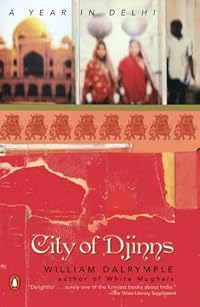
After reading City of Djinns, William Dalrymple had become one of my favorite authors.
Whereas that book was a slender but intense personal account rolled into a historical narrative of The City, Return of a King seemed like the opposite: sprawling with dozens upon dozens of characters, describing solely events of almost 200 years ago.
But this is as good of a historical narrative as any other that you could read. What really shines through is the author's empathy and even keel. Criticism, praise, and sympathy is set in appropriate measures towards all parties. Even more so, Dalrymple has a keen sense of the times; although he does judge the morality of the actors, its tempered by the prevailing mores rather than on modern/post-modern show more terms.
It is thrilling, exhilarating, and more than anything else, heart breaking. Well-deserved of all the awards it has garnered. show less
Whereas that book was a slender but intense personal account rolled into a historical narrative of The City, Return of a King seemed like the opposite: sprawling with dozens upon dozens of characters, describing solely events of almost 200 years ago.
But this is as good of a historical narrative as any other that you could read. What really shines through is the author's empathy and even keel. Criticism, praise, and sympathy is set in appropriate measures towards all parties. Even more so, Dalrymple has a keen sense of the times; although he does judge the morality of the actors, its tempered by the prevailing mores rather than on modern/post-modern show more terms.
It is thrilling, exhilarating, and more than anything else, heart breaking. Well-deserved of all the awards it has garnered. show less
William Dalrymple picks events that have been hitherto described in a maximum of two pages - The White Mughals, The Last Mughal and now the Return of a King. Inclined to believe from their short descriptions that these were but minor footnotes to history, thus are we condemned to repeat it after having failed to learn any lessons. Dalyrmple's telling of the First Anglo-Afghan war is a masterpiece that brings into sharp focus not only various characters from that period but also striking similarities between then and now. This book is very well researched and makes good use sources that the author claims have never been used before. This book is a must-buy.
Members
- Recently Added By
Lists

Top Five Books of 2013
1,564 works; 722 members

Best British Empire History Books
39 works; 8 members

Books Read in 2016
4,666 works; 197 members

THE WAR ROOM
813 works; 24 members
Author Information

37+ Works 12,607 Members
William Dalrymple wrote the highly acclaimed British best-seller In Xanadu when he was twenty-two. It won the 1990 Yorkshire Post Best First Work Award and a Scottish Arts Council Spring Book Award; it was also shortlisted for the John Llewelyn Rhys Memorial Prize. His second book, City of Djinns, won the 1994 Thomas Cook Travel Book Award and the show more Sunday Times Young British Writer of the Year Award. From the Holy Mountain was awarded the Scottish Arts Council Autumn Book Award for 1997; it was also shortlisted for the 1998 Thomas Cook Award, the John Lewelyn Rhys Memorial Prize, and the Duff Cooper Prize. A collection of his essays on India, The Age of Kali, was published in 1998. Dalrymple is a fellow of the Royal Society of Literature and of the Royal Asiatic Society and in 2002 was awarded the Mungo Park Medal by the Royal Scottish Geographic Society for his "outstanding contribution to travel literature." He is married to the artist Olivia Fraser, and they have three children. They now divide their time between London and Delhi show less
Awards and Honors
Awards
Work Relationships
Common Knowledge
- Canonical title
- Return of a King: The Battle for Afghanistan, 1839-42
- Original publication date
- 2013
- People/Characters
- George Eden, 1st Earl of Auckland; Shah Shujah Durrani; Dost Mohammad Khan, Emir of Afghanistan; Ahmad Shah Durrani, King of Afghanistan; George Broadfoot; Dr William Brydon (show all 74); Sir Alexander Burnes; Field Marshal Sir Neville Bowles Chamberlain; John Russell Colvin; Lieutenant General Sir Willoughby Cotton; Colonel William Henry Dennie; Henry Marion Durand; Emily Eden; Edward Law, 1st Earl of Ellenborough; William George Keith Elphinstone; Mountstuart Elphinstone; Major General Sir Vincent Eyre; Josiah Harlan; Mirwais Khan Hotaki; Haji Khan Kakar; Wazir Akbar Khan; Wazir Fateh Khan; Naib Aminullah Khan Logari; Mohammad Ghulam Kohistani; Captain George Lawrence; Sir William Hay Macnaghten; Charles Masson (pseudonym of James Lewis, British East India Company explorer); Maharaja Ranjit Singh; Sir George Pollock; Eldred Pottinger; Major General Sir Robert Henry Sale; Colonel Sir Claude Martin Wade; Timur Shah Durrani; Mahmud Shah Durrani; Zaman Shah Durrani; Sardar Payinda Khan; Jan Prosper Witkiewicz; Vasily Alekseevich Perovsky; Henry Creswicke Rawlinson; Sir John Keane; Arthur Wellesley, 1st Duke of Wellington; Wa'fa Begum; Sir John McNeill; Mohammad Shah Qajar; Dr. Percival Lord; George Robert Gleig; Mirza Ata Mohammad; Faiz Mohammad Katib Hazara; Mawlana Hamid Kashmiri; Abdullah Khan Achakzai; John Sturt; Count Ivan Simonitch; Colonel James Skinner, East India Company officer; Major General Sir Thomas Seaton; Florentia, Lady Sale; Alexandrina Sale; James Rattray; Yar Mohamed Khan Alikozai; Havildar Moti Ram; Lieutenant-General Lord William Henry Cavendish-Bentinck, Governor-General of India; Lady Frances Macnaghten; Lieutenant-General Colin Mackenzie; Sir David Ochterlony (first Baronet of Pitforthy, first Baronet of Ochterlony); Mohammad Shah Khan Ghilzai; Sir John William Kaye; Sultan Jan Barakzai; Mohammad Husain Herati; Lieutenant John Greenwood; Lieutenant Thomas Gaisford; William Fraser, British India civil servant; Fateh Jang Durrani; Major Elliot D'Arcy Todd; Field Marshal Sir Neville Bowles Chamberlain; Major-General Augustus Abbott
- Important places
- Afghanistan; Kabul, Afghanistan; British Empire; Ludhiana, Punjab, India; Kandahar, Afghanistan; Jalalabad, Afghanistan (show all 24); Peshawar, Pakistan; Herat, Afghanistan; Orenburg, Russia; St. Petersburg, Russia; Lahore, Punjab, Pakistan; Ghazni, Afghanistan; Tehran, Iran; Simla, Himachal Pradesh, India; Attock, Punjab, Pakistan; Lucknow, Uttar Pradesh, India; Jamrud, Khyber Pakhtunkhwa, Pakistan; Gandamak, Afghanistan; Charikar, Afghanistan; Bamiyan, Afghanistan; Bukhara, Uzbekistan; Shikarpur, Sindh, Pakistan; Firozpur, Punjab, India; Ali Masjid, Khyber Pakhtunkhwa, Pakistan
- Important events
- Victorian Era (1837 | 1901); First Anglo-Afghan War (1839 | 1842); 1842 Retreat from Kabul; Great Game; Qajar Siege of Herat
- Epigraph
- Great kings have always recorded the events of their reigns, some writing themselves, with their natural gifts, but most entrusting the writing to historians and writers, so that these compositions would remain as a memorial ... (show all)on the pages of passing time. Thus it occurred to this humble petitoner at the court of the Merciful God, Sultan Shuja al-Mulk Shah Durrani, to record the battles and events of his reign, so that the historians of Khurasan should know the true account of these events, and thoughtful readers take heed from these examples. - Shah Shuja, Waqiat-i-Shah Shuja
- Dedication
- To my beloved Adam And also to the four people who did most to encourage in me a love of history: Veronica Telfer Fr. Edward Corbould OSB Lucy Warrack and Elsie Gibbs (North Berwick, 10 June 1922 - Bristol, 4 February 20... (show all)12)
- First words
- The year 1809 opened auspiciously for Shah Shuja ul-Mulk.
- Last words
- (Click to show. Warning: May contain spoilers.)"Next it will be China."
Classifications
Statistics
- Members
- 938
- Popularity
- 28,159
- Reviews
- 26
- Rating
- (4.21)
- Languages
- English, French, Italian, Spanish
- Media
- Paper, Audiobook, Ebook
- ISBNs
- 16
- ASINs
- 13