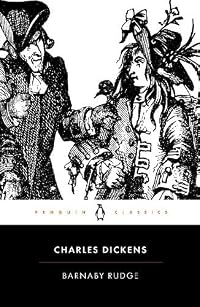
Barnaby Rudge
by Charles Dickens
On This Page
Description
Renowned storyteller Charles Dickens takes on the historical novel in Barnaby Rudge, a gripping fictionalized account of the anti-Catholicism turmoil that rocked England in the late eighteenth century. The novel pairs Dickens' social insights into the "anti-papist" riots of 1780 with the quirky, closely observed characters that have won him a loyal following the world over..
Tags
Recommendations






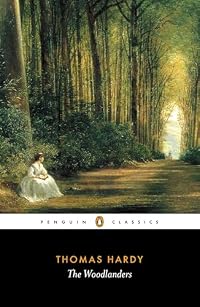
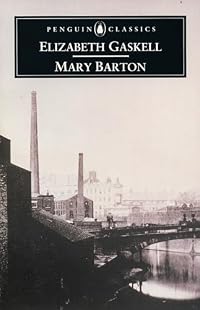
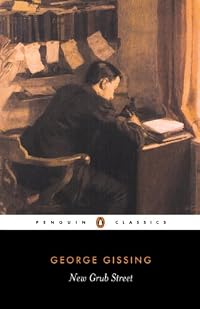
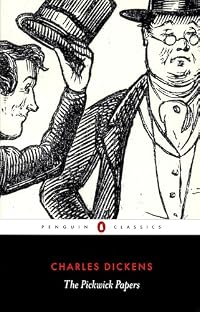








Member Recommendations
morryb Both have a main character who adopts a daughter and the struggle of letting her go.
Morryman84 Scott and Dickens two of my favorite writers

morryb Bothtell of the struggle of adopting a child and letting go later on.
Member Reviews
Dickens is known for his complex plots and his myriad characters, and in this sense Barnaby Rudge is no different from the rest of his novels. But even for a Dickens fan such as myself, despite the rich characterizations, the plot itself is just awful. It boils down to problems with time and place. As for place, the question is why Dickens insisted on creating two distinct locales, Chigwell (where the Maypole Pub is the setting, mainly), and London, which is 11 miles away. The characters attached to Chigwell have some business in London, but really there is never much reason for them to connect with the London folk, and there is much to-ing and fro-ing for no clear reason.
As for time, Dickens introduces a 5 year gap right in the middle show more of his narrative. Again, this is a problem. The book starts in 1775 then jumps to 1780, the year of the Gordon Riots in London. As young Joe Willet falls out with his father in 1775 and then goes off to fight in the Revolutionary War in America, time stands still. Nothing happens. When he returns his sweetheart, Dolly Varden, is still waiting for him, frozen in time. Likewise with Emma Haredale and her beau, Edward Chester ... frozen in time, waiting 5 years for her missing man, and all this time becoming an old maid. But why? Why 5 years when one year would have sufficed? One year is an eternity when you are only 18 in the first place.
Lastly, there is something to be learned about the nature of weak men who sway crowds into populist frenzies by invoking tribalism, i.e. "othering" those who are different, in this case the Catholics. The historical figure of Lord George Gordon, a despicable little man who foments hatred and causes a 4 day riot in London, is described this way:
"This lord was sincere in his violence and in his wavering. A
nature prone to false enthusiasm, and the vanity of being a leader,
were the worst qualities apparent in his composition. All the rest
was weakness--sheer weakness; and it is the unhappy lot of
thoroughly weak men, that their very sympathies, affections,
confidences--all the qualities which in better constituted minds
are virtues--dwindle into foibles, or turn into downright vices."
So, plus ça change, as they say. Dickens makes it even more clear in his Preface to Barnaby Rudge:
"It is unnecessary to say, that those shameful tumults, while they reflect indelible disgrace upon the time in which they occurred, and all who had act or part in them, teach a good lesson. That what we falsely call a religious cry is easily raised by men who have no religion, and who in their daily practice set at nought the commonest principles of right and wrong; that it is begotten of intolerance and persecution; that it is senseless, besotted, inveterate and unmerciful; all History teaches us. But perhaps we do not know it in our hearts too well, to profit by even so humble an example as the ‘No Popery’ riots of Seventeen Hundred and Eighty."
Would I recommend this book? Yes, but it did not need to be this long. Entire chapters could have disappeared without trace, not affecting the plot. Even though it may be perhaps the weakest Dickens novel, it is still astounding, and I'm glad I read/listened. show less
As for time, Dickens introduces a 5 year gap right in the middle show more of his narrative. Again, this is a problem. The book starts in 1775 then jumps to 1780, the year of the Gordon Riots in London. As young Joe Willet falls out with his father in 1775 and then goes off to fight in the Revolutionary War in America, time stands still. Nothing happens. When he returns his sweetheart, Dolly Varden, is still waiting for him, frozen in time. Likewise with Emma Haredale and her beau, Edward Chester ... frozen in time, waiting 5 years for her missing man, and all this time becoming an old maid. But why? Why 5 years when one year would have sufficed? One year is an eternity when you are only 18 in the first place.
Lastly, there is something to be learned about the nature of weak men who sway crowds into populist frenzies by invoking tribalism, i.e. "othering" those who are different, in this case the Catholics. The historical figure of Lord George Gordon, a despicable little man who foments hatred and causes a 4 day riot in London, is described this way:
"This lord was sincere in his violence and in his wavering. A
nature prone to false enthusiasm, and the vanity of being a leader,
were the worst qualities apparent in his composition. All the rest
was weakness--sheer weakness; and it is the unhappy lot of
thoroughly weak men, that their very sympathies, affections,
confidences--all the qualities which in better constituted minds
are virtues--dwindle into foibles, or turn into downright vices."
So, plus ça change, as they say. Dickens makes it even more clear in his Preface to Barnaby Rudge:
"It is unnecessary to say, that those shameful tumults, while they reflect indelible disgrace upon the time in which they occurred, and all who had act or part in them, teach a good lesson. That what we falsely call a religious cry is easily raised by men who have no religion, and who in their daily practice set at nought the commonest principles of right and wrong; that it is begotten of intolerance and persecution; that it is senseless, besotted, inveterate and unmerciful; all History teaches us. But perhaps we do not know it in our hearts too well, to profit by even so humble an example as the ‘No Popery’ riots of Seventeen Hundred and Eighty."
Would I recommend this book? Yes, but it did not need to be this long. Entire chapters could have disappeared without trace, not affecting the plot. Even though it may be perhaps the weakest Dickens novel, it is still astounding, and I'm glad I read/listened. show less
Dickens introduces this novel with several chapters of pure fiction set in 1775, laying out two romance plots and a murder mystery. Then the story jumps ahead five years to the Gordon Riots of 1780 when historical events take over the plot, catching up his characters in the turmoil. There's good understanding shown here of how a mob gathers, acts, and is reacted to. This was Dickens' first crack at writing historical fiction and he used several sources to get the details right. Significant characters in the novel (e.g. Lord Gordon) were real people, and their personalities are believed to be accurately portrayed.
If this is Dickens' least popular novel, I blame its title character. Barnaby is an innocent simpleton whose cognitive show more abilities slide up and down the scale as the plot demands. He's a rare personality that Dickens could not get a handle on, or at least was less true in portraying for the sake of directing his story. He was also Dickens' third variant on the helpless innocent motif, following Oliver and Little Nell, and the most shallow even by that comparison. From the first page we meet him he is living a vacant-minded idyllic life, and almost nothing shakes him from it. It's as flat a character arc as you might imagine.
The book isn't really about Barnaby, however, despite its title, since there's nothing central about him and he remains a sideshow in his own story. The secondary plot romances are far more engaging and often feel primary. Only thematically can I find a purpose for Barnaby, where he serves as an extreme symbol of disparity between mob mentality and the individuals that comprise it. Potential blame for this novel's being unpopular might also lie with the subject matter. How many people outside England today have heard of the Gordon Riots, or can imagine Protestant extremists? On the other hand riots, political unrest and religious angst are abundantly relevant in our modern context. This work could find new relevance with its reminder that there is nothing new under the sun. show less
If this is Dickens' least popular novel, I blame its title character. Barnaby is an innocent simpleton whose cognitive show more abilities slide up and down the scale as the plot demands. He's a rare personality that Dickens could not get a handle on, or at least was less true in portraying for the sake of directing his story. He was also Dickens' third variant on the helpless innocent motif, following Oliver and Little Nell, and the most shallow even by that comparison. From the first page we meet him he is living a vacant-minded idyllic life, and almost nothing shakes him from it. It's as flat a character arc as you might imagine.
The book isn't really about Barnaby, however, despite its title, since there's nothing central about him and he remains a sideshow in his own story. The secondary plot romances are far more engaging and often feel primary. Only thematically can I find a purpose for Barnaby, where he serves as an extreme symbol of disparity between mob mentality and the individuals that comprise it. Potential blame for this novel's being unpopular might also lie with the subject matter. How many people outside England today have heard of the Gordon Riots, or can imagine Protestant extremists? On the other hand riots, political unrest and religious angst are abundantly relevant in our modern context. This work could find new relevance with its reminder that there is nothing new under the sun. show less
I must admit, I really enjoyed Barnaby Rudge. Dickens' 6th book, and 5th novel, it is perhaps the least read of his "Big Fifteen" and not unfairly, but that's only because the rest of them are so vibrant! Barnaby Rudge is a bit of an anomaly, in that it has its origins in history, but it's still very Dickensian, and fits neatly into its place just after The Old Curiosity Shop, which also features a naive young thing running away with their guardian from an unforgiving society. Published in 1841, Rudge is the last book in a rapid writing frenzy that must have overtaken Dickens. It's certainly true that these early novels feel less thorough, less thematically unified than the later works (but perhaps that's because Dickens was thinking show more almost solely of serialisation, and not so much about ultimate publication), but it also means that they can be more surprising. One doesn't feel so often (as one does even with the best of the later books) that Dickens is making you wait forever just to get to the secrets he has kept hidden from you.
Despite being the title character (and one of my personal favourites), Barnaby himself is not really the lead in this book; it feels like a real ensemble piece, being marvelously unpredictable in terms of which characters will join which side of the riots. The riot setpieces themselves, and how easily Barnaby is swept up in them (perhaps reflecting on how so many others were swept up, in some cases unwillingly and in some cases just due to the Trump-esque mob mentality), are particularly moving. What works here is Dickens' incredible skill at description; every home and street feels truly lived in, even if none of the characters in this novel - even the irrepressible Dolly Varden - have any real internal life. To be honest, I feel as if the first half of the novel is a bit repetitive, while the second half spends so much historical time on the one situation that the book could easily be a two- or three-hour miniseries rather than the kind of lengthy soap opera which could be spun from Little Dorrit. Anyhow, if only the BBC would give us a modern Barnaby Rudge, perhaps the book would be more widely read! In truth, I'd place this fairly low down the Dickens totem pole, lower than Dombey and Son, perhaps equal to The Old Curiosity Shop, but I find it interesting to see Dickens applying his skill to history, which gives him a chance to further investigate why men do what they do, a question he will plunge into with great fervour later in his career. By the time Rudge was done, Dickens was off to America, and the next phase of his remarkable career. show less
Despite being the title character (and one of my personal favourites), Barnaby himself is not really the lead in this book; it feels like a real ensemble piece, being marvelously unpredictable in terms of which characters will join which side of the riots. The riot setpieces themselves, and how easily Barnaby is swept up in them (perhaps reflecting on how so many others were swept up, in some cases unwillingly and in some cases just due to the Trump-esque mob mentality), are particularly moving. What works here is Dickens' incredible skill at description; every home and street feels truly lived in, even if none of the characters in this novel - even the irrepressible Dolly Varden - have any real internal life. To be honest, I feel as if the first half of the novel is a bit repetitive, while the second half spends so much historical time on the one situation that the book could easily be a two- or three-hour miniseries rather than the kind of lengthy soap opera which could be spun from Little Dorrit. Anyhow, if only the BBC would give us a modern Barnaby Rudge, perhaps the book would be more widely read! In truth, I'd place this fairly low down the Dickens totem pole, lower than Dombey and Son, perhaps equal to The Old Curiosity Shop, but I find it interesting to see Dickens applying his skill to history, which gives him a chance to further investigate why men do what they do, a question he will plunge into with great fervour later in his career. By the time Rudge was done, Dickens was off to America, and the next phase of his remarkable career. show less
A neglected gem. After the slog that was "Dombey and Son" it was good to read a Dickens I could enjoy. In this case, it's one of his few historical novels and one of his most tightly-plotted works. The anti-Catholic Gordon Riots are described with outrage, but there's the lingering sense that Dickens never examined his own anti-Catholic sentiments too deeply, and the curt offstage death of a good Catholic man suggests that his supply of outrage for persecuted Catholics had its limits. Be that as it may, the novel is a good one: part historical, part murder mystery, part romance. It moves along at a steady clip without the longueurs you sometimes find in Victorian novels. His long accounts of the riots--and in particular his description show more of a mob--are terrific. show less
This, truly, is an amazing book. My edition had illustrations on many of the pages, but it still ran to over 700 pages in length. Part of me considers just sticking with this book a significant accomplishment! But in all seriousness, this tome is a monument to observations, to knowledge of human motivations, and to mob rule.
The first half is, of course, full of Dickensian characters. For me, getting through the first 100 pages, ending with the painting of the character of Hugh, was a hurdle. I can honestly say that a reader can stick with this portion and will find joy and relief in the latter half of the book. The maidens are full of distress and loveliness, the men are jovial and satirical, but Dickens is able to twist the knife in show more the character of his own father by naming two horrible men, who happen to be fathers of sons John." Both men have good sons, and neither father is deserving of such good sons.
But within the details of the characters lies less satire or over-the-top descriptions and much more malice and true goodness. The character of Barnaby is kind and quaint, the character of Dolly Vickens is sweet and . . . flirtatious without caring whether she breaks men's hearts. The character of Mrs. Vickens is brilliantly martyred (helped by her lady's maid) . . . with an undercurrent of vindictiveness. And Simon Tippertit is almost, but not quite, a spoof of the hapless apprentice . . . until he joins with the apprentice "court" and becomes a court favorite by his similarly uncaring ways.
Then we get to the second half and the Gordon Riots of 1780. I had not known these riots existed, even, and they are brilliantly described in their horrible detail: the sound made by the mob is consistently referred to with water imagery (some earth imagery might also have been good, or references to an avalanche), the destruction they cause is described in horrible detail, and their motivations for destroying the churches? Well, religion is the excuse but hatred and vengeance and a need to get back it others is the real reason. Dickens' descriptions of the "false enthusiasm and vanity of being a leader" as Lord Gordon's foundation for his personality are spot-on, and the methods to motivate a crowd, not by standing on London Bridge and "calling till . . . hoarse . . . might have influenced a score of people in a month. . . . But when vague rumors got abroad, that in this Protestant association a secret power was mustering against the government for undefined and mighty purposes; . . . then the mania spread indeed and the body . . . grew forty thousand strong." These are the truest words about vain and weak leaders that I've read yet. show less
The first half is, of course, full of Dickensian characters. For me, getting through the first 100 pages, ending with the painting of the character of Hugh, was a hurdle. I can honestly say that a reader can stick with this portion and will find joy and relief in the latter half of the book. The maidens are full of distress and loveliness, the men are jovial and satirical, but Dickens is able to twist the knife in show more the character of his own father by naming two horrible men, who happen to be fathers of sons John." Both men have good sons, and neither father is deserving of such good sons.
But within the details of the characters lies less satire or over-the-top descriptions and much more malice and true goodness. The character of Barnaby is kind and quaint, the character of Dolly Vickens is sweet and . . . flirtatious without caring whether she breaks men's hearts. The character of Mrs. Vickens is brilliantly martyred (helped by her lady's maid) . . . with an undercurrent of vindictiveness. And Simon Tippertit is almost, but not quite, a spoof of the hapless apprentice . . . until he joins with the apprentice "court" and becomes a court favorite by his similarly uncaring ways.
Then we get to the second half and the Gordon Riots of 1780. I had not known these riots existed, even, and they are brilliantly described in their horrible detail: the sound made by the mob is consistently referred to with water imagery (some earth imagery might also have been good, or references to an avalanche), the destruction they cause is described in horrible detail, and their motivations for destroying the churches? Well, religion is the excuse but hatred and vengeance and a need to get back it others is the real reason. Dickens' descriptions of the "false enthusiasm and vanity of being a leader" as Lord Gordon's foundation for his personality are spot-on, and the methods to motivate a crowd, not by standing on London Bridge and "calling till . . . hoarse . . . might have influenced a score of people in a month. . . . But when vague rumors got abroad, that in this Protestant association a secret power was mustering against the government for undefined and mighty purposes; . . . then the mania spread indeed and the body . . . grew forty thousand strong." These are the truest words about vain and weak leaders that I've read yet. show less
Dickens as a liberal reformer: a repeating metaphor of the book is the lethal harvest sown by cruel laws, by the death penalty (really? I couldn't parse it otherwise, though), and by reckless politicians inciting mob violence. London is terrorized for a week or more, jails and judges' houses burnt, until the Riot Act and public dismay restore order.
The villains are livelier characters than most of the virtuous protagonists, which makes it glum, even by Dickensian standards. All the feistiness is foolish unto villainy, and the virtuous are foolish and fond. The prettiest heroine is Dolly Varden, but she doesn't do much except love the hero at the last possible moment. He's been off and lost an arm in the war of the day, which happens to show more be the American colonies' revolt; a minor joke is that the States are so minor that it's hard for someone to keep track of who England was fighting there; the natives or the colonials? I remember from high-school textbooks (in the States) some references to the government of Great Britain being distracted by internal turmoil, but I sure don't remember mention of fiery riot in the capitol -- unrelated to the US revolt. Our textbook did make sure to mention an incompetent and probably mentally ill King, which Dickens doesn't bring up at all.
Available at Project Gutenberg, Barnaby Rudge. show less
The villains are livelier characters than most of the virtuous protagonists, which makes it glum, even by Dickensian standards. All the feistiness is foolish unto villainy, and the virtuous are foolish and fond. The prettiest heroine is Dolly Varden, but she doesn't do much except love the hero at the last possible moment. He's been off and lost an arm in the war of the day, which happens to show more be the American colonies' revolt; a minor joke is that the States are so minor that it's hard for someone to keep track of who England was fighting there; the natives or the colonials? I remember from high-school textbooks (in the States) some references to the government of Great Britain being distracted by internal turmoil, but I sure don't remember mention of fiery riot in the capitol -- unrelated to the US revolt. Our textbook did make sure to mention an incompetent and probably mentally ill King, which Dickens doesn't bring up at all.
Available at Project Gutenberg, Barnaby Rudge. show less
Dickens' great strength is his characters, and in this he creates another couple of gems. Gabriel Varden is a real salt of the earth type, down to earth, upright, principled as honest as the day is long and caught up in events beyond his control. By contrast, his apprentice is a slimy weasel of a man and is not worthy of the locksmith's daughter. The title character is an idiot, but not completely without sense. He's endearing enough that you do care about him. Set in the midst of the Gordon riots of the 1780s, this is a history, being written somewhat later. There's lots of weighty matters in here, crime and punishment, he death penalty, the way that a mob mentality can take over, manipulation of people and events for personal revenge, show more the works. There's a reason Dickens is still read today, it's because he captures the entire of the human condition. show less
Members
- Recently Added By
Lists

Favourite 19th century fiction
257 works; 62 members

Favourite Books
1,817 works; 316 members

Favorite Dickens novels?
16 works; 27 members
Folio Society
831 works; 48 members

Books Read in 2014
2,341 works; 86 members

Fifty Representative Historical Novels
50 works; 2 members
Good, Smart, Clean Fiction
46 works; 4 members

CCE 1000 Good Books List
1,033 works; 12 members

Books I may read for February 2012 TIOLI
23 works; 5 members

Charles Dickens books
17 works; 1 member
Author Information

2,578+ Works 313,139 Members
Charles Dickens, perhaps the best British novelist of the Victorian era, was born in Portsmouth, Hampshire, England on February 7, 1812. His happy early childhood was interrupted when his father was sent to debtors' prison, and young Dickens had to go to work in a factory at age twelve. Later, he took jobs as an office boy and journalist before show more publishing essays and stories in the 1830s. His first novel, The Pickwick Papers, made him a famous and popular author at the age of twenty-five. Subsequent works were published serially in periodicals and cemented his reputation as a master of colorful characterization, and as a harsh critic of social evils and corrupt institutions. His many books include Oliver Twist, David Copperfield, Bleak House, Great Expectations, Little Dorrit, A Christmas Carol, and A Tale of Two Cities. Dickens married Catherine Hogarth in 1836, and the couple had nine children before separating in 1858 when he began a long affair with Ellen Ternan, a young actress. Despite the scandal, Dickens remained a public figure, appearing often to read his fiction. He died in 1870, leaving his final novel, The Mystery of Edwin Drood, unfinished. (Bowker Author Biography) show less
Some Editions
Awards and Honors
Series
Belongs to Publisher Series
New Century Library Works of Charles Dickens (Volume 6)
Collins Classics (29)
Penguin English Library, 2012 series (2012-08)
Everyman's Library (76)
The World's Classics (286)
Work Relationships
Is contained in
Contains
Has the adaptation
Has as a reference guide/companion
Has as a study
Common Knowledge
- Canonical title
- Barnaby Rudge
- Original title
- Barnaby Rudge
- Original publication date
- 1841
- People/Characters
- Akerman; Black Lion; Mr Chester; Edward Chester; Tom Cobb; General Conway (show all 32); Solomon Daisy; Ned Dennis; Gashford; Mark Gilbert; Colonel Gordon; Lord George Gordon; Tom Green; Grip; John Grueby; Geoffrey Haredale; Miss Emma Haredale; Hugh; Mr Langdale; Miss Miggs; Phil Parkes; Peak; Barnaby Rudge; Mrs Rudge; Mr Rudge; Stagg; Simon Tappertitt; Dolly Varden; Gabriel Varden; Martha Varden; John Willet; Joe Willet
- Important places
- Newgate Prison, London, England, UK; London, England, UK
- Important events
- Gordon Riots (1780)
- First words
- In the year 1775, there stood upon the borders of Epping Forest, at a distance of about twelve miles from London--measuring from the Standard in Cornhill, or rather from the spot on or near to which the Standard used to be in... (show all) days of yore--a house of public entertainment called the Maypole; which fact was demonstrated to all such travellers as could neither read nor write (and at that time a vast number both of travellers and stay-at-homes were in this condition) by the emblem reared on the roadside over against the house, which, if not of those goodly proportions that Maypoles were wont to present in olden times, was a fair young ash, thirty feet in height, and straight as any arrow that ever English yeoman drew.
- Last words
- (Click to show. Warning: May contain spoilers.)From that period (although he was supposed to be much affected by the death of Mr Willet senior), he constantly practised and improved himself in the vulgar tongue; and, as he was a mere infant for a raven when Barnaby was grey, he has very probably gone on talking to the present time.
- Original language
- English
- Canonical DDC/MDS
- 823.83
Classifications
Statistics
- Members
- 2,888
- Popularity
- 6,195
- Reviews
- 49
- Rating
- (3.73)
- Languages
- 9 — Czech, Danish, Dutch, English, French, German, Italian, Spanish, Swedish
- Media
- Paper, Audiobook, Ebook
- ISBNs
- 175
- UPCs
- 2
- ASINs
- 153