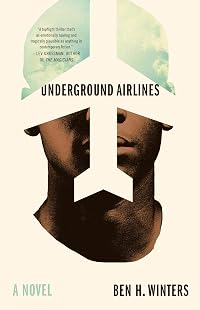
Underground Airlines
by Ben H. Winters
On This Page
Description
"It is the present-day, and the world is as we know it: smartphones, social networking and Happy Meals. Save for one thing: the Civil War never occurred. A gifted young Black man calling himself Victor has struck a bargain with federal law enforcement, working as a bounty hunter for the US Marshall Service. He's got plenty of work. In this version of America, slavery continues in four states called "the Hard Four." On the trail of a runaway known as Jackdaw, Victor arrives in Indianapolis show more knowing that something isn't right--with the case file, with his work, and with the country itself. A mystery to himself, Victor suppresses his memories of his childhood on a plantation, and works to infiltrate the local cell of a abolitionist movement called the Underground Airlines. Tracking Jackdaw through the back rooms of churches, empty parking garages, hotels, and medical offices, Victor believes he's hot on the trail. But his strange, increasingly uncanny pursuit is complicated by a boss who won't reveal the extraodinary stakes of Jackdaw's case, as well as by a heartbreaking young woman and her child who may be Victor's salvation. Victor himself may be the biggest obstacle of all--though his true self remains buried, it threatens to surface. Victor believes himself to be a good man doing bad work, unwilling to give up the freedom he has worked so hard to earn. But in pursuing Jackdaw, Victor discovers secrets at the core of the country's arrangement with the Hard Four, secrets the government will preserve at any cost. Underground Airlines is a ground-breaking novel, a wickedly imaginative thriller, and a story of an America that is more like our own than we'd like to believe"-- show lessTags
Recommendations





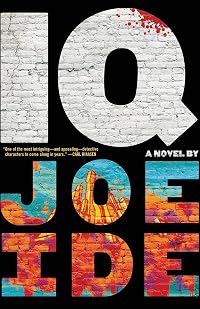
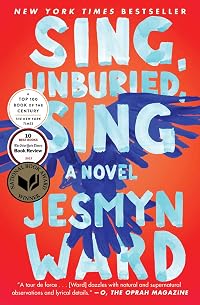
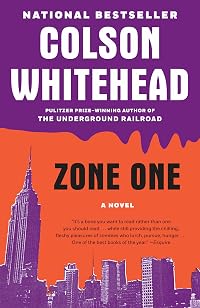
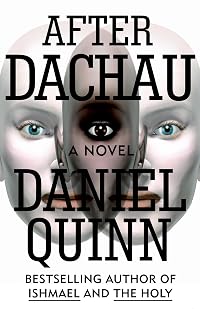

Member Recommendations
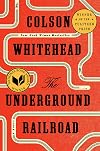
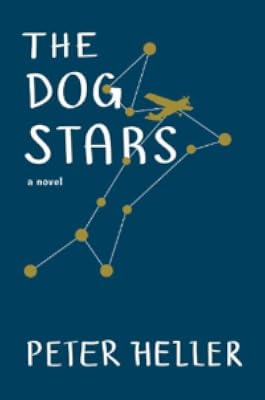
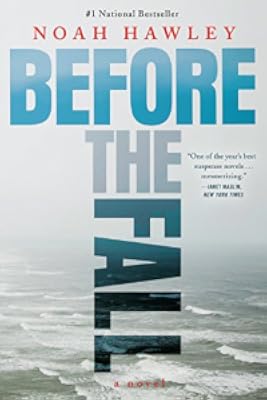
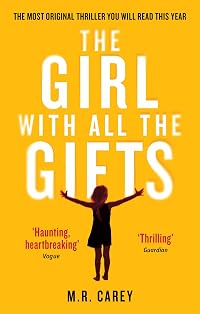
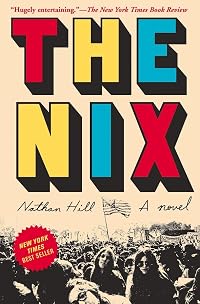
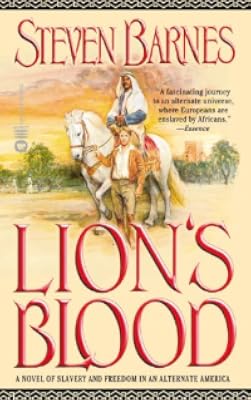
elenchus That popular culture phenomenon of the uncanny twins, two works appearing together yet unrelated in authorship, production, inspiration. Why do they appear together? In this case, each is compelling enough to read based on their own, but for me irresistable now they've shown up onstage at the same time. Ben Winters's Underground Airlines a bizarro underground railroad, updated (for reasons left implicit) for air travel; Colson Whitehead's The Underground Railroad making the escape trail a concrete reality. Each also addresses our world, in between stations.
10

sturlington Speculative fiction about alternative Souths.
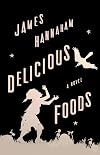
susanbooks Underground Airlines is very good --I gave it 4 stars -- but Delicious Foods covers the same ground so much more profoundly & doesn't need any speculation to do it.
Member Reviews
I highly enjoyed and appreciated this gripping book on three levels.
First, it presents a fascinating what-if scenario. In this alternate America, instead of having a civil war, the states came to a compromise that essentially made slavery constitutional into perpetuity. In the present day, slavery continues to be legal in four states--the "hard four," as they are called--making the United States a political and trade pariah in the world. This hard-to-fathom reality of present-day legal slavery shades every plot point, character motivation, and line of dialogue, presenting a mind-warping vision of America.
Layered on top of this is a highly suspenseful, well-plotted crime story. The combination of tropes from two such disparate genres show more infuses both with a new energy. Winters has done this before, in his excellent Last Policeman trilogy, but he's upped his game here. The nameless narrator, once a slave, is now an undercover detective for the US Marshals who tracks fugitive slaves himself, with a hard-boiled sensibility but a nuanced character that gradually reveals itself.
All of this would be enough to make Underground Airlines a terrific read, but Winters has deftly woven piercing social commentary into his alternate history. This vision of America, in which people passionately condone the enslavement of black human beings, is so different from and yet so much like our own society that it forces the reader to re-examine all the assumptions that lie at the bottom of race relations in the United States today. Without preaching or lecturing, Winters makes us question how we view race as it affects poverty, education, incarceration, pretty much everything.
This book enthralled me on all levels. I so hope there will be a sequel, because I would definitely read it. show less
First, it presents a fascinating what-if scenario. In this alternate America, instead of having a civil war, the states came to a compromise that essentially made slavery constitutional into perpetuity. In the present day, slavery continues to be legal in four states--the "hard four," as they are called--making the United States a political and trade pariah in the world. This hard-to-fathom reality of present-day legal slavery shades every plot point, character motivation, and line of dialogue, presenting a mind-warping vision of America.
Layered on top of this is a highly suspenseful, well-plotted crime story. The combination of tropes from two such disparate genres show more infuses both with a new energy. Winters has done this before, in his excellent Last Policeman trilogy, but he's upped his game here. The nameless narrator, once a slave, is now an undercover detective for the US Marshals who tracks fugitive slaves himself, with a hard-boiled sensibility but a nuanced character that gradually reveals itself.
All of this would be enough to make Underground Airlines a terrific read, but Winters has deftly woven piercing social commentary into his alternate history. This vision of America, in which people passionately condone the enslavement of black human beings, is so different from and yet so much like our own society that it forces the reader to re-examine all the assumptions that lie at the bottom of race relations in the United States today. Without preaching or lecturing, Winters makes us question how we view race as it affects poverty, education, incarceration, pretty much everything.
This book enthralled me on all levels. I so hope there will be a sequel, because I would definitely read it. show less
America in the present day: smartphones, Facebook and chalupas. One thing is different and it's a whopper-
the civil war never happened. Four states, in the deep south, still practice slavery. The Hard Four.
Victor is a smart, young black man. He works for the US Marshal service, a modern day bounty hunter, tracking down fugitive slaves. He is tasked to track down a rebellious slave named Jackdaw. He is exceptional at his job but Jackdaw, causes Victor to take a hard look at himself and question his own mysterious past. It also propels him into a conspiracy that places him firmly in the cross-hairs, of his own government and the Hard Four.
This is fine alt/history. Well-written, intense and thought-provoking. With the fiery and unstable show more racial issues, happening in our country, at the moment, this novel really resonates.
I really liked the author's The Last Policeman trilogy, but he really stepped up his game on this one. show less
the civil war never happened. Four states, in the deep south, still practice slavery. The Hard Four.
Victor is a smart, young black man. He works for the US Marshal service, a modern day bounty hunter, tracking down fugitive slaves. He is tasked to track down a rebellious slave named Jackdaw. He is exceptional at his job but Jackdaw, causes Victor to take a hard look at himself and question his own mysterious past. It also propels him into a conspiracy that places him firmly in the cross-hairs, of his own government and the Hard Four.
This is fine alt/history. Well-written, intense and thought-provoking. With the fiery and unstable show more racial issues, happening in our country, at the moment, this novel really resonates.
I really liked the author's The Last Policeman trilogy, but he really stepped up his game on this one. show less
The central fact of Underground Airlines is that Winters describes the present moment in an imagined U.S., and that moment matches ours in almost all particulars, except in arriving from a different past. It is perhaps tempting to argue that is a worse, more horrific history than ours, so Winters calmly and steadily shows us that it is not. Those who don't see it are perhaps like a dog, watching master's pointing finger, and those who do see it, looking where the finger points.
The story's center of gravity, then, is that alternate history and the global stage built upon it. What's fascinating is how familiar are the dynamics in that world compared with our own, both interpersonal and group interactions, even the realpolitik of nation show more states, despite the dramatic yet arguably superficial differences. This is the primary achievement here, what attracted me to the book and continues to attract me even after I've turned the final page. The story is quite good, the characters and narration also well done, amusing and observant, and Winters' prose is itself a pleasure to read as it rolls by. The genre tropes I find fun: the hardboiled protagonist, the first person narration as familiar as the shamus (I enjoy the absurdity of asking: "To whom is he speaking? What's his angle, that he's so confessional?"), the plot playing Virgil to the reader's Dante, offering up so many absurd scenes. These are all great and reason enough to read the book. But the book will be a favourite, a personal benchmark, because of that bizarro world and my imagined place in it.
Winters's alternate America displays the same cultural touch points as ours, the same Jim Crow social controls, the same economy. The same economy. And -- the plot follows that insight down a rabbit hole that most citizens (in this alternate world, but just as certainly here, today) do not want to peer into, don't want to hear about. But -- the logic of the setup requires Victor look down that hole, and drag up whatever unpleasantries are there to be found. Look around. They're here, too.
//
The Civil War: averted. Emancipation: stillborn. The Constitutional compromise which preserves the Union guarantees slaveholding states the right in perpetuity to lawfully control Persons Bound to Labor. Four states eagerly enslave 3 million black men, women, and children: Louisiana, Mississippi, Alabama, and Carolina. Other states abide it in various ways: Texas a troublesome Republic, many northern states observing a Clean Hands Initiative. Georgia, perhaps most cannily, turns non-slavery only to serve as a commercial highway between the Hard Four.
Some citizens endeavour to bring people out of slavery, one or two at a time, via the clandestine Underground Airlines. They are opposed, as mandated in Federal statute, by the U.S. Marshal Service. Fugitive Slave Laws shore up the old compromise, uphold the Constitution. Victor works for the U.S. Marshals, he is black, and he is very good at what he does. He himself was once enslaved. show less
The story's center of gravity, then, is that alternate history and the global stage built upon it. What's fascinating is how familiar are the dynamics in that world compared with our own, both interpersonal and group interactions, even the realpolitik of nation show more states, despite the dramatic yet arguably superficial differences. This is the primary achievement here, what attracted me to the book and continues to attract me even after I've turned the final page. The story is quite good, the characters and narration also well done, amusing and observant, and Winters' prose is itself a pleasure to read as it rolls by. The genre tropes I find fun: the hardboiled protagonist, the first person narration as familiar as the shamus (I enjoy the absurdity of asking: "To whom is he speaking? What's his angle, that he's so confessional?"), the plot playing Virgil to the reader's Dante, offering up so many absurd scenes. These are all great and reason enough to read the book. But the book will be a favourite, a personal benchmark, because of that bizarro world and my imagined place in it.
Winters's alternate America displays the same cultural touch points as ours, the same Jim Crow social controls, the same economy. The same economy. And -- the plot follows that insight down a rabbit hole that most citizens (in this alternate world, but just as certainly here, today) do not want to peer into, don't want to hear about. But -- the logic of the setup requires Victor look down that hole, and drag up whatever unpleasantries are there to be found. Look around. They're here, too.
//
The Civil War: averted. Emancipation: stillborn. The Constitutional compromise which preserves the Union guarantees slaveholding states the right in perpetuity to lawfully control Persons Bound to Labor. Four states eagerly enslave 3 million black men, women, and children: Louisiana, Mississippi, Alabama, and Carolina. Other states abide it in various ways: Texas a troublesome Republic, many northern states observing a Clean Hands Initiative. Georgia, perhaps most cannily, turns non-slavery only to serve as a commercial highway between the Hard Four.
Some citizens endeavour to bring people out of slavery, one or two at a time, via the clandestine Underground Airlines. They are opposed, as mandated in Federal statute, by the U.S. Marshal Service. Fugitive Slave Laws shore up the old compromise, uphold the Constitution. Victor works for the U.S. Marshals, he is black, and he is very good at what he does. He himself was once enslaved. show less
As we're introduced to Victor, we get the sense that he's some kind of detective or investigator on a mission. In his hotel room he receives a digital file containing information about his new case and a nightly phone call from his boss at precisely 9:50pm. Though we aren't yet privy to the nature of his work, the reader gradually gleans sufficient snippets and clues that make it clear that he's living in an alternate reality in which the Civil War was never fought, and in which slavery is still legal, though regulated, in four southern states.
Though the United States depicted in this dystopian novel is horrifying on the one hand, on the other it sadly didn't seem excessively far-fetched. In any case, it was absolutely a riveting show more page-turner for me, and would make for an interesting book club discussion. show less
Though the United States depicted in this dystopian novel is horrifying on the one hand, on the other it sadly didn't seem excessively far-fetched. In any case, it was absolutely a riveting show more page-turner for me, and would make for an interesting book club discussion. show less
The title isn't literal. It refers to the modern equivalent of the underground railroad that sneaked escaped slaves from the American south to freedom in the north. In the alternate reality Winters imagines, Lincoln was assassinated before he took office, compromise prevented the Civil War, and in the present there remain the Hard Four states where slavery is still legal. Victor is an escaped slave who's been forced to work with the US Marshals to hunt down other escaped slaves. All Victor cares about is himself. All he wants is to remain free, or the semblance of freedom that marks his life, the ability to move around the non-slave states, staying in nice hotels, eating good food, and trying to not think about the tracker inbedded in show more his spine. But his latest case, to find a runaway slave called Jackdaw who reportedly is hiding in Indianapolis turns out to not be the routine assignment he'd thought, and the things he learns cause him to question what he knows about the country and himself.
This novel works on many levels, but mostly, it's a personal journey for Victor and an incredibly relevant commentary on the state of the US today. The provocative title caught my attention in the bookstore, the blurb made me buy it, and the words inside lead me to highly recommend it. show less
This novel works on many levels, but mostly, it's a personal journey for Victor and an incredibly relevant commentary on the state of the US today. The provocative title caught my attention in the bookstore, the blurb made me buy it, and the words inside lead me to highly recommend it. show less
Just imagine for a moment an establishment spook and modern slave wrapped into one, pressed into service to hunt down and reel back in other escaped slaves, and you've got yourself a tracker right out of the bad old days of pre-civil war. A black man forced to do the devil's work.
Now imagine him in our modern world, where the American Civil War had ended in an economic truce and slavery is alive and well and made so very efficient.
Hell, just imagine how easy it'd be to track down every slave with GPS and have a world tweeting happy PR banalities to hide the horrible truth of slums in our brightest cities, labor camps like private prisons, communities openly and proudly racist and happy to thumb their noses at the rest of the world at show more just how they've managed to fool the IRS, twist the legal establishment, and all the while tell themselves just how humane they are to the downtrodden.
Wait... is this an alternate timeline? An excellent What-If novel? A deeply horrific and oppressive dystopia so very much like the world we've got now?
Yes. Fancy that.
But the point is, we're living it through the devil's eyes, the scared black man in this nightmare world who is forced to do unspeakable things to men and women who should be his brothers, and if you think this is a heavy-handed political tale, then think again. I got sucked right in just fine and loved the story, it's twists and turns. Do you think he finds a way to help his brothers and sisters, and get out of his horrid servitude? Does he infiltrate the Underground Railroad (ahem, sorry, Airline) or does he betray or get betrayed?
Just how complex does this tale get?
Pretty complex. And Very Satisfying. :)
It actually makes me believe that for all the crap we're living through in *this* world, I'm still happy to be *here*. show less
Now imagine him in our modern world, where the American Civil War had ended in an economic truce and slavery is alive and well and made so very efficient.
Hell, just imagine how easy it'd be to track down every slave with GPS and have a world tweeting happy PR banalities to hide the horrible truth of slums in our brightest cities, labor camps like private prisons, communities openly and proudly racist and happy to thumb their noses at the rest of the world at show more just how they've managed to fool the IRS, twist the legal establishment, and all the while tell themselves just how humane they are to the downtrodden.
Wait... is this an alternate timeline? An excellent What-If novel? A deeply horrific and oppressive dystopia so very much like the world we've got now?
Yes. Fancy that.
But the point is, we're living it through the devil's eyes, the scared black man in this nightmare world who is forced to do unspeakable things to men and women who should be his brothers, and if you think this is a heavy-handed political tale, then think again. I got sucked right in just fine and loved the story, it's twists and turns. Do you think he finds a way to help his brothers and sisters, and get out of his horrid servitude? Does he infiltrate the Underground Railroad (ahem, sorry, Airline) or does he betray or get betrayed?
Just how complex does this tale get?
Pretty complex. And Very Satisfying. :)
It actually makes me believe that for all the crap we're living through in *this* world, I'm still happy to be *here*. show less
I was pleasantly surprised by this one. Given the plot summary - the book is about a black man who pursues escaped slaves in an alternate history where slavery was never abolished in the US - I was afraid that the book was going to be unreadably grim. It is grim, and it will not increase your faith in humanity, but it is also a suspenseful and engaging page-turner.
The world-building is interesting: Winters describes the economic and political consequences of slavery without slowing down the fast pace of the story. His ideas are more or less plausible, although ironically there are some aspects of this alternate history that are more equitable than our current reality (for instance, a lot of businesses refuse to do commerce with any show more other business that uses slave labor, and businesses can have a supply chain that is certified free of slave labor: how hard is it in our real world to buy electronics that have not used slave labor in their factories at some point?).
I had some extra fun with this because it is set in Indianapolis, where I grew up. Winters has clearly spent a lot of time in Indianapolis, because he knows all the streets and neighborhoods - most of the scenes were set in parts of town that I knew really well, and all the details are true to life.
I listened to the audiobook, and the narrator was very good, and my house was very clean because I didn't want to stop listening. show less
The world-building is interesting: Winters describes the economic and political consequences of slavery without slowing down the fast pace of the story. His ideas are more or less plausible, although ironically there are some aspects of this alternate history that are more equitable than our current reality (for instance, a lot of businesses refuse to do commerce with any show more other business that uses slave labor, and businesses can have a supply chain that is certified free of slave labor: how hard is it in our real world to buy electronics that have not used slave labor in their factories at some point?).
I had some extra fun with this because it is set in Indianapolis, where I grew up. Winters has clearly spent a lot of time in Indianapolis, because he knows all the streets and neighborhoods - most of the scenes were set in parts of town that I knew really well, and all the details are true to life.
I listened to the audiobook, and the narrator was very good, and my house was very clean because I didn't want to stop listening. show less
Members
- Recently Added By
Lists

Best Science Fiction Novels
816 works; 430 members

Best Alternate History
111 works; 60 members

2017 Hugo Eligible Novels
145 works; 14 members

Best Contemporary Literary Fiction (Around the Last 30 Years)
388 works; 124 members

Best 21st Century Books (So Far)
670 works; 86 members

Dystopian and Apocalyptic Literature
350 works; 74 members

Speculative Fiction to Read
706 works; 31 members

Reading Group 2017
4 works; 1 member

Read in 2018
18 works; 1 member

Books Read in 2017
4,249 works; 130 members

Books Set in Indiana
4 works; 4 members

USA Road Trip
50 works; 3 members

Ultimate Thriller Guide
52 works; 4 members

To Read List
21 works; 1 member

Books Read in 2016
4,666 works; 199 members

Top Five Books of 2017
757 works; 231 members

Books Read in 2022
5,226 works; 115 members

Indie Next Picks
196 works; 4 members
Books We Couldn't Put Down
443 works; 197 members
Author Information

40+ Works 11,080 Members
Writer Ben H. Winters graduated from Washington University in St. Louis, Missouri in 1998. He is a journalist and playwright as well as an author, and he co-wrote the New York Times bestseller Sense and Sensibility and Sea Monsters. (Bowker Author Biography)
Some Editions
Awards and Honors
Awards
Distinctions
Notable Lists
Common Knowledge
- Original publication date
- 2016-07-05
- Important places
- Indianapolis, Indiana, USA; Alabama, USA
- Dedication
- For my kids, and their friends
- First words
- "So," said the young priest. "I think that I'm the man you're looking for."
- Last words
- (Click to show. Warning: May contain spoilers.)Everything can happen. Everything is possible.
- Canonical DDC/MDS
- 813.6
- Canonical LCC
- PS3623.I6735
Classifications
Statistics
- Members
- 1,484
- Popularity
- 15,686
- Reviews
- 81
- Rating
- (3.86)
- Languages
- English, French, Hungarian, Portuguese
- Media
- Paper, Audiobook, Ebook
- ISBNs
- 18
- ASINs
- 6