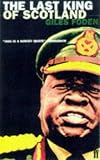
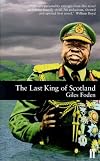
The Last King of Scotland
by Giles Foden
On This Page
Description
Shortly after his arrival in Uganda, Scottish doctor Nicholas Garrigan is called to the scene of a bizarre accident: Idi Amin, careening down a dirt road in his Maserati, has hit a cow. When Garrigan tends to Amin, the dictator, obsessed with all things Scottish, appoints him as his personal physician. So begins a fateful dalliance with the African leader whose Emperor Jones-style autocracy would transform into a reign of terror. In The Last King of Scotland, Foden's Amin is as ridiculous as show more he is abhorrent: a self-proclaimed cannibal who, at the end of his eight years in power, would be responsible for 300,000 deaths. As Garrigan awakens to his patient's barbarism--and his own complicity in it--we enter a venturesome meditation on conscience, charisma, and the slow corruption of the human heart. show lessTags
Recommendations































Member Recommendations
mcenroeucsb Dictators
Member Reviews
'My life story...It is very exciting. Because, as you know, I am the hero of all Africa', July 26, 2014
This review is from: The Last King of Scotland (Kindle Edition)
As a female reader who doesn't 'do' war/ politics/ espionage, I wasn't sure I'd like this, but I really enjoyed it, especially the earlier part which others have criticized as 'slow''!
When a young Scottish doctor goes out to work in a clinic in 1970s Uganda, he little imagines that a chance meeting will cause the new dictator, Idi Amin, to select him as his personal physician. Foden's descriptions of the country and people really bring the pages alive; later he manages to imbue the horrific Amin with the charisma and charm that keep Dr Garrigan hanging on in the country show more when his fellow countrymen have fled.
' "Please help me", he said again, leaning closer. I could feel his breath in my ear. His voice was slow this time, like dripping honey.
My head spun. The softness of his voice had awakened in me an emotion I could hardly begin to understand....The emotion I felt for him was pity, and I knew that the way out of the darkness into which I had allowed myself to fall was to help him.'
Although Garrigan is fictitional, he is based - very loosely - around one Bob Astle, a white British associate of Amin, whose complicity in his master's actions is open to debate.
I felt I learned a lot from reading this, notably the Entebbe raid, which was just a name to me beforehand. Really gripping. show less
This review is from: The Last King of Scotland (Kindle Edition)
As a female reader who doesn't 'do' war/ politics/ espionage, I wasn't sure I'd like this, but I really enjoyed it, especially the earlier part which others have criticized as 'slow''!
When a young Scottish doctor goes out to work in a clinic in 1970s Uganda, he little imagines that a chance meeting will cause the new dictator, Idi Amin, to select him as his personal physician. Foden's descriptions of the country and people really bring the pages alive; later he manages to imbue the horrific Amin with the charisma and charm that keep Dr Garrigan hanging on in the country show more when his fellow countrymen have fled.
' "Please help me", he said again, leaning closer. I could feel his breath in my ear. His voice was slow this time, like dripping honey.
My head spun. The softness of his voice had awakened in me an emotion I could hardly begin to understand....The emotion I felt for him was pity, and I knew that the way out of the darkness into which I had allowed myself to fall was to help him.'
Although Garrigan is fictitional, he is based - very loosely - around one Bob Astle, a white British associate of Amin, whose complicity in his master's actions is open to debate.
I felt I learned a lot from reading this, notably the Entebbe raid, which was just a name to me beforehand. Really gripping. show less
“It is the bad spirit that has come over this place. My grandmother says that it will only go away when you see a dog and a goat riding a bicycle together.”
This is a novel encompassing both historical fact and fiction. In the novel, Scotsman Nicholas Garrigan tells how he came to be Idi Amin's personal physician,sometime confidant and of his subsequent adventures.
One of the novel's major concerns is Garrigan's relationship with Amin, a brutal dictator, and why Garrigan is so fascinated by the leader that he does not leave, even when faced with the certain knowledge of Amin's atrocities.
Foden in many respects has written two great characters. Garrigan is a totally passive observer who due to indecision, naivete and weakness ends up show more trying to rationalise the atrocities being perpetrated about him. This horror is implicit rather than graphic. You end up feeling a little sympathy for Garrigan's situation without really liking the man himself.In contrast Idi Amin is shown as being capable of kindness and humour as well as anger and brutality rather than being painted as some pantomime villain. Despite being a despot he has great charisma and aura about him which matches his sizeable stature which suggests that it is not just fear that makes people follow him. And perhaps that is really the central theme of this book, that anyone else in Garrigan's situation might finding themselves doing as he did.
Recently I have taken a great interest in literature written about Africa just before or after the various countries independence from colonial rule with books like A Sunday by the Pool in Kigali and The Catastrophist. Idi Amin before independence was a mere sergeant in the Army and had very little education yet became a ruler of millions just like so many post-colonial leaders who found themselves in similar situations. So in many respects it is hardly surprising that even today the continent is busy tearing itself apart. In fact Amin was initially welcomed by the UK Government when he took power.
The pace of this book is quite slow but never so much so that you want to give up on it. Rather it increases the intensity of the action when it does happen. On the whole I found this an enjoyable read and you can see how Foden has used his 20 years experience as a journalist to good use. However, IMHO it just lacked a little something to make it a really memorable read. show less
This is a novel encompassing both historical fact and fiction. In the novel, Scotsman Nicholas Garrigan tells how he came to be Idi Amin's personal physician,sometime confidant and of his subsequent adventures.
One of the novel's major concerns is Garrigan's relationship with Amin, a brutal dictator, and why Garrigan is so fascinated by the leader that he does not leave, even when faced with the certain knowledge of Amin's atrocities.
Foden in many respects has written two great characters. Garrigan is a totally passive observer who due to indecision, naivete and weakness ends up show more trying to rationalise the atrocities being perpetrated about him. This horror is implicit rather than graphic. You end up feeling a little sympathy for Garrigan's situation without really liking the man himself.In contrast Idi Amin is shown as being capable of kindness and humour as well as anger and brutality rather than being painted as some pantomime villain. Despite being a despot he has great charisma and aura about him which matches his sizeable stature which suggests that it is not just fear that makes people follow him. And perhaps that is really the central theme of this book, that anyone else in Garrigan's situation might finding themselves doing as he did.
Recently I have taken a great interest in literature written about Africa just before or after the various countries independence from colonial rule with books like A Sunday by the Pool in Kigali and The Catastrophist. Idi Amin before independence was a mere sergeant in the Army and had very little education yet became a ruler of millions just like so many post-colonial leaders who found themselves in similar situations. So in many respects it is hardly surprising that even today the continent is busy tearing itself apart. In fact Amin was initially welcomed by the UK Government when he took power.
The pace of this book is quite slow but never so much so that you want to give up on it. Rather it increases the intensity of the action when it does happen. On the whole I found this an enjoyable read and you can see how Foden has used his 20 years experience as a journalist to good use. However, IMHO it just lacked a little something to make it a really memorable read. show less
The Last King of Scotland chronicles the rise and fall of Idi Amin, the Ugandan dictator through the eyes of a naive Scottish doctor named Nicholas Garrigan. From a historical context, the story is quite interesting. It is obvious that Foden did his research and he provides an interesting view on Amin. Although Foden did have to take some liberties with filling in the blanks on Amin's character, I think he does a good job in providing a different viewpoint and showing differences between Amin the dictator and Amin the person. With that said, I don't think this would be enjoyable for people not very much interested in politics or history. While there is some action and adventure, this is very much a novel that delves into politics and show more the consequences of rulers' actions.
Much of the first half could have been cut out without any consequence to the story itself. Foden takes a long time to get through setting up the atmosphere and culture of Uganda. While I appreciated being so thoroughly immersed in the setting of the story, after awhile, the overly long descriptions of the landscapes and Garrigan's naive outlook on African life gets a bit boring. There were times I would zone out for thirty to forty-minutes and was able to pick back up again without feeling like I'd missed anything.
The second half, however, is a different story. It quickly picks up and finally some action gets started. Wars erupt between Uganda and neighboring countries, and Garrigan realizes how ruthless and crazy Amin can be. He decides to return home but has to do so without Amin's knowledge. This makes for some great adventure and suspense-filled chapters. While I found it hard to get through half an hour of the beginning of the novel, near the end, I listened to about three hours at once and didn't find it at all difficult. I thought the ending was perfect and it really showed how much Garrigan has grown throughout the course of the novel. But I don't think that the last part of the novel makes up for the tediousness of the first part. This is a book I could have done without.
While I wasn't a fan of the story, the narration is very good. Mirron Willis does a great job with the accents and the different characters' voices. I wasn't a fan of Sarah's voice, but I wasn't a fan of Sarah the character either, so it worked out. There were times when Willis would meld the Ugandan accent and the Scottish accent when switching back and forth from Amin and Garrigan, but it only lasted for a second. I always like listening to first-person novels in audiobook format, because it adds a little more personality to it. If you're going to read this at all, I would say that audio is the way to go as long as the length of it doesn't bother you. Much of the enjoyment I got out of The Last King of Scotland was enhanced by the audiobook. I most definitely would have given up on a print version. show less
Much of the first half could have been cut out without any consequence to the story itself. Foden takes a long time to get through setting up the atmosphere and culture of Uganda. While I appreciated being so thoroughly immersed in the setting of the story, after awhile, the overly long descriptions of the landscapes and Garrigan's naive outlook on African life gets a bit boring. There were times I would zone out for thirty to forty-minutes and was able to pick back up again without feeling like I'd missed anything.
The second half, however, is a different story. It quickly picks up and finally some action gets started. Wars erupt between Uganda and neighboring countries, and Garrigan realizes how ruthless and crazy Amin can be. He decides to return home but has to do so without Amin's knowledge. This makes for some great adventure and suspense-filled chapters. While I found it hard to get through half an hour of the beginning of the novel, near the end, I listened to about three hours at once and didn't find it at all difficult. I thought the ending was perfect and it really showed how much Garrigan has grown throughout the course of the novel. But I don't think that the last part of the novel makes up for the tediousness of the first part. This is a book I could have done without.
While I wasn't a fan of the story, the narration is very good. Mirron Willis does a great job with the accents and the different characters' voices. I wasn't a fan of Sarah's voice, but I wasn't a fan of Sarah the character either, so it worked out. There were times when Willis would meld the Ugandan accent and the Scottish accent when switching back and forth from Amin and Garrigan, but it only lasted for a second. I always like listening to first-person novels in audiobook format, because it adds a little more personality to it. If you're going to read this at all, I would say that audio is the way to go as long as the length of it doesn't bother you. Much of the enjoyment I got out of The Last King of Scotland was enhanced by the audiobook. I most definitely would have given up on a print version. show less
From what I've seen in the reviews of this book, either people really really liked it or they really really disliked it. Personally, I liked it (not really really) and created opportunities to be in my car to continue the story (this edition is the unabridged audiobook). Let me note here that I did see the movie prior to reading the book -- a definite plus in this case since the screenplay of the movie was changed quite a bit from the book.
The narrator is one Dr. Nicholas Garrigan, a Scottish doctor who is somewhat disillusioned with life under his father and life in general -- so he ends up in Uganda, where he is helping out at a clinic there, until a chance meeting with Idi Amin changes his life forever. When Nicholas had arrived in show more Uganda, Amin had not yet cemented his power, but after the freak accident that put Nicholas in Amin's path, Nicholas found himself in the position of Amin's personal physician and moved to the capital. On one level the story is about Nicholas and his dealings with Amin, but on another level, it turns out to be about his examination of his own soul as he wonders why he has failed to see the truth about Amin, and what it says about him that he let himself become so immersed in and remained somewhat in denial of the evils of the entire situation and of Amin himself until it was nearly too late. As Garrigan said at one point to a reporter, "You've never known real fear," but it's really obvious that he was somewhat fascinated by Amin at the same time he was afraid. It wasn't until some time after he eventually found himself on the other side of Amin's generosity that he realized that he was probably a marked man and tried to find a way out; yet in the meantime, he stayed put while others were cruelly tortured and while whole villages & peoples were destroyed.
This is fiction, so if you're looking for a book to fill in holes in your knowledge about the reign of Idi Amin, this may not be what you're looking for. However, if you want something really good to take your mind off things for a while, this book is perfect. And don't expect the movie between the covers. I can definitely recommend this one to anyone interested in the topic. The writer did a great job. show less
The narrator is one Dr. Nicholas Garrigan, a Scottish doctor who is somewhat disillusioned with life under his father and life in general -- so he ends up in Uganda, where he is helping out at a clinic there, until a chance meeting with Idi Amin changes his life forever. When Nicholas had arrived in show more Uganda, Amin had not yet cemented his power, but after the freak accident that put Nicholas in Amin's path, Nicholas found himself in the position of Amin's personal physician and moved to the capital. On one level the story is about Nicholas and his dealings with Amin, but on another level, it turns out to be about his examination of his own soul as he wonders why he has failed to see the truth about Amin, and what it says about him that he let himself become so immersed in and remained somewhat in denial of the evils of the entire situation and of Amin himself until it was nearly too late. As Garrigan said at one point to a reporter, "You've never known real fear," but it's really obvious that he was somewhat fascinated by Amin at the same time he was afraid. It wasn't until some time after he eventually found himself on the other side of Amin's generosity that he realized that he was probably a marked man and tried to find a way out; yet in the meantime, he stayed put while others were cruelly tortured and while whole villages & peoples were destroyed.
This is fiction, so if you're looking for a book to fill in holes in your knowledge about the reign of Idi Amin, this may not be what you're looking for. However, if you want something really good to take your mind off things for a while, this book is perfect. And don't expect the movie between the covers. I can definitely recommend this one to anyone interested in the topic. The writer did a great job. show less
A rare case where the film version is actually better than the original book. Perhaps I would have enjoyed it more had I not seen the film, but I just wasn't gripped by the book. The doctor narrator isn't a very likeable character and I don't necessarily have a problem with that, but I found his actions hard to understand because the Amin in this book didn't ever seem that charismatic (unlike Forest Whittaker's portrayal of him).
I agree with other reviewers that this is interesting but far from brilliant. Had neither the compelling qualities of good fiction nor the redeeming grace of biography. I did feel I learned about the period and setting, but the characters were poorly realised and it all took a long time to get going. I felt detached from the main character and his 'dilemmas', the soul-searching stuff felt tacked on and the ending unlikely and too melodramatic for the rest. Glad to hear the film was better, though would probably will give it a miss.
a bit disappointing, after all the hype about the film, which I haven't seen yet. Strayed a bit close to Alexander McCall territory. Didn't really get under Amin's skin in the way it promised.
Members
- Recently Added By
Lists

A Good Read (Radio 4)
221 works; 1 member
Author Information

13+ Works 1,861 Members
Some Editions
Awards and Honors
Awards
Notable Lists
Series
Belongs to Publisher Series
Work Relationships
Has the adaptation
Has as a student's study guide
Common Knowledge
- Canonical title*
- De laatste koning van Schotland
- Original publication date
- 1998
- People/Characters
- Idi Amin; Nicholas Garrigan
- Important places
- Uganda; Kampala, Uganda; East Africa
- Related movies
- The Last King of Scotland (2006 | IMDb)
- Epigraph*
- Loose ends, things unrelated, shifts, nightmare yourneys, cities arrived at and left, meetings, desertions, betrayals, all manner of unions, adulteries, triumphs, defeats ... these are the facts.
Alexander Trocchi, Cain... (show all)'s Book (1960) - First words
- I did almost nothing on my first day as Idi Amin's doctor.
- Last words
- (Click to show. Warning: May contain spoilers.)I will dig out a hammer and nails from among Eammonn's tools and do it.
*Some information comes from Common Knowledge in other languages. Click "Edit" for more information.
Classifications
Statistics
- Members
- 991
- Popularity
- 26,420
- Reviews
- 17
- Rating
- (3.66)
- Languages
- 6 — Chinese, Dutch, English, French, German, Portuguese
- Media
- Paper, Audiobook, Ebook
- ISBNs
- 40
- UPCs
- 1
- ASINs
- 7