On This Page
Description
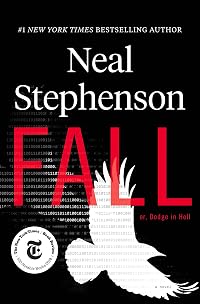
"In his youth, Richard "Dodge" Forthrast founded Corporation 9592, a gaming company that made him a multibillionaire. Now in his middle years, Dodge appreciates his comfortable, unencumbered life, managing his myriad business interests, and spending time with his beloved niece Zula and her young daughter, Sophia. One beautiful autumn day, while he undergoes a routine medical procedure, something goes irrevocably wrong. Dodge is pronounced brain dead and put on life support, leaving his show more stunned family and close friends with difficult decisions. Long ago, when a much younger Dodge drew up his will, he directed that his body be given to a cryonics company now owned by enigmatic tech entrepreneur Elmo Shepherd. Legally bound to follow the directive despite their misgivings, Dodge's family has his brain scanned and its data structures uploaded and stored in the cloud, until it can eventually be revived. In the coming years, technology allows Dodge's brain to be turned back on. It is an achievement that is nothing less than the disruption of death itself. An eternal afterlife--the Bitworld--is created, in which humans continue to exist as digital souls. But this brave new immortal world is not the Utopia it might first seem... Fall, or Dodge in Hell is pure, unadulterated fun: a grand drama of analog and digital, man and machine, angels and demons, gods and followers, the finite and the eternal. In this exhilarating epic, Neal Stephenson raises profound existential questions and touches on the revolutionary breakthroughs that are transforming our future. Combining the technological, philosophical, and spiritual in one grand myth, he delivers a mind-blowing speculative literary saga for the modern age."--provided by publisher. show lessTags
Recommendations


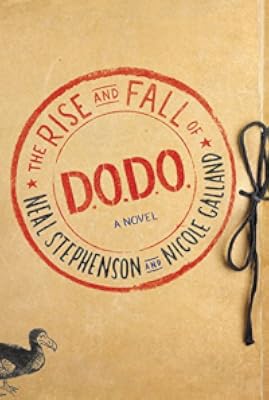
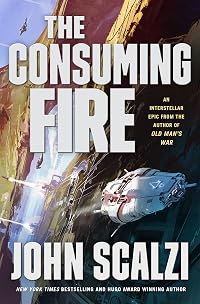
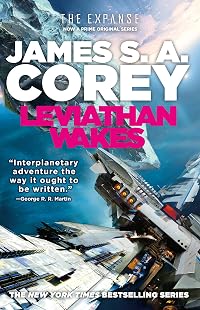
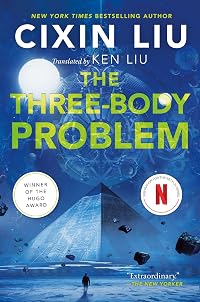
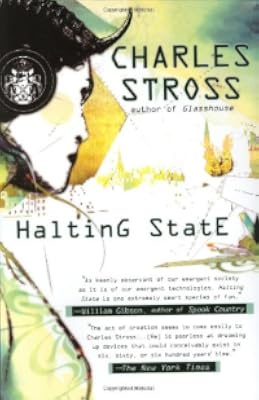

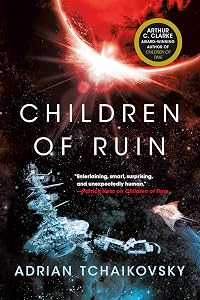
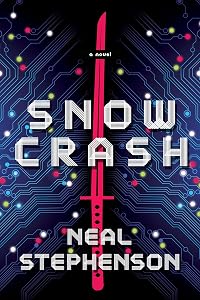
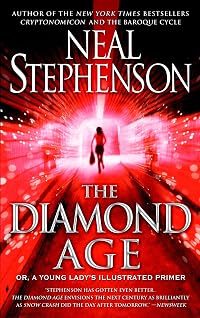
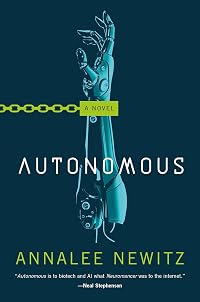
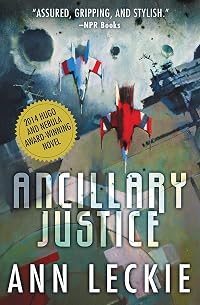
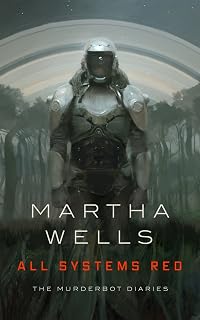
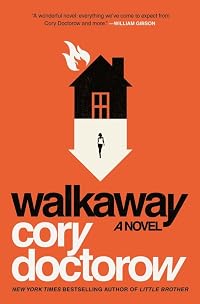

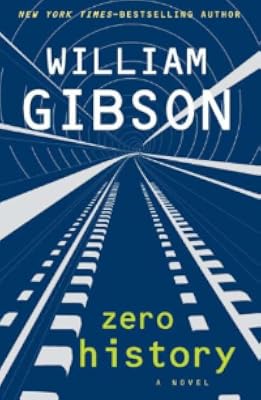
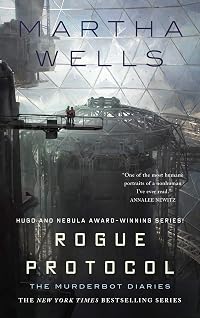
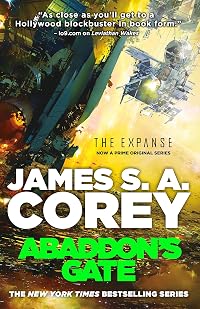
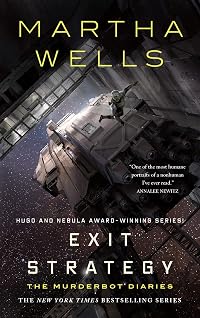

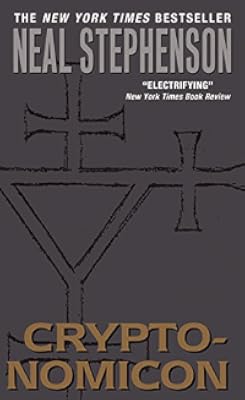
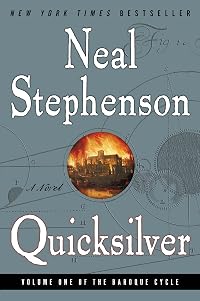
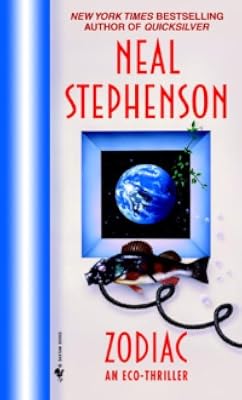
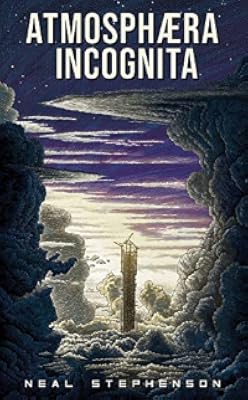
Member Recommendations

g33kgrrl Normally I find it silly to recommend books by the same author, but The Diamond Age is a deep cut by now. While completely different stories, I find the parallel of the virtual quest/actual reality intriguing.
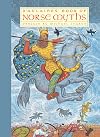
themulhern Remarkable coincidence: the day after I returned D'Aulaire's "Norse Gods and Giants" to the library, after having checked it out on a whim and found myself remembering how much I loved it as a child I started listening to the audio version of "Fall". And less than half an hour into the book there is an extraordinary discussion about the D'Aulaire's two books of myths, Greek and Norse, with a focus on the Norse, which I always thought was by far the better. How many literate people of my or Stephenson's age didn't fall in love with that extraordinary book?
Member Reviews
After what seems like a rather dull opening, but which turns into something absorbing and engaging, the book shoots off in part two with a piece of perfect Stephensonian chaos and thrills and sly satire, and it's still only setting the stage for the epic to come. When it begins its bible/Silmarillion mythbuilding riff my heart sank a bit, no way would this sustain interest, but it does, culminating in a Quest, of all things, straight out of DnD, and it all works, it all makes sense and it's all brilliant and readable and incredibly enjoyable and oddly life-affirming.
883 pages. Word processing has a lot to answer for. This is not one story but several. Dodge's last morning. An SF story of copying and rebooting minds, Dodge's being the first, in the cloud as spearheaded by his niece Sophia and his friend, and executor Corvallis which includes a sort of post-data-apocalyptic road trip through Ameristan. Then there is the creation story and the story of the fall, semi-inverted and interleaved with the original SF narrative. Then we get to watch as new Adam and Eve meet a charming worm and have to face the consequences. Then, with a few "meatspace" interludes we are off on a classic Quest with the repulsively charming Corvallis/Corvus.
Don't worry about spoilers up there, there's lots of other stuff. But show more while it is as easy to read and smoothly paced as almost all of Neal Stephenson's writing, it is facile surface stuff. Really, the adversaries are kind of six-of-one blah blah. Hierarchies are really all that's on offer. Who would pay to be a beedle? Who wouldn't have their estate sue if they were instantiated as one?
Also, the orientation is so completely US & Western Europe in spite of Corvallis's Asian ancestry and Zulu&Sophia's Eritrean origins. Not even a nod to Russian, Chinese, Middle Eastern, or Southeast Asian money, which would very likely not have gone into Dodge's after world, but it's as if these whole parts of the world are not worth mentioning. show less
Don't worry about spoilers up there, there's lots of other stuff. But show more while it is as easy to read and smoothly paced as almost all of Neal Stephenson's writing, it is facile surface stuff. Really, the adversaries are kind of six-of-one blah blah. Hierarchies are really all that's on offer. Who would pay to be a beedle? Who wouldn't have their estate sue if they were instantiated as one?
Also, the orientation is so completely US & Western Europe in spite of Corvallis's Asian ancestry and Zulu&Sophia's Eritrean origins. Not even a nod to Russian, Chinese, Middle Eastern, or Southeast Asian money, which would very likely not have gone into Dodge's after world, but it's as if these whole parts of the world are not worth mentioning. show less
A by turns fascinating, exasperating, boring GrecoNorseJudeoChristian fantasy, some sort of mishmash-up of Hesiod, the Eddas, Milton, Tolkien and Martin, embedded in a much more interesting near future science fiction novel about developments in computing, robotics, the doings of Tech lords and such. Had to plow through this one; not sure it was worth it.
Neal Stephenson is one of the most engaging writers I know, and also one of the most idiosyncratic. Fall is simultaneously an engrossing story and an often frustrating read. I've read criticisms that this novel is a rip off of Milton, and I can see how one might come to that conclusion, but there is more going on here despite characters named Adam and Eve, El, and Sophia. Stephenson is using mashups of different religious traditions (consider the Raven character and the Pantheon) to reflect on the nature of reality, the nature of death, the question of alternate universes. Ultimately, I called this science fiction because the enabling premises are tropes of that stream of fiction, but this novel is unclassifiable in genre terms. A very show more worthwhile way to pass the time until it's time to go out into the word again. show less
This is a very hard book to review, but one thing is absolutely true:
I'm absolutely blown away by this book.
Ameristan! Lol MOAB! lol
This is definitely one of Neal Stephenson's better books. Just for the ideas and the great twisting of several tales in one, I'm already looking forward to a glorious re-read. He does lead us down a few winding paths that eventually turn out to be VERY important to the whole, and I admit to laughing out loud several times when the important bits bit me on the butt. :)
All told, it's the hundreds of wonderful details, ideas, technological problems, and the nature of our world of Lies and Truth in the Miasma (Stephenson's term for the future of the Internet) that make this an extremely memorable book, but show more it's the depth of the themes that go well beyond the obvious Milton's Paradise Lost that make me grin like an idiot.
My favorite is the whole perception-as-reality by way of Philip K Dick, hitting all the big points AND even throwing the scholars a bone by setting up a fantastic Manichean Heresy (Real God and the Flawed God and the temperance of Sophia.) (And for you PKD fans, look no further than Divine Invasion.
The other obvious theme connecting it to Paradise Lost is actually a subversive red herring. There's a big twist to this that makes it a lot more like PKD, including the paranoia, the corruption, and the faulty memories.
I came into this kinda expecting a single viewpoint adventure like many old SFs that take on uploaded consciousnesses and/or Hell, but you know what? This is so much better. We have many viewpoints, great adventures, and very little actual Hell except in a (you brought this with you sense). Kinda awesome when you think about it. No cheap theatrics, only an in-depth issue revolving People doing what People always do. Character-driven, with a lot of added juice.
Like several ages of mythology run by high-speed processors in the ultimate game of Life (as an afterlife), skirting the edges of a technological singularity, and wrapping it all up with a reality-based hackathon by way of a Gamer's Ultimate Quest.
I think I see the point, here. For all of us future afterlifers, let's MAKE SURE THE GAME DESIGNERS retain control over it. Please? No one wants to live an (after)life CONTROLLED BY THE BEAN COUNTERS. :)
The book has some great mirroring going on, rooting itself in near-future meatspace with tons of corporate intrigue, funny/nasty worldbuilding that put the quality of Truth on trial. The whole SF of tackling perception-as-reality is taken to new heights and multiple threads that keep twining and intertwining in really great ways. And then it takes on HUGE significance in the digital realm. Nasty significance. :)
Lordy! The Moab disaster (in more ways than one) is the very thing that sparks the Heaven 2.0 disaster! I loved that! The whole mad-god theme is great! And perfectly in-line with regular corporate madness, too. :) Why shouldn't we bring all our usual messes into the afterlife? We are, after all, only human, even when some of us become gods, angels, or incarnations of DEATH. :) lol
I had such a fun time with this, I can't even begin... or rather, I have begun, but I could keep going on forever.
Like I said, it's a really hard one to review. :) It has a lot of great depth to it that is rather MORE surprising than I ever gave it credit for, and this is coming from an avowed fanboy of Stephenson. I definitely like it more than Seveneves and Reamde. I'd have to re-read Snow Crash and Diamond Age again to see where it ranks by those. :)
I will always have Anathem as my primary love, tho. :)
BUT I think I will have to nom this one for next year's Hugo. Just for its sheer audacity and richness. :) show less
I'm absolutely blown away by this book.
Ameristan! Lol MOAB! lol
This is definitely one of Neal Stephenson's better books. Just for the ideas and the great twisting of several tales in one, I'm already looking forward to a glorious re-read. He does lead us down a few winding paths that eventually turn out to be VERY important to the whole, and I admit to laughing out loud several times when the important bits bit me on the butt. :)
All told, it's the hundreds of wonderful details, ideas, technological problems, and the nature of our world of Lies and Truth in the Miasma (Stephenson's term for the future of the Internet) that make this an extremely memorable book, but show more it's the depth of the themes that go well beyond the obvious Milton's Paradise Lost that make me grin like an idiot.
My favorite is the whole perception-as-reality by way of Philip K Dick, hitting all the big points AND even throwing the scholars a bone by setting up a fantastic Manichean Heresy (Real God and the Flawed God and the temperance of Sophia.) (And for you PKD fans, look no further than Divine Invasion.
The other obvious theme connecting it to Paradise Lost is actually a subversive red herring. There's a big twist to this that makes it a lot more like PKD, including the paranoia, the corruption, and the faulty memories.
I came into this kinda expecting a single viewpoint adventure like many old SFs that take on uploaded consciousnesses and/or Hell, but you know what? This is so much better. We have many viewpoints, great adventures, and very little actual Hell except in a (you brought this with you sense). Kinda awesome when you think about it. No cheap theatrics, only an in-depth issue revolving People doing what People always do. Character-driven, with a lot of added juice.
Like several ages of mythology run by high-speed processors in the ultimate game of Life (as an afterlife), skirting the edges of a technological singularity, and wrapping it all up with a reality-based hackathon by way of a Gamer's Ultimate Quest.
I think I see the point, here. For all of us future afterlifers, let's MAKE SURE THE GAME DESIGNERS retain control over it. Please? No one wants to live an (after)life CONTROLLED BY THE BEAN COUNTERS. :)
The book has some great mirroring going on, rooting itself in near-future meatspace with tons of corporate intrigue, funny/nasty worldbuilding that put the quality of Truth on trial. The whole SF of tackling perception-as-reality is taken to new heights and multiple threads that keep twining and intertwining in really great ways. And then it takes on HUGE significance in the digital realm. Nasty significance. :)
Lordy! The Moab disaster (in more ways than one) is the very thing that sparks the Heaven 2.0 disaster! I loved that! The whole mad-god theme is great! And perfectly in-line with regular corporate madness, too. :) Why shouldn't we bring all our usual messes into the afterlife? We are, after all, only human, even when some of us become gods, angels, or incarnations of DEATH. :) lol
I had such a fun time with this, I can't even begin... or rather, I have begun, but I could keep going on forever.
Like I said, it's a really hard one to review. :) It has a lot of great depth to it that is rather MORE surprising than I ever gave it credit for, and this is coming from an avowed fanboy of Stephenson. I definitely like it more than Seveneves and Reamde. I'd have to re-read Snow Crash and Diamond Age again to see where it ranks by those. :)
I will always have Anathem as my primary love, tho. :)
BUT I think I will have to nom this one for next year's Hugo. Just for its sheer audacity and richness. :) show less
Fall is like The Diamond Age: lots of interesting things happening in Meatspace, an increasingly boring story developing in Bitworld/Primer. Bitworld is supposed to make us wonder whether we're living in a simulation, Plato's Cave, can you bend the spoon, etc, and it does all of that competently, on top of raising a bunch of other really great questions (like what political order in a digital society could look like). But it could be hundreds of pages shorter, especially towards the end. Also, I hate the cheap attempt to connect the different Neal Stephenson's fictional universes to make people buy the other books. Screw Enoch Root and the Shaftoes, they had no place in this story. Finally, Ameristan feels like a silly nod to current show more anti-tech, anti-social media alarmists; it doesn't really help move the story forward. All that said, Fall is still worth it - and still better than 90% of what's out there -, though almost exclusively because of the Meatspace story, especially in the first 1/3 or so of the book. show less
The dust jacket notes for Fall position it as a sequel to Reamde, and, indeed, for the first fourteenth or so of the book that's just what it is, as the initial part of what is covered on the jacket blurb is worked through. But then, on page 69, the name Waterhouse pops up, and then "Waterhouse-Shaftoe", which tells an attentive reader that this is Cryptonomicon territory. About a chapter later this is confirmed with a museum which implies that Randy got quite a lot of information out of Enoch Root regarding the past once they all got back to safety.
A reader who had read only Reamde wouldn't be too adrift, although they'd be somewhat puzzled by Enoch Root, and wouldn't get some of the bits of humour regarding his references to his show more background.
Root is the only character directly linking Cryptonomicon and Fall. Early on, he provides a context-setting statement for the whole arc from the Baroque Cycle to Fall:
The extended Baroque Cycle was an optimistic work, a chronicle of a rising arc from a pre-Newtonian world to a bright-side view of the dot-com boom: the key texts being Daniel Waterhouse's metaphor of the understanding of the world as a ship passing in reverse time order from the aftermath of a dorm to a clear sunny day, and Avi's / Goto Dengo's resolution to eradicate the possibility of abuses of human rights of the type associated with World War II.
Snow Crash and its successor, The Diamond Age, present a fragmented world of distributed micro-states which feels like some sort of at least potential improvement over the old nation-states. The "real world" of this book is very different: the fragmentation in Ameristan is a set of steps backwards, an amplification of today's fake news into a world where people can believe that a thriving town a few miles away had been obliterated in a nuclear explosion twelve years before without ever going to check on it.
It can be a bit of a shock to remember that when Cryptonomicon was published Clinton was still President of the United States and the Red State / Blue State meme popularised by David Brooks' "One Nation, Slightly Divisible" had not yet come into existence. Whatever continuation into the future Stephenson might have been contemplating for that continuity at that time it would assuredly not have been this one, along this particular axis.
The second obvious major theme, the habitation of virtual reality, has been a continuous interest of Stephenson's since Snow Crash with its metaverse. This picks up and plays with alternative models of uploading minds.
A third ongoing concern of Stephenson's, less obvious in previous books, is the coordination of religion (or at least mysteries unmappable by science, if we want to rope in the Philosopher's Stone) and science. Enoch Root raises the question just by being there, and the developing history of the simulation inside the book picks up on and juggles elements of both Hellenic and Hebraic mythologies.
Reamde was slightly atypical Stephenson - more a pure technothriller - and there's elements of that sort of storytelling here as well, especially as we get to the latter part of the book. Overall, though, it's classic Stephenson, full of ideas and digressive detail.
It even has an ending, or pair of endings, which tidy up some loose ends and bring us, in a way, pleasingly back to the beginning. show less
A reader who had read only Reamde wouldn't be too adrift, although they'd be somewhat puzzled by Enoch Root, and wouldn't get some of the bits of humour regarding his references to his show more background.
Root is the only character directly linking Cryptonomicon and Fall. Early on, he provides a context-setting statement for the whole arc from the Baroque Cycle to Fall:
"I would say that the ability of people to agree on matters of fact not immediately visible - states of affairs removed from them in place and time - ramped up from a baseline of approximately zero to a pretty high level around the time of the scientific revolution and all that, and stayed there and became more globally distributed up through the Cronkite era, and then dropped to zero incredibly quickly when the Internet came along."
The extended Baroque Cycle was an optimistic work, a chronicle of a rising arc from a pre-Newtonian world to a bright-side view of the dot-com boom: the key texts being Daniel Waterhouse's metaphor of the understanding of the world as a ship passing in reverse time order from the aftermath of a dorm to a clear sunny day, and Avi's / Goto Dengo's resolution to eradicate the possibility of abuses of human rights of the type associated with World War II.
Snow Crash and its successor, The Diamond Age, present a fragmented world of distributed micro-states which feels like some sort of at least potential improvement over the old nation-states. The "real world" of this book is very different: the fragmentation in Ameristan is a set of steps backwards, an amplification of today's fake news into a world where people can believe that a thriving town a few miles away had been obliterated in a nuclear explosion twelve years before without ever going to check on it.
It can be a bit of a shock to remember that when Cryptonomicon was published Clinton was still President of the United States and the Red State / Blue State meme popularised by David Brooks' "One Nation, Slightly Divisible" had not yet come into existence. Whatever continuation into the future Stephenson might have been contemplating for that continuity at that time it would assuredly not have been this one, along this particular axis.
The second obvious major theme, the habitation of virtual reality, has been a continuous interest of Stephenson's since Snow Crash with its metaverse. This picks up and plays with alternative models of uploading minds.
A third ongoing concern of Stephenson's, less obvious in previous books, is the coordination of religion (or at least mysteries unmappable by science, if we want to rope in the Philosopher's Stone) and science. Enoch Root raises the question just by being there, and the developing history of the simulation inside the book picks up on and juggles elements of both Hellenic and Hebraic mythologies.
Reamde was slightly atypical Stephenson - more a pure technothriller - and there's elements of that sort of storytelling here as well, especially as we get to the latter part of the book. Overall, though, it's classic Stephenson, full of ideas and digressive detail.
It even has an ending, or pair of endings, which tidy up some loose ends and bring us, in a way, pleasingly back to the beginning. show less
Members
- Recently Added By
Lists

2020 Hugo Eligible Novels
71 works; 12 members

Top Five Books of 2019
387 works; 111 members

Finished in 2019
15 works; 1 member

Wishlist
50 works; 1 member

Kirkus Starred Fiction Reviews of Books Published in 2019
411 works; 12 members

Books Read in 2019
4,052 works; 110 members

Books Read in 2020
4,379 works; 123 members

Books Read in 2023
5,547 works; 145 members

Simulated Reality in Fiction
124 works; 7 members
Talk Discussions
Past Discussions
purchased the latest Neal Stephenson book yesterday in The Green Dragon (August 2019)
Author Information

Neal Stephenson, the science fiction author, was born on October 31, 1959 in Maryland. He graduated from Boston University in 1981 with a B.A. in Geography with a minor in physics. His first novel, The Big U, was published in 1984. It received little attention and stayed out of print until Stephenson allowed it to be reprinted in 2001. His second show more novel was Zodiac: The Eco-Thriller was published in 1988, but it was his novel Snow Crash (1992) that brought him popularity. It fused memetics, computer viruses, and other high-tech themes with Sumerian mythology. Neal Stephenson has won several awards: Hugo for Best Novel for The Diamond Age (1996), the Arthur C. Clarke for Best Novel for Quicksilver (2004), and the Prometheus Award for Best Novel for The System of the World (2005). He recently completed the The Baroque Cycle Trilogy, a series of historical novels. It consists of eight books and was originally published in three volumes and Reamde. His latest novel is entitled The Rise and Fall of D. O. D. O. Stephenson also writes under the pseudonym Stephen Bury. (Bowker Author Biography) show less
Some Editions
Awards and Honors
Distinctions
Notable Lists
Series

Common Knowledge
- Canonical title
- Fall; or, Dodge in Hell
- Original publication date
- 2019-06-04
- Dedication
- to O. L.
- First words
- Dodge became conscious.
- Quotations
- The tragedy—and the entire point—of being a parent was the moment when the story stopped being about you.
- Last words
- (Click to show. Warning: May contain spoilers.)"As tall as she wants to be," said Dodge.
- Original language
- English
Classifications
Statistics
- Members
- 1,901
- Popularity
- 11,236
- Reviews
- 70
- Rating
- (3.45)
- Languages
- English, German, Italian
- Media
- Paper, Audiobook, Ebook
- ISBNs
- 22
- ASINs
- 6