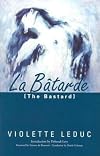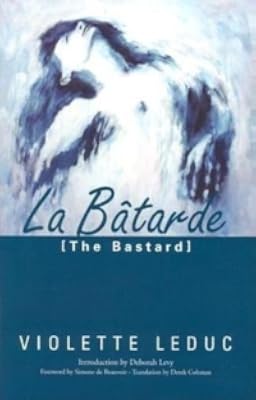
The Bastard
by Violette Leduc
On This Page
Description
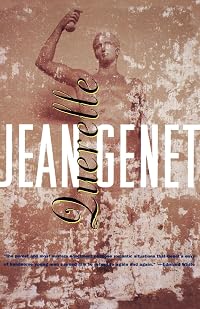
An obsessive and revealing self-portrait of a remarkable woman humiliated by the circumstances of her birth and by her physical appearance, La Bâtarde relates Violette Leduc's long search for her own identity through a series of agonizing and passionate love affairs with both men and women. When first published, La Bâtarde earned Violette Leduc comparisons to Jean Genet for the frank depiction of her sexual escapades and immoral behavior. A confession that contains portraits of several show more famous French authors, this book is more than just a scintillating memoir-like that of Henry Miller, Leduc's brilliant writing style and attention to language transform this autobiography into a work of art. show lessTags
Recommendations























Member Reviews
This is Leduc's most famous book, a memoir of her life up to the end of the Second World War, the point at which she's just about to meet Simone de Beauvoir and get her encouragement to publish her first novel, L'Asphyxie.
We get to see her early childhood, living in poverty in northern France with her mother (a domestic servant made pregnant by a member of the family she was working for) and grandmother; the sudden shift in her early teens to being middle-class and going to boarding-school, when her mother marries; the 20s and 30s when she's a young office-worker and then a journalist in Paris; and her surprising career as a black-marketeer smuggling Normandy butter and meat to Paris during the war.
As you would expect, Violette's show more love-life plays quite a part in the story: there's a reworking of the affair with her classmate "Isabelle" already used in the suppressed first chapter of Ravages (later published as the novella Thérèse et Isabelle); there's her more serious relationship with "Hermine", a young teacher at the school, who lives with her in Paris for some years after they both leave; there's the slightly ambivalent friendship with "Gabriel", which seems to have nothing obviously sexual about it until they impulsively decide to get married in 1939, and almost immediately regret it. And there's the even more complicated friendship with the gay writer Maurice Sachs, who seems to have been her main literary mentor before she met Simone de Beauvoir. And all kinds of random encounters with strangers, male and female, where she deliberately obfuscates things to leave us wondering whether she's telling us about this to show how much enjoyed flirting and felt validated by other people's sexual interest, or whether she was just having lots of casual sex.
There's certainly a great deal of insecurity and self-doubt on display in the book, lots of accounts of her messing up at work, or getting commissions to write articles and not having a clue where to start, but there's another, contradictory, sense of her as a competent, self-assured person, fond of dressing up in good clothes and getting her hair done by the best Paris coiffeurs, writing fashion articles that brought her a good stream of freebies from the couturiers she mentioned in her columns, running her rather dangerous butter-racket successfully for a couple of years without getting caught, and so on.
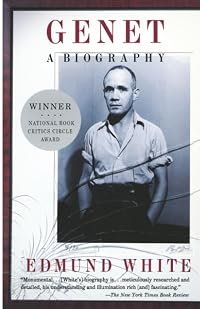
Before reading this, I had an idea in my head of Leduc as a kind of female version of Genet, but that's a bit misleading. She had a difficult start in life, but no more so than most of her contemporaries who lived through the First World War, and the improvement in her mother's fortunes seems to have given her the chance to fill most of the gaps that war and poverty left in her early education. As a (mostly-)lesbian in 1920s and 30s Paris, she hardly comes into the category of "sexual outlaw" — who wasn't, in those days? — and by working in publishing and journalism she had built up a pretty good network of literary contacts, even before meeting de Beauvoir and Sartre. The problems she had to overcome to become a writer were obviously more psychological than social — none the less real and difficult for that, of course.
Anyway, a fascinating book, much funnier than I was expecting, but emotionally trying sometimes as well, of course. And a very interesting experiment into techniques for writing honestly about yourself — maybe not always completely successful, but successful often enough to keep us interested in how she does it. show less
We get to see her early childhood, living in poverty in northern France with her mother (a domestic servant made pregnant by a member of the family she was working for) and grandmother; the sudden shift in her early teens to being middle-class and going to boarding-school, when her mother marries; the 20s and 30s when she's a young office-worker and then a journalist in Paris; and her surprising career as a black-marketeer smuggling Normandy butter and meat to Paris during the war.
As you would expect, Violette's show more love-life plays quite a part in the story: there's a reworking of the affair with her classmate "Isabelle" already used in the suppressed first chapter of Ravages (later published as the novella Thérèse et Isabelle); there's her more serious relationship with "Hermine", a young teacher at the school, who lives with her in Paris for some years after they both leave; there's the slightly ambivalent friendship with "Gabriel", which seems to have nothing obviously sexual about it until they impulsively decide to get married in 1939, and almost immediately regret it. And there's the even more complicated friendship with the gay writer Maurice Sachs, who seems to have been her main literary mentor before she met Simone de Beauvoir. And all kinds of random encounters with strangers, male and female, where she deliberately obfuscates things to leave us wondering whether she's telling us about this to show how much enjoyed flirting and felt validated by other people's sexual interest, or whether she was just having lots of casual sex.
There's certainly a great deal of insecurity and self-doubt on display in the book, lots of accounts of her messing up at work, or getting commissions to write articles and not having a clue where to start, but there's another, contradictory, sense of her as a competent, self-assured person, fond of dressing up in good clothes and getting her hair done by the best Paris coiffeurs, writing fashion articles that brought her a good stream of freebies from the couturiers she mentioned in her columns, running her rather dangerous butter-racket successfully for a couple of years without getting caught, and so on.
Before reading this, I had an idea in my head of Leduc as a kind of female version of Genet, but that's a bit misleading. She had a difficult start in life, but no more so than most of her contemporaries who lived through the First World War, and the improvement in her mother's fortunes seems to have given her the chance to fill most of the gaps that war and poverty left in her early education. As a (mostly-)lesbian in 1920s and 30s Paris, she hardly comes into the category of "sexual outlaw" — who wasn't, in those days? — and by working in publishing and journalism she had built up a pretty good network of literary contacts, even before meeting de Beauvoir and Sartre. The problems she had to overcome to become a writer were obviously more psychological than social — none the less real and difficult for that, of course.
Anyway, a fascinating book, much funnier than I was expecting, but emotionally trying sometimes as well, of course. And a very interesting experiment into techniques for writing honestly about yourself — maybe not always completely successful, but successful often enough to keep us interested in how she does it. show less
The first half of this book is one of the most beautiful and textured accounts of childhood I've ever read, the second half suffers because the personal traumas are so abstract, I don't know why she's crying, there's a "quest for elegance" that follows our narrator through different dept. stores looking for a blouse, a woman screams "I'd kill myself if I had a face like yours!" (I liked that part though.) Still: beautiful, funny, vivid, occasionally pretentious biography of a woman who spent the first forty years of her life just hanging out before becoming a writer. My kinda gal!
I enjoyed reading Leduc's story of her life through childhood, school years, early working life and the World War II to becoming a writer.
Je ne m'en souviens plus très bien ,mais je me souviens que le livre est tragique, rude, et qu'il pratiquait une franchise et un "Famille, je vous hais" peu courant à l'époque de sa parution.
Perfect
«Mi caso no es único: tengo miedo de morir y me desgarra estar en el mundo. No he trabajado, no he estudiado. He llorado, he gritado. Las lágrimas y los lamentos me han llevado mucho tiempo. La tortura del tiempo perdido en cuanto reflexiono en ello. No puedo pensar mucho tiempo, pero puedo complacerme ante una hoja de lechuga marchita ante la cual no tengo más que penas para rumiar. El pasado no alimenta. Me iré como he llegado: intacta y cargada con los defectos que me han torturado. Hubiera querido nacer estatua, y soy una babosa en mi propio estercolero. Las virtudes, las cualidades, el valor, la meditación, la cultura. De brazos cruzados, me he destrozado ante esas palabras». Un autorretrato obsesivo y revelador de una mujer show more notable humillada por las circunstancias de su nacimiento y por su apariencia física. La bastarda relata la larga búsqueda de Violette Leduc de su propia identidad a través de una serie de agonizantes y apasionados amores con hombres y mujeres. Cuando se publicó por primera vez, La bastarda logró que se comparara a Leduc con Jean Genet por la descripción franca de sus escapadas sexuales y su comportamiento inmoral. Una obra confesional que contiene retratos de varios autores y autoras franceses famosos, que hacen de este libro mucho más que una memoria centelleante. El brillante estilo de Leduc y su delicada atención al lenguaje transforman esta autobiografía en una verdadera obra de arte. La calidad de sus escritos fue reivindicada por otras destacadas figuras como Simone de Beauvoir, Albert Camus o Jean-Paul Sartre. show less
Jun 26, 2020Spanish
« Une femme descend au plus secret de soi, et elle raconte avec une sincérité intrépide, comme s'il n'y avait personne pour l'écouter. » Rien ne résume mieux le récit de Violette Leduc que cette phrase empruntée à la préface où Simone de Beauvoir présente l'auteur et son oeuvre. Car La Bâtarde est une autobiographie sans fard et sans remords, une « tranche de vie » de trente années taillée dans le siècle de telle sorte que les deux dernières guerres y sont englobées. Trente ans qui font de l'enfant illégitime un auteur capable de retenir l'attention de grands écrivains contemporains. L'éveil â la vie que raconte Violette Leduc, c'est aussi l'éveil d'une vocation littéraire - un apprentissage qui aboutit à show more pratiquer l'art d'écrire les sensations glanées au cours d'une marche toujours solitaire bien qu'il y ait eu une Isabelle, une Hermine, un Gabriel pour faire avec elle un bout de la route, et aussi un ange : Fidéline, pour mettre en toile de fond à cette histoire brûlante un peu de ciel bleu découpé dans leur tablier. show less
Jun 7, 2011French
Members
- Recently Added By
Author Information

23+ Works 1,341 Members
Violette Leduc had been publishing works of an autobiographical nature in France since 1945. But, aside from the enthusiastic support of Simone de Beauvoir, Jean-Paul Sartre and certain other intellectuals, she had gone unnoticed until the publication of La Batarde (1964) propelled her to fame---in part, no doubt, for "the candor in the totally show more uninhibited descriptions of [her] Lesbian loves. . . . This, the story of [her] first forty years, is a courageous confession and a work of art, . . . a weird mixture of burning, naive, lucid, and unadorned sincerity . . . and of poetic inner monologue" (Henri Peyre, SR). (Bowker Author Biography) show less
Some Editions
Awards and Honors
Series
Belongs to Publisher Series
Work Relationships
Has the (non-series) sequel
Common Knowledge
- Canonical title
- The Bastard
- Original title
- La bâtarde
- Original publication date
- 1964; 1965 (Germany) (Germany)
- People/Characters
- Violette Leduc
- Important events
- World War I; World War II
- Related movies
- Violette (2013 | IMDb)
- First words
- My case is not unique: I'm afraid of dying and distressed at being in this world. I haven't worked, I haven't studied. I have wept, I have cried out in protest.
- Original language
- French
Classifications
Statistics
- Members
- 570
- Popularity
- 51,934
- Reviews
- 8
- Rating
- (3.94)
- Languages
- 8 — Dutch, English, French, German, Italian, Portuguese, Spanish, Swedish
- Media
- Paper, Ebook
- ISBNs
- 26
- ASINs
- 26