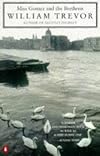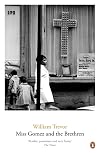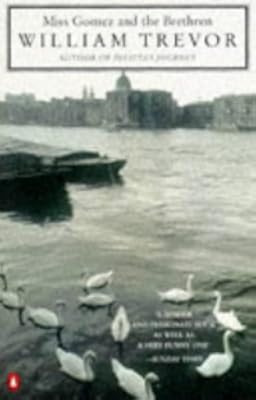
Miss Gomez and the Brethren
by William Trevor
On This Page
Description
Miss Gomez and the Brethrenby William Trevor - a classic early novel from one of the world's greatest writers 'Like Rembrandt, Trevor looks long but charitably upon his creations . . . his understanding of human nature is acute' Sunday Times Beryl Tuke, whiling time away in the Thistle Arms with gin and cheap romances, and Alban Roche at Bassett's Petstore are among the street's dream-ridden survivors. A new arrival, Miss Gomez, on the run from her tragic childhood in Jamaica, now lives for show more her postal correspondence with the Church of the Brethren of the Way back on the island. No one will believe Miss Gomez when she announces her revelation of a hideous sex crime soon to be committed in Crow Street. That is, until young Prudence Tuke disappears, the police arrive, and the newspapers herald a 'Sex Crime Prophecy'... 'The genius of William Trevor is that he can entice you into his fictional terrain in a handful of pages' Literary Review William Trevor was born in Mitchelstown, County Cork, in 1928, and was educated at Trinity College, Dublin. He has lived in England for many years. The author of numerous acclaimed collections of short stories and novels, he has won many awards including the Whitbread Book of the Year, The James Tait Black Memorial Prize and the Sunday Times Award for Literary Excellence. He has been shortlisted three times for the Booker Prize- in 1976 with his novel The Children of Dynmouth, in 1991 with Reading Turgenevand in 2002 with The Story of Lucy Gault. He received the prestigious David Cohen Literature Prize in recognition of a lifetime's literary achievement, and has been knighted for his services to literature. show lessTags
Recommendations





















Member Reviews
Not my favorite of Trevor's novel, but, as always, his writing is soft and subtle with deeply developed characters enduring pain in their ordinary, everyday lives. Miss Gomez is a Jamaican black women who ran away from an orphanage. As a child, she lacked emotion and had with no bonds with other children. She manages to emigrate to England where after a series of unskilled jobs becomes a stripper and then a prostitute, both activities taking her deeper in a gulf of depersonalized human contact. Miss Gomez spots an advertisement in a London paper for a church in Jamaica called "Brethren of the Way". The Brethren claim that happiness comes to those who pray for criminals and others who follow evil ways. The church asks its adherents to show more write to them of people who needs its prayer ministry and to send money to support the church's mission. She falls for this sect in a big way and zealously seeks to gain converts to it. She at last finds the way to emotional connections with others, but, importantly, she never actually meets the church "reverends"; her only ties are through their replies to her letters.
Miss Gomez makes her way to Crow Street, finding employment to clean a pet store operated by the widow Mrs. Bassett and an adjacent pub run by Mr. and Mrs. Tuke. Crow Street is an eerie devastation zone nearly entirely demolished to make way for new housing development. The only two premises remaining amidst the rubble are the pet store which Mrs. Bassett refuses to sell and the pub whose brewery leaseholder wants to stay open until the laborers on the project are finished.
In rooms above the pub reside Alban Roche who works in the pet store, Mr. Batt, a pensioner who is deaf and contemplating taking his own life, and Prudence, the Tuke's lonely hippy-like daughter. Alban has recently been released from gaol where he served a short sentence having been caught peeping on women who were undressing. He is fixated on the memory of his late devoted mother who he has come to realize he detested. He has taken a great interest in the pets and will inherit the store upon Mrs. Bassett's passing. Mr. Tuke is a milk-toast husband whose sole emotional attachment is to his Alsatian dog. He formerly was very close to his daughter, but they have become distant after he found out that Pru is from a liaison of Mrs. Tuke and other man. Mrs. Tuke is garrulous in her demeanor and garish in her dress. She is an alcoholic and is addicted to romance novels over which she floridly fantasizes. She is haughtily dismissive of an Irish labor from the project who is pursuing her, but without self-awareness that she is willingly doing so she sleeps with him.
Mrs. Bassett dies in her sleep and Alban inherits the pet store. His plan is to take the developer's offer of compensation and move the store to another location. Pru secretly loves Alban and finally makes him aware of it. Miss Gomez believes that they all are in need of, and will find solace, as she has, in her religion and she ceaselessly proselytizes them to join her church. She has a premonition that Alban will immanently commit a sex crime and she warns everyone of this. When Pru turns up missing everyone is convinced that she has been murdered and the police stage an investigation and search that receives national media attention. It turns out that Pru and Alban have located a premise for the store and she has spent hours out of sight working on readying it for the move. The hysteria spurred by Miss Gomez has turned the incident into a farce.
Pru and Alban start a new life together, but there are hints that it may not be permanent. Before the pub is relocated Mr. Tuke's beloved dog is killed by a pack of feral cats living in the ruins of Crow Street. He becomes more withdrawn and he begins to think that the Brethren might be what he needs in his life to offset his estrangement from his wife and daughter. Mr. Batt moves to new lodging and purchases aspirin that he contemplates using to end his life. His chance encounter with Miss Gomez turns around his thinking on this. She believes that she is an exemplar of fulfilling the Brethren's doctrines and writes to them of this. When after weeks she receives no reply she books a flight to Jamaica to meet the church's leaders in person. Her pilgrimage to the temple of her church ends up with discovery that the church was a scam that defrauded its distant faithful followers of their "tithes". There's a note of hope when she sees a notice for the "Assembly of God" offering services in Kingston.
Some of the scenes in the novel are quite comical, especially when Miss Gomez is firing the characters up about the crime she has foretold, but the comedy only serves to underscore the all-pervasive bathos about their lives. Miss Gomez and the others do not perceive the small tragedies of their circumstances are beyond their ability to control. She holds her religion to be the means of personal fulfillment; we are certain she will be betrayed by it. The Tuke's think that through the relocation of the pub their status will improve; we know there nothing about their inner lives that this will change. The metaphor of their ruined neighborhood parallels the desolation of their lives. The deep sadness Trevor conveys to the reader derives from the hopelessness that the characters can control the circumstances of their lives that bar their happiness, a sadness more profound because they are unaware of it. Think of the dog's fate for a moment. This powerful animal began to show fear about the feral cats and in the end he was killed by them. Are not these characters equally unable to master the forces beset them in their lives? Are any humans? show less
Miss Gomez makes her way to Crow Street, finding employment to clean a pet store operated by the widow Mrs. Bassett and an adjacent pub run by Mr. and Mrs. Tuke. Crow Street is an eerie devastation zone nearly entirely demolished to make way for new housing development. The only two premises remaining amidst the rubble are the pet store which Mrs. Bassett refuses to sell and the pub whose brewery leaseholder wants to stay open until the laborers on the project are finished.
In rooms above the pub reside Alban Roche who works in the pet store, Mr. Batt, a pensioner who is deaf and contemplating taking his own life, and Prudence, the Tuke's lonely hippy-like daughter. Alban has recently been released from gaol where he served a short sentence having been caught peeping on women who were undressing. He is fixated on the memory of his late devoted mother who he has come to realize he detested. He has taken a great interest in the pets and will inherit the store upon Mrs. Bassett's passing. Mr. Tuke is a milk-toast husband whose sole emotional attachment is to his Alsatian dog. He formerly was very close to his daughter, but they have become distant after he found out that Pru is from a liaison of Mrs. Tuke and other man. Mrs. Tuke is garrulous in her demeanor and garish in her dress. She is an alcoholic and is addicted to romance novels over which she floridly fantasizes. She is haughtily dismissive of an Irish labor from the project who is pursuing her, but without self-awareness that she is willingly doing so she sleeps with him.
Mrs. Bassett dies in her sleep and Alban inherits the pet store. His plan is to take the developer's offer of compensation and move the store to another location. Pru secretly loves Alban and finally makes him aware of it. Miss Gomez believes that they all are in need of, and will find solace, as she has, in her religion and she ceaselessly proselytizes them to join her church. She has a premonition that Alban will immanently commit a sex crime and she warns everyone of this. When Pru turns up missing everyone is convinced that she has been murdered and the police stage an investigation and search that receives national media attention. It turns out that Pru and Alban have located a premise for the store and she has spent hours out of sight working on readying it for the move. The hysteria spurred by Miss Gomez has turned the incident into a farce.
Pru and Alban start a new life together, but there are hints that it may not be permanent. Before the pub is relocated Mr. Tuke's beloved dog is killed by a pack of feral cats living in the ruins of Crow Street. He becomes more withdrawn and he begins to think that the Brethren might be what he needs in his life to offset his estrangement from his wife and daughter. Mr. Batt moves to new lodging and purchases aspirin that he contemplates using to end his life. His chance encounter with Miss Gomez turns around his thinking on this. She believes that she is an exemplar of fulfilling the Brethren's doctrines and writes to them of this. When after weeks she receives no reply she books a flight to Jamaica to meet the church's leaders in person. Her pilgrimage to the temple of her church ends up with discovery that the church was a scam that defrauded its distant faithful followers of their "tithes". There's a note of hope when she sees a notice for the "Assembly of God" offering services in Kingston.
Some of the scenes in the novel are quite comical, especially when Miss Gomez is firing the characters up about the crime she has foretold, but the comedy only serves to underscore the all-pervasive bathos about their lives. Miss Gomez and the others do not perceive the small tragedies of their circumstances are beyond their ability to control. She holds her religion to be the means of personal fulfillment; we are certain she will be betrayed by it. The Tuke's think that through the relocation of the pub their status will improve; we know there nothing about their inner lives that this will change. The metaphor of their ruined neighborhood parallels the desolation of their lives. The deep sadness Trevor conveys to the reader derives from the hopelessness that the characters can control the circumstances of their lives that bar their happiness, a sadness more profound because they are unaware of it. Think of the dog's fate for a moment. This powerful animal began to show fear about the feral cats and in the end he was killed by them. Are not these characters equally unable to master the forces beset them in their lives? Are any humans? show less
Willam Trevor details the triviality of everyday life. In fact, he bases entire books on it. In this story, Miss Gomez makes her way from an orphanage in Jamaica to London. After a series of jobs, including those of ill repute, she finds religion. Proselytizing in the street comes next, with little result, as these things often do.
She then finds herself in Crow Street, an area that is soon to be demolished in the interest of urban renewal. There Miss Gomez either causes, or plays a central part in a bit of havoc involving the proprietors, family, boarders and customers of The Thistle Arms, a pub and boarding house in its final days.
There’s desire there, among the people in this soon to be gone street. And humor – as there is in all show more of life, for those who can see it. Interspersed with the desire and humor is the seriousness of life, and how we each choose to live it. show less
She then finds herself in Crow Street, an area that is soon to be demolished in the interest of urban renewal. There Miss Gomez either causes, or plays a central part in a bit of havoc involving the proprietors, family, boarders and customers of The Thistle Arms, a pub and boarding house in its final days.
There’s desire there, among the people in this soon to be gone street. And humor – as there is in all show more of life, for those who can see it. Interspersed with the desire and humor is the seriousness of life, and how we each choose to live it. show less
Ratings
Members
- Recently Added By
Author Information

120+ Works 13,475 Members
William Trevor Cox was born in Mitchelstown, County Cork, Ireland on May 24, 1928. He received a degree in history from Trinity College in 1950. Before becoming a full-time author in 1965, he worked as a sculptor, a teacher, and a copywriter at an advertising agency. He exhibited his sculptures in Dublin and England and was joint winner of the show more International Year of the Political Prisoner art competition in 1952. His first novel, A Standard of Behaviour, was published in 1958. His other novels include Other People's Worlds, Nights at the Alexandra, The Silence in the Garden, The Story of Lucy Gault, My House in Umbria, and Love and Summer. He won the Hawthornden Prize in 1964 for The Old Boys, the Whitbread Award in 1976 for The Children of Dynmouth, the Whitbread Award in 1983 for Fools of Fortune, and the Whitbread Award in 1994 for Felicia's Journey. His short story collections include The Day We Got Drunk on Cake and Other Stories, The Ballroom of Romance and Other Stories, Beyond the Pale, A Bit on the Side, Cheating at Canasta, and The Mark-2 Wife. The Hill Bachelors received the 2001 Irish Times Irish Literature Prize for Fiction and the PEN/Macmillan Silver Pen Award for Short Stories. He received the Allied Irish Banks' Prize in 1976, The Sunday Times Award for Literary Excellence in 1992, the David Cohen British Literature Prize in 1999, and the Bob Hughes Lifetime Achievement Award in Irish Literature in 2008. In 1977, he was awarded an honorary CBE in recognition of his services to literature. He died on November 20, 2016 at the age of 88. (Bowker Author Biography) show less
Some Editions
Common Knowledge
- Original title
- Miss Gomez and the Brethren
- Original publication date
- 1971
Classifications
Statistics
- Members
- 102
- Popularity
- 316,684
- Reviews
- 2
- Rating
- (3.75)
- Languages
- English, German
- Media
- Paper, Ebook
- ISBNs
- 8
- ASINs
- 1