
On This Page
Description
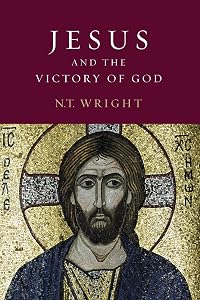
In this highly anticipated volume, N. T. Wright focuses directly on the historical Jesus: Who was he? What did he say? And, what did he mean by it? Wright begins by showing how the questions posed by Albert Schweitzer a century ago remain central today. Then he sketches a profile of Jesus in terms of his prophetic praxis, his subversive stories, the symbols by which he reordered his world, and the answers he gave to the key questions that any worldview must address. The examination of Jesus' show more aims and beliefs, argued on, the basis of Jesus' actions and their accompanying riddles, is sure to stimulate heated response. Wright offers a provocative portrait of Jesus as Israel's Messiah who would share and bear the fate of the nation and would embody the long-promised return of Israel's God to Zion. show lessTags
Recommendations



Member Recommendations
Member Reviews
I should say this up front: the idea that I’m going to be able to intelligently “review” Wright’s massive Jesus and the Victory of God in a 250-word blog post is ridiculous at best, and insane at worst. But I’m posting individual reviews for each book I finish this year, so here goes.
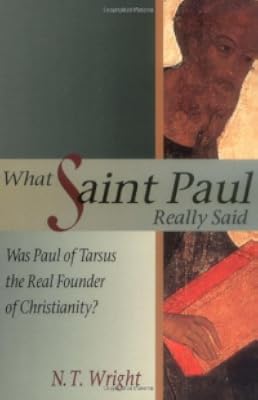
I first became familiar with N. T. Wright through some of his shorter books: What Saint Paul Really Said, Simply Christian, and, of course, Surprised by Hope. Somewhere along the way I found out that he has written a three-volume set specifically about Jesus, and so I requested one of the volumes for Christmas back a year ago. (Why I requested Volume Two of a three volume set is beyond me… but I did.)
Sure, there have been a million books written show more about Jesus. So why does Wright’s stand out? Wright takes the angle of exploring what I’ll call the “historical” Jesus. What was Jesus, the man, thinking? What were his goals? How did the things he said fit into the theological and political scene of first-century Palestine? Wright answers these questions brilliantly, with clarity and insight.
As just a small example, Wright at one point asks this question: Did Jesus know that he was the Son of God? Certainly we affirm that Jesus was fully man and fully God, but how did Jesus the man know that he was God? Wright gives by way of answer this analogy: Jesus knew he was the Son of God in the same way a musician knows they are a musician. They have the skills and abilities of a musician, and something deep within them says ‘I simply must make this music’. As such, a person knows they are a musician. Similarly, Jesus knew he had the skills and abilities of the Messiah, and had the internal calling. It may not be a perfect analogy, but it certainly provides opportunity to stop and think.
Jesus and the Victory of God deals with Jesus’ life and teaching, leading right up to his death. Wright then devotes the entire third volume in his series to the Resurrection. (I got that book for Christmas this year.) Jesus and the Victory of God isn’t a simple read - it’s more like a college-level scholarly text. But if you’re willing to make the effort to dig through it, it will reward you with insight into the life and purposes of Jesus. show less
I first became familiar with N. T. Wright through some of his shorter books: What Saint Paul Really Said, Simply Christian, and, of course, Surprised by Hope. Somewhere along the way I found out that he has written a three-volume set specifically about Jesus, and so I requested one of the volumes for Christmas back a year ago. (Why I requested Volume Two of a three volume set is beyond me… but I did.)
Sure, there have been a million books written show more about Jesus. So why does Wright’s stand out? Wright takes the angle of exploring what I’ll call the “historical” Jesus. What was Jesus, the man, thinking? What were his goals? How did the things he said fit into the theological and political scene of first-century Palestine? Wright answers these questions brilliantly, with clarity and insight.
As just a small example, Wright at one point asks this question: Did Jesus know that he was the Son of God? Certainly we affirm that Jesus was fully man and fully God, but how did Jesus the man know that he was God? Wright gives by way of answer this analogy: Jesus knew he was the Son of God in the same way a musician knows they are a musician. They have the skills and abilities of a musician, and something deep within them says ‘I simply must make this music’. As such, a person knows they are a musician. Similarly, Jesus knew he had the skills and abilities of the Messiah, and had the internal calling. It may not be a perfect analogy, but it certainly provides opportunity to stop and think.
Jesus and the Victory of God deals with Jesus’ life and teaching, leading right up to his death. Wright then devotes the entire third volume in his series to the Resurrection. (I got that book for Christmas this year.) Jesus and the Victory of God isn’t a simple read - it’s more like a college-level scholarly text. But if you’re willing to make the effort to dig through it, it will reward you with insight into the life and purposes of Jesus. show less
I am not a Bible scholar, a member of the clergy, or a theologian. I am simply a lay Christian who, called by my Franciscan vocation to study, chose to read this book to advance my understanding and knowledge of Jesus.
Having read several of N T Wright's 'popular' books, written under the name of Tom Wright, I had come to respect his teaching and its sound basis. Also, when I began to see this series of books on the recommended reading lists of Anglican and Catholic influencers that I trust, I was finally drawn to begin what for me was a mammoth commitment.
I have just finished the second part of that commitment, Jesus and the Victory of God. It has taken me just over two months, not solidly as it included a break for Christmas and the show more New Year and several other books. I have heard someone recommend taking a year to read it.
It was like climbing a mountain but without a map or a guide, coming across new vistas at every turn, heading towards the peak but at many times walking through dark woodland.
I'm not used to scholarly works, so that in itself was a new experience for me, witnessing Wright's desire to validate his theories by rigorous written debate and criticism of others' work. At times this felt like a drag and the pages turned less slowly as I tried to understand his points.
At another level, I think I was afraid of reading a historical review of Jesus's life and ministry. I thought that it would demythologise Jesus and in so doing harm my faith. But quite the opposite came to pass. Gaining a deeper understanding of Jesus' life, aims, and beliefs has only deepened my faith and my love of him.
I'm not going to write a summary of every chapter. That is for you to discover for yourself. But here's a brief outline of the book -
Part One - Introduction
A review of Jesus scholarship over the past three hundred years, particularly focussed on the three 'quests' to describe the historical Jesus.
Part Two - Profile of a Prophet
Coming to know Jesus through His worldview as evidenced by his practices, stories, and symbols
Answering the questions of the Kingdom
Part Three - The Aims and Beliefs of Jesus
The meaning of Messiahship, the reasons for Jesus' crucifixion, the return of the King,
Part Four - (Very short) Conclusion.
I feel that I need to read this book again now that I know the territory. I think I would be able to spend far longer taking in the views a second time round rather than racing to the top. But then, I have 'The Resurrection of the Son of God' to read! show less
Having read several of N T Wright's 'popular' books, written under the name of Tom Wright, I had come to respect his teaching and its sound basis. Also, when I began to see this series of books on the recommended reading lists of Anglican and Catholic influencers that I trust, I was finally drawn to begin what for me was a mammoth commitment.
I have just finished the second part of that commitment, Jesus and the Victory of God. It has taken me just over two months, not solidly as it included a break for Christmas and the show more New Year and several other books. I have heard someone recommend taking a year to read it.
It was like climbing a mountain but without a map or a guide, coming across new vistas at every turn, heading towards the peak but at many times walking through dark woodland.
I'm not used to scholarly works, so that in itself was a new experience for me, witnessing Wright's desire to validate his theories by rigorous written debate and criticism of others' work. At times this felt like a drag and the pages turned less slowly as I tried to understand his points.
At another level, I think I was afraid of reading a historical review of Jesus's life and ministry. I thought that it would demythologise Jesus and in so doing harm my faith. But quite the opposite came to pass. Gaining a deeper understanding of Jesus' life, aims, and beliefs has only deepened my faith and my love of him.
I'm not going to write a summary of every chapter. That is for you to discover for yourself. But here's a brief outline of the book -
Part One - Introduction
A review of Jesus scholarship over the past three hundred years, particularly focussed on the three 'quests' to describe the historical Jesus.
Part Two - Profile of a Prophet
Coming to know Jesus through His worldview as evidenced by his practices, stories, and symbols
Answering the questions of the Kingdom
Part Three - The Aims and Beliefs of Jesus
The meaning of Messiahship, the reasons for Jesus' crucifixion, the return of the King,
Part Four - (Very short) Conclusion.
I feel that I need to read this book again now that I know the territory. I think I would be able to spend far longer taking in the views a second time round rather than racing to the top. But then, I have 'The Resurrection of the Son of God' to read! show less
Overall the most realistic portrayal of Jesus of Nazareth as the Christ displayed in the Gospels yet recognizable as a Second Temple Galilean Jewish male.
Wright begins by laying out the territory, the history of interpretation of Jesus as it has played out over the past two hundred or so years, locates his own work in that history (as part of the third quest), and begins his critique of the major positions.
He then explores Jesus' ministry and death in detail and sees how it can be made comprehensible in a Second Temple Jewish context (similarity) yet at the same time represent something new (dissimilarity). He explores themes of the parables, the ethical instruction, the Kingdom, the sign-acts, and whether and how Jesus expected to show more die. He helpfully refocuses the apocalyptic of the Gospels away from end of the world expectations and locates it in terms of YHWH bringing forth judgment on His people, and sees His own vocation as the means by which YHWH would bring His reign to earth. One might quibble with a narrow contextual focus, presuming that there would be no further message to generations beyond, and disagree in terms of various details or points of identification, but the overall trend and thrust is hard to dismiss.
Thorough, always engaging with fellow scholars over the generations, witty, sharp-tongued at times, but absolutely worth the exploration. Highly recommended. show less
Wright begins by laying out the territory, the history of interpretation of Jesus as it has played out over the past two hundred or so years, locates his own work in that history (as part of the third quest), and begins his critique of the major positions.
He then explores Jesus' ministry and death in detail and sees how it can be made comprehensible in a Second Temple Jewish context (similarity) yet at the same time represent something new (dissimilarity). He explores themes of the parables, the ethical instruction, the Kingdom, the sign-acts, and whether and how Jesus expected to show more die. He helpfully refocuses the apocalyptic of the Gospels away from end of the world expectations and locates it in terms of YHWH bringing forth judgment on His people, and sees His own vocation as the means by which YHWH would bring His reign to earth. One might quibble with a narrow contextual focus, presuming that there would be no further message to generations beyond, and disagree in terms of various details or points of identification, but the overall trend and thrust is hard to dismiss.
Thorough, always engaging with fellow scholars over the generations, witty, sharp-tongued at times, but absolutely worth the exploration. Highly recommended. show less
Even more exhausting than the first volume, and equally hamstrung by Wright's insistence on reading both the Israelite religion and Jesus's life in Greimasian terms, so everything has to be categorized and explained independently of everything else. The downside to this is pretty clear, and ironic: here is an analysis that's based on the stories people tell about themselves and their people... which doesn't tell much of a story itself.
That's not really much of a problem, since you won't go pick up a book like this if you don't already know the rough outlines of Jesus's life as presented in the gospels. But it does make the reading experience more painful than it needs to be; this book is basically a very long collection of analyses, show more whether of biblical texts, non-biblical texts, abstract questions, or other people's understanding of Jesus.
Nonetheless, Wright's understanding is very attractive. He gives you historical responsibility and respectability (Jesus was a first century Jew, who did first century Jewish things, but was also, as we barbarically say today, an innovator); he lets you keep Jesus-as-Christ (Jesus, on Wright's reading, understood himself to be the messiah, and took that to mean that he was the 'son of god,' without necessarily being entirely clear about what that might mean), and he lets you keep a great deal of orthodoxy (leading into the next volume, Wright argues that the resurrection is what explain the early church's fealty to a messiah who had so disastrously failed to bring about what he said he was bringing about--so, at a bare minimum, the preception-of-resurrection was a founding phenomenon of Christianity). In a very strange way, his reading of the gospels says: the gospels are more or less accurate, what they say can be understood perfectly well, they don't say anything ridiculous. It's just that he needs 400 pages of fine grained argument to even get you to the point that you can understand such an argument and be responsible at the same time, which is itself a pretty damning indictment not only of previous life-of-Jesus types, but also of the theologies of the various Christian denominations. All of them, it seems, have ignored history and critical analysis, to the detriment of their own scholarly work and/or faith.
The take-away is: Jesus understood himself to be replacing the Temple as site of the return of Israel's God. Instead of a Temple, you get Jesus. Instead of a victorious king, you get Jesus. Instead of political and military victory, you get a martyr. This reading makes sense of a good deal, though at least one major question goes unanswered: what on earth does it mean to say that Jesus foresaw the 'victory of God'? What does that victory look like, in practice?
Dare I read volume three? Perhaps not. But the volume on Paul, definitely. show less
That's not really much of a problem, since you won't go pick up a book like this if you don't already know the rough outlines of Jesus's life as presented in the gospels. But it does make the reading experience more painful than it needs to be; this book is basically a very long collection of analyses, show more whether of biblical texts, non-biblical texts, abstract questions, or other people's understanding of Jesus.
Nonetheless, Wright's understanding is very attractive. He gives you historical responsibility and respectability (Jesus was a first century Jew, who did first century Jewish things, but was also, as we barbarically say today, an innovator); he lets you keep Jesus-as-Christ (Jesus, on Wright's reading, understood himself to be the messiah, and took that to mean that he was the 'son of god,' without necessarily being entirely clear about what that might mean), and he lets you keep a great deal of orthodoxy (leading into the next volume, Wright argues that the resurrection is what explain the early church's fealty to a messiah who had so disastrously failed to bring about what he said he was bringing about--so, at a bare minimum, the preception-of-resurrection was a founding phenomenon of Christianity). In a very strange way, his reading of the gospels says: the gospels are more or less accurate, what they say can be understood perfectly well, they don't say anything ridiculous. It's just that he needs 400 pages of fine grained argument to even get you to the point that you can understand such an argument and be responsible at the same time, which is itself a pretty damning indictment not only of previous life-of-Jesus types, but also of the theologies of the various Christian denominations. All of them, it seems, have ignored history and critical analysis, to the detriment of their own scholarly work and/or faith.
The take-away is: Jesus understood himself to be replacing the Temple as site of the return of Israel's God. Instead of a Temple, you get Jesus. Instead of a victorious king, you get Jesus. Instead of political and military victory, you get a martyr. This reading makes sense of a good deal, though at least one major question goes unanswered: what on earth does it mean to say that Jesus foresaw the 'victory of God'? What does that victory look like, in practice?
Dare I read volume three? Perhaps not. But the volume on Paul, definitely. show less
One of the greatest books on Jesus I have ever read... A Critical Realist (and New Perspectivist) approach to the Quest for the Historical Jesus. A historical analysis of first century Judaism(s) and how Jesus fit inside of and subverted it(them). Wright takes on 100 years of Jesus scholarship, outlines the flaws and successes, and stands upon the shoulders of giants to bring us to new heights in understanding the life (but also the death) of Jesus. Although a technical and scholastic book that may overwhelm the uninitiated, Wright invests his writing with creativity, wit, and an erudite mastery of the texts and their relationship that leaves you begging for more.
Wright cuts through a lot of the nonsense in current Jesus studies, with a hardnoses approach that takes the text seriously, but which engages well with modern scholarship.
My only complaint is that he raises an excellent question (We know why Jesus died--Why did Jesus live?) but I think he punts when it comes to an answer. But given the depth of material he offers, this is a small criticism.
My only complaint is that he raises an excellent question (We know why Jesus died--Why did Jesus live?) but I think he punts when it comes to an answer. But given the depth of material he offers, this is a small criticism.
Outstanding book - first he deals with the history of 'the quest for the historical Jesus' and then he examines the key texts in the NT as interpreted along the lines he proposes. Essentially, he follows along the lines of E P Sanders in putting the emphasis on the kingdom as a hope of a renewed Israel - realised eschatology but without the other-worldly emphasis of Sweitzer. He interprets some familiar texts as apocalyptic in style and suggests that the message was radical and subversive. Much food for thought here.
Members
- Recently Added By
Published Reviews
ThingScore 75
Finally, I commend Wright for his attempt to provide an overarching, comprehensive interpretation of the life of Jesus. Such an undertaking inspires a kind of awe. Most scholars do not have sufficient mastery of the materials to attempt such an undertaking. Others do not have the skills to do so. Wright bravely, some would say "naively," attempts to do so. His attempt to fit all the Biblical show more and extra-Biblical material into his overarching scheme, however, raises questions at various points. To this I shall now turn. show less
added by aevaughn
Lists

Books That Changed Me
157 works; 47 members
Talk Discussions
Past Discussions
N T Wright's Christian Origin Series in 2014 Category Challenge (December 2014)
Author Information

295+ Works 56,073 Members
N. T. Wright serves as Senior Research Fellow at Wycliffe Hall, Oxford University, as well professor emeritus of New Testament and Early Christianity at the School of Divinity at the University of St. Andrews. He is the award-winning author of many books, including Broken Signposts, Paul: A Biography, Surprised by Hope, and many more.
Awards and Honors
Awards
Series

Work Relationships
Common Knowledge
- Canonical title
- Jesus and the Victory of God
- Original publication date
- 1993
- People/Characters
- Jesus Christ
- Dedication
- for M.E.A.W.
Classifications
Statistics
- Members
- 1,875
- Popularity
- 11,436
- Reviews
- 11
- Rating
- (4.58)
- Languages
- English, German
- Media
- Paper, Ebook
- ISBNs
- 9
- ASINs
- 8