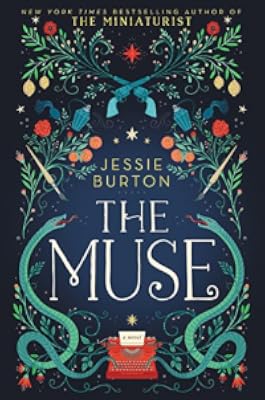
The Muse
by Jessie Burton
On This Page
Description
From the #1 internationally bestselling author of The Miniaturist comes a captivating and brilliantly realized story of two young women-a Caribbean immigrant in 1960s London, and a bohemian woman in 1930s Spain-and the powerful mystery that ties them together. England, 1967. Odelle Bastien is a Caribbean émigré trying to make her way in London. When she starts working at the prestigious Skelton Institute of Art, she discovers a painting rumored to be the work of Isaac Robles, a young show more artist of immense talent and vision whose mysterious death has confounded the art world for decades. The excitement over the painting is matched by the intrigue around the conflicting stories of its discovery. Drawn into a complex web of secrets and deceptions, Odelle does not know what to believe or who she can trust, including her mesmerizing colleague, Marjorie Quick. Spain, 1936. Olive Schloss, the daughter of a Viennese Jewish art dealer and an English heiress, follows her parents to Arazuelo, a poor, restless village on the southern coast. She grows close to Teresa, a young housekeeper, and Teresa's half-brother, Isaac Robles, an idealistic and ambitious painter newly returned from the Barcelona salons. A dilettante buoyed by the revolutionary fervor that will soon erupt into civil war, Isaac dreams of being a painter as famous as his countryman Picasso. Raised in poverty, these illegitimate children of the local landowner revel in exploiting the wealthy Anglo-Austrians. Insinuating themselves into the Schloss family's lives, Teresa and Isaac help Olive conceal her artistic talents with devastating consequences that will echo into the decades to come. Rendered in exquisite detail, The Muse is a passionate and enthralling tale of desire, ambition, and the ways in which the tides of history inevitably shape and define our lives. show lessTags
Recommendations








Member Reviews
No sophomore slump here. I liked The Muse better than The Miniaturist overall. Instead of a single timeframe as in her first book, here we get two; 1967 (with Odelle’s life and situation in London) and 1938 (with the Schloss family’s entanglement with the Robles siblings in Spain). The 1967 section deals with the rediscovery of a ‘lost’ Issac Robles painting and the 1938 section with its creation. The mystery Odelle needs to solve isn’t one for the reader, but Burton still has a few surprises up her sleeve. None are earth shattering and they make sense. It’s a quietly moving book about the suppression of female talent, the value of art, the anguish of creation and the price of friendship and keeping secrets.
The value of art show more and creation is a quiet undercurrent in the book and Odelle embodies it quite well. She’s a writer who doesn’t write anymore because she doesn’t know why she’s doing it. She isn’t published and she isn’t producing school work anymore, so she’s stuck; feeling the urge, but having no outlet. “I appreciated the irony that just like at school at university, I was delivering a story for someone else to approve, but I had been too long inculcated with the act of writing for an audience. This time, however, I wasn't going to hinge everything on my audience’s response. If Quick didn't like it, maybe that was a good thing. It was now out of my control.”
It reminds me of a conversation I had recently with an old friend who is a painter. She’s sold a few paintings here and there and would like to do more, but she doesn’t like the idea of sitting at arts and crafts shows, behind a table with her work on display, a hopeful look on her face silently pleading to viewers to buy her art. I feel the same way about my photography. To do it for others’ approval alone would debase it in my view. I do it for me. I enjoy it. I don’t need other people’s approval and that’s not why I keep doing it. Oh sure, I have a couple of websites where I share my work, but I’m no glory hog. I’m not on every website fishing for compliments. The drive to keep looking, to keep seeing, to keep producing is for me. I love looking at my own work and the things I’ve discovered and captured. It’s a personal joy that keeps giving because it’s the work, the process that I love, not the end result or the adulation.
Anyway, the relationship between Quick and Odelle is an interesting one. They both put themselves out there and take risks with one another, knowing that they will reap rewards that might be a ways off and that neither might see the other enjoy. The mirroring friendship between Olive and Theresa is fraught with different risks, but is also subtly drawn. Both end in death, but hope lives on. show less
The value of art show more and creation is a quiet undercurrent in the book and Odelle embodies it quite well. She’s a writer who doesn’t write anymore because she doesn’t know why she’s doing it. She isn’t published and she isn’t producing school work anymore, so she’s stuck; feeling the urge, but having no outlet. “I appreciated the irony that just like at school at university, I was delivering a story for someone else to approve, but I had been too long inculcated with the act of writing for an audience. This time, however, I wasn't going to hinge everything on my audience’s response. If Quick didn't like it, maybe that was a good thing. It was now out of my control.”
It reminds me of a conversation I had recently with an old friend who is a painter. She’s sold a few paintings here and there and would like to do more, but she doesn’t like the idea of sitting at arts and crafts shows, behind a table with her work on display, a hopeful look on her face silently pleading to viewers to buy her art. I feel the same way about my photography. To do it for others’ approval alone would debase it in my view. I do it for me. I enjoy it. I don’t need other people’s approval and that’s not why I keep doing it. Oh sure, I have a couple of websites where I share my work, but I’m no glory hog. I’m not on every website fishing for compliments. The drive to keep looking, to keep seeing, to keep producing is for me. I love looking at my own work and the things I’ve discovered and captured. It’s a personal joy that keeps giving because it’s the work, the process that I love, not the end result or the adulation.
Anyway, the relationship between Quick and Odelle is an interesting one. They both put themselves out there and take risks with one another, knowing that they will reap rewards that might be a ways off and that neither might see the other enjoy. The mirroring friendship between Olive and Theresa is fraught with different risks, but is also subtly drawn. Both end in death, but hope lives on. show less
Here's a delicious combination -- historical fiction set during the Spanish Civil War of the 1930s interwoven with a surprisingly well-crafted mystery. I simply inhaled THE MUSE. Awarded four stars on Goodreads, but 4.5 is probably more accurate.
As a fan of her previous novel, The Miniaturist, I looked forward to picking up Jessie Burton's THE MUSE. And I wasn't disappointed. This historical novel takes place in two time periods -- the late 1930s and the late 1960s. What ties the two together is a painting.
1936: A family of wealthy Austrian ex-pats (Harold, Sarah, and daughter Olive Schloss), living in Spain, meet a brother and sister (Isaac and Teresa Robles) who are sympathetic to the left-leaning forces struggling to change the show more country's right-wing government. Isaac is an amateur artist and Teresa a teenager. In need of money to live, the two are hired by the Schloss family to cook, clean, and do odd jobs. Only their involvement with the Schlosses expands quickly.
1967: Trinidad born Odelle Bastien, a fledgling writer/poet, is thrilled when she lands an entry level job at an art gallery in London. Even better, one of her bosses, Marjorie Quick, seems to take a shine to Odelle. But it turns out there may be an ulterior motive in Quick's interest. Odell also meets an attractive young man who has inherited a painting from his recently deceased mother. And what could be more natural than asking the experts at Odelle's gallery for help in assessing its value?
I won't divulge more about the plot, except you should expect romance, infidelity, betrayals, family secrets, and unexpected violence to touch all these lives. And while you try throughout to figure out how the story will be resolved, you'll be proved wrong again and again, until you arrive at the surprising end. VERY highly recommended. show less
As a fan of her previous novel, The Miniaturist, I looked forward to picking up Jessie Burton's THE MUSE. And I wasn't disappointed. This historical novel takes place in two time periods -- the late 1930s and the late 1960s. What ties the two together is a painting.
1936: A family of wealthy Austrian ex-pats (Harold, Sarah, and daughter Olive Schloss), living in Spain, meet a brother and sister (Isaac and Teresa Robles) who are sympathetic to the left-leaning forces struggling to change the show more country's right-wing government. Isaac is an amateur artist and Teresa a teenager. In need of money to live, the two are hired by the Schloss family to cook, clean, and do odd jobs. Only their involvement with the Schlosses expands quickly.
1967: Trinidad born Odelle Bastien, a fledgling writer/poet, is thrilled when she lands an entry level job at an art gallery in London. Even better, one of her bosses, Marjorie Quick, seems to take a shine to Odelle. But it turns out there may be an ulterior motive in Quick's interest. Odell also meets an attractive young man who has inherited a painting from his recently deceased mother. And what could be more natural than asking the experts at Odelle's gallery for help in assessing its value?
I won't divulge more about the plot, except you should expect romance, infidelity, betrayals, family secrets, and unexpected violence to touch all these lives. And while you try throughout to figure out how the story will be resolved, you'll be proved wrong again and again, until you arrive at the surprising end. VERY highly recommended. show less
A special thank you to Edelweiss and The Reading Society for an ARC in exchange for an honest review.
Although I'm new to Burton's writing, I was aware of her successful debut The Miniaturist and was anxious to read her sophomore effort. This book is incredibly well written and I thoroughly enjoyed Odelle's story. She is a young, bright Trinidadian immigrant who accepts a job at a London art gallery that houses a cast of eccentric and mesmerizing characters. The focus of the story is a painting by Isaac Robles, which brings the reader to 1937 in Spain, a few months before the artists mysterious death.
The novel takes place over a 40-year span with parallel stories that eventually intersect; Odelle is a immigrant to London, Olive is a show more foreigner in Spain. Both women create art, Odelle through the written word, and Olive paints–both woman protect their work from others and end up having their work exposed without their prior knowledge or consent.
My one criticism of the book, I found the parts of the story set in Spain were too long, and the storyline wasn't as intriguing than the one in London. I found Olive was not as enchanting as Odelle, although equally gifted, I found her self-centred and she relied on Isaac too much.
Burton is a great writer, I can't wait to check out The Miniaturist. show less
Although I'm new to Burton's writing, I was aware of her successful debut The Miniaturist and was anxious to read her sophomore effort. This book is incredibly well written and I thoroughly enjoyed Odelle's story. She is a young, bright Trinidadian immigrant who accepts a job at a London art gallery that houses a cast of eccentric and mesmerizing characters. The focus of the story is a painting by Isaac Robles, which brings the reader to 1937 in Spain, a few months before the artists mysterious death.
The novel takes place over a 40-year span with parallel stories that eventually intersect; Odelle is a immigrant to London, Olive is a show more foreigner in Spain. Both women create art, Odelle through the written word, and Olive paints–both woman protect their work from others and end up having their work exposed without their prior knowledge or consent.
My one criticism of the book, I found the parts of the story set in Spain were too long, and the storyline wasn't as intriguing than the one in London. I found Olive was not as enchanting as Odelle, although equally gifted, I found her self-centred and she relied on Isaac too much.
Burton is a great writer, I can't wait to check out The Miniaturist. show less
Here's a delicious combination -- historical fiction set during the Spanish Civil War of the 1930s interwoven with a surprisingly well-crafted mystery. I simply inhaled THE MUSE. Awarded four stars on Goodreads, but 4.5 is probably more accurate.
As a fan of her previous novel, The Miniaturist, I looked forward to picking up Jessie Burton's THE MUSE. And I wasn't disappointed. This historical novel takes place in two time periods -- the late 1930s and the late 1960s. What ties the two together is a painting.
1936: A family of wealthy Austrian ex-pats (Harold, Sarah, and daughter Olive Schloss), living in Spain, meet a brother and sister (Isaac and Teresa Robles) who are sympathetic to the left-leaning forces struggling to change the show more country's right-wing government. Isaac is an amateur artist and Teresa a teenager. In need of money to live, the two are hired by the Schloss family to cook, clean, and do odd jobs. Only their involvement with the Schlosses expands quickly.
1967: Trinidad born Odelle Bastien, a fledgling writer/poet, is thrilled when she lands an entry level job at an art gallery in London. Even better, one of her bosses, Marjorie Quick, seems to take a shine to Odelle. But it turns out there may be an ulterior motive in Quick's interest. Odell also meets an attractive young man who has inherited a painting from his recently deceased mother. And what could be more natural than asking the experts at Odelle's gallery for help in assessing its value?
I won't divulge more about the plot, except you should expect romance, infidelity, betrayals, family secrets, and unexpected violence to touch all these lives. And while you try throughout to figure out how the story will be resolved, you'll be proved wrong again and again, until you arrive at the surprising end. VERY highly recommended. show less
As a fan of her previous novel, The Miniaturist, I looked forward to picking up Jessie Burton's THE MUSE. And I wasn't disappointed. This historical novel takes place in two time periods -- the late 1930s and the late 1960s. What ties the two together is a painting.
1936: A family of wealthy Austrian ex-pats (Harold, Sarah, and daughter Olive Schloss), living in Spain, meet a brother and sister (Isaac and Teresa Robles) who are sympathetic to the left-leaning forces struggling to change the show more country's right-wing government. Isaac is an amateur artist and Teresa a teenager. In need of money to live, the two are hired by the Schloss family to cook, clean, and do odd jobs. Only their involvement with the Schlosses expands quickly.
1967: Trinidad born Odelle Bastien, a fledgling writer/poet, is thrilled when she lands an entry level job at an art gallery in London. Even better, one of her bosses, Marjorie Quick, seems to take a shine to Odelle. But it turns out there may be an ulterior motive in Quick's interest. Odell also meets an attractive young man who has inherited a painting from his recently deceased mother. And what could be more natural than asking the experts at Odelle's gallery for help in assessing its value?
I won't divulge more about the plot, except you should expect romance, infidelity, betrayals, family secrets, and unexpected violence to touch all these lives. And while you try throughout to figure out how the story will be resolved, you'll be proved wrong again and again, until you arrive at the surprising end. VERY highly recommended. show less
‘’...and that’s all that matters, isn’t it? What people believe. It doesn’t matter what’s the truth; what people believe becomes the truth.’’
I finally found the time to read Jessie Burton’s sophomore novel and I am very glad to conclude a wonderful reading month with a beautiful work of Fiction. The Miniaturist is among my 10 all-time favourite novels and while The Muse wasn’t as magical and haunting, it was no less exciting and complex.
The novel opens with Odelle, a young woman from Trinidad, who tries to find a better life and a chance to follow her love for poetry in London during the swinging ‘60s. The narration is often transferred to Spain, in the area of Arazuelo during the late ‘30s, and the birthplace of show more an enigmatic painting that finds itself in the gallery where Odelle works. Through Olive’s eyes we witness the political and social upheaval in the Iberian Peninsula and a woman’s fight to find a voice and a place of her own in the world of Art.
So, the dual timeline trope is present in The Muse and is masterfully executed. The sense of time and place is tangible and precise. The depiction of London and the beautifully frenetic era of the ‘60s is so vivid you can actually ‘’see’’ the colours of the clothes and the pop-art and listen to the songs that marked one of the most fascinating eras in History. Through Odelle’s memories of Trinidad, the writing acquires a fresh, sultry and sad Caribbean aura that is quite unique and perfectly balanced with the London atmosphere. What is interesting is the way Burton manages to create a darker feeling each time the narration moves under the shadow of the Andalusian sun. Despite the sunny hills, the aroma of the fruit and the luxurious background of Olive’s terribly dysfunctional family, the threat of the civil war is present everywhere. Hypocrisy is mixed with suspicion and the chances for a woman to be acknowledged for her skills and intelligence and not for her father’s walet are slim. Even people who claim to be fighting for equality (...and act in a completely opposite manner…) look upon women as feeble creatures who only act on a whim, devoid of feelings and thoughts.
‘’Women can’t do it, you see. They haven’t got the vision, although last time I checked they had eyes and hands, and hearts and souls. I’d have lost before I’d even had a chance.’’
The lives of Odelle and Olive are interlocked and it is clear that not many things have changed through the years. Olive isn’t allowed to pursue her dream and Odelle is considered an Other, an exotic bird that only half-belongs (if at all…) in her new surroundings. Lies and obsession are two major themes in the novel because truth is dangerous. It can destroy a life’s work along with Love. The men of the story aren’t exactly exemplary creations of their sex, they’re unable to love, hiding behind the curtain of a utopian society (utopian for them and an anarchy for everyone else...) and the utter motive of personal gain. If women are naive enough, they fall into the trap and the consequences are terrible.
This brings me to my only complaint regarding The Muse. Although I try not to compare books written by the same author, it is my impression that The Muse lacked the unique characters of The Miniaturist. Odelle and Olive are quite interesting and their voice is clearly heard but they’re not heroines we haven’t seen before. I found I anticipated Odelle’s chapters more than Olive’s because the latter’s love affair with Isaac was irritating and too melodramatic for my liking. Isaac is an utterly loathsome creature, in my opinion. A brute with brutal ideas, a coward who tries to act like a revolutionary but is neck-deep in lies, deceit and views that serve savagery and anarchy. His sister is a much better character, quite enigmatic but not enough to attract my interest in the Arazuelo storyline. So, while London’s narrative was quite exciting, the action set in Spain was far less satisfying for me.
Although The Muse isn’t as atmospheric, mystical and haunting as The Miniaturist, it is an excellent work of Historical Fiction. With a number of twists and rich in beautiful imagery and evocative prose, it is one more reason -for me, at least- to anticipate that Jessie Burton will go on giving us wonderful novels for many years to come.
My reviews can also be found on https://theopinionatedreaderblog.wordpress.com show less
I finally found the time to read Jessie Burton’s sophomore novel and I am very glad to conclude a wonderful reading month with a beautiful work of Fiction. The Miniaturist is among my 10 all-time favourite novels and while The Muse wasn’t as magical and haunting, it was no less exciting and complex.
The novel opens with Odelle, a young woman from Trinidad, who tries to find a better life and a chance to follow her love for poetry in London during the swinging ‘60s. The narration is often transferred to Spain, in the area of Arazuelo during the late ‘30s, and the birthplace of show more an enigmatic painting that finds itself in the gallery where Odelle works. Through Olive’s eyes we witness the political and social upheaval in the Iberian Peninsula and a woman’s fight to find a voice and a place of her own in the world of Art.
So, the dual timeline trope is present in The Muse and is masterfully executed. The sense of time and place is tangible and precise. The depiction of London and the beautifully frenetic era of the ‘60s is so vivid you can actually ‘’see’’ the colours of the clothes and the pop-art and listen to the songs that marked one of the most fascinating eras in History. Through Odelle’s memories of Trinidad, the writing acquires a fresh, sultry and sad Caribbean aura that is quite unique and perfectly balanced with the London atmosphere. What is interesting is the way Burton manages to create a darker feeling each time the narration moves under the shadow of the Andalusian sun. Despite the sunny hills, the aroma of the fruit and the luxurious background of Olive’s terribly dysfunctional family, the threat of the civil war is present everywhere. Hypocrisy is mixed with suspicion and the chances for a woman to be acknowledged for her skills and intelligence and not for her father’s walet are slim. Even people who claim to be fighting for equality (...and act in a completely opposite manner…) look upon women as feeble creatures who only act on a whim, devoid of feelings and thoughts.
‘’Women can’t do it, you see. They haven’t got the vision, although last time I checked they had eyes and hands, and hearts and souls. I’d have lost before I’d even had a chance.’’
The lives of Odelle and Olive are interlocked and it is clear that not many things have changed through the years. Olive isn’t allowed to pursue her dream and Odelle is considered an Other, an exotic bird that only half-belongs (if at all…) in her new surroundings. Lies and obsession are two major themes in the novel because truth is dangerous. It can destroy a life’s work along with Love. The men of the story aren’t exactly exemplary creations of their sex, they’re unable to love, hiding behind the curtain of a utopian society (utopian for them and an anarchy for everyone else...) and the utter motive of personal gain. If women are naive enough, they fall into the trap and the consequences are terrible.
This brings me to my only complaint regarding The Muse. Although I try not to compare books written by the same author, it is my impression that The Muse lacked the unique characters of The Miniaturist. Odelle and Olive are quite interesting and their voice is clearly heard but they’re not heroines we haven’t seen before. I found I anticipated Odelle’s chapters more than Olive’s because the latter’s love affair with Isaac was irritating and too melodramatic for my liking. Isaac is an utterly loathsome creature, in my opinion. A brute with brutal ideas, a coward who tries to act like a revolutionary but is neck-deep in lies, deceit and views that serve savagery and anarchy. His sister is a much better character, quite enigmatic but not enough to attract my interest in the Arazuelo storyline. So, while London’s narrative was quite exciting, the action set in Spain was far less satisfying for me.
Although The Muse isn’t as atmospheric, mystical and haunting as The Miniaturist, it is an excellent work of Historical Fiction. With a number of twists and rich in beautiful imagery and evocative prose, it is one more reason -for me, at least- to anticipate that Jessie Burton will go on giving us wonderful novels for many years to come.
My reviews can also be found on https://theopinionatedreaderblog.wordpress.com show less
When writers who can write this well receive such mixed reviews, it must frustrate all creatives. The book is multilayered taking place over two time lines. Jessie Burton excels with a rich, sensual vocabulary that makes her easy to read yet brings to life people, places, and the world of creativity without the reader being aware of it, blending it into the narrative seemingly without effort, though a great deal of effort must have gone into this work for the research alone. This book is about the impediments women face both practically and psychologically. It’s about the inspiration of creativity. When I purchased the book, I read a few reviews; some pronounced Odelle and Olive — the principal characters of the book separated by show more three decades — as irrelevant and unlikeable, but there’s much more woven into this story than we see immediately on the page. Odelle’s experience in unravelling the mystery behind a mysterious painting gives her the foundation to be herself, to push onwards against all obstacles. Olive is also a woman of her time, equally restricted because of it. Olive chooses secrecy; Odelle to claim what is hers. These women are bookends, the opposite of each other and of how society wants them to be as the times dictated, adding more depth. I’ve loved both this and The Miniaturist, but, if I had to choose, I would opt for The Muse. It is by no means a weaker second book, as some noted critics have suggested. show less
That Difficult Second Book
Quite frankly the only difficult thing about this book is putting it down!! T’is a joyous thing to behold a writer growing into their own skin and finding their voice. If anyone believed that The Miniaturist was a flash in the pan or a one hit wonder, think again. For The Muse is another exhilarating read.
Similar themes occur, some of them paradoxical, the secrecy of art and creativity, the destruction and the preservation of art and creativity, plenty of food for thought. But whereas The Miniaturist remains in one historical period The Muse swing boats us between two different periods and two different locations. And the wonderful Marjorie Quick is the link between those two periods and locations. For me show more Marjorie Quick is one of those characters who projects such a presence on the page. as a reader you kind of know she is an unusual person and pivotal to the narrative. And we are never told the whole truth abut her but there are enough clues to understand her motivation and her sadness.
There’s plenty going on in the narrative to keep the reader entertained and curious. There are pictures painted (no pun intended) of a time gone by, of different etiquettes and protocols. Atmospheric to the extent that you have to check that you yourself are not soaked from the rain.
It’s a privilege to read a book such as this for it is everything a fiction should be. If there is a down side I think it is that The Miniaturist was so unique the expectation for The Muse might disappoint some readers. But I believe the quality of the writing, the development of the plot and sympathies of the characterisations assure Jessie Burton’s credibility as a modern novelist of some standing. show less
Quite frankly the only difficult thing about this book is putting it down!! T’is a joyous thing to behold a writer growing into their own skin and finding their voice. If anyone believed that The Miniaturist was a flash in the pan or a one hit wonder, think again. For The Muse is another exhilarating read.
Similar themes occur, some of them paradoxical, the secrecy of art and creativity, the destruction and the preservation of art and creativity, plenty of food for thought. But whereas The Miniaturist remains in one historical period The Muse swing boats us between two different periods and two different locations. And the wonderful Marjorie Quick is the link between those two periods and locations. For me show more Marjorie Quick is one of those characters who projects such a presence on the page. as a reader you kind of know she is an unusual person and pivotal to the narrative. And we are never told the whole truth abut her but there are enough clues to understand her motivation and her sadness.
There’s plenty going on in the narrative to keep the reader entertained and curious. There are pictures painted (no pun intended) of a time gone by, of different etiquettes and protocols. Atmospheric to the extent that you have to check that you yourself are not soaked from the rain.
It’s a privilege to read a book such as this for it is everything a fiction should be. If there is a down side I think it is that The Miniaturist was so unique the expectation for The Muse might disappoint some readers. But I believe the quality of the writing, the development of the plot and sympathies of the characterisations assure Jessie Burton’s credibility as a modern novelist of some standing. show less
Members
- Recently Added By
Lists

Top Five Books of 2020
982 works; 350 members

International Dublin Literary Award Longlist 2018
22 works; 2 members

Books Read in 2016
4,666 works; 199 members

My Library
43 works; 1 member
Author Information

9 Works 7,736 Members
Some Editions
Awards and Honors
Series
Belongs to Publisher Series
Gallimard, Folio (6499)
Common Knowledge
- Canonical title
- The Muse
- Original publication date
- 2016
- People/Characters*
- Olive Schlosse (1936 Andalousië); Harold (haar vader); Sarah (haar moeder); Isaac Robles; Teresa Robles (zijn zus); Odelle Bastien (1967 London) (show all 7); Marjorie Quick (1967)
- Important places
- London, England, UK; Arazuelo, Andalusia, Spain; Port of Spain, Trinidad and Tobago
- Important events
- Spanish Civil War
- Epigraph
- Never again will a single story be told as though it were the only one.
—John Berger - Dedication
- For Alice, Teasel & Pip
- First words
- Not all of us receive the ends that we deserve.
- Blurbers
- Moggach, Deborah; Watson, S. J.
- Original language
- English
*Some information comes from Common Knowledge in other languages. Click "Edit" for more information.
Classifications
Statistics
- Members
- 1,495
- Popularity
- 15,547
- Reviews
- 37
- Rating
- (3.65)
- Languages
- 11 — Catalan, Czech, Danish, Dutch, English, Finnish, French, German, Italian, Spanish, Swedish
- Media
- Paper, Audiobook, Ebook
- ISBNs
- 53
- UPCs
- 2
- ASINs
- 12