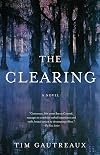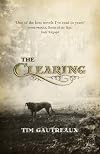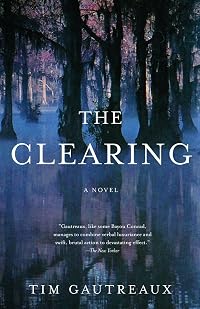
The Clearing
by Tim Gautreaux
On This Page
Description
In his critically acclaimed new novel, Tim Gautreaux fashions a classic and unforgettable tale of two brothers struggling in a hostile world. In a lumber camp in the Louisiana cypress forest, a world of mud and stifling heat where men labor under back-breaking conditions, the Aldridge brothers try to repair a broken bond. Randolph Aldridge is the mill's manager, sent by his father--the mill owner--to reform both the damaged mill and his damaged older brother. Byron Aldridge is the mill's show more lawman, a shell-shocked World War I veteran given to stunned silences and sudden explosions of violence that make him a mystery to Randolph and a danger to himself. Deep in the swamp, in this place of water moccasins, whiskey, and wild card games, these brothers become embroiled in a lethal feud with a powerful gangster. In a tale full of raw emotion as supple as a saw blade, The Clearing is a mesmerizing journey into the trials that define men's souls. show lessTags
Recommendations















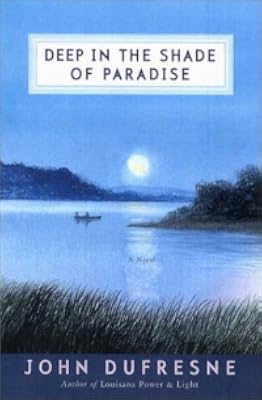
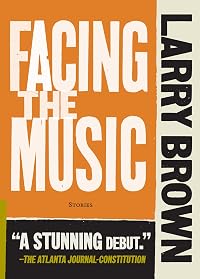

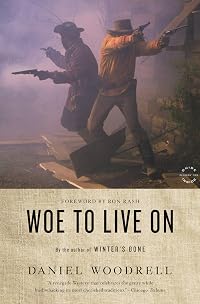

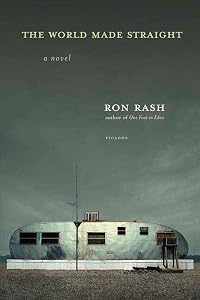






Member Recommendations

Member Reviews
In the 1920’s during Prohibition, protagonist Randolph Aldridge, son of a Pennsylvania lumber baron, travels to Louisiana to find his elder brother, Byron, and manage one of his father’s sawmills. Randolph takes the train to Nimbus, an isolated logging town, where Byron functions as the arm of the law. Byron is estranged from his family after returning from his service in WWI, where he has suffered psychological trauma. The sawmill hands work hard, drink hard, and fight hard, often leading to violent confrontations. A mafia boss controls the local saloon and brothels, which adds to the violence.
The setting is vividly described. The writing is atmospheric and evokes a strong sense of the Louisiana swamps. The characters are show more particularly well-drawn. The relationship between the brothers is key. Byron has withdrawn to the edges of civilization and Randolph wants to help him reconnect with life. During his melancholy moods, Byron plays a series of sad songs on the Victrola. Randolph cares deeply for his brother, eventually making a significant sacrifice. The supporting characters are believable and given enough backstory to picture them as part of this small remote community. Even the blind horse has a unique personality.
I particularly enjoyed the writing style in passages such as: “Ella appeared in the doorway and leaned against the frame, looking at her brother-in-law. After a while she placed a finger below a dry blue eye. At first Randolph didn’t understand, but then he turned and saw that Byron was crying, his lips formed carefully around each note of the song issuing thin and one-dimensional from the mahogany cabinet. Randolph sat as still as wood, his lips parted, his disbelieving breath coming lightly between his lips. Out in the mill yard, rain began to fall, and the house shook as the blind horse bumped its head against the porch post.”
This book strikes a satisfying balance between character and plot. It is dark and violent but contains offsetting elements of decency and redemption. It features many voices, such as the northern outsiders, Cajuns, Creoles, African Americans, and Italians. It gets the reader thinking about how violence impacts people and nature. I am impressed by the author’s craftsmanship. show less
The setting is vividly described. The writing is atmospheric and evokes a strong sense of the Louisiana swamps. The characters are show more particularly well-drawn. The relationship between the brothers is key. Byron has withdrawn to the edges of civilization and Randolph wants to help him reconnect with life. During his melancholy moods, Byron plays a series of sad songs on the Victrola. Randolph cares deeply for his brother, eventually making a significant sacrifice. The supporting characters are believable and given enough backstory to picture them as part of this small remote community. Even the blind horse has a unique personality.
I particularly enjoyed the writing style in passages such as: “Ella appeared in the doorway and leaned against the frame, looking at her brother-in-law. After a while she placed a finger below a dry blue eye. At first Randolph didn’t understand, but then he turned and saw that Byron was crying, his lips formed carefully around each note of the song issuing thin and one-dimensional from the mahogany cabinet. Randolph sat as still as wood, his lips parted, his disbelieving breath coming lightly between his lips. Out in the mill yard, rain began to fall, and the house shook as the blind horse bumped its head against the porch post.”
This book strikes a satisfying balance between character and plot. It is dark and violent but contains offsetting elements of decency and redemption. It features many voices, such as the northern outsiders, Cajuns, Creoles, African Americans, and Italians. It gets the reader thinking about how violence impacts people and nature. I am impressed by the author’s craftsmanship. show less
Tim Gautreaux writes about the South and Louisiana the way you might speak of a old, mangy dog that you love but know others might not. His writing shows all the wounds and the rough underbelly of society, but somehow manages to convey that people who are struggling here are somehow more alive than their safer brothers in the settled North.
There are so many dangers and frightening animals in these pages. Cottonmouth snakes and alligators and mosquitoes that cover men like second skins, but nothing is as frightening or dangerous as the human element that stalks the swamps with guns and knives and lead pipes.
The two brothers who form the nucleus of this novel, Randolph and Byron Aldridge, are often in over their heads, trying to deal with show more lawlessness, personal vendetta, and immorality. Their relationship with one another is touching and real, constantly proving that old adage that blood is thicker than water...a theme that is reflected back at us in the persons of their main enemies, Buzetti and his cousin, Couch. There are strong women as well, represented by the wives of these men and their mixed-blood housekeeper, who weather both the difficult environment and the unpredictability of their men.
After dark, he thought too much and sometimes drank, and one quiet evening when he heard from across the yard Byron wake howlin out of another dreamed bloodletting, he saw that his one killing did not stack up against the ranks of German Kinder his brother had packed off to darkness. While this thought didn’t comfort him, it gave him perspective on the deep well of foreboding into which his brother sank each time he opened his eyes on a sunrise.
Byron, a man broken by war, is hiding the middle of a battlefield. Randolph, who is tied to his brother by memory and affection but fails to understand him, witnesses something of the horrors his brother has experienced and learns what it is to face an enemy with only the choice of kill or be killed. This is a tale of sacrifice and redemption, layered like a good Southern biscuit. I loved it. show less
There are so many dangers and frightening animals in these pages. Cottonmouth snakes and alligators and mosquitoes that cover men like second skins, but nothing is as frightening or dangerous as the human element that stalks the swamps with guns and knives and lead pipes.
The two brothers who form the nucleus of this novel, Randolph and Byron Aldridge, are often in over their heads, trying to deal with show more lawlessness, personal vendetta, and immorality. Their relationship with one another is touching and real, constantly proving that old adage that blood is thicker than water...a theme that is reflected back at us in the persons of their main enemies, Buzetti and his cousin, Couch. There are strong women as well, represented by the wives of these men and their mixed-blood housekeeper, who weather both the difficult environment and the unpredictability of their men.
After dark, he thought too much and sometimes drank, and one quiet evening when he heard from across the yard Byron wake howlin out of another dreamed bloodletting, he saw that his one killing did not stack up against the ranks of German Kinder his brother had packed off to darkness. While this thought didn’t comfort him, it gave him perspective on the deep well of foreboding into which his brother sank each time he opened his eyes on a sunrise.
Byron, a man broken by war, is hiding the middle of a battlefield. Randolph, who is tied to his brother by memory and affection but fails to understand him, witnesses something of the horrors his brother has experienced and learns what it is to face an enemy with only the choice of kill or be killed. This is a tale of sacrifice and redemption, layered like a good Southern biscuit. I loved it. show less
Tim Gautreaux' novel The Clearing is the kind of book that's every reviewer's (and reader's) agony and ecstasy. It is so finely constructed—precise as the miniature gearworks of a pocket watch, multi-layered as a Beethoven symphony—that I risk credibility by overpraising its virtues. After all, who's gonna believe someone who says their reading experience went something like this: quickness of breath, eyes rolling back in head, lashes fluttering erratically, soft moans escaping from lips. You'd think I was eating chocolate or having sex…or both. And so I agonize over my ecstasy when sitting down to write this review.
But you should heed my soft moans of pleasure, dear review-reader, for The Clearing is that rare thing among books: show more a reading experience that's not only better than chocolate-covered sex, it's superior to most (if not all) of the pleasures offered by its contemporary neighbors on the bookstore's new release table. It is the kind of novel that so completely transports us to another time, another place—the cypress forests of Louisiana in the 1920s—that we emerge on the other side of the story blinking and not quite sure of our surroundings. In short, Gautreaux (Same Place, Same Things) achieves what John Gardner called "the vivid and continuous dream" of fiction.
As I try to make my way down from the stratosphere (bibliosphere?) of ecstasy, I should point out that the brilliance of The Clearing lies mainly in its telling. The story and characters—a man tries to redeem his brother from a swamp of corruption and finds himself getting pulled into the mire as well—will be familiar to readers of Dostoevsky, Steinbeck and Faulkner and countless others who've brought us tales of sibling salvation. In Gautreaux' hands, however, the plot transforms into a lyric, epic experience and we feel as if we're hearing it for the first time.
Randolph Aldridge, the son of a Pittsburgh timber baron, is sent to a remote Louisiana mill town to convince his long-lost older brother Byron, the town's constable, to return to the family up north. Byron, psychologically damaged by World War I, disappeared from view for five years until the family received a telegram from him in Nimbus, Louisiana. Randolph has always idolized the brother who once could do everything well; now, it seems the shattered Byron is just trying to hold himself together for the sake of those around him.
His older brother was well educated, big, and handsome, and in spite of a disposition oscillating between manic elation and mannequin somberness, he'd been destined to take over management of the family's mills and timber. Then he'd gone off to the war, coming back neither elated nor somber but with the haunted expression of a poisoned dog, unable to touch anyone or speak for more than a few seconds without turning slowly to look over his shoulder. Randolph saw on the mantel the sepia photograph of a young man with dark hair laid over to the side, a sharp-eyed fellow who looked as though he had a politician's gift for talking to strangers and putting them at ease. After France, Byron spoke to people with his eyes wide, sometimes vibrating with panic, as if he expected them suddenly to burst into flames.
As Randolph sets off in search of Byron, Gautreaux devotes a lot of pages to describing the journey—by train and steam-powered paddleboat—as if it was one into the heart of darkness. Byron is no Conradian Kurtz—his roughshod violence does less to quell the saloon fights than it does to keep the coffin-maker in business.
When Randolph arrives, he finds his brother is nearly powerless in Nimbus; the mill hands living in "a clearing of a hundred stumpy acres" are controlled by the saloon owners, a family of Sicilians who cruelly extort the workers' wages in gambling and booze. Byron laments, "I thought I was through with the war, but this whole damned world's turned into one."
Randolph plans to remain at the clearing only until the timber is "cut out" of the surrounding forest and he can somehow convince his brother to return to Pittsburgh, but he's soon caught in the bog of violence as well. "Who knows how much trouble this will cause?" one mill worker says after a particularly bloody shootout with the Sicilians. Byron shakes his head and says, "What starts small gets bigger."
The Clearing does indeed get bigger as it goes along, the prose—dense as anything Faulkner ever wrote—swelling and overflowing the page. Gautreaux has given us a reading-by-immersion experience in these pages. In the time it takes to read this novel, and perhaps for many days after, we are fully convinced we're surrounded by humid cypress forests where violence lurks like patient alligators at every step.
Gautreaux uses figurative language to evoke a precise sense of time and place. So, on the first page, we get a sentence like this describing a train engineer: The man looked as though all unnecessary meat had been cooked off of him by the heat of his engine. Gautreaux composes the kind of sentences which roll around on the tongue like all-day jawbreakers. The beauty of his words catches us up short at least once every dozen pages and causes us to slow down, savoring The Clearing bit by bit, phrase by phrase. Later, we come across another description of an aged lawman: The man's face was soft, his features rounded like those of a statue left for centuries out in the rain. Or, this, Randolph's first sight of Nimbus: "The settlement lay before him like an unpainted model of a town made by a boy with a dull pocketknife."
The novel comes to a crescendo with a final chapter that, even during a rereading, has such linguistic and thematic beauty that it brought tears to my eyes in a way I thought only the final notes of "Ode to Joy" ever could. As in the rest of the novel, this elegiac conclusion proves Gautreaux composes words like Beethoven composed notes. show less
But you should heed my soft moans of pleasure, dear review-reader, for The Clearing is that rare thing among books: show more a reading experience that's not only better than chocolate-covered sex, it's superior to most (if not all) of the pleasures offered by its contemporary neighbors on the bookstore's new release table. It is the kind of novel that so completely transports us to another time, another place—the cypress forests of Louisiana in the 1920s—that we emerge on the other side of the story blinking and not quite sure of our surroundings. In short, Gautreaux (Same Place, Same Things) achieves what John Gardner called "the vivid and continuous dream" of fiction.
As I try to make my way down from the stratosphere (bibliosphere?) of ecstasy, I should point out that the brilliance of The Clearing lies mainly in its telling. The story and characters—a man tries to redeem his brother from a swamp of corruption and finds himself getting pulled into the mire as well—will be familiar to readers of Dostoevsky, Steinbeck and Faulkner and countless others who've brought us tales of sibling salvation. In Gautreaux' hands, however, the plot transforms into a lyric, epic experience and we feel as if we're hearing it for the first time.
Randolph Aldridge, the son of a Pittsburgh timber baron, is sent to a remote Louisiana mill town to convince his long-lost older brother Byron, the town's constable, to return to the family up north. Byron, psychologically damaged by World War I, disappeared from view for five years until the family received a telegram from him in Nimbus, Louisiana. Randolph has always idolized the brother who once could do everything well; now, it seems the shattered Byron is just trying to hold himself together for the sake of those around him.
His older brother was well educated, big, and handsome, and in spite of a disposition oscillating between manic elation and mannequin somberness, he'd been destined to take over management of the family's mills and timber. Then he'd gone off to the war, coming back neither elated nor somber but with the haunted expression of a poisoned dog, unable to touch anyone or speak for more than a few seconds without turning slowly to look over his shoulder. Randolph saw on the mantel the sepia photograph of a young man with dark hair laid over to the side, a sharp-eyed fellow who looked as though he had a politician's gift for talking to strangers and putting them at ease. After France, Byron spoke to people with his eyes wide, sometimes vibrating with panic, as if he expected them suddenly to burst into flames.
As Randolph sets off in search of Byron, Gautreaux devotes a lot of pages to describing the journey—by train and steam-powered paddleboat—as if it was one into the heart of darkness. Byron is no Conradian Kurtz—his roughshod violence does less to quell the saloon fights than it does to keep the coffin-maker in business.
When Randolph arrives, he finds his brother is nearly powerless in Nimbus; the mill hands living in "a clearing of a hundred stumpy acres" are controlled by the saloon owners, a family of Sicilians who cruelly extort the workers' wages in gambling and booze. Byron laments, "I thought I was through with the war, but this whole damned world's turned into one."
Randolph plans to remain at the clearing only until the timber is "cut out" of the surrounding forest and he can somehow convince his brother to return to Pittsburgh, but he's soon caught in the bog of violence as well. "Who knows how much trouble this will cause?" one mill worker says after a particularly bloody shootout with the Sicilians. Byron shakes his head and says, "What starts small gets bigger."
The Clearing does indeed get bigger as it goes along, the prose—dense as anything Faulkner ever wrote—swelling and overflowing the page. Gautreaux has given us a reading-by-immersion experience in these pages. In the time it takes to read this novel, and perhaps for many days after, we are fully convinced we're surrounded by humid cypress forests where violence lurks like patient alligators at every step.
Gautreaux uses figurative language to evoke a precise sense of time and place. So, on the first page, we get a sentence like this describing a train engineer: The man looked as though all unnecessary meat had been cooked off of him by the heat of his engine. Gautreaux composes the kind of sentences which roll around on the tongue like all-day jawbreakers. The beauty of his words catches us up short at least once every dozen pages and causes us to slow down, savoring The Clearing bit by bit, phrase by phrase. Later, we come across another description of an aged lawman: The man's face was soft, his features rounded like those of a statue left for centuries out in the rain. Or, this, Randolph's first sight of Nimbus: "The settlement lay before him like an unpainted model of a town made by a boy with a dull pocketknife."
The novel comes to a crescendo with a final chapter that, even during a rereading, has such linguistic and thematic beauty that it brought tears to my eyes in a way I thought only the final notes of "Ode to Joy" ever could. As in the rest of the novel, this elegiac conclusion proves Gautreaux composes words like Beethoven composed notes. show less
I picked this book up from the library because I had read an interview with Annie Proulx in which she stated that The Clearing was the best novel she’d read in ten years. I thought that was high praise coming from a talented writer such as Proulx, who I respect and whose writing I really enjoy. And, in fact, similarities exist between Gautreaux’s novel and some of Proulx’s work. Both authors raise physical place almost to the level of a living, breathing character through their intricate and vivid descriptions of the rural locations they use as settings. In The Clearing, the wildness and extreme weather of the southern Louisiana cypress swamp permeates every page. I felt the sticky humidity and saw the sun trickling weakly down show more through the forest canopy as I read, even as the employees of the Nimbus sawmill worked tirelessly to slowly strip the swamp of all its valuable lumber.
Much like two of Proulx’s characters, Quoyle in The Shipping News and Bob Dollar in That Old Ace in the Hole, Randolph Aldridge must also enter a small rural community that is alien to him and find a way to assimilate himself. Through often-painful experience, he learns to communicate with the inhabitants of the ramshackle community that has sprung up around the Nimbus mill. Aldridge comes to Nimbus ostensibly as an agent of his father, a prominent Pennsylvania lumber baron, who has bought the Nimbus mill for one purpose: to try to lure his long-lost son Byron home. Byron, whose psyche was severely damaged during World War I, is working as a constable at Nimbus. He spends his nights breaking up violent fights between desperate mill workers at the camp’s saloon, and his days drinking whiskey while listening to mournful songs on his Victrola.
As Randolph’s emotional investment in the Nimbus community deepens and he struggles in vain to reach his disturbed brother, both he and Byron become inextricably caught up in a deadly feud with the Sicilians who control the camp’s saloon. Gautreaux carefully blends the extremes of the seasons in the swamp into the plot so that time passes by with a natural flow, in keeping with the precise pacing of the story. His cast of unique and fascinating characters quickly lures the reader into the vibrant and desperate life of the strange community of Nimbus. And he reminds us in The Clearing that humanity often reveals both its warmest and its most ruthless traits when existing in the wildest untamed and insulated environments. show less
A great disappointment. Just prior to reading "The Clearing," I read three collections of his short stories, the great majority of which are excellent, and I couldn't wait to read more of his work. "The Clearing" turned out to be a slog to finish. Hard to believe it's even the same author, other than the Louisiana setting. A number of irritating techniques, e.g. alternating calling a main character Randolph and then "the mill manager." Lots of violence, which somehow becomes repetitive and makes the book more difficult to finish. As for the title, as some have noted elsewhere, the French translation's title "Le Dernier Arbre" (The Last Tree) might have been a better choice. A plea to the author - more short stories, please.
I had been avoiding reading this book as I was dreading it pulling me down as it didn't seem to be a happy novel. However, although generally lots of bad things happen, there is joy and happiness among the pages. The sense of place is the most powerful thing in this novel It is set in a logging camp in a Louisiana cypress swamp in the 1920s and I could feel the darkness of the forest, the dampness of the air and see the clouds of insects and the numerous snakes. The noises of the logging camp were also well described, the steam engines and axes and the quiet when the day's work had finished. As the forest is cleared, the stumps of trees that were left is well described and the light that starts to filter through the trees as the belt of show more trees around the camp gets smaller and smaller is fascinating.
In this remote forest clearing live Byron, the estranged brother of Randolph, who Tim Gautreaux often refers to as the Mill Manager. There is the saloon that is the place of fights and card cheats and there are the workers. The novel deals with the pain of Byron who fought in the first world war and his healing. show less
In this remote forest clearing live Byron, the estranged brother of Randolph, who Tim Gautreaux often refers to as the Mill Manager. There is the saloon that is the place of fights and card cheats and there are the workers. The novel deals with the pain of Byron who fought in the first world war and his healing. show less
I found this book to be slow going at first - I am not fond of his highly flowery writing style- but once I adjusted to that the story flowed and I did enjoy the read. This was a bit too violent for me and seemed to lack optimism. Toward the end, the journey the two primary characters were on became more positive and redemptive. The descriptiveness of the author’s writing style is remarkable- this reader could almost feel the smothering nature of the Louisiana bayou.
Members
- Recently Added By
Author Information

Common Knowledge
- Original publication date
- 2003
- Dedication
- To Winbourne
- First words
- At a flag stop in Louisiana, a big, yellow-haired man named Jules stepped off a day coach at a settlement of twelve houses and a shoebox station.
- Last words
- (Click to show. Warning: May contain spoilers.)Byron threw back his head and hollered like a train whistle down the track to Poachum, were the main line's rail's ran east and west to the rest of the nation, all the way to their hates and loves, toward what they would have and what would have them.
Classifications
Statistics
- Members
- 504
- Popularity
- 59,665
- Reviews
- 10
- Rating
- (3.92)
- Languages
- English, French
- Media
- Paper, Audiobook, Ebook
- ISBNs
- 21
- ASINs
- 8