On This Page
Description
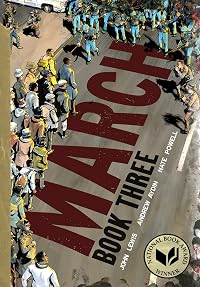
By Fall 1963, the Civil Rights Movement is an undeniable keystone of the national conversation, and as chair of the Student Nonviolent Coordinating Committee, John Lewis is right in the thick of it. With the stakes continuing to rise, white supremacists intensify their opposition through government obstruction and civilian terrorist attacks, a supportive president is assassinated, and African-Americans across the South are still blatantly prohibited from voting. To carry out their nonviolent show more revolution, Lewis and an army of young activists launch a series of innovative projects, including the Freedom Vote, Mississippi Freedom Summer, and a pitched battle for the soul of the Democratic Party waged live on national television. But strategic disputes are deepening within the movement, even as 25-year-old John Lewis heads to Alabama to risk everything in a historic showdown that will shock the world.. show less
Tags
Recommendations


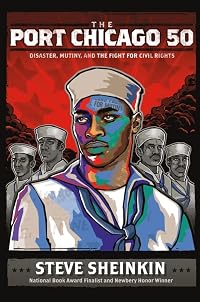
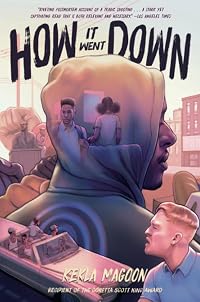
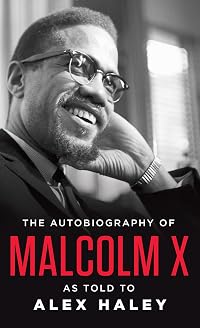
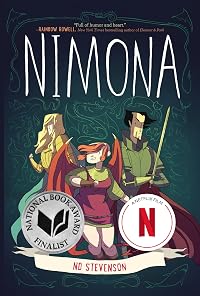

Member Recommendations
Member Reviews
What an historic, critically important graphic series this is. March Book Three, the third volume on the U.S. civil rights movement from the perspective of Congressman John Lewis, lives up to the first two volumes and then some. Lewis, who recently led a House Democratic sit-in over gun control, tells the story of his participation in the movement, which followed principles of non-violence. Lewis himself got beaten and imprisoned many times over in asserting rights of equality for blacks. Much of this volume concerns the constitutional right to vote, which for black voters was impeded in every way possible in Alabama (under Governor George Wallace) and other Southern states. The non-voters in the recent election (nearly half our show more country's population, including many minority voters) must break Lewis's heart. But, as these volumes show, it has been broken so many times I suppose he can handle anything.
While many of us lived through that time, he provides insight, context and immediacy to the events in an unmatched way. These volumes also give a perspective on the Black Lives Matter movement, and underscore the struggles to make what progress exists in racial equality. There are villains aplenty, one of the worst being Jim Clark, a vicious and determined segregationist sheriff in Dallas County, Alabama. Lewis writes that Clark, “was made all the more dangerous by the sundry gang of white men he deputized for the sole purpose of doing whatever it took to stop black people from voting.”
The Deep South resisted recognizing constitutional rights, and the federal government in Washington, under President Lyndon Johnson, dithered. Tv news replays of the brutality and injustice, as police beat and in some instances killed nonviolent protestors, helped forge public opinion and force a governmental response. Lewis and Dr. Martin Luther King and others simply refused to give up, knowing their cause was right, and believing in this country more than it believed in itself. Johnson finally rose to the occasion, and a federal judge permitted the famous march to Selma. What Lewis and others went through to vindicate their right to vote is jaw-dropping.
Nate Powell's art is just right throughout, and the story well-paced.
If the subject matter holds any interest for you, you'll want to read this stunning series. show less
While many of us lived through that time, he provides insight, context and immediacy to the events in an unmatched way. These volumes also give a perspective on the Black Lives Matter movement, and underscore the struggles to make what progress exists in racial equality. There are villains aplenty, one of the worst being Jim Clark, a vicious and determined segregationist sheriff in Dallas County, Alabama. Lewis writes that Clark, “was made all the more dangerous by the sundry gang of white men he deputized for the sole purpose of doing whatever it took to stop black people from voting.”
The Deep South resisted recognizing constitutional rights, and the federal government in Washington, under President Lyndon Johnson, dithered. Tv news replays of the brutality and injustice, as police beat and in some instances killed nonviolent protestors, helped forge public opinion and force a governmental response. Lewis and Dr. Martin Luther King and others simply refused to give up, knowing their cause was right, and believing in this country more than it believed in itself. Johnson finally rose to the occasion, and a federal judge permitted the famous march to Selma. What Lewis and others went through to vindicate their right to vote is jaw-dropping.
Nate Powell's art is just right throughout, and the story well-paced.
If the subject matter holds any interest for you, you'll want to read this stunning series. show less
this picks up after the freedom rides, starting at the church bombing in birmingham (where people literally celebrated the deaths of those little girls), and takes us through the civil rights act of 1964 and the voting rights act of 1965. this is such important history. i am so disgusted all over again that we've more or less rolled back the voting rights act, and that we are no longer protecting the rights of all americans to vote. specifically, of course, the black vote is being targeted. after all these people went through to secure the vote, and we just forget the history and continue to make it harder for black voices to be heard. white supremacy is despicable.
i understand the push/pull between nonviolent groups and people like show more malcolm x, but it's surprising to me that sncc and the sclc didn't see more eye to eye. and that the naacp was so much further to the right than sncc. i guess the naacp is like the older, more conservative, slower moving mature folks that are overtaken by the younger more radical folks who get things moving faster that i was struck by in the first book. they are still important but can be usurped by younger, newer ideas.
there's a quote from a mlk speech where he says that every black person who passively accepts segregation without a fight is partially responsible for the death of those who are fighting for integration. i can't get on board with victim blaming. it's not the job of those who are just trying to survive to bring about the end of their own oppression; it's the job of those who have the power and do the oppression to end it. i understand the concept and his point, but it sits with me very uncomfortably.
as a series, these books are excellent. they are enlightening and show in such an in-your-face way all that these people went through to achieve what should have, in a respectable society, been freely given. there were parts where i would have liked more detail, but those were few, and that information can be found elsewhere if i wanted to dig deeper. i rarely feel like graphic novels/memoirs give enough information, but these are (in general) a great exception. it would help if the people the drawings represent looked more like the actual people, so a reader doesn't have to pause to make sure who is speaking or being shown, but that's really my only complaint about the art. these drawings are so powerful and show so much. john lewis (and so many others in sncc and the sclc) was an absolute hero. show less
i understand the push/pull between nonviolent groups and people like show more malcolm x, but it's surprising to me that sncc and the sclc didn't see more eye to eye. and that the naacp was so much further to the right than sncc. i guess the naacp is like the older, more conservative, slower moving mature folks that are overtaken by the younger more radical folks who get things moving faster that i was struck by in the first book. they are still important but can be usurped by younger, newer ideas.
there's a quote from a mlk speech where he says that every black person who passively accepts segregation without a fight is partially responsible for the death of those who are fighting for integration. i can't get on board with victim blaming. it's not the job of those who are just trying to survive to bring about the end of their own oppression; it's the job of those who have the power and do the oppression to end it. i understand the concept and his point, but it sits with me very uncomfortably.
as a series, these books are excellent. they are enlightening and show in such an in-your-face way all that these people went through to achieve what should have, in a respectable society, been freely given. there were parts where i would have liked more detail, but those were few, and that information can be found elsewhere if i wanted to dig deeper. i rarely feel like graphic novels/memoirs give enough information, but these are (in general) a great exception. it would help if the people the drawings represent looked more like the actual people, so a reader doesn't have to pause to make sure who is speaking or being shown, but that's really my only complaint about the art. these drawings are so powerful and show so much. john lewis (and so many others in sncc and the sclc) was an absolute hero. show less
The March graphic novels start out relatively light, and grow heavier and heavier as they get deeper into America's troubled civil rights history. While reading book three I could only manage a bit at a time, before needing to step away. It was horrifying--and horrifyingly familiar--how the fact that Black women and men had the right to vote since the 1940's, that they were still treated like animals and the government and every day citizens manipulated laws and turned quickly to violence to keep them from exercising those rights. As a country we have come a long way since that time, but anyone who reads it will be painfully aware that we have not come far enough.
Just as powerful as its predecessors. This one is the longest and probably most intense of the trilogy, following the increasing tension in the Civil Rights movement. John Lewis and SNCC stay true to their non-violent origins, but the ante is definitely upped in the atrocities they witness and experience. The temptation to meet violence with violence had to be almost overpowering at times, but the single-minded sense of purpose keeps them on course. The book begins with the bombing of the 16th St. Baptist Church in Birmingham in 1963 and ends with the march from Selma to Montgomery in 1965. Mention of the Civil Rights Act (1964) and the subsequent Voting Rights Act (1965) brought history and political intrigue to life. The 1964 show more Republican Convention eerily expresses some of the same sentiments as the 2016 Convention though the authors are too talented to be overt about it and leave the reader to make connections. Malcolm X is introduced when Lewis meets him in Africa in 1964 and it is clear there are many conflicting agendas among those who want the same thing. MLK is featured again with excerpts from some of his stirring speeches and most edifying is the mention of many average ordinary people whose courage and witness helped see this whole thing through. Those are the ones history has overlooked or forgotten, but helped make change happen. There is an endearing moment in a flash-forward to 2009 when Lewis attends Obama's inauguration and the sense of accomplishment is palpable -- all the beatings, death, struggle and sacrifice come to fruition. show less
This stirring conclusion to the trilogy truly captures the struggle and the triumph of the Civil Rights movement. The story of John Lewis in the 1960s IS the story of the movement, and his three-volume graphic memoir gives life to its history. This final volume is especially potent as it relates the events from the church bombing in Birmingham, Alabama through the series of marches from Selma to Montgomery. Lewis’ life experience, combined with the narrative skill of Andrew Aydin and the artistic talent of Nate Powell, provides the most incisive and insightful kind of history lesson—one that shows how the personal cannot be separated from the political. Highly recommended.
I read this book and the trilogy for two reasons. First, as a child of the 60s and 70s, these events weren't covered much in my history education and I don't remember when they were happening because I was too young. I've made it a goal to catch myself up this year. My second reason is because it's important to me, in 2016 with 45 in the White House, to understand how successful change and resistance is implemented. The trilogy delivered both goals for me, and then some.
I also learned about successful change agents (even though I kind of hate that now-cliche term) whose stories I'd like to explore further. First will be John Lewis's memoir, [book:Walking with the Wind: A Memoir of the Movement|27550]. And I'm also reading [book:The show more Autobiography of Malcolm X|92057] for another perspective.
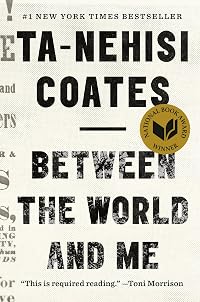
The trilogy also gave me a deep appreciation of the sacrifices made by the black people and communities. It helped bring background to some of the feelings and facts [author:Ta-Nehisi Coates|1214964] talks about in [book:Between the World and Me|25489625].
If you're interested in a woman's perspective on the times, check out [book:Whatever Happened to Interracial Love?|29505406] by Kathleen Collins.
Another reviewer wondered why this was called March, when that's only one fairly short part of the story. This comment made me think. If marching is moving forward, then this shows how excruciating it is, physically, emotionally and politically, to do just that. I also noticed a few times when the police told the marchers to "march" in one direction opposed to their goal. And black people have been told to march to other people's tunes for centuries now, simply based on race. It's time to change that forever!
Please read this trilogy with your kids so we raise an aware generation who sees the injustices and stops them. show less
I also learned about successful change agents (even though I kind of hate that now-cliche term) whose stories I'd like to explore further. First will be John Lewis's memoir, [book:Walking with the Wind: A Memoir of the Movement|27550]. And I'm also reading [book:The show more Autobiography of Malcolm X|92057] for another perspective.
The trilogy also gave me a deep appreciation of the sacrifices made by the black people and communities. It helped bring background to some of the feelings and facts [author:Ta-Nehisi Coates|1214964] talks about in [book:Between the World and Me|25489625].
If you're interested in a woman's perspective on the times, check out [book:Whatever Happened to Interracial Love?|29505406] by Kathleen Collins.
Another reviewer wondered why this was called March, when that's only one fairly short part of the story. This comment made me think. If marching is moving forward, then this shows how excruciating it is, physically, emotionally and politically, to do just that. I also noticed a few times when the police told the marchers to "march" in one direction opposed to their goal. And black people have been told to march to other people's tunes for centuries now, simply based on race. It's time to change that forever!
Please read this trilogy with your kids so we raise an aware generation who sees the injustices and stops them. show less
[[John Lewis]] - that two word review would suffice. Having read his memoir, [Walking with the Wind: A Memoir of the Movement], I was armed with the details of Mr. Lewis' rich and important life. These three graphic novels form around the conceit that he is telling a couple of visitors about his life on the day of President Obama's inauguration. The art, mostly in grays, is beautiful and moving. And boiling down each important event of his life to a few pages helps to quicken the story in the reader's heart, boil them down to their very essence. At the very least, this is a more digestible format for newcomers to learn about the civil rights movement - which is extremely important in today's fractured political and social environment. show more
If you want to know more, read the memoir, but at least read these and get to know one of the most important figures in our recent history - more important the MLK or Malcom X by leaps.
And, Restore Voting Rights!
5 bones!!!!!
Highly recommended show less
If you want to know more, read the memoir, but at least read these and get to know one of the most important figures in our recent history - more important the MLK or Malcom X by leaps.
And, Restore Voting Rights!
5 bones!!!!!
Highly recommended show less
Members
- Recently Added By
Lists

Recommended Comics / Graphic Novels
595 works; 122 members

Graphic Novels
94 works; 6 members

Mensa for Kids Excellence in Reading Award Program (Nonfiction)
54 works; 4 members

Books Set in Washington DC
34 works; 7 members

Books Read in 2017
4,249 works; 129 members

Top Five Books of 2017
757 works; 231 members

Struggle for Freedom
69 works; 4 members

1900s: America
31 works; 2 members

Pierce County READS
17 works; 1 member

Books Read in 2018
4,360 works; 110 members

National Book Award winners
65 works; 11 members

Five star books
1,767 works; 110 members

Top-Rated Books on LibraryThing
272 works; 116 members

Robert F. Sibert Informational Book Medal
102 works; 1 member

Youth: BLM
265 works; 1 member
Author Information

16+ Works 10,081 Members
John Lewis is the U.S. Representative for Georgia's 5th district, a position he has held since 1987. Michael Droso is the author of sixteen books, which include Oceana, Plundering Paradise, and The Cost of Courage. His work has been featured or reviewed in The New Yorker, Time, Newsweek, and Sports Illustrated, among other publications.

14+ Works 8,805 Members

Awards and Honors
Awards
Distinctions
Notable Lists
Series

Work Relationships
Is contained in
Common Knowledge
- Canonical title
- March: Book Three
- Original title
- March: Book Three
- Original publication date
- 2016-08-02
- People/Characters
- John Lewis (John Robert Lewis); Bob Moses; Fannie Lou Hamer; Lyndon Baines Johnson; Martin Luther King, Jr.; Malcolm X (show all 7); Hosea Williams
- Important places
- Selma, Alabama, USA
- Important events
- African-American Civil Rights Movement; Voting Rights Act of 1965; Freedom Summer; March on Washington for Jobs and Freedom
- Dedication
- To the past and future children
of the movement. - First words
- September 15, 1963.
Birmingham, Alabama. - Quotations
- For so many months I’d kept my emotions bottled up to be strong for those counting on me to lead, but there I was, alone in the dark with it all.
What sort of sense did it make if we could own part of a company, but not be served by it. - Last words
- (Click to show. Warning: May contain spoilers.)It won't be the first time, sonny boy.
- Publisher's editor
- Walton, Leigh
- Original language
- English US
- Canonical DDC/MDS
- 323.092
- Canonical LCC
- E840.8.L43
Classifications
- Genres
- Graphic Novels & Comics, Teen
- DDC/MDS
- 323.092 — Society, government, & culture Political science Civil Rights & Liberties/ Human Rights Civil Rights Biography And History Biography
- LCC
- E840.8 .L43 — History of the United States United States Later twentieth century, 1961-2000 Biography (General)
- BISAC
Statistics
- Members
- 1,901
- Popularity
- 11,291
- Reviews
- 100
- Rating
- (4.62)
- Languages
- English, Portuguese (Portugal)
- Media
- Paper, Ebook
- ISBNs
- 14
- ASINs
- 1