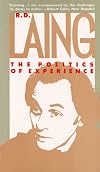
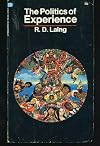
The Politics of Experience
by Ronald D. Laing
On This Page
Description
Laing's groundbreaking work posits a distinction between people as sources of action and people as the seat of experience, arguing that society dehumanizes people by only recognizing the former, and criticizing psychiatric institutions for failing to see that mental illness can partly be explained as a reaction to society's sickness.Tags
Recommendations


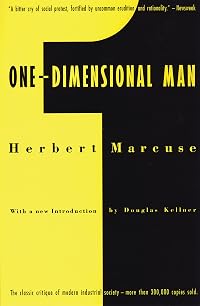





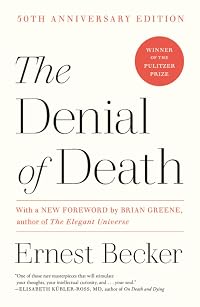
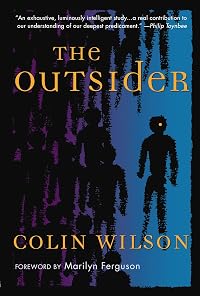
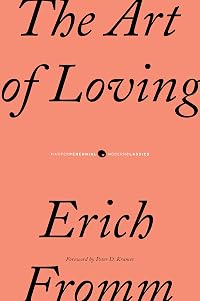

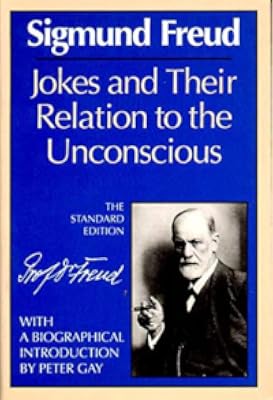








Member Recommendations
Member Reviews
A brilliantly original book from one of the 20th century's most influential psychiatrists that goes beyond the usual theories of mental illness and alienation to make a convincing case for the "madness of morality."
R.D. Laing is at his most wickedly iconoclastic in this eloquent assault on conventional morality. Compelling, unsettling, consistently absorbing, The Politics of Experience is a classic of genuine importance that will "excite, enthrall, and disturb. No one who reads it will remain unaffected." (Rollo May, Saturday Review)
Source: Knopf Doubleday Publishing Group (isbn 039471475X) 183 edition
R.D. Laing is at his most wickedly iconoclastic in this eloquent assault on conventional morality. Compelling, unsettling, consistently absorbing, The Politics of Experience is a classic of genuine importance that will "excite, enthrall, and disturb. No one who reads it will remain unaffected." (Rollo May, Saturday Review)
Source: Knopf Doubleday Publishing Group (isbn 039471475X) 183 edition
Psychology as imperialism.
While the writing is at times clunky and some chapters are top-heavy with psycho-analyst speak -- gibberish to the non-specialist -- Liang does string together some powerful stuff at times:
“Madness need not be all breakdown. It may also be breakthrough. It is potentially liberation and renewal as well as enslavement and existential death.”
“The family’s function is to repress Eros; to induce a false consciousness of security; to deny death by avoiding life; to cut off transcendence; to believe in God, not to experience the Void; to create, in short, one-dimensional man; to promote respect, conformity, obedience; to con children out of play; to induce a fear of failure; to promote a respect for work; to show more promote a respect for ‘respectability’.”
Stuff with which he indicts the social structure at large, and psychology in particular.
His thesis is that we are socialized to function in a mad world. No great insight here, but his claim that madness (schizophrenia) is a way for the truly sane to cope, his flirtation with mysticism (citing the Gospel of Thomas, Zen Buddhism, the Tao Te Ching) and rage against duality is comforting to read, although it has been said better and more completely elsewhere. And while he acknowledges the symptoms of alienation, he never seems to make the effort to treat the root disease. But perhaps this is too much to ask of such a short work.
In all, a decent primer. If you are sympathetic to the concepts of the unconscious, the quest and the archetype, I would suggest reading Joseph Campbell, Aldous Huxley (The Perennial Philosophy), Jung and even Nietzsche, among others. If you are of a literary inclination, The Lively Image (Richard Hughes) and Mrs. Dalloway (Virginia Woolf) come to mind. show less
While the writing is at times clunky and some chapters are top-heavy with psycho-analyst speak -- gibberish to the non-specialist -- Liang does string together some powerful stuff at times:
“Madness need not be all breakdown. It may also be breakthrough. It is potentially liberation and renewal as well as enslavement and existential death.”
“The family’s function is to repress Eros; to induce a false consciousness of security; to deny death by avoiding life; to cut off transcendence; to believe in God, not to experience the Void; to create, in short, one-dimensional man; to promote respect, conformity, obedience; to con children out of play; to induce a fear of failure; to promote a respect for work; to show more promote a respect for ‘respectability’.”
Stuff with which he indicts the social structure at large, and psychology in particular.
His thesis is that we are socialized to function in a mad world. No great insight here, but his claim that madness (schizophrenia) is a way for the truly sane to cope, his flirtation with mysticism (citing the Gospel of Thomas, Zen Buddhism, the Tao Te Ching) and rage against duality is comforting to read, although it has been said better and more completely elsewhere. And while he acknowledges the symptoms of alienation, he never seems to make the effort to treat the root disease. But perhaps this is too much to ask of such a short work.
In all, a decent primer. If you are sympathetic to the concepts of the unconscious, the quest and the archetype, I would suggest reading Joseph Campbell, Aldous Huxley (The Perennial Philosophy), Jung and even Nietzsche, among others. If you are of a literary inclination, The Lively Image (Richard Hughes) and Mrs. Dalloway (Virginia Woolf) come to mind. show less
Essentially, this is an argument that much madness is divinest sense. Recounts examples of when psychotic episodes perform a healing function; and condemns sedation, electroshock, isolation, etc. Makes the point that contemporary life is by definition disjunctive; disjointed.
Weird but interesting book, in the spirit of the 1960-70s.
The idea of ' the family is the source of the world's misinformation ' ( White Noise ) probably comes from Laing
The idea of ' the family is the source of the world's misinformation ' ( White Noise ) probably comes from Laing
Members
- Recently Added By
Author Information

40+ Works 5,493 Members
Ronald David Laing, a prominent British psychoanalyst, won wide attention in the United States, especially among young people, for his questioning of many of the old concepts of what is "normal" and what is "insane" in a world that he sees as infinitely dangerous in the hands of "normal" people. Born and educated in Glasgow, Scotland, Laing show more questioned many of the basic assumptions of Western culture. Taking the role of social critic, he wrote in The Politics of Experience (1967): "A little girl of seventeen in a mental hospital told me she was terrified because the Atom Bomb was inside her. That is a delusion. The statesmen of the world who boast and threaten that they have Doomsday weapons are far more dangerous, and far more estranged from "reality' than many of the people on whom the label "psychotic' is affixed." Much of Laing's work was in the field of schizophrenia. Philosophical and humanist in approach, he questioned many of the cut-and-dried classifications for the mentally ill, whom he regarded with great compassion; he looked beyond the "case" to the man or woman trying to come to grips with life in the broadest human context. He was a compelling writer of great literary skill who brought to his studies a worldview that reached far beyond the confines of his profession. Until his death, Laing continued to expand on his early themes, which are also evident in his poetry, interviews, and conversations with children. show less
Some Editions
Awards and Honors
Notable Lists
Series
Belongs to Publisher Series
Work Relationships
Common Knowledge
- Canonical title
- The Politics of Experience
- Original title
- The politics of experience and The bird of paradise
- Original publication date
- 1967
- First words
- Even facts become fictions without adequate ways of seeing 'the facts'.
- Original language
- English
- Canonical DDC/MDS
- 362.2031
Classifications
- Genres
- Nonfiction, General Nonfiction, Philosophy
- DDC/MDS
- 362.2031 — Society, government, & culture Social problems and social services Social Welfare Mental illness General overview of mental health services Antipsychiatry, Democratic Psychiatry and Mad Liberation Antipsychiatry
- LCC
- HM132 .L33 — Social sciences Sociology (General) Sociology These are obsolete numbers no longer used
- BISAC
Statistics
- Members
- 805
- Popularity
- 34,281
- Reviews
- 8
- Rating
- (3.84)
- Languages
- 7 — Dutch, English, Finnish, German, Hungarian, Italian, Swedish
- Media
- Paper
- ISBNs
- 12
- UPCs
- 1
- ASINs
- 16