On This Page
Description
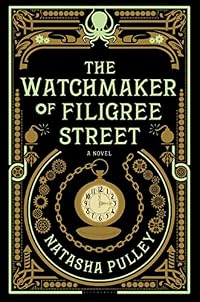
In 1883, Thaniel Steepleton returns to his tiny flat to find a gold pocketwatch on his pillow. But he has worse fears than generous burglars; he is a telegraphist at the Home Office, which has just received a threat for what could be the largest-scale Fenian bombing in history. When the watch saves Thaniel's life in a blast that destroys Scotland Yard, he goes in search of its maker, Keita Mori--a kind, lonely immigrant who sweeps him into a new world of clockwork and music. Although Mori show more seems harmless at first, a chain of unexpected events soon proves that he must be hiding something. Meanwhile, Grace Carrow is sneaking into an Oxford library dressed as a man. A theoretical physicist, she is desperate to prove the existence of the luminiferous ether before her mother can force her to marry. As the lives of these three characters become entwined, events spiral out of control until Thaniel is torn between loyalties, futures and opposing geniuses. Utterly beguiling, The Watchmaker of Filigree Street blends historical events with dazzling flights of fancy to plunge readers into a strange and magical past, where time, destiny, genius--and a clockwork octopus--collide. show lessTags
Recommendations












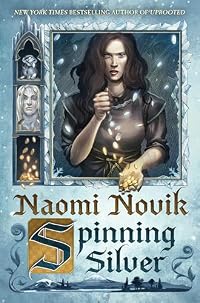


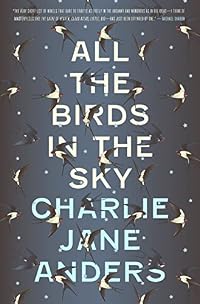
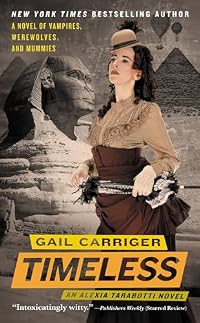
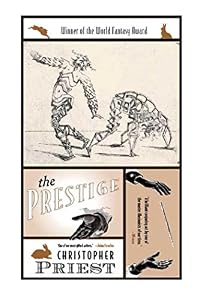

Member Recommendations
jain Kind-hearted protagonists experiencing the power of friendship against a backdrop of sociopolitical unrest.
20
by anonymous user
Member Reviews
Just before a bomb destroys Scotland Yard, Thaniel Steepleton's watch gives off an alarm, which saves his life. The watch appeared mysteriously in his apartment months before, and Thaniel, deciding that these events require more scrutiny, traces the watch to its maker, Keita Mori. Mori is a Japanese expat of incredible skill with clockwork. He has a room to let over his shop, and at the urging of a Scotland Yard friend, Thaniel takes the room, promising to keep an eye out and see if he can find any evidence that Mori is the maker of the bomb. There's certainly something strange about Mori, but Thaniel also finds him kind, brilliant, and solitary. But who did make the bomb?
I enjoyed this book almost as much as The Mars House, and Pulley show more is definitely an author I'll be reading more of. This book has a delicious steampunk vibe (there's a clockwork octopus!), and I'll admit to a teensy literary crush on Keita Mori. I was a little bit disappointed in Grace's storyline (ha! I didn't even get to Grace in the description above), but all in all this was a satisfying and delightful read. show less
I enjoyed this book almost as much as The Mars House, and Pulley show more is definitely an author I'll be reading more of. This book has a delicious steampunk vibe (there's a clockwork octopus!), and I'll admit to a teensy literary crush on Keita Mori. I was a little bit disappointed in Grace's storyline (ha! I didn't even get to Grace in the description above), but all in all this was a satisfying and delightful read. show less
It just eked out a five (I hate giving 5s, I feel dirty, like I can be had for the sake of a gripping conclusion and an unexpected tear), and would be a solid 4.5 or 9/10 if we had a better scale. I'm rounding up because it was so fresh and inventive.
In many ways, not much happened ... if you're used to fantasy novels where breathless pursuits follow exciting chases, only to result in terrific battles and astonishing plot twists, then this book will be a massive change of pace. It's gentle. It's a character study--almost a bildungsroman--the plot (it doesn't seem like there's much plot, but by the end you realize there was quite a bit) surprised, and the romance was charming (though I could see it unfolding from a mile away, which is show more fine).
An awfully good book. I look forward to more from the author.
(Note: 5 stars = amazing, wonderful, 4 = very good book, 3 = decent read, 2 = disappointing, 1 = awful, just awful. I'm fairly good at picking for myself so end up with a lot of 4s). show less
In many ways, not much happened ... if you're used to fantasy novels where breathless pursuits follow exciting chases, only to result in terrific battles and astonishing plot twists, then this book will be a massive change of pace. It's gentle. It's a character study--almost a bildungsroman--the plot (it doesn't seem like there's much plot, but by the end you realize there was quite a bit) surprised, and the romance was charming (though I could see it unfolding from a mile away, which is show more fine).
An awfully good book. I look forward to more from the author.
(Note: 5 stars = amazing, wonderful, 4 = very good book, 3 = decent read, 2 = disappointing, 1 = awful, just awful. I'm fairly good at picking for myself so end up with a lot of 4s). show less
The Publisher Says: 1883. Thaniel Steepleton returns home to his tiny London apartment to find a gold pocket watch on his pillow. Six months later, the mysterious timepiece saves his life, drawing him away from a blast that destroys Scotland Yard. At last, he goes in search of its maker, Keita Mori, a kind, lonely immigrant from Japan. Although Mori seems harmless, a chain of unexplainable events soon suggests he must be hiding something. When Grace Carrow, an Oxford physicist, unwittingly interferes, Thaniel is torn between opposing loyalties.
The Watchmaker of Filigree Street is a sweeping, atmospheric narrative that takes the reader on an unexpected journey through Victorian London, Japan as its civil war crumbles long-standing show more traditions, and beyond. Blending historical events with dazzling flights of fancy, it opens doors to a strange and magical past.
I CHECKED THIS ONE OUT FROM THE LIBRARY. USE THIS FREE SERVICE OFTEN. THEY'RE ALREADY PAID FOR.
My Review: I was hoping this would be a five-star read. I hope that every time I open a book, albeit often with a forlorn sense of the hopelessness of such a thing. But this one, with Queer desire and relationship on offer? Yes please! Gimme!
Mori and Thaniel, the men in question, are indeed heading down Relationship Road. In no kind or sort of hurry, mind you. They live in *London, *Victorian times, with...magic? sort-of kind-of magic...that involves seeing the multiverse and manipulating your present to bring about a future you like the best from the possibilities. I love this idea, and the use of this trope alone would've gotten the book four stars!
The way it's handled is also really compelling to me, with Mori making his odd little machines to nudge reality into new shapes. I was also fascinated by Thaniel's kinesthesia...D# is yellow, for example...but too little was made of this for my taste, more of a small grace note. In particular I was sad that Thaniel didn't twig to something he heard being the proof he needed of what was happening around him...but he was simply too stressed out, I think was the reasoning behind that failure.
Quite a lot that I missed first time round.
I was sure I recalled this read pretty accurately, and was mildly taken aback by the amount of information I glided past before...for example, the way Thaniel says things to his, um, er, to Grace that, um, kind-of unhappen as the ending approaches...and now, on a years-later re-read seem *hugely*significant* and almost spoilery.
But that's because I really already knew them, and how they'd play out.
So what would I call this read, a re-read or a new read? It's kind of both. I've read The Kingdoms between that initial experience and this one, I'm hip to the author's tricks in a way I wasn't before; I was revisiting the story because I'm reviewing The Half Life of Valery K now, as well. It's clear as crystal that any author develops stylistic tropes, won't call them tics unless they irk me somehow, and Author Pulley's a one for hiding relationship signals in plain sight. It's a bit disappointing that Grace, after her *horrible* behavior, isn't made to suffer any consequences. Given that there's a second book with Thaniel and Mori at its center, which I haven't read, that could be possible.
I've got the best of both worlds, then, revisiting an older read that's altered in interesting ways in light of later reads by the same author. It made this meditation on the etheric reality of chance and destiny intertwining so much richer than it was at first. show less
The Watchmaker of Filigree Street is a sweeping, atmospheric narrative that takes the reader on an unexpected journey through Victorian London, Japan as its civil war crumbles long-standing show more traditions, and beyond. Blending historical events with dazzling flights of fancy, it opens doors to a strange and magical past.
I CHECKED THIS ONE OUT FROM THE LIBRARY. USE THIS FREE SERVICE OFTEN. THEY'RE ALREADY PAID FOR.
My Review: I was hoping this would be a five-star read. I hope that every time I open a book, albeit often with a forlorn sense of the hopelessness of such a thing. But this one, with Queer desire and relationship on offer? Yes please! Gimme!
Mori and Thaniel, the men in question, are indeed heading down Relationship Road. In no kind or sort of hurry, mind you. They live in *London, *Victorian times, with...magic? sort-of kind-of magic...that involves seeing the multiverse and manipulating your present to bring about a future you like the best from the possibilities. I love this idea, and the use of this trope alone would've gotten the book four stars!
The way it's handled is also really compelling to me, with Mori making his odd little machines to nudge reality into new shapes. I was also fascinated by Thaniel's kinesthesia...D# is yellow, for example...but too little was made of this for my taste, more of a small grace note. In particular I was sad that Thaniel didn't twig to something he heard being the proof he needed of what was happening around him...but he was simply too stressed out, I think was the reasoning behind that failure.
Quite a lot that I missed first time round.
I was sure I recalled this read pretty accurately, and was mildly taken aback by the amount of information I glided past before...for example, the way Thaniel says things to his, um, er, to Grace that, um, kind-of unhappen as the ending approaches...and now, on a years-later re-read seem *hugely*significant* and almost spoilery.
But that's because I really already knew them, and how they'd play out.
So what would I call this read, a re-read or a new read? It's kind of both. I've read The Kingdoms between that initial experience and this one, I'm hip to the author's tricks in a way I wasn't before; I was revisiting the story because I'm reviewing The Half Life of Valery K now, as well. It's clear as crystal that any author develops stylistic tropes, won't call them tics unless they irk me somehow, and Author Pulley's a one for hiding relationship signals in plain sight. It's a bit disappointing that Grace, after her *horrible* behavior, isn't made to suffer any consequences. Given that there's a second book with Thaniel and Mori at its center, which I haven't read, that could be possible.
I've got the best of both worlds, then, revisiting an older read that's altered in interesting ways in light of later reads by the same author. It made this meditation on the etheric reality of chance and destiny intertwining so much richer than it was at first. show less
Six-word review: Engaging, original concept not fully realized.
Extended review:
Nineteenth-century London, Japanese culture, bombs, clockwork, terrorists, politics, physics, romance; memory, foreknowledge, consciousness, choice, consequences. And an endearing mechanical mascot. What a promising list of ingredients!
Unfortunately the author just doesn't have the muscle to pull off what she's trying to do here. She's the singer who breaks on the high note, the gymnast who can't stick her dismount.
Not that we aren't rooting for her. The idea is strong. The main character is appealing. The devices she imagines sound almost plausible enough to be real (in a magical sort of way), and the notion of a character who remembers alternative futures show more before they occur works as a concept within the bounds of the world she creates.
But something happens between the plan and the execution. Little fumbles along the way--muddled sentences, minor logical slips, small missed connections--seem to snowball in the last fifty pages or so, and suddenly we're lost. What just happened? Did I completely lose the thread? Did the story slip a gear? Did somebody's character come completely undone?
Is this the outcome we've been building up to? Really?
Actually, no, I don't think it is. Rather, the author seems to have lost control of her material, and nobody pulled her back in.
Nobody made her go back and look at colorless-green-ideas sentences like these:
68, Ito, who had just returned from a long stint in America, thought of escaping oranges.
241, But he wanted to lock himself upstairs and sleep until he could wake into something else.
308, 'I don't like being a future goldfish, it makes me perpetually mistrustful of my past self.'
Nobody made her ditch some terrible coined adverbs:
133, piggily
207, purply
272, tinily
Nobody helped her correct numerous wrongly nuanced expressions and overt malapropisms:
49, The watchmaker must have been waiting to hear the clatter of fabric
A clatter is a percussive sound made by the impact of hard things striking one another. Fabric does not clatter.
65, ...dropped straight down on to his knees and pressed his forehead to the cobblestones. This genuflection...
Genuflection means bending the knee--not a full kowtow, which is what's being described here.
214, I really haven't the time to soothe your ensuing alcoholism
Surely she meant "incipient," not "ensuing."
239, He pulled Fanshaw's dictionary across the desk and stole a supernumerary pencil
"Supernumerary" doesn't just mean "spare," never mind "available." It's in excess of some proper or prescribed amount; or it's the term you use for so-called spear-carriers in an opera, extras who stand silent guard by the gates or fill out a crowd scene but have no actual role. The number of pencils on hand is both unstated and irrelevant here; nothing (except a needless distraction) is lost if the six-syllable adjective is simply deleted. He picked up a pencil. Who cares if it's extra, borrowed, stray, or one of a perfect set? It's just a writing implement and has no importance in the story, much less the weight attached to it by an ostentatious word like "supernumerary."
Nobody told her that narrative prose isn't the place for a writer's-notebook line like this:
99, the grumbling humming of the bumblebees
Nobody, in fact, seems to have been on duty for the whole last muddy sixth of it. What actually happened? Where did that come from? How does this explain what went before?
All this notwithstanding, I liked this book. I wanted it to be better. It's good in a way that The Night Circus should have been but wasn't. By that I mean that it has an honest feel, it shows some depth, and it aspires to be something more than the average crowd-pleaser without preening and posturing. The misuse of words looks more like an excess of enthusiasm than pretentiousness to me.
What I'd really like to see, if it were up to me, would be for the author to get on with her writing career, publish three or four more novels (maybe bringing back the delightful Katsu?), and then come back and rewrite this one when she's gained a lot more experience. She may not have the muscle right now, but she looks like someone who can build it up with practice. Oh, and training.
And someone to watch those dismounts. show less
Extended review:
Nineteenth-century London, Japanese culture, bombs, clockwork, terrorists, politics, physics, romance; memory, foreknowledge, consciousness, choice, consequences. And an endearing mechanical mascot. What a promising list of ingredients!
Unfortunately the author just doesn't have the muscle to pull off what she's trying to do here. She's the singer who breaks on the high note, the gymnast who can't stick her dismount.
Not that we aren't rooting for her. The idea is strong. The main character is appealing. The devices she imagines sound almost plausible enough to be real (in a magical sort of way), and the notion of a character who remembers alternative futures show more before they occur works as a concept within the bounds of the world she creates.
But something happens between the plan and the execution. Little fumbles along the way--muddled sentences, minor logical slips, small missed connections--seem to snowball in the last fifty pages or so, and suddenly we're lost. What just happened? Did I completely lose the thread? Did the story slip a gear? Did somebody's character come completely undone?
Is this the outcome we've been building up to? Really?
Actually, no, I don't think it is. Rather, the author seems to have lost control of her material, and nobody pulled her back in.
Nobody made her go back and look at colorless-green-ideas sentences like these:
68, Ito, who had just returned from a long stint in America, thought of escaping oranges.
241, But he wanted to lock himself upstairs and sleep until he could wake into something else.
308, 'I don't like being a future goldfish, it makes me perpetually mistrustful of my past self.'
Nobody made her ditch some terrible coined adverbs:
133, piggily
207, purply
272, tinily
Nobody helped her correct numerous wrongly nuanced expressions and overt malapropisms:
49, The watchmaker must have been waiting to hear the clatter of fabric
A clatter is a percussive sound made by the impact of hard things striking one another. Fabric does not clatter.
65, ...dropped straight down on to his knees and pressed his forehead to the cobblestones. This genuflection...
Genuflection means bending the knee--not a full kowtow, which is what's being described here.
214, I really haven't the time to soothe your ensuing alcoholism
Surely she meant "incipient," not "ensuing."
239, He pulled Fanshaw's dictionary across the desk and stole a supernumerary pencil
"Supernumerary" doesn't just mean "spare," never mind "available." It's in excess of some proper or prescribed amount; or it's the term you use for so-called spear-carriers in an opera, extras who stand silent guard by the gates or fill out a crowd scene but have no actual role. The number of pencils on hand is both unstated and irrelevant here; nothing (except a needless distraction) is lost if the six-syllable adjective is simply deleted. He picked up a pencil. Who cares if it's extra, borrowed, stray, or one of a perfect set? It's just a writing implement and has no importance in the story, much less the weight attached to it by an ostentatious word like "supernumerary."
Nobody told her that narrative prose isn't the place for a writer's-notebook line like this:
99, the grumbling humming of the bumblebees
Nobody, in fact, seems to have been on duty for the whole last muddy sixth of it. What actually happened? Where did that come from? How does this explain what went before?
All this notwithstanding, I liked this book. I wanted it to be better. It's good in a way that The Night Circus should have been but wasn't. By that I mean that it has an honest feel, it shows some depth, and it aspires to be something more than the average crowd-pleaser without preening and posturing. The misuse of words looks more like an excess of enthusiasm than pretentiousness to me.
What I'd really like to see, if it were up to me, would be for the author to get on with her writing career, publish three or four more novels (maybe bringing back the delightful Katsu?), and then come back and rewrite this one when she's gained a lot more experience. She may not have the muscle right now, but she looks like someone who can build it up with practice. Oh, and training.
And someone to watch those dismounts. show less
In mid-1880s London, both Nathaniel “Thaniel” Steepleton, a 25-year-old lowly clerk and telegraphist first at the Home Office and then at the Foreign Office, and Grace Carrow, opinionated Oxford-trained physicist and daughter of old-fashioned Lord Carrow, both end up with a marvel of a timepiece. Both of these watches were lovingly crafted by a most unusual watchmaker, Keita Mori, related to a Samurai lord and a former assistant to the interior minister of Japan. These days Mori creates the finest watches in London. Scotland Yard suspect Mori’s mechanisms of being the heart of a series of bombs set by Irish nationalists, but Steepleton knows better. He recognizes that the tiny, gentle creator of the delightful Katsu, the show more clockwork, sock-stealing octopus, is no bomb maker. But there is much more to Mori than anyone would ever suspect.
To tell any more would be to spoil this charming debut by Natasha Pulley, one that celebrates the most unlikely of romances. Despite the frequent comparisons to the Sherlock Holmes oeuvre, The Watchmaker of Filigree Street reminded me more of Philip Pullman’s The Golden Compass and its alternative clockwork world. Pulley’s wildly inventive tale kept me turning pages to the final startling revelations — although, in truth, the novel proves phenomenally original at nearly every turn. Highly recommended as one of the best books I’ve read in years.
In the interest of full disclosure, I received this book from NetGalley and Bloomsbury USA in exchange for an honest review. show less
To tell any more would be to spoil this charming debut by Natasha Pulley, one that celebrates the most unlikely of romances. Despite the frequent comparisons to the Sherlock Holmes oeuvre, The Watchmaker of Filigree Street reminded me more of Philip Pullman’s The Golden Compass and its alternative clockwork world. Pulley’s wildly inventive tale kept me turning pages to the final startling revelations — although, in truth, the novel proves phenomenally original at nearly every turn. Highly recommended as one of the best books I’ve read in years.
In the interest of full disclosure, I received this book from NetGalley and Bloomsbury USA in exchange for an honest review. show less
Charming and almost perfect. I enjoyed the more measured pace, being allowed to live in the universe before the explosions went off and to realize on my own, sans inner angsty musings, what was going on with the characters - who are some of the best realized in any fantasy fiction. The dialog is the best! The charming Matsumoto is likely to be recognized by women who have encountered an upper class Japanese man at university. It is adult and whimsical. Katsu redeems all gratuitous steampunk octopi.
After reading Patrick O’Brian, virtually all other historical fiction will seem slightly weaker by proximity. In this case, I was at first discomforted by the slight air of anachronism, but got over it once I rapidly became intrigued by the characters and plot. The author cleverly sidesteps the need for a perfectly historical atmosphere, in any case, with the use of fantastical elements. The novel is thus not set in 19th century England as such. This explains any anachronisms to my satisfaction and allowed me to put my usual tedious pedantry aside and enjoy a lovely distraction. ‘The Watchmaker of Filigree Street’ is a charming tale of a telegraph operator at the Home Office whose life is transformed by the mysterious gift of a show more watch. Although there are exciting action sequences, it is for the most part a cosy novel of learning about the characters and observing as they get to know one another. The three main characters are both appealing and interesting: the synesthete telegraph operator who used to be a pianist, the Japanese clockwork expert with a secret agenda, and the former physics student who wants her own lab space. As for the plot, I enjoyed the balance that was struck between sweetness and darkness. It’s an escapist piece of fiction, yet it also raises complex questions of agency and motive. Where there is conflict between characters, they are all treated fairly and with sympathy. The implications of the main fantastical element (which I won’t spoil) are dealt with cleverly and thoughtfully. Most importantly, I was distracted from the catastrophic state of politics for an evening, for which I am very grateful. show less
Members
- Recently Added By
Lists

Best Fantasy Novels
821 works; 361 members

Best 21st Century Books (So Far)
670 works; 86 members

2016 Hugo Eligible Novels
90 works; 32 members

Female Author
1,235 works; 67 members

Top Five Books of 2020
982 works; 350 members

Favourite Steampunk Books
80 works; 16 members

Gaslamp Fantasy
87 works; 15 members

Global Reads: Books Set in the United Kingdom and Ireland
109 works; 5 members

LGBTQ+ Speculative Fiction
818 works; 51 members
Speculative Fiction to Read
706 works; 31 members
Historical Fantasy
93 works; 14 members

Books Read in 2020
4,379 works; 124 members
Books Read in 2016
4,666 works; 197 members

READ in 2023
244 works; 1 member
Recommended Speculative Fiction by Women and People of Color
298 works; 45 members

Good LGBT fiction for LGBT folk and friends
537 works; 54 members

First Novels
373 works; 17 members
International Dublin Literary Award Longlist 2017
147 works; 3 members

Dublin Literary Award Longlist 2017
147 works; 2 members
Genre Benders: Historical Speculative Fiction
22 works; 7 members

Books Read in 2021
5,361 works; 114 members
Books Read in 2018
4,360 works; 110 members
Kirkus Starred Fiction Reviews of Books Published in 2015
310 works; 6 members

Books We Discovered On LibraryThing
530 works; 130 members

Books Read in 2019
4,052 works; 110 members

2010s
241 works; 3 members

Toy Stories: Living Dolls, Bears and Other Toys
129 works; 7 members

Character-driven SF
59 works; 1 member

2016 reads
46 works; 1 member

Kirkus Reviews Best Fiction of 2015
98 works; 6 members

Five star books
1,755 works; 107 members
Talk Discussions
Past Discussions
Group read: The watchmaker of Filigree Street in The Green Dragon (February 2016)
Author Information

9+ Works 5,079 Members
Some Editions
Awards and Honors
Awards
Series

Common Knowledge
- Canonical title
- The Watchmaker of Filigree Street
- Original title
- The Watchmaker of Filigree Street
- Original publication date
- 2015-07-14
- People/Characters
- Nathaniel Steepleton; Grace Carrow; Keita Mori; Akira Matsumoto; Dolly Williamson; Ito (show all 10); Frederick Spindle; Francis Fanshaw; W. S. Gilbert; Arthur Sullivan
- Important places
- London, England, UK; England, UK; Japan; Tokyo, Japan; Oxford, Oxfordshire, England, UK; Japanese Village, Knightsbridge, London, England, UK
- Dedication
- To Claire
- First words
- The Home Office telegraphy department always smelled of tea.
- Quotations
- He liked the noise that a newspaper made when you folded it. It was the only thing he liked about newspapers; he had to read them through spectacles, and spelling mistakes annoyed him because as a clerk he felt that bad spell... (show all)ing was one step away from bad speech, which was within hopping distance of being Welsh.
The spare room was crooked, as though it had planned to be L-shaped but changed its mind at the last minute. - Last words
- (Click to show. Warning: May contain spoilers.)It was a heavy-duty bolt.
- Publisher's editor
- Alexa von Hirschberg
- Original language
- English
- Canonical DDC/MDS
- 823.914
- Canonical LCC
- PR6116.U55
Classifications
Statistics
- Members
- 2,303
- Popularity
- 8,559
- Reviews
- 102
- Rating
- (3.73)
- Languages
- 7 — Danish, Dutch, English, German, Italian, Spanish, Swedish
- Media
- Paper, Audiobook, Ebook
- ISBNs
- 33
- ASINs
- 12