On This Page
Description
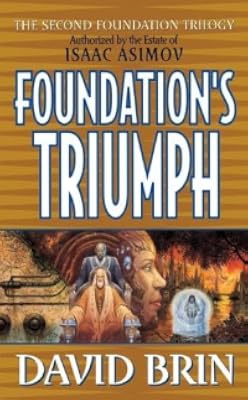
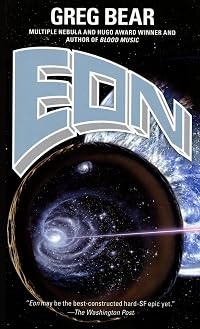
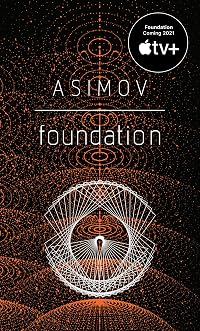
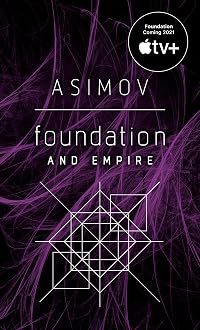
Isaac Asimov's Foundation Trilogy is one of the highwater marks of science fiction.The monumental story of a Galactic Empire in decline and a secret society of scientists who seek to shorten the coming Dark Age with tools of Psychohistory, Foundation pioneered many themes of modern science fiction.Now, with the approval of the Asimov estate, three of today's most acclaimed authors have completed the epic the Grand Master left unfinished. The Second Foundation Trilogy begins with Gregory show more Benford's Foundation's Fear, telling the origins of Hari Seldon, the Foundation's creator. Greg Bear's Foundation and Chaos relates the epic tale of Seldon's downfall and the first stirrings of robotic rebellion. Now, in David Brin's Foundation's Triumph, Seldon is about to escape exile and risk everything for one final quest-a search for knowledge and the power it bestows. The outcome of this final journey may secure humankind's future-or witness its final. show lessTags
Recommendations








Member Reviews
SPOILERS AHEAD; SKIP IF YOU'RE PLANNING TO READ THIS AND DON'T WANT TO KNOW. This is the third book in the new Foundation trilogy, and it's quite an interesting addition. Hari Seldon, now old, isolated from what's left of his family by the exigencies of the Plan, and no longer a major object of suspicion for the Imperial security forces, decides to pursue a minor mystery brought to him by a minor bureaucrat who has been working at the mathematics of psychohistory as a hobby. The mystery concerns "tilling", the fact that nearly every human-inhabited planet was subjected to a major churning and grinding of the soil, making it suitable for agriculture, before humans arrived--in an expanding wave just ahead of the wave of human colonial show more expansion, in fact. There are exceptions, though, worlds where the process didn't happen, and substantial amounts of life unlike the life on most human worlds still survives. What do these anomalies mean? Why do they appear to track so well with the distribution of "chaos worlds", the worlds that experience a runaway outbreak of advancing science, art, and technology, before collapsing into equally runaway disaster?
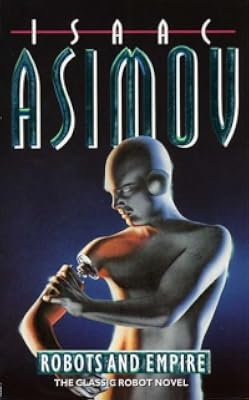
Hari quickly discovers he's on the trail of something very important to psycohistory and the Plan, and Daneel, the Calvinian robots, imperial security, and several other forces are in hot pursuit of him. All fairly standard, except for where Brin takes this. Put simply, not only is psychohistory wrong, in the sense of inaccurate and inadequate to the job Hari's trying to do with it, but the goal is wrong. Hari's Plan rests on certain assumptions about human nature and human capacity that are not correct, based on facts which are incomplete and which have been subjected to seriously flawed analysis by Daneel and Giskard, which have never been checked against the wishes and opinions of humans. And Daneel has deliberately deceived Hari Seldon about these facts. He has done it from the best of motives, but he's wrong. He's concerned only with taking the safest path for the human species, not the best path; because of the Three Laws, and the Zeroth Law, he can't really distinguish between the two. Hari's plan is really Daneel's plan, and it's a mistake. At the end, it appears that Daneel's plan is triumphant; the hope for a genuinely human future--and perhaps a future where humans may finally be able to run the risk of meeting intelligent aliens--is that Hari's Foundation will be more robust than Hari or Daneel have believed, and prevent Daneel's rather horrifying, but very safe, Gaia plan from coming to fruition.
Altogether, a rather darker and more interesting book than I expected. show less
Hari quickly discovers he's on the trail of something very important to psycohistory and the Plan, and Daneel, the Calvinian robots, imperial security, and several other forces are in hot pursuit of him. All fairly standard, except for where Brin takes this. Put simply, not only is psychohistory wrong, in the sense of inaccurate and inadequate to the job Hari's trying to do with it, but the goal is wrong. Hari's Plan rests on certain assumptions about human nature and human capacity that are not correct, based on facts which are incomplete and which have been subjected to seriously flawed analysis by Daneel and Giskard, which have never been checked against the wishes and opinions of humans. And Daneel has deliberately deceived Hari Seldon about these facts. He has done it from the best of motives, but he's wrong. He's concerned only with taking the safest path for the human species, not the best path; because of the Three Laws, and the Zeroth Law, he can't really distinguish between the two. Hari's plan is really Daneel's plan, and it's a mistake. At the end, it appears that Daneel's plan is triumphant; the hope for a genuinely human future--and perhaps a future where humans may finally be able to run the risk of meeting intelligent aliens--is that Hari's Foundation will be more robust than Hari or Daneel have believed, and prevent Daneel's rather horrifying, but very safe, Gaia plan from coming to fruition.
Altogether, a rather darker and more interesting book than I expected. show less
The final volume of The Second Foundation Trilogy is on par with the second-- it's impossible for me to decide which one is better. Foundation and Chaos was a perfect Asimov story of his early sort (much like the stories of the original novel Foundation), one where characters sit around and talk about things and go through a crisis in a brief amount of time. This is the later sort of typical Asimov story, the travelogue where people sit around and talk about things as they move from destination to destination (like Prelude to Foundation and the two Golan Trevize tales). As a result, the ideas are what have to sell the book, and they do. The Trilogy's themes of Chaos and Renaissance are brought to their culminations, as we finally learn show more how Daneel kept the Galaxy together for so long-- and how it is finally tearing itself apart. Brin's characterization of the aged Hari Seldon is spot-on (though I didn't much like his Dors), and the idea of him having one last adventure in his old age is too perfect to pass up. Aside from some continuity quibbles (if Hari's psychohistory is modeled on the history of the Empire, how can it be accurate once the giskardian neural dampeners fail?), this book pulls all of Asimov's works (even "Blind Alley"!) together magnificently. This was my second time reading it, and once again, I was massively disappointed when Hari failed to jump through the time warp in the end. And I want my followup: the adventures of Mors Planch and Biron Maserd in the far future appeal, as do the hints we get about those times from the Encyclopedia Galactica quotations. And as for the on-line coda... The Foundation series has spent too much time wallowing in the past; it needs to get back into the future again. (originally written December 2007) show less
When a favourite author writes in a favourite universe, you hope the results will be awesome. Unfortunately it was just "meh". Asimov's Hari Seldon molded the future of the galaxy and mankind as he knew it into his own vision of perfection. Brin's Seldon refuses to do the same. The situations, backgrounds and major players keep setting up to be special and repeatedly fall short.
Don't get me wrong, Brin doesn't slight Asimov's work, he just takes it in a direction that doesn't work for me. Maybe if I'd read the other two books in the Second Foundation trilogy by Benford and Bear I would have been more in tune with this one.
Foundation lovers likely can't resist another book in the same universe they love so well, just don't expect show more another Asimov Foundation novel and you won't be setting yourself up for disappointment. show less
Don't get me wrong, Brin doesn't slight Asimov's work, he just takes it in a direction that doesn't work for me. Maybe if I'd read the other two books in the Second Foundation trilogy by Benford and Bear I would have been more in tune with this one.
Foundation lovers likely can't resist another book in the same universe they love so well, just don't expect show more another Asimov Foundation novel and you won't be setting yourself up for disappointment. show less
This "second conclusion" was anti-climactic for me. The writing itself is great and nicely consistent with Asimov's style. However, I found the whole peace vs. free will thing a bit predictable and hence overly attended across three hundred pages. The characterization is nice, especially Dors and Trema. The afterward includes a timeline of all the works - tight, yet with plenty of unexplored topics and space as fodder for future works.
This book is pretty good. I'd say its the best of the three Second Foundation Trilogy books in fact. Unfortunately, you need to read the other two in order for this one to make any sense, which is a shame because the first one sucked, and the second one was ok.
A lot of loose ends get cleaned up in this book. Why did Earth get abandoned? Why did everyone forget their history? Why is Trantor built much like the cities in the Naked Sun? Why are there all those habitable worlds for the galactic empire to reside on? It seems odd that there would be 25 million habitable worlds out there. There are other examples as well, but I wont bore you with them all.
Another good bit of this book is the time line of all Asimov Foundation stories at the show more back of the book. I am sure it would have been useful to know about that earlier.
http://www.stillhq.com/book/David_Brin/Foundations_Triumph.html show less
A lot of loose ends get cleaned up in this book. Why did Earth get abandoned? Why did everyone forget their history? Why is Trantor built much like the cities in the Naked Sun? Why are there all those habitable worlds for the galactic empire to reside on? It seems odd that there would be 25 million habitable worlds out there. There are other examples as well, but I wont bore you with them all.
Another good bit of this book is the time line of all Asimov Foundation stories at the show more back of the book. I am sure it would have been useful to know about that earlier.
http://www.stillhq.com/book/David_Brin/Foundations_Triumph.html show less
I am a fan of most of David Brin's books but guess this trilogy too deep/profound for me or something -- not a good story. Too much philosophy and not enough story (or even a good job carrying the what-if theme of everything in Asimov's original vision). Take away name of title, places and characters and I would never have suspected this had anything to do with Foundation novels.
This is the final book in the Foundation trilogy filling in the bits of Hari Seldon's life undocumented by Asimov himself. Like the earlier books in the series, it takes a deeper look at the background consipracies that had kept the Empire stable for 12 millennia and even attempts to look at possible explanations for the great metal Cities of Earth and the mysongenist Spacer worlds. Brin references work throughout Asimov's Foundation and Empire series whether or not they were particularly relevant but it has been interesting to see them as I'm sure I didn't catch them when I first read the book :-)
Members
- Recently Added By
Author Information

David Brin is a scientist, writer, and public speaker. He was born in Pasadena, California, on October 9, 1950. Brin attended the California Institute of Technology (Caltech) and later earned a doctorate at the University of California. He accepted a position as an engineer at Hughes Aircraft Company. Brin is a former fellow at the California show more Space Institute and serves on several government and nongovernment advisory committees dealing with issues involved with technological growth. Brin has lectured all over the world on such topics as space flight, ecology, and the search for extraterrestrial life. Brin deals with global warming, the destruction of the ozone layer, and pollution of Earth. His 1987 novel, The Uplift War, received the Hugo Award and the Locus Award. His novels have been translated into 20 languages. (Bowker Author Biography) show less

David Brin is a LibraryThing Author, an author who lists their personal library on LibraryThing.
All Editions
Some Editions
Series

Belongs to Publisher Series
Heyne Science Fiction & Fantasy (06/8303)
Work Relationships
Common Knowledge
- Canonical title
- Foundation's Triumph
- Original title
- Foundation's Triumph
- Original publication date
- 1999-05
- People/Characters
- Hari Seldon
- Important places
- Trantor; Earth
- Epigraph
- Little is known about the final days of Hari Seldon, though
many romanticized accounts exist, some of them purportedly by his own hand. None has any proved validity.
What appears evident, however, is that Seldon spent h... (show all)is
last months uneventfully, no doubt enjoying satisfaction in
his life's work. For with his gift of mathematical insight, and
the powers of psychohistory at his command, he must surely
have seen the panorama of history stretching before him,
confirming the great path of destiny that he had already
mapped out
Although death would soon claim him, no other mortal
ever knew with such confidence and certainty the bright
promise that the future would hold in store.
~ ENCYCLOPEDIA GALACTICA, 117TH EDITION, 1054 F.E. - Dedication
- To Isaac Asimov,
who added an entire course to our endless
dinner-table conversation about destiny - First words
- As for me ... I am finished."
- Quotations*
- Seule la divergence de vues peut empêcher l'individu de s'aveugler lui-même.
Seule la critique peut combattre l'erreur. - Last words
- (Click to show. Warning: May contain spoilers.)In time, we will be greater than we ever imagined possible.
- Original language
- English
*Some information comes from Common Knowledge in other languages. Click "Edit" for more information.
Classifications
Statistics
- Members
- 1,480
- Popularity
- 15,808
- Reviews
- 17
- Rating
- (3.48)
- Languages
- 9 — Czech, Dutch, English, French, German, Hungarian, Polish, Romanian, Spanish
- Media
- Paper, Ebook
- ISBNs
- 22
- ASINs
- 9