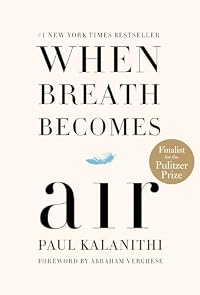
When Breath Becomes Air
by Paul Kalanithi
On This Page
Description
"For readers of Atul Gawande, Andrew Solomon, and Anne Lamott, a profoundly moving, exquisitely observed memoir by a young neurosurgeon faced with a terminal cancer diagnosis who attempts to answer the question What makes a life worth living? At the age of thirty-six, on the verge of completing a decade's worth of training as a neurosurgeon, Paul Kalanithi was diagnosed with stage IV lung cancer. One day he was a doctor treating the dying, and the next he was a patient struggling to live. show more And just like that, the future he and his wife had imagined evaporated. When Breath Becomes Air chronicles Kalanithi's transformation from a naïve medical student "possessed," as he wrote, "by the question of what, given that all organisms die, makes a virtuous and meaningful life" into a neurosurgeon at Stanford working in the brain, the most critical place for human identity, and finally into a patient and new father confronting his own mortality. What makes life worth living in the face of death? What do you do when the future, no longer a ladder toward your goals in life, flattens out into a perpetual present? What does it mean to have a child, to nurture a new life as another fades away? These are some of the questions Kalanithi wrestles with in this profoundly moving, exquisitely observed memoir. Paul Kalanithi died in March 2015, while working on this book, yet his words live on as a guide and a gift to us all. "I began to realize that coming face to face with my own mortality, in a sense, had changed nothing and everything," he wrote. "Seven words from Samuel Beckett began to repeat in my head: 'I can't go on. I'll go on.'" When Breath Becomes Air is an unforgettable, life-affirming reflection on the challenge of facing death and on the relationship between doctor and patient, from a brilliant writer who became both. Advance praise for When Breath Becomes Air "Rattling, heartbreaking, and ultimately beautiful, the too-young Dr. Kalanithi's memoir is proof that the dying are the ones who have the most to teach us about life."--Atul Gawande "Thanks to When Breath Becomes Air, those of us who never met Paul Kalanithi will both mourn his death and benefit from his life. This is one of a handful of books I consider to be a universal donor--I would recommend it to anyone, everyone."--Ann Patchett"-- "At the age of 36, on the verge of a completing a decade's worth of training as a neurosurgeon, Paul Kalanithi's health began to falter. He started losing weight and was wracked by waves of excruciating back pain. A CT scan confirmed what Paul, deep down, had suspected: he had stage four lung cancer, widely disseminated. One day, he was a doctor making a living treating the dying, and the next, he was a patient struggling to live. Just like that, the future he and his wife had imagined, the culmination of decades of striving, evaporated. With incredible literary quality, philosophical acuity, and medical authority, When Breath Becomes Air approaches the questions raised by facing mortality from the dual perspective of the neurosurgeon who spent a decade meeting patients in the twilight between life and death, and the terminally ill patient who suddenly found himself living in that liminality. At the base of Paul's inquiry are essential questions, such as: What makes life worth living in the face of death? What happens when the future, instead of being a ladder toward the goals of life, flattens out into a perpetual present? When faced with a terminal diagnosis, what does it mean to have a child, to nuture a new life as another one fades away? As Paul wrote, "Before my cancer was diagnosed, I knew that someday I would die, but I didn't know when. After the diagnosis, I knew that someday I would die, but I didn't know when. But now I knew it acutely. The problem wasn't really a scientific one. The fact of death is unsettling. Yet there is no other way to live." Paul Kalanithi passed away in March 2015, while working on this book"-- On the verge of completing a decade's worth of training as a neurosurgeon, Kalanithi was diagnosed with stage IV lung cancer. Just like that, the future he and his wife had imagined evaporated. Kalanithi chronicles his transformation from a naïve medical student into a neurosurgeon at Stanford working in the brain, the most critical place for human identity, and finally into a patient and new father confronting his own mortality. show lessTags
Recommendations







Member Recommendations
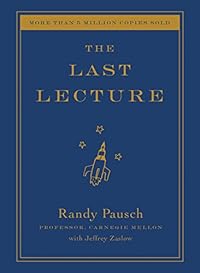
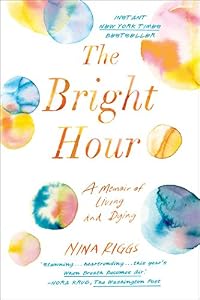
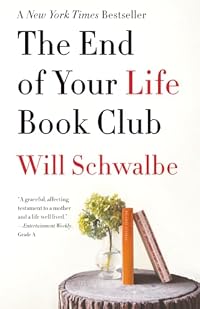
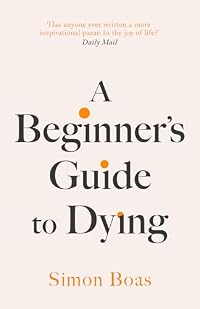
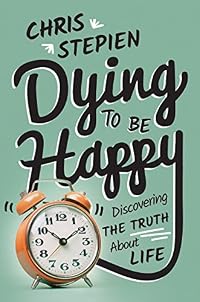
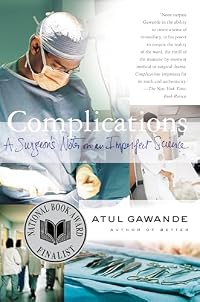
WildMaggie Thoughts on death and dying by brilliant young men as they come to terms with their own imminent deaths
20
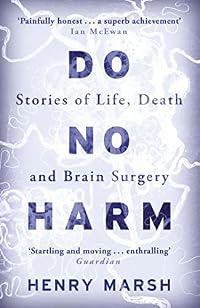
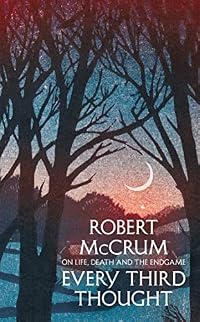
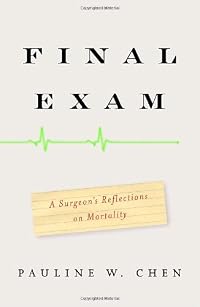
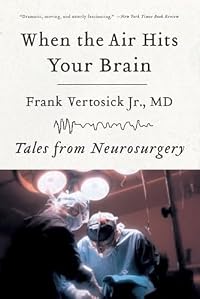
bluepiano An older neurosurgeon writes about dealing with advanced cancer. Less autobiographical,, more reflective.
bluepiano Author is also suffering a terminal lung disease. Far more thoughtful and thought-provoking, gives a convincing argument for a change in doctors' attitudes without the autobiographical cletter of this book.
Member Reviews
I cried several times while reading When Breath Becomes Air. This one cut a bit close to the bone for me, but not entirely for the reasons one might think. I can only begin to imagine the depth of this man's anger & grief and I'm amazed at how he overcame them to write such a beautiful book with the last of his fading strength. Though part of me wishes it were longer, in actuality I doubt I could have handled it as a 400 pager. Mainly I wish he'd found the time to write other things, since his plan was to be a surgeon for the first part of his life and a writer for the second.
I bought this in hardcover form because I thought I would probably want to read it more than once, and I hope to have my kids each read it at some point. That made show more it much harder to save my favorite passages, though. I was stuffing little pieces of paper in it to mark pages, but sadly some of them fell out. But here are two short ones. One with some with humor:
"The good news is I've already outlived two Brontës, Keats and Stephen Crane. The bad news is I haven't written anything yet."
And one without:
"It occurred to me that my relationship with statistics changed as soon as I became one."
There is another I loved about hard decisions when one's loved one's quality of life has ebbed, but it is quite long and rather depressing. I might come back and add that later, or I might just keep that one to myself. show less
I bought this in hardcover form because I thought I would probably want to read it more than once, and I hope to have my kids each read it at some point. That made show more it much harder to save my favorite passages, though. I was stuffing little pieces of paper in it to mark pages, but sadly some of them fell out. But here are two short ones. One with some with humor:
"The good news is I've already outlived two Brontës, Keats and Stephen Crane. The bad news is I haven't written anything yet."
And one without:
"It occurred to me that my relationship with statistics changed as soon as I became one."
There is another I loved about hard decisions when one's loved one's quality of life has ebbed, but it is quite long and rather depressing. I might come back and add that later, or I might just keep that one to myself. show less
”Severe illness wasn’t life-altering, it was life-shattering. It felt less like an epiphany – piercing burst of light, illuminating What Really Matters – and more like someone had just firebombed the path forward.”
Already having made such a difference in the lives of his patients, and on the cusp of fully beginning his neurosurgery future, Dr. Kalanithi is diagnosed with lung cancer, too sick to even attend his graduation.
This is a remarkable book. The questions with which he’s grappled as a student - ”Where did biology, morality, literature, and philosophy intersect?” “What makes life meaningful enough to go on living?” - he meets head-on during his illness. This work, written while hurrying against the time that show more was ticking away from him, is thoughtful, sharp and poignant.
Highly recommended for anyone interested in the medical field, or who knows someone with a hard diagnosis. show less
Already having made such a difference in the lives of his patients, and on the cusp of fully beginning his neurosurgery future, Dr. Kalanithi is diagnosed with lung cancer, too sick to even attend his graduation.
This is a remarkable book. The questions with which he’s grappled as a student - ”Where did biology, morality, literature, and philosophy intersect?” “What makes life meaningful enough to go on living?” - he meets head-on during his illness. This work, written while hurrying against the time that show more was ticking away from him, is thoughtful, sharp and poignant.
Highly recommended for anyone interested in the medical field, or who knows someone with a hard diagnosis. show less
It turned out to be very bad timing for me to read a book by someone dying of cancer: during the very long time between getting on the waiting list at the library and getting the book I was diagnosed with breast cancer. I very nearly sent the book back unread. But I thought I'd read a couple of pages and just see what it was like, and I wound up devouring it.
This was such a thoughtful and loving memoir as well as a wide-ranging philosophical inquiry into the relationship of life and death! I'm not a particularly introspective person, but this gave me many things to think about. I'm glad I read it. And maybe it just was the right time.
This was such a thoughtful and loving memoir as well as a wide-ranging philosophical inquiry into the relationship of life and death! I'm not a particularly introspective person, but this gave me many things to think about. I'm glad I read it. And maybe it just was the right time.
When Paul Kalanithi passed away on March 9, 2015, I was a high school senior, concerned more with my on-again off-again boyfriend than anything remotely close to the meaning of life and death.
Five years later, I found myself sobbing into the pillow of my makeshift bedroom (thanks, quarantine), clinging to the final words of Paul’s book.
When Breath Becomes Air didn’t have me repeatedly tearing up and dabbing my eyes at multiple parts. Rather, the heavy emotion grew and grew inside me as I read, until I knew the tears were inevitable. And when I finished those final words, I ran to that pillow and gasp-sobbed into it, curling myself into a ball and shaking until I had nothing left to cry.
The name Paul Kalanithi hadn’t meant a thing show more to me three days earlier.
My close friend from college sent me the book in the mail for my birthday, proclaiming it to be a personal favorite and a highly recommended read. Sure, I’d heard of When Breath Becomes Air, although I can’t remember where or when or why.
Not long before, my high school best friend had sent me The Unwinding of the Miracle by Julie Yip-Williams, and When Breath Becomes Air sounded similarly emotional and heavy. While I enjoyed that book, it was easier to return to the comfort of romantic novels and contemporary fiction rather than confront cancer and nonfiction death through literature again so soon.
But I wanted to read the book for my friend, and stuck it in my luggage with me as I packed up for the roadtrip to spend quarantine back East with my family. A quick text to let my friend know that I was starting the book soon meant that I would have to do just that: start the book soon.
So a few afternoons later, I did just that. By the following afternoon, the book was closed and I was sobbing into that pillow.
The name Paul Kalanithi means a lot more to me now.
I’m not sure that his name — or the poetry of his language, the beautiful inner sentiments, his story of letting go — will ever leave me. And if it does, I’ll pick the book up and read it again to remind myself.
I never want to forget the experience of reading this book.
Summary
For those not unlike myself, who haven’t/hadn’t heard of Paul Kalanithi, Paul was an esteemed neurosurgeon and neuroscientist who developed Stage Four lung cancer at 36. As he tells us, that only happens to 0.0012% of 36 year olds.
The book opens with Paul’s realization of his disease. The bad news that he had to deliver to patients time and again, delivered to him. Much sooner than ever anticipated, and at the same time, not anticipated at all.
We are then taken on the journey of Paul’s childhood, a brief summary of his time in Kingman, Arizona and how he wound up becoming a doctor, after saying it would be the one job he wouldn’t do.
In fact, the book opens with the line, “I knew for certainty that I would never be a doctor.”
Right off the bat, we as readers, knowing the premise of the book, understand that certainty is never guaranteed.
Paul’s love of literature and its importance in his life’s journey is emphasized, a testament to how he developed his gorgeous way with words. His mother instilled this in him; after moving her family to the area of the country with the worst performing school district, she forced her kids to read the best literature in hopes of them still being able to realize their potential (spoiler: it worked!).
This is followed by a chronological progression of Paul’s time in medical school and residency. As readers, we become invested in the case of each patient he shares — devastated by the death of premature twins, the recovery of an eight-year old with a brain tumor — whose stories only last a few page turns at most.
In the latter half of the book, we return to Paul’s diagnosis and the time he had left after that. The child that Paul and his wife, Lucy, chose to have amidst the cancer. His treatments, and the time they afforded him. His confusion about whether to spend time with family, return to surgery or write this book.
By the time Paul passes away, before the manuscript for the book in your hands is finished, it’s impossible to not be moved and rendered more or less speechless. At least, it was impossible for me. I’m only two days removed from finishing the book, and tears come back to my eyes as I write this.
Review
When Breath Becomes Air is sandwiched by a foreword from physician Abraham Verghese and an epilogue by Paul’s wife, Lucy Kalanithi.
Abraham is a particularly interesting choice for a prologue, as he had only met Paul once. His introduction describes in depth that although he met Paul in reality, he only truly got to know and understand Paul after reading this book.
“But it was only when I received the pages that you now hold in your hands, two months after Paul died, that I felt I had finally come to know him, to know him better than if I had been blessed to call him a friend.”
That’s high praise for a 225 page book — and I’ll admit that I didn’t buy it at first. I thought the book would be moving, yes. But it’s not often that a book creates that kind of a bond between author and reader. After finishing, I regret ever doubting Abraham. This book does exactly as he says.
In her epilogue, Lucy commented on the style in which Paul wrote this book, noting that she wishes people got to know how incredibly funny he was in real life, amongst other things.
I’ll disagree with Lucy a little bit here — there were a handful of moments that made me laugh out loud. Such visceral emotions across the spectrum because of words on a page is an incredible feat.
The following is one of my favorite funny moments. Paul had just started doing labs with real dead bodies, and was worried about how he would respond to cutting open and inspecting a real human body. This passage is a perfect balance between Paul’s elevated writing and down to earth nature:
“Cadaver dissection is a medical rite of passage and a trespass on the sacrosanct, engendering a legion of feelings: from revulsion, exhilaration, nausea, frustration, and awe to, as time passes, the mere tedium of academic exercise. Everything teeters between pathos and bathos: here you are, violating society’s most fundamental taboos, and yet formaldehyde is a powerful appetite stimulant, so you also crave a burrito.”
I can’t bring myself to spoil any more of the beauty of this book. I could have told you fifty pages in that this was a 5 out of 5, and I wasn’t wrong.
Read, read, read. And, most importantly, let yourself feel all of it.
5 out of 5 stars. show less
Five years later, I found myself sobbing into the pillow of my makeshift bedroom (thanks, quarantine), clinging to the final words of Paul’s book.
When Breath Becomes Air didn’t have me repeatedly tearing up and dabbing my eyes at multiple parts. Rather, the heavy emotion grew and grew inside me as I read, until I knew the tears were inevitable. And when I finished those final words, I ran to that pillow and gasp-sobbed into it, curling myself into a ball and shaking until I had nothing left to cry.
The name Paul Kalanithi hadn’t meant a thing show more to me three days earlier.
My close friend from college sent me the book in the mail for my birthday, proclaiming it to be a personal favorite and a highly recommended read. Sure, I’d heard of When Breath Becomes Air, although I can’t remember where or when or why.
Not long before, my high school best friend had sent me The Unwinding of the Miracle by Julie Yip-Williams, and When Breath Becomes Air sounded similarly emotional and heavy. While I enjoyed that book, it was easier to return to the comfort of romantic novels and contemporary fiction rather than confront cancer and nonfiction death through literature again so soon.
But I wanted to read the book for my friend, and stuck it in my luggage with me as I packed up for the roadtrip to spend quarantine back East with my family. A quick text to let my friend know that I was starting the book soon meant that I would have to do just that: start the book soon.
So a few afternoons later, I did just that. By the following afternoon, the book was closed and I was sobbing into that pillow.
The name Paul Kalanithi means a lot more to me now.
I’m not sure that his name — or the poetry of his language, the beautiful inner sentiments, his story of letting go — will ever leave me. And if it does, I’ll pick the book up and read it again to remind myself.
I never want to forget the experience of reading this book.
Summary
For those not unlike myself, who haven’t/hadn’t heard of Paul Kalanithi, Paul was an esteemed neurosurgeon and neuroscientist who developed Stage Four lung cancer at 36. As he tells us, that only happens to 0.0012% of 36 year olds.
The book opens with Paul’s realization of his disease. The bad news that he had to deliver to patients time and again, delivered to him. Much sooner than ever anticipated, and at the same time, not anticipated at all.
We are then taken on the journey of Paul’s childhood, a brief summary of his time in Kingman, Arizona and how he wound up becoming a doctor, after saying it would be the one job he wouldn’t do.
In fact, the book opens with the line, “I knew for certainty that I would never be a doctor.”
Right off the bat, we as readers, knowing the premise of the book, understand that certainty is never guaranteed.
Paul’s love of literature and its importance in his life’s journey is emphasized, a testament to how he developed his gorgeous way with words. His mother instilled this in him; after moving her family to the area of the country with the worst performing school district, she forced her kids to read the best literature in hopes of them still being able to realize their potential (spoiler: it worked!).
This is followed by a chronological progression of Paul’s time in medical school and residency. As readers, we become invested in the case of each patient he shares — devastated by the death of premature twins, the recovery of an eight-year old with a brain tumor — whose stories only last a few page turns at most.
In the latter half of the book, we return to Paul’s diagnosis and the time he had left after that. The child that Paul and his wife, Lucy, chose to have amidst the cancer. His treatments, and the time they afforded him. His confusion about whether to spend time with family, return to surgery or write this book.
By the time Paul passes away, before the manuscript for the book in your hands is finished, it’s impossible to not be moved and rendered more or less speechless. At least, it was impossible for me. I’m only two days removed from finishing the book, and tears come back to my eyes as I write this.
Review
When Breath Becomes Air is sandwiched by a foreword from physician Abraham Verghese and an epilogue by Paul’s wife, Lucy Kalanithi.
Abraham is a particularly interesting choice for a prologue, as he had only met Paul once. His introduction describes in depth that although he met Paul in reality, he only truly got to know and understand Paul after reading this book.
“But it was only when I received the pages that you now hold in your hands, two months after Paul died, that I felt I had finally come to know him, to know him better than if I had been blessed to call him a friend.”
That’s high praise for a 225 page book — and I’ll admit that I didn’t buy it at first. I thought the book would be moving, yes. But it’s not often that a book creates that kind of a bond between author and reader. After finishing, I regret ever doubting Abraham. This book does exactly as he says.
In her epilogue, Lucy commented on the style in which Paul wrote this book, noting that she wishes people got to know how incredibly funny he was in real life, amongst other things.
I’ll disagree with Lucy a little bit here — there were a handful of moments that made me laugh out loud. Such visceral emotions across the spectrum because of words on a page is an incredible feat.
The following is one of my favorite funny moments. Paul had just started doing labs with real dead bodies, and was worried about how he would respond to cutting open and inspecting a real human body. This passage is a perfect balance between Paul’s elevated writing and down to earth nature:
“Cadaver dissection is a medical rite of passage and a trespass on the sacrosanct, engendering a legion of feelings: from revulsion, exhilaration, nausea, frustration, and awe to, as time passes, the mere tedium of academic exercise. Everything teeters between pathos and bathos: here you are, violating society’s most fundamental taboos, and yet formaldehyde is a powerful appetite stimulant, so you also crave a burrito.”
I can’t bring myself to spoil any more of the beauty of this book. I could have told you fifty pages in that this was a 5 out of 5, and I wasn’t wrong.
Read, read, read. And, most importantly, let yourself feel all of it.
5 out of 5 stars. show less
[When Breath Becomes Air] by Paul Kalanithi 5.0
Okay, this is definitely one of my favorite reads for 2021, and perhaps THE favorite. Paul is a young neurosurgeon diagnosed with lung cancer and these are his musing on life, family, why he became a doctor and death. I bookmarked so many passages...here are just a few:
This book is not all doom and gloom, rather it embraces life and love. It's about family and passion, wanting to do right by people, and, yes, even the love of literature. It is beautiful and haunting. A must-read. show less
Okay, this is definitely one of my favorite reads for 2021, and perhaps THE favorite. Paul is a young neurosurgeon diagnosed with lung cancer and these are his musing on life, family, why he became a doctor and death. I bookmarked so many passages...here are just a few:
...only 0.0012 percent of 36-year-olds get lung cancer...It occurred to me that my relationships with statistics changed as soon as I became one.show more
In fourteenth-century philosophy, the word patient simply meant "the object of an action," and I felt like one. As a doctor, I was an agent, a cause; as a patient, I was merely something to which things happened.
Paul's wife: "Will having a newborn district from the time we have
together?" she asked. "Don't you think saying goodbye to your child will make your death more painful?" "Wouldn't it be great if it did?" I said.
...knowing that even if I'm dying, until I actually die, I am still living.
This is not the end...or even the beginning of the end. This is just the end of the beginning.
This book is not all doom and gloom, rather it embraces life and love. It's about family and passion, wanting to do right by people, and, yes, even the love of literature. It is beautiful and haunting. A must-read. show less
This may possibly be the most beautiful book I have ever read. The book was written by a young neurosurgery resident who was diagnosed with lung cancer who was about to finish his residency and embark on what promised to be a brilliant career. His undergraduate degree in literature shows in the beauty of his writing and the depth and serenity of his philosophy of life and death. I cried and I smiled and I doubt I will ever forget this book.
Here are a couple of quotes from the jacket:
"Rattling, heartbreaking, and ultimately beautiful, the too-young Dr. Kalanithi's memoir is proof that the dying are the ones who have the most to teach us about life." Atal Gawande
"Thanks to [When Breath Becomes Air], those of us who never met Paul show more Kalanithi will both mourn his death and benefit from his life. This is one of a handful of books I consider to be a universal donor--I would recommend it to anyone, everyone." Ann Pathett show less
Here are a couple of quotes from the jacket:
"Rattling, heartbreaking, and ultimately beautiful, the too-young Dr. Kalanithi's memoir is proof that the dying are the ones who have the most to teach us about life." Atal Gawande
"Thanks to [When Breath Becomes Air], those of us who never met Paul show more Kalanithi will both mourn his death and benefit from his life. This is one of a handful of books I consider to be a universal donor--I would recommend it to anyone, everyone." Ann Pathett show less
This is a short memoir by a neurosurgeon diagnosed with lung cancer at the age of 36, just as he was completing his residency. Paul Kalanithi describes the notoriously difficult and intense educational path he followed; his personal drive is unbelievable. When he is diagnosed, that same drive guides how he faces and manages his illness, and how he comes to understand what is most important to him. The book ends with a moving epilogue by his wife, Lucy. I first thought this book would be a quick read, but almost immediately realized I needed to pace myself. This is partly because Kalanithi’s thoughts and experience merit reflection, but I also felt profoundly sad. I am glad I read this, but am looking forward to something light and show more easy for my next read. show less
Members
- Recently Added By
Published Reviews
ThingScore 100
“When Breath Becomes Air” is gripping from the start. But it becomes even more so as Dr. Kalanithi tries to reinvent himself in various ways with no idea what will happen.
Part of this book’s tremendous impact comes from the obvious fact that its author was such a brilliant polymath. And part comes from the way he conveys what happened to him — passionately working and striving, show more deferring gratification, waiting to live, learning to die — so well. None of it is maudlin. Nothing is exaggerated. As he wrote to a friend: “It’s just tragic enough and just imaginable enough.” And just important enough to be unmissable. show less
Part of this book’s tremendous impact comes from the obvious fact that its author was such a brilliant polymath. And part comes from the way he conveys what happened to him — passionately working and striving, show more deferring gratification, waiting to live, learning to die — so well. None of it is maudlin. Nothing is exaggerated. As he wrote to a friend: “It’s just tragic enough and just imaginable enough.” And just important enough to be unmissable. show less
added by parlerodermime
Lists

Best Biographies, Autobiographies and Memoirs
464 works; 156 members

medical memoirs
24 works; 3 members

Top Five Books of 2016
795 works; 228 members

Top Five Books of 2021
604 works; 181 members

Memoirs Heal the Soul
22 works; 1 member

Recommend the 20 best books you've read in the last five years
2,167 works; 601 members

Top Five Books of 2015
811 works; 241 members

Phi Beta Kappa reading list
260 works; 8 members

Investment News 2021 What Advisors Are Reading This Summer
16 works; 1 member

40 Books to Read Before You’re 40
40 works; 4 members

Books Read in 2017
4,248 works; 130 members

NYT Readers best of 21st C
100 works; 8 members

Grief
15 works; 1 member

Book of the Month Selections 2016 to Present
130 works; 5 members

Non-Fiction
68 works; 1 member
Books That Made Us Cry
278 works; 145 members

Books Read in 2023
5,547 works; 145 members

Tagged Doctors
15 works; 5 members

Books With the Most Memorable Titles
478 works; 158 members

Books Read in 2018
4,360 works; 110 members

Books Read in 2016
4,666 works; 199 members

Deathreads
78 works; 2 members

Five star books
1,755 works; 107 members

el
1,139 works; 1 member
Author Information

3 Works 6,810 Members
All Editions
Some Editions
Awards and Honors
Work Relationships
Is contained in
Common Knowledge
- Canonical title
- When Breath Becomes Air
- Original title
- When Breath Becomes Air
- Original publication date
- 2016-01-12
- Important places
- Kingman, Arizona, USA; New Haven, Connecticut, USA; Palo Alto, California, USA
- Epigraph
- You that seek what life is in death,
Now find it air that once was breath.
New names unknown, old names gone:
Till time end bodies, but souls none.
Reader! then make time, while you be,
But steps t... (show all)o your eternity.
— Baron Brooke Fulke Greville, “Caelica 83” - Dedication
- For Cady
- First words
- I knew with certainty that I would never be a doctor.
— Part One
I flipped through the CT scan images, the diagnosis obvious: the lungs were matted with innumerable tumours, the spine deformed, a full lobe of the liver obliterated.
— Prologue - Quotations
- I knew with certainty that I would never be a doctor. I stretched out in the sun, relaxing on a desert plateau just above our house. My uncle, a doctor, like so many of my relatives, had asked me earlier that day what I plann... (show all)ed on doing for a career, now that I was heading off to college, and the question barely registered. If you had forced me to answer, I suppose I would have said a writer, but frankly, thoughts of any career at this point seemed absurd. I was leaving this small Arizona town in a few weeks, and I felt less like someone preparing to climb a career ladder than a buzzing electron about to achieve escape velocity, flinging out into a strange and sparkling universe.
Though we had free will, we were also biological organisms -- the brain was an organ, subject to all the laws of physics, too! Literature provided a rich account of human meaning; the brain, the, was the machinery that someho... (show all)w enabled it. It seemed like magic.
Literature provided, I believed, the richest material for moral reflection.
Moral speculation was puny compared moral action.
I had come to see language as an almost supernatural force, existing between people, bringing our brains, shielded in centimeter-thick skulls, into communion.
In anatomy lab, we objectified the dead, literally reducing them to organs, tissues, nerves, muscles. On that first day, you simply could not deny the humanity of the corpse. But by the time you'd skinned the limbs, sliced th... (show all)rough inconvenient muscles, pulled out the lung, cut open the heart, and removed a lobe of the liver, it was hard to recognize this pile of tissue as human. Anatomy lab, in the end, becomes less a violation of the sacred and more something that interferes with happy hour, and that realization discomfits. In our rare reflective moments, we were all silently apologizing to our cadavers, not because we sensed the transgression but because we did not.
It was not a simple evil, however. All of medicine, not just cadaver dissection, trespasses into sacred spheres. Doctors invade the the body in every way imaginable. They see people at their most vulnerable, their most scared... (show all), their most private. They escoret them into the world, and then back out. Seeing the body as matter and mechanism is th eflip side to easing the most profound human suffering. By the same token, the most profound human suffering becomes a mere pedagogical tool.
Neurosurgery seemed to present the most challenging and direct confrontation with meaning, identity, and death. Concomitant with the enormous responsibilities they shouldered, neurosurgeons were also masters of many fields: n... (show all)eurosurgery, ICU medicine, neurology, radiology. Not only would I have to train my mind and hands, I realized; I'd have to train my eyes, and perhaps other organs as well. The idea was overwhelming and intoxicating; perhaps I, too, could join the ranks of these polymaths who strode into the densest thicket of emotional, scientific, and spiritual problems and found, or carved, ways out.
I wondered if, in my brief time as a physician, I had made more moral slides than strides.
I feared I was on the way to becoming Tolstoy's stereotype of a doctor, preoccupied with empty formalism, focused on rote treatment of disease -- and utterly missing the larger human significance.
As a resident, my highest ideal was not saving lives -- everyone dies eventually -- but guiding a patient or family to an understanding of death or illness.
Any major illness transforms a patient's -- really, an entire family's -- life.
The root of disaster means a star coming apart, and no image expresses better the look in a patient's eyes when hearing a neurosurgeon's diagnosis.
A tureen of tragedy was best alloted by the spoonful.
Second, it is important to be accurate, but you must always leave some room for hope . . . I came to believe that it is irresponsible to be more precise than accurate. Those apocryphal doctors who gave specific numbers ("The ... (show all)doctor told me I had six months to live"): Who were they, I wondered, and who taught them statistics.
Openness to human relationality does not mean revealing grand truths from the apse; it means meeting patients where they are, in the narthex or nave, and bringing them as far as you can.
Being with these patients in these moments certainly had its emotional cost, but it also had its rewards. I don't think I ever spent a minute of any day wondering why I did this work, or whether it was worth it. The call to p... (show all)rotect life -- and not merely life but an another's identity; it is perhaps not too much to say another's soul -- was obvious in its sacredness.
Before operating on a patient's brain, I realized, I must first understand his mind: his identity, his values, what makes his life worth living, and what devastation makes it reasonable to let that life end. The cost of my de... (show all)dication to succeed was high, and the ineluctable failures brought me nearly unbearable guilt. Those burderns are what make medicine holy and wholly impossible: in taking up another's cross, one must sometimes get crushed by the weight.
Perhaps unique in medicine, the ethos of neurosurgery -- of excellence in all things -- maintains that excellence in neurosurgery alone is not enough. In order to carry the field, neurosurgeons must venture forth and excel in... (show all) other fields as well.
Certain brain areas are considered near--inviolable, like the primary motor cortex, damage to which results in paralysis of affected body parts. But the most sacrosanct regions of the cortex are those that control language . ... (show all). . What kind of life exists withouth language?
I began to realize that coming in such close contact with my own mortality had changed both nothing and everything. Before my cancer was diagnosed, I knew that someday I would die, but I didn't know when. After the diagnosis,... (show all) I knew that someday I would die, but I didn't know when. But now I knew it acutely. The problem wasn't a scientific one. The fact of death is unsettling. Yet there is no other way to live.
It occurred to me that my relationship with statistics changed as soon as I became one.
What patients seek is not scientific knowledge that doctors hide but existential authenticity each person must find on her own. Getting too deeply into statistics is like trying to quench a thirst with salty water. The angst ... (show all)of facing morality has no remedy in probability.
I had passed from the subject to the direct object of every sentence of my life.
"Will having a newborn distract from the time we have together?" she asked. "Don't you think saying goodbye to your child will make your death more painful?" "Wouldn't it be great if it did?" I said. Lucy and I both felt that... (show all) life wasn't about avoiding suffering. Years ago, it had occurred to me that Darwin and Nietzshe agreed on one thing: the defining characteristic of the organism is striving. Describing life otherwise was like painting a tiger without stripes. After so many years of living with death, I'd come to understand that the easiest death wasn't necessarily the best. We talked it over. Our families gave their blessing. We decided to have a child. We would carry on living, instead of dying.
I was searching for a vocabulary with which to make sense of death, to find a way to begin defining myself and inching forward again. The privilege of direct experience had led me away from literary and academic work, yet now... (show all) I felt that to understand my own direct experiences, I would have to translate them back into language. Hemingway described his process in similar terms: acquiring rich experiences, then retreating to cogitate and write about them. I needed words to go forward. And so it was literature that brought me back to life during this time.
Even working on the dead, with their faces covered, their names a mystery, you fund that their humanity pops up at you—in opening my cadaver’s stomach, I found two indigested morphine pills, meaning that he had died in pa... (show all)in, perhaps alone and fumbling with the cap of a pill bottle.
Because I would have to learn to live in a different way, seeing death as an imposing itinerant visitor but knowing that even if I’m dyung, until I actually die, I am still living.
I had learned something, something not found in Hippocrates, Maimonides, or Osler: the physician’s duty is not to stave off death or return patients to their old lives, but to take into our arms a patient and family whose l... (show all)ives have disintegrated and work until they can stand back up and face, and make sense of, their own existence. - Last words
- (Click to show. Warning: May contain spoilers.)There is perhaps only one thing to say to this infant, who is all future, overlapping briefly with me, whose life, barring the improbable, is all but past. That message is simple: When you come to one of the many moments in life where you must give an account of yourself, provide a ledger of what you have been, and done, and meant to the world, do not, I pray, discount that you filled a dying man's days with a sated joy, a joy unknown to me in all my prior years, a joy that does not hunger for more and more but rests, satisfied. In this time, right now, that is an enormous thing.
- Blurbers
- Gawande, Atul; Patchett, Ann
- Original language
- English
Classifications
Statistics
- Members
- 6,809
- Popularity
- 1,747
- Reviews
- 338
- Rating
- (4.24)
- Languages
- 17 — Chinese, Danish, Dutch, English, Finnish, French, German, Italian, Korean, Lithuanian, Polish, Romanian, Spanish, Swedish, Turkish, Vietnamese, Portuguese (Portugal)
- Media
- Paper, Audiobook, Ebook
- ISBNs
- 66
- ASINs
- 16
