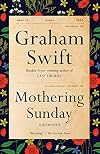
Mothering Sunday
by Graham Swift
On This Page
Description
"From the Booker Award winner: a luminous, profoundly moving work of fiction that begins with an afternoon tryst in 1924 between a servant girl and the young man of the neighboring house, but then opens to reveal the whole life of a remarkable woman. Twenty-two-year-old Jane Fairchild, orphaned at birth, has worked as a maid at one English country estate since she was sixteen. And for almost all of those years she has been the secret lover to Paul Sheringham, the scion of the estate next show more door. On an unseasonably warm March afternoon, Jane and Paul will make love for the last time--though not, as Jane believes, because Paul is about to be married--and the events of the day will alter Jane's life forever. As the narrative moves back and forth from 1924 to the end of the century, what we know and understand about Jane--about the way she loves, thinks, feels, sees, remembers--deepens with every beautifully wrought moment. Her story is one of profound self-discovery and through her, Graham Swift has created an emotionally soaring and deeply affecting work of fiction"-- show lessTags
Recommendations
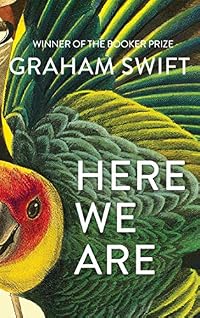
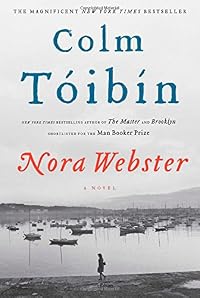
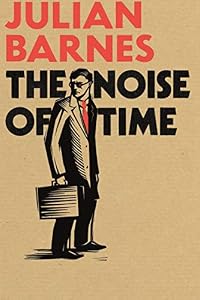

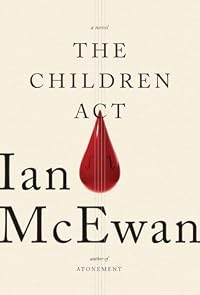
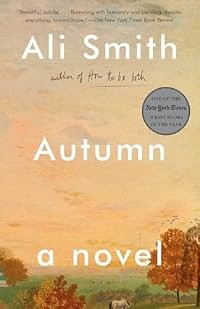
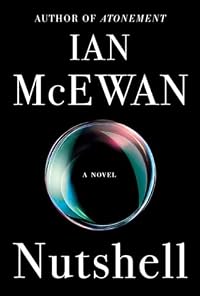
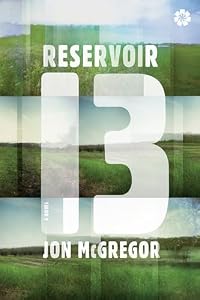
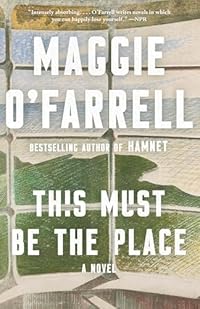








Member Recommendations
Member Reviews
Graham Swift has a wonderful way with words, creating characters and scenarios artfully from just the minimum. Over the course of Mothering Sunday, he reveals how one day shaped the life of Jane Fairchild, gradually revealing the rest of her life in this novella.
On the exceptionally warm and sunny day in March, Jane is a servant for the Nivens, a couple who lost their sons during the Great War. Mothering Sunday is a ‘day off’ (post breakfast and before dinner) for the servants, an opportunity to visit their own mothers. For Jane, that’s not possible as she’s an orphan. Her plans are to find somewhere quiet and sunny and read one of the books from the Niven’s library (with permission of course, Mr Niven is supportive of show more Jane’s reading). But a phone call to the house beckons her to ride to her lover’s house, where he is alone. Paul is about to marry someone else, and Jane is not quite sad, not quite envious. She’s curious as to what Paul’s fiancé Emma is like and fairly accepting of the class differences between them. Afterwards, Paul must meet his fiancé for lunch but tells Jane to stay in the house as long as she likes. Big houses don’t really hold an allure for her, so she returns to the Nivens early, only to meet Mr Niven. A shocking thing has happened, and knocks both of them for six. In a way, this defines a turning point in Jane’s life and sets her towards becoming a writer.
Jane’s future is gradually revealed over the course of the novel, first via a sentence here and there until it takes over the last part of the novella. It’s in contrast to the slow, lazy morning of that day and its shocking conclusion. Piecing together Jane’s life over the novel was fun, as was languishing over each of Swift’s sentences. He captures the melancholy post-war as well as the change in the air as the end draws near for big houses and servants. It’s beautifully constructed, creating emotion through experience of one woman’s eyes. This is the kind of novel that makes a reader’s heart sing.
http://samstillreading.wordpress.com show less
On the exceptionally warm and sunny day in March, Jane is a servant for the Nivens, a couple who lost their sons during the Great War. Mothering Sunday is a ‘day off’ (post breakfast and before dinner) for the servants, an opportunity to visit their own mothers. For Jane, that’s not possible as she’s an orphan. Her plans are to find somewhere quiet and sunny and read one of the books from the Niven’s library (with permission of course, Mr Niven is supportive of show more Jane’s reading). But a phone call to the house beckons her to ride to her lover’s house, where he is alone. Paul is about to marry someone else, and Jane is not quite sad, not quite envious. She’s curious as to what Paul’s fiancé Emma is like and fairly accepting of the class differences between them. Afterwards, Paul must meet his fiancé for lunch but tells Jane to stay in the house as long as she likes. Big houses don’t really hold an allure for her, so she returns to the Nivens early, only to meet Mr Niven. A shocking thing has happened, and knocks both of them for six. In a way, this defines a turning point in Jane’s life and sets her towards becoming a writer.
Jane’s future is gradually revealed over the course of the novel, first via a sentence here and there until it takes over the last part of the novella. It’s in contrast to the slow, lazy morning of that day and its shocking conclusion. Piecing together Jane’s life over the novel was fun, as was languishing over each of Swift’s sentences. He captures the melancholy post-war as well as the change in the air as the end draws near for big houses and servants. It’s beautifully constructed, creating emotion through experience of one woman’s eyes. This is the kind of novel that makes a reader’s heart sing.
http://samstillreading.wordpress.com show less
A bright brave soul who gets a taste of freedom, consumes it with relish, and later runs with it. This short novel isn't on the scale of Waterland in size, depth, or structure, which of course in its short form would be extremely difficult–but it is very, very good. In reminded me a little of Woolf both in writing style and in the way we are inside our narrator's mind as her thoughts drift through her, what turns out to be, intense day. Jane is clearly bright, brave and adventurous and willing to push the envelope of her strictly structured maid's world in its rigid environment. Her wealthy lover, after some farewell for ever love making, leaves her in his family home, and she wanders around naked, feeling and absorbing the house and show more the experience, her universe expanding on her special Sunday off. I liked the sisterhood aspect of the maids world that was portrayed. A fine, very well told tale. show less
Deceptively simple in outline but complex and daring in execution, the action of Graham Swift’s brief novel Mothering Sunday takes place on March 30, 1924. On this day, Jane Fairchild, the maid at Beechwood, cycles to Upleigh for a final tryst with Paul Sheringham, the young master of that house. Paul is betrothed to Emma Hobday and the wedding is imminent. But Paul and Jane have been engaged in a physical relationship for several years, since both were in their late teens. It is a radiant, sun-dappled day, unseasonably warm, the kind of day when one notices the angle of sunlight and its honeyed warmth as it strikes bare skin. Mothering Sunday, the religious precursor to the secular Mother’s Day, was traditionally a day one spent show more with one’s mother--servants and their employers alike. Jane, an orphan with no family, is simply given the day off, which she had planned to spend reflecting and reading and gazing at the countryside, until a phone call draws her to Upleigh to have sex with the lover she knows will soon be abandoning her. But Swift’s novel is concerned with much more than a sexual escapade. The pivotal day of March 30, 1924 is also the day that Jane Fairchild decided or discovered (take your pick) that she was a writer. That was the day when tragedy struck and Jane achieved a heightened awareness of how a random incident, intertwining fates, secret love and strategic silence can join forces to create compelling narrative. The Jane Fairchild of Swift’s novel that matters most is not the young maid we meet lying naked in Paul Sheringham’s bed in the opening scene, but instead the observant young woman whose fascination with human behaviour leads to an equal fascination with books, which in turn impels her to leave her position at Beechwood for a job in a bookshop, and to eventually start writing books of her own. In the latter sections of Swift’s novel, he imagines an elderly Jane responding evasively to an interviewer’s questions and reflecting on the events of March 30, 1924, recalling the day in minute and meaningful detail. Mothering Sunday is a novel that constantly surprises: with a subtle shift in emphasis it transforms itself from one thing into something else entirely. Its brevity may fool you into thinking it’s a minor work. In fact, it is a moving and eloquent testament to the seductive power of the written word by a novelist whose storytelling gifts have been widely and deservedly acclaimed. show less
Surprisingly nuanced, this is the story of Jane Fairchild, an orphan-turned-maid servant who is having an affair with the handsome heir in a neighboring English country house. The year is 1924; the First War has ravaged the country and everything is changing fast. But Jane is just a young woman in love with a young man, the two of them from such different spheres that she hardly even grieves the impossibility of their relationship. Swift's tale focuses largely on a single day but he captures a lifetime through the narrative, moving back and forth through Jane's life such that her character emerges in multifaceted light and shadow. That Jane becomes a writer provides an intriguing reflective vehicle for the author to consider truth, show more fiction, lies and stories as they meld into a novelist's craft. That a writer draws upon their own experience, their own story, is inevitable. So this story about one remarkable day in the life of an ordinary servant girl becomes a meditation on the novelist's material: the "stuff of life," and the novelist's intention: through fiction, through lies, to tell the truth. show less
A young man, the sole surviving child of an upper class family post WWI, and a young woman, a foundling, maid at a neighboring family meet on Mothering Sunday. She has nothing but herself and he has everything but himself, but this is really about how life is turned into art and how language both wonderfully expresses life and is inadequate to do so.
While billed as a romance, Mothering Sunday is actually a spare novel that bounces between timelines in the life of servant turned author Jane Fairchild. Born in 1901, servant Jane Fairchild had a multi-year secret affair with Paul, the heir of a neighboring well to do family. Jane and Paul spend Mothering Sunday (what later became to be known as Mothers Day) having one last fling before his marriage, scheduled just two weeks later. At the end of the 20th Century a ninety year old Jane, now a successful writer, reflects back on her long and amazing life and that one last day with her secret lover.
Readers should not let the word romance in the title lead them to think that his novel is what is traditionally thought of as romantic. Jane show more is practical and articulate. Trying to better herself without coming off as grasping. Instead of being portrayed as a more traditional star-crossed or dewy heroine, she is fully aware that her relationship with Paul is not destined to be permanent. While she may wish circumstances could be different as she spends a final afternoon alone in his home, Jane understands the class structure that dictates society and the unbridgeable gap between herself and Paul. It's also rather interesting to get her perspective at the end of her life. A life the spanned nearly the entirety of the Twentieth Century. show less
Readers should not let the word romance in the title lead them to think that his novel is what is traditionally thought of as romantic. Jane show more is practical and articulate. Trying to better herself without coming off as grasping. Instead of being portrayed as a more traditional star-crossed or dewy heroine, she is fully aware that her relationship with Paul is not destined to be permanent. While she may wish circumstances could be different as she spends a final afternoon alone in his home, Jane understands the class structure that dictates society and the unbridgeable gap between herself and Paul. It's also rather interesting to get her perspective at the end of her life. A life the spanned nearly the entirety of the Twentieth Century. show less
It's Mothering Sunday, 1924, and Jane Fairchild, orphaned housemaid, is given the day off. Conveniently having no mother to visit, Jane is free to rendezvous with her lover, rich young heir Paul Shefington. Paul's parents have scheduled a lunch date to meet his fiancée's parents, so the house is empty. It will be the first time she has met Paul at Upbridge, and the first time he has asked her specifically to come in through the front door--signs, she believes, that this will be a farewell tryst as the wedding is only days away. Throughout the novel, there are hints that, although written in the present tense, the story is a retrospective, and that Jane has become a famous author. The events of this day have apparently become show more life-changing for her.
There's a dreamy quality to the description of the lovers' meeting--yet I have to admit that I was getting tired of the repeated image of a map-shaped post-coitus stain on the bed sheets, which was mentioned over and over again with various details. Please. Spare me. The lovemaking itself is left to the imagination, but afterwards, Jane admires the way Paul walks, naked, through the room. It really never occurred to me, however, that this was a love relationship, at least on Paul's part. There's a moment when he lights each of them a cigarette as they lie naked in bed, and he places the ashtray on her belly, between navel and pubis. How romantic. And they never talk--no conversation at all. It just seemed to me that Paul was using an impressionable young woman of lower social class for sex, treating her more like an object than a person he loved. But Jane's interpretation of their meeting and of later events is quite different. After Paul leaves, Jane remains in the house, walking naked through every room with a sense of wonder and ownership, even eating the ham and veal pie that has been set out for Paul's snack.
So what is there to admire about this book? Well, Swift has mastered the art of getting inside his main character's head. The novel is told by a third person narrator but strictly from Jane's point of view, so we're privy to her eye on every detail and to her thoughts, present and past, on that particular Mothering Sunday. Swift does a fine job of developing Jane's practicality, tempered by her youth, and of conveying her mixed emotions. While I found myself focusing mainly on the events and her character, after I finished the book, I found myself thinking more about its various themes: the effect of The Great War and the loss of so many young men, the changing relations between the social classes, the increasing opportunities for woman to be independent, the way memories can transform themselves and transform lives. And Jane discusses how, as a writer, she had taken the people and events of that Mothering Sunday and transformed them into her own novels. In that last regard, many readers have noted a similarity to Ian McEwan's Atonement. But I would also note similarities to McEwan's novella On Chesil Beach, in which the main characters are also greatly affected by a single sexual encounter. Both books also uniquely and unexpectedly link a private moment to the larger social changes occurring in the era.
Overall, I can't say that I loved Mothering Sunday, but I do appreciate the way it lingered in my mind and opened up deeper meanings than were apparent on the surface.
Edited to add I upped my rating of this book to four stars, based on the fact that I'm still thinking about it several days after finishing it--always a sign that the writer has done something right! show less
There's a dreamy quality to the description of the lovers' meeting--yet I have to admit that I was getting tired of the repeated image of a map-shaped post-coitus stain on the bed sheets, which was mentioned over and over again with various details. Please. Spare me. The lovemaking itself is left to the imagination, but afterwards, Jane admires the way Paul walks, naked, through the room. It really never occurred to me, however, that this was a love relationship, at least on Paul's part. There's a moment when he lights each of them a cigarette as they lie naked in bed, and he places the ashtray on her belly, between navel and pubis. How romantic. And they never talk--no conversation at all. It just seemed to me that Paul was using an impressionable young woman of lower social class for sex, treating her more like an object than a person he loved. But Jane's interpretation of their meeting and of later events is quite different. After Paul leaves, Jane remains in the house, walking naked through every room with a sense of wonder and ownership, even eating the ham and veal pie that has been set out for Paul's snack.
So what is there to admire about this book? Well, Swift has mastered the art of getting inside his main character's head. The novel is told by a third person narrator but strictly from Jane's point of view, so we're privy to her eye on every detail and to her thoughts, present and past, on that particular Mothering Sunday. Swift does a fine job of developing Jane's practicality, tempered by her youth, and of conveying her mixed emotions. While I found myself focusing mainly on the events and her character, after I finished the book, I found myself thinking more about its various themes: the effect of The Great War and the loss of so many young men, the changing relations between the social classes, the increasing opportunities for woman to be independent, the way memories can transform themselves and transform lives. And Jane discusses how, as a writer, she had taken the people and events of that Mothering Sunday and transformed them into her own novels. In that last regard, many readers have noted a similarity to Ian McEwan's Atonement. But I would also note similarities to McEwan's novella On Chesil Beach, in which the main characters are also greatly affected by a single sexual encounter. Both books also uniquely and unexpectedly link a private moment to the larger social changes occurring in the era.
Overall, I can't say that I loved Mothering Sunday, but I do appreciate the way it lingered in my mind and opened up deeper meanings than were apparent on the surface.
Edited to add I upped my rating of this book to four stars, based on the fact that I'm still thinking about it several days after finishing it--always a sign that the writer has done something right! show less
Members
- Recently Added By
Published Reviews
ThingScore 100
Graham Swift's slim, incantatory new book is one of those deceptively spare tales (like Julian Barnes' The Sense of an Ending) that punch well above their weight. Mothering Sunday, more novella than novel, zeroes in on a time of seismic change in English society and a turning point in the life of a woman who against all odds becomes a famous author.
added by Nickelini
Mothering Sunday is a powerful, philosophical and exquisitely observed novel about the lives we lead, and the parallel lives – the parallel stories – we can never know: “All the scenes. All the scenes that never occur, but wait in the wings of possibility.”
It may just be Swift’s best novel yet.
It may just be Swift’s best novel yet.
added by Nickelini
Comparisons will be made with Ian McEwan’s controversially Booker-shortlisted On Chesil Beach, at 166 pages marginally longer than Mothering Sunday. Both narratives share the focus on a single pivotal moment and its consequences, on intimacy as hazardous territory, on Englishness and on the unknowableness of others. But where On Chesil Beach feels like a meditation under a low grey sky, show more Mothering Sunday is bathed in light; and even when tragedy strikes, it blazes irresistibly. show less
added by Nickelini
Lists

1001 Books You Must Read Before You Die
1,448 works; 1,132 members

Top Five Books of 2017
757 works; 231 members

Books Read in 2016
4,666 works; 197 members

Walter Scott Prize Winners and Shortlist
66 works; 6 members

Books Read in 2021
5,361 works; 114 members
Author Information

21+ Works 10,727 Members
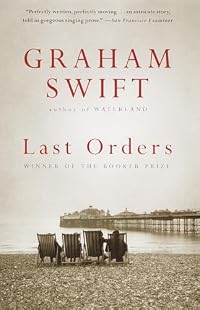
British novelist Graham Swift was born in London on May 4, 1949. He attended Cambridge University and York University. Swift has written five novels, including Waterland. (Bowker Author Biography) Novelist Graham Swift was born in London, England on May 4, 1949. He attended Cambridge University where he received a B.A. in 1970, and an M.A. in show more 1975. He also attended York University from 1970-73. He taught English part time at several London Colleges between the years 1974 to1983. Swift's fiction tends to touch upon the subject of World War II as well as exploring the larger subject of history. "Waterland" established Swift's reputation and was made into a major film. He also wrote "Last Orders" and his novels have won a variety of prestigious literary awards and have been widely translated. Swift was an avid fisherman and co-edited an anthology of fishing in literature. (Bowker Author Biography) show less
Awards and Honors
Awards
Distinctions
The Guardian Book of the Day (2016-02-20)
Series
Belongs to Publisher Series
Work Relationships
Has the adaptation
Common Knowledge
- Canonical title
- Mothering Sunday
- Original title
- Mothering Sunday
- Alternate titles*
- Moeders Zondag : een romance
- Original publication date
- 2016
- People/Characters
- Jane Fairchild; Paul Sheringham; Mr Niven
- Important places
- Berkshire, England, UK
- Related movies
- Mothering Sunday (2021)
- Epigraph
- You shall go to the ball.
- Dedication
- For Candice
- First words
- Once upon a time before the boys were killed and when there were more horses than cars, before the male servants disappeared and they made do, at Upleigh and at Beechwood, with just a cook and a maid, the Sheringhams had owne... (show all)d not just four horses in their own stable, but what might be called a "real horse," a race horse, a thoroughbred.
- Quotations
- And what if orphans really were called orchids? And if the sky was called the ground. And if a tree was called a daffodil. Would it make any difference to the actual nature of things? Or their mystery?
We are all fuel. We are born, and we burn, some of us more quickly than others. There are different kinds of combustion. But not to burn, never to catch fire at all, that would be the sad life, wouldn't it? - Last words
- (Click to show. Warning: May contain spoilers.)And it was about being true to the fact, the one thing only followed from the other, that many things in life - oh so many more than we think - can never be explained at all.
- Original language
- English
*Some information comes from Common Knowledge in other languages. Click "Edit" for more information.
Classifications
Statistics
- Members
- 972
- Popularity
- 27,032
- Reviews
- 60
- Rating
- (3.87)
- Languages
- 10 — Danish, Dutch, English, Estonian, French, German, Italian, Portuguese, Spanish, Swedish
- Media
- Paper, Audiobook, Ebook
- ISBNs
- 51
- ASINs
- 15