
Life: A Natural History of the First Four Billion Years of Life on Earth
by Richard A. Fortey
On This Page
Description
By one of Britain's most gifted scientists: a magnificently daring and compulsively readable account of life on Earth (from the "big bang" to the advent of man), based entirely on the most original of all sources--the evidence of fossils. With excitement and driving intelligence, Richard Fortey guides us from the barren globe spinning in space, through the very earliest signs of life in the sulphurous hot springs and volcanic vents of the young planet, the appearance of cells, the slow show more creation of an atmosphere and the evolution of myriad forms of plants and animals that could then be sustained, including the magnificent era of the dinosaurs, and on to the last moment before the debut of Homo sapiens. Ranging across multiple scientific disciplines, explicating in wonderfully clear and refreshing prose their findings and arguments--about the origins of life, the causes of species extinctions and the first appearance of man--Fortey weaves this history out of the most delicate traceries left in rock, stone and earth. He also explains how, on each aspect of nature and life, scientists have reached the understanding we have today, who made the key discoveries, who their opponents were and why certain ideas won. Brimful of wit, fascinating personal experience and high scholarship, this book may well be our best introduction yet to the complex history of life on Earth. A Book-of-the-Month Club Main Selection With 32 pages of photographs. show lessTags
Recommendations





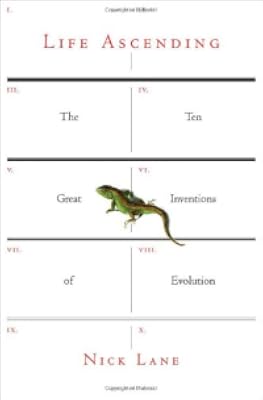
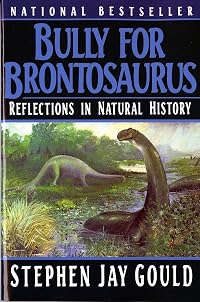
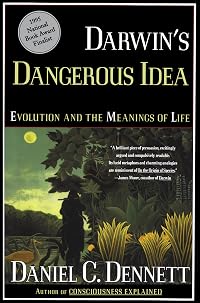


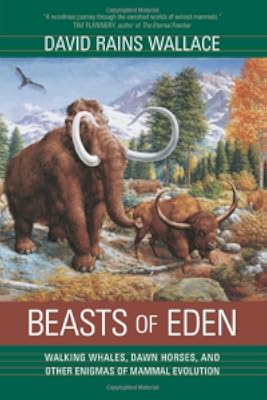











Member Recommendations
thcson Read Murchie too! He's not a scientist but he has some very original and interesting thoughts about life.
Member Reviews
Professor Fortey takes the reader on a chronological tour of the the biological history of earth. However, his story is not a boring slog through the strata, but an eclectic stroll among fascinating organisms. Fortey includes many asides in his narrative, including important aspects of geology, portraits of eccentric paleontologists and personal anecdotes about fossil hunting is unusual locations. This book manages to summarise paleontological controversies in a fair manner without bogging down the story. I found the author's descriptive writing style to be rich and lyrical.
Enjoyed Richard Fortey's presentation of life on earth, especially his last chapter. While I knew some aspects of his topic, he brought it all together in one book with sly comments showing a wry sense of humor. Great book for me to read before going to sleep.
This is a big book, the story of four billion years of evolution, a history of our planet before man appears. Fortey takes the reader to a fascinating journey in time that begins in the shores of Spitsbergen. His recollection of his first expedition, in that bare, gray rocky outcrop, draws us into the world of rocks and the stories that tell of the beginnings of our planet, spun from dust and rock. He guides us through the processes which gave rise to conditions that proved favourable to the formation of the most primitive forms of life, which are evidenced in fossil records, some organisms of which are very much still with us. Then on to the development of more complex organisms, the places they inhabited. He pictures for us the rich show more marine broth, the periodic crisis the planet goes through with the climatic cycles, that eventually released creatures from this marine soup to slouch landwards. He depicts the silent greening of the world in the Devonian period, and the wondrous engineering of a tree. In these carboniferous forests, we behold the instance when the last physical, threshold was crossed: from the ground to the air. He talks of continental drift, and of dinosaurs great and small, including a fascinating chapter on theories of the end and controversies surrounding them. Then there is the appearance of mammals, and the special case of Australian mammals. The last chapter, as befits its place in the evolution of life in our planet, is about us, humans, our origins and the earliest journeys of our ancestors.
While many things from this book are quite familiar to most people, Fortey's narrative is so wonderfully written, his curiousity and wonder infusing every page, that what is already fascinating becomes wondrous. This book came out in 1997, so some of the information may already be outdated, still it is a worthwhile read of the origins of the greatest wonder of all. show less
While many things from this book are quite familiar to most people, Fortey's narrative is so wonderfully written, his curiousity and wonder infusing every page, that what is already fascinating becomes wondrous. This book came out in 1997, so some of the information may already be outdated, still it is a worthwhile read of the origins of the greatest wonder of all. show less
This is my second book by Richard Fortey, retired paleontologist and science writer. I complained in the past about Fortey's flowery writing style but once I settle into his books, I find myself enjoying it so I am not going to take any stars away. For a science writer, he puts a lot of effort into his use of english to write what I find to be very engrossing science books about one of my favorite subjects, paleontology.
I liked that the book focused on the little stuff...the microorganisms that transformed the earth during the proterozoic and the slow evolution of larger organisms in the oceans and the latter movement onto land that ended in the permian. This incredibly long time period encapsulating many millions of years in geologic show more time is really what set the stage for everything that came after. Dinosaurs, mammals and ultimately humans are not covered as extensively but still get their due.
I own a copy of a large format picture book published by Dorling Kindersley titled Prehistoric Life: The Definitive Visual History of Life on Earth. I found it very useful to follow along in this picture book as I read Life. Fortey's chapters roughly covered geological time periods...ordovician, devonian, etc...which is how Prehistoric Life is laid out as well. It was enlightening to see the actual fossils Fortey describes and just added to what I learned about this time period in earth's history.
A thoroughly enjoyable overview of life on earth. show less
I liked that the book focused on the little stuff...the microorganisms that transformed the earth during the proterozoic and the slow evolution of larger organisms in the oceans and the latter movement onto land that ended in the permian. This incredibly long time period encapsulating many millions of years in geologic show more time is really what set the stage for everything that came after. Dinosaurs, mammals and ultimately humans are not covered as extensively but still get their due.
I own a copy of a large format picture book published by Dorling Kindersley titled Prehistoric Life: The Definitive Visual History of Life on Earth. I found it very useful to follow along in this picture book as I read Life. Fortey's chapters roughly covered geological time periods...ordovician, devonian, etc...which is how Prehistoric Life is laid out as well. It was enlightening to see the actual fossils Fortey describes and just added to what I learned about this time period in earth's history.
A thoroughly enjoyable overview of life on earth. show less
If you want to be swept off your feet by the great story that is life on earth, this is the book to read. Fortey is a scientist with the relatively rare gift of making not only scientific facts but also the romance of science accessible to the layperson. His tone is conversational, his language clear and his style humourous. He starts off with an entertaining anecdotal chapter on how he himself became involved in paleonthology and from there jumps back some 4 billion years, to when it all began. I thoroughly enjoyed immersing myself in this book. The only criticism is that the somewhat crummy black and white photographs are rather meagre as illustrations. I would have liked more and better pictures of all the wondrous life forms that show more Fortey describes with so much panache. show less
Who could possibly whip up your interest and enthusiasm for slime mold or Spriggina, a several cell animal present millions of years ago? Richard Fortey in Life: A Natural History of the First Four Billion Years of Life on Earth is who. He writes with awe, knowledge, and enthusiasm about the development of life with some lively descriptions of the people and expeditions who have uncovered it. It presents the history of life in its presently understood version; that our understanding can and will change with new evidence is consistently brought up. It's a wonderfully engaging and informative book
Fortey's enthusiasm and humor kept things going when the text got a little too dense for me. It did seem to linger on the early life forms and then rush through the emergence of mammals and humans but I guess that's true of the actual time-line of life on earth itself. I liked that it included some background and anecdotes about the paleontologists and biologists who discovered and shaped so much of what we know about natural history today.
Members
- Recently Added By
Lists

Top Five Books of 2018
802 works; 265 members

Folio Society
831 works; 53 members

Books Read in 2015
3,299 works; 129 members

Books Read in 2018
4,360 works; 110 members

A Good Read (Radio 4)
287 works; 1 member
Author Information

19+ Works 5,450 Members
Richard Fortey is a senior paleontologist at the Natural History Museum in London. (Bowker Author Biography)
Awards and Honors
Awards
Distinctions
Work Relationships
Is abridged in
Common Knowledge
- Original title
- Life: An Unauthorised Biography
- Alternate titles
- Life: A Natural History
- Original publication date
- 1997
- Important places
- Earth
- Dedication
- For Jackie, with my love
- First words
- Salterella dodged between the icebergs.
- Last words
- (Click to show. Warning: May contain spoilers.)Life will probably cope.
- Disambiguation notice
- Later subtitle: A natural history of the first four billion years of life on earth.
Classifications
Statistics
- Members
- 1,473
- Popularity
- 15,922
- Reviews
- 16
- Rating
- (4.02)
- Languages
- 7 — Dutch, English, German, Italian, Polish, Portuguese, Spanish
- Media
- Paper, Ebook
- ISBNs
- 16
- ASINs
- 22