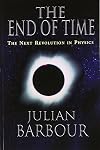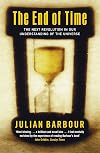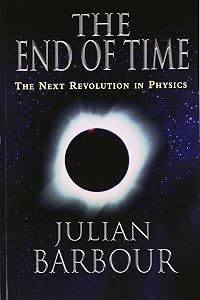
The End of Time : The Next Revolution in Physics
by Julian Barbour
On This Page
Description
Richard Feynman once quipped that ""Time is what happens when nothing else does."" But Julian Barbour disagrees: if nothing happened, if nothing changed, then time would stop. For time is nothing but change. It is change that we perceive occurring all around us, not time. Put simply, time does not exist. In this highly provocative volume, Barbour presents the basic evidence for a timeless universe, and shows why we still experience the world as intensely temporal. It is a book that strikes show more at the heart of modern physics. It casts doubt on Einstein's greatest contribution, the spacetime continu show lessTags
Recommendations

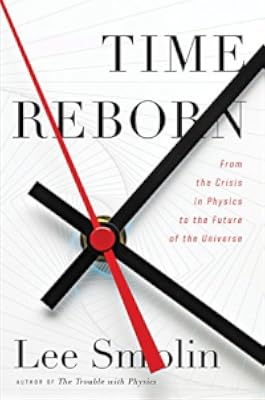
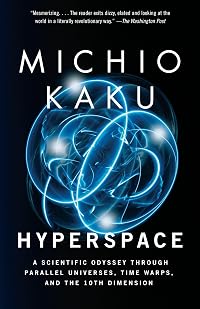
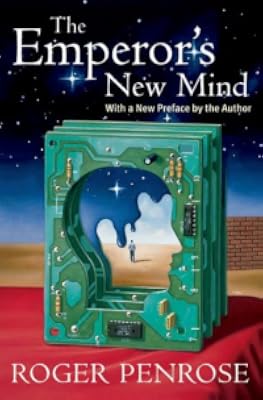
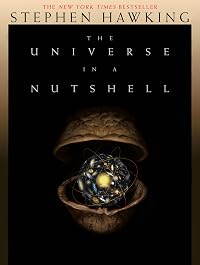



Member Reviews
In this wonderful book, Barbour (a physicist) attempts to explain what time is.
The book isn't aimed at (or likely to be fun for) the general audience. It's aimed at people who took at least a little university physics and who remember some of it, or people who took at least some philosophy of physics and who remember some of that. It's also aimed at people who are willing to really bend their brains in order to follow the author.
Reading The End of Time reminds you that Einstein's revolution was, in part, thought up purely from the armchair. That is, it was partly just doing philosophy. ("If we take for granted that any observer, moving at any velocity, should nonetheless be able to discover the objective speed of light, then...") If show more there is going to be another revolution around our idea of time, it will also be partly philosophical -- and Barbour makes an exciting case for his vision being a part of such a revolution. show less
The book isn't aimed at (or likely to be fun for) the general audience. It's aimed at people who took at least a little university physics and who remember some of it, or people who took at least some philosophy of physics and who remember some of that. It's also aimed at people who are willing to really bend their brains in order to follow the author.
Reading The End of Time reminds you that Einstein's revolution was, in part, thought up purely from the armchair. That is, it was partly just doing philosophy. ("If we take for granted that any observer, moving at any velocity, should nonetheless be able to discover the objective speed of light, then...") If show more there is going to be another revolution around our idea of time, it will also be partly philosophical -- and Barbour makes an exciting case for his vision being a part of such a revolution. show less
I bought this book when it was first published. I am not an especially knowledgeable individual on the subject of theoretical physics, but I could follow most of Dr. Barbour's discussion. The primary component about Dr. Barbour's theories regarding time is that it is an illusion. He uses Xeno's paradox to illustrate that motion is impossible and therefore illusory and if time is based upon motion, that it must therefore also be illusory. That's the book in a nutshell, but there is much more discussion and presentation of the work of Mach and other theorists. I found it to be a fascinating read and highly recommend it. My copy is dog-eared and starting to fall apart, so I will likely be looking for a new copy soon, if for no other reason show more than to preserve it for future generations. show less
Barbour has thought long and hard about how to abolish time as a fundamental quantity. He is inspired by what he presumes to be a Machian requirement – a cosmos of 3-space defined only by relative spatial coordinates. Certainly the book describes a valiant attempt at advancing the boundaries of knowledge. It is therefore fascinating to read. Yet history shows that telling nature how she ought to behave is usually as fruitful as a stroll in a minefield.
Barbour proposes that the cosmos at every instant is a timeless snapshot of the relative positions of entities in 3-space. Barbour shows how we can form a picture in which time is a construct that we impose on a set of disjoint timeless 3-dimensional cosmoses. Naturally there is a show more conceptual configurational space holding all conceivable instants. The actual wavefunction of material reality sits in this configurational space. This universal wavefunction is timeless holding all that was, is and will be. The wavefunction spreads over the configurational space (each point of this space being a 3-space cosmos). However, having abolished fundamental time, he has to explain how cosmic instances have a sense of motion, a direction for time, and a record of a sequential past.
It is thought likely that the contributions (to the universal wavefunction) of many configurations are mostly weak and/or effectively self-cancelling. He suspects that we only have to consider the rarer supportive configurations. These special configurations are suspected to be defined by a stationary relationship coinciding with the coherence of classically determined histories and futures. We regard these coherent configurations as actually realized sometime or other. This condition will probably ensure these configurations contain consistent records. These consistent records provide imprints of a definite past. Such imprints include books, personal memories, ice cores, tree rings, erosion, etc.
A story that is plausibly consistent with many facts is an interpretation. For an interpretation to be an explanation, it also needs the backing of a paradigm. This is where Barbour’s story is troublesome. He has a tentative paradigm but it is not robust enough to underpin all the principles he wants for his arguments. Thus ultimately the reader is left disappointed that Barbour’s outline of a paradigm is not able, at present, to congeal into something more plausible than a skeletal conjecture. It cannot speak with the certainty of the existing worldview. Furthermore it does not shed light on the deeper questions such as the dimensionality of space, the existence of matter, and the intelligibility of the universe. show less
Barbour proposes that the cosmos at every instant is a timeless snapshot of the relative positions of entities in 3-space. Barbour shows how we can form a picture in which time is a construct that we impose on a set of disjoint timeless 3-dimensional cosmoses. Naturally there is a show more conceptual configurational space holding all conceivable instants. The actual wavefunction of material reality sits in this configurational space. This universal wavefunction is timeless holding all that was, is and will be. The wavefunction spreads over the configurational space (each point of this space being a 3-space cosmos). However, having abolished fundamental time, he has to explain how cosmic instances have a sense of motion, a direction for time, and a record of a sequential past.
It is thought likely that the contributions (to the universal wavefunction) of many configurations are mostly weak and/or effectively self-cancelling. He suspects that we only have to consider the rarer supportive configurations. These special configurations are suspected to be defined by a stationary relationship coinciding with the coherence of classically determined histories and futures. We regard these coherent configurations as actually realized sometime or other. This condition will probably ensure these configurations contain consistent records. These consistent records provide imprints of a definite past. Such imprints include books, personal memories, ice cores, tree rings, erosion, etc.
A story that is plausibly consistent with many facts is an interpretation. For an interpretation to be an explanation, it also needs the backing of a paradigm. This is where Barbour’s story is troublesome. He has a tentative paradigm but it is not robust enough to underpin all the principles he wants for his arguments. Thus ultimately the reader is left disappointed that Barbour’s outline of a paradigm is not able, at present, to congeal into something more plausible than a skeletal conjecture. It cannot speak with the certainty of the existing worldview. Furthermore it does not shed light on the deeper questions such as the dimensionality of space, the existence of matter, and the intelligibility of the universe. show less
Didn't read all of this, off kilter and idiosyncratic, bordering on ' crank ' maybe
Didn't read all of this, off kilter and idiosyncratic, bordering on ' crank ' maybe
I got interested in this book after attending a seminar given by Barbour at the University of New Brunswick.
THIS REVIEW HAS BEEN CURTAILED IN PROTEST AT GOODREADS' CENSORSHIP POLICY
See the complete review here:
http://arbieroo.booklikes.com/post/667713/the-end-of-time-julian-barbour
THIS REVIEW HAS BEEN CURTAILED IN PROTEST AT GOODREADS' CENSORSHIP POLICY
See the complete review here:
http://arbieroo.booklikes.com/post/667713/the-end-of-time-julian-barbour
Ratings
Members
- Recently Added By
Author Information

6 Works 748 Members
Julian Barbour is a distinguished theoretical physicist He has appeared in many television and radio programs broadcast worldwide, and was the subject of the cover story of the December 2000 issue of Discover
Awards and Honors
Awards
Common Knowledge
- Canonical title
- The End of Time : The Next Revolution in Physics
- Original publication date
- 1999
- Important events
- End of Time
- First words
- Two views of the world clashed at the dawn of thought.
- Blurbers
- Smolin, Lee; Lanier, Jaron
Classifications
Statistics
- Members
- 607
- Popularity
- 48,361
- Reviews
- 6
- Rating
- (3.50)
- Languages
- English, Italian
- Media
- Paper, Ebook
- ISBNs
- 11
- ASINs
- 4