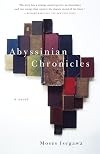
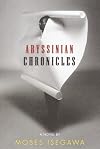
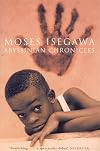
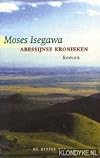
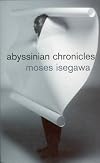
Abyssinian Chronicles
by Moses Isegawa
On This Page
Description
Every once in a while there emerges a literary voice with the power and urgency to immerse readers deep within a previously "invisible" culture. From a young African writer who has already earned comparisons to Salman Rushdie and Gabriel Garcia Marquez comes this masterful saga of life in 20th-century Uganda. The teller of this panoramic tale is Mugezi, a quick-witted, sharp-eyed man whose life encompasses the traditional and the modern, the peaceful and the insanely violent, the despotic show more and the democratic. Born in a rural community in the early 1960s, he is raised by his grandfather, a deposed clan chief, and his great-aunt, or "grandmother," after his parents immigrate to the capital city of Kampala. At age nine, he leaves behind his secure life in the village to join his parents and siblings in the city, where he is first exposed to the despotism and hardship that he will contend with in the years to come. The nightmare reign of Idi Amin and its chaotic aftermath are the backdrop to Mugezi's troubled coming-of-age: his constant struggle with his harsh mother and austere father; his years spent as caregiver to his parents' ever-growing brood of children; his sojourn in a horrifically repressive Catholic seminary. He goes to work as a high school teacher, becomes enmeshed in a tragic romance, finds himself drawn into a dubious, potentially dangerous alliance with the military after Amin's fall and witnesses the widespread ravages of the AIDS virus. Finally, sickened by personal loss and national tragedy, he manages to immigrate to Amsterdam. The details of Mugezi's life provide a foundation for Isegawa's brilliant and profoundly illuminating portrait of the contemporary, postcolonial African experience. Filled with extraordinary characters, animated by a wicked sense of humor and guided by an intense yet clear-eyed compassion, Abyssianian Chronicles is our introduction to a superlative new writer. show lessTags
Recommendations
















Member Reviews
As much as I loved the first half of this book, the fact that I almost quit reading it several times through the second half after it lost nearly all its steam made me dislike it far more than I should.
After reading The Last King of Scotland not long ago, I thought I'd try a different take on the 70s situation in Uganda. This one focused more on the citizens than it did on the government, specifically a narrator who grew up through the dictatorship and government overthrows.
The book starts off explaining the background information on the narrator's family, including his father and grandfather, in their small village. The first half of the book is almost strictly on the narrator's life and his family. The accounts of his daily life both show more in the village and in Kampala and the Seminary are both interesting and funny, since the narrator tends to enjoy outsmarting people who he disagrees with.
The government situation doesn't enter into the first part much at all save for when it directly affects the family's life, such as the house his mother and father get in Kampala or his father's position at work.
Once the character leaves the seminary, the second half of the book focuses heavily on the fighting between guerrilla and government soldiers and the effects on the country at large. This part was much less interesting since the narrator was playing very little part in what was going on.
The second half of the book is actually quite difficult to get through because of this. It also doesn't help that the time period for all the events is fairly unclear through the entire novel, as is the age of the narrator. Occasionally the year is brought up, and occasionally Mugezi's age is also mentioned, but it's really hard to tell how much time is passing once he leaves the seminary.
The final "book" was fairly interesting and entertaining once again, when the narrator leaves Uganda and winds up in Amsterdam. It seemed like the storytelling worked best when only dealing with a narrow thread of events and people.
The writing style also got on my nerves sometimes. There are copious, flowery descriptions of everything. At one point, the description of a plane ride and Mugezi's mindset takes up three or four pages.
Even as interested as I was in the history in the book, and as much as I liked the main character and his family, I just could not bring myself to like this book in the end. show less
After reading The Last King of Scotland not long ago, I thought I'd try a different take on the 70s situation in Uganda. This one focused more on the citizens than it did on the government, specifically a narrator who grew up through the dictatorship and government overthrows.
The book starts off explaining the background information on the narrator's family, including his father and grandfather, in their small village. The first half of the book is almost strictly on the narrator's life and his family. The accounts of his daily life both show more in the village and in Kampala and the Seminary are both interesting and funny, since the narrator tends to enjoy outsmarting people who he disagrees with.
The government situation doesn't enter into the first part much at all save for when it directly affects the family's life, such as the house his mother and father get in Kampala or his father's position at work.
Once the character leaves the seminary, the second half of the book focuses heavily on the fighting between guerrilla and government soldiers and the effects on the country at large. This part was much less interesting since the narrator was playing very little part in what was going on.
The second half of the book is actually quite difficult to get through because of this. It also doesn't help that the time period for all the events is fairly unclear through the entire novel, as is the age of the narrator. Occasionally the year is brought up, and occasionally Mugezi's age is also mentioned, but it's really hard to tell how much time is passing once he leaves the seminary.
The final "book" was fairly interesting and entertaining once again, when the narrator leaves Uganda and winds up in Amsterdam. It seemed like the storytelling worked best when only dealing with a narrow thread of events and people.
The writing style also got on my nerves sometimes. There are copious, flowery descriptions of everything. At one point, the description of a plane ride and Mugezi's mindset takes up three or four pages.
Even as interested as I was in the history in the book, and as much as I liked the main character and his family, I just could not bring myself to like this book in the end. show less
In Moses Isegawa's riveting first novel, the writing is big, but the story is even bigger. It is a coming of age chronicle of post-colonial Ugandan history, as told by the narrator, who is also coming of age, Mugezi. Isegawa candidly touches on many subjects: Obote, Idi Amin, civil wars, corruption, rapes, religion, party politics, the AIDS epidemic, culture, tradition, morals, and community folklore. While much of the novel contains serious subject matter, humorous sections are abundant, and I found myself laughing out loud periodically. Early on, the author spectacularly foreshadows the deaths of two main characters, and clear parallels are drawn between the dictators of the era and the culture of the home. The text is ornate and show more difficult at times, but it reads like a classic. I picked out this novel, since I have traveled to Uganda, and after having read it, Isegawa is now on my list of favorite authors. show less
First published in dutch in 1998 under the title Abessijnse Kronieken, this book soon achieved notority, and a number of translations into several european languages, including this portuguese one, have been printed. Several critics have claimed this novel a landmark in african literature and a book of universal import. Whatever the veredict of time concerning its standing as part of the canon, this is certainly a powerful novel, telling the saga of a Ugandan man (the narrator) and of his family through the last half of the twentieth century. A grand canvas of live in Uganda, but also a mirror of a large part of sub-saharian Africa: a blunt tale of misery, despair, hope and achievement amid a turbulent childhood, a castrating Catholic show more education, brutal dictatorships, mercyless wars, and the wretch brought about by the AIDS epidemic. Written in a lively style evoking powerful images, one reads quickly and effortlessly through the five hundred plus pages of this absorbing book just to feel sad when it finally ends... show less
My feelings on the book are mixed - many good and some bad. The fomulation of chapters rather than longer 'books' would have made it easier, as it was a long read. I did enjoy some of the prose which, while not succeeding all the time and being a bit overblown in parts, still captivated me. It had an uncontrolled, uneven, and undisciplined structure - pwehaps hallmarking it as a first novel.
For me, it read as an epic of a family, covering a turbulent 30 years of history in Uganda. It touched on politics, social structure, religion, AIDS and the family.
The characters seemed to be instuments for illustrating the necessary events in the timeline, and too much continuity of them through the story would have made it too busy for me. show more However, they did not develop into sympathetic or believable people for me - I found myself reading the book as a historical sweep of various Uganda events, rather than getting immersed in the characters.
I thought that it was a mistake that the author used first person narrative - it hindered the flow and gave me higher expectations of individual character development. I did not feel any sympathy at all for Mugezi (the narrator) - possibly there was significant autobiographical content?
I found the treatment of woman disturbing and the portrayal of Padlock (the narrator's mother) 'over the top'; just too much - really not believable in the end, even accounting for her obvious fanaticism. I was not sure what Isegawa was trying to say about women in Ugandan society through the persistently violent and degrading portrayals in the narrative?
Overall the book comes across to me as a turbulent, somewhat disjointed, emotive, rather uneven and disturbing book. It has stimulated my interest in Uganda (which I know embarrassingly little about).
If you are an African buff, there are good insights into Ugandan society, and the late 20th Century social and political events. But don't read this if you want plot or character development. show less
For me, it read as an epic of a family, covering a turbulent 30 years of history in Uganda. It touched on politics, social structure, religion, AIDS and the family.
The characters seemed to be instuments for illustrating the necessary events in the timeline, and too much continuity of them through the story would have made it too busy for me. show more However, they did not develop into sympathetic or believable people for me - I found myself reading the book as a historical sweep of various Uganda events, rather than getting immersed in the characters.
I thought that it was a mistake that the author used first person narrative - it hindered the flow and gave me higher expectations of individual character development. I did not feel any sympathy at all for Mugezi (the narrator) - possibly there was significant autobiographical content?
I found the treatment of woman disturbing and the portrayal of Padlock (the narrator's mother) 'over the top'; just too much - really not believable in the end, even accounting for her obvious fanaticism. I was not sure what Isegawa was trying to say about women in Ugandan society through the persistently violent and degrading portrayals in the narrative?
Overall the book comes across to me as a turbulent, somewhat disjointed, emotive, rather uneven and disturbing book. It has stimulated my interest in Uganda (which I know embarrassingly little about).
If you are an African buff, there are good insights into Ugandan society, and the late 20th Century social and political events. But don't read this if you want plot or character development. show less
Good report about the political situation in Uganda. People are pretty realistic. Not black and white but many grey zones. Some of the writing was excellent and then there were some trivial parts.
I just could not get into this book - eventually I gave up, which killed me since I hate leaving a book unfinished.
The characters in this book seemed really one-dimensional (especially the female characters) and the main character often seemed like a secondary character in his own life. I felt like I knew more about his father and his grandfather than about him.
The narrative itself was very confusing and meandering - I had trouble understanding how different events fit together and when things were happening.
I thought the book did a nice job of highlighting the different religious, ethnic/racial, and socio-economic classes that made up Ugandan society and the dislocations of these groups experienced due to the political upheavals in show more Uganda. But these passages seemed really disconnected from the narrative of Mugezi and his family.
I wish I could recommend this book, but it just didn't do anything for me. show less
The characters in this book seemed really one-dimensional (especially the female characters) and the main character often seemed like a secondary character in his own life. I felt like I knew more about his father and his grandfather than about him.
The narrative itself was very confusing and meandering - I had trouble understanding how different events fit together and when things were happening.
I thought the book did a nice job of highlighting the different religious, ethnic/racial, and socio-economic classes that made up Ugandan society and the dislocations of these groups experienced due to the political upheavals in show more Uganda. But these passages seemed really disconnected from the narrative of Mugezi and his family.
I wish I could recommend this book, but it just didn't do anything for me. show less
This was really not a book that I enjoyed, I'm afraid. Although I have enjoyed books that attempt to look at a country's history through parallels with a central protagonists life ('Midnights Children' springs to mind as one of the best), they rely very heavily on that central character, and Isegawa is terrible at fleshing out his characters to be believable. Mugezi (the narrator) and his family remained 2-dimensional ciphers for events to happen to, rather than leading real lives that I could get interested in. Consequently the book became, for me, a series of almost unrelated events, and I was more than ready for the book to end long before I got there.
Members
- Recently Added By
Lists

Novels that you shouldn't waste your time on
94 works; 52 members

Around the World in 80 Books
79 works; 4 members

Uganda
17 works; 1 member

Books Set In Africa
81 works; 4 members

Literature in Translation
113 works; 5 members

Best Contemporary Literary Fiction (Around the Last 30 Years)
400 works; 124 members

Favourite Books
1,820 works; 316 members

20th Century Literature
1,161 works; 55 members
Author Information

Some Editions
Awards and Honors
Series
Belongs to Publisher Series
Goldmann (45117)
Common Knowledge
- Canonical title
- Abyssinian Chronicles
- Original title
- Abessijnse kronieken
- Original publication date
- 1998
- People/Characters
- Mugezi; Serenity/Sere/Mpanama; Padlock/Nakkazi/Virgin/Sr. Peter; Grandpa; Grandma; Tiida/Miss Sunlight Soap (show all 26); Dr. Saif Ssali; Nakatu; Hajj Ali; Kawayida; Lwandeka; Kasawo; Mbale; Kasiko; Nakibuka; Hajj Gimbi; Lusanani; Loverboy/Mbaziira; Cane; Lwendo; Fr. Kaanders; Fr. Mindi; Fr. Lageau; Jo Nakabiri; Eva; Magdelein
- Important places
- Kampala, Uganda
- First words
- Three final images flashed across Serenity's mind as he disappeared into the jaws of the colossal crocodile: a rotting buffalo with rivers of maggots and armies of flies emanating from its cavities; the aunt of his missing wi... (show all)fe, who was also his longtime lover; and the mysterious woman who had cured his childhood obsession with tall women.
- Last words
- (Click to show. Warning: May contain spoilers.)It has always been a Herculean task for Abyssinians to get their foot in the door, but once in, they never budge. I was in.
- Blurbers
- Kakutani, Michiko; Prose, Francine
Classifications
- Genres
- General Fiction, Fiction and Literature
- DDC/MDS
- 839.31364 — Literature & rhetoric German & related literatures Other Germanic literatures Netherlandish literatures Dutch Dutch fiction 20th Century 1945-1999
- LCC
- PT5881.19 .S24 .A2413 — Language and Literature German, Dutch and Scandinavian literatures Dutch literature Individual authors or works 1961-2000
- BISAC
Statistics
- Members
- 557
- Popularity
- 53,415
- Reviews
- 10
- Rating
- (3.28)
- Languages
- 13 — Danish, Dutch, English, Finnish, French, German, Hungarian, Italian, Norwegian (Bokmål), Polish, Portuguese, Spanish, Swedish
- Media
- Paper, Ebook
- ISBNs
- 28
- ASINs
- 5