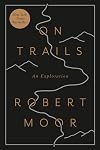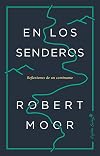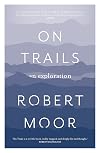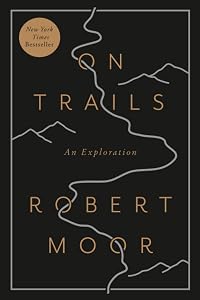
On Trails: An Exploration
by Robert Moor
On This Page
Description
"From a brilliant new literary voice comes a groundbreaking exploration of how trails help us understand the world--from tiny ant trails to hiking paths that span continents, from interstate highways to the Internet. In 2009, while thru-hiking the Appalachian Trail, Robert Moor began to wonder about the paths that lie beneath our feet: How do they form? Why do some improve over time while others devolve? What makes us follow or strike off on our own? Over the course of the next seven years, show more Moor traveled the globe, exploring trails of all kinds, from the miniscule to the massive. He learned the tricks of master trail-builders, hunted down long-lost Cherokee trails, and traced the origins of our road networks and the Internet. In each chapter, Moor interweaves his adventures with findings from science, history, philosophy, and nature writing--combining the nomadic joys of Peter Matthiessen with the eclectic wisdom of Lewis Hyde's The Gift. Throughout, Moor reveals how this single topic--the oft-overlooked trail--sheds new light on a wealth of age-old questions: How does order emerge out of chaos? How did animals first crawl forth from the seas and spread across continents? How has humanity's relationship with nature and technology shaped world around us? And, ultimately, how does each of us pick a path through life? Moor has the essayist's gift for making new connections, the adventurer's love for paths untaken, and the philosopher's knack for asking big questions. With a breathtaking arc that spans from the dawn of animal life to the digital era, On Trails is a book that makes us see our world, our history, our species, and our ways of life anew"-- show lessTags
Recommendations
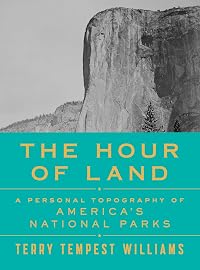
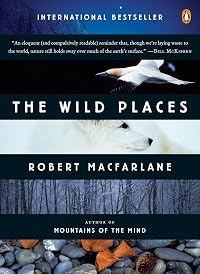

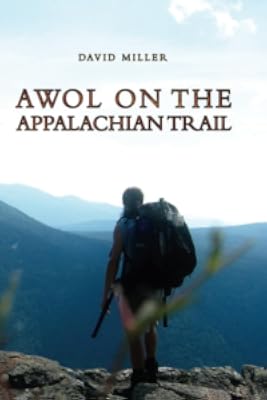


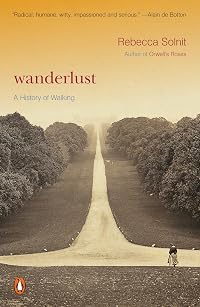


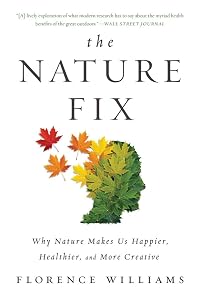
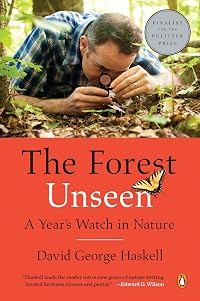
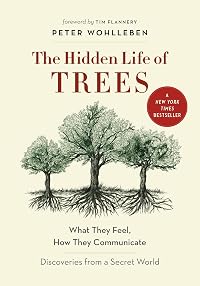
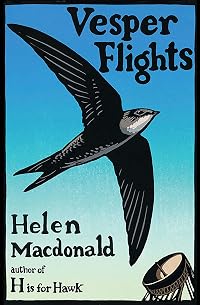











Member Recommendations

Member Reviews
So wide ranging that at times it threatens to fly apart, but Moor's writing is both evocative and deceptively accessible. Just as trails, in his view, are mechanisms for stitching together not only the physical but imaginative worlds, so this book weaves together many different definitions of what a trail is, and what it means to blaze one, to follow one, or to destroy one. I made a lot of notes on this book and they take me deeper each time I return to them.
Working outwards from his experience of walking the entire Appalachian Trail, Moor looks into the surprisingly complex question “What is a trail?” — he investigates how and why animals, from fossil sea-bed creatures and ants to elephants and bison, change the world by making trails, where human trails used by different cultures come from and how they evolve, takes a sidestep to look at human interaction with animals as hunter, pastoralist, or scientific observer, and then takes a wide sweep through the background to modern ideas about hiking and wilderness. Along the way we get plenty of chance to reflect on the many metaphorical ways we talk and think about trails too.
I found the scientific part of the discussion the most show more interesting: Moor seems to be an arts graduate with an unusual gift for asking scientists the right questions an continuing to do so until he actually understands what they are telling him, so his accounts of the trail-making behaviour of various animals and of how we found about it are lively and convincing, despite a few journalistic tics like his insistence on telling us about the dress and facial features of his interviewees.
The section on human behaviour was quite interesting too, although it’s very North American in its focus. There’s a lot about the tracks used by Native Americans, most of which were probably originally adapted from animal trails — bison are very good at finding the most energy-efficient route, apparently — and many of which still exist as part of the modern highway network. I was also interested by the way he picks out the odd convergence between urban liberals and crotchety gun-toting libertarians in the conservation movement, even if, as he points out, America has never been the “trackless wilderness” so many people have a nostalgic affection for.
Moor comes to the interesting conclusion that trails, with their mixture of serendipitous exploration and continuous refinement, are a repository of collective wisdom in the same sort of way that books or the internet are, and that trail-building behaviour is one of the great evolutionary steps that animals have taken, almost on a par with the invention of language.
The last audiobook I listened to irritated me because the reader didn’t distinguish clearly enough between the author’s voice and passages of quotation; this one went the other way, giving everyone quoted the stage-school accent appropriate to his or her presumed origins. If you want to hear Nietzsche and “Goatie” speaking English like camp commandants in a seventies war film, or a distinguished Belgian ethologist doing a Poirot impersonation, you’re in the right place… show less
I found the scientific part of the discussion the most show more interesting: Moor seems to be an arts graduate with an unusual gift for asking scientists the right questions an continuing to do so until he actually understands what they are telling him, so his accounts of the trail-making behaviour of various animals and of how we found about it are lively and convincing, despite a few journalistic tics like his insistence on telling us about the dress and facial features of his interviewees.
The section on human behaviour was quite interesting too, although it’s very North American in its focus. There’s a lot about the tracks used by Native Americans, most of which were probably originally adapted from animal trails — bison are very good at finding the most energy-efficient route, apparently — and many of which still exist as part of the modern highway network. I was also interested by the way he picks out the odd convergence between urban liberals and crotchety gun-toting libertarians in the conservation movement, even if, as he points out, America has never been the “trackless wilderness” so many people have a nostalgic affection for.
Moor comes to the interesting conclusion that trails, with their mixture of serendipitous exploration and continuous refinement, are a repository of collective wisdom in the same sort of way that books or the internet are, and that trail-building behaviour is one of the great evolutionary steps that animals have taken, almost on a par with the invention of language.
The last audiobook I listened to irritated me because the reader didn’t distinguish clearly enough between the author’s voice and passages of quotation; this one went the other way, giving everyone quoted the stage-school accent appropriate to his or her presumed origins. If you want to hear Nietzsche and “Goatie” speaking English like camp commandants in a seventies war film, or a distinguished Belgian ethologist doing a Poirot impersonation, you’re in the right place… show less
Recently there seems to be a spate of ‘back to nature’ books on the market. Non-fiction looks at how being in nature benefits us, or the mere existence of nature preserves improves communities and similar things. As a nature girl and an outdoorswoman, I appreciate this kind of thing and had my eye on this book for a while. I thought it would be a bit less philosophical in bent than it turned out to be, and I bogged down in those parts, but for the most part it scratched the itch about why trails are so fascinating and irresistible.
The narrative hinges on the author’s through-hike on the Appalachian Trail. From this he branches onto side trails about paths made by bacteria, insects, animals and finally humans. One of the things show more that fascinated me was how people (and animals) will find the shortest, most efficient way to get from A to B by instinct alone. In many parks, paved paths exist, but people inevitably find shortcuts across “forbidden” areas no matter what things the parks departments might put in their way. Same with nature trails; designers often find themselves thwarted by hikers taking shortcuts. I try not to do this myself because I understand that most trails are designed to keep erosion to a minimum and switchbacks and the ways they cut through the terrain are optimized to preserve the area being passed through; not to get there fastest.
Another thing that intrigued me was how clueless the European settlers were about how the Indian population moved around. You often hear North America described as a “trackless wilderness” when nothing was further from the truth. They just couldn’t see the tracks because they weren’t roads and often went in directions that didn’t makes sense for wheeled vehicles or large animals. But the people here went on foot and had different routes that served different purposes; whether that being the destination or the reason for the trip. Wonderful that some of those ancient trails are preserved still, even if they are part of the national highway system.
Moor’s writing is engaging and thoughtful. He makes some really unusual and appropriate word choices throughout -
“I awoke to a glassine dawn.” p 45
“The mule driver blew onto his hands, his curly hair collecting little nerds of ice.” p 283
“We can travel at the speed of sound and transmit information at the speed of light, but deep human connection still cannot move faster than the (comparatively, lichenous) rate at which trust can grow.” p 293
And while I have no desire to do any overnight or long distance hiking, I appreciated the wisdom of this -
“Shaving one’s pack weight, he said, was a process of sloughing off one’s fears. Each object a person carries represents a particular fear; of injury, of discomfort, of boredom, of attack. The “last vestige” of fear that even the most minimalist hikers have trouble shedding, he said, was starvation. As a result, most people ended up carrying “way the hell too much food”. He did not even carry so much as an emergency candy bar.” p 325 (imparted in a conversation with Meredith J. Eberhard aka Nimblewill Nomad) show less
The narrative hinges on the author’s through-hike on the Appalachian Trail. From this he branches onto side trails about paths made by bacteria, insects, animals and finally humans. One of the things show more that fascinated me was how people (and animals) will find the shortest, most efficient way to get from A to B by instinct alone. In many parks, paved paths exist, but people inevitably find shortcuts across “forbidden” areas no matter what things the parks departments might put in their way. Same with nature trails; designers often find themselves thwarted by hikers taking shortcuts. I try not to do this myself because I understand that most trails are designed to keep erosion to a minimum and switchbacks and the ways they cut through the terrain are optimized to preserve the area being passed through; not to get there fastest.
Another thing that intrigued me was how clueless the European settlers were about how the Indian population moved around. You often hear North America described as a “trackless wilderness” when nothing was further from the truth. They just couldn’t see the tracks because they weren’t roads and often went in directions that didn’t makes sense for wheeled vehicles or large animals. But the people here went on foot and had different routes that served different purposes; whether that being the destination or the reason for the trip. Wonderful that some of those ancient trails are preserved still, even if they are part of the national highway system.
Moor’s writing is engaging and thoughtful. He makes some really unusual and appropriate word choices throughout -
“I awoke to a glassine dawn.” p 45
“The mule driver blew onto his hands, his curly hair collecting little nerds of ice.” p 283
“We can travel at the speed of sound and transmit information at the speed of light, but deep human connection still cannot move faster than the (comparatively, lichenous) rate at which trust can grow.” p 293
And while I have no desire to do any overnight or long distance hiking, I appreciated the wisdom of this -
“Shaving one’s pack weight, he said, was a process of sloughing off one’s fears. Each object a person carries represents a particular fear; of injury, of discomfort, of boredom, of attack. The “last vestige” of fear that even the most minimalist hikers have trouble shedding, he said, was starvation. As a result, most people ended up carrying “way the hell too much food”. He did not even carry so much as an emergency candy bar.” p 325 (imparted in a conversation with Meredith J. Eberhard aka Nimblewill Nomad) show less
Interesting but slow-going, On Trails explains more than I could have imagined. Moor's concluding words about wisdom, though, didn't ring true.
Moor is a long distance walker, he took five months completing the Appalachian Trail, but rather than just the exhilaration in completing this 2190 mile journey he realised that he now had questions about just why we create trails. In exploring this phenomena he is shown some of the oldest fossil trails, he learns how and why animals do the same thing, from ants that use pheromones to guide others from the nest to sources of food. He has a go a shepherding to see how sheep make trails, and manages to mislay a complete flock in his first attempt. He joins Native Americans to see the trails in their culture and perches in a tree with Larry Benoit to gain an insight into the mind of a hunter following deer trails in a forest.
He finds out show more how a new trail is created when he joins a renowned trail builder in Tennessee making pathways with a quad-bike. He is asked to join the International Appalachian Trail, what will be the world’s longest footpath, spanning from Alabama to Morocco, and spends some time walking some of what could be the Moroccan section. In the final part of the book, he catches up with the Nimblewill Nomad, M.J. Eberhart. He is somewhat of a legend, as he has walked the Appalachian Trail, the Pacific Crest Trail and the Continental Divide Trail; around 34,000 miles in total. He could be described as eccentric too, having had all his toenails removed and passed on most of his possessions bar a truck and a couple of boxes of sentimental stuff. Moor joins him for a few days and walks with him from Winnie along the roads of Texas.
Walking creates trails. Trails, in turn, shape landscapes
Moor has tremendous potential as an author but I am not entirely sure if this is a travel book, a walking book, a book on the natural world or book on the deeper philosophy on the process of placing one foot in front of another. That said, it is an eloquent set of essays and stories about the pleasures of walking along the great trails of the world. Liked the piece about technology too, it makes a change to have someone say that it can have its place, rather than being one of those who considers the mix of technology and nature to be abhorrent. It is quite American-centric, though he does venture overseas at times, but its wide-ranging scope means that it is not quite as focused as it could be hence I have only given it three stars. However, I really liked this, as he has been bold enough to take a step off the well-trodden path for the wider view. For those with and interest in walking, this should be on your to-read list. show less
He finds out show more how a new trail is created when he joins a renowned trail builder in Tennessee making pathways with a quad-bike. He is asked to join the International Appalachian Trail, what will be the world’s longest footpath, spanning from Alabama to Morocco, and spends some time walking some of what could be the Moroccan section. In the final part of the book, he catches up with the Nimblewill Nomad, M.J. Eberhart. He is somewhat of a legend, as he has walked the Appalachian Trail, the Pacific Crest Trail and the Continental Divide Trail; around 34,000 miles in total. He could be described as eccentric too, having had all his toenails removed and passed on most of his possessions bar a truck and a couple of boxes of sentimental stuff. Moor joins him for a few days and walks with him from Winnie along the roads of Texas.
Walking creates trails. Trails, in turn, shape landscapes
Moor has tremendous potential as an author but I am not entirely sure if this is a travel book, a walking book, a book on the natural world or book on the deeper philosophy on the process of placing one foot in front of another. That said, it is an eloquent set of essays and stories about the pleasures of walking along the great trails of the world. Liked the piece about technology too, it makes a change to have someone say that it can have its place, rather than being one of those who considers the mix of technology and nature to be abhorrent. It is quite American-centric, though he does venture overseas at times, but its wide-ranging scope means that it is not quite as focused as it could be hence I have only given it three stars. However, I really liked this, as he has been bold enough to take a step off the well-trodden path for the wider view. For those with and interest in walking, this should be on your to-read list. show less
Just like a walk on a trail with a good, thoughtful friend. To read this book is to wander with Robert Moor through a landscape of thoughts and ideas, pondering the meaning of trails, and recounting stories of trails already traveled, until you find yourself at trails end, wanting more.
Really appreciated how Moor includes the trails of ants, insects, wildlife, indigenous people, and current populations in his examination of modern trails and networks. I'd heard quiet rumblings about plants to greatly extend the Appalachian Trail from my fellow hikers, but I didn't realize the concept had progressed this far so those portions were particularly informative too.
Members
- Recently Added By
Lists

Best of Travel Narratives
142 works; 28 members

Books Read in 2017
4,249 works; 130 members

Books Read in 2021
5,361 works; 114 members

Mountain Adventures
26 works; 1 member
Author Information

3 Works 860 Members
Some Editions
Awards and Honors
Awards
Distinctions
Common Knowledge
- Canonical title*
- Over paden een ontdekkingstocht
- Original title
- On trails: an exploration
- Original publication date
- 2017
- Important places
- Appalachian Trail, USA
*Some information comes from Common Knowledge in other languages. Click "Edit" for more information.
Classifications
- Genres
- Sports and Leisure, Travel, Science & Nature, General Nonfiction, Nonfiction, Biography & Memoir
- DDC/MDS
- 796.51 — Arts & recreation Recreation, sports, and performing arts Athletic and outdoor sports and games Outdoor leisure Hiking and Backpacking
- LCC
- GV199.5 .M66 — Geography, Anthropology and Recreation Recreation. Leisure Recreation. Leisure Outdoor life. Outdoor recreation Hiking. Pedestrian tours
- BISAC
Statistics
- Members
- 828
- Popularity
- 33,343
- Reviews
- 19
- Rating
- (3.69)
- Languages
- 5 — Chinese, Dutch, English, German, Spanish
- Media
- Paper, Audiobook, Ebook
- ISBNs
- 14
- ASINs
- 3