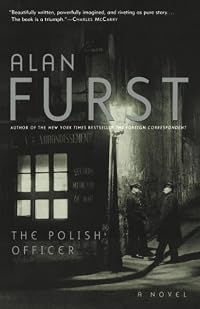
On This Page
Description
September 1939. As Warsaw falls to Hitler's Wehrmacht, Captain Alexander de Milja is recruited by the intelligence service of the Polish underground. His mission: to transport the national gold reserve to safety, hidden on a refugee train to Bucharest. Then, in the back alleys and black-market bistros of Paris, in the tenements of Warsaw, with partizan guerrillas in the frozen forests of the Ukraine, and at Calais Harbor during an attack by British bombers, de Milja fights in the war of the show more shadows in a world without rules, a world of danger, treachery, and betrayal. show lessTags
Recommendations



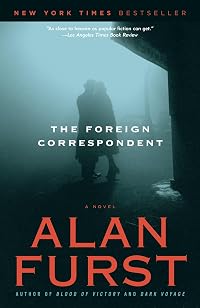



Member Reviews
A surprise Christmas gift, because it wasn’t on any of my wish lists, but serendipitous, since I’d just finished Norman Davies’ Rising ‘44 on the Polish resistance in WWII. Author Alan Furst comments in an afterword that he likes Eric Ambler, and The Polish Officer has the same feel as Ambler’s books, with heroes that aren’t perfectly good, villains that aren’t perfectly evil, and a general atmosphere of gloom and quiet desperation.
The protagonist is Alexander de Milja, a Polish intelligence officer in the cartography section who suddenly finds himself doing a whole bunch of things that have nothing to do with maps, like attempting to smuggle the Polish national gold reserves into Romania and impersonating a dead Russian show more poet. The novel is a series of vignettes like this - intelligence operations directed by de Milja with varying success. The atmosphere seems right - long periods of routine interspersed with episodes of frantic terror. There’s somewhat more sexual activity than I suspect actually occurred in the 1940s - I suppose you have to do something to keep reader interest in between encounters with the GESTAPO. A minor quibble - Mr. Furst has received a lot of favorable reviews complementing him on his technical accuracy, but here he confuses the Russian PPD submachine gun with the PPSch by outfitting a bunch of Russian guerrillas with the former, then claiming that the nickname - papecha - for the weapons was derived from the noise the weapon made when firing rather than the pronunciation of the initials - “pay-pay-schah”. Furst also has his character complain that the French lost in 1940 because they were armed with the same bolt-action rifles they used in 1914, ignoring the fact that every power in the Second World War except the US also had the same bolt action rifles they used in WWI as the standard infantry weapon.
Nevertheless I found the book enjoyable, if a little dark, and will probable read some more of Mr. Furst’s books. show less
The protagonist is Alexander de Milja, a Polish intelligence officer in the cartography section who suddenly finds himself doing a whole bunch of things that have nothing to do with maps, like attempting to smuggle the Polish national gold reserves into Romania and impersonating a dead Russian show more poet. The novel is a series of vignettes like this - intelligence operations directed by de Milja with varying success. The atmosphere seems right - long periods of routine interspersed with episodes of frantic terror. There’s somewhat more sexual activity than I suspect actually occurred in the 1940s - I suppose you have to do something to keep reader interest in between encounters with the GESTAPO. A minor quibble - Mr. Furst has received a lot of favorable reviews complementing him on his technical accuracy, but here he confuses the Russian PPD submachine gun with the PPSch by outfitting a bunch of Russian guerrillas with the former, then claiming that the nickname - papecha - for the weapons was derived from the noise the weapon made when firing rather than the pronunciation of the initials - “pay-pay-schah”. Furst also has his character complain that the French lost in 1940 because they were armed with the same bolt-action rifles they used in 1914, ignoring the fact that every power in the Second World War except the US also had the same bolt action rifles they used in WWI as the standard infantry weapon.
Nevertheless I found the book enjoyable, if a little dark, and will probable read some more of Mr. Furst’s books. show less
synopsis | As the German army overruns Warsaw in September 1939, a Polish cartographer accepts an unexpected offer to serve an intelligence role rather than face defeat with his regular army unit. Alexander de Milja is resourceful and (he admits to himself) lucky so far in surviving various operations against the Nazi war machine: spiriting national gold reserves out of Poland 'to help keep alive the idea of a nation'; undermining Germany's plans for a Channel Invasion of Great Britain; assisting Ukrainian nationalists with a supply train demolition and a prison break. He moves from Warsaw to Paris, Calais to Barcelona, Brest-Litovsk to the Ukrainian backcountry. De Milja is left with the question of whether his efforts make a show more difference, whether he contributes anything lasting in support of his ideals, or rather, if his struggle and extemporizing in fact amount to nothing.
//
As he does throughout the Night Soldiers novels, Furst here implicitly addresses some perennial concerns of life in wartime, for soldier and civilian alike. De Milja regularly encounters other characters who mostly want only to survive, or who seemingly make a partisan decision at odds with the regular flow of their lives. Mostly, though, the questions have to do with how best to join the struggle. The Polish Officer emphasises the necessity for faith in organisation and coordination, recognising that one's own little contributions may not be the key but with the efforts of others, can help fund that crucial piece of the puzzle that wins a battle, which turns the war. Yet one also is aware always that at times organisation and coordination fall apart, and then ... one's efforts can be suicide, might only lead others to their deaths. Always weighing the one outcome against the other. In a word: discipline. This implicit need for coordination, and the concomitant faith that unseen others are doing their part and one's orders truly do help realise that joint aim, this uneasy alliance of necessity and belief is the sole justification for military discipline, and at the same time, a reminder of the moral hazard always living alongside.
Furst focuses not on the historical key battles and linchpins, but the smaller and moderate successes and efforts, and leaves implicit that these helped weave a patchwork. For we know the eventual outcome. He helps us see perhaps a little ways into how it was made, the efforts and sacrifices made to allow it to form, and a glimpse into the many, many dead ends or feints.
For the historians of WWII: De Milja's time in France, behind the lines, working however haphazardly to funnel intelligence to the British on German assets and operations, raises the intriguing question of whether, strategically, the early fall of France was to the long term detriment of the Nazis. That is: it put partisans aligned with the Allies behind front lines, and in a position to divine the German war strategy, and counter their plans. Was this a greater or lesser advantage than opposing Germany from France, if the Allies had rebuffed the German invasion? Same question could apply to any country, but something about French history, status as a nation, its location, and (maybe this is it) its size somehow suggest to me the question applies specially to France. Perhaps an ethical dilemma akin to that facing the Allies in deciding whether to use atomic weapons against civilians in Japan, or to conduct an invasion of military positions in the Pacific. I wonder whether the question of France's strategic contribution was ever addressed prospectively, and helped inform Chamberlain's appeasement, or whether France's sudden fall was never considered plausible by anyone but the Nazis. show less
//
As he does throughout the Night Soldiers novels, Furst here implicitly addresses some perennial concerns of life in wartime, for soldier and civilian alike. De Milja regularly encounters other characters who mostly want only to survive, or who seemingly make a partisan decision at odds with the regular flow of their lives. Mostly, though, the questions have to do with how best to join the struggle. The Polish Officer emphasises the necessity for faith in organisation and coordination, recognising that one's own little contributions may not be the key but with the efforts of others, can help fund that crucial piece of the puzzle that wins a battle, which turns the war. Yet one also is aware always that at times organisation and coordination fall apart, and then ... one's efforts can be suicide, might only lead others to their deaths. Always weighing the one outcome against the other. In a word: discipline. This implicit need for coordination, and the concomitant faith that unseen others are doing their part and one's orders truly do help realise that joint aim, this uneasy alliance of necessity and belief is the sole justification for military discipline, and at the same time, a reminder of the moral hazard always living alongside.
Furst focuses not on the historical key battles and linchpins, but the smaller and moderate successes and efforts, and leaves implicit that these helped weave a patchwork. For we know the eventual outcome. He helps us see perhaps a little ways into how it was made, the efforts and sacrifices made to allow it to form, and a glimpse into the many, many dead ends or feints.
For the historians of WWII: De Milja's time in France, behind the lines, working however haphazardly to funnel intelligence to the British on German assets and operations, raises the intriguing question of whether, strategically, the early fall of France was to the long term detriment of the Nazis. That is: it put partisans aligned with the Allies behind front lines, and in a position to divine the German war strategy, and counter their plans. Was this a greater or lesser advantage than opposing Germany from France, if the Allies had rebuffed the German invasion? Same question could apply to any country, but something about French history, status as a nation, its location, and (maybe this is it) its size somehow suggest to me the question applies specially to France. Perhaps an ethical dilemma akin to that facing the Allies in deciding whether to use atomic weapons against civilians in Japan, or to conduct an invasion of military positions in the Pacific. I wonder whether the question of France's strategic contribution was ever addressed prospectively, and helped inform Chamberlain's appeasement, or whether France's sudden fall was never considered plausible by anyone but the Nazis. show less
Hard to rate. 3.5, nearly a 4. Furst does his usual expert job of evoking time and place. Sections of de Milja's story are excellent, particularly the first part and the Calais harbor scenes, among others. But a story about the grinding, soil-wearying effect of intelligence work is bound to get to a reader eventually. Still, a very worthy addition to Furst's canon.
The period between the wars, especially the later period (we're of course talking Europe here) in the run-up to World War II especially in Eastern Europe, fascinates me. This is where Alan Furst's excellent novels are set. According to the introduction information, he has travelled and lived for many years in France and eastern Europe, though reading his books, you'd find it hard not to believe he wasn't transported in a time-machine, directly to today from Europe of the late 1930s.
The Polish Officer is part espionage novel and part fascinating look at ordinary people being forced to understand extra-ordinary situations. Situations made all the more extra-ordinary as their optimistic, post-World War I world is torn apart by forces show more beyond their understanding and, more importantly, beyond their control. It is surely a fictional companion piece to Max Hastings' 'All Hell Let Loose.'
I found this an absolutely absorbing novel. By far the most satisfying Alan Furst novel I've read so far. It is set in Eastern Europe, in Poland, at the outbreak of World War II. The main character is drafted into Polish Intelligence, while the war causes the world around him to collapse. He and his colleagues try to re-establish their places in the new world and determine how the future of their country might look. Being Polish, they of course know that however things turn out, it's probably going to be largely out of their hands and that other, bigger and more powerful, powers will determine what happens to the Poles and so their job is to try and make the best of it, while also trying to make sense of it all.
He is sent undercover through Poland, to France, to Spain, to England and back to Poland where the Nazis are now on their way into Russia and the world is turning upside down once again. As i said earlier, I think the book is about people trying to make the best of situations that are largely out of their control. They are trying to remain in control of their lives, while realising that it probably isn't possible.
This is a thrilling, tense, satisfying book. There are many absorbing vignettes, many interesting characters, many thought-provoking episodes, all linked by the Polish officer of the book's title, who is, as he says at one point; "...a wanderer, somehow never home." show less
The Polish Officer is part espionage novel and part fascinating look at ordinary people being forced to understand extra-ordinary situations. Situations made all the more extra-ordinary as their optimistic, post-World War I world is torn apart by forces show more beyond their understanding and, more importantly, beyond their control. It is surely a fictional companion piece to Max Hastings' 'All Hell Let Loose.'
I found this an absolutely absorbing novel. By far the most satisfying Alan Furst novel I've read so far. It is set in Eastern Europe, in Poland, at the outbreak of World War II. The main character is drafted into Polish Intelligence, while the war causes the world around him to collapse. He and his colleagues try to re-establish their places in the new world and determine how the future of their country might look. Being Polish, they of course know that however things turn out, it's probably going to be largely out of their hands and that other, bigger and more powerful, powers will determine what happens to the Poles and so their job is to try and make the best of it, while also trying to make sense of it all.
He is sent undercover through Poland, to France, to Spain, to England and back to Poland where the Nazis are now on their way into Russia and the world is turning upside down once again. As i said earlier, I think the book is about people trying to make the best of situations that are largely out of their control. They are trying to remain in control of their lives, while realising that it probably isn't possible.
This is a thrilling, tense, satisfying book. There are many absorbing vignettes, many interesting characters, many thought-provoking episodes, all linked by the Polish officer of the book's title, who is, as he says at one point; "...a wanderer, somehow never home." show less
Alan Furst is the King of the noir World War II espionage novel. His characters, brave, cynical, but still full of human compassion are unforgettable, and he captures the murky atmosphere of Eastern Europe perfectly. In this novel we follow Captain Alexander de Milja from transporting all the gold in the Polish treasury to the West, to working as a spy in occupied France, to a desk job with the Polish government in exile in London, to finally back on the Eastern front taking a last stand against the Whermacht. It’s not going to end well for him we sense, but we know that he is a brave man of principle. I can’t wait to read another one of his books.
This is one of Furst's earlier World War II thrillers, and, as usual it's full of vivid characters and noir atmosphere. It is September, 1939 and the German's are invading Poland. France and Britain have declared war on Germany, but are doing less than nothing to help the Poles fend off the invading Wehrmacht. Captain Alexander de Milia has been assigned some rear guard actions: hijacking a train to get the Polish treasury of gold to Romania and organizing resistance units. He moves from Poland, to Romania, back to Poland to Russia to France to London & then back to France. All the while he acts bravely, and doesn't ask too many questions. He seems to know that the war is being fought among the great powers and that the little countries show more that are in the way have very little hope of survival.
Furst captures all of this in his atmospheric writing that captures a mood that is both cynical and heroic. DeMila has no illusions about either side in this war, but he does have his own ode of honor that he follows to the letter. I'd like to think that there were such men during the war & that they survived. show less
Furst captures all of this in his atmospheric writing that captures a mood that is both cynical and heroic. DeMila has no illusions about either side in this war, but he does have his own ode of honor that he follows to the letter. I'd like to think that there were such men during the war & that they survived. show less
Finished another Alan Furst book. I am hooked. I really like his rather old fashioned, simple novel format - there's a little romance, a few killings, quite a bit of suspense (these are spy novels, after all) and some good historical background. He has obviously done his homework in learning about Europe between 1938 and 1945; all kinds of spies and underground networks working against the Nazi Germans. His books have the atmosphere of Humphrey Bogart in Casablanca, you can almost hear Sam singing "you must remember this, a kiss is just a kiss, and...... as times go by." My goodness, if you have not seen Casablanca - do that, now! And then read some Alan Furst.
This latest book is The Polish Officer and we follow a likeable Polish fellow show more as he works against the Nazis first as they invade his homeland, second from his base in Paris, and finally in the woods of the Soviet Union as the Germans head to their winter defeat. He carries the different persona well: he's an officer in the Polish military who escapes to Paris, and there, he is a "bon vivant", mixing with "rich and famous" while passing secret messages, and then he morphs into a member of the Underground doing sabotage to the German trains, and mounting a clever attack on a prison. The final scene is worthy of a classic 1940s black and white movie. I loved the book, and somewhat reluctantly turn to my next read, which is a science fiction book. show less
This latest book is The Polish Officer and we follow a likeable Polish fellow show more as he works against the Nazis first as they invade his homeland, second from his base in Paris, and finally in the woods of the Soviet Union as the Germans head to their winter defeat. He carries the different persona well: he's an officer in the Polish military who escapes to Paris, and there, he is a "bon vivant", mixing with "rich and famous" while passing secret messages, and then he morphs into a member of the Underground doing sabotage to the German trains, and mounting a clever attack on a prison. The final scene is worthy of a classic 1940s black and white movie. I loved the book, and somewhat reluctantly turn to my next read, which is a science fiction book. show less
Members
- Recently Added By
Lists

Best Spy Fiction
153 works; 102 members

Books Read in 2023
5,547 works; 145 members
Author Information

26+ Works 16,480 Members
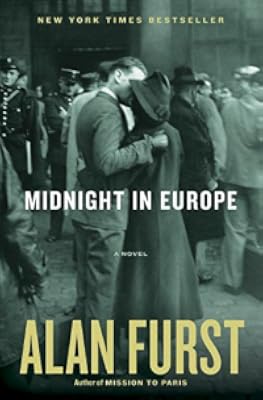
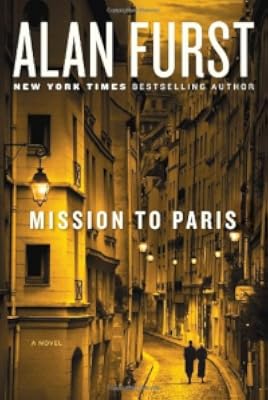
Furst received a B.A. from Oberlin College in 1962 and an M.A. from Penn State in 1967. Before becoming a full-time novelist, Furst worked in advertising and wrote magazine articles, most notably for Esquire, and as a columnist for the International Herald Tribune His early novels (1976-1983) achieved limited success. However, the 1988 publication show more of Night Soldiers inspired by a 1984 trip to Eastern Europe on assignment for Esquire revitalized his career. It was the first of his highly original novels about espionage in Europe before and during the Second World War. Born in New York on February 20, 1941, he lived for long periods in France, especially Paris where he was awarded a Fulbright teaching fellowship. In 2011, the Tulsa Library Trust in Tulsa, Oklahoma selected Furst to receive its Helmerich Award, a literary prize given annually to honor a distinguished author's body of work He also made The New York Times Best Seller List in 2012 with his title The Mission to Paris and Midnight in Europe in 2014. Furst again made the New York Times Bestseller in 2016 with his novel a Hero of France. (Publisher Provided) Alan Furst is an American author of spy novels. He was born in New York City on February 20, 1941, and was raised on the Upper West Side of Manhattan. Furst received a B.A. from Oberlin College in 1962 and an M.A. from Penn State in 1967. His novels are set just prior to and during the Second World War. Titles include: Night Soldiers, Kingdom of Shadows (which won the 2001 Hammett Prize), Blood of Victory, Spies of the Balkans and Mission to Paris. In 2011, the Tulsa Library Trust in Tulsa, Oklahoma, selected Furst to receive its Helmerich Award, a literary prize given annually to honor a distinguished author's body of work. Furst made The New York Times Best Seller List in 2012 with his title The Mission to Paris and Midnight in Europe in 2014. Furst again made the New York Times Bestseller in 2016 with his novel A Hero of France. (Bowker Author Biography) show less

Alan Furst is a LibraryThing Author, an author who lists their personal library on LibraryThing.
Some Editions
Series

Work Relationships
Common Knowledge
- Canonical title
- The Polish Officer
- Original title
- The Polish Officer
- Original publication date
- 1995
- People/Characters
- Alexander de Milja (Captain); Anton Vyborg (Colonel); Colonel Broza; Boris Lezhev; Vassily Fedin (General); Genya Beilis
- Important places
- Poland; Paris, France
- First words
- In Poland, on the night of 11 September 1939, Wehrmacht scout and commando units - elements of Kuechler's Third Army Corps - moved silently around the defenses of Novy Dvor, crossed the Vistula over the partly demolished Jabl... (show all)onks Bridge, and attempted to capture the Warsaw Telephone Exchange at the northern edge of the city.
- Last words
- (Click to show. Warning: May contain spoilers.)They sat close together in the truck, trying to stay warm.He held her tightly, she pressed against his side. In time the darkness faded and the first sunlight hit the rooftops, a flock of pigeons flew up in the air, a dog barked, and another answered.
- Blurbers
- Cheuse, Alan; Walton, David; McCarry, Charles; Chatain, Robert; Corrigan, Maureen; Winks, Robin W. (show all 11); Thobae, Charles P.; Johnson, Mark; Pate, Nancy; Banville, Vincent; Brandt, Anthony
- Original language
- English
Classifications
- Genres
- Fiction and Literature, General Fiction, Historical Fiction, Suspense & Thriller
- DDC/MDS
- 813.54 — Literature & rhetoric American literature in English American fiction in English 1900-1999 1945-1999
- LCC
- PS3556 .U76 .P64 — Language and Literature American literature American literature Individual authors 1961-
- BISAC
Statistics
- Members
- 1,268
- Popularity
- 19,310
- Reviews
- 36
- Rating
- (3.92)
- Languages
- English, French, Spanish
- Media
- Paper, Audiobook, Ebook
- ISBNs
- 24
- ASINs
- 6