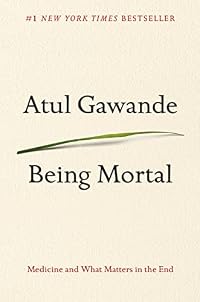
Being Mortal: Medicine and What Matters in the End
by Atul Gawande
On This Page
Description
Medicine has triumphed in modern times, transforming birth, injury, and infectious disease from harrowing to manageable. But in the inevitable condition of aging and death, the goals of medicine seem too frequently to run counter to the interest of the human spirit. Nursing homes, preoccupied with safety, pin patients into railed beds and wheelchairs. Hospitals isolate the dying, checking for vital signs long after the goals of cure have become moot. Doctors, committed to extending life, show more continue to carry out devastating procedures that in the end extend suffering. Gawande, a practicing surgeon, addresses his profession's ultimate limitation, arguing that quality of life is the desired goal for patients and families. Gawande offers examples of freer, more socially fulfilling models for assisting the infirm and dependent elderly, and he explores the varieties of hospice care to demonstrate that a person's last weeks or months may be rich and dignified. show lessTags
Recommendations











Member Recommendations
BookshelfMonstrosity Written by experienced and dedicated physicians, these compelling books question American health care's emphasis on management and technique to the detriment of human relationships between doctors and patients, especially when the patient's mortality is an important consideration.
20
teelgee Memoir by a death doula; "Making an authentic life by getting real about the end."
Member Reviews
Aging and death are things all of us have to deal with eventually, both in ourselves and in our loved ones. But, physician Atul Gawande says, these inevitabilities are often much worse than they actually have to be. People frequenty fail to communicate, or even consider, their end-of-life wishes until it's too late. Aggressive treatments for terminal diseases or measures aimed at providing safe environments for the infirm may end up making people's lives worse, rather than better. Few doctors are specifically trained in the care of the aged, and most begin their careers unprepared to deal with the dying. Above all, both doctors and patients are programmed to see healthcare purely in terms of identifying and treating specific medical show more problems... Which works well when your problem is a broken bone or a case of strep throat, but less so when it's an incurable cancer, or the general, systemic decline that comes with age.
That might make this sound like some hippie holistic-medicine manifesto. (You know the kind of thing: "Forget all the reductionist Western medicine, man! You've got to, like, treat the spirit with positive energy!"). It's absolutely not. Gawande's approach is very much grounded in medical reality, and he's got some actual science on his side. (E.g., the study that concluded that, counter-intuitively, terminal patients placed in hospice care actually lived longer, on average, than those who aggressively treated their conditions.) This isn't primarily about science and statistics, though; throughout the book, he focuses on real human beings and how they, their doctors, and their family members deal with infirmity and death, in all their awful complexity. This includes stories of his own family members, some of which must have been incredibly difficult to write about, but which I think are invaluable in helping the reader to connect to these issues on a human level.
His conclusions, ultimately, are ones that make a lot of sense to me: Doctors should be better prepared to deal with these concerns and to talk honestly with their patients about them. Everyone should have the difficult discussions about their end-of-life wishes ahead of time, especially those with terminal illnesses. Nursing homes should think of and treat the elderly less like hospital patients and more like people who need help to live lives that still have meaning. And doctors and patients should together consider not simply the question of what actions might help to shrink a tumor or prevent a broken hip, but on how to maximize the overall well-being of the person, given their individual priorities for what matters to them in the time they have left.
I was honestly a little reluctant to start this book, fearing it would be entirely too depressing. And I suppose it is, a bit. Aging and death are sad and scary subjects, and some of the stories Gawande tells are heartbreaking. (The descriptions of miserable, hopeless people in nursing homes particularly got to me. Being a woman with no children and meager savings, I fully expect that will be me someday, and the thought is terrifying.) But the book itself is hopeful, with genuinely useful suggestions for how we can make these things easier, both individually and as a society. And the writing is utterly compelling. It seems very odd to say "I couldn't put it down" about a book of this kind, but it's true. I couldn't. I ended up reading it all in less than a day.
Rating: A book this good about a subject this important surely cannot receive anything less than a 5/5. show less
That might make this sound like some hippie holistic-medicine manifesto. (You know the kind of thing: "Forget all the reductionist Western medicine, man! You've got to, like, treat the spirit with positive energy!"). It's absolutely not. Gawande's approach is very much grounded in medical reality, and he's got some actual science on his side. (E.g., the study that concluded that, counter-intuitively, terminal patients placed in hospice care actually lived longer, on average, than those who aggressively treated their conditions.) This isn't primarily about science and statistics, though; throughout the book, he focuses on real human beings and how they, their doctors, and their family members deal with infirmity and death, in all their awful complexity. This includes stories of his own family members, some of which must have been incredibly difficult to write about, but which I think are invaluable in helping the reader to connect to these issues on a human level.
His conclusions, ultimately, are ones that make a lot of sense to me: Doctors should be better prepared to deal with these concerns and to talk honestly with their patients about them. Everyone should have the difficult discussions about their end-of-life wishes ahead of time, especially those with terminal illnesses. Nursing homes should think of and treat the elderly less like hospital patients and more like people who need help to live lives that still have meaning. And doctors and patients should together consider not simply the question of what actions might help to shrink a tumor or prevent a broken hip, but on how to maximize the overall well-being of the person, given their individual priorities for what matters to them in the time they have left.
I was honestly a little reluctant to start this book, fearing it would be entirely too depressing. And I suppose it is, a bit. Aging and death are sad and scary subjects, and some of the stories Gawande tells are heartbreaking. (The descriptions of miserable, hopeless people in nursing homes particularly got to me. Being a woman with no children and meager savings, I fully expect that will be me someday, and the thought is terrifying.) But the book itself is hopeful, with genuinely useful suggestions for how we can make these things easier, both individually and as a society. And the writing is utterly compelling. It seems very odd to say "I couldn't put it down" about a book of this kind, but it's true. I couldn't. I ended up reading it all in less than a day.
Rating: A book this good about a subject this important surely cannot receive anything less than a 5/5. show less
I have always been in awe of medical people who can manage to excel in their field and also write for the reading public. That alone is a feat that boggles my mind. That he is able to do this so eloquently is real talent.
This book opens up a subject we all instinctively know we will have to face one day, but probably try, consciously or unconsciously, to avoid: the subject of end of life care, most especially in terms of quality of life versus medical intervention. And sadly, that is the very crux of the issue of our highly technical and medicalized society. Where once, a long time ago, people died at home, surrounded by family and traditional customs, today, in North America anyhow, the purpose of *medicine* seems to be to prolong show more life at all cost, regardless of whether it is actually benefitting the patient or not. In fact, such interventions seem to completely ignore the patient as a participant in the event altogether. Gawande talks about several patients of his and how their individual situations and choices were handled and dealt with, including hospital interventions, nursing homes, hospice care and assisted living centres. Then he turns the mirror on his own personal tale: the one of his own father's terminal illness and how he, as a doctor, came to experience the other side of the story, as it were.
I wish this book would be compulsory reading for every medical student from this day forward. I am not elderly, nor am I facing any health issues that are close to what Gawande talks about in this book. But aging is something none of us can avoid and frankly, I think about this a lot. This book offers a practical and honest look at questions, options and plans that everyone can learn from. show less
This book opens up a subject we all instinctively know we will have to face one day, but probably try, consciously or unconsciously, to avoid: the subject of end of life care, most especially in terms of quality of life versus medical intervention. And sadly, that is the very crux of the issue of our highly technical and medicalized society. Where once, a long time ago, people died at home, surrounded by family and traditional customs, today, in North America anyhow, the purpose of *medicine* seems to be to prolong show more life at all cost, regardless of whether it is actually benefitting the patient or not. In fact, such interventions seem to completely ignore the patient as a participant in the event altogether. Gawande talks about several patients of his and how their individual situations and choices were handled and dealt with, including hospital interventions, nursing homes, hospice care and assisted living centres. Then he turns the mirror on his own personal tale: the one of his own father's terminal illness and how he, as a doctor, came to experience the other side of the story, as it were.
I wish this book would be compulsory reading for every medical student from this day forward. I am not elderly, nor am I facing any health issues that are close to what Gawande talks about in this book. But aging is something none of us can avoid and frankly, I think about this a lot. This book offers a practical and honest look at questions, options and plans that everyone can learn from. show less
“THIS IS A book about the modern experience of mortality—about what it’s like to be creatures who age and die, how medicine has changed the experience and how it hasn’t, where our ideas about how to deal with our finitude have got the reality wrong.” – Atul Gawande
We do not like to think about our mortality but assessing in advance about what is most important to us is extremely relevant to how we spend our last days, assuming we are fortunate enough to avoid accident or sudden death. Gawande draws upon his medical background, experiences with end-of-life situations, research, and case studies to make a case for investigating what the patient wants rather than dispensing information and letting the patient decide, which is show more what is often done now. Some people value quality of life over taking extraordinary means to survive a short time longer, often at the cost of more pain and suffering.
The author makes a strong case for increasing individual freedoms in assisted living and nursing home arrangements, recommending earlier palliative care, and training doctors and other medical professionals in asking the right questions to help the patient make informed choices. He begins to discuss allowing individuals end-of-life decisions but does not go into much depth. Though it is obvious this book is written by a doctor, Gawande does a good job of avoiding medical jargon and explaining his perspective in straight-forward manner. He takes the subject matter to a personal level by sharing his father’s decline and eventual death, and how his family handled it. He advises holding those uncomfortable but necessary conversations with loved ones before a crisis arises.
I particularly liked the list of questions to ask in dealing with a terminal situation. I also appreciated learning more about hospice and that it is not solely related to imminent death, as is widely believed. Though it’s not pleasant to read about death and dying, this book contains valuable and pragmatic advice. I found it informative and worthwhile. show less
We do not like to think about our mortality but assessing in advance about what is most important to us is extremely relevant to how we spend our last days, assuming we are fortunate enough to avoid accident or sudden death. Gawande draws upon his medical background, experiences with end-of-life situations, research, and case studies to make a case for investigating what the patient wants rather than dispensing information and letting the patient decide, which is show more what is often done now. Some people value quality of life over taking extraordinary means to survive a short time longer, often at the cost of more pain and suffering.
The author makes a strong case for increasing individual freedoms in assisted living and nursing home arrangements, recommending earlier palliative care, and training doctors and other medical professionals in asking the right questions to help the patient make informed choices. He begins to discuss allowing individuals end-of-life decisions but does not go into much depth. Though it is obvious this book is written by a doctor, Gawande does a good job of avoiding medical jargon and explaining his perspective in straight-forward manner. He takes the subject matter to a personal level by sharing his father’s decline and eventual death, and how his family handled it. He advises holding those uncomfortable but necessary conversations with loved ones before a crisis arises.
I particularly liked the list of questions to ask in dealing with a terminal situation. I also appreciated learning more about hospice and that it is not solely related to imminent death, as is widely believed. Though it’s not pleasant to read about death and dying, this book contains valuable and pragmatic advice. I found it informative and worthwhile. show less
A book title "Being Mortal" isn't going to be cheery. Without even getting to the text, you already know what he is implying: yes, despite anything I may doas a doctor, you're going to meet the inevitable conclusion all of us come to.
Well written with personal recollections of patients, friends, and family Gawande paints the picture of our failing nursing homes and evidence of those who've found better solutions, demonstrates how clinicians need to move from being Dr. Informative to interpretive, and a person's death need not be in a hospital bed having their chest crushed but at home with family and love.
This is not an easy conversation. It's going to be hard. We need to have it anyway.
Well written with personal recollections of patients, friends, and family Gawande paints the picture of our failing nursing homes and evidence of those who've found better solutions, demonstrates how clinicians need to move from being Dr. Informative to interpretive, and a person's death need not be in a hospital bed having their chest crushed but at home with family and love.
This is not an easy conversation. It's going to be hard. We need to have it anyway.
This is an incredible book. It's even beautifully made (at least the edition I read), with soft pages with the rough edges I love in old books.
It starts with an examination of aging and how to deal with it, and then goes on looking at end of life care (since something that may last several decades can't really be considered "end"), and death. Dr. Gawande describes his discoveries with both feeling and clinical observation, illustrating his points with poignant examples from his own life as well as those of his patients, leading to useful suggestions on how to improve our own care. Apparently, a quiet revolution has been going on, as those dismayed by the current system innovate better ways to handle aging and dying. The most show more depressing part of the book is knowing that such innovations exist and have been proven to be economically as well as emotionally and medically better, but not only are they not spreading as I'd hope, but sometimes after proving themselves, spreading, and becoming large enough that the entrepreneurs lose control, they start to revert to the older, more familiar and less responsive models. I am personally thrilled that so many examples have shown that giving the old people more autonomy, privacy, and less intervention not only can be cost effective, but results in longer, more satisfying lives.
As I read I saved several quotes that I wanted to share:
"You become a doctor for what you imagine to be the satisfaction of the work and that turns out to be the satisfaction of competence. ... Your competence gives you a secure sense of identity. For a clinician, therefore, nothing is more threatening to who you think you are than a patient with a problem you cannot solve."
"The job of any doctor, Bludau later told me, is to support quality of life, by which he meant two things: as much freedom from the ravages of disease as possible and the retention of enough function for active engagement with the world."
"In the United States, 25% of all Medicare spending is for the 5% of patients who are in their final year of life, and most of that money goes for care in their last couple of months that is of little apparent benefit. The US is often thought to be unusual in this regard, but it doesn't appear to be. Data from elsewhere are more limited, but where they are available- for instance, from countries like the Netherlands and Switzerland- the results are similar."
"In 2008, the national Coping with Cancer project published a study showing that terminally ill cancer patients who were put on a mechanical ventilator, given electrical defibrillation or chest compression, or admitted, near death, to intensive care had a substantially worse quality of life in their last week than those who received no such interventions. And, six months after their death, their caregivers were three times as likely to suffer from major depression."
... "The end comes with no chance for you to have said good-bye or "It's okay" or "I'm sorry" or "I love you."
People with serious illness have priorities besides simply prolonging their lives. Surveys find that their top concerns include avoiding suffering, strengthening relationships with family and friends, being mentally aware, not being a burden on others, and achieving a sense that their life is complete. Our system of technological medical care has utterly failed to meet these needs, and the cost of this failure is measured in far more than dollars. The question therefore is not how we can afford this system's expense. It is how we can build a health care system that will actually help people achieve what's most important to them at the end of their lives."
"According to Block, about two-thirds of patients are willing to undergo therapies they don't want if that's what their loved ones want." (I've personally seen this.)
"We've begun rejecting the institutionalized version of aging and death, but we've not yet established our new norm. We're caught in a transitional phase. However miserable the old system has been, we are all experts at it."
"... I stepped back and asked the questions I'd asked my father: What were her biggest fears and concerns? What goals were mores important to her? What trade-offs was she willing to make, and what ones was she not?" (I think learning to ask these questions was the core of this book.) show less
It starts with an examination of aging and how to deal with it, and then goes on looking at end of life care (since something that may last several decades can't really be considered "end"), and death. Dr. Gawande describes his discoveries with both feeling and clinical observation, illustrating his points with poignant examples from his own life as well as those of his patients, leading to useful suggestions on how to improve our own care. Apparently, a quiet revolution has been going on, as those dismayed by the current system innovate better ways to handle aging and dying. The most show more depressing part of the book is knowing that such innovations exist and have been proven to be economically as well as emotionally and medically better, but not only are they not spreading as I'd hope, but sometimes after proving themselves, spreading, and becoming large enough that the entrepreneurs lose control, they start to revert to the older, more familiar and less responsive models. I am personally thrilled that so many examples have shown that giving the old people more autonomy, privacy, and less intervention not only can be cost effective, but results in longer, more satisfying lives.
As I read I saved several quotes that I wanted to share:
"You become a doctor for what you imagine to be the satisfaction of the work and that turns out to be the satisfaction of competence. ... Your competence gives you a secure sense of identity. For a clinician, therefore, nothing is more threatening to who you think you are than a patient with a problem you cannot solve."
"The job of any doctor, Bludau later told me, is to support quality of life, by which he meant two things: as much freedom from the ravages of disease as possible and the retention of enough function for active engagement with the world."
"In the United States, 25% of all Medicare spending is for the 5% of patients who are in their final year of life, and most of that money goes for care in their last couple of months that is of little apparent benefit. The US is often thought to be unusual in this regard, but it doesn't appear to be. Data from elsewhere are more limited, but where they are available- for instance, from countries like the Netherlands and Switzerland- the results are similar."
"In 2008, the national Coping with Cancer project published a study showing that terminally ill cancer patients who were put on a mechanical ventilator, given electrical defibrillation or chest compression, or admitted, near death, to intensive care had a substantially worse quality of life in their last week than those who received no such interventions. And, six months after their death, their caregivers were three times as likely to suffer from major depression."
... "The end comes with no chance for you to have said good-bye or "It's okay" or "I'm sorry" or "I love you."
People with serious illness have priorities besides simply prolonging their lives. Surveys find that their top concerns include avoiding suffering, strengthening relationships with family and friends, being mentally aware, not being a burden on others, and achieving a sense that their life is complete. Our system of technological medical care has utterly failed to meet these needs, and the cost of this failure is measured in far more than dollars. The question therefore is not how we can afford this system's expense. It is how we can build a health care system that will actually help people achieve what's most important to them at the end of their lives."
"According to Block, about two-thirds of patients are willing to undergo therapies they don't want if that's what their loved ones want." (I've personally seen this.)
"We've begun rejecting the institutionalized version of aging and death, but we've not yet established our new norm. We're caught in a transitional phase. However miserable the old system has been, we are all experts at it."
"... I stepped back and asked the questions I'd asked my father: What were her biggest fears and concerns? What goals were mores important to her? What trade-offs was she willing to make, and what ones was she not?" (I think learning to ask these questions was the core of this book.) show less
Being Mortal by Atul Gawande is one of the best books I've read, period. The first thing I said to my wife after finishing it is, this book is un-effing-believable. Then I repeated that a few times.
It's wise, moving, insightful, heartbreaking, heartwarming, heartgrowing. It's about dying. It's about how we practice medicine (often wrongheadedly), how we should practice medicine, when we should not practice medicine. It's about what's important in our lives, how we want our story to read, how we want it to end. How we want it to be for those we love who are nearing the end, who are at the end, for ourselves at the end.
"{O}ur decision-making in medicine has failed so spectacularly that we have reached the point of actively inflicting harm show more on patients rather than confronting the subject of mortality. If end-of-life discussions were an experimental drug, the FDA would approve it."
"{Y}our remembering self is attempting to recognize not only the peaks of joy and valleys of misery but also how the story works out as a whole. That is profoundly affected by how things ultimately turn out. Why would a football fan let a few flubbed minutes at the end of a game ruin three hours of bliss? Because a football game is a story. And in stories, endings matter." Including the stories of our lives.
Bring some kleenex - for the happy stories, for the stories when things are done right. What questions should we ask, what goes into solid decision-making? Gawande does his homework, going to facilities, and talking with patients and doctors and specialists, including palliative care practitioners and geriatricians. He cites the results of critical studies in plain English. He looks at failures, including some of his own, and what goes into creating a success. He painfully but successfully applies what he has learned to his patients and to the distressed health of his own father.
We've been wrong about what our job is in medicine." Read this to find out why. What an extraordinary book. Un-effing-believable. Five stars. show less
It's wise, moving, insightful, heartbreaking, heartwarming, heartgrowing. It's about dying. It's about how we practice medicine (often wrongheadedly), how we should practice medicine, when we should not practice medicine. It's about what's important in our lives, how we want our story to read, how we want it to end. How we want it to be for those we love who are nearing the end, who are at the end, for ourselves at the end.
"{O}ur decision-making in medicine has failed so spectacularly that we have reached the point of actively inflicting harm show more on patients rather than confronting the subject of mortality. If end-of-life discussions were an experimental drug, the FDA would approve it."
"{Y}our remembering self is attempting to recognize not only the peaks of joy and valleys of misery but also how the story works out as a whole. That is profoundly affected by how things ultimately turn out. Why would a football fan let a few flubbed minutes at the end of a game ruin three hours of bliss? Because a football game is a story. And in stories, endings matter." Including the stories of our lives.
Bring some kleenex - for the happy stories, for the stories when things are done right. What questions should we ask, what goes into solid decision-making? Gawande does his homework, going to facilities, and talking with patients and doctors and specialists, including palliative care practitioners and geriatricians. He cites the results of critical studies in plain English. He looks at failures, including some of his own, and what goes into creating a success. He painfully but successfully applies what he has learned to his patients and to the distressed health of his own father.
We've been wrong about what our job is in medicine." Read this to find out why. What an extraordinary book. Un-effing-believable. Five stars. show less
This deserves to be read widely and used as a basis for conversations around the world. Gawande examines the phenomenon of "medicalizing" old age and death, turning people over to nursing homes when they become too old and frail to look after themselves, and the problem of viewing medicine through the framework of providing treatment at the expense of quality of life. Throughout the book we are shown examples of nursing homes, assisted living facilities, and other arrangements that allow older people to maintain their dignity and independence as much as possible and help them feel more like they're living at home than in an institution.
The biggest lesson from this book is providing a framework for that difficult conversation: if you show more face a serious medical emergency, how should treatment be prioritized? What do you want to be able to maintain and what are you willing to give up if you want to achieve that condition? When should do-not-resuscitate orders be given, and when do you decide to focus on making yourself more comfortable and enjoying the time you have left than on pursuing aggressive treatment options? Gawande is also right in saying that these conversations are important to have when things are calm, before a real emergency hits. That way, when you or your loved ones are forced to make difficult decisions on the fly, you can use that conversation as a framework to help you decide what to do.
This is not a comfortable topic to think about, but Gawande's book is a good place to start thinking about it. show less
The biggest lesson from this book is providing a framework for that difficult conversation: if you show more face a serious medical emergency, how should treatment be prioritized? What do you want to be able to maintain and what are you willing to give up if you want to achieve that condition? When should do-not-resuscitate orders be given, and when do you decide to focus on making yourself more comfortable and enjoying the time you have left than on pursuing aggressive treatment options? Gawande is also right in saying that these conversations are important to have when things are calm, before a real emergency hits. That way, when you or your loved ones are forced to make difficult decisions on the fly, you can use that conversation as a framework to help you decide what to do.
This is not a comfortable topic to think about, but Gawande's book is a good place to start thinking about it. show less
Members
- Recently Added By
Published Reviews
ThingScore 100
His new book, “Being Mortal,” is a personal meditation on how we can better live with age-related frailty, serious illness and approaching death.
It is also a call for a change in the philosophy of health care. Gawande writes that members of the medical profession, himself included, have been wrong about what their job is. Rather than ensuring health and survival, it is “to enable show more well-being.” show less
It is also a call for a change in the philosophy of health care. Gawande writes that members of the medical profession, himself included, have been wrong about what their job is. Rather than ensuring health and survival, it is “to enable show more well-being.” show less
added by melmore
Lists

Recommend the 20 best books you've read in the last five years
2,167 works; 601 members

Top Five Books of 2015
811 works; 241 members

Non-Fiction Worth Reading
1,015 works; 260 members

Books recommended by Barack Obama
295 works; 28 members

Top Five Books of 2014
1,064 works; 397 members

Top Five Books of 2020
982 works; 348 members

Top Five Books of 2018
802 works; 265 members

Books for helping to cope with serious illness/dying
19 works; 2 members

Read-alike - From here to eternity by Caitlin doughty
8 works; 1 member

Obama Reads
181 works; 3 members

Read in 2016
107 works; 7 members

Books We Love to Reread
688 works; 296 members

.
184 works; 1 member

public health, illness, dying
11 works; 1 member
Books That Changed Our Perspective
423 works; 166 members

Top Five Books of 2024
795 works; 264 members

2024 Reading List
49 works; 1 member
Books That Made Us Cry
278 works; 145 members

Best Audiobooks
240 works; 114 members

Books Read in 2016
4,666 works; 199 members

Totally Biased List of Tookie’s Favorite Books
10 works; 1 member

Books That Made Me Cry
199 works; 104 members

Books Read in 2019
4,052 works; 110 members

Books Read in 2017
4,248 works; 130 members

Recommendations by Tim Keller
50 works; 1 member
Author Information

12+ Works 16,906 Members
Atul Gawande is a surgical resident in Boston and staff writer on medicine and science for The New Yorker. A former Rhodes scholar, he received his M.D. from Harvard Medical School. He lives with his wife and three children in Newton, Massachusetts. (Publisher Fact Sheets) Atul Gawande is a surgeon at Brigham and Women's Hospital in Boston, a show more staff writer for The New Yorker, and a professor at Harvard Medical School and the Harvard School of Public Health. He is also the Executive Director of Ariadne Labs and chairman of Lifebox, a nonprofit organization making surgery safer globally. He has written several books including Complications, Better, The Checklist Manifesto, and Being Mortal: Medicine and What Matters in the End. He has won the Lewis Thomas Prize for Writing about Science and two National Magazine Awards. He will be appearing at the 2015 Auckland Writers Festival in New Zealand. He won the prize for Adult Non-fiction in the Indies Choice Book Awards 2015 with Being Mortal: Medicine and What Matters in the End. (Bowker Author Biography) show less
Some Editions
Awards and Honors
Awards
Distinctions
Common Knowledge
- Canonical title
- Being Mortal: Medicine and What Matters in the End
- Original title
- Being Mortal: Medicine and What Matters in the End
- Alternate titles
- Being Mortal: Illness, Medicine, and What Matters in the End
- Original publication date
- 2014-10-07
- People/Characters
- Keren Brown Wilson
- Related movies
- Being Mortal (2015 | IMDb)
- Epigraph
- I see it now—this world is swiftly passing.
—the warrior Karna, in the Mahabharata
They come to rest at any kerb:
All streets in time are visited.
—Philip Larkin, "Ambulances" - Dedication
- To Sara Bershtel
- First words
- I learned about a lot of things in medical school, but mortality wasn't one of them.
- Quotations
- Modern scientific capability has profoundly altered the course of human life. People live longer and better than at any other time in history. But scientific advances have turned the processes of aging and dying into medical ... (show all)experiences, matters to be managed by health care professionals. And we in the medical profession have proved alarmingly unprepared for it.
In other words, our decision making in medicine has failed so spectacularly that we have reached the point of actively inflicting harm on patients rather than confronting the subject of mortality. If end-of-life discussions w... (show all)ere an experimental drug, the FDA would approve it.
The simple view is that medicine exists to fight death and disease, and that is, of course, its most basic task. Death is the enemy. But the enemy has superior forces. Eventually, it wins. And in a war that you cannot win, yo... (show all)u don't want a general who fights to the point of total annihilation. You don't want Custer. You want Robert E. Lee, someone who knows how to fight for territory that can be won and how to surrender it when it can't, someone who understands that the damage is greatest if all you do is battle to the bitter end.
… our driving motivations in life, instead of remaining constant, change hugely over time and in ways that don’t quite fit Maslow’s classic hierarchy. In young adulthood, people seek a life of growth and self-fulfillmen... (show all)t, just as Maslow suggested. Growing up involves opening outward. We search out new experiences, wider social connections, and ways of putting our stamp on the world. When people reach the latter part of adulthood, however, their priorities change markedly. Most reduce the amount of time they spend pursuing achievement and social networks. They narrow in. Given the choice, young people prefer meeting new people to spending time with, say, a sibling; old people prefer the opposite. Studies find that as people grow older they interact with fewer people and concentrate more on spending time with family and established friends. They focus on being rather than doing and on the present more than the future.
Life is choices, and they are relentless. No sooner have you made one choice than another is upon you.
What were her biggest fears and concerns? What goals were most important to her? What trade-offs was she willing to make, and what ones was she not?
When our time is limited and we are uncertain about how best to serve our priorities, we are forced to deal with the fact that both the experiencing self and the remembering self matter. We do not want to endure long pain an... (show all)d short pleasure. Yet certain pleasures can make enduring suffering worthwhile. The peaks are important, and so is the ending. - Last words
- (Click to show. Warning: May contain spoilers.)No more breaths came.
- Blurbers
- Gladwell, Malcolm; Sacks, Oliver; Boo, Katherine
- Original language
- English
- Canonical LCC
- R726.8 G39
Classifications
- Genres
- General Nonfiction, Nonfiction, Science & Nature, Biography & Memoir
- DDC/MDS
- 362.17 — Social sciences Social problems and social services Social problems of and services to groups of people People with physical illnesses Specific services
- LCC
- R726.8 .G39 — Medicine Medicine (General) Medical philosophy. Medical ethics
- BISAC
Statistics
- Members
- 6,515
- Popularity
- 1,854
- Reviews
- 315
- Rating
- (4.46)
- Languages
- 15 — Danish, Dutch, English, Estonian, French, German, Hungarian, Italian, Korean, Portuguese, Russian, Spanish, Swedish, Turkish, Chinese, traditional
- Media
- Paper, Audiobook, Ebook
- ISBNs
- 48
- UPCs
- 2
- ASINs
- 10
