On This Page
Description
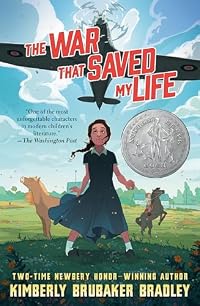
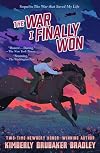
A young disabled girl and her brother are evacuated from London to the English countryside during World War II, where they find life to be much sweeter away from their abusive mother.Tags
Recommendations




Member Recommendations



Member Reviews
Ada has a clubfoot and her mother has abused/neglected her all her life, but when her brother Jamie is sent away from London to the country for safety during the air raids, she takes the opportunity to run away from home. The children are reluctantly taken in by an old maid, Susan, who tells them she isn't very nice - but she doesn't hit like Ada's mother did and has a pony named Butter that Ada is determined to ride.
This is a heartbreaking, lovely book. Ada is a strong, independent girl but deals with her abuse in a very realistic way - the scenes of this were probably even harder for me to read as an adult because I understood what was happening more than I would have as a child. I cried and cheered as Ada began to overcome her past show more and trust Susan, and as Susan herself came to love the children. Details about riding as Ada learns to ride Butter and some aspects of the war fill out the narrative. The ending felt just a little bit rushed and neat, but overall it was a satisfying read and I can see why it's won such acclaim. show less
This is a heartbreaking, lovely book. Ada is a strong, independent girl but deals with her abuse in a very realistic way - the scenes of this were probably even harder for me to read as an adult because I understood what was happening more than I would have as a child. I cried and cheered as Ada began to overcome her past show more and trust Susan, and as Susan herself came to love the children. Details about riding as Ada learns to ride Butter and some aspects of the war fill out the narrative. The ending felt just a little bit rushed and neat, but overall it was a satisfying read and I can see why it's won such acclaim. show less
Ada is ten and as far as she can tell she’s never been outdoors. Never felt the sun on her face. Never seen grass. Born with a twisted foot her mother considers her an abomination and her own personal shame. So when the chance comes for Ada to join her fellow child evacuees, including her little brother Jamie, out of the city during WWII she leaps at the chance. Escaping to the English countryside, the two are foisted upon a woman named Susan who declares herself to be “not nice” from the start. Under her care the siblings grow and change. Ada discovers Susan’s pony and is determined from the get-go to ride it. And as the war progresses and things grow dire, she finds that the most dangerous thing isn’t the bombs or the war show more itself. It’s hope. And it’s got her number. show less
‘The War that Saved my Life’ is a brilliantly crafted novel set against the backdrop of World War II. This first-person historical fiction tells the story of Ada and her younger brother Jamie who manage to not only survive but thrive during wartime in England.
The author uses countless historical facts such as evacuating the children of London before the war stretched outside Germany, food rationing, war poster slogans, and the Dunkirk invasion around which to weave Ada’s life.
At times, this was a difficult read. To anyone who has survived physical, emotional, or mental abuse at the hands of a caregiver, the author strikes true on so many of Ada’s reactions to stressors. Ada has found a way to escape inside her own mind when she show more is threatened, overwhelmed or stressed beyond her limits. She also cringes at being touched, cannot accept praise, and constantly attempts to respond to adults in the way she thinks will please them.
Throughout the story, Ada slowly learns to be strong. First for her brother, and then for herself. She finds her voice and begins to value what makes her a human being. For a person who has only known a constant stream of abuse, this is the pinnacle of achievement. I think the tipping point of her self admiration occurs when Ada becomes an actual hero for recognizing a spy. We cheer for her when she stands up for herself to the first officer who doesn’t believe her story!
I could not seem to put this book down. It is well written, a beautiful story, and makes you fall in love with Ada Smith; who was fighting her own war for her sanity and independence. show less
The author uses countless historical facts such as evacuating the children of London before the war stretched outside Germany, food rationing, war poster slogans, and the Dunkirk invasion around which to weave Ada’s life.
At times, this was a difficult read. To anyone who has survived physical, emotional, or mental abuse at the hands of a caregiver, the author strikes true on so many of Ada’s reactions to stressors. Ada has found a way to escape inside her own mind when she show more is threatened, overwhelmed or stressed beyond her limits. She also cringes at being touched, cannot accept praise, and constantly attempts to respond to adults in the way she thinks will please them.
Throughout the story, Ada slowly learns to be strong. First for her brother, and then for herself. She finds her voice and begins to value what makes her a human being. For a person who has only known a constant stream of abuse, this is the pinnacle of achievement. I think the tipping point of her self admiration occurs when Ada becomes an actual hero for recognizing a spy. We cheer for her when she stands up for herself to the first officer who doesn’t believe her story!
I could not seem to put this book down. It is well written, a beautiful story, and makes you fall in love with Ada Smith; who was fighting her own war for her sanity and independence. show less
Wow this book. Such a difficult subject, but hard to put down. It’s set during WWII. The main character is Ada, a young girl who lived with her brother in poverty in London, until children were evacuated to the countryside. Ada resented her mother’s treatment of her, and longed to play outside, but she didn’t realize how bad things had actually been, until she faced a much better life with a woman who was was actually reluctant to take them in, but did her duty. How could this woman Susan feed them, clothe them, give them a warm and comfortable place to sleep, even make sure they got educated (Ada didn’t know how to read and write before), when her own mother who was supposed to love her had neglected those things? Ada hadn’t show more liked getting yelled at, physically punished or shut up in the room- never allowed outside- but she partly thought she deserved it. Her mother was ashamed of her club foot and had always abused her. Life in the country was so different Ada didn’t know what to think. She didn’t know about some of the simplest things- having never gone into shops, never walked through a field, never attended school. She sometimes reacted with anger and resentment at kind things people did for her, or gifts they gave, because she thought it would all get taken away again. Her conflicting feelings and terror at the prospect of being returned to London warred with her growing acceptance of the idea that life could be better, that she could actually learn and do things. She learned to walk on crutches, she taught herself to ride a pony, she made a few friends. She even assisted others when war brought wounded soldiers into their village. She grew up quickly and matured in so many ways, finding herself more capable than she’d ever imagined, and even slowly learning to trust that Susan actually cared for her. But at the end, she had to face her mother once more . . .
This story has so much going on. At heart, it’s about this girl gradually overcoming the trauma from her abusive childhood, learning new skills and learning to trust and receive love. She finds acceptance among the villagers and even admiration for a job well done (helping out with the war effort). The are quiet, parallel stories in here on similar themes- their temporary foster mother seems to be shunned by the locals and (though it is never spoken of clearly) appears to be suffering from depression and grief, after the death of her long-time friend. The two women had lived together and I can only assume they were partners. Ada’s brother is punished in school for being left-handed, and Susan has to march in there and set the teacher straight. So he had his own fear and shame to overcome, for something he couldn’t help- just being himself. Even the pony has been harmed by ignorance, because Susan assumed he was fine out there in the pasture with grass to eat, and never gave him proper care. Ada only learns this from a stable worker at a nearby horse farm who helps her out when she’s learning how to ride. She’s angry at Susan at first, then learns herself how to take care of the pony better, and teach Susan the same. They make things right. There’s also- of course- a lot in here about how civilians experienced the war, the fear of bombing, hiding in shelters, shortages and food rationing. Ada’s little brother loves to watch planes on the airfield near their home, and they have their share of close calls, terrifying moments and seeing others injured, wondering if there are spies among them . . . This one does have a good ending. You fear for Ada in the final chapters, but things turn out all right. show less
This story has so much going on. At heart, it’s about this girl gradually overcoming the trauma from her abusive childhood, learning new skills and learning to trust and receive love. She finds acceptance among the villagers and even admiration for a job well done (helping out with the war effort). The are quiet, parallel stories in here on similar themes- their temporary foster mother seems to be shunned by the locals and (though it is never spoken of clearly) appears to be suffering from depression and grief, after the death of her long-time friend. The two women had lived together and I can only assume they were partners. Ada’s brother is punished in school for being left-handed, and Susan has to march in there and set the teacher straight. So he had his own fear and shame to overcome, for something he couldn’t help- just being himself. Even the pony has been harmed by ignorance, because Susan assumed he was fine out there in the pasture with grass to eat, and never gave him proper care. Ada only learns this from a stable worker at a nearby horse farm who helps her out when she’s learning how to ride. She’s angry at Susan at first, then learns herself how to take care of the pony better, and teach Susan the same. They make things right. There’s also- of course- a lot in here about how civilians experienced the war, the fear of bombing, hiding in shelters, shortages and food rationing. Ada’s little brother loves to watch planes on the airfield near their home, and they have their share of close calls, terrifying moments and seeing others injured, wondering if there are spies among them . . . This one does have a good ending. You fear for Ada in the final chapters, but things turn out all right. show less
A moving story that confronts abuse and shame and depression against the backdrop of the Battle for Britain. Despite that description, it's an appropriate and complex story for children -- there's just the right amount of good to balance the bad, just the right amount of hard to read true. When difficult emotions overwhelm our narrator, the author has deftly found a balance between letting things go unsaid and offering a compassionate understanding. That sounds vague, I know, but it's beautifully done and you'll know it when you see it.
Ada has a crippled foot and has been kept prisoner in her one-room home by a hard working and hard hitting mother. When her younger brother Jamie has the chance to evacuate London she joins him, and in show more that one painful step begins to discover the world that has been denied her. Powerful, and better yet,impossible to put down.
Advance Reader Copy provided by Edelweiss. show less
Ada has a crippled foot and has been kept prisoner in her one-room home by a hard working and hard hitting mother. When her younger brother Jamie has the chance to evacuate London she joins him, and in show more that one painful step begins to discover the world that has been denied her. Powerful, and better yet,impossible to put down.
Advance Reader Copy provided by Edelweiss. show less
I love this book -- I’m getting emotional just thinking about it. Because of Ada’s twisted foot, her mother doesn’t allow the ten year old to leave their one-room flat. But in the summer of 1939, Ada secretly teaches herself to walk and when her younger brother’s school is evacuated to the country, she steals her mother’s shoes and leaves with him. Ada and Jamie are foisted upon a reluctant, grieving woman who owns a pony. Ada is immediately determined to teach herself to ride.
The amount of things Ada doesn’t know (including her own age) and the extent of deprivation she’s experienced is staggering -- but her journey is so heartwarming and hopeful. But recovery isn’t straightforward or instantaneous. I was fascinated by show more how the better things get the angrier Ada becomes -- and by how believable that anger was. She doesn’t want to become too attached to living with Susan because it is temporary and the more she learns, the more she understands how unnecessary and cruel her mother has been.
I love how Susan -- still struggling with grief and not always knowing what Ada and Jamie have been through or what they don’t understand -- supports these kids. She too knows that recovery isn’t an easy, straightforward thing.
“I’m just now learning to write,” I said. “And read. So I couldn’t write back yet. I’m sorry. Next time I’ll try.”
Instead of looking horrified by my ignorance, she looked mollified. (Susan taught me that word, and I loved it. Mollified. Sometimes when Jamie was cross, he had to be mollified.) “I didn’t think of that,” she said. “I thought you just weren’t interested. But wouldn’t Miss Smith have helped you? She would have written down what you wanted to say.”
She would have, if I’d asked. “I didn’t want to ask her. I don’t like her helping me.”
“Why ever not?”
“I don’t want to get used to her,” I said. “She’s just someone we have to stay with for a little while. She’s not, you know, actually real.” show less
The amount of things Ada doesn’t know (including her own age) and the extent of deprivation she’s experienced is staggering -- but her journey is so heartwarming and hopeful. But recovery isn’t straightforward or instantaneous. I was fascinated by show more how the better things get the angrier Ada becomes -- and by how believable that anger was. She doesn’t want to become too attached to living with Susan because it is temporary and the more she learns, the more she understands how unnecessary and cruel her mother has been.
I love how Susan -- still struggling with grief and not always knowing what Ada and Jamie have been through or what they don’t understand -- supports these kids. She too knows that recovery isn’t an easy, straightforward thing.
“I’m just now learning to write,” I said. “And read. So I couldn’t write back yet. I’m sorry. Next time I’ll try.”
Instead of looking horrified by my ignorance, she looked mollified. (Susan taught me that word, and I loved it. Mollified. Sometimes when Jamie was cross, he had to be mollified.) “I didn’t think of that,” she said. “I thought you just weren’t interested. But wouldn’t Miss Smith have helped you? She would have written down what you wanted to say.”
She would have, if I’d asked. “I didn’t want to ask her. I don’t like her helping me.”
“Why ever not?”
“I don’t want to get used to her,” I said. “She’s just someone we have to stay with for a little while. She’s not, you know, actually real.” show less
I love the way this book illustrates the process of leaving an abusive/neglectful environment and getting used to living somewhere "safe", and how difficult that can be. It must have been quite strange for poor children from London to be introduced to homes in the countryside. It's really clear from the start how much Ada doesn't know about the world, and the way that adults misinterpret her not knowing things. I enjoyed seeing Susan slowly realize what the kids need, and slowly come out of her own depression to care for them. For a large part of the book, it seems it will focus more on Ada's personal journey than on the war itself. But then the war becomes real in a big way.
I'm looking forward to seeing how the story concludes in the show more sequel. show less
I'm looking forward to seeing how the story concludes in the show more sequel. show less
Members
- Recently Added By
Lists

Best Children's Books You've Read
197 works; 75 members

Best Newbery Honor Books
241 works; 31 members

Children's Books about World War II (1939-1945)
143 works; 12 members

Newbery Honor Books By year - II - 1981-2035
143 works; 4 members

4th Grade Books
312 works; 5 members

Books about World War II
241 works; 22 members

Books Read in 2016
4,666 works; 197 members
KayStJ's to-read list
1,616 works; 11 members

Historical Fiction
889 works; 90 members
Literature About Women and Girls
394 works; 39 members

Best 21st Century Books (So Far)
670 works; 86 members

Top Five Books of 2021
604 works; 180 members
SYES Library Wishlist
1,080 works; 4 members

Books Read in 2023
5,547 works; 145 members
Author Information

24+ Works 8,430 Members
Kimberly Brubaker Bradley was raised in Fort Wayne, Indiana and her first novel was Ruthie's Gift. Her children's book, The War That Saved My Life, became a New York Times bestseller. (Bowker Author Biography)
Some Editions
Awards and Honors
Awards
Distinctions
Notable Lists
Series

Common Knowledge
- Original title
- The War That Saved My Life
- Original publication date
- 2015-12
- People/Characters
- Ada (World War II evacuee); Jamie (World War II evacuee); Susan Smith
- Important events
- Evacuation of British Children in WW2
- First words
- Ada! Get back from that window! Mam's voice, shouting.
- Last words
- (Click to show. Warning: May contain spoilers.)"So now, we're even," I said.
Classifications
Statistics
- Members
- 3,903
- Popularity
- 4,025
- Reviews
- 384
- Rating
- (4.56)
- Languages
- 5 — Chinese, Dutch, English, Portuguese, Spanish
- Media
- Paper, Audiobook, Ebook
- ISBNs
- 40
- ASINs
- 8