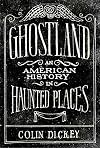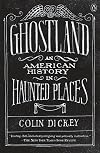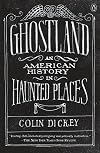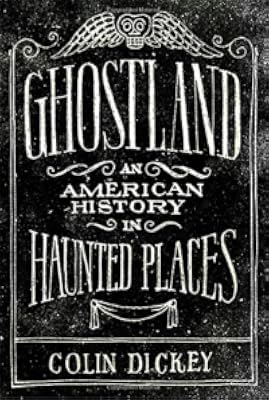
Ghostland: An American History in Haunted Places
by Colin Dickey
On This Page
Description
One of NPR’s Great Reads of 2016“A lively assemblage and smart analysis of dozens of haunting stories…absorbing…[and] intellectually intriguing.” —The New York Times Book Review
From the author of The Unidentified, an intellectual feast for fans of offbeat history that takes readers on a road trip through some of the country’s most infamously haunted places—and deep into the dark side of our history.
Colin Dickey is on the trail of America’s ghosts. Crammed into old houses show more and hotels, abandoned prisons and empty hospitals, the spirits that linger continue to capture our collective imagination, but why? His own fascination piqued by a house hunt in Los Angeles that revealed derelict foreclosures and “zombie homes,” Dickey embarks on a journey across the continental United States to decode and unpack the American history repressed in our most famous haunted places. Some have established reputations as “the most haunted mansion in America,” or “the most haunted prison”; others, like the haunted Indian burial grounds in West Virginia, evoke memories from the past our collective nation tries to forget.
With boundless curiosity, Dickey conjures the dead by focusing on questions of the living—how do we, the living, deal with stories about ghosts, and how do we inhabit and move through spaces that have been deemed, for whatever reason, haunted? Paying attention not only to the true facts behind a ghost story, but also to the ways in which changes to those facts are made—and why those changes are made—Dickey paints a version of American history left out of the textbooks, one of things left undone, crimes left unsolved.
Spellbinding, scary, and wickedly insightful, Ghostland discovers the past we’re most afraid to speak of aloud in the bright light of day is the same past that tends to linger in the ghost stories we whisper in the dark. Nonfiction. Sociology. History. New Age. show less
Tags
Recommendations






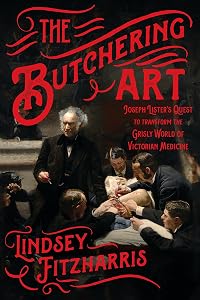



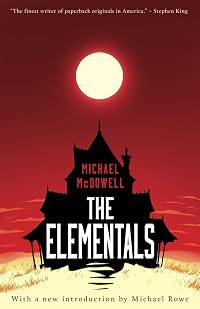
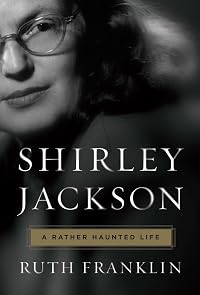
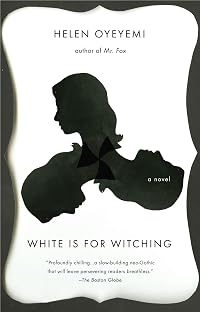

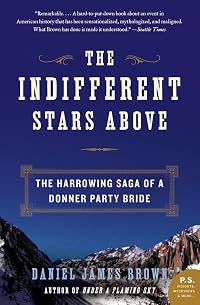
Member Recommendations

Member Reviews
Readers hoping for a collection of ghost stories related to American history may well be disappointed with this, but I enjoyed it very much. Dickey doesn't actually tell many ghost stories, and certainly never with the level of detail that make them fun. What he's interested in is the why of ghosts. Why certain places and circumstances inspire ghost stories, what ghosts and their stories give us that we need.
This reminded me some of W. Scott Poole's Monsters in America, which explores historical/social developments as possible backgrounds for supernatural beliefs, except that Dickey focuses only on ghosts. His style is somewhat breezier, also, but both authors see communal guilt or discomfort with actions taken against overpowered show more minorities, generally native Americans and African-Americans, as an underlying “itch” which inspires many American stories of victims who refuse to permanently disappear after their deaths. Stories of murdered slaves and vengeful native American spirits reflect anxieties with histories which don't fit our preferred narratives. Also, though, Dickey regularly points out the profit motives, both financial and otherwise, which may motivate ghost stories. As well as selling tickets for ghost tour guides, ghost stories can offer cautionary tales for potentially wayward children (“don't hitchhike!”), satisfactory resolutions in cases where the wicked are indicted by their victims from beyond the grave, entertaining explanations of why particular buildings or other settings which should be mundane feel, instead, oddly unsettling.
Ghost stories can accrue to many types of locations, and, section by section, Dickey explores ghosts connected with homes, hotels, brothels, asylums, cemeteries, cities, etc. Since his interest is not so much in particular stories as in the reasons that ghosts may “arise,” he tends to jump around quite a bit, bringing in stories as they support or illustrate his points.
While not a “debunker,” Dickey does tend to expose most of the stories he conveys as, at least to a large extent, fictions. His interest, again, is not in the reality of the ghosts, but in why their stories are compelling enough to be told and retold. Stories which are verifiably false, though, do, particularly, invite the question of what it is that keeps them circulating. For example, he tells the story of the ghost of George D. Mason, who supposedly haunts Detroit's Masonic Temple, from the roof of which he jumped to his death due to financial woes. Dickey says,
Dickey really summarizes his book nicely right up front in his “Author's Note,” when he says,
Dickey's exploration of why ghost stories are told, what they tell us about ourselves, why we enjoy them is entertaining reading. show less
This reminded me some of W. Scott Poole's Monsters in America, which explores historical/social developments as possible backgrounds for supernatural beliefs, except that Dickey focuses only on ghosts. His style is somewhat breezier, also, but both authors see communal guilt or discomfort with actions taken against overpowered show more minorities, generally native Americans and African-Americans, as an underlying “itch” which inspires many American stories of victims who refuse to permanently disappear after their deaths. Stories of murdered slaves and vengeful native American spirits reflect anxieties with histories which don't fit our preferred narratives. Also, though, Dickey regularly points out the profit motives, both financial and otherwise, which may motivate ghost stories. As well as selling tickets for ghost tour guides, ghost stories can offer cautionary tales for potentially wayward children (“don't hitchhike!”), satisfactory resolutions in cases where the wicked are indicted by their victims from beyond the grave, entertaining explanations of why particular buildings or other settings which should be mundane feel, instead, oddly unsettling.
Ghost stories can accrue to many types of locations, and, section by section, Dickey explores ghosts connected with homes, hotels, brothels, asylums, cemeteries, cities, etc. Since his interest is not so much in particular stories as in the reasons that ghosts may “arise,” he tends to jump around quite a bit, bringing in stories as they support or illustrate his points.
While not a “debunker,” Dickey does tend to expose most of the stories he conveys as, at least to a large extent, fictions. His interest, again, is not in the reality of the ghosts, but in why their stories are compelling enough to be told and retold. Stories which are verifiably false, though, do, particularly, invite the question of what it is that keeps them circulating. For example, he tells the story of the ghost of George D. Mason, who supposedly haunts Detroit's Masonic Temple, from the roof of which he jumped to his death due to financial woes. Dickey says,
”A popular story, yes, but among the most patently false and easily disproved ghost stories out there. Mason was eighty-eight at the time of his death, from natural causes (as any quick Google search will tell you), which took place more than twenty years after the Masonic Temple was finished. And yet the story has cachet in part because it reflects a narrative tha many have about Detroit: one of ostentatious overreach, folly, and death from financial ruin. So even though it's obviously false, it still gets told and retold.”
Dickey really summarizes his book nicely right up front in his “Author's Note,” when he says,
”Even if you don't believe in the paranormal, ghost stories and legends of haunted places are a vital, dynamic means of confronting the past and those who have gone before us. Ultimately, this book is about the relationship between place and story: how the two depend on each other and how they bring each other alive.”
Dickey's exploration of why ghost stories are told, what they tell us about ourselves, why we enjoy them is entertaining reading. show less
This book is a travelogue of haunted places in the United States, but it's not the anthology of creepy stories you may expect. While the author is skeptical of ghosts and hauntings, this is also not a work of debunking. Instead it's a deeper analysis of the stories as folklore that explain the hidden parts of the human psyche as well as how Americans deal with the past (or more commonly, how we hide from it).
Stops on his tour include places known for traumatic events and exploitation, such as brothels, prisons, ayslums, and even hotels. Dickey visits several cities that have made an industry of monetizing their traumatic history as ghost stories for tourists, including Salem, Savannah, and New Orleans. These stories can sanitize past show more tragedies while clearing us of wrongdoing. Then there's the message of the ruin porn of Detroit where the message is that someone's hubris is definitely to blame, although that may also be a deferral.
In short, one may open a book of ghost stories and find oneself reading a social justice critique of the United States instead. And a good one at that.
Favorite Passages:
show less
Stops on his tour include places known for traumatic events and exploitation, such as brothels, prisons, ayslums, and even hotels. Dickey visits several cities that have made an industry of monetizing their traumatic history as ghost stories for tourists, including Salem, Savannah, and New Orleans. These stories can sanitize past show more tragedies while clearing us of wrongdoing. Then there's the message of the ruin porn of Detroit where the message is that someone's hubris is definitely to blame, although that may also be a deferral.
In short, one may open a book of ghost stories and find oneself reading a social justice critique of the United States instead. And a good one at that.
Favorite Passages:
"... all of these stories, in one way or another, respond to history. Ghost stories like this are a way for us to revel in the open wounds of the past while any question of responsibility for that past blurs, then fades away." - p. 48
"If the Kirkbride asylums are haunted, they are haunted by the difference between how history is conceived and how it plays out." - p. 185
"Surely ghosts will follow wherever there is bad record keeping.” - p. 200
"Ghosts stories, for good or ill, are how cities make sense of themselves: how they narrate the tragedies of their past, weave cautionary tales for the future. " - p. 248
show less
Haunted houses have always fascinated the American public. So much so that they have become tourist attractions across the country. Homeowners brag about the ghostly visitors in their houses. Cities thrive on ghost tours. Millions of TV viewers watch the various ghost hunting shows on cable networks. Ghosts are big business.
Ghostland is not so much another attempt to uncover paranormal activity as it is another way to explore the idea of something haunted. Ghosts may not exist in the physical sense but the stories behind the ghost stories explain much about life at the time of the first mention of a haunting. Whether it is an eccentric and independent woman who felt more comfortable alone than in public, a hospital that was anything but show more humane, a house built with slave labor, or owners forced to abandon the house they could no longer afford to keep, each of these dwellings comes with a story, and the ghosts lie within that story.
It is an unusual but thoughtful way to consider the idea of ghosts and hauntings. After all, everyone who has ever moved into a new house experiences some lingering trace of the former owners. According to Mr. Dickey, that trace of prior ownership – the joy and sorrow the house has seen – is a haunting. Every owner leaves something behind, whether it is in the form of memories or something more concrete like a bitter note written on a wall. The sorrow and pain from a former insane asylum becomes palpable over time, and the anxiety of an introvert at the thought of hosting family takes shape in constant preparations required to make the house habitable for said family. Ghosts therefore are not spiritual entities but rather something even more nebulous but more powerful.
Through Mr. Dickey’s insight, there is much more than meets the eye about these haunted locations. Sadly, the truth is never mentioned during tours of these sites. After all, no one wants to tour a house in Salem that was built after the witch trials, and no one wants to hear that those witch trials were about land ownership and property grabs than about actual witches. Still, Mr. Dickey’s explanations leave room for a new form of ghost that is equally intriguing and terrifying. After all, the past has its own way of haunting the present. show less
Ghostland is not so much another attempt to uncover paranormal activity as it is another way to explore the idea of something haunted. Ghosts may not exist in the physical sense but the stories behind the ghost stories explain much about life at the time of the first mention of a haunting. Whether it is an eccentric and independent woman who felt more comfortable alone than in public, a hospital that was anything but show more humane, a house built with slave labor, or owners forced to abandon the house they could no longer afford to keep, each of these dwellings comes with a story, and the ghosts lie within that story.
It is an unusual but thoughtful way to consider the idea of ghosts and hauntings. After all, everyone who has ever moved into a new house experiences some lingering trace of the former owners. According to Mr. Dickey, that trace of prior ownership – the joy and sorrow the house has seen – is a haunting. Every owner leaves something behind, whether it is in the form of memories or something more concrete like a bitter note written on a wall. The sorrow and pain from a former insane asylum becomes palpable over time, and the anxiety of an introvert at the thought of hosting family takes shape in constant preparations required to make the house habitable for said family. Ghosts therefore are not spiritual entities but rather something even more nebulous but more powerful.
Through Mr. Dickey’s insight, there is much more than meets the eye about these haunted locations. Sadly, the truth is never mentioned during tours of these sites. After all, no one wants to tour a house in Salem that was built after the witch trials, and no one wants to hear that those witch trials were about land ownership and property grabs than about actual witches. Still, Mr. Dickey’s explanations leave room for a new form of ghost that is equally intriguing and terrifying. After all, the past has its own way of haunting the present. show less
This totally reignited my childhood interest in ghosts and hauntings, in a way almost perfectly tailored to my adult interests; exploring how ghost stories are reflective of society's prejudices, fears, and institutionalized beliefs is absolutely something I want to research more. My only complaint about this book is that I could have read thousands of pages of it. It was engrossing, accessible, and fascinating. A must-read for anyone who loves ghost stories.
I love nothing more than a good ghost story. Colin Dickey's "Ghostland" explores famous, and less famous, haunts across America from the perspective of the living. What do these haunted places and ghost stories tell us about ourselves and about our society? How is our own unease regarding our history reflected in them?
Particularly interesting was Dickey's de-construction of some of the tales behind the hauntings. I certainly look at Sarah Winchester and the Winchester Mystery House a whole lot differently now. It's fascinating how the tales have grown, or perhaps not grown, around the kernel of truth. The chapters on African-American ghosts, or lack of same, around southern plantations or slave market sites were especially show more interesting.
Dickey's writing style made "Ghostland" a really enjoyable read. show less
Particularly interesting was Dickey's de-construction of some of the tales behind the hauntings. I certainly look at Sarah Winchester and the Winchester Mystery House a whole lot differently now. It's fascinating how the tales have grown, or perhaps not grown, around the kernel of truth. The chapters on African-American ghosts, or lack of same, around southern plantations or slave market sites were especially show more interesting.
Dickey's writing style made "Ghostland" a really enjoyable read. show less
This was an interesting take on hauntings. The author did not discuss whether the hauntings were true or not (though he seems to have his doubts) but rather what they say about us as a society, as a country.
He discusses how some ghost stories may have a glimmer of truth in their origin but have been embellished to suit our purposes. The purpose may be to whitewash our history, to assuage our guilt about events that have happened. The purpose might be to draw attention to something in our past that needs to be addressed. The purpose might be to divert ourselves from more serious issues such as racism. The purpose might be as simple as drumming up tourism or scaring children into being good.
Colin Dickey traveled throughout the states, show more gathering these stories. Some I am very familiar with, others I had never heard of. He did put a good perspective on our hauntings, made me think about some new ideas. I never thought about our ghost stories as being part of our national mythology like this.
(I still like to be scared, so I think I'll stay less of a skeptic than he is.) show less
He discusses how some ghost stories may have a glimmer of truth in their origin but have been embellished to suit our purposes. The purpose may be to whitewash our history, to assuage our guilt about events that have happened. The purpose might be to draw attention to something in our past that needs to be addressed. The purpose might be to divert ourselves from more serious issues such as racism. The purpose might be as simple as drumming up tourism or scaring children into being good.
Colin Dickey traveled throughout the states, show more gathering these stories. Some I am very familiar with, others I had never heard of. He did put a good perspective on our hauntings, made me think about some new ideas. I never thought about our ghost stories as being part of our national mythology like this.
(I still like to be scared, so I think I'll stay less of a skeptic than he is.) show less
I was extremely excited to read this book from the first. The idea of an anthropological study of hauntings is deeply intriguing to me, and this book delivered just that in spades. More interesting than whether or not ghosts are real, is the question of why belief in them persists. [author: Colin Dickey] examines this in detail, along with the reality behind the stories presented and why the often changed stories persist rather than the true ones. Ghosts are part of our psyche, attracting us like catnip. Urban legends live on for a reason.
This book isn't as much a Who's Who of haunted houses as much as it is a history of both the well-known and forgotten, as well as the newly emerging. The latter section on Detroit was particularly show more interesting and moving, as was the section on Katrina, and the oddity of Richmond having nearly no ghosts of slaves. Most interesting, perhaps, was the notion of the sasha and the zamani. We die twice, according to this theory. While there are still those who remember us and knew us while we lived we occupy the space of sasha, only after the last person who knew us dies do we move to the land of zamani where people may do with our memory what we wish.
The idea of sasha an zamani was very moving when it came to the ghosts. So many ghost hunters searching for thrills end up doing a disservice to those who knew the person before they died, or still visit the graves and occupy that space. Ghost hunting, like any study of the dead, should be done with respect and an appreciation of the reality of the people who now "haunt" the area, or at least a respect for the long history of each place that is visited. show less
This book isn't as much a Who's Who of haunted houses as much as it is a history of both the well-known and forgotten, as well as the newly emerging. The latter section on Detroit was particularly show more interesting and moving, as was the section on Katrina, and the oddity of Richmond having nearly no ghosts of slaves. Most interesting, perhaps, was the notion of the sasha and the zamani. We die twice, according to this theory. While there are still those who remember us and knew us while we lived we occupy the space of sasha, only after the last person who knew us dies do we move to the land of zamani where people may do with our memory what we wish.
The idea of sasha an zamani was very moving when it came to the ghosts. So many ghost hunters searching for thrills end up doing a disservice to those who knew the person before they died, or still visit the graves and occupy that space. Ghost hunting, like any study of the dead, should be done with respect and an appreciation of the reality of the people who now "haunt" the area, or at least a respect for the long history of each place that is visited. show less
Members
- Recently Added By
Published Reviews
The most fascinating moments in “Ghostland” are Dickey’s etymological musings (on terms like “haunt,” “cemetery,” “ruin porn” and “ghost town”) and his many turns down unusual paths of American history. His discussion of the links between 19th-century Spiritualism, the early feminist movement and contemporary New Age beliefs; his account of the red dwarf who is said to show more have haunted Detroit since the city’s founding, in 1701; and his recognition that ghost stories can aid the work of historic preservation: All of these are absorbing. While many of the ghost stories he recounts can be found in academic treatments as well as lighthearted local guides, with “Ghostland,” Dickey achieves a capacious geographical synthesis that is both intellectually intriguing and politically instructive. show less
added by Lemeritus
Throughout history, ghost stories have been used to make money, offer a moral, mark a location, and explain the unexplainable, among many other functions.... An intriguing but somewhat uneven exploration of things unseen.
added by Lemeritus
Grouping haunts into four categories—houses, hangouts, institutions, and entire towns—he shows how the persistence of these ghost stories, especially when their details change with the times, say more about the living than the dead.... Dickey embeds all of the fanciful tales he recounts in a context that speaks “to some larger facet of American consciousness.”
added by Lemeritus
Lists

Top Five Books of 2016
795 works; 229 members

Books Read in 2018
4,360 works; 110 members

Haunted Places and Ghost Stories Reading List
99 works; 4 members

Fiction: Supernatural Horror
97 works; 1 member

Reading Glasses Podcast
410 works; 3 members

Ghost Stories That Thrill Us
256 works; 115 members

Top Five Books of 2024
795 works; 264 members
Author Information

6+ Works 1,608 Members
Colin Dickey is the co-editor (with Nicole Antebi and Robby Herbst) of Failure! Experiments in Aesthetic and Social Practices. His fiction and nonfiction have appeared in Lapham's Quarterly, Cabinet, TriQuarterly, and The Santa Monica Review. A native of the San Francisco Bay Area, he now lives in Los Angeles.
Awards and Honors
Notable Lists
Common Knowledge
- Original publication date
- 2016
- Important places
- New Orleans, Louisiana, USA; Salem, Massachusetts, USA; Shiloh, Tennessee, USA; Detroit, Michigan, USA
- Epigraph
- The main work of haunting is done by the living. - Judith Richardson
Ghostland lies beyond the jurisdiction of veracity. - Nathaniel Hawthorne - Dedication
- For Nicole
- First words
- August 1933, a summer's day in Manhattan's Lower East Side.
- Quotations
- A paranormal event without a story is tenuous, fragile. What makes it “real,” at least in a sense, is the story, the tale that grounds the event. That sense of the uncanny, of something not-quite-right, of things ever-so-... (show all)slightly off, cries out for an explanation, and often we turn to ghosts for that explanation.
A spinster and one who seemed to resist time in a place as restless as New York City, Gertrude Tredwell embodies a set of ideas—and anxieties—about women, domesticity, and modernity. Likewise, in the ghost of threadbare S... (show all)amuel Tredwell we have a story of disinheritance and filial failure that reflects how we as a culture treat men who don’t live up to certain concepts of masculinity. Add to this the overbearing portrait of Seabury himself, and what the Merchant’s House offers is an uncanny portrait of the American family, one that frustrates our basic assumptions about how a father and his children should act.
Our ghost stories center on unfinished endings, broken relationships, things left unexplained.
We like to view this country as a unified, cohesive whole based on progress, a perpetual refinement of values, and an arc of history bending toward justice—but the prevalence of ghosts suggests otherwise. The ghosts who hau... (show all)nt our woods, our cemeteries, our houses, and our cities appear at moments of anxiety and point to instability in our national and local identities.
Our country’s ghost stories are themselves the dreams (or nightmares) of a nation, the Freudian slips of whole communities: uncomfortable and unbidden expressions of things we’d assumed were long past and no longer import... (show all)ant.
...the history of America’s ghost stories is one of crimes left unsolved or transgressions we now feel guilty about.
The language of ghosts, it seems, has become an important (if abstract) way of talking about architecture and place.
Ghost tours are popular with tourists, explains geographer Glenn Gentry, because they “allow access to dissonant knowledge, dirty laundry, back stage.” They are the celebrity gossip of history, the salacious underbelly of... (show all) the past, and we’re drawn to them because the standard history often obscures as much as it reveals.
With a haunted house, the question is: to what extent is the house itself alive, and to what extent is it inanimate?
Neither alive nor dead but undead, the haunted house is the thing in between.
Home ownership has always been intertwined with the American dream; we have magnified this simple property decision in part because it represents safety and security. The haunted house is a violation of this comfort, the Amer... (show all)ican dream gone horribly wrong.
...the simple addition of an anomalous element to a house’s construction immediately opens up vertiginous possibilities. The secret staircase, simply by virtue of not being immediately self-explanatory, renders the entire h... (show all)ouse even more uncanny.
The narrative of the haunted Indian burial ground hides a certain anxiety about the land on which Americans—specifically white, middle-class Americans—live. Embedded deep in the idea of home ownership—the Holy Grail of ... (show all)American middle-class life—is the idea that we don’t, in fact, own the land we’ve just bought.
The constant evolving of the land around the Mississippi delta is anathema to human habitation, and civilizations that don’t make their mark through massive earthworks and geologic engineering—as New Orleans has—are eas... (show all)ily erased by the constant flow and flux of the river and its mud.
Ghost stories like this are a way for us to revel in the open wounds of the past while any question of responsibility for that past blurs, then fades away.
Urban sprawl isn’t unique to San Jose, of course, but the city has a miniature allegory of itself in the form of a sprawling, formless Victorian mansion that sits in its very center. If there is a central monument to San Jo... (show all)se now, it is this labyrinthine, inscrutable house in the heart of the city.
If houses are supposed to be places of security, then most terrifying is the idea that they might go on forever, that they might be labyrinths.
The story of Sarah Winchester’s house, built on the fortune of the rifle that “won the West,” is always, one way or another, the story of money.
...attitudes toward America’s westward expansion and manifest destiny changed, so, too, did the role of the Winchester rifle in the tour, now emphasized as the gun that had killed untold Native Americans, all of whom were n... (show all)ow haunting the widow who’d profited from the murder weapon.
The legend of Sarah Winchester depends on a cultural uneasiness to which we don’t always like to admit. An uneasiness about women living alone, withdrawn from society, for one. An uneasiness about wealth and the way the sup... (show all)errich live among us. And, perhaps largest of all, an uneasiness about the gun that won the West and the violence white Americans carried out in the name of civilization.
...we’ve projected shame on her nonetheless, as though we can quarantine such thoughts in the mind of someone long dead so the rest of us can go about our days unburdened, enjoying the California sun.
Burial reformers pushed the importance of sanitary corpse disposal, and so families, many of whom were used to keeping vigil with a loved one’s body for several days after death, saw these bodies removed from their care at ... (show all)a rapid rate. Suddenly bereft of this final communion due to medical and sanitation laws, families turned to Spiritualism as a means of continuing that conversation, seeking in séances a closure that had been denied them.
...since the spirit world was accessible to all, Spiritualists saw little need for the men who traditionally controlled organized religion. In short order Spiritualism became dominated by women:
Spiritualism had given many of these women practice and confidence in speaking to groups with authority; by allowing others (the dead) to speak through them, American women began to speak for themselves in greater numbers.
Since women gained the vote, however, Spiritualism’s importance as a women’s movement has more or less been forgotten or downplayed.
...if it is truly haunted, then it is haunted not by ghosts or evil spirits so much as by an idea that has vanished; a building left behind, without the animating spirit that inspired its construction.
That sense of emptiness is key to a good haunting. Few things are more unsettling than being somewhere emptied out, after everyone else has left.
As supernatural beings, spirits often come to represent some universal truth of the past. They turn space into time and can be a way of making a place stand for some transcendental value or universal ideal.
As Tiya Miles notes in her book Tales from the Haunted South, the consuming horror that animated most whites was “not a fear of ghosts but a fear of black rebellion.” The only way to keep alive the white world of Southern... (show all) belles and elegant gentlemen was to deny the humanity of black people: their names, their identities, their families.
Here, then, is a central paradox in the way that ghosts work: to turn the living into ghosts is to empty them out, rob them of something vital; to keep the dead alive as ghosts is to fill them up with memory and history, to k... (show all)eep alive a thing that would otherwise be lost.
...what is clear is that history is not just written by the victors; it’s written by the literate. The prohibition against enslaved Americans learning to read or write had the immediate purpose of denying them agency and ke... (show all)eping them under control, but in the long run it also meant that the stories, lives, and opinions of millions of Americans were lost to time.
Brothels are liminal (from the Latin limins, “threshold”) places, borderland places where the traditional rules of a society are momentarily suspended. Both for good and for ill, the world of the brothel seems a world in ... (show all)extremis. And so perhaps no other business venture is so primed for ghost stories. The brothel, with its mix of tragedy and hiddenness, rowdy violence and erotic allure, seems the perfect place for spirits to take up residence.
...there’s something uncanny about the very nature of a hotel, its endless, involuntary repetition of home-seeming spaces, rooms that could almost be home but are always somehow slightly off. Cultural critic Wayne Koestenba... (show all)um writes, “The uncanny is home defamiliarized—its rule book torn at the seam."
This is how ghost stories are born, after all: not from a complete story so much as from bits and pieces that don’t quite add up, a kaleidoscope of menace and unease that coalesce in unpredictable ways.
We tell spooky tales and scary stories because the alternative—the open-ended chaos of the unknown—is even more terrifying.
With little commercial interest to dictate how one experienced the city, downtown Los Angeles became, in its own way, a dream space—free to be colonized by alcoholics and junkies, of course, but also by artists and writers ... (show all)who found cheap living space and no one looking over their shoulders.
More so than houses, civic structures—not just courthouses but prisons, asylums, and other government buildings—are purpose-built. They are rarely constructed for convenience’s sake; they are built to send a message.
Part of our belief in ghosts, you could say, comes from our belief in perfect and unambiguous justice. As opposed to tales of, say, a poltergeist, a spirit that is mischievous without direction, or a demon or other actively m... (show all)alevolent spirit, ghost stories often revolve around crime and punishment.
Offering a vision of pure justice, the unavenged ghost wipes away all the legal ambiguities of the case with a brush of a spectral hand, leaving only the pure truth.
Asylums became haunted by what happened inside their walls and also by the walls themselves: an architecture that was purposely boastful but which spoke of a previous generation with different ideals, economic motives, and at... (show all)titudes toward the sick. The moment when we were most optimistic about our ability to cure the mind is when we built our most ostentatious palaces to psychiatry. There is a danger, then, in telegraphing too prominently one’s utopian ideals via architecture.
If the Kirkbride asylums are haunted, they are haunted, you could say, by the difference between how history is conceived and how it plays out.
The word “cemetery,” which comes from the Greek koimētērion and originally meant simply a dormitory or a place to sleep, had been adopted first by early Christians, who saw sleep as temporary and used the Latin coemeter... (show all)ium to refer to the tombs of martyrs, who were simply sleeping and would soon arise once more.
The work of burying Confederate soldiers fell to civilians and became a grassroots movement that gave a purpose of sorts to defeated Southern culture. Southern whites undertook ad hoc attempts to bury their dead, often raisin... (show all)g money through the community to cover burial costs and tombstones. This work was largely the provenance of women—grieving mothers and widows who would honor fallen Confederates one last time. Mourning the Southern dead became a way to subtly repudiate the Union and reject the war’s outcome.
By spreading ghost stories, Southern whites hoped to limit the unauthorized movement of black people. If cemeteries, crossroads, and forests came to be known particularly as haunted, it’s because they presented the easiest ... (show all)means of escape and had to be patrolled.
What better way to spend a chilly evening than trying to scare yourself into feeling alive?
What was once a person’s unbearable loss is now someone else’s “strange noises and voices,” a reminder of how quickly a personal tragedy can be molded, in the hands of strangers, into folklore, taking on a life of its... (show all) own.
For better or worse, the language of hauntings and ghosts is a convenient metaphor for a whole host of problems not connected to the supernatural, and the recourse to such vocabulary becomes a means to process or make sense o... (show all)f experiences that can otherwise seem overwhelming and mystifying.
Detroit has become our nation’s favorite morality tale: a series of ineffectual mayors, bad public policy, and servitude to unions have all allowed a popular conception that Detroit “deserves” its fate.
A popular story, yes, but among the most patently false and easily disproved ghost stories out there. Mason was eighty-eight at the time of his death, from natural causes (as any quick Google search will tell you), which took... (show all) place more than twenty years after the Masonic Temple was finished. And yet the story has cachet in part because it reflects a narrative that many have about Detroit: one of ostentatious overreach, folly, and death from financial ruin. So even though it’s obviously false, it still gets told and retold.
A ghost story’s reduction of a complex moment or the history of a building into a series of clichés is reproduced in beautifully staged photos that fetishize the past without truly representing it. Ruin porn is the visual ... (show all)analog of the ghost story.
The archetypal haunted house story is fundamentally about class: new money who doesn’t understand the land or the people or the history blunders into the landscape, attempting to buy his way into a community, blithely obliv... (show all)ious to the locals. A legend goes unheeded, a terrible secret is unearthed, sacred land is disturbed, and so forth. The townspeople grow resentful because, by the force of economics, they are imprisoned by the rich and their folly.
...she was told by employees that the ghost rumors had been started by neighbors, who were concerned that the high-priced apartments would drive up their own rents. Meanwhile, prospective renters at 123 on the Park have thems... (show all)elves apparently tried to use the ghosts as a bargaining chip, asking for reduced rents since their apartments already have occupants. In landscapes such as New York City, where real estate and issues of gentrification are already fraught, it doesn’t much matter if the ghosts are real or not; what matters is the financial leverage they may provide.
We tell ourselves ghost stories perhaps because we truly believe in the paranormal—or perhaps because we just need a word, a term, a story for that vague feeling that would be too silly to admit in other terms.
Ghost towns feel haunted because, even if they will never again host living society, they remain filled with hints of those who once lived there. Our imaginations cannot help but project onto these ruins the ghosts of the peo... (show all)ple who’ve left indelible traces, and these spirits can spring to life with just a shift in the wind, a creaking board, or a distant animal call.
As places like Manhattan and San Francisco become uninhabitable to all but the richest 0.01 percent, driving out even their own service workers, internal migration will continue and new places will become abandoned. A 2014 ar... (show all)ticle in the New York Times suggested that as global warming increases, Americans will empty out the Southwest in favor of places like Maine, Oregon, and Alaska. Spurred by a global warming dust bowl, we’ll move north, and in time Phoenix, Sacramento, and Los Angeles may come to be as ghost-haunted as Detroit seems now.
Ghost stories are about how we face, or fail to face, the past—how we process information, how we narrate our past, and how we make sense of the gaps in that history. - Last words
- (Click to show. Warning: May contain spoilers.)In some ways we don't want to know too much about the true story, since whatever happens, we can't break the spell - because the ghost is too important.
- Canonical DDC/MDS
- 133.10973
- Canonical LCC
- BF1472.U6
Classifications
- Genres
- General Nonfiction, History, Nonfiction, Religion & Spirituality
- DDC/MDS
- 133.10973 — Philosophy & psychology Parapsychology & occultism Specific topics in parapsychology and occultism Apparitions North America United States
- LCC
- BF1472 .U6 — Philosophy, Psychology and Religion Psychology Occult sciences Ghosts. Apparitions. Hauntings
- BISAC
Statistics
- Members
- 936
- Popularity
- 28,468
- Reviews
- 38
- Rating
- (3.65)
- Languages
- English, Italian, Korean, Polish
- Media
- Paper, Audiobook, Ebook
- ISBNs
- 9
- ASINs
- 2