On This Page
Description
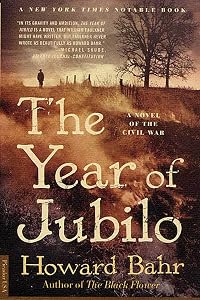
A New York Times Notable Book The last time Gawain Harper saw Cumberland, Mississippi, he was heading off to fight for the newly formed Confederate States of America-driven not by the cause that motivated so many others, but by love. The father of his beloved, Morgan Rhea, refused to allow her to be courted by a man who would not take up arms to defend the South. So Gawain joined the Mississippi Infantry-and now, three nightmarish years later, he is coming home. But postwar Cumberland is not show more the place Gawain so fondly remembered. An occupying force of Union soldiers keeps uneasy watch over the townspeople, including an erstwhile slave hunter and an albino gravedigger known as Old Hundred-and-Eleven. Meanwhile, a bloodthirsty former Confederate officer named King Solomon Gault is organizing a secret militia to drive the occupiers out and bring the entire region under his ruthless control. Before Gawain can marry Morgan and build their new life together, he must return to the world of violence and turmoil he has been so desperate to escape. show lessTags
Recommendations


Member Reviews
The Year of Jubilo is very different from The Black Flower but equally as brilliant. Gawain Harper's war has finished, but in many ways his life has just started. Surrounded by a cast of vanquished and somewhat colourful/discombobulated characters, he seeks to find normality and love in a world that no longer exists. Revenge gets in the way and things become complicated. This is a story about how destructive civil wars can be, not just on the battlefield, but after they have finished. Howard Bahr has rapidly become one of my favourite writers.
5 stars. Among the best Civil War epics ever written.
It is 1865 and the war is over. The Confederate soldiers are going home at last, among them Gawain Harper. He has made it through the war with the daguerreotype of Morgan Rhea in his pocket, but he does not know if she is waiting for him and he is afraid that the women he will find at the end of this journey will not be the woman he left behind. Indeed, he knows not one person in this world is the same, especially not himself.
Bahr, who, in his first novel, [b:The Black Flower: A Novel of the Civil War|651358|The Black Flower A Novel of the Civil War|Howard Bahr|http://images.gr-assets.com/books/1354900191s/651358.jpg|637489], offered the most realistic picture I have ever known of show more the Civil War, now gives just as stark and compelling a picture of the days after the war and the struggle of the living to rejoin life and determine their places in it. We walk the road with these men and feel how foreign everything in life is to them. Even after returning home, something as normal as sleeping in a bed seems impossible. Much of the town they knew is burned to the ground and, even worse, they are in an occupied territory. The hatred of the soldiers has virtually evaporated, but the hatred in the town and among the “rangers”, who never went to war but have ruled in the absence of the men, is hot and palpable. Like most wars, this one has claimed some of the best men and left behind some of the worst.
If you have ever had a romantic notion of what war or reconstruction is, Howard Bahr will steal that from you and leave you gasping at how raw and real war and its aftermath can be. His own experiences in Vietnam no doubt inform his clear understanding of the horrors and consequences of war. His ability to convert that knowledge into the world of the 1860s is impressive and unparalleled.
I shall never forget Gawain Harper or Capt. Harry Stribling. They are so realistically depicted that I felt as if I were reading about a fore-father and as if their stories were a part of my own past. After reading this book, I took a walk down into the countryside to a small cemetery plot that is now buried in a tangle of weeds on the far side of a field that is only temporarily free of crops. In that graveyard (which is an old-time family plot from the 1800s), there is a marker for a soldier by the name of Whitfield Moore from Co. F of the 40th VA Infantry, C.S.A. I placed flowers there and said a prayer for the soul of this man who must certainly have suffered much of what Bahr writes of and whose greatest luck might be that he found a final resting place back at his home place. Perhaps he is out walking that long road with his fellows still. There is a reason history should be remembered, not the least of which it that all of these young men were real.
The title of this book is the name of a Civil War song, written in 1862 and heard here as it would have been sung then. https://youtu.be/Lalt29JmeC8 show less
It is 1865 and the war is over. The Confederate soldiers are going home at last, among them Gawain Harper. He has made it through the war with the daguerreotype of Morgan Rhea in his pocket, but he does not know if she is waiting for him and he is afraid that the women he will find at the end of this journey will not be the woman he left behind. Indeed, he knows not one person in this world is the same, especially not himself.
Bahr, who, in his first novel, [b:The Black Flower: A Novel of the Civil War|651358|The Black Flower A Novel of the Civil War|Howard Bahr|http://images.gr-assets.com/books/1354900191s/651358.jpg|637489], offered the most realistic picture I have ever known of show more the Civil War, now gives just as stark and compelling a picture of the days after the war and the struggle of the living to rejoin life and determine their places in it. We walk the road with these men and feel how foreign everything in life is to them. Even after returning home, something as normal as sleeping in a bed seems impossible. Much of the town they knew is burned to the ground and, even worse, they are in an occupied territory. The hatred of the soldiers has virtually evaporated, but the hatred in the town and among the “rangers”, who never went to war but have ruled in the absence of the men, is hot and palpable. Like most wars, this one has claimed some of the best men and left behind some of the worst.
If you have ever had a romantic notion of what war or reconstruction is, Howard Bahr will steal that from you and leave you gasping at how raw and real war and its aftermath can be. His own experiences in Vietnam no doubt inform his clear understanding of the horrors and consequences of war. His ability to convert that knowledge into the world of the 1860s is impressive and unparalleled.
I shall never forget Gawain Harper or Capt. Harry Stribling. They are so realistically depicted that I felt as if I were reading about a fore-father and as if their stories were a part of my own past. After reading this book, I took a walk down into the countryside to a small cemetery plot that is now buried in a tangle of weeds on the far side of a field that is only temporarily free of crops. In that graveyard (which is an old-time family plot from the 1800s), there is a marker for a soldier by the name of Whitfield Moore from Co. F of the 40th VA Infantry, C.S.A. I placed flowers there and said a prayer for the soul of this man who must certainly have suffered much of what Bahr writes of and whose greatest luck might be that he found a final resting place back at his home place. Perhaps he is out walking that long road with his fellows still. There is a reason history should be remembered, not the least of which it that all of these young men were real.
The title of this book is the name of a Civil War song, written in 1862 and heard here as it would have been sung then. https://youtu.be/Lalt29JmeC8 show less
Part Civil War novel and part Wild West tale, The Year of Jubilo follows the adventures of Gawain Harper, a Confederate veteran who upon returning home becomes involved in a town battle of deadly consequences. Gawain reluctantly joined the Confederate Army after the father of his beloved, Morgan Rhea, told Gawain that if he wants to marry Morgan, he must fight in the war. Throughout the war, Gawain learns to accept his soldier life, and after three years of hard battle, he returns home to marry Morgan.
However, Morgan's father has another demand for Gawain before he will accept his proposal: Gawain must kill the powerful King Solomon Gault, a former Confederate officer who killed Morgan's sister.
The Year of Jubilo then progresses into a show more tale reminiscent of the Old West (at times, I felt like I was watching the HBO show Deadwood). Shoot outs, ambushes, stealing horses and weapons, toothless men, crazy men - you name it, it was in this novel. I enjoyed the characters in this book; many of their conversations were humorous (I even chuckled out loud), and Howard Bahr did a great job attaching this reader to the characters' fates.
At the risk of sounding stereotypical, I would characterize The Year of Jubilo as a "man's tale" - full of blood, grit and guts. I am not saying that women can't enjoy this book, but you do have to like the dirtier side of historical fiction to enjoy The Year of Jubilo.
(P.S. This would make a great movie!) show less
However, Morgan's father has another demand for Gawain before he will accept his proposal: Gawain must kill the powerful King Solomon Gault, a former Confederate officer who killed Morgan's sister.
The Year of Jubilo then progresses into a show more tale reminiscent of the Old West (at times, I felt like I was watching the HBO show Deadwood). Shoot outs, ambushes, stealing horses and weapons, toothless men, crazy men - you name it, it was in this novel. I enjoyed the characters in this book; many of their conversations were humorous (I even chuckled out loud), and Howard Bahr did a great job attaching this reader to the characters' fates.
At the risk of sounding stereotypical, I would characterize The Year of Jubilo as a "man's tale" - full of blood, grit and guts. I am not saying that women can't enjoy this book, but you do have to like the dirtier side of historical fiction to enjoy The Year of Jubilo.
(P.S. This would make a great movie!) show less
I read this right after reading The Black Flower. My hopes were set extremely high as The Black Flower is one of the best books I have ever read. Perhaps the bar was set too high. This is the second of a three book series set in the south around the Civil War. The Black Flower took place during a battle, while this takes place as the Civil War is winding down.
The writing ability is still there. I just felt the first hundred and fifty or so pages could have been cut in half. The final half of the book is excellent and reminded why I have a new love for Howard Bahr's ability. It just felt like nothing of any significance happened in the first half and that he took too much time doing some character development.
I look forward to reading show more the final book of the trilogy. While this book was not as good as The Black Flower, in my opinion, it is a very good read for anybody looking to read Civil War era fiction. show less
The writing ability is still there. I just felt the first hundred and fifty or so pages could have been cut in half. The final half of the book is excellent and reminded why I have a new love for Howard Bahr's ability. It just felt like nothing of any significance happened in the first half and that he took too much time doing some character development.
I look forward to reading show more the final book of the trilogy. While this book was not as good as The Black Flower, in my opinion, it is a very good read for anybody looking to read Civil War era fiction. show less
This was the first Civil War novel I've read, and based on this it will not be the last. I was instantly engrossed in the novel, as it pulls you right in. I loved the characters and the way Bahr continued their stories all the way through the novel. The way Bahr mixes the emotions of the war participants in with their homes and the people and places they come back to felt like it definitely had the ring of accuracy. Well done.
Ratings
Members
- Recently Added By
Author Information

Series

Common Knowledge
- Important places
- USA
- Important events
- American Civil War (1861 | 1865)
- Epigraph
- Well, it must be now that the kingdom's coming, In the Year of Jubilo. -Henry Clay Work
And as to you Death, and you bitter hug of mortality, it is idle to try to alarm me.
-Walt Whitman "Song of Myself" - Dedication
- For Laura and Kathleen
- First words
- In the last week of May, Willy Landers passed his twelfth birthday, and on that day his mother presented him a pretty doorknob, broken from its shaft, that she'd found in the ruins of a burned house hard by the southerly road... (show all).
- Last words
- (Click to show. Warning: May contain spoilers.)They caught up with the Major just beyond the bridfge, and together they rode into the cedars.
- Blurbers
- Morgan, Robert; Perry, Roy E.
Classifications
Statistics
- Members
- 273
- Popularity
- 118,570
- Reviews
- 5
- Rating
- (4.00)
- Languages
- English
- Media
- Paper, Audiobook, Ebook
- ISBNs
- 8
- ASINs
- 5