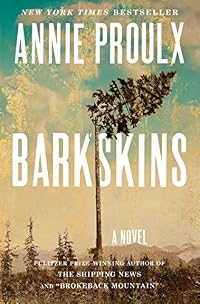
Barkskins
by Annie Proulx
On This Page
Description
"Bark Skins open in New France in the late 18th century as Rene Sel, an illiterate woodsman makes his way from Northern France to the homeland to seek a living. Bound to a "seigneur" for three years in exchange for land, he suffers extraordinary hardship and violence, always in awe of the forest he is charged with clearing. In the course of this epic novel, Proulx tells the stories of Rene's children, grandchildren, and great grandchildren, as well as the descendants of his friends and foes, show more as they travel back to Europe, to China, to New England, always in quest of a livelihood or fleeing stunningly brutal conditions--war, pestilence, Indian attacks, the revenge of rivals. Proulx's inimitable genius is her creation of characters who are so vivid--in their greed, lust, vengefulness, or their simple compassion and hope--that we follow them with fierce attention. This is Proulx's most ambitious novel ever, and her master work"-- show lessTags
Recommendations




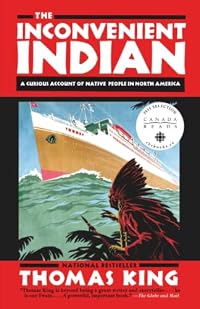
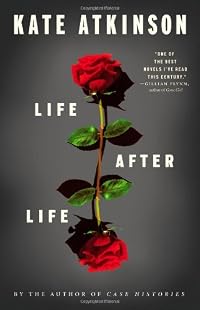
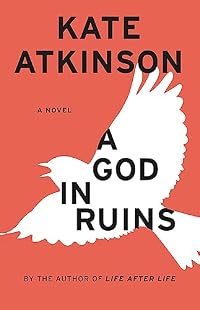
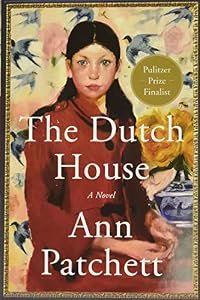
Member Recommendations


Member Reviews
What an extraordinary book. It encompasses the history of the major North American forests from the 17th century to the present day, and combines this with two loosely connected family stories. This ought to be too complex and ambitious to work, but for me it got more compulsive the more I read.
At the start of the book we meet two poor Frenchmen, Rene Sel and Charles Duquet, who are contracted to work for a settler from a French aristocratic family in a forest in New France. Duquet runs away while Sel remains loyal, and is persuaded to marry a Mi'kmaw Indian woman who has been contracted as a cook. Duquet is an ambitious wheeler dealer who starts a business empire which concentrates on logging, while Sel's family lead a marginal show more existence with the vestiges of the Mi'kmaw. Both families are followed all the way to the present day, and Proulx exposes the way in which the forestry industry destroyed most of America's primeval forests and most of the Indian tribes' homelands and sources of food. The book is full of memorable characters (Lavinia, the heiress to the Duquet empire in particular), but as in Proulx's earlier novel Accordion Crimes, most of their lives come to premature ends.
For such a long book, this is surprisingly enjoyable, in fact it is among the best new American novels I have read in the last few years. show less
At the start of the book we meet two poor Frenchmen, Rene Sel and Charles Duquet, who are contracted to work for a settler from a French aristocratic family in a forest in New France. Duquet runs away while Sel remains loyal, and is persuaded to marry a Mi'kmaw Indian woman who has been contracted as a cook. Duquet is an ambitious wheeler dealer who starts a business empire which concentrates on logging, while Sel's family lead a marginal show more existence with the vestiges of the Mi'kmaw. Both families are followed all the way to the present day, and Proulx exposes the way in which the forestry industry destroyed most of America's primeval forests and most of the Indian tribes' homelands and sources of food. The book is full of memorable characters (Lavinia, the heiress to the Duquet empire in particular), but as in Proulx's earlier novel Accordion Crimes, most of their lives come to premature ends.
For such a long book, this is surprisingly enjoyable, in fact it is among the best new American novels I have read in the last few years. show less
Proulx is a pleasure to read. This one is mammoth--a multigenerational epic: 1693 to present day--tellimg the North American story from the medicinal-herb-ground up to the giant-forest-canopy, providing First Nations peoples' perspective and the European invasion, with the effects of capitalist growth on the sacred environment. This is a meditation on identity (mixed-race, mixed-culture), environmentalism (with a grand historical view), and the development (and sometimes loss) of knowledge. Long, but definitely a Good Read. (Brian)
This was recently made into a TV series and when i noticed it i remembered that it had been sitting in "The Pile" for quite some time an thought this would be a good time to give it a read and then, afterwards, think about watching the TV show if i feel it would bring anything to the story.
This was my third Annie Proulx book. My first was Accordion Crimes, which i read years ago -- having found the paperback loitering in a charity shop -- and thoroughly enjoyed and is definitely on my bucket list to read again one day when the Kindle version goes on sale. I've also read The Shipping News, which was also quite the experience: so i was quite looking forward to Barkskins.
First comments on this has to be its size. If you're not in show more for a very, very long book -- its over 10,000 Kindle location points --- then just stay away. But, if you're up to the challenge, it's a very, very rewarding book.
It's very much the usual Annie Proulx style, giving us a deep and long trip through North America's history telling the stories of people at the bottom of the pile rather than those at the top like the history books always do. It's also a deep and long trip through the history of forest devastation the world over, and that's what this book is really about: how Europeans, having destroyed all the great European forests then discovered the New World and its seemingly infinite forests of never ending trees, set about destroying those -- and also the people who had lived in harmony with those forests for thousands of years -- with extreme predjudice. Along the way it also touches on New Zealand, as well as the great tropical forests, as the corporations who, having wrought the destruction and decimation of North America's great forests, then realised that there was plenty of far more exotic and expensive woods to be had -- not to mention all that farm land once the trees were cleared -- by destroying the rest of the world's forests.
It also touches on the folly of managed forests and sustainable forestry and how we fool ourselves into thinking that these are anything even approaching a real, natural forest. The delusions of Homo sapiens convincing themselves that they know better than Nature as to how Nature should be. We're currently in a global pandemic thanks, completely, to Homo sapiens' interference in the Natural order. But we won't learn and we certainly won't stop until we've destroyed it all and ourselves with it. Only at the end will we finally understand that corporate profits cannot ever sustain life.
Yes, after all is written and read, this is a book that screams at humanity to get its shit together before its too late, and maybe there's also a suggestion that it's already too late. Homo sapiens, by destroying the very life blood of Earth, the forests, has inevitably destroyed any chance of Homo sapiens' survival upon Earth. As the book makes abundantly clear, we can never put back and recreate what we destroyed, it will take thousands of years for Earth's great forests to re-establish themselves but they'll never be as they were, and even then, that's only if Homo sapiens fucks off and leaves them alone. So we're left with a catch 22 situation, if Homo sapiens remains on the planet in the numbers that we are, then the great forests can never begin to re-establish themselves, if they don't re-establish themselves then there's no future on this planet for Homo sapiens. Either way, Homo sapiens is doomed and the forests will eventually re-establish themselves -- Nature will always win at the end of time.
All in all, a fantastic book, and a must read for all those who still think its somehow possible to save the environment for Homo sapiens to survive.
Before i go though, i did start this by mentioning the TV series and reading this first to see if i'll be wanting to watch that. The answer is a firm NO. I am more than content with the image that this book has left in my mind and i do not wish to muddy and mess with that by watching some hack job of a TV show that cannot even begin to approach the depths this books goes into.
So yeah, don't watch the TV show and think you know what this is about, take the long path through forests long ago destroyed and read this incredible book instead, you'll be glad you did. show less
This was my third Annie Proulx book. My first was Accordion Crimes, which i read years ago -- having found the paperback loitering in a charity shop -- and thoroughly enjoyed and is definitely on my bucket list to read again one day when the Kindle version goes on sale. I've also read The Shipping News, which was also quite the experience: so i was quite looking forward to Barkskins.
First comments on this has to be its size. If you're not in show more for a very, very long book -- its over 10,000 Kindle location points --- then just stay away. But, if you're up to the challenge, it's a very, very rewarding book.
It's very much the usual Annie Proulx style, giving us a deep and long trip through North America's history telling the stories of people at the bottom of the pile rather than those at the top like the history books always do. It's also a deep and long trip through the history of forest devastation the world over, and that's what this book is really about: how Europeans, having destroyed all the great European forests then discovered the New World and its seemingly infinite forests of never ending trees, set about destroying those -- and also the people who had lived in harmony with those forests for thousands of years -- with extreme predjudice. Along the way it also touches on New Zealand, as well as the great tropical forests, as the corporations who, having wrought the destruction and decimation of North America's great forests, then realised that there was plenty of far more exotic and expensive woods to be had -- not to mention all that farm land once the trees were cleared -- by destroying the rest of the world's forests.
It also touches on the folly of managed forests and sustainable forestry and how we fool ourselves into thinking that these are anything even approaching a real, natural forest. The delusions of Homo sapiens convincing themselves that they know better than Nature as to how Nature should be. We're currently in a global pandemic thanks, completely, to Homo sapiens' interference in the Natural order. But we won't learn and we certainly won't stop until we've destroyed it all and ourselves with it. Only at the end will we finally understand that corporate profits cannot ever sustain life.
Yes, after all is written and read, this is a book that screams at humanity to get its shit together before its too late, and maybe there's also a suggestion that it's already too late. Homo sapiens, by destroying the very life blood of Earth, the forests, has inevitably destroyed any chance of Homo sapiens' survival upon Earth. As the book makes abundantly clear, we can never put back and recreate what we destroyed, it will take thousands of years for Earth's great forests to re-establish themselves but they'll never be as they were, and even then, that's only if Homo sapiens fucks off and leaves them alone. So we're left with a catch 22 situation, if Homo sapiens remains on the planet in the numbers that we are, then the great forests can never begin to re-establish themselves, if they don't re-establish themselves then there's no future on this planet for Homo sapiens. Either way, Homo sapiens is doomed and the forests will eventually re-establish themselves -- Nature will always win at the end of time.
All in all, a fantastic book, and a must read for all those who still think its somehow possible to save the environment for Homo sapiens to survive.
Before i go though, i did start this by mentioning the TV series and reading this first to see if i'll be wanting to watch that. The answer is a firm NO. I am more than content with the image that this book has left in my mind and i do not wish to muddy and mess with that by watching some hack job of a TV show that cannot even begin to approach the depths this books goes into.
So yeah, don't watch the TV show and think you know what this is about, take the long path through forests long ago destroyed and read this incredible book instead, you'll be glad you did. show less
We treasure trees. We have a long history with trees reflected in the growing list of why we need them ... or how we use them.
At the bottom of that list is the chemistry they provide for the betterment of this planet. At the top of the list is money. (Money does grow on trees.)
Through a huge cast of characters over generations, Annie Proulx details how we have cut into the vast forests on this planet with little thought to the future. In fact, burning acres of trees was a good thing. (Tell that to California now.)
Her characters come and go quickly but ever present are the trees and how they were adapted to our changing society.
She did have characters who cared: “Nothing in the natural world, no forest, no river, no insect nor leaf show more has any intrinsic value to men. All is worthless, utterly dispensable unless we discover some benefit to ourselves in it—even the most ardent forest lover thinks this way. Men behave as overlords. They decide what will flourish and what will die. I believe that humankind is evolving into a terrible new species and I am sorry that I am one of them.”
A revealing historical story ... that so far does not have a happy ending. A sluggish read at times, (713 pages) but feels too important to ignore. show less
At the bottom of that list is the chemistry they provide for the betterment of this planet. At the top of the list is money. (Money does grow on trees.)
Through a huge cast of characters over generations, Annie Proulx details how we have cut into the vast forests on this planet with little thought to the future. In fact, burning acres of trees was a good thing. (Tell that to California now.)
Her characters come and go quickly but ever present are the trees and how they were adapted to our changing society.
She did have characters who cared: “Nothing in the natural world, no forest, no river, no insect nor leaf show more has any intrinsic value to men. All is worthless, utterly dispensable unless we discover some benefit to ourselves in it—even the most ardent forest lover thinks this way. Men behave as overlords. They decide what will flourish and what will die. I believe that humankind is evolving into a terrible new species and I am sorry that I am one of them.”
A revealing historical story ... that so far does not have a happy ending. A sluggish read at times, (713 pages) but feels too important to ignore. show less
This is the sort of sprawling, multigenerational epic that isn’t to my taste. I liked it much better after I finished it, when I could consider its overarching message and its painstaking historical detail, than I did while I was reading it, when it struck me as dry, with characters that came and went without much fanfare and without being very engaging or sympathetic.
I'm thankful to whomever it was who said this was like the best book that they have ever read, as that pushed it off the TBR shelf and into the suitcase to read while actually sitting alongside the Penobscot river, a huge place in this book. It made the book extra special, while also giving me a better appreciation of what was once here, who was once here. I didn't expect this to be so readable, while being so rich, both in the environment and characters: loggers, Natives, businessmen... all sorts of people involving the TREES. The plot starts with two men who arrive in New France about 300 years ago and get tasked to cut some trees down. Each lengthy alternating chapter usually focusing on the descendents of either the Duquet/Duke show more family or the Sel family. But it is also very much about the trees, the environment. It's amazing the detail here. It's a delicate balance and Proulx perfects this balance. Full, rich like an untouched forest. Even at the beginning of this gigantic book, I was already wishing there were even more pages than 700. However, I was also wishing that this would tie together more, towards the end when so many characters are just briefly mentioned. Probably there didn't need to be THIS many characters, but I also think Proulx wanted to follow the early days of forest removal to present times for a reason, and that is a LOT of generations. It is hard to believe this book was never nominated for awards? That must mean 'The Shipping News' is REALLY good and it's already in the TBR stack. I would set this on the shelf beside 'The Son' by Philipp Meyer, 'The Overstory' by Richard Powers, 'Trust' by Hernan Diaz and David Mitchell's books. show less
I almost didn’t finish this book. I found the early and long stories of the lumber camps and all the traumatic deaths hard to pick up after a break. Very much like Game of Thrones where you get to know a character and then they were killed off in the most horrific way.
I only kept going because it was a book club pick. I found that once we got to Lavinia (about 65% of the way through) the book carried a lot faster.
She put a lot of work into this book—was it 15 years?! Insane dedication. I appreciate all the research she had to do to write it. But, the beginning was hard to get through and she lost about half of my 10 person club because of it. And those that did finish it felt very love/hate about it.
So, I guess I would say read show more it if you have a real love of history. If you love the earth, it’s heart-wrenching to read about its destruction in great detail. The research and details to the way of life are enlightening and worth it if you are up for it. But don’t expect to feel uplifted when you’re done. show less
I only kept going because it was a book club pick. I found that once we got to Lavinia (about 65% of the way through) the book carried a lot faster.
She put a lot of work into this book—was it 15 years?! Insane dedication. I appreciate all the research she had to do to write it. But, the beginning was hard to get through and she lost about half of my 10 person club because of it. And those that did finish it felt very love/hate about it.
So, I guess I would say read show more it if you have a real love of history. If you love the earth, it’s heart-wrenching to read about its destruction in great detail. The research and details to the way of life are enlightening and worth it if you are up for it. But don’t expect to feel uplifted when you’re done. show less
Members
- Recently Added By
Published Reviews
ThingScore 92
Een echte dikke pil is de historische roman Schorshuiden, geschreven door de bekende schrijfster Annie Proulx. Een werkelijk prachtig geconstrueerde roman over de kolonisatie van Amerika en over de houtbouw. Beide niet echt onderwerpen die mijn hart meteen doen zingen, maar wat heeft Annie Proulx er boeiend over geschreven! Een rakend en boeiend verhaal van generaties schorshuiden dat maar show more liefst 320 jaar beslaat (1693 – 2013)…lees verder > show less
added by Jordaan
Part ecological fable à la Ursula K. Le Guin, part foundational saga along the lines of Brian Moore’s Black Robe and, yes, James Michener’s Centennial, Proulx’s story builds in depth and complication without becoming unduly tangled and is always told with the most beautiful language.
added by Richardrobert
It’s exhilarating to read Proulx, a master storyteller; she is as adept at placing us in the dripping, cold Mi’kma’ki forests as in the stuffy Duke & Sons parlors. Despite the length, nothing seems extraneous, and not once does the reader sense the story slipping from Proulx’s grasp, resulting in the kind of immersive reading experience that only comes along every few years.
added by Richardrobert
Lists

Best Contemporary Literary Fiction (Around the Last 30 Years)
388 works; 124 members

Best 21st Century Books (So Far)
670 works; 86 members

Favorite Long Books
330 works; 41 members

Favourite Books
1,817 works; 316 members
Historical Fiction
889 works; 89 members

2017 Baileys Women's Prize for Fiction
16 works; 7 members

Powell's Indiespensable
79 works; 6 members

Five star books
1,755 works; 108 members

Kirkus Starred Fiction Reviews of Books Published in 2016
63 works; 3 members

Phi Beta Kappa reading list
260 works; 8 members

Books Read in 2016
4,666 works; 197 members

History in the long view
55 works; 3 members

Books Read in 2018
4,360 works; 110 members

Canada
42 works; 3 members

To Read List
21 works; 1 member

Climate Change
39 works; 2 members

Historical Fiction
8 works; 1 member

Canadian Historical Fiction 🇨🇦
157 works; 8 members

Books Read in 2024
4,623 works; 126 members

Bibliography of How the Old World Ended by Jonathan Scott
308 works; 1 member
Talk Discussions
Past Discussions
Group Read: Barkskins by Annie Proulx in 75 Books Challenge for 2018 (March 2018)
Author Information

43+ Works 35,165 Members
Edna Annie Proulx was born in Norwich, Connecticut on August 22, 1935. She graduated from the University of Vermont in 1969 and earned an M. A. from Sir George Williams University in Montreal in 1973. She was a journalist, wrote nonfiction articles for numerous publications, and was the author of several "how-to" books before beginning to write show more fiction in her 50s. She became the first woman to win the prestigious PEN/Faulkner Award for Fiction, for her debut novel Postcards. Her novel The Shipping News won the Pulitzer Prize for Fiction and the National Book Award in 1994. Accordion Crimes, published in 1996, won the Dos Passos Prize for literature. She also won the O. Henry prize for the year's best short story twice; in 1998 for Brokeback Mountain and in 1999 for The Mud Below. She has written more than 50 articles and stories for periodicals and edited Best American Short Stories of 1997. (Bowker Author Biography) show less
Some Editions
Awards and Honors
Common Knowledge
- Canonical title
- Barkskins
- Original title
- Barkskins
- Original publication date
- 2016
- People/Characters
- Rene Sel; Charles Duquet
- Important places
- New France; Maine, USA; Nova Scotia, Canada; New Zealand
- Epigraph
- Why shouldn't things be largely absurd, futile, and transitory? They are so, and we are so, and they and we go very well together. - George Santayana.
In Antiquity every tree, every spring, every hill had its own genius loci, its guardian spirit. These spirits were accessible to men, but were very unlike men; centaurs, fauns, and mermaids show their ambivalence. Before one ... (show all)cut a tree, mined a mountain, or dammed a brook, it was important to placate the spiriti in charge of that particular situation, and to keep it placated. By destroying pagan animism, Christianity made it possible to exploit nature in a mood of indifference to the feelings of natural objects. - Lynn White, Jr. - First words
- In twilight they passed bloody Tadoussac, Kebec and Trois-Rivieres and near dawn moored at a remote riverbank settlement.
- Last words
- (Click to show. Warning: May contain spoilers.)And kept on lifting.
- Original language
- English
Classifications
Statistics
- Members
- 1,810
- Popularity
- 11,954
- Reviews
- 88
- Rating
- (3.77)
- Languages
- 7 — Dutch, English, German, Greek, Italian, Polish, Spanish
- Media
- Paper, Audiobook, Ebook
- ISBNs
- 37
- ASINs
- 10