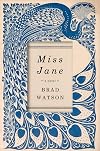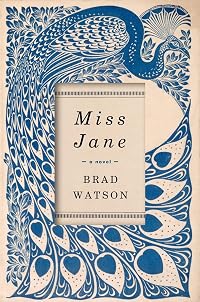
Miss Jane
by Brad Watson
On This Page
Description
"Astonishing prose brings to life a forgotten woman and a lost world in a strange and bittersweet Southern pastoral. Since his award-winning debut collection of stories, Last Days of the Dog- Men, Brad Watson has been expanding the literary traditions of the South, in work as melancholy, witty, strange, and lovely as any in America. Inspired by the true story of his own great-aunt, he explores the life of Miss Jane Chisolm, born in rural, early-twentieth-century Mississippi with a genital show more birth defect that would stand in the way of the central "uses" for a woman in that time and place--namely, sex and marriage. From the country doctor who adopts Jane to the hard tactile labor of farm life, from the highly erotic world of nature around her to the boy who loved but was forced to leave her, the world of Miss Jane Chisolm is anything but barren. Free to satisfy only herself, she mesmerizes those around her, exerting an unearthly fascination that lives beyond her still"--Provided by publisher. show lessTags
Recommendations
















Member Recommendations
tangledthread Both books bear compassionate witness to the lives of women with both familial and physical struggles.
There are similar themes as well beautiful prose.
tangledthread The books have a similar writing style. Also both books deal with themes of solitude and community.
Member Reviews
This is a must read book. The writing is exceedingly marvelous and crafted in a way in which there is a steady rhythm of life in rural Mississippi. Miss Jane Chisolm is born with a rare genital birth defect. Unable to have children, sexual intimacy or a "normal" relationship, Jane is born with a keen intuition and very bright mind.
Unfortunately, her incontinence interferes with every day interactions with the outside world, still she finds ways in which to draw people to her. Jane is conceived when her father had too much to drink and her mother is in a drugged state of laudinum use. Long past the age of joy in having children, her mother's despondency grows as she perceives the child as a burden. Her father loves her, but cannot show more express this. Her sister both loves her yet perceives her as a stone around her neck.
The small-town doctor becomes her friend and mentor and the beauty of their relationship is woven throughout the story. Understanding the incredible personhood of Jane, Dr. Thompson grows to appreciate the exquisite beauty of Jane's internal world wherein she fears very little.
As she grows, she exhibits a keen sense of nature, both of growing, living things found in the wood, and the internal personality traits of people which render them kind and sensitive and then bitter and moody.
This is writing at its best! show less
Unfortunately, her incontinence interferes with every day interactions with the outside world, still she finds ways in which to draw people to her. Jane is conceived when her father had too much to drink and her mother is in a drugged state of laudinum use. Long past the age of joy in having children, her mother's despondency grows as she perceives the child as a burden. Her father loves her, but cannot show more express this. Her sister both loves her yet perceives her as a stone around her neck.
The small-town doctor becomes her friend and mentor and the beauty of their relationship is woven throughout the story. Understanding the incredible personhood of Jane, Dr. Thompson grows to appreciate the exquisite beauty of Jane's internal world wherein she fears very little.
As she grows, she exhibits a keen sense of nature, both of growing, living things found in the wood, and the internal personality traits of people which render them kind and sensitive and then bitter and moody.
This is writing at its best! show less
Miss Jane, based on the author’s great-aunt, is born in the early 20th century in rural Mississippi. She has a congenital defect that leaves her incontinent, as well as unable to have sexual relations or bear children. Life is tough on the farm; her father is an alcoholic, her mother deeply unhappy, and her sister can’t get away fast enough.
Jane is a remarkable girl and woman, and how she finds a life of meaning and worth despite her loneliness and affliction is a joy to read. Her attempts to attend school despite her condition, and her brush with young love are particularly poignant. The friendship she has with her doctor, who becomes like a father to her, is touching. I also enjoyed the medical aspect of the story as her doctor show more searches for a surgical cure to her condition.
I don’t want to give any of the plot away but this is storytelling at it’s finest. I don’t like overly descriptive books, but the prose the author uses to describe rural life, nature, and the inner life of Jane is simply beautiful. Highly recommended. show less
Jane is a remarkable girl and woman, and how she finds a life of meaning and worth despite her loneliness and affliction is a joy to read. Her attempts to attend school despite her condition, and her brush with young love are particularly poignant. The friendship she has with her doctor, who becomes like a father to her, is touching. I also enjoyed the medical aspect of the story as her doctor show more searches for a surgical cure to her condition.
I don’t want to give any of the plot away but this is storytelling at it’s finest. I don’t like overly descriptive books, but the prose the author uses to describe rural life, nature, and the inner life of Jane is simply beautiful. Highly recommended. show less
First off, let me say that there is a kind of old-fashioned sweetness about this book and its title character that makes it a pure pleasure to read, and Brad Watson obviously knows his rural Mississippi setting of the early 20th century and uses it to great advantage. That said, the subject matter - the unavoidable central focus of the story - is sometimes difficult to read about. Because Jane Chisolm, born at home in 1915, was marked by a rare birth defect which would have a profound effect on her life. Her condition is finally given a name in a pamphlet given to her at age sixteen by the doctor who delivered her.
"She sat down on her bed, set down the pamphlet, looked again at the drawing. Read the words she'd never seen or heard show more before printed there, defining her: 'Urogenital sinus anomaly. Persistent cloaca.' They made no sense."
To explain: a urogenital sinus anomaly is a defect in which the urethra and vagina both open into a common channel. A persistent cloaca is a disorder whereby the rectum, vagina, and urinary tract meet and fuse, creating a cloaca, a single common channel. And in Jane's particular case the condition was exacerbated by a lack of sphincter control. Simply put, she had no control over her basest bodily functions, and was forced to wear a kind of diaper her whole life.
And yet .. and yet. MISS JANE is an admirable and compelling character, because in all other ways she is a normal little girl, who matures into an attractive young woman with a normal sexual curiosity, urges, feelings and emotions. Which makes it doubly sad for her to finally be able to put words to her chronic problem just as she is falling in love with a boy from a neighboring farm. But she knows it will only end in disappointment. And it does.
But Jane is not the only compelling character here. Watson has filled his narrative with a cast of interesting and well-developed characters. First there is Ed Thompson, the caring country doctor who delivered Jane, who takes her case to heart, corresponding with specialists in Baltimore and Memphis, keeping her parents informed, and becoming a personal friend to the Chisolms, and to Jane especially. And the doctor keeps a flock of peafowl on his place, a colorful touch which brought to mind another southern writer, Flannery O'Connor. And of course Jane's parents are also integral and important figures in her story. Her father, a successful farmer who supervises his own crops and animals, as well as a couple of tenant farmer families, also maintains a still and, when the Great Depression hits, becomes his own best customer of its product. Although a man of few words, Chisolm obviously loves his damaged daughter deeply. It shows in the way he takes her fishing, indulges her love of dogs, and teaches her to mind the store he keeps for his tenants. And, perhaps most of all, in the life insurance policy he takes out with Jane as beneficiary. Jane's mother, Ida, is more of a mystery, bitter and withdrawn after Jane's birth, she leaves much of Jane's raising to her older daughter, Grace, who becomes a calculating and colorful character in her own right as the story progresses.
Jane's story covers a good part of the twentieth century - thru wars and flu epidemics, prohibition and brothels, the Depression and more. Jane moves from the farm to the city and back again, the important people in her life grow old and disappear or die, but Jane perseveres, living her quiet life. Watson (who based the character of Jane on a great-aunt) effectively portrays the life of a woman who lived bravely and productively despite her physical problems and limitations, a woman who came to appreciate the rhythms and cycles of nature and the simple pleasures of gardening and a solitary life.
The very 'quietness' and stoicism of Jane's story brought to mind another favorite book of mine: STONER, John Williams's quiet novel of the long and lonely life of a farm boy turned college professor.
In the end, MISS JANE is a kind of love story. All kinds of love are represented. There is Jane's first love for Elijah Key, one which was never to be, but she never forgot it. There is the bond between Jane and her father. And there is that life-long affection between Jane and her doctor, a kind and lonely man. And there is, finally, that 'sweetness' I mentioned here at the outset. Which results, I think, from the fact that writing MISS JANE was a labor of love for Watson. A tribute to the quiet fortitude of a woman alone. I enjoyed this book so very much. Highly recommended.
- Tim Bazzett, author of the memoir, BOOKLOVER show less
"She sat down on her bed, set down the pamphlet, looked again at the drawing. Read the words she'd never seen or heard show more before printed there, defining her: 'Urogenital sinus anomaly. Persistent cloaca.' They made no sense."
To explain: a urogenital sinus anomaly is a defect in which the urethra and vagina both open into a common channel. A persistent cloaca is a disorder whereby the rectum, vagina, and urinary tract meet and fuse, creating a cloaca, a single common channel. And in Jane's particular case the condition was exacerbated by a lack of sphincter control. Simply put, she had no control over her basest bodily functions, and was forced to wear a kind of diaper her whole life.
And yet .. and yet. MISS JANE is an admirable and compelling character, because in all other ways she is a normal little girl, who matures into an attractive young woman with a normal sexual curiosity, urges, feelings and emotions. Which makes it doubly sad for her to finally be able to put words to her chronic problem just as she is falling in love with a boy from a neighboring farm. But she knows it will only end in disappointment. And it does.
But Jane is not the only compelling character here. Watson has filled his narrative with a cast of interesting and well-developed characters. First there is Ed Thompson, the caring country doctor who delivered Jane, who takes her case to heart, corresponding with specialists in Baltimore and Memphis, keeping her parents informed, and becoming a personal friend to the Chisolms, and to Jane especially. And the doctor keeps a flock of peafowl on his place, a colorful touch which brought to mind another southern writer, Flannery O'Connor. And of course Jane's parents are also integral and important figures in her story. Her father, a successful farmer who supervises his own crops and animals, as well as a couple of tenant farmer families, also maintains a still and, when the Great Depression hits, becomes his own best customer of its product. Although a man of few words, Chisolm obviously loves his damaged daughter deeply. It shows in the way he takes her fishing, indulges her love of dogs, and teaches her to mind the store he keeps for his tenants. And, perhaps most of all, in the life insurance policy he takes out with Jane as beneficiary. Jane's mother, Ida, is more of a mystery, bitter and withdrawn after Jane's birth, she leaves much of Jane's raising to her older daughter, Grace, who becomes a calculating and colorful character in her own right as the story progresses.
Jane's story covers a good part of the twentieth century - thru wars and flu epidemics, prohibition and brothels, the Depression and more. Jane moves from the farm to the city and back again, the important people in her life grow old and disappear or die, but Jane perseveres, living her quiet life. Watson (who based the character of Jane on a great-aunt) effectively portrays the life of a woman who lived bravely and productively despite her physical problems and limitations, a woman who came to appreciate the rhythms and cycles of nature and the simple pleasures of gardening and a solitary life.
The very 'quietness' and stoicism of Jane's story brought to mind another favorite book of mine: STONER, John Williams's quiet novel of the long and lonely life of a farm boy turned college professor.
In the end, MISS JANE is a kind of love story. All kinds of love are represented. There is Jane's first love for Elijah Key, one which was never to be, but she never forgot it. There is the bond between Jane and her father. And there is that life-long affection between Jane and her doctor, a kind and lonely man. And there is, finally, that 'sweetness' I mentioned here at the outset. Which results, I think, from the fact that writing MISS JANE was a labor of love for Watson. A tribute to the quiet fortitude of a woman alone. I enjoyed this book so very much. Highly recommended.
- Tim Bazzett, author of the memoir, BOOKLOVER show less
Jane Chisolm is born with a birth defect that leaves her incontinent and likely unable to bear children. This is the early 20th c. in rural Mississippi and nothing can be done to fix it. As a result, she is unable to live a normal life. Her one attempt at school ends in humiliation and marriage is out of the question. Yet, despite this, Jane leads a very fulfilling and mostly happy life.
Miss Jane is written by author Brad Watson who based the character of Jane on his aunt. The story covers her life from her birth and is a tender and poignant portrayal of a woman, who by all accounts and based on the mores of the time, had every reason to be bitter but who is able to rise above her physical limitations. Although hers is mostly a solitary show more life, she finds joy in small things, nature walks, a country dance, the company of her doctor who wants, more than anything, to find someone who can fix her problem. Interestingly, her calm acceptance of her limits is contrasted with her sister who, despite being able to lead a normal life, refuses to accept what was perceived as the acceptable role for a woman at the time.
Miss Jane is a story about how physical disabilities can both limit a life and free it from the confines of society. This is a story that could easily cross the line from touching to maudlin but perhaps because it is based on his own family, Watson never crosses the line. As a result, Miss Jane is touching without being manipulative, quiet without becoming boring, a deceptively simple tale about a character who could easily elicit pity from the reader but instead demands their empathy.
Thanks to Edelweiss and W.W. Norton & Co. for the opportunity to read this book in exchange for an honest review show less
Miss Jane is written by author Brad Watson who based the character of Jane on his aunt. The story covers her life from her birth and is a tender and poignant portrayal of a woman, who by all accounts and based on the mores of the time, had every reason to be bitter but who is able to rise above her physical limitations. Although hers is mostly a solitary show more life, she finds joy in small things, nature walks, a country dance, the company of her doctor who wants, more than anything, to find someone who can fix her problem. Interestingly, her calm acceptance of her limits is contrasted with her sister who, despite being able to lead a normal life, refuses to accept what was perceived as the acceptable role for a woman at the time.
Miss Jane is a story about how physical disabilities can both limit a life and free it from the confines of society. This is a story that could easily cross the line from touching to maudlin but perhaps because it is based on his own family, Watson never crosses the line. As a result, Miss Jane is touching without being manipulative, quiet without becoming boring, a deceptively simple tale about a character who could easily elicit pity from the reader but instead demands their empathy.
Thanks to Edelweiss and W.W. Norton & Co. for the opportunity to read this book in exchange for an honest review show less
This was a rare 5-star read for me. Its unlikely topic - the life of a woman with a urological abnormality - will not appeal to everyone, but the author's graceful prose, carefully drawn characters, and beautiful elucidation of southern country life make this a book that will linger in my memory for a long time.
A baby is born on a Mississippi farm in the beginning years of the 20th century. Dr. Thompson immediately knows something is drastically wrong but the impairment isn't immediately defined, making the reader wonder just what makes Miss Jane Chisolm different from other girls…'within but apart from the world.' The breathtaking first chapter introduces us to a young girl who is happy with herself and unafraid of most things, including her own strangeness. Her parents didn't plan to have another child at their advanced ages but her father's love of his apple brandy and her mother's addiction to laudanum overcame their resistance. They both felt guilty because of her affliction. Jane lacked the freedom of other girls because of her show more incontinence yet she discovered the freedom of roaming the wooded areas on their property and spent most of her time exploring the natural world.
As Miss Jane grows she develops a quiet courage to accept her genital defect that is so gently explained by her one true friend, Dr. Ed Thompson, who tells her at a very young age that she wasn't finished forming her private parts when she was born so she has little control over her bodily functions. She longs to go to school and learns to fast so she won't lose control of her bowels and embarrass herself. She is very bright and treasures a book by Flaubert that Dr. T gives to her. He seems to know the things to say and do to help make up for her parents melancholy lack of parenting.
There are so many wonderful things about this book The compassionate way her doctor explains her anomoly and answers her curious questions about sex help her understand that she will never marry or have a normal relationship with a man. Instead of becoming bitter, she quietly accepts her situation and learns to take life as it is. Such a wonderful lesson told with simplicity and always giving Miss Jane the dignity she deserves. This book touched my heart and knowing it was based on the author's Great Aunt Jane made it even more meaningful. It has my vote for The National Book Award. show less
As Miss Jane grows she develops a quiet courage to accept her genital defect that is so gently explained by her one true friend, Dr. Ed Thompson, who tells her at a very young age that she wasn't finished forming her private parts when she was born so she has little control over her bodily functions. She longs to go to school and learns to fast so she won't lose control of her bowels and embarrass herself. She is very bright and treasures a book by Flaubert that Dr. T gives to her. He seems to know the things to say and do to help make up for her parents melancholy lack of parenting.
There are so many wonderful things about this book The compassionate way her doctor explains her anomoly and answers her curious questions about sex help her understand that she will never marry or have a normal relationship with a man. Instead of becoming bitter, she quietly accepts her situation and learns to take life as it is. Such a wonderful lesson told with simplicity and always giving Miss Jane the dignity she deserves. This book touched my heart and knowing it was based on the author's Great Aunt Jane made it even more meaningful. It has my vote for The National Book Award. show less
Think of all the difficulties you have encountered in your life. Remember the heartbreak of first love, the nervousness of meeting another human being you wanted to love and be loved by, and the doubts you entertained about whether your love, freely given, would be returned. Imagine how much harder it would be to find your place in the world if, along with all the normal difficulties life throws at us, you had a physical defect that made it impossible for you to have sex or bear children, and that left you incontinent as well. This is the life of Miss Jane Chisolm. Sounds rather bleak out of context, but that is because you don’t know Miss Jane.
This is a soft, simple book. The story is very straight forward, and yet there is a show more strength at the core of Jane that keeps you coloring with bright colors instead of gloomy ones. It isn’t only Jane’s story that resonates, it is also her sister, her parents and the doctor who brought her into this world and then held her hand as she journeyed through it. Dr. Thompson is a hero, in my eyes, and one of my favorite characters in a long, long while. Jane is intelligent, positive and stalwart; the kind of person you admire and strive to emulate.
Jane lives on a farm in Mississippi, and Watson’s descriptions of her life there and the nature around her are remarkable.
She loved most being in the woods, with the diffused light and the quiet there. Such a stillness, with just the pecking of ground birds and forest animals, the flutter of wings, the occasional skittering of squirrels playing up and down a tree. The silent, imperceptible unfurling of spring buds into blossom. She felt comfortable there. As if nothing could be unnatural in that place, within but apart from the world.
This seems to me to be the heart of Jane herself, “within but apart from the world”, and in just as many positive ways as negative ones. It is a book about perception. How people see Jane, how she sees herself, and how they all see each other.
Jane had never seen the look in her eyes she saw then. She almost looked empty. And for the first time Jane could remember, she saw her mother as a woman whom life had made not just hard but also exhausted and plain. Older-looking than her years.
Just as Jane came to see her mother differently, I came to see her differently as well. The weight of her life began to dawn upon me and soften my view of her behavior.
The creek would be up in such a rain, if it didn’t dump all of itself into the valley where the people of the town sat awaiting it, powerless like all of God’s children on this earth, who needed such reminding now and then that they were mortal. Ida Chisolm didn’t.
Yes, this is a quiet, flowing sort of story, not action packed or exciting, thoughtful and perhaps even brooding at times, but it offers characters you will never forget and a circumstance that would seem to break a person, but doesn’t. And therein is the magic, for if Jane is unbroken by who she is, why should any of us be broken by the things we cannot control. If the heart is strong, the spirit can win.
show less
This is a soft, simple book. The story is very straight forward, and yet there is a show more strength at the core of Jane that keeps you coloring with bright colors instead of gloomy ones. It isn’t only Jane’s story that resonates, it is also her sister, her parents and the doctor who brought her into this world and then held her hand as she journeyed through it. Dr. Thompson is a hero, in my eyes, and one of my favorite characters in a long, long while. Jane is intelligent, positive and stalwart; the kind of person you admire and strive to emulate.
Jane lives on a farm in Mississippi, and Watson’s descriptions of her life there and the nature around her are remarkable.
She loved most being in the woods, with the diffused light and the quiet there. Such a stillness, with just the pecking of ground birds and forest animals, the flutter of wings, the occasional skittering of squirrels playing up and down a tree. The silent, imperceptible unfurling of spring buds into blossom. She felt comfortable there. As if nothing could be unnatural in that place, within but apart from the world.
This seems to me to be the heart of Jane herself, “within but apart from the world”, and in just as many positive ways as negative ones. It is a book about perception. How people see Jane, how she sees herself, and how they all see each other.
Jane had never seen the look in her eyes she saw then. She almost looked empty. And for the first time Jane could remember, she saw her mother as a woman whom life had made not just hard but also exhausted and plain. Older-looking than her years.
Just as Jane came to see her mother differently, I came to see her differently as well. The weight of her life began to dawn upon me and soften my view of her behavior.
The creek would be up in such a rain, if it didn’t dump all of itself into the valley where the people of the town sat awaiting it, powerless like all of God’s children on this earth, who needed such reminding now and then that they were mortal. Ida Chisolm didn’t.
Yes, this is a quiet, flowing sort of story, not action packed or exciting, thoughtful and perhaps even brooding at times, but it offers characters you will never forget and a circumstance that would seem to break a person, but doesn’t. And therein is the magic, for if Jane is unbroken by who she is, why should any of us be broken by the things we cannot control. If the heart is strong, the spirit can win.
show less
Members
- Recently Added By
Published Reviews
ThingScore 100
“Miss Jane,” however, takes Watson’s writing to new heights...The novel is not only a lovely character study but also looks at the dignity of rural lives, medicine in the early 20th century, and the joys and heartaches of being a parent.
“Miss Jane” is an especially timely novel for right now, when so much of our turmoil is dependent on how we view the Other, whether it be because of show more race, sexuality, religion, or where someone was born. It’s also a novel that thrums with beauty, melancholy, and desire. show less
“Miss Jane” is an especially timely novel for right now, when so much of our turmoil is dependent on how we view the Other, whether it be because of show more race, sexuality, religion, or where someone was born. It’s also a novel that thrums with beauty, melancholy, and desire. show less
added by vancouverdeb
And he has shown, as few writers have, how wildness, in us and in our environment, can be deliverance. In his newest novel, “Miss Jane,” Watson’s facility with upending expectations and upsetting the lines between all sorts of categories — good and bad, normal and abnormal, pride and shame, love and hate — is at its keenest and applied most carefully....Yet the complexity and drama show more of Watson’s gorgeous work here is life’s as well: Sometimes physical realities expand us, sometimes trap; sometimes heroism lies in combating our helplessness, sometimes in accepting it. A writer of profound emotional depths, Watson does not lie to his reader, so neither does his Jane. show less
added by vancouverdeb
Lists

Recommend the 20 best books you've read in the last five years
2,168 works; 606 members

Best 21st Century Books (So Far)
670 works; 86 members

Favourite Books
1,817 works; 308 members

Top Five Books of 2016
795 works; 229 members

Five star books
1,755 works; 107 members

Bitter Southerner Summer Reading Roundup
198 works; 8 members

Books Read in 2016
4,666 works; 197 members

Books Read in 2021
5,361 works; 114 members

History & Political Science: US
158 works; 1 member

Fiction: BLM
60 works; 1 member
Author Information

Brad Watson lives in Cambridge, Massachusetts, and Foley, Alabama.
Some Editions
Awards and Honors
Awards
Distinctions
Notable Lists
Series
Belongs to Publisher Series
Common Knowledge
- Canonical title
- Miss Jane
- Original title
- Miss Jane
- Original publication date
- 2016
- People/Characters
- Jane Chishom; Dr. Ed Thompson; Ida Chisholm; Sylvester Chisholm; Grace Chisholm; Elijah Key
- Important places
- Mississippi, USA
- Epigraph
- In the wombs of the mothers, unborn embryos were growing, membranes and tissues folded and pleated themselves cleverly around each other, exploring without sorrow, without hesitation, the possibilities of topological space.... (show all) - Lars Gustafsson, " Greatness Strikes Where It Pleases"
She'd had, like anyone, her love story. - Flaubert, "A Simple Heart" - Dedication
- This book is dedicated to the lost memory of my Great-Aunt
Mary Ellis "Jane" Clay,
to the beloved memory of my mother,
Bonnie Clay Watson Collins.
to her memories of my grandfather,
S.S. Clay,
Nell Hanley.
Thank you, love. - First words
- You would not think someone so afflicted would or could be cheerful, not prone to melancholy or the miseries.
- Quotations
- In time her gaunt, dark-haired, blue-eyed beauty would be altered and sharpened by age, a visible sign of her difference, her independence, and a silent message to all that her presence in the world was impenetrable beyond a ... (show all)point of her own determination.
He took the narrow access road to Chisolm's farm, barely lit by stars and sheen of moonlight, through hushed and tunneled woodland, beside pastures silvered with an evening frost on the grass, waxing moonlight on them like bl... (show all)ued silver dust, and down into the draw over the creek.
"Where the hell have you been?"
"The usual purgatories."
And all these wretched souls came out of the womb perfectly normal, the doctor thought, looking around. Who can say what life will make of a body?
She shook her head, like a horse pestered by a fly.
Crows banked about the grove of pine and hardwood down by the cow pond and flew back up on fluff-cranked wings into the pecans near the barn, settling in their gnarly limbs like black fluttering shadows into the foliage of cl... (show all)ouded thoughts she could not and did not bother to plumb. Late fall blackbirds swept in waves to the oaks at the yard's edge, and their deafening, squawking, creaking calls, the cacophonous tuning of a mad avian symphony, drew the grief-borne anger from her heart, into the air, and swept it away in long, almost soothing moments of something like peace. The occasional fluid murmuration of migrating starlings, a wondrous sight when she was a child, could evoke in her all over again a strange sense of foreboding.
By late spring of the year she would turn six, a more complex awareness of her difference had begun to shape itself in her mind like the root of some strange plant down deep in the woods.
She had been a spritely young girl, slim and a bit lank-haired but with a sweet face and good humor, but by now had grown taller and begun to take on a gaunt, dark-eyed beauty, and moved with a kind of natural grace, as a lea... (show all)f will fall gracefully from a tree in barely a breeze.
The boys liked her, and she liked them. But if any one of them seemed about to like her too much, she had her way of withdrawing just enough. Like a scrap of paper the wind keeps breezing just out of reach.
And when he'd gone back to the house with no deer and no dog, no one had said anything to him about it. Nor he to them.
How could a person's face, his whole self, what was after all just an ordinary body, well shaped and good-looking but certainly another mortal walking around, come to seem so beautiful and take over a heart and a mind in that... (show all) way?
His features had drawn themselves down into what looked like a permanent sadness, as if he no longer had the will or strength to pull them up into any expression but the forlorn.
There now living alone with a woman who must seem a hostile stranger to him, and him a hollow one to her.
The shadowed shape of his hat and head there in the truck's cab, visible in the gaps between the oak boards of the cattle guard. She felt the ghost of an apprehension. He still looked strong but in many ways ten years older t... (show all)han he was. She had a sudden irrational fear that this would be the last time she ever saw him. But she fought that down, knew it was foolish, superstitious in some way.
She stayed so busy and tired that it seemed like time didn't matter anymore. Didn't so much pass as disappear, like memories neglected and forgotten.
Her father seemed to be in decline. She would come upon him standing at the edge of the pasture, looking at his cows as if he hardly knew what they were. Or he would sit on the front porch by himself, smoking. He drank before... (show all) breakfast, and then periodically throughout the day.
"Papa?" she'd say.
"Yes."
And sometimes they would say no more than that, as if that were enough, or all there was, a generic reply to her all-but-unspoken query into his condition.
Death was in the room and they were quiet in its presence.
Puffy white clouds drifting low over the hills to the south and making their way along the valley, moving northeast like a patient fleet of ghost dirigibles carrying the equally weightless, invisible souls of the dead.
Whereas all her life her mother had more often than not been in conflict not only with others but with herself, her own circumstances, angry about one thing or another, mostly dissatisfied and even resentful of her lot in lif... (show all)e, now she seemed to have let that go. But in its stead, there appeared to be nothing. As if she had finally fully burned her ability to care about anything in the long-stoked fire of her discontent. And now she was empty.
She watched him drive off in a late afternoon light that seemed flickering, like the clickety light in a motion picture, color draining as if it, too, were in black-and-white, controlled by a steady hand turning a handle to k... (show all)eep the world in motion, by and by.
Cicadas pulsed in the heat of the day, and in the late afternoon, so loud as to overwhelm everything else, the very pressure in the air seeming to swell with their mad song. - Last words
- (Click to show. Warning: May contain spoilers.)They stood very still, hushed, their gleaming black eyes fixed on her, white beaks open in a strange, alert anticipation.
- Blurbers
- Andre Dubus III, author of Dirty Love; Alyson Hagy, author of Boleto; Billy Collins, former poet laureate of the United States; Andrea Barrett, author of Archangel; Dennis Covington, author of Revelation; Jim Shepard, author of The Book of Aron (show all 8); Melissa Pritchard, author of Palmerino; Steve Yarbrough, author of The Realm of Last Chances
- Original language*
- Anglais (Etats-Unis) (Etats-Unis)
*Some information comes from Common Knowledge in other languages. Click "Edit" for more information.
Classifications
Statistics
- Members
- 461
- Popularity
- 65,941
- Reviews
- 32
- Rating
- (4.13)
- Languages
- Dutch, English, French, Turkish
- Media
- Paper, Audiobook, Ebook
- ISBNs
- 16
- ASINs
- 3