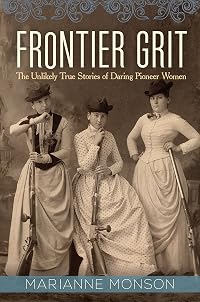
Frontier Grit: The Unlikely True Stories of Daring Pioneer Women
by Marianne Monson
On This Page
Description
Discover the stories of twelve women who heard the call to settle the west and who came from all points of the globe to begin their journey. As a slave Clara watched helplessly as her husband and children were sold, only to be reunited with her youngest daughter, as a free woman, six decades later. As a young girl, Charlotte hid her gender to escape a life of poverty and became the greatest stagecoach driver that ever lived. As a Native American, Gertrude fought to give her people a voice show more and to educate leaders about the ways and importance of America's native people. These are gripping miniature dramas of good-hearted women, selfless providers, courageous immigrants and migrants, and women with skills too innumerable to list. Many were crusaders for social justice and women's rights. All endured hardships, overcame obstacles, broke barriers, and changed the world. The author ties the stories of these pioneer women to the experiences of women today with the hope that they will be inspired to live boldly and bravely and to fill their own lives with vision, faith, and fortitude. To live with grit. show lessTags
Recommendations








Member Reviews
This little nugget is a delightful find and carries quite a punch for a small book. The stories of 12 fascinating women will captivate you while exposing you to the history they did not teach us in school.
The author purposefully chose 12 women of different nationalities, ethnic backgrounds, and socioeconomic status, to illustrate the diversity of the American West. Contrary to what our history textbooks and the Hollywood movies claim, white males were not even half the true story of the West much less the whole story. Monson wants to help correct that distortion. She hopes that by understanding the severe restrictions on women in the 19th century, modern women will understand how much we owe those who came before us, and understand show more what they were risking by pursuing their goals. They faced physical hardships and legal barriers that no longer exist for us. They endured unfathomable personal losses but clung either to faith in God, in life, in themselves, or simply refused to give in and give up.
I would love to summarize the story of each of these remarkable women for you, but the publisher wouldn’t give me the entire page! Some were authors who used their way with words to tell a female perspective on topics; some were illiterate but found other ways to make themselves understood. Some were political firebrands, bent on the women’s vote, against the women’s vote, for property ownership, for temperance, against temperance, etc. Just like today, women of the West were varied in their interests, concerns, and viewpoints.
Mother Jones, one of the most famous women of the frontier, endured the loss of her entire family – all her young children and her husband within a very short period of time. Instead of giving in to depression and despair, she set about to make her life meaningful. Abigail Scott Duniway was a staunch suffragette and insisted that “obey” be removed from her marriage vows.
Martha Hughes Cannon was also a women’s right activist, a medical doctor, and the fourth wife of a Mormon polygamist. She ran on the Democrat ticket against him on the Republican side to become the first female state senator of Utah. Martha had to resign in her second term because her third pregnancy gave away the fact that she was still engaged in marital relations with her polygamist husband, which was by then against federal law. She was full of contradictions.
Maria Amparo Ruiz de Burton was an upper class, educated, proud Mexican woman, who nevertheless defied her family and her church and married a “white man” in a Protestant church. She became the first Mexican-American female novelist. She was a bit conflicted, however, as her writing showed the Mexican viewpoint of American expansion, but from an aristocratic bias, minimizing the Mexican workers. The last years of her own life were spent trying to repel dozens of squatters who were staking claims on her own vast ranch.
Aunt Clara Brown was born in a slave cabin in 1800, month and date unknown. She was given no last name and no one recorded her birth. As a teenager, she married the very handsome new slave acquired by the farmer. When times got tough, he had to sell Clara, her husband and their 2 children. The family was torn apart. Clara’s unquestioning faith in God and ceaseless prayer guided her life. She eventually brought her own freedom, made her way West to St. Louis where she earned some money cooking and doing laundry. After the Dred Scott decision, St. Louis was not safe for blacks and she moved to Kansas. The freedom and tolerance of the West called to her and she talked a wagon train master into letting her accompany his train of 26 single men as a cook and laundress. Blacks were not allowed in the wagons, so she walked next to the wagons during the day and at night cooked, did laundry and slept in the open air. In 8 weeks, she reached her destination of Colorado, bought a cabin for 25 dollars, opened a laundry business and in a few years, was one of a handful of women who owned property in the state and was one of the wealthiest with 10 thousand dollars in cash plus her property. She used her money to help her community and her church and continued to pray to be reunited with her daughter. By this time she knew her husband and son were gone.
Charley Parkhurst, the most celebrated stagecoach driver in the West, was a woman who passed as a male from the age of nine. Her gender was discovered upon her death in 1879.
I think you’ll enjoy the stories of these wonderful women. There are immigrants from Ireland, New Zealand, and Wales, a black born into slavery, middle class white women with almost no education to unusually high levels of education, some who pursued their professions while having families, some who went West in a wagon, an Hawaiian who converted to Mormonism and moved to Utah with her family, a young woman who at age 19 devoted herself to fighting the enslavement of Chinese girls in San Francisco’s Chinatown. Also a Mexican aristocrat, and a Yankton Lakota whose father was white.
Each chapter is the story of one of the women, followed by about 2 pages of the author’s interpretation of why that woman’s life story was chosen. She is very clear about her purpose in writing this book and if you aren’t interested in reading her plug her viewpoint, just skim through it. She offers an excellent appendix at the end of each story with suggestions for books to read on that person, as well as excellent annotated footnotes.
This book is available now for preorder at the major vendors. I was given a galley of this book by the publisher in exchange for an honest review. My rating is 3.75/5.0. show less
The author purposefully chose 12 women of different nationalities, ethnic backgrounds, and socioeconomic status, to illustrate the diversity of the American West. Contrary to what our history textbooks and the Hollywood movies claim, white males were not even half the true story of the West much less the whole story. Monson wants to help correct that distortion. She hopes that by understanding the severe restrictions on women in the 19th century, modern women will understand how much we owe those who came before us, and understand show more what they were risking by pursuing their goals. They faced physical hardships and legal barriers that no longer exist for us. They endured unfathomable personal losses but clung either to faith in God, in life, in themselves, or simply refused to give in and give up.
I would love to summarize the story of each of these remarkable women for you, but the publisher wouldn’t give me the entire page! Some were authors who used their way with words to tell a female perspective on topics; some were illiterate but found other ways to make themselves understood. Some were political firebrands, bent on the women’s vote, against the women’s vote, for property ownership, for temperance, against temperance, etc. Just like today, women of the West were varied in their interests, concerns, and viewpoints.
Mother Jones, one of the most famous women of the frontier, endured the loss of her entire family – all her young children and her husband within a very short period of time. Instead of giving in to depression and despair, she set about to make her life meaningful. Abigail Scott Duniway was a staunch suffragette and insisted that “obey” be removed from her marriage vows.
Martha Hughes Cannon was also a women’s right activist, a medical doctor, and the fourth wife of a Mormon polygamist. She ran on the Democrat ticket against him on the Republican side to become the first female state senator of Utah. Martha had to resign in her second term because her third pregnancy gave away the fact that she was still engaged in marital relations with her polygamist husband, which was by then against federal law. She was full of contradictions.
Maria Amparo Ruiz de Burton was an upper class, educated, proud Mexican woman, who nevertheless defied her family and her church and married a “white man” in a Protestant church. She became the first Mexican-American female novelist. She was a bit conflicted, however, as her writing showed the Mexican viewpoint of American expansion, but from an aristocratic bias, minimizing the Mexican workers. The last years of her own life were spent trying to repel dozens of squatters who were staking claims on her own vast ranch.
Aunt Clara Brown was born in a slave cabin in 1800, month and date unknown. She was given no last name and no one recorded her birth. As a teenager, she married the very handsome new slave acquired by the farmer. When times got tough, he had to sell Clara, her husband and their 2 children. The family was torn apart. Clara’s unquestioning faith in God and ceaseless prayer guided her life. She eventually brought her own freedom, made her way West to St. Louis where she earned some money cooking and doing laundry. After the Dred Scott decision, St. Louis was not safe for blacks and she moved to Kansas. The freedom and tolerance of the West called to her and she talked a wagon train master into letting her accompany his train of 26 single men as a cook and laundress. Blacks were not allowed in the wagons, so she walked next to the wagons during the day and at night cooked, did laundry and slept in the open air. In 8 weeks, she reached her destination of Colorado, bought a cabin for 25 dollars, opened a laundry business and in a few years, was one of a handful of women who owned property in the state and was one of the wealthiest with 10 thousand dollars in cash plus her property. She used her money to help her community and her church and continued to pray to be reunited with her daughter. By this time she knew her husband and son were gone.
Charley Parkhurst, the most celebrated stagecoach driver in the West, was a woman who passed as a male from the age of nine. Her gender was discovered upon her death in 1879.
I think you’ll enjoy the stories of these wonderful women. There are immigrants from Ireland, New Zealand, and Wales, a black born into slavery, middle class white women with almost no education to unusually high levels of education, some who pursued their professions while having families, some who went West in a wagon, an Hawaiian who converted to Mormonism and moved to Utah with her family, a young woman who at age 19 devoted herself to fighting the enslavement of Chinese girls in San Francisco’s Chinatown. Also a Mexican aristocrat, and a Yankton Lakota whose father was white.
Each chapter is the story of one of the women, followed by about 2 pages of the author’s interpretation of why that woman’s life story was chosen. She is very clear about her purpose in writing this book and if you aren’t interested in reading her plug her viewpoint, just skim through it. She offers an excellent appendix at the end of each story with suggestions for books to read on that person, as well as excellent annotated footnotes.
This book is available now for preorder at the major vendors. I was given a galley of this book by the publisher in exchange for an honest review. My rating is 3.75/5.0. show less
Reading Marianne Monson’s stories of twelve bold and inspiring women in Frontier Grit: The Unlikely True Stories of Daring Pioneer Women, I was often reminded of the daily devotionals from a monthly publication called Our Daily Bread. Our church handed them out to everyone each month and we all read them. My sisters still read Our Daily Bread. Contrarian as I am, I always thought them slightly at odds with the Baptist doctrine of soul liberty, because they often told us how we were supposed to interpret Bible verses, rather than simply giving us context and recognizing our competency to get the point on our own.
I mention this because Monson reminded me so much of the authors of those devotionals in her lack of trust in her readers show more competency to find their own inspiration and understanding of these women’s lives.
Frontier Grit tells the stories of twelve amazing and inspiring women, from Charley Parkhurst who lived her life as a man and achieved fame as one of the greatest stagecoach drivers in the West. She tells the story of Makaopiopio who was one of the Hawaiians who established a colony in Utah and of Zitkala-Sa, the Sioux woman who wrote an opera and spoke on behalf of Native American rights. All of the women were quite amazing and great examples of courage, resolve and yes, of grit.
There were some curious juxtapositions that came about because each woman’s story is a discrete presentation. Her history, how Monson thinks that story should inspire us, and then some suggestions for further reading (something I appreciated very much). The most jarring example was the story of María Amparo Ruiz de Burton who wrote and spoke on behalf of the Californios who were citizens of Mexico before their land was annexed to the United States. Squatters would settle on their land and there would be long land disputes and they often lost their land. The very next story was about Luzena Stanley Wilson who was an frontier entrepreneur. She was also a squatter on Californio land belonging to a man named Vaca. The “hills and the wildflowers entreated them to stay” but I bet Vaca did not. Add to that, the ironic complaint about later squatters trying to take the land they took by squatting and well, that is how the “West was won” but it is doubly ironic being the story immediately following the story of María and the great injustices done to her.
Monson does a good job of telling the women’s stories and has done a lot of research. In particular, the story of Makaopiopio Kaohimaunu is a testament to her research and dedication to unearthing the stories of pioneer women from the past. There is not much trace of her, not even a Wikipedia entry, and Monson drew her story out by talking to her descendants, going to Utah to see the traces of the former colony and lifting her out of the past, so we can learn of this amazing woman. Most of the women in the book will be new to readers, other than Mother Jones whose inclusion surprised me because she is so well-known. I also valued the inclusion of suggested further reading and sources for more information.
My own feelings about this book are mixed. I enjoyed the stories of the women, but every chapter ended with Monson telling us how we should feel about the women’s stories, how they should make us think about the past, about society today and what lessons we should draw. She has no faith in us as readers to find our own inspiration, turning these women’s stories into didactic morality tales for our edification. So every story, in the end, was ruined by this irritating coda. If you stop reading after the colophon in each chapter, the book would be so much better.
Frontier Grit will be released September 6th. I received an electronic advance copy from the publisher through NetGalley.
http://tonstantweaderreviews.wordpress.com/2016/08/04/frontier-grit-by-marianne-... show less
I mention this because Monson reminded me so much of the authors of those devotionals in her lack of trust in her readers show more competency to find their own inspiration and understanding of these women’s lives.
Frontier Grit tells the stories of twelve amazing and inspiring women, from Charley Parkhurst who lived her life as a man and achieved fame as one of the greatest stagecoach drivers in the West. She tells the story of Makaopiopio who was one of the Hawaiians who established a colony in Utah and of Zitkala-Sa, the Sioux woman who wrote an opera and spoke on behalf of Native American rights. All of the women were quite amazing and great examples of courage, resolve and yes, of grit.
There were some curious juxtapositions that came about because each woman’s story is a discrete presentation. Her history, how Monson thinks that story should inspire us, and then some suggestions for further reading (something I appreciated very much). The most jarring example was the story of María Amparo Ruiz de Burton who wrote and spoke on behalf of the Californios who were citizens of Mexico before their land was annexed to the United States. Squatters would settle on their land and there would be long land disputes and they often lost their land. The very next story was about Luzena Stanley Wilson who was an frontier entrepreneur. She was also a squatter on Californio land belonging to a man named Vaca. The “hills and the wildflowers entreated them to stay” but I bet Vaca did not. Add to that, the ironic complaint about later squatters trying to take the land they took by squatting and well, that is how the “West was won” but it is doubly ironic being the story immediately following the story of María and the great injustices done to her.
Monson does a good job of telling the women’s stories and has done a lot of research. In particular, the story of Makaopiopio Kaohimaunu is a testament to her research and dedication to unearthing the stories of pioneer women from the past. There is not much trace of her, not even a Wikipedia entry, and Monson drew her story out by talking to her descendants, going to Utah to see the traces of the former colony and lifting her out of the past, so we can learn of this amazing woman. Most of the women in the book will be new to readers, other than Mother Jones whose inclusion surprised me because she is so well-known. I also valued the inclusion of suggested further reading and sources for more information.
My own feelings about this book are mixed. I enjoyed the stories of the women, but every chapter ended with Monson telling us how we should feel about the women’s stories, how they should make us think about the past, about society today and what lessons we should draw. She has no faith in us as readers to find our own inspiration, turning these women’s stories into didactic morality tales for our edification. So every story, in the end, was ruined by this irritating coda. If you stop reading after the colophon in each chapter, the book would be so much better.
Frontier Grit will be released September 6th. I received an electronic advance copy from the publisher through NetGalley.
http://tonstantweaderreviews.wordpress.com/2016/08/04/frontier-grit-by-marianne-... show less
12 women. 12 stories. 12 totally fascinating stories.
Each chapter is about a different woman who stood up and did something with her life. Each story teaches women to live boldly, be brave, and to stand up for what you believe in!
Hardship was a common theme.
These women made their mark on the American frontier as entrepreneurs, ranchers, doctors, writers, teachers, philanthropists, and social reformers. They all endured vilification, discrimination, and personal tragedies at levels unimaginable today yet remained determined and strong.
Some lives are already well-documented (although I had never heard of any of them), while others deserve wider recognition. For example, Clara Brown, the former Virginian slave, or Zitkala-Sa, Sioux show more musician and activist, or Donaldina Cameron from New Zealand, who rescued Chinese girls from forced labor in San Francisco, or Welsh immigrant to Utah, Martha Hughes Cannon, who became the first female State Senator and defeated her own husband on the ballot – a husband she just happened to share with several other wives! Many of the women in this book are Mormon.
The author’s personal anecdotes and opinions at the close of each section was different. There are also many sources and references listed for those who wish to discover more which I plan to do as some of the biographies I wanted way more information on. show less
Each chapter is about a different woman who stood up and did something with her life. Each story teaches women to live boldly, be brave, and to stand up for what you believe in!
Hardship was a common theme.
These women made their mark on the American frontier as entrepreneurs, ranchers, doctors, writers, teachers, philanthropists, and social reformers. They all endured vilification, discrimination, and personal tragedies at levels unimaginable today yet remained determined and strong.
Some lives are already well-documented (although I had never heard of any of them), while others deserve wider recognition. For example, Clara Brown, the former Virginian slave, or Zitkala-Sa, Sioux show more musician and activist, or Donaldina Cameron from New Zealand, who rescued Chinese girls from forced labor in San Francisco, or Welsh immigrant to Utah, Martha Hughes Cannon, who became the first female State Senator and defeated her own husband on the ballot – a husband she just happened to share with several other wives! Many of the women in this book are Mormon.
The author’s personal anecdotes and opinions at the close of each section was different. There are also many sources and references listed for those who wish to discover more which I plan to do as some of the biographies I wanted way more information on. show less
This book contains a number of minibiographies of women who settled in the American west in the 19th century. The author has done a good job of selecting women of diverse backgrounds. She encourages today’s woman to take inspiration from history.
The women include:
- Nellie Cashman – nurse, businesswoman, miner, and dog musher in the Yukon Gold Rush
- Clara Brown – born in slavery whose family was sold, eventually bought her freedom to search for her children
- Abigail Scott Duniway – a pioneer of the Oregon trail who became a news editor and early suffragette
- Maria Ruiz de Burton – writer of social satire on issues of Mexican-US land disputes
- Luzena Stanley Wilson – traveled from Missouri to California during the Gold Rush show more with her husband and two small children
- Mother Jones – social activist and agitator for coal mining safety and against child labor
- Gertrude Simmons (Zitkala-Ša) – musician and writer on Native American issues
- Mary Hallock Foote – author and illustrator (and part of the Angle of Repose controversy)
- Martha Hughes Cannon – frontier doctor, polygamist wife, and first female state senator
- Donaldina Cameron – crusader against sex trafficking in Chinatown in San Francisco
- Charley Parkhurst – stagecoach driver, farmer, and rancher, living as a man
- Makaopiopio – Hawaiian immigrant to Utah
Each woman could be (and some have been) the subject of an entire book. Monson inserts her observations about their lives in a somewhat didactic fashion, which may appeal to younger readers, but I found unnecessary. It whets the appetite to learn more about these women and this time period.
3.5 show less
The women include:
- Nellie Cashman – nurse, businesswoman, miner, and dog musher in the Yukon Gold Rush
- Clara Brown – born in slavery whose family was sold, eventually bought her freedom to search for her children
- Abigail Scott Duniway – a pioneer of the Oregon trail who became a news editor and early suffragette
- Maria Ruiz de Burton – writer of social satire on issues of Mexican-US land disputes
- Luzena Stanley Wilson – traveled from Missouri to California during the Gold Rush show more with her husband and two small children
- Mother Jones – social activist and agitator for coal mining safety and against child labor
- Gertrude Simmons (Zitkala-Ša) – musician and writer on Native American issues
- Mary Hallock Foote – author and illustrator (and part of the Angle of Repose controversy)
- Martha Hughes Cannon – frontier doctor, polygamist wife, and first female state senator
- Donaldina Cameron – crusader against sex trafficking in Chinatown in San Francisco
- Charley Parkhurst – stagecoach driver, farmer, and rancher, living as a man
- Makaopiopio – Hawaiian immigrant to Utah
Each woman could be (and some have been) the subject of an entire book. Monson inserts her observations about their lives in a somewhat didactic fashion, which may appeal to younger readers, but I found unnecessary. It whets the appetite to learn more about these women and this time period.
3.5 show less
Grit- something i wish i had, maybe i do? BUT i do know myself well-enough to know that i would not have nearly enough of the stuff to equal the women in these 12 stories.
Frontier..." this place of possibility remains open for average people to help determine the way things are going to work, because it is still anyone's guess how the future will unfold"
I do understand what must be the thrill of the freedom of being the first, of standing up for yourself and others for what is right, and these women had the guts and strength of most men of the time. ( more actually )
My one negative? The book was too short!
Frontier..." this place of possibility remains open for average people to help determine the way things are going to work, because it is still anyone's guess how the future will unfold"
I do understand what must be the thrill of the freedom of being the first, of standing up for yourself and others for what is right, and these women had the guts and strength of most men of the time. ( more actually )
My one negative? The book was too short!
Frontier Grit: The Unlikely True Stories of Daring Pioneer Women by Marianne Monson is a recommended collection featuring the story of twelve women who were pioneers.
The women featured in each short chapter are:
Nellie Cashman: Gold Rush “Boomer”; a nurse, businesswoman and gold prospector.
Aunt Clara Brown: a former slave who became an accomplished and beloved community leader.
Abigail Scott Duniway: Oregon Trail suffragette; "Abigail burned at these injustices. Women contributed economically, were held accountable for debts, but remained powerless to own property or manage their own incomes."
María Amparo Ruiz de Burton: The first Mexican-American novelist.
Luzena Stanley Wilson: Ever-resourceful; a gold-rush entrepreneur.
Mother show more Jones: She could not be silenced; a school teacher who became a labor activist and community organizer. "For over fifty years, Mary traveled the country speaking on behalf of child workers, steelworkers, deported Mexican workers, and coal miners. She once declared to a judge, 'My address is wherever there is a fight against oppression. . . . My address is like my shoes: it travels with me.'
Zitkala-Sa: “Red Bird”; a Sioux writer, editor, musician, teacher, and activist
Mary Hallock Foote: Mining town author and illustrator. Wallace Stegner was captivated by Mary’s story and his 1972 Pulitzer Prize winning novel, Angle of Repose, was based on her life.
Martha Hughes Cannon: Frontier doctor, state senator, polygamist, refugee, and women’s rights activist.
Donaldina Cameron: The Most Loved and Feared Woman in Chinatown. Donaldina Cameron rescued thousands of girls from sex trafficking rings, and then raised them as her own daughters.
Charley Parkhurst: Most celebrated stagecoach driver in the west; she lived her life as a man.
Makaopiopio: The Spirit of Aloha; one of the first Hawaiian immigrants to settle the colony of Iosepa.
Frontier Grit is a well-researched, easy to read summation of the lives of these 12 women. Each chapter opens with a picture of the woman and a quote. As is my wont for documentation, I appreciate that Monson includes at the end of each chapter a list of books to consult for more information and that she has footnoted all of her resources. This will be a good resource for students because it will be easy to understand and is concise.
That said, it does have a few drawbacks. I truly wish Monson had restrained herself from adding her own personal thoughts and commentary at the end of each chapter. Surely each woman's life should speak for itself and different readers will likely have diverse lessons they need to learn from each woman's life. I am also beginning to detest the word "grit" which is currently being overused in a wide variety of venues. Enough with your grit everyone. Please look for a more deliberate and appropriate word to reflect your presentation, theories, and opinions.
Disclosure: My advanced reading copy was courtesy of the publisher for review purposes.
http://shetreadssoftly.blogspot.com/2016/09/frontier-grit.html
https://www.goodreads.com/review/show/1746399346 show less
The women featured in each short chapter are:
Nellie Cashman: Gold Rush “Boomer”; a nurse, businesswoman and gold prospector.
Aunt Clara Brown: a former slave who became an accomplished and beloved community leader.
Abigail Scott Duniway: Oregon Trail suffragette; "Abigail burned at these injustices. Women contributed economically, were held accountable for debts, but remained powerless to own property or manage their own incomes."
María Amparo Ruiz de Burton: The first Mexican-American novelist.
Luzena Stanley Wilson: Ever-resourceful; a gold-rush entrepreneur.
Mother show more Jones: She could not be silenced; a school teacher who became a labor activist and community organizer. "For over fifty years, Mary traveled the country speaking on behalf of child workers, steelworkers, deported Mexican workers, and coal miners. She once declared to a judge, 'My address is wherever there is a fight against oppression. . . . My address is like my shoes: it travels with me.'
Zitkala-Sa: “Red Bird”; a Sioux writer, editor, musician, teacher, and activist
Mary Hallock Foote: Mining town author and illustrator. Wallace Stegner was captivated by Mary’s story and his 1972 Pulitzer Prize winning novel, Angle of Repose, was based on her life.
Martha Hughes Cannon: Frontier doctor, state senator, polygamist, refugee, and women’s rights activist.
Donaldina Cameron: The Most Loved and Feared Woman in Chinatown. Donaldina Cameron rescued thousands of girls from sex trafficking rings, and then raised them as her own daughters.
Charley Parkhurst: Most celebrated stagecoach driver in the west; she lived her life as a man.
Makaopiopio: The Spirit of Aloha; one of the first Hawaiian immigrants to settle the colony of Iosepa.
Frontier Grit is a well-researched, easy to read summation of the lives of these 12 women. Each chapter opens with a picture of the woman and a quote. As is my wont for documentation, I appreciate that Monson includes at the end of each chapter a list of books to consult for more information and that she has footnoted all of her resources. This will be a good resource for students because it will be easy to understand and is concise.
That said, it does have a few drawbacks. I truly wish Monson had restrained herself from adding her own personal thoughts and commentary at the end of each chapter. Surely each woman's life should speak for itself and different readers will likely have diverse lessons they need to learn from each woman's life. I am also beginning to detest the word "grit" which is currently being overused in a wide variety of venues. Enough with your grit everyone. Please look for a more deliberate and appropriate word to reflect your presentation, theories, and opinions.
Disclosure: My advanced reading copy was courtesy of the publisher for review purposes.
http://shetreadssoftly.blogspot.com/2016/09/frontier-grit.html
https://www.goodreads.com/review/show/1746399346 show less
An interesting examination of a handful of historical figures from a variety of backgrounds. Although obviously well-researched, the writing and brevity of each woman's journey left me wanting more. Overall, the book feels like more of an introductory overview rather than an in-depth examination of life during this time. I might recommend this book to those who want the bang-for-their-buck and direct others to individual biographies of the more interesting women covered here.
Members
- Recently Added By
Lists

Short Story Collections
6 works; 1 member

1800s: America
23 works; 4 members

1900s: America
31 works; 2 members
Author Information
11 Works 374 Members
Classifications
- Genres
- Nonfiction, Biography & Memoir, History, General Nonfiction, Sexuality and Gender Studies
- DDC/MDS
- 920.72 — History & geography Biographies, Genealogy, Heraldry Biographies Famous People of Native Nations Women
- LCC
- E663 .M73 — History of the United States United States Late nineteenth century, 1865-1900 Biography
- BISAC
Statistics
- Members
- 125
- Popularity
- 261,599
- Reviews
- 12
- Rating
- (3.61)
- Languages
- English
- Media
- Paper, Audiobook, Ebook
- ISBNs
- 9
- UPCs
- 1
- ASINs
- 2