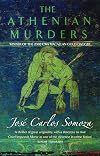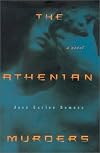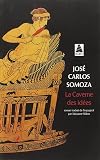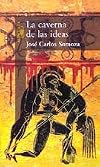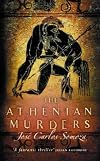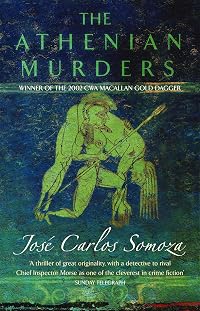
The Athenian Murders
by José Carlos Somoza
On This Page
Description
THE ATHENIAN MURDERS is a brilliant, very entertaining and absolutely original literary mystery, revolving round two intertwined riddles. In classical Athens, one of the pupils of Plato's Academy is found dead. His idealistic teacher suspects that this wasn't an accident and asks Heracles, known as the 'Decipherer of Enigmas', to investigate the death and ultimately a dark, irrational and subversive cult. The second plot unfolds in parallel through the footnotes of the translator of the show more original Greek text. As he proceeds with his work, he becomes increasingly convinced that the Greek author has hidden a second meaning, which can be brought to light by interpreting certain repeated words and images. As the main plot and also the translation of the manuscript advances, there are certain sinister coincidences, and it seems that the text is addressing him personally and in an increasingly menacing manner... THE ATHENIAN MURDERS constitutes a highly compelling, entertaining and intelligent novel. show lessTags
Recommendations

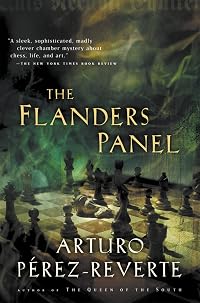
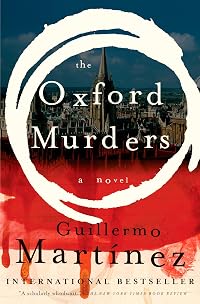
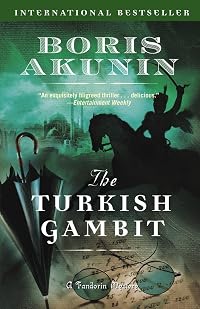
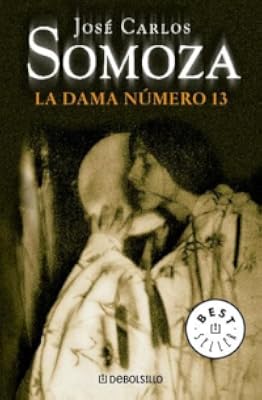

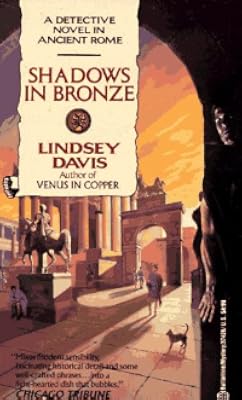
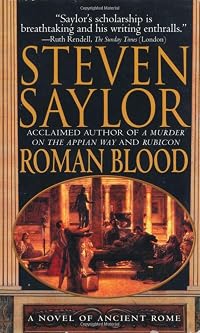
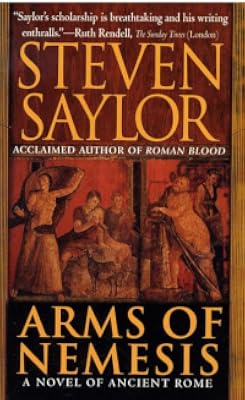
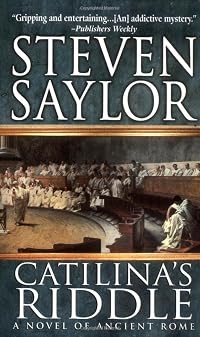



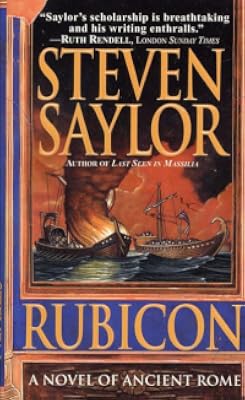
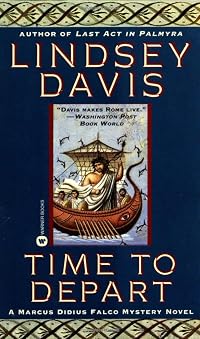
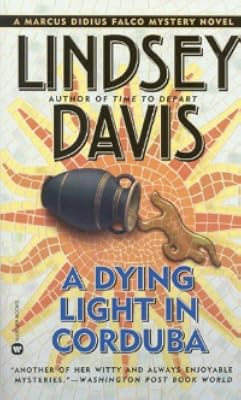


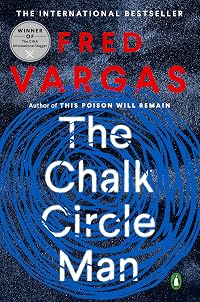


Member Recommendations



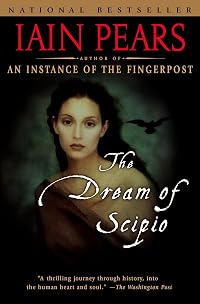
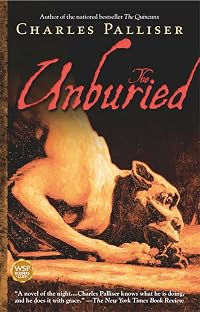
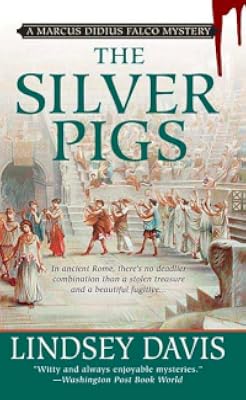
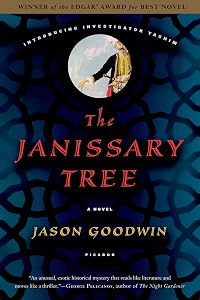
bluepiano An immensely better novel in which scholarly commentary on a classical Greek text reveals more than was intended by those offering it. In this one though the annotations are made by several people over several centuries.
Member Reviews
This has been on my radar since 2011 and in my possession since 2015. Ancient Greece and stories involving translators tick two pretty good boxes for me, so I was prepared for a good story. However, I found it extremely irritating. Part of this was on me—I’d actually somehow forgotten about the translator storyline and thought it was just a mystery set in ancient Greece, so it took me a little bit of getting used to. But I absolutely could not get behind the translator storyline, with the translator trying to solve a mystery that he thought was embedded in the text.
The translator came across as a pretentious twit. He threw fancy words around like nobody’s business, and said the word “eidesis” so many times that I was going to show more either make a drinking game out of it or reach into the book and slap him. And for some reason the whole ending each footnote with “(Translator’s Note)” or “(T’s N.)” annoyed the **** out of me. WHO ELSE WOULD BE WRITING THESE FOOTNOTES?! Also, translators don’t generally write this sort of nonsense in their footnotes. It was just too implausible.
And then because of this dude taking up all the airtime, I did not feel invested in Heracles Pontor’s story either. This book went straight to the giveaway pile. show less
The translator came across as a pretentious twit. He threw fancy words around like nobody’s business, and said the word “eidesis” so many times that I was going to show more either make a drinking game out of it or reach into the book and slap him. And for some reason the whole ending each footnote with “(Translator’s Note)” or “(T’s N.)” annoyed the **** out of me. WHO ELSE WOULD BE WRITING THESE FOOTNOTES?! Also, translators don’t generally write this sort of nonsense in their footnotes. It was just too implausible.
And then because of this dude taking up all the airtime, I did not feel invested in Heracles Pontor’s story either. This book went straight to the giveaway pile. show less
An interesting idea which the author, unfortunately, simply does not pull off. The internal logic is flawed, as is the logic of his (straw man) detective character. The author's presentation of philosophy and logic as well as Plato's theory of the forms (which he insists on calling 'the existence of Ideas") are simplistic, and will annoy anyone who has studied it in any depth, at least as much as the liberties his translator says he takes with the text will annoy real translators. But none of that is what made it so haaaard for me to force myself through this book (it's for a book club, so I had to.)
I found it impossible to become in any way absorbed in the story because Somoza constantly distracts the reader with the two parts of the show more project, which appear to be most interesting/important to him and, which the critics are loving: the translator commenting on the piece (don't worry, I'm going to avoid spoilers, despite my rating) and the fictional literary device 'eidesis.' I'm sure plenty of people will say that this distraction was a deliberate part of the metafiction or, at least, that literary books aren't supposed to flow, they are supposed to make the reader work. I accept neither of those objections; It is clear in the latter parts of the book that we are supposed to be absorbed, or at least care about these characters (in the main text and footnotes) and I'm afraid I was never given the chance to connect with them, because of these two devices.
First, the eidesis, which at one point is described as 'subtle' but is the opposite. The repeated imagery (it's no spoiler to define "eidesis") stands out incongruously from page 1 so that a) it just reads like bad writing and then b) once we know what it is, it still jumps out as bad writing but now we're thinking, "alright already we get the image" and THEN we have to put up with the translator popping in to exclaim about the eidesis he has so cleverly discovered. Which brings me nicely to my second point.
Second, the translator. Any time I had managed to get past the writing (the eidesis wasn't the only problem,) and just when I was starting to become absorbed in the main story, the translator would appear with his thoughts on the matter. That would be fine if I wanted to know what the translator thought but, unfortunately, he is not only unnamed but un-introduced and simply forces himself upon us. I quickly began thinking of him as "the interrupter" and it stuck. What's worse, until fairly late in the piece, his comments are rarely anything that isn't damned obvious to the reader, already; in fact, on page 263 the translator comes up with a 'revelation' that I had wondered about on page 33 - now, an author has every right to reveal their story as they want but being 230 pages behind the reader suggests a need to credit their readers with a touch more intellect.
The sad thing about this book (without giving spoilers) is that there actually is no need for 'eidesis' to be invented to achieve what the author (fictional and real world) is attempting to achieve with it and so the language need not have been burdened by it. I know that might sound absurd to those who have read it, but it's actually not needed - I'm sure plenty of others will have seen what I'm referring to, as obliquely as I can, I don't think it takes a degree in Philosophy (though it will help!)
The saddest thing about the book, for me, is the portrayal of Plato's theory of forms as some life-quashing philosophy because it's exactly the opposite - of course, that can be forgiven, it is hard to see from inside the cave. show less
I found it impossible to become in any way absorbed in the story because Somoza constantly distracts the reader with the two parts of the show more project, which appear to be most interesting/important to him and, which the critics are loving: the translator commenting on the piece (don't worry, I'm going to avoid spoilers, despite my rating) and the fictional literary device 'eidesis.' I'm sure plenty of people will say that this distraction was a deliberate part of the metafiction or, at least, that literary books aren't supposed to flow, they are supposed to make the reader work. I accept neither of those objections; It is clear in the latter parts of the book that we are supposed to be absorbed, or at least care about these characters (in the main text and footnotes) and I'm afraid I was never given the chance to connect with them, because of these two devices.
First, the eidesis, which at one point is described as 'subtle' but is the opposite. The repeated imagery (it's no spoiler to define "eidesis") stands out incongruously from page 1 so that a) it just reads like bad writing and then b) once we know what it is, it still jumps out as bad writing but now we're thinking, "alright already we get the image" and THEN we have to put up with the translator popping in to exclaim about the eidesis he has so cleverly discovered. Which brings me nicely to my second point.
Second, the translator. Any time I had managed to get past the writing (the eidesis wasn't the only problem,) and just when I was starting to become absorbed in the main story, the translator would appear with his thoughts on the matter. That would be fine if I wanted to know what the translator thought but, unfortunately, he is not only unnamed but un-introduced and simply forces himself upon us. I quickly began thinking of him as "the interrupter" and it stuck. What's worse, until fairly late in the piece, his comments are rarely anything that isn't damned obvious to the reader, already; in fact, on page 263 the translator comes up with a 'revelation' that I had wondered about on page 33 - now, an author has every right to reveal their story as they want but being 230 pages behind the reader suggests a need to credit their readers with a touch more intellect.
The sad thing about this book (without giving spoilers) is that there actually is no need for 'eidesis' to be invented to achieve what the author (fictional and real world) is attempting to achieve with it and so the language need not have been burdened by it. I know that might sound absurd to those who have read it, but it's actually not needed - I'm sure plenty of others will have seen what I'm referring to, as obliquely as I can, I don't think it takes a degree in Philosophy (though it will help!)
The saddest thing about the book, for me, is the portrayal of Plato's theory of forms as some life-quashing philosophy because it's exactly the opposite - of course, that can be forgiven, it is hard to see from inside the cave. show less
Two texts. Above the line, a pastiche of (a translation of) an ancient Greek prose work, in which a “decipherer” called Heracles investigates a set of killings in Athens. Below the line, the translator’s notes, in which he documents increasingly odd details about the work, and becomes increasingly worried that someone is taking an unwholesome interest in his labours.
Set aside the obvious flaw with this conceit: the idea that a translator starts at the first word and ploughs forward one at a time, such that their successive notes might be contemporaneous to their textual discoveries and their growing worldly unease. Set aside also the sense that this meta-fictional thing has been done quite enough times already—maybe it still show more felt sufficiently fresh in 2002, a mere 40 years after Pale Fire. Set those aside, and you’re still left with a pretty dire novel.
The main text is something like a straightforward detective story. Just not a very good one. The central mystery concerns the deaths of one, then two, then three promising young men studying at Plato’s Academy (aye, really. He has a walk-on part). It becomes clear that they’ve been doing all sorts of naughty nice things. This allows the author to write loads of guff about Dionysian cults and sacrifice and such. It also provides the various ancient academic Greeks lots of opportunity to pontificate about the relative rewards of rational virtue and sybaritic vice, which is an opportunity they take, banging on in the plodding, windy style familiar from plodding, windy translations of Plato (the main text is not actually a bad pastiche of such stuff, in places; the trouble is that such stuff is bad).
But the text isn’t just boring and silly. The main oddity noticed by the translator is that each chapter contains allusion to one of the twelve labours of Heracles, mostly in the form of far-flown literary imagery and repetition of significant language. The translator could hardly not notice this, because the allusion is very heavy-handed. The text is frequently overwhelmed by the imagery and repetition. “Unreadable” is a strong word, but it’s pretty dreadful stuff.
I suppose it would be worth it if the translator’s commentary on it were interesting—if the meta-fictional game were worth the fictional candle. It isn’t. Besides noting the obvious in the text, the translator tells us about his present-day worries. These mount as he finds that the last person to try translating this ended up dead, mount further as he starts seeing reference to himself in the text, and mount further still when he ends up kidnapped and forced to, umm, translate more by a mystery jailer. I suppose this could work, but here it doesn’t; it’s dull, predictable, and forced. Towards the end, the two texts pretty much blend into a brown postmodern slurry, as characters find out they’re characters, and so on ad yawnium. Besides the avant garde yucks, there’s also something deep we’re meant to be getting about Plato’s theory of the forms and the distances from word to knowledge to Idea, but I didn’t get much out of it. All we really learn is that the author has heard of the theory and wants to let us know that he has. I could have done without that knowledge, these words, and any related idea. show less
Set aside the obvious flaw with this conceit: the idea that a translator starts at the first word and ploughs forward one at a time, such that their successive notes might be contemporaneous to their textual discoveries and their growing worldly unease. Set aside also the sense that this meta-fictional thing has been done quite enough times already—maybe it still show more felt sufficiently fresh in 2002, a mere 40 years after Pale Fire. Set those aside, and you’re still left with a pretty dire novel.
The main text is something like a straightforward detective story. Just not a very good one. The central mystery concerns the deaths of one, then two, then three promising young men studying at Plato’s Academy (aye, really. He has a walk-on part). It becomes clear that they’ve been doing all sorts of naughty nice things. This allows the author to write loads of guff about Dionysian cults and sacrifice and such. It also provides the various ancient academic Greeks lots of opportunity to pontificate about the relative rewards of rational virtue and sybaritic vice, which is an opportunity they take, banging on in the plodding, windy style familiar from plodding, windy translations of Plato (the main text is not actually a bad pastiche of such stuff, in places; the trouble is that such stuff is bad).
But the text isn’t just boring and silly. The main oddity noticed by the translator is that each chapter contains allusion to one of the twelve labours of Heracles, mostly in the form of far-flown literary imagery and repetition of significant language. The translator could hardly not notice this, because the allusion is very heavy-handed. The text is frequently overwhelmed by the imagery and repetition. “Unreadable” is a strong word, but it’s pretty dreadful stuff.
I suppose it would be worth it if the translator’s commentary on it were interesting—if the meta-fictional game were worth the fictional candle. It isn’t. Besides noting the obvious in the text, the translator tells us about his present-day worries. These mount as he finds that the last person to try translating this ended up dead, mount further as he starts seeing reference to himself in the text, and mount further still when he ends up kidnapped and forced to, umm, translate more by a mystery jailer. I suppose this could work, but here it doesn’t; it’s dull, predictable, and forced. Towards the end, the two texts pretty much blend into a brown postmodern slurry, as characters find out they’re characters, and so on ad yawnium. Besides the avant garde yucks, there’s also something deep we’re meant to be getting about Plato’s theory of the forms and the distances from word to knowledge to Idea, but I didn’t get much out of it. All we really learn is that the author has heard of the theory and wants to let us know that he has. I could have done without that knowledge, these words, and any related idea. show less
Wildly original! Bizarre but hypnotic and enthralling on every page! There are two plotlines: one the Straightforward story of murder in ancient Athens right after the Peloponnesian War in an ancient Greek manuscript by an anonymous author COUPLED WITH periodic footnotes by Translator with his comments, feelings, and reactions. He feels the strange metaphors and similes in each chapter point to SOMETHING hidden in text. Somoza uses something he calls "eidetic imagery"--"repetition of metaphors or words which calls up images independent of the original text, but giving extra layers of meaning. Each chapter presents one of the Twelve Labors of Hercules, not necessarily in order.
The "Decipherer of Enigmas", Heracles Pontor--note the show more similarity of name to a modern-day fictional detective [physical description is similar too]--and Diagoras, a philosophy teacher from Plato's Academy, investigate murders. The first victim, a student from the Academy, is supposedly killed by wolves while out hunting and his heart torn from his body. In some sense, the novel is also philosophical; Heracles represents REASON and Diagoras the IDEA.
The Translator becomes obsessed with finding a "key" [secret message] and finally enters the story physically; the two plotlines converge. Now the book takes a frightening turn; two more classmates of the first victim are murdered [or in one case, is it suicide?], as well as a slave. Our intrepid duo sets out to solve all four murders. There is violence and a final confrontation. The novel's a balance between Reason and the Platonic Idea: Plato's Theory of Forms. http://en.wikipedia.org/wiki/Theory_of_Forms There's some of the cave allegory also. http://en.wikipedia.org/wiki/Allegory_of_the_Cave
Characterization wasn't as important as the "whodunit" and the philosophy. I liked the way the book was set up; the footnotes led me by the hand; and the symposium in Chapter 7 was most informative. Sometimes I thought Somoza had boxed himself in but manages to escape with ingenious twists. The Spanish title: "Cave of the Ideas" I felt expressed better the content than the bland "Athenian Murders". I recommend this book highly, but don't read it at night! show less
The "Decipherer of Enigmas", Heracles Pontor--note the show more similarity of name to a modern-day fictional detective [physical description is similar too]--and Diagoras, a philosophy teacher from Plato's Academy, investigate murders. The first victim, a student from the Academy, is supposedly killed by wolves while out hunting and his heart torn from his body. In some sense, the novel is also philosophical; Heracles represents REASON and Diagoras the IDEA.
The Translator becomes obsessed with finding a "key" [secret message] and finally enters the story physically; the two plotlines converge. Now the book takes a frightening turn; two more classmates of the first victim are murdered [or in one case, is it suicide?], as well as a slave. Our intrepid duo sets out to solve all four murders. There is violence and a final confrontation. The novel's a balance between Reason and the Platonic Idea: Plato's Theory of Forms. http://en.wikipedia.org/wiki/Theory_of_Forms There's some of the cave allegory also. http://en.wikipedia.org/wiki/Allegory_of_the_Cave
Characterization wasn't as important as the "whodunit" and the philosophy. I liked the way the book was set up; the footnotes led me by the hand; and the symposium in Chapter 7 was most informative. Sometimes I thought Somoza had boxed himself in but manages to escape with ingenious twists. The Spanish title: "Cave of the Ideas" I felt expressed better the content than the bland "Athenian Murders". I recommend this book highly, but don't read it at night! show less
This is one of the most clever and cunning books I've read. Story-in-a-story is not easy to do, and I think that this is the best accomplishment of this type I've seen.
Weird murders have been going on in ancient Greece and Heracles Pontor is called to investigate along with his classic sidekick. Their story is told in an old manuscript that is now being translated for a modern audience. Thus the reader sees both the original story and the translator's comments, and as the story progresses they start to intertwine noticeably to an unforeseeable conclusion.
Aside from the plot itsef, I had a good time spotting the allegories and eidetic references hidden (usually pretty obviously and also pointed out by the translator) in the text. All in show more all, this is a refreshing change from all those wannabe-Da-Vinci-Codes that have been flooding the genre of ancient mysteries and manuscripts and I can sincerely recommend the book. show less
Weird murders have been going on in ancient Greece and Heracles Pontor is called to investigate along with his classic sidekick. Their story is told in an old manuscript that is now being translated for a modern audience. Thus the reader sees both the original story and the translator's comments, and as the story progresses they start to intertwine noticeably to an unforeseeable conclusion.
Aside from the plot itsef, I had a good time spotting the allegories and eidetic references hidden (usually pretty obviously and also pointed out by the translator) in the text. All in show more all, this is a refreshing change from all those wannabe-Da-Vinci-Codes that have been flooding the genre of ancient mysteries and manuscripts and I can sincerely recommend the book. show less
Very clever, but somehow not as engaging as I'd hoped it would be, The Athenian Murders, in the most basic sense, tells the tale of Heracles Pontor attempting to solve a series of murders of young attendees of Plato's Academy in ancient Athens. But there is also a story developing in the translator's footnotes which is increasingly interlinked with the main narrative and unexpectedly offers a commentary upon the philosophical ideas therein.
My problem with this book boiled down to the fact that I never found the main narrative particularly interesting: I never really felt the need to know what had happened or why, so all Heracles' detective work was basically lost on me. It was fun to play along with the translator looking for the show more eidesis (repetitive words or ideas) in the main text, and I found the story developing in the footnotes far more interesting (and, in places, downright hilarious). Although this is a novel on many levels, for me it only really functioned well on one: as a novel of ideas, and this only really developed in the latter half of the book. The ending ultimately was all about ideas but seemed a little rushed, after the not-terribly-interesting plot had to get finished off. Granted, the layers were strongly interlinked, but for me, it would have worked better as a book if I'd found the main narrative as interesting as the footnotes and philosophy explored in them. show less
My problem with this book boiled down to the fact that I never found the main narrative particularly interesting: I never really felt the need to know what had happened or why, so all Heracles' detective work was basically lost on me. It was fun to play along with the translator looking for the show more eidesis (repetitive words or ideas) in the main text, and I found the story developing in the footnotes far more interesting (and, in places, downright hilarious). Although this is a novel on many levels, for me it only really functioned well on one: as a novel of ideas, and this only really developed in the latter half of the book. The ending ultimately was all about ideas but seemed a little rushed, after the not-terribly-interesting plot had to get finished off. Granted, the layers were strongly interlinked, but for me, it would have worked better as a book if I'd found the main narrative as interesting as the footnotes and philosophy explored in them. show less
An interesting idea. A novel within a novel, a mystery within a mystery. I don't know enough about the philosophy behind it to know how accurate this might be, but the story itself keep me interested though I didn't really feel a connection to any of the characters.
Members
- Recently Added By
Lists

Best Historical Crime
44 works; 17 members

Novels featuring language professionals
98 works; 12 members
Best Mysteries With a Historical Setting
292 works; 160 members

Best historical fiction set in the ancient world
126 works; 40 members
Author Information

33 Works 1,996 Members
Some Editions
Awards and Honors
Common Knowledge
- Canonical title
- The Athenian Murders
- Original title
- La caverna de las ideas
- Original publication date
- 2000 (original Spanish) (original Spanish); 2002 (English translation) (English translation)
- People/Characters
- Plato, ca. 428-347 BC
- Important places
- Ancient Greece
- Epigraph
- There is an argument which holds good against the man who ventures to put anything whatever in writing on questions of this nature, it has often before been stated by me, and it seems suitable for the present occasion.
&nb... (show all)sp; For everything that exists there are three instruments by which the knowledge of it is necessarily imparted; fourth, there is the knowledge itself, and, as fifth, we must count the thing itself which is known and truly exists. The first is the name, the second the definition, the third the image ...
PLATO, Epistle VII - First words*
- Der Leichnam lag auf einer Trage aus dünnen Birkenreisern.
- Last words
- (Click to show. Warning: May contain spoilers.)But I'll abide by Xenophon's final words in his recent history: 'As for me, my work ends here. Let another deal with what comes next.'
The end of The Athenian Murders,
written by Philotextus of Chersonnese
in the year that Arginides was archon,
Demetriate was sybil, and Argelaus was ephor. - Original language
- Spanish
*Some information comes from Common Knowledge in other languages. Click "Edit" for more information.
Classifications
- Genres
- Fiction and Literature, Mystery, Historical Fiction, General Fiction
- DDC/MDS
- 863.64 — Literature & rhetoric Spanish Literature Spanish fiction 20th Century 1945-2000
- LCC
- PQ6669 .O56 .C3813 — Language and Literature French, Italian, Spanish and Portuguese literatures Spanish literature Individual authors, 1961-2000
- BISAC
Statistics
- Members
- 839
- Popularity
- 32,669
- Reviews
- 30
- Rating
- (3.46)
- Languages
- 11 — Bulgarian, Danish, Dutch, English, French, German, Greek, Portuguese (Portugal), Croatian, Spanish, Swedish
- Media
- Paper, Ebook
- ISBNs
- 29
- ASINs
- 9