
George D. Economou (1934–2019)
Author of Proensa: An Anthology of Troubadour Poetry (New York Review Books Classics)
About the Author
Works by George D. Economou
Proensa: An Anthology of Troubadour Poetry (New York Review Books Classics) (1978) — Editor — 93 copies, 2 reviews
The Georgics 1 copy
Associated Works
Tagged
Common Knowledge
- Birthdate
- 1934
- Date of death
- 2019
- Gender
- male
- Education
- Columbia University
Colgate University - Occupations
- poet
translator
professor - Organizations
- Brooklyn Center of Long Island University
University of Oklahoma - Relationships
- Owens, Rochelle (wife)
- Nationality
- USA
- Birthplace
- Great Falls, Montana, USA
- Places of residence
- Philadelphia, Pennsylvania, USA
Wellfleet, Massachusetts, USA - Associated Place (for map)
- USA
Members
Reviews

This is one of the best books I've read this year despite its being a scholarly study of the poetry written by Ananios of Kleitor (not, of course, to be confused with the sixth-century iambic poet Ananios) several centuries B.C.E. and so a far cry from my usual reading.
What remains of Ananios's work has come down to us on papyrus and thus the poems are really only fragments, though even these scraps are suggestive of a distinctive voice: 'Dance through the forest [ ] deer season (cakes?) [ / show more Artem]is shouts and shoots [ / as the moon r [ ] on flying feet [ / ]the precipice / ]fisherman's net [ ] my heart, my love [ '. Economou gives us his own sometimes startling translation of them and provides as well endnotes, information on the various commentators, and general background and in fact it would be a good idea to have two or three bookmarks to hand before beginning his book.
A fair bit of Ananios of Kleitor comprises commentary from a range of characters through the centuries, from The Anonymous Alexandrian to 20th-century academics. Of particular interest is how their interpretations of the poems are skewed by their own inclinations and how much about them is revealed in their discussions of the poetry: amongst the references to other classical authors, comments on prosody, and attempted reconstruction of the fragments there are outpourings of fierce religiosity, an account of a third-century dinner party bore, and of course sniping, squabbling, and possibly plagiarism between modern academics. (In fact, my only--minor--objection to the book is Economou's decision to include letters between these last containing personal information he might have thought significantly revelatory but that for me were not.)
I don't think one need have any but a basic familiarity with the classics, mythology, and scholarly commentary to enjoy this book, though when I re-read it I'll do so with The Reader's Dictionary and Lempriere beside me as I've little doubt there were significant bits I overlooked on first reading. It's a book that does, though, require close attention--which will be generously rewarded.
I can't recommend this highly enough: I was held rapt by Ananios of Kleitor and noticed as soon as the second page that I was smiling, as I was to be through almost all the book. Admirers of rather similar scholarly work of Charles Kinbote might be especially likely to enjoy this, though I think Economou puts Nabokov in the shade. show less
What remains of Ananios's work has come down to us on papyrus and thus the poems are really only fragments, though even these scraps are suggestive of a distinctive voice: 'Dance through the forest [ ] deer season (cakes?) [ / show more Artem]is shouts and shoots [ / as the moon r [ ] on flying feet [ / ]the precipice / ]fisherman's net [ ] my heart, my love [ '. Economou gives us his own sometimes startling translation of them and provides as well endnotes, information on the various commentators, and general background and in fact it would be a good idea to have two or three bookmarks to hand before beginning his book.
A fair bit of Ananios of Kleitor comprises commentary from a range of characters through the centuries, from The Anonymous Alexandrian to 20th-century academics. Of particular interest is how their interpretations of the poems are skewed by their own inclinations and how much about them is revealed in their discussions of the poetry: amongst the references to other classical authors, comments on prosody, and attempted reconstruction of the fragments there are outpourings of fierce religiosity, an account of a third-century dinner party bore, and of course sniping, squabbling, and possibly plagiarism between modern academics. (In fact, my only--minor--objection to the book is Economou's decision to include letters between these last containing personal information he might have thought significantly revelatory but that for me were not.)
I don't think one need have any but a basic familiarity with the classics, mythology, and scholarly commentary to enjoy this book, though when I re-read it I'll do so with The Reader's Dictionary and Lempriere beside me as I've little doubt there were significant bits I overlooked on first reading. It's a book that does, though, require close attention--which will be generously rewarded.
I can't recommend this highly enough: I was held rapt by Ananios of Kleitor and noticed as soon as the second page that I was smiling, as I was to be through almost all the book. Admirers of rather similar scholarly work of Charles Kinbote might be especially likely to enjoy this, though I think Economou puts Nabokov in the shade. show less

Another of those books I'd been waiting for. What an amazing poet Blackburn was; he brings these medieval poets to blazing contemporary life. "I'll tell you/ in my own way/ what I've seen/ and what I see."
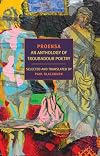
Reprint. Orig. publ. University of California Press
Lists
You May Also Like


Associated Authors
Statistics
- Works
- 12
- Also by
- 1
- Members
- 189
- Popularity
- #115,305
- Rating
- 4.5
- Reviews
- 3
- ISBNs
- 13